Mykonos accommodations
Mykonos accommodations welcome you to a destination nicknamed “The Island of the Winds”. Known for its sandy & pebbled beaches (mostly golden, some white such as Lia Beach), iconic windmills, turquoise waters, Mediterranean cuisine, nightlife, shopping, Chora (Mykonos Town – main town) and beloved pelicans, Mykonos is a Cyclades cluster island found centrally within the Greek Isles. Just a 30-45 minute ferry ride from Old Port in Mykonos Town (summertime ferry schedule – Mykonos departures 9 AM, 10 AM, 11 AM, 5 PM – Delos returns 12 PM, 1 PM, 3 PM, 7 PM), The Greek island of Delos (ancient temples, mosaics, theater, ruins) is just southwesterly of Mykonos.
Mykonos main attractions: Windmills of Mykonos (16 historic grain windmills, photography spot), Super Paradise Beach Club, D’Angelo (Italian restaurant), Mykonos Port (marina – cruise ship facilities, tour companies, ferries to other islands), 180º Sunset Bar (cocktail bar), Local Mykonos (Gyro restaurant), Tropicana Beach Bar, Sakis (Gyro restaurant), Ornos Beach (rental chairs / umbrellas, beach bars, restaurants, hotels), Kalafati Beach, Armenistis Lighthouse (historical landmark), Nikolas Tavern Mykonos (seafood restaurant), Kiki’s Tavern, Alemagou (beachfront restaurant), Monastery of Tourliani (16th-century monastery, grand dome, religious museum), Avli Tou Thodori (restaurant, RIZOS BIKES MYKONOS (motorcycle rental agency), Assimomitis Mykonos Rent a Car & Transfer (airport car rental agency), Agios Stefanos Beach (rentable chairs / umbrellas, swimming, water sports, eateries), Apaggio Restaurant, Zuma Mykonos (Japanese restaurant), Limnios Tavern, Tour In Mykonian Land & Wine Tasting Mykonos (winery), Moto Speed S.A. (ATV rental service), Psarou Beach (lively, green waters, water sports, amenities), Tokyo Joe Mykonos (Sushi restaurant), Paralia Ftelias (beach), Boni’s Windmill (museum), To Apomero (restaurant), Manto Mavrogenous Statue (historical landmark), Velanos Mykonos – Brunch, Breakfast & Cocktails (near airport), Mototrust Mykonos (car rental agency), Cavo Paradiso Club Mykonos (night club), To Karteri (small plates restaurant – near airport), Kalammmakia Ano Mera (restaurant), Compass Mykonos Restaurant, Church of Panagia Paraportiani (Greek Orthodox church), Carwiz mykonos (airport car rental agency), Quality Rentals Mykonos (car / motorcycle / ATV rental service), Mykonos Vioma Organic Farm, View of Alefkandra (Little Venice – scenic spot), RIZES Mykonos – Folkore Farmstead, Philotimo Restaurant, Deep Blue Mykonos (seafood restaurant), Nautica Marine (boat rental service)
Mykonos international airport: Mykonos Airport (JMK)
Rideshare service: Uber
In addition to cars, motorcycles, scooters and ATVs are also popular rental vehicles. Mykonos being a party destination, keep in mind that garbage can pile-up in public places near tourist areas at times. Apart from the island’s three pelican mascots, many cats inhabit Mykonos. On Mykonos it’s best to avoid drinking tap water, though teeth-brushing should be perfectly fine. When walking about keep an eye out for vehicular traffic, especially at night, as traffic & pedestrian lights are sparse. True to its nickname, Mykonos can be windy at times. Mykonos currency is the Euro, cars travel on the right-hand side and the drinking age is 18 years old. Mykonos accommodations are some of the Greek Isles’ best. Before we get to Mykonos accommodations, let’s take a look at some more background information on the area to help you along the way.
The name “Mykonos” likely originates from either the ancient Greek word “Mykon” (“pile of stones” or “rocky place”) or the mythological hero Mykonos (son of the Delos king and Apollo priest, Anius). Greek historian and geographer Herodotus (484-425 BC) attributes the Carians as being the island’s first inhabitants. Ionians from Athens were the island’s next inhabitants until about the early 11th century BC. Around this time and unlike today, many people inhabited the nearby island of Delos. Also differing from present-day, Mykonos at this time was a relatively poor island, used mostly for supplies and transit. The Romans took control of Mykonos during the Roman Empire, followed by the Byzantine Empire until the 12th century. Constantinople having fallen in 1204 by way of the Fourth Crusade, the Venetian nobleman Andrea Ghisi took control of Mykonos, becoming Tinos’ and Mykonos’ first Lord. Catalan Company mercenaries ravaged Mykonos at the end of the 13th century. In 1390, the Venetians took direct control of the island. The Ottoman Hayreddin Barbarossa in 1537 attacked the island, which was still under Venetian control, and thereafter established an Ottoman fleet. Under Ottoman Navy admiral Kapudan Pasha, a system of self-governance (a governor & council of syndics) was imposed. In 1718, the castle of Tinos (Tinos island) fell to the Ottomans and the last of the Venetians withdrew from the region. By the late-18th century, Mykonos had become a prosperous trading center, albeit prone to frequent pirate attacks. The Battle of Mykonos circa June 1794 between Great Britain’s ship HMS Romney (54 guns) and France’s ship Sibylle (44 guns) resulted in a British victory, likely due to HMS Romney’s two gun-decks. In 1821, the Greek Revolution against the Ottoman Empire occurred. Led by Greek princess and heroine of the Greek War of Independence Manto Mavrogenous, Mykonos played an important role in Greece’s revolt against the Ottomans. In the early 20th century, many Mykonians left the island for Mainland Greece and other countries (United States) as a result of the Corinth Canal’s opening and the First World War. Tourism ensued in the 1960s by way of “jet set” (high society) tourists, and by the 2000s Mykonos had become one of Greece/s most expensive islands.
An island in the Greek Cyclades cluster, Mykonos is home to around 11,000 “Mykonians”. Mykonos attracts around 1.5 million visitors annually, and an additional 1.2 million via cruise ships. Of course, tourism accounts for much of the island’s economy, with nightlife being a major draw. 33 square miles, Mykonos is home to a hot semi-arid climate, with around 300 days of sunshine per year. Summer high temperatures average around 82-degrees Fahrenheit. Mykonos’ rainy season occurs between October and March. Although rare, snowfall is possible during winter months, which are mostly mild and sunny, and occasionally rainy. Additional points of interest include Municipal Library (18th-century mansion – 8,000+ volumes, photographs, Cycladic coins / seals, sketches), Archaeological Museum of Mykonos, Agricultural Museum, Aegean Maritime Museum, Folklore Museum, Lena’s House, Petros the Pelican (feathery mascot), Little Venice (18th-century fishing houses, bars, galleries, cafes, shops, sunset views), Tria Pigadia (three shallow Chora wells, built 1722), Panagia Paraportiani Church and Camel Rock. Local foods include steak, lamb, sausage, grilled octopus, louza (thinly sliced spiced pork dish), Greek salad, kopanisti (spicy cheese), ksinotira (cheese) and a variety of seafoods. Popular drinks are ouzo (potent anise-flavored liquor), tsipouro (brandy), wine and the non-alcoholic soumada (sweet rose water drink). With a little background information on the area, we’re ready for Mykonos accommodations that will help make for an exciting trip.
Lithos by Spyros & Flora
Agios Ioannis

Glyfadi Beach
Hotel amenities: lobby bar, continental breakfast, swimming pool overlooking the Aegean Sea, pool bar, furnished balcony, whitewashed design, LCD TVs, kitchenettes, spacious bathrooms, slippers, hairdryers
Nearby: Vasilikos Restaurant, Bellissimo Pizza e Pasta, Mikrasia Mykonos Restaurant, Beefbar Mykonos (restaurant), Diakoftis Mini Market, Agios Ioannis Beach (bar), San Giovanni (church)
Within feet:
-
-
- Agios Ioannis Beach
- Kapari Beach
- Korfos Beach
- Ornos Beach
-
Within 1.1 miles:
-
-
- Glyfadi Beach
-
Within 1.7 miles:
-
-
- Fabrica Square
-
Within 2.2 miles:
-
-
- Archaeological Museum of Mykonos
-
Lithos by Spyros & Flora is 2.3 miles from Mykonos Airport.
Approximate cost per night (suite with sea view): $323
Cost per person (four people): $80
Palladium Hotel
Nammos Beach , Platis Gialos
Psarou Beach
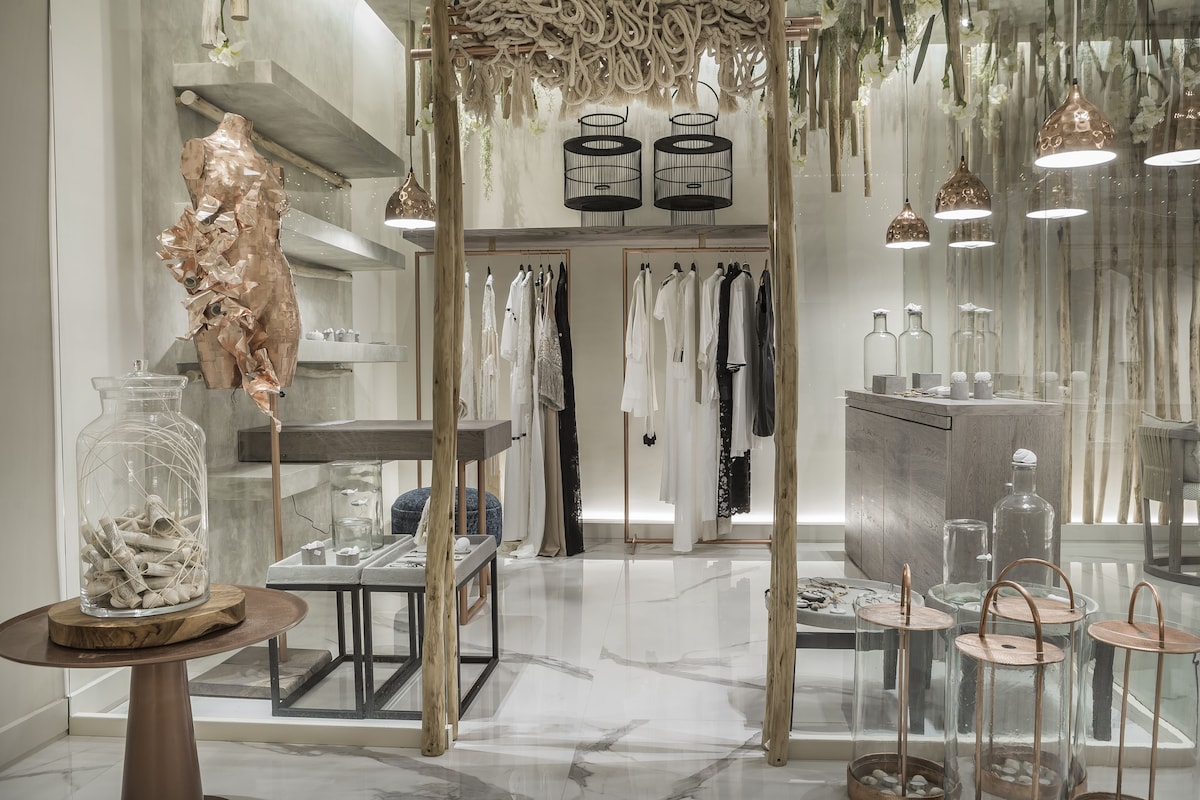
Hotel amenities: outdoor & indoor heated swimming pools, private pools, hot tubs, balconies, spa, sauna, fitness center, air conditioning, free Wi-Fi, flat-screen TVs, coffee machines, hair dryers, fashion boutique
Nearby restaurants / bars: Nikos Gallop Restaurant (Greek restaurant), Delos Lounges & Bar (bar)
Nearby misc.: Psarou Beach, Riva Lounge @AllinBlusive (boat rental service), Nammos Village (shopping mall), Louis Vuitton Nammos, Cartier, LOEWE Mykonos Nammos (clothing store), VILEBREQUIN (swimwear store)
Within feet:
-
-
- Psarou Beach
- Platis Gialos Beach
- Pinky Beach
-
Within 1.9 miles:
-
-
- Fabrica Square
-
Within 2.2 miles:
-
-
- Little Venice
-
Within 5 miles:
-
-
- Armenistis Lighthouse
-
Palladium Hotel is 1.4 miles from Mykonos Airport.
Approximate cost per night (master two-bedroom suite): $1,022
Cost per person (four people): $255
Seethrough Mykonos Suites
Platis Gialos, Platis Gialos
Platis Gialos Beach
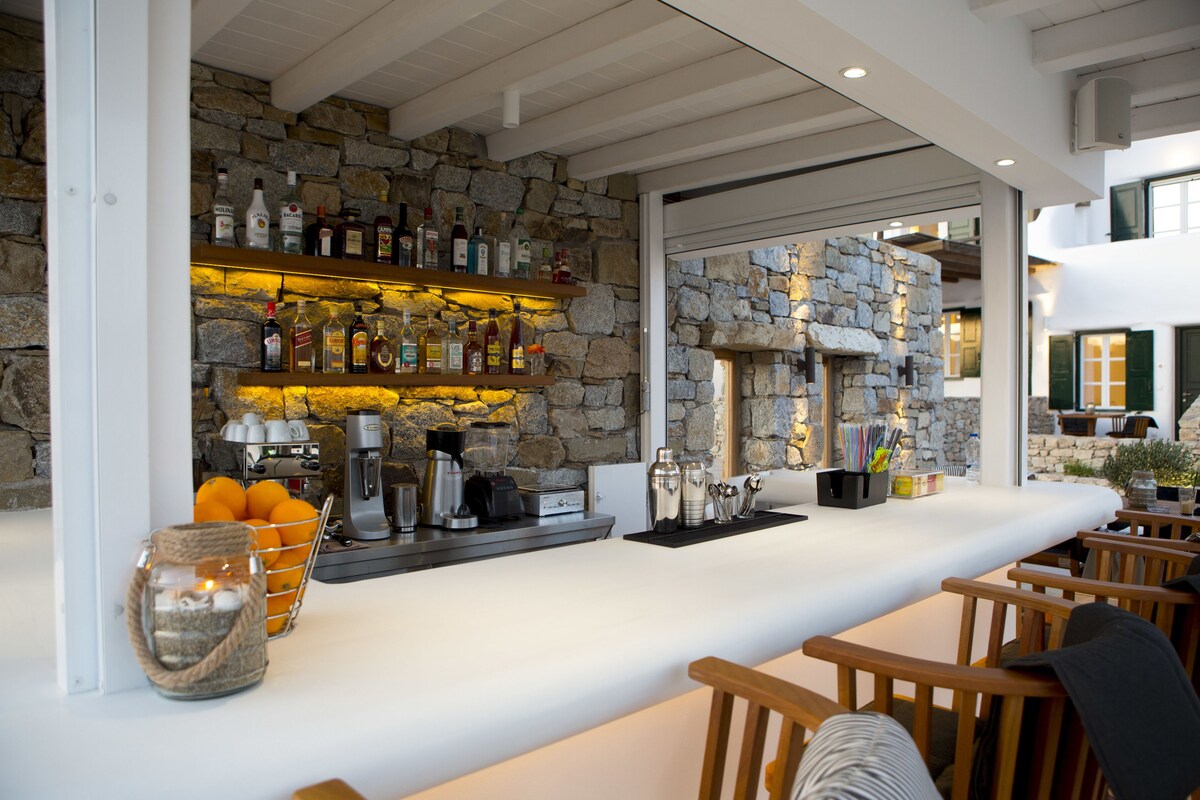
Guesthouse amenities: outdoor pool, poolside bar, panoramic sea views, furnished sun terrace, beamed ceilings, built-in sofas, free Wi-Fi, flat-screen TVs, safes, modern bathrooms
Nearby restaurants: VIP Restaurant (Greek restaurant), Phos Restaurant (seafood restaurant), Thea Restaurant (Italian restaurant), Branco Mykonos (restaurant), Yialo Yialo Restaurant Mykonos, Avli Tou Thodori (restaurant), Bonatsa Restaurant (sushi restaurant), Souvlaki mykonos (brunch restaurant), Oakberry (health food restaurant)
Nearby misc.: Delicious (café), PlatisBakery (bakery), Konstantinos Kontizas (hair salon), Sunrise Supermarket (grocery store), Blue Myth Restaurant, Mykonos Yachting (boat rental service), Mykonos Cruises Ticket Office (boat tour agency), Mykonos Fishing Tours (corporate office), Narayan’s Beach Of Mykonos
Within feet:
-
-
- Platis Gialos Beach
- Pinky Beach
- Paraga Beach
-
Within 2.3 miles:
-
-
- Fabrica Square
-
Within 2.5 miles:
-
-
- Mykonos Windmills
- Meletopoulou Public Garden
-
Within 3.6 miles:
-
-
- Μαράθι (Μυκόνου)
-
- Seethrough Mykonos Suites is 1.5 miles from Mykonos Airport
Approximate cost per night (two-bedroom suite with sea-view): $469
Cost per person (four people): $117

Esperides
Main Street, Platis Gialos

Pinky Beach
Hotel amenities: pool, landscaped gardens, traditional Mykonos style, air conditioning, flat-screen TVs, safes
Also in the area: Seethrough Mykonos Suites
Within feet:
-
-
- Platis Gialos Beach
- Pinky Beach
- Paradise Beach
-
Within 2.3 miles:
-
-
- Mykonos Windmills
- Meletopoulou Public Garden
-
Within 2.4 miles:
-
-
- Little Venice
-
Within 2.5 miles:
-
-
- Archaeological Museum of Mykonos
-
- Esperides is 1.4 miles from Mykonos Airport.
Approximate cost per night (comfort triple room): $99
Cost per person (three people): $33
Mina Studios
Platys Gialos, Platis Gialos

Psarou Beach
Hotel amenities: sea views, balcony, breakfast, air conditioning, free Wi-Fi, flat-screen TVs, kitchens (select units), free private parking, airport shuttle, drinks / coffee / tea upon arrival
Also in the area: Seethrough Mykonos Suites, Esperides
Within feet:
-
-
- Psarou Beach
- Platis Gialos Beach
- Pinky Beach
-
Within 1.9 miles:
-
-
- Fabrica Square
-
Within 2.2 miles:
-
-
- Little Venice
-
Within 3.4 miles:
-
-
- Μαράθι (Μυκόνου)
-
- Mina Studios is 1.3 miles from Mykonos Airport.
Approximate cost per night (two-bedroom apartment): $142
Cost per person (four people): $35

Argo Hotel
Main Street, Platis Gialos

Paradise Beach
Hotel amenities: outdoor pool, poolside bar, poolside breakfast, pool views, Mykonos-style minimal décor, classic furnishings, air conditioning, free Wi-Fi, flat-screen TVs, safes, hairdryers
Also in the area: Seethrough Mykonos Suites, Esperides
Within feet::
-
-
- Psarou Beach
- Pinky Beach
- Paradise Beach
-
Within 2.1 miles:
-
-
- Fabrica Square
-
Within 2.3 miles:
-
-
- Mykonos Windmills
- Meletopoulou Public Garden
-
Within 2.6 miles:
-
-
- Archaeological Museum of Mykonos
-
Within 5 miles:
-
-
- Armenistis Lighthouse
-
Argo Hotel is 1.4 miles from Mykonos Airport.
Approximate cost per night (two-bedroom apartment): $648
Cost per person (four people): $162
Mykonos Moussa
Agios Ioannis

Agios Ioannis Beach
Apartment amenities: sea / mountain views, terraces, balconies, air conditioning, free Wi-Fi, flat-screen TVs, coffee machines, bathrobes
Also in the area: Lithos by Spyros & Flora
Within feet:
-
-
- Agios Ioannis Beach
- Kapari Beach
-
Within 1.5 miles:
-
-
- Nammos Mykonos
-
Within 2.3 miles:
-
-
- Scorpios Mykonos
-
Within 11.6 miles:
-
-
- Archaeological Museum of Tinos
- Megalochari Church
-
Mykonos Moussa is 2 miles from Mykonos Airport.
Approximate cost per night (two-bedroom house): $296
Cost per person (five people): $59

Mykonos Grand Hotel & Resort
Agios Ioannis

Ornos Beach
Hotel & Resort amenities: fine dining, open-air dining room, bar with a terrace, panoramic sea views near the pool, sea, garden or pool views, balconies, patios, cobble paths, health center, spa, gym, tennis court, cube-shaped Cycladic architecture, flat-screen TVs, iPod docking stations, DVD players
Nearby: Vasilikos Bar-Restaurant (Greek restaurant), Beefbar Mykonos (restaurant), Pili Beach Restaurant (restaurant), Hippie Fish Mykonos (restaurant), Greece Sailing (tourist attraction)
Within feet:
-
-
- Ornos Beach
- Korfos Beach
-
Within 1.4 miles:
-
-
- Nammos Mykonos
-
Within 1.9 miles:
-
-
- Meletopoulou Public Garden
- Little Venice
-
Within 2.7 miles:
-
-
- Cavo Paradiso
-
Mykonos Grand Hotel & Resort is 2.1 miles from Mykonos Airport.
Approximate cost per night (suite with private pool): $1,430
Cost per person (four people): $357
The TownHouse Mykonos
Manto Square Cyclades

Tourlos Beach
Hotel amenities: bar, sea views, furnished terrace, fitness room, elegant décor, white-washed walls, handpicked furnishings, air conditioning, free Wi-Fi, flat-screen TVs, bathrobes, hairdryers
Nearby restaurants / bars: Mamas Cuisine (Greek restaurant), at54 Club & Lounge Mykonos (bar)
Nearby misc.: Bougazi Cafe, Hondos Center (shopping mall), Swarovski (boutique), ilias LALAoUNIS (jewelry store), PONIROS (jewelry store), Atlantis Sea Shells and Sponges (store), A Touch of Art (museum), Pump Gym, Paralia Choras Mikonou (beach), Manto Mavrogenous Statue (historical landmark)
Within feet:
-
-
- Tourlos Beach
- Korfos Beach
- Manto Open Air Cinema
- Archaeological Museum of Mykonos
- Panagia Paraportiani Church
-
Within 1.3 miles:
-
-
- Mykonos New Port
-
Within 2 miles:
-
-
- Μαράθι (Μυκόνου)
-
Within 3.1 miles:
-
-
- Armenistis Lighthouse
-
The TownHouse Mykonos is 1.4 miles from Mykonos Airport.
Approximate cost per night (two-bedroom suite): $1,305
Cost per person (five people): $262
Nomia Sunset Suites Mykonos
Pigados, Mykonos, Tagou
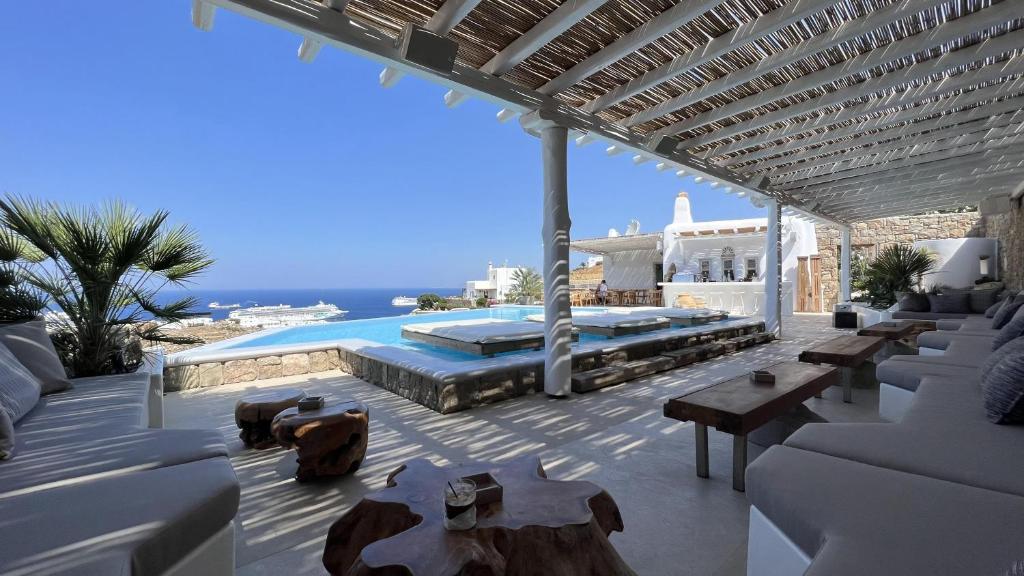
Mykonos Old Port
Suite amenities: restaurant, bar, buffet breakfast, infinity pool, sea views, sun terrace, balconies, garden, spa facilities, hot tub, fitness center, air conditioning, free Wi-Fi, private check-in/out
Nearby: Narcissus Restaurant, Zuma Mykonos (Japanese restaurant), Fitoria Mpourgia (garden center), Assimomytis Stavros (butcher shop)
Within feet:
-
-
- Mykonos Old Port
- Archaeological Museum of Mykonos
- Panagia Paraportiani Church
- Manto Open Air Cinema
- Mykonos Windmills
-
Within 1 mile:
-
-
- Fabrica Square
-
Within 2.5 miles:
-
-
- Armenistis Lighthouse
-
Within 11 miles:
-
-
- Monument of Elli
- Archaeological Museum of Tinos
-
Nomia Sunset Suites Mykonos is 1.7 miles from Mykonos Airport.
Anax Resort and Spa
Agios Ioannis Mykonos

Nammos Mykonos
Resort amenities: private beach, restaurant, infinity pool, poolside bar, lounge-style sunbeds, hot tub, seafront views, balconies, patios, lobby bar, private pools, spa, gym, Cycladic architecture, air conditioning, free Wi-Fi, smart TVs, Bluetooth access, modern amenities, elegant bathrooms
Also in the area: Mykonos Grand Hotel & Resort
Within feet:
-
-
- Agios Ioannis Beach
- Ornos Beach
- Glyfadi Beach
-
Within 1.3 miles:
Within 1.9 miles:
-
-
- Mykonos Windmills
-
Within 2.3 miles:
-
-
- Archaeological Museum of Mykonos
- Mykonos Old Port
-
Anax Resort and Spa is 2.2 miles from Mykonos Airport.
Approximate cost per night (exclusive two-bedroom suite): $1,017
Cost per person (four people): $254
Bellissimo Resort
Agios Ioannis

Kapari Beach
Hotel amenities: swimming pool, covered seaward terrace, private porches / patios, air conditioning, TVs, safes, daily buffet breakfast (served on restaurant terrace – overlooks water / mountains), on-site mini market
Also in the area: Mykonos Grand Hotel & Resort, Anax Resort and Spa
Within feet:
-
-
- Kapari Beach
- Ornos Beach
-
Within 1.6 miles:
-
-
- Nammos Mykonos
-
Within 1.7 miles:
-
-
- Fabrica Square
- Mykonos Windmills
-
Within 11.4 miles:
-
-
- Megalochari Church
-
Bellissimo Resort is 2.2 miles from Mykonos Airport.
Approximate cost per night: $178
DeLight Boutique Hotel
Agios Ioannis

Delos Island
Hotel amenities: restaurant, in-suite dining upon request, breakfast, private pool, pool bar, hot tub, sea views, patios, balconies, air conditioning, free Wi-Fi, LED TVs, DVD players, mini-bars, modern bathrooms, spa bathtubs, steam baths, hydro-massage showers, bathrobes, slippers, hairdryers, 24-hour front desk
Within feet:
-
-
- Agios Ioannis Beach
- Ornos Beach
-
Within 1.8 miles:
-
-
- Manto Open Air Cinema
- Meletopoulou Public Garden
- Little Venice
- Panagia Paraportiani Church
-
Within 2.2 miles:
-
-
- Mykonos Old Port
-
DeLight Boutique Hotel is 2.1 miles from Mykonos Airport.
Approximate cost per night (DeLight suite with private pool): $770
Cost per person (three people): $256

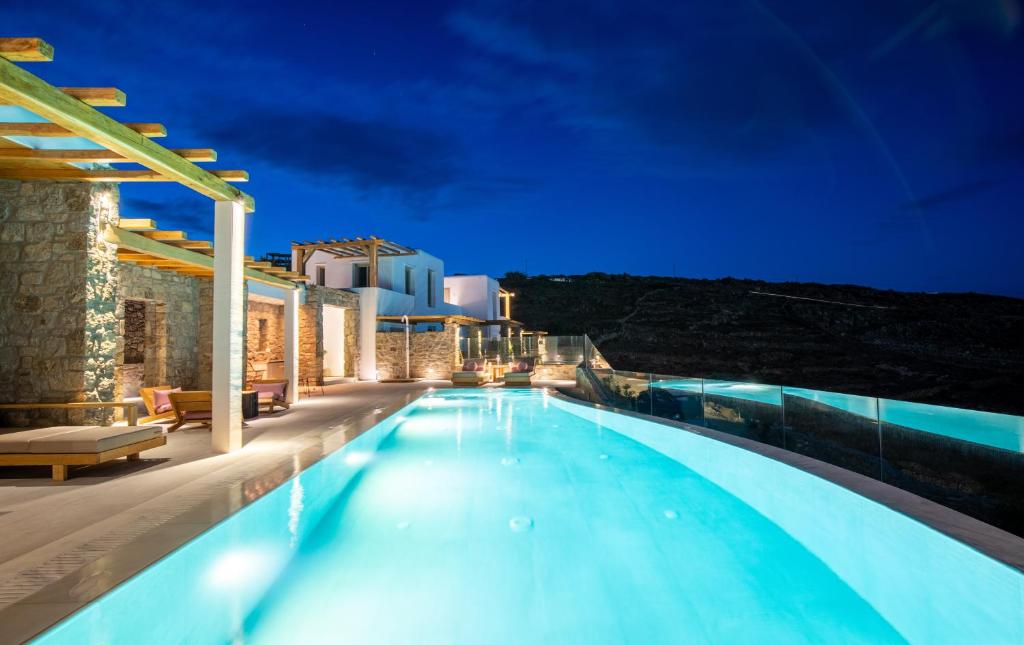
Due Mari Mykonos
Agios Ioannis, Mykonos
Korfos Beach
Guesthouse amenities: city views, terrace, garden, hot tub, air conditioning, free Wi-Fi, flat-screen TVs, coffee machines, electric tea pots, safety deposit boxes, free private parking
Also in the area: Mykonos Grand Hotel & Resort, Anax Resort and Spa, Bellissimo Resort
Within feet:
-
-
- Agios Ioannis Beach
- Korfos Beach
- Kapari Beach
-
Within 1.7 miles:
-
-
- Meletopoulou Public Garden
- Little Venice
-
Within 2 miles:
-
-
- Archaeological Museum of Mykonos
-
Within 12 miles:
-
-
- Monument of Elli
- Archaeological Museum of Tinos
-
Due Mari Mykonos is 2 miles from Mykonos Airport.
Approximate cost per night (apartment with sea view): $281
Cost per person (four people): $70
Apsenti – Couples Only
Main Street, Agios Ioannis

Fabrica Square
Suite amenities: outdoor whirlpools, modern rooms, candlelit dinners, spa facilities, air conditioning, smart TVs, mini-bars, buffet breakfast, 24-hour front desk, wine & fruits upon arrival
Also in the area: Mykonos Grand Hotel & Resort, Anax Resort and Spa, Bellissimo Resort, Due Mari Mykonos
Within feet:
-
-
- Agios Ioannis Beach
- Korfos Beach
-
Within 1.7 miles:
-
-
- Fabrica Square
-
Within 1.8 miles:
-
-
- Little Venice
-
Within 3.8 miles:
-
-
- Μαράθι (Μυκόνου)
-
Apsenti is 2.1 miles from Mykonos Airport.
Approximate cost per night (love affair suite): $326
Panormos Village
Main Street, Mykonos

Mykonos North CoastHotel amenities: sea-view outdoor pool overlooking Panormos Beach, poolside buffet breakfast, private verandas, terraces, balconies, gardens, vine-covered pergolas, Cycladic-style rooms, air conditioning, free Wi-Fi, coffee making facilities, flat-screen TVs
Nearby restaurants: Kalosta, Kiki’s Tavern
Nearby misc.: Παραλία Πάνορμος (beach), Agios Sostis Beach, Lovers Beach, View of Agios Sostis Beach (scenic spot), Agios Sostis Church (Greek Orthodox church), Prophet Elias Church (Greek Orthodox church)
Within feet:
-
-
- Panormos Beach
- Agios Sostis Beach
-
Within 1.3 miles:
-
-
- Ftelia Beach
-
Within 2.2 miles:
-
-
- Tourlos Beach
-
Within 2.9 miles:
-
-
- Meletopoulou Public Garden
- Little Venice
-
Within 3.1 miles:
-
-
- Mykonos Windmills
- Fabrica Square
-
Panormos Village is 3.1 miles from Mykonos Airport.
Approximate cost per night (executive suite): $1,133
Cost per person (four people): $283
Nissaki Boutique Hotel
Nammos Beach , Platis Gialos

Avli Tou Thodrou Restaurant
Hotel amenities: open-air restaurant, bar lounge, outdoor sea-view swimming pool, beach views, private sea-view balconies, indoor pool, hot tub, fitness facility, whitewashed walls, multi-colored stone floor tiles, free Wi-Fi, flat-screen TVs
Also in the area: Seethrough Mykonos Suites, Esperides, Argo Hotel
Within feet:
-
-
- Avli Tou Thodrou Restaurant
- Platis Gialos Beach
- Psarou Beach
-
Within 2.1 miles:
-
-
- Fabrica Square
-
Within 2.4 miles:
-
-
- Little Venice
-
Within 3.6 miles:
-
-
- Μαράθι (Μυκόνου)
-
Within 5 miles:
-
-
- Armenistis Lighthouse
-
Nissaki Boutique Hotel is 1.5 miles from Mykonos Airport.
Approximate cost per night (Myconian grand suite): $1,242
Cost per person (four people): $310

Villa Nireas
Platis Yalos, Platis Gialos
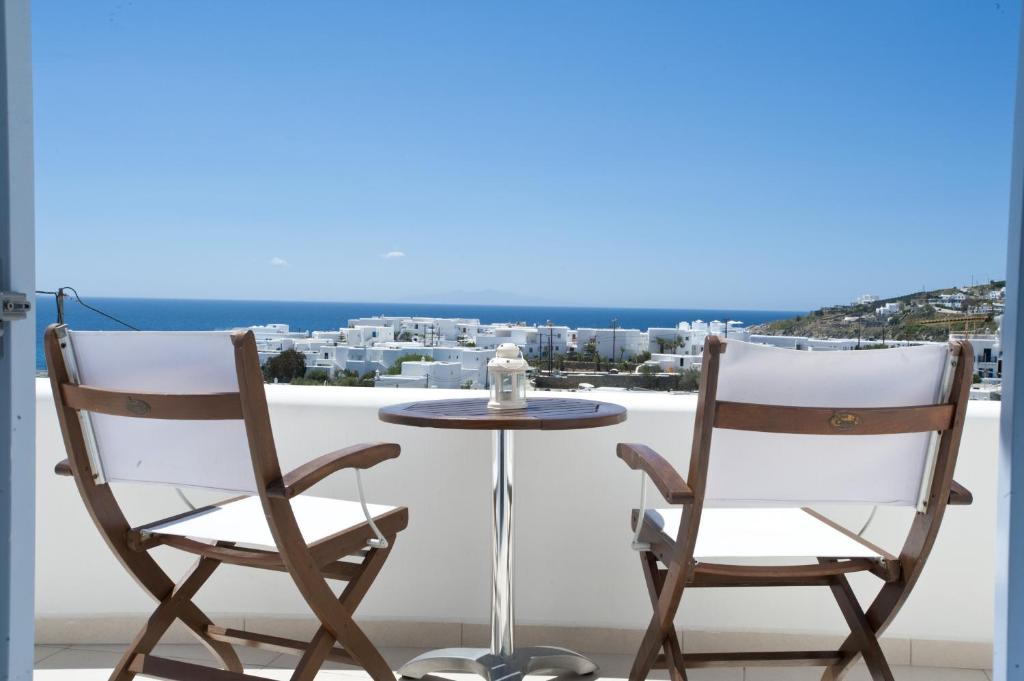
Also in the area: Seethrough Mykonos Suites, Esperides, Argo Hotel, Nissaki Boutique Hotel
Within feet:
-
-
- DK Oyster Restaurant
- Psarou Beach
- Paradise Beach
-
Within 2 miles:
-
-
- Fabrica Square
-
Within 2.3 miles:
-
-
- Little Venice
-
Within 5 miles:
-
-
- Armenistis Lighthouse
-
- Villa Nireas is 1.4 miles from Mykonos Airport.
Approximate cost per night (two-bedroom apartment): $322
Cost per person (four people): $80

Lofos Apartments
Kakovouni, Platis Gialos

Mykonos Airport
Hotel amenities: terrace, garden, air conditioning, free Wi-Fi, flat-screen TVs
Also in the area: Seethrough Mykonos Suites, Esperides, Argo Hotel, Nissaki Boutique Hotel, Villa Nireas
Within feet:
-
-
- Platis Gialos Beach
- Paradise Beach
- Psarou Beach
-
Within 1 mile:
-
-
- Mykonos Airport
- Pinky Beach
-
Within 2 miles:
-
-
- Fabrica Square
-
Within 2.3 miles:
-
-
- Archaeological Museum of Mykonos
-
Within 2.9 miles:
-
-
- Μαράθι (Μυκόνου)
-
Lofos Apartments is 1 mile from Mykonos Airport.
Approximate cost per night (studio apartment with sea view): $182
Cost per person (four people): $45

Sea & Stone Residence Mykonos
Mykonos Airport, Kakovouni, Platis Gialos
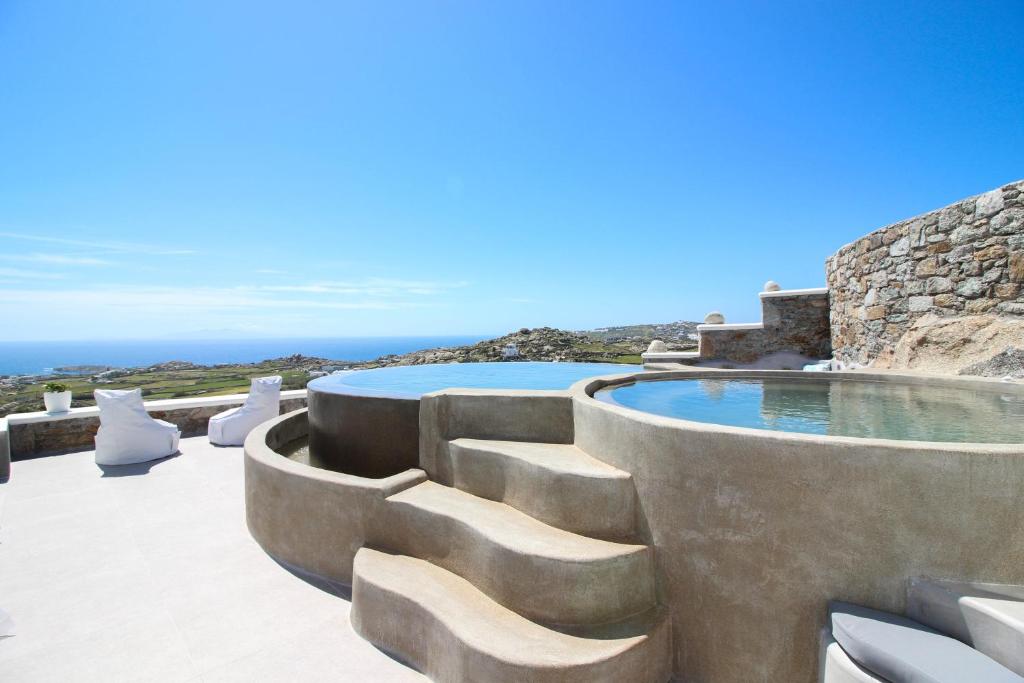
Grepaland Restaurant
Hotel amenities: sea views, terrace, balcony, jetted tub, free Wi-Fi, air conditioning, flat-screen TVs
Also in the area: Seethrough Mykonos Suites, Esperides, Argo Hotel, Nissaki Boutique Hotel, Villa Nireas, Lofos Apartments
Within feet:
-
-
- Grepaland Restaurant
- Platis Gialos Beach
- Mykonos Airport
-
Within 1 mile:
-
-
- Psarou Beach
- Pinky Beach
-
Within 1.9 miles:
-
-
- Fabrica Square
-
Within 2.1 miles:
-
-
- Meletopoulou Public Garden
- Mykonos Windmills
-
Within 5 miles:
-
-
- Armenistis Lighthouse
-
Sea & Stone Residence Mykonos is 0.9 miles from Mykonos Airport.
Approximate cost per night (superior apartment): $208
Cost per person (four people): $52

Desire Mykonos Apartments
Μυκόνου, Vrisi/ Mykonos
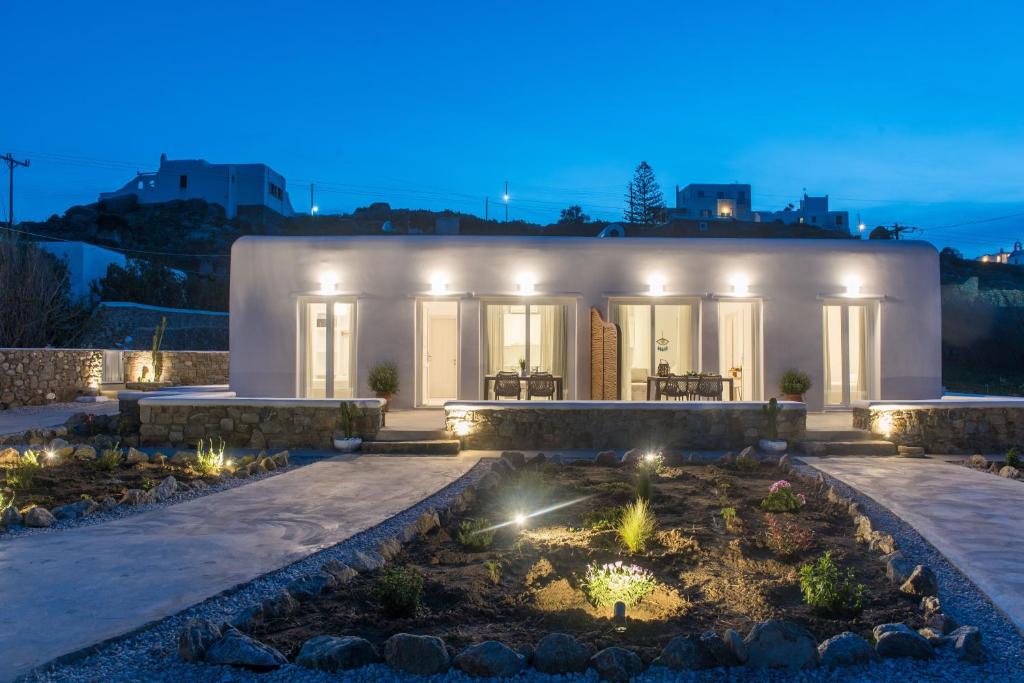
Megali Ammos Beach
Apartment amenities: terrace, balconies, garden, air conditioning, free Wi-Fi, flat-screen TVs, fully-equipped kitchens, bicycle / car rental service
Nearby restaurants: Obati (Italian restaurant), Lounda Pikantiki Gwnia (restaurant), Tokyo Joe Mykonos (sushi restaurant), Andreas & Maria (Greek restaurant)
Nearby misc.: The Caviar House (deli), Enjoy Bistro (café), NOO-NOO Chill Out Cafe-Bar-Restaurant (coffee shop), NEFES SPA & BATH MYKONOS (day spa), Vrisi Market (liquor store), MB beauty Salon Mykonos (beauty salon), OK! Grocery (convenience store), SMOKE Cigars Emporium & Lounge (cigar shop), My Rent Mykonos (motorcycle rental agency), The Bodywork Gym (gym)
Within feet:
-
-
- Korfos Beach
- Megali Ammos Beach
- Fabrica Square
-
Within 1 mile:
-
-
- Agios Charalabos Beach
-
Within 1.2 miles:
-
-
- Little Venice
-
Within 12 miles:
-
-
- Πλατεία Ελευθερίας
- Monument of Elli
- Archaeological Museum of Tinos
-
- Desire Mykonos Apartments is 0.8 miles from Mykonos Airport.
Approximate cost per night (two-bedroom apartment): $270
Cost per person (four people): $54

Albatros Club Mykonos
Panormos Beach, Mykonos
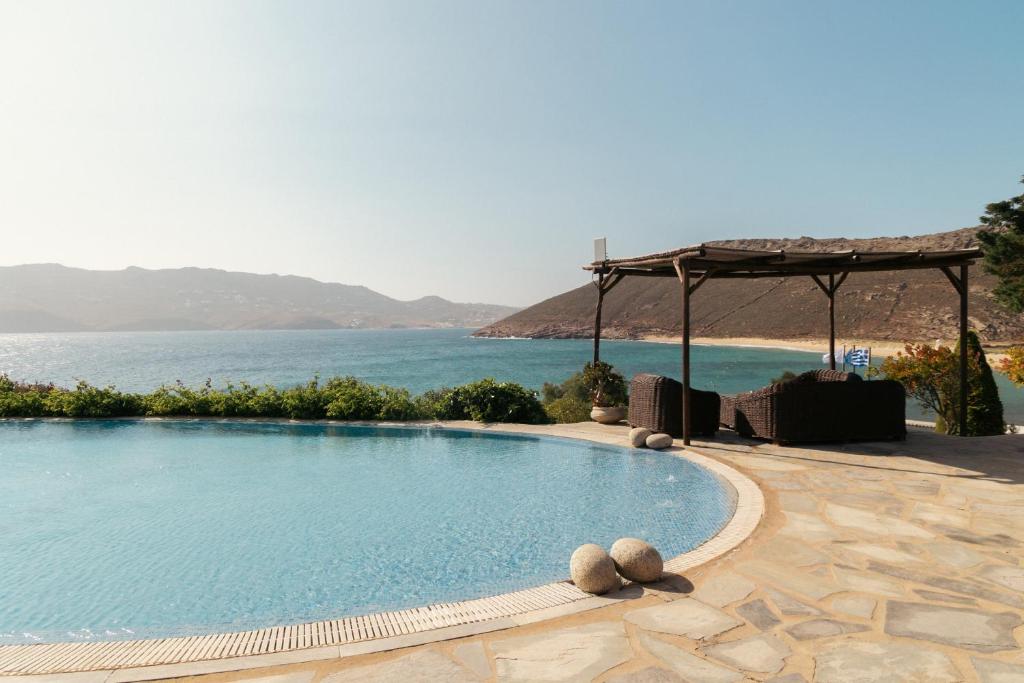
Μαράθι (Μυκόνου)
Hotel amenities: indoor & outdoor restaurants / cafes, swimming pool, poolside bar, sea views, balconies, free Wi-Fi, flat-screen TVs, hairdryers, wine making events
Also in the area: Panormos Village
Within feet:
-
-
- Panormos Beach
- Agios Sostis Beach
-
Within 1 mile:
-
-
- Μαράθι (Μυκόνου)
-
Within 1.3 miles:
-
-
- Ftelia Beach
-
Within 2.1 miles:
-
-
- Tourlos Beach
-
Within 3 miles:
-
-
- Mykonos Windmills
-
Albatros Club Mykonos is 3.1 miles from Mykonos Airport.
Approximate cost per night: $114

Villa Irini
Panormos, Kantounia Mykonou
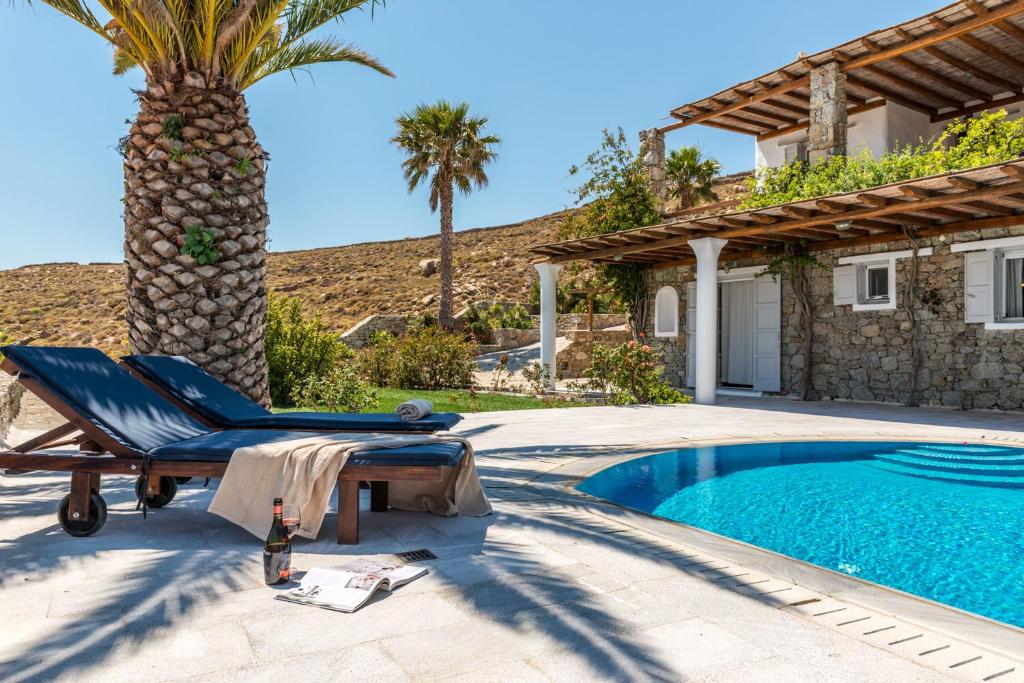
Mathew Tavern
Villa amenities: private pool, furnished sun terrace, BBQ facilities, garden, beamed ceilings, free Wi-Fi, flat-screen TV, living room with a fire place, fully-equipped kitchen
Also in the area: Panormos Village, Albatros Club Mykonos
Within 1 mile:
-
-
- Panormos Beach
-
Within 1.1 miles:
-
-
- Agios Sostis Beach
-
Within 1.2 miles:
-
-
- Μαράθι (Μυκόνου)
- Mathew Tavern
-
Within 2 miles:
-
-
- Archaeological Museum of Mykonos
-
Within 2.5 miles:
-
-
- Fabrica Square
-
Villa Irini is 2.9 miles from Mykonos Airport.

So there they are, Mykonos accommodations that will help make for an unforgettable experience. We hope you have found this information valuable and most importantly, that you enjoy your time in the Greek Isles!
Helsinki Accommodations
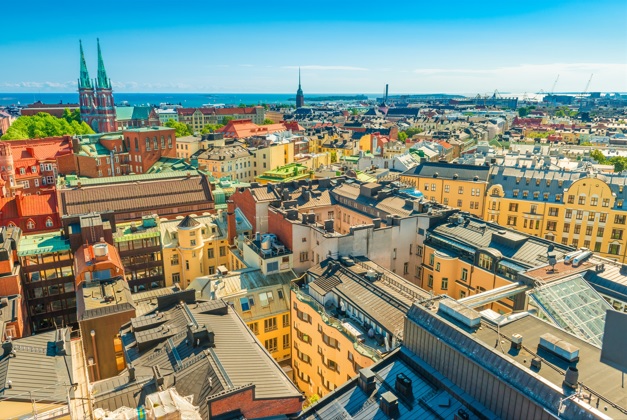
Helsinki accommodations
Helsinki accommodations welcome you to a destination nicknamed “White City of the North”. Known for its museums, Lutheran churches, parks, plazas, sculptures, statues, winter gardens, waterways, marinas, public saunas, fresh food markets and Scandinavian cuisine, Helsinki is a port-city located in southern Finland. Across the Gulf of Finland lies Estonia’s capital city, Tallinn. Helsinki is about half-way between the port-cities of Stockholm to its west and St. Petersburg to its east.
Helsinki main attractions: Kauppatori (market), Linnanmäki (amusement park), Senate Square (Senaatintori – Neoclassical architecture), Temppeliaukio Church (Lutheran church), Esplanadi (city park), Helsinki Cathedral (Neoclassical – green dome), Art Museum Ateneum, West Terminal 2 (cruise terminal), Uspenski Cathedral (Orthodox parish), Kaivopuisto (city park – landscaped, restaurants, cafes, sea / island views), SEA LIFE Helsinki (aquarium), Hakaniemi Market Hall (general store), Löyly Helsinki (restaurant / seaside sauna), Natural History Museum, The National Museum of Finland (history museum), Cafe Regatta, Fazer Café Kluuvikatu, Kappeli (restaurant), SkyWheel Helsinki (Ferris wheel – sauna cabin, champagne bar), Oodi – Helsinki Central Library, Finnish National Opera and Ballet (opera house), Helsingin Kaupunginteatteri (performing arts theater), Kaisaniemi Botanic Garden, Old Market Hall (Vanha kauppahalli – traditional fresh food market), Sea Horse (restaurant), Sinebrychoff Art Museum, Helsinki Winter Garden (19th-century greenhouse – free entry), St. John’s Church (Lutheran church), University of Helsinki
Surrounding Helsinki points of interest: Suomenlinna (fortress – cannons, tunnels, dockyard, museums, brewery – accessible via ferry), Sello Shopping Centre (shopping mall), Haaga Rhododendron Park (botanical garden), Didrichsen Art Museum, Helsinki Central Park (forests, nature trails, indoor athletics facilities, hiking lodge), Sompasauna (public sauna – clothing optional), Tamminiemi (history museum), Aalto University
Outward from Helsinki: Nuuksio National Park (forests, lakes, hiking trails, cooking/camping sites, flying squirrels), Sipoonkorpi National Park (forests, waterways, hiking trails, mushroom / berry field), LeipomoKahvila N’Avetta Oy (coffee shop), Halosenniemi (museum), Hvitträsk (museum), Gumbostrand Konst & Form (art gallery), Espoo Car Museum, Meikon luonnonsuojelualue (wildlife refuge), Hirsala Golf (golf course), Master Golf Course Oy, Sarfvik Golfklubi ry (golf club)
Helsinki main airport: Helsinki-Vantaa Airport
Rideshare service: Uber
Rapid transit system: Helsinki Metro (world’s northernmost metro system)
Public transportation (including ferry) card: Helsinki Card
Helsinki main Christmas market: Tuomaan Markkinat (Senate Square – Senaatintori)
Helsinki top events: Helsinki Festival, Helsinki International Film Festival, Sideways Festival, Lux Helsinki, Flow Festival, Helsinki Chamber Music Festival, Tuska Festival, Weekend Festival Finland, Helsinki Cup, Helsinki Outsider Art Festival, Helsinki Christmas Market, Baltic Circle Festival, Helsinki Nordic Music Festival, Seurasaari Midsummer’s Eve Festival, Helsinki Baltic Herring Market, Helsinki Renaissance Music Festival, Helsinki Marathon, sEXHIBITION
Finland is home to both the northern lights and Santa Claus. When in Helsinki, keep in mind that the Finns like their saunas hot and that it is considered impolite to stare. It goes without saying that one should stay hydrated if partaking in public saunas. Finns tend not to smile often, men typically do not open doors for women and please and thank you are absent from the Finnish language. English is commonly spoken in Helsinki, especially with the younger crowd. Nightclubs typically remain open until around 4 AM. In Helsinki, cars travel on the right-hand side, currency is the Euro and the legal drinking ages are 18-years old for beer and wine, and 20-years old for spirits. Helsinki accommodations are some of Scandinavia’s best. Before we get to Helsinki accommodations, let’s take a look at some more background information on the area to help you along the way.
Helsinki’s first permanent settlements were formed during the first millennium AD by an ancient Finnish tribe, the Tavastians. Prior to that time, following the Ice Age, temporary settlements popped-up around 5000 BC, as evidenced by archaeological discoveries in Vantaa, Pitäjänmäki and Kaarela. The Tavastians controlled the area and utilized it for hunting, fishing and agriculture until about the 10th century. Archaeological findings such as crosses and Christian objects place the arrival of Christianity to the area during the 11th century. Until 1008 AD, early settlements were raided by Vikings. The Battle at Herdaler circa 1008 AD between Norse-Viking leader Olav Haraldsson and local Finns nearly took Olav’s life, after which the Vikings no longer raided Finland coastlines. It is believed traditionally that three Kingdom of Sweden crusades incorporated the region into both the Swedish Empire and Christianity. Swedish-Christians from Norrland and Hälsingland migrated to the area around 1100. Sweden permanently colonized the region circa the late-13th century following its defeat of the Tavastians. During the Middle Ages, the Helsinki-area consisted of small villages. Notable medieval buildings were Vartiokylä hillfort (1380s) and Church of St. Lawrence (1450). Several thousand people lived in Helsinki’s keep (fortified tower) during the Middle Ages. Benefiting from its location near the Baltic Sea, Helsinki became one of Finland’s and Uusimaa province’s wealthiest cities via trade in commodities such as furs, fish, tar, wood, salt, grain and cattle. On June 12, 1550, King Gustav I of Sweden officially founded Helsingfors (Helsinki) as a trading town and rival to the Hanseatic League city of Reval (present-day Tallinn). As with many cities made of wood, Helsinki was damaged by fires during the 17th century. In 1710, the plague killed most of Helsinki’s population. The Russians captured Helsinki in May 1713 as a result of the Great Northern War. The naval fortress Sveaborg (Suomenlinna) was constructed in 1748 under the Swedish Crown as a defense against Russia. The Finnish War of 1808 between Russia and Sweden resulted in a Russian victory, the Treaty of Fredriksham being executed, Sweden losing control of Finland and the Grand Duchy of Finland (an autonomous part of the Russian Empire) being constituted. During the Finnish War, the Russians besieged the Sveaborg fortress and about a quarter of the city was destroyed by fire. On April 8, 1812, Emperor Alexander I of Russia moved Finland’s capital from Turku to Helsinki, a city farther from Swedish influence and closer to St. Petersburg. Helsinki thus was rebuilt in neoclassical style to resemble St. Petersburg. By the 1910s, the city’s population had surpassed 100,000. The early-20th century brought both the Finnish Civil War and the Winter War. In 1952, Helsinki hosted the Summer Olympics, and in the early 1980s the Helsinki Metro opened to the public.
Finland’s capital city, Helsinki today is home to around 690,000 Helsinkians. About 5.5% of the Helsinki population’s native language is Swedish, while around 70% of Helsinkians are aged 15-64. Scandinavia’s third-largest municipality, Helsinki harbors a range of vessels to include ferries, cruise ships, container ships, icebreakers and Finnish Navy boats on the Gulf of Finland. In 2024, about 4.5 million people visited White City of the North. Helsinki is one of the world’s busiest passenger ports. Ferry services include Viking Line, Tallink Silja Line and Eckerö Line, while international cruise lines include Norwegian Cruise Line, MSC Cruises, Holland America Line, Princess Cruises, Celebrity Cruises and Royal Carribean International. White City of the North is regarded as one of the world’s most livable cities. A humid continental climate accounts for average July high temperatures at around 70 degrees Fahrenheit, and just below freezing in February. Due to its location on the Gulf, Helsinki experiences a shorter snow season than that of northern Finland. Additional points of interest include Kiasma (contemporary art museum), Aurinkolahti (neighborhood), Eläintarhanlahti (bay area), Helsinki City Museum, Finnish National Gallery, Finnish National Theatre, Helsinki Music Centre (Musiikkitalo – live music venue) and Helsinki Olympic Stadium. Local foods include herring, rye bread, berries, cheese, rice pies, salmon, cinnamon buns and other seafoods. Finland’s national beverage is milk, while popular alcoholic drinks are lakka (liquor derived from cloudberry fruit) and mesimarja ( liquor derived from brambleberries). With some background information on the area, we’re ready for Helsinki accommodations that will help make for an exciting trip.
Clarion Hotel Mestari
51-53 Fredrikinkatu, Kamppi

Amos Rex Art Museum | Mannerheimin Ratsastajapatsas
Hotel amenities: restaurant, bar, city views, terrace, balconies, fitness center, soundproofing, air conditioning, free Wi-Fi, tea / coffee makers, mini-bars, desks, 24-hour front desk, on-site parking
Nearby restaurants / bars: Lappi Ravintola (Finnish restaurant), Restaurant Passio, Café Boardgame (restaurant), Restaurant Ristorante Argegno (pizza restaurant), Hills Dumplings (Asian restaurant), Ravintola Domo (Japanese restaurant), Sushibar+Wine Freda (sushi restaurant), Nabi Korean BBQ, 面师傅 Noodle Master (Chinese noodle restaurant), Noodle Story Kamppi (restaurant), Restaurant Big Bowl Noodle (noodle shop), Hanoi Quan (Vietnamese restaurant), Poke Mood Kamppi (restaurant), Mama’s Pita Bar (restaurant), Restaurant Thai Vegan Kitchen, SalamaNation (bar), Oluthuone Angleterre (bar), Viinibaari Apotek / Wine Bar Apotek
Nearby misc.: Café Tampopo, Helkatti Cat Cafe, Théhuone (tea house), The Ounce – Fredrikinkatu (tea house), My Bohemy (hair salon), Elinahair Oy (hair salon), Funky Lady Oy (lingerie store), Inka Gyyli (hair salon), Parturi Kampaamo Lady & Gentleman (barber shop), Mestari Parturi (barber shop), Niina Halonen (jewelry designer), Tokyokan (Japanese grocery store), Cinema Orion (movie theater)
Within feet:
-
-
- Amos Rex Art Museum
- Mannerheimin Ratsastajapatsas (sculpture)
- Helsinki General Post Office
- Ateneum Art Museum
- Kamppi Metro Station
-
Within 1 mile:
-
-
- Sinebrychoff Art Museum
- Museum of Finnish Architecture
-
Within 1.3 miles:
-
-
- Hietaranta Beach
-
Within 4.4 miles:
-
-
- Vanhankaupunginkoski Waterfall
-
Clarion Hotel Mestari is 10 miles from Helsinki Airport.
Approximate cost per night (Junior Suite): $584
Cost per person (four people): $146
Hotel AX
Välimerenkatu 18, 00220
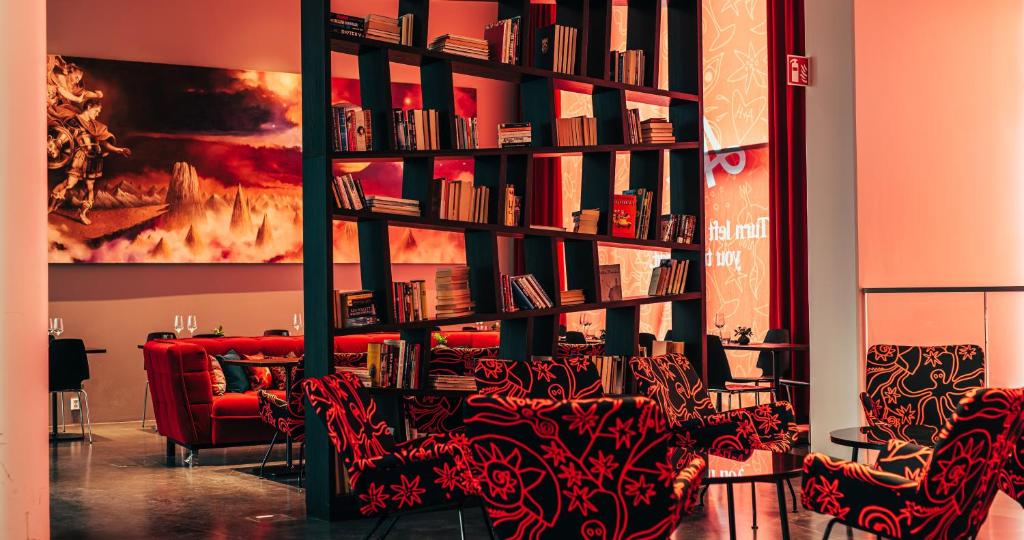
Hietaranta Beach
Hotel amenities: restaurant, bar, buffet breakfast, terrace, air conditioning, free Wi-Fi, electric tea pots, 24-hour front desk, luggage storage
Nearby restaurants: Restaurant Ismet (restaurant), Restaurant Boneless, Restaurant Be My Guest (Vietnamese restaurant), Koi Sushi (Koi Japanese kitchen)
Nearby misc.: Banu café, Belle Baguette le Café, Victorias Cafe & Bakery Jätkäsaari
Within feet:
-
-
- Selkämerenpuisto
- Sinebrychoff Art Museum
- Lastenlehto
-
Within 1.1 miles:
-
-
- Hietaranta Beach
-
Within 1.2 miles:
-
-
- Design Museum
- Mannerheim Statue
-
Within 1.3 miles:
-
-
- Museum of Contemporary Art Kiasma
-
Within 1.4 miles:
-
-
- National Museum of Finland
-
Within 9 miles:
-
-
- Kauniainen Lift
-
Hotel AX is 11 miles from Helsinki Airport.
Approximate cost per night (King Studio): $389
Cost per person (four people): $97
The Folks Hotel Konepaja
23 Aleksis Kiven katu
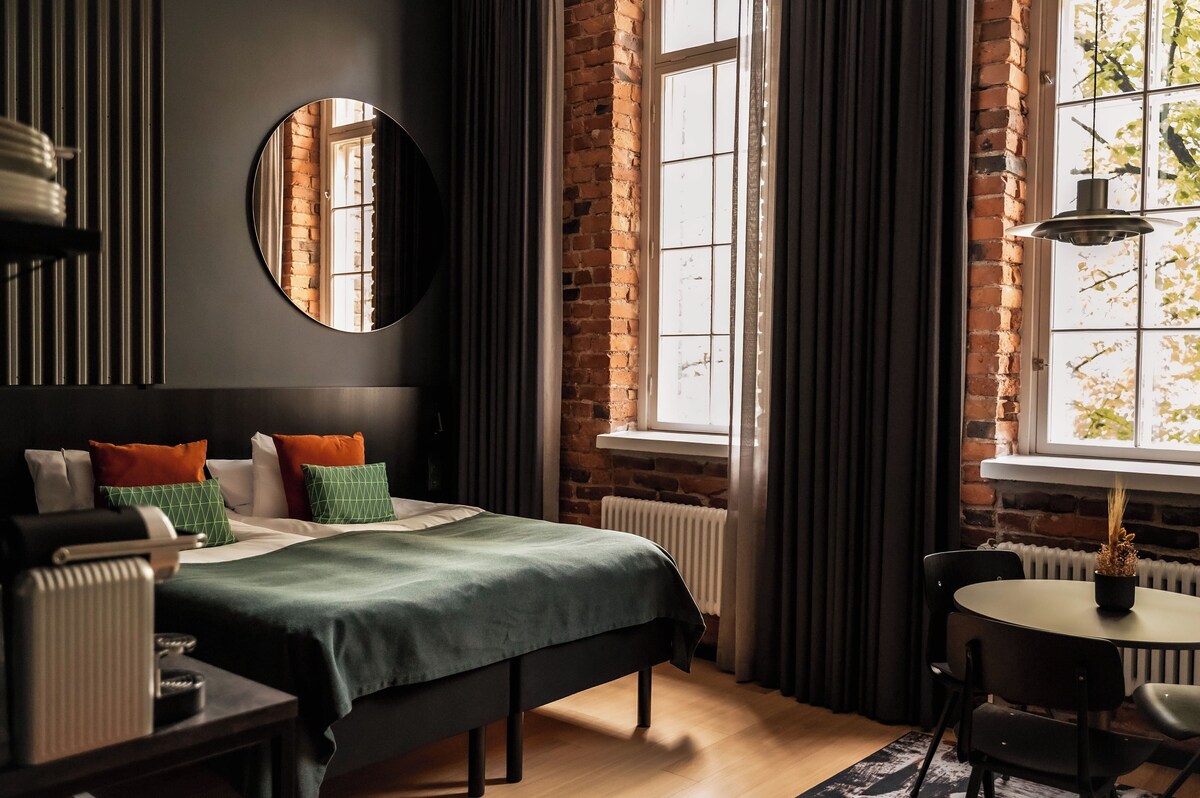
Kallion Kirkko | Helsinki Winter Garden
Hotel amenities: restaurant, bar, city views, sun terrace, sauna, steam room, fitness center, yoga classes, air conditioning, free Wi-Fi, mini-bars, desks, 24-hour front desk
Nearby restaurants / bars: Albina Restaurant & Wine Bar (restaurant), Bambu Sushi (sushi restaurant), Alexis Rooftop Terrace (bar), Maltainen Riekko (bar), Super Bario (bar)
Nearby misc.: Olarin Panimo (brewery), Geezers the Shop (art supply store), Vallilan Parkour Akatemia (gym), Motivus (gym)
Within feet:
-
-
- Kallion Kirkko (Lutheran church)
- Helsinki Winter Garden
- Maisemajuna Train Station
-
Within 1 mile:
-
-
- Stadium Tower
- Olympiastadion
-
Within 2.7 miles:
-
-
- Seurasaari Beach
-
Within 9 miles:
-
-
- Science Centre Heureka
-
The Folks Hotel Konepaja is 8 miles from Helsinki Airport.
Approximate cost per night (Loft Room): $389
Cost per person (three people): $97

Lapland Hotels Bulevardi
Bulevardi 28, Kamppi, 00120

Sinebrychoff Art Museum
Hotel amenities: restaurant, bar, city views, terraces, saunas, flat-screen TVs, work desks, 24-hour front desk
Nearby restaurants: Restaurant Pamela, Ravintola Muru (restaurant), Demo (fine dining restaurant), Restaurant Saaga (Finnish restaurant), Restaurant Penny (American restaurant), Cafe Trocadero (Mediterranean restaurant), Kultá Kitchen & Bar, GIWA (Korean restaurant), Sushibar + Wine, Tortilla House – Iso Roobertinkatu 7 (restaurant), Levant Restaurant (middle eastern restaurant), Café Bar No 9, The Riff (bar), Blackdoor (bar)
Nearby misc.: Cafetino (café), Konst Hair & Gallery (hair salon), C. Hagelstam Antikvariaatti (rare books store), Nide Kirjakauppa Oy (book store), SWON (hat shop), Suomalainen Nappitalo-Finska Knapphuset Oy (haberdashery), Vaatturiliike Sauma Oy (tailor), Zicco (toy store), The Alexander Theatre, Myymälä 2 osk. (art gallery), Galleria Heino (art gallery), Helsinki Contemporary (art gallery), Tempera Oy (art supply store), Lokal (art center), Chez Marius (kitchen supply store)
Within feet:
-
-
- Sinebrychoff Art Museum
- Old Church Park
- Swedish Theatre
- Kamppi Shopping Center & Bus Terminal
- Forum Shopping Center
- Helsinki Music Centre
- Finlandia Hall
-
Within 1.7 miles:
-
-
- Helsinki Olympic Stadium
- Bolt Arena
-
- Lapland Hotels Bulevardi is 11 miles from Helsinki Airport.
Approximate cost per night (Arctic Penthouse): $910
Cost per person (three people): $303
Home Hotel Katajanokka
Merikasarminkatu 1 A, Katajanokka
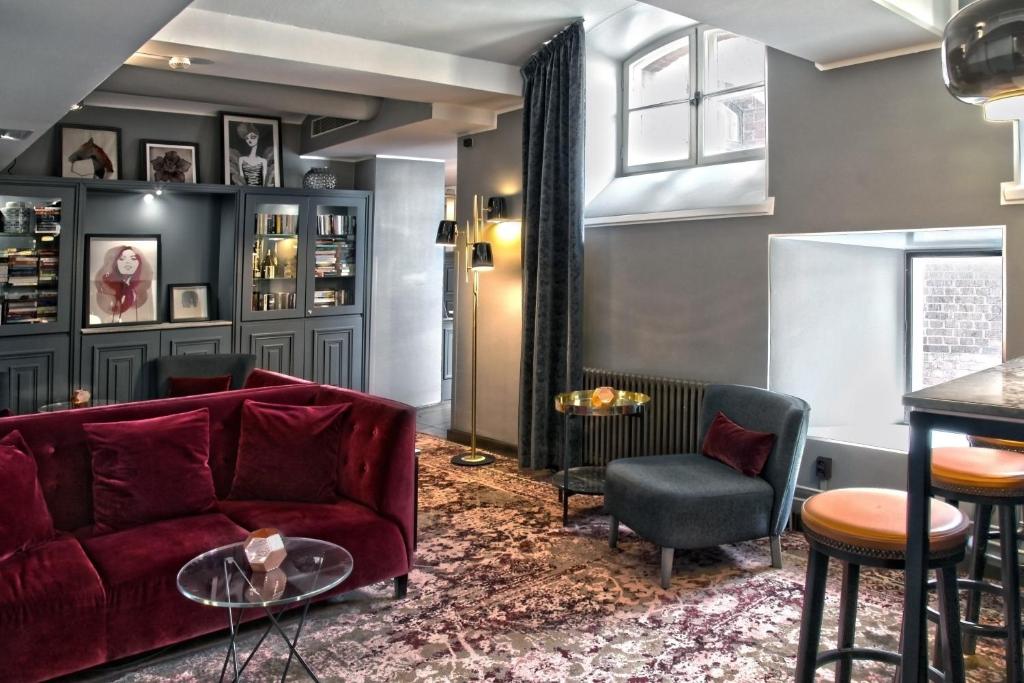
Helsinki City Museum
Hotel amenities: restaurant, 24-hour gym, free Wi-Fi, flat-screen TVs, mini-bars, kettles, desks
Nearby restaurants / bars: Restaurant Fly Fusion (restaurant), Restaurant Everest Katajanokka, Restaurant Wellamo (restaurant), Ravintola LOBO (restaurant), Beaky Basterd & Co (bar), Island-K Bar&Kitchen (bar)
Nearby misc.: Finca Las Ventanas Café (coffee roasters), Alepa Jungmann (grocery store), Fit Skatta (gym)
Within feet:
-
-
- Helsinki City Museum
- Merikasarmin puisto
- Laivastopuisto
- Kaivopuisto Park
- Helsinki Zoo
- Ateneum Art Museum
-
Within 1.2 miles:
-
-
- Museum of Contemporary Art Kiasma
- Mannerheim Statue
-
Within 1.7 miles:
-
-
- Suomenlinna Maritime Fortress
-
Within 2.2 miles:
-
-
- Sibelius Monument
-
Within 2.4 miles:
-
-
- Kivinokan Beach
-
- Home Hotel Katajanokka is 11 miles from Helsinki Airport.
Approximate cost per night (Family Room): $275
Cost per person (three people): $91
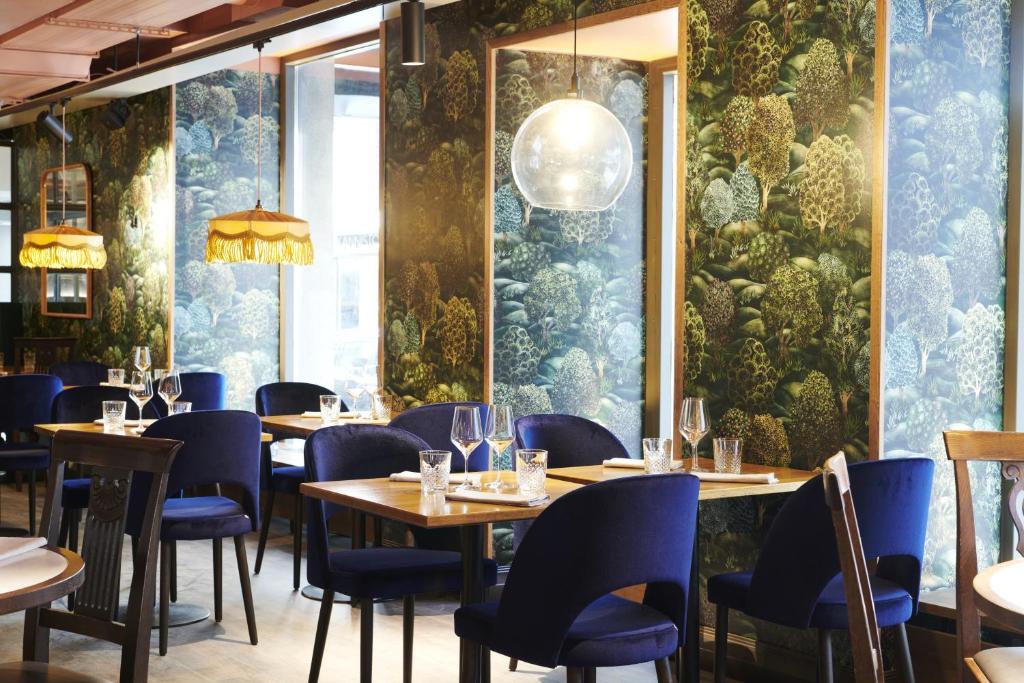
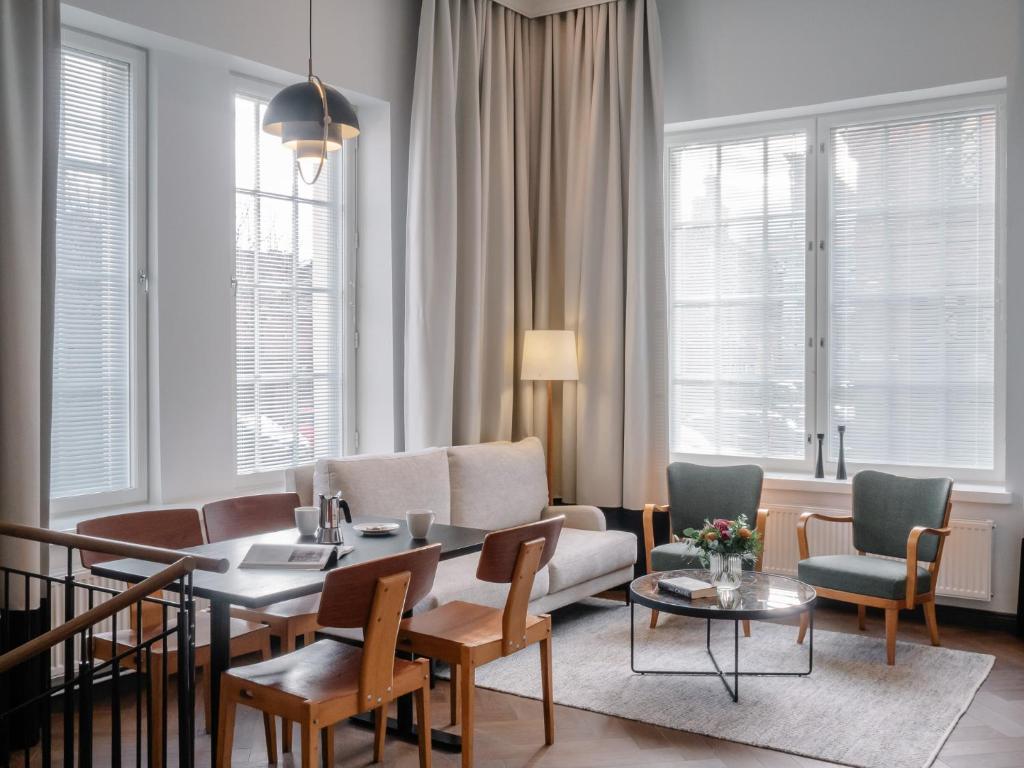
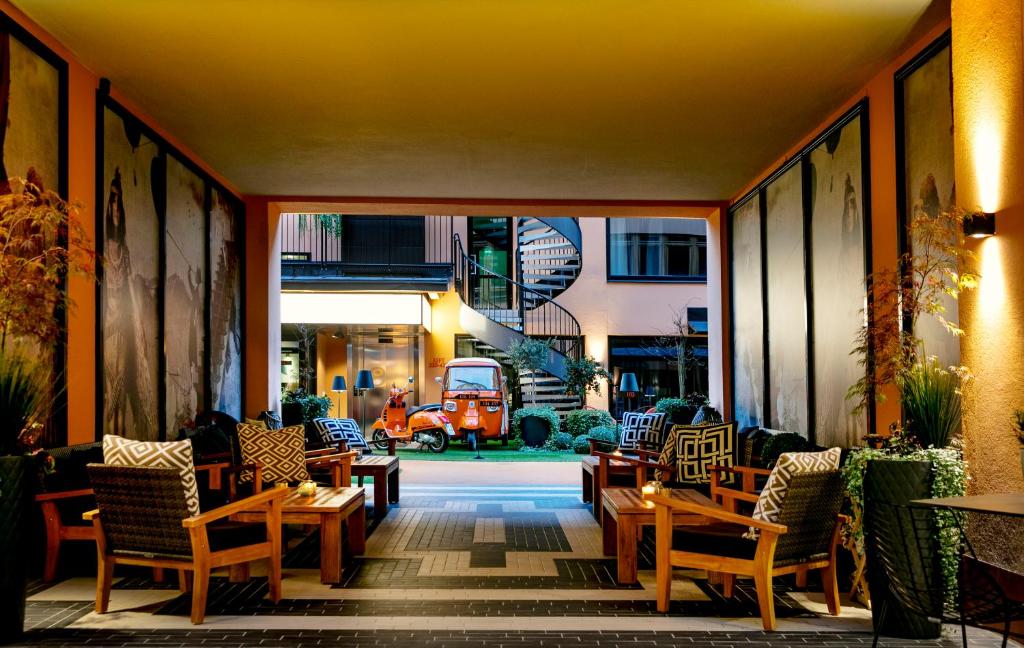
Solo Sokos Hotel Helsinki
Kluuvikatu 8, Kluuvi
Ateneum Art Museum | Senaatintori
Hotel amenities: 2 restaurants, bar, buffet breakfast, seasonal terrace, private saunas (select rooms), fitness center, wooden floors, air conditioning, free Wi-Fi, flat-screen TVs, tea / coffee makers, 24-hour front desk
Nearby restaurants: Holy Crab (seafood restaurant), Gaucho Helsinki (Brazilian restaurant)
Nearby misc.: Ihana Kahvila Baari (café), Kanniston Leipomo (bakery), Tiedekulma (event venue), UniSport Kluuvi (gym)
Within feet:
-
-
- Ateneum Art Museum
- Senaatintori (Senate Square – plaza)
- Esplanade Park
- University of Helsinki Metro Station
-
Within 1 mile:
-
-
- Kaivopuisto Park
-
Within 1.3 miles:
-
-
- Uunisaaren Beach
-
Within 2.5 miles:
-
-
- Helsinki Zoo
-
Solo Sokos Hotel Helsinki is 10 miles from Helsinki Airport.
Approximate cost per night (Junior Suite): $425
UNITY Helsinki
22 Välimerenkatu, 00220

Helsinki Design Museum
Hotel amenities: bar, terrace, balconies,, sauna, fitness center, air conditioning, free Wi-Fi, flat-screen TVs,, electric tea pots, desks
Also in the area: Hotel AX
Within feet:
-
-
- Selkämerenpuisto
- Jaalarannanpuisto
- Työmiehenpuistikko
-
Within 1.3 miles:
-
-
- Helsinki Design Museum
- Mannerheim Statue
- Museum of Contemporary Art Kiasma
-
Within 1.4 miles:
-
-
- National Museum of Finland
- Ateneum Art Museum
-
Within 1.5 miles:
-
-
- Uunisaaren Beach
-
UNITY Helsinki is 12 miles from Helsinki Airport.
Approximate cost per night (Atelier Studio): $318
Cost per person (three people): $106

Bob W Koti Katajanokka
4 Kruunuvuorenkatu, Katajanokka
Scandic Grand Marina
Apartment amenities: bar, sauna, fitness center, air conditioning, free Wi-Fi, fully-equipped kitchens, washing machines, concierge service, private check-in/out, full-day security, private parking
Also in the area: Home Hotel Katajanokka
Within feet:
-
-
- Scandic Grand Marina
- Tove Janssonin puisto
- Matruusinpuisto
- Armi Ratian puisto
- Museum of Finnish Architecture
- Ateneum Art Museum
-
Within 1 mile:
-
-
- Helsinki Zoo
-
Within 1.1 miles:
-
-
- Museum of Contemporary Art Kiasma
-
Within 2.1 miles:
-
-
- Sibelius Monument
-
Within 2.4 miles:
-
-
- Kivinokan Beach
-
- Bob W Koti Katajanokka is 11 miles from Helsinki Airport.
Approximate cost per night (Duplex Apartment): $399
Cost per person (four people): $99
Hotel F6
Fabianinkatu 6, Kaartinkaupunki, 00130
Havis Amanda
Hotel amenities: bar, home-style breakfast, wooden floors, air conditioning, free Wi-Fi, flat-screen TVs, electric kettles, mini-bars, hairdryers, bathrobes, slippers, 24-hour front desk, laundry service, free bike rentals
Nearby restaurants: Restaurant Savoy (Finnish restaurant), Pompier ESPA (Italian restaurant), Capperi – Rikhardinkatu (Italian restaurant), Goodwin The Steak House, Kappeli (restaurant), Ravintola Ragu (restaurant), Ravintola Palace (restaurant), Pihka Kasarmi (modern European restaurant), Latva (restaurant), Zucchini Vegetarian (restaurant)
Nearby misc.: Ravintola Kaarle XII (night club), SOUP+MORE Vanha Kauppahalli (soup shop), Juuri Café & Bar Kasarmi (coffee shop), LA GELATERIA (ice cream shop), Lumo Helsinki (hair salon), Lady’s Laces (lingerie store), Seremonia (wedding store), Havanna Aitta Oy (cigar shop), Helsinki Design School, Esplanadi (park), Kalakauppa Åvalls E. Eriksson (fish store)
Within feet:
-
-
- Havis Amanda (statue)
- Esplanade Park
- Kauppatori
- Helsinki City Hall
- University of Helsinki
- Helsinki Cathedral
-
Within 2.8 miles:
-
-
- Hartwall Arena
-
Within 7.3 miles:
-
-
- Iso Omena Shopping Center
-
- Hotel F6 is 10 miles from Helsinki Airport.
Approximate cost per night (Grand Deluxe Room): $471
Cost per person (four people): $117
Original Sokos Hotel Tripla Helsinki
Fredikanterassi 1 B, Pasila

Pasila Train Station
Hotel amenities: city views, fitness room, air conditioning, free Wi-Fi, flat-screen TVs, desks, 24-hour front desk, on-site parking
Nearby: The Avocado Cafeteria – Tripla Pasila (restaurant), Beard Park Tripla (barber shop), Mall of Tripla (shopping mall), Biitsi (event venue), 7D Simulator Cinema (movie theater)
Within feet:
-
-
- Pasila Train Station
-
Within 1.1 miles:
-
-
- Olympiastadion
- Helsinki Winter Garden
-
Within 4.1 miles:
-
-
- Kivinokan Beach
-
Within 4.9 miles:
-
-
- Suomenlinna Maritime Fortress
-
Original Sokos Hotel Tripla Helsinki is 8 miles from Helsinki Airport.
Approximate cost per night (Suite): $439
Hotel Indigo Helsinki
Bulevardi 26, Kamppi
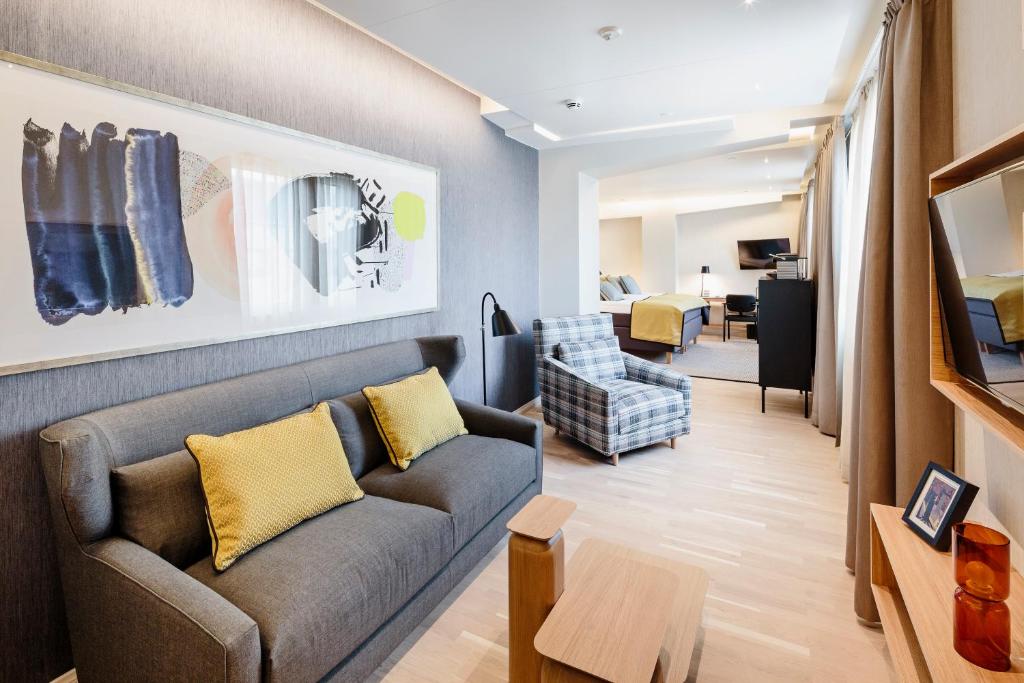
Old Church Park
Hotel amenities: restaurant, 24-hour gym, hardwood floors, air conditioning, free Wi-Fi, Nespresso coffee machines, rainfall showers, bathrobes, private parking
Nearby restaurants: Restaurant Muru, Restaurant Kultá Kitchen & Bar, Murun Viinibaari (wine bar)
Nearby misc.: Chez Janet (coffee shop), Xocolab (chocolate shop), M Tea (bubble tea store), Saxce Oy (hair salon), A-Studio Parturi-Kampaamo (hair salon), Mad Barbers (barber shop), Pinkomo (clothing store), Pieni astiakauppa (store)
Within feet:
-
-
- Old Church Park
- Sinebrychoff Art Museum
- Vanha Kirkko
- Kamppi Metro Station
-
Within 1 mile:
-
-
- Kaivopuisto Park
-
Within 2.4 miles:
-
-
- Pihlajasaari Beach
-
Hotel Indigo Helsinki-Boulevard by IHG is 11 miles from Helsinki Airport.
Approximate cost per night (One-Bedroom Suite): $347

Solo Sokos Hotel Torni Helsinki
Yrjönkatu 26, Kamppi

Vanha Kirkko
Hotel amenities: multiple restaurants, rooftop bar with panoramic city views, buffet breakfast, city / sea views, balconies, fitness center, soundproofing, air conditioning, free Wi-Fi, flat-screen TVs, 24-hour front desk, airport shuttle service
Nearby restaurants / bars: Ravintola Parrilla Española (Spanish restaurant), Ravintola Karl-Johan Oy (Finnish restaurant), Pho Viet (Vietnamese restaurant), Putte’s Bar & Pizza Kalevankatu, Ateljee Bar, Base Bar, Pub Peräkammari (bar)
Nearby misc.: Hiushuone-Helsinki (hair salon), Annika Nails (nail salon)
Within feet:
-
-
- Vanha Kirkko (Helsinki Old Church – Lutheran church)
- Old Church Park
- Ateneum Art Museum
- Amos Rex Art Museum
- Helsinki Bus Station
-
Within 3.2 miles:
-
-
- Seurasaari Beach
-
Within 55 miles:
-
-
- Lennart Meri Tallinn Airport
-
Solo Sokos Hotel Torni Helsinki is 10 miles from Helsinki Airport.
Approximate cost per night (King Suite): $512
Cost per person (three people): $170
NH Collection Helsinki Grand Hansa
5 Mannerheimintie, Kluuvi
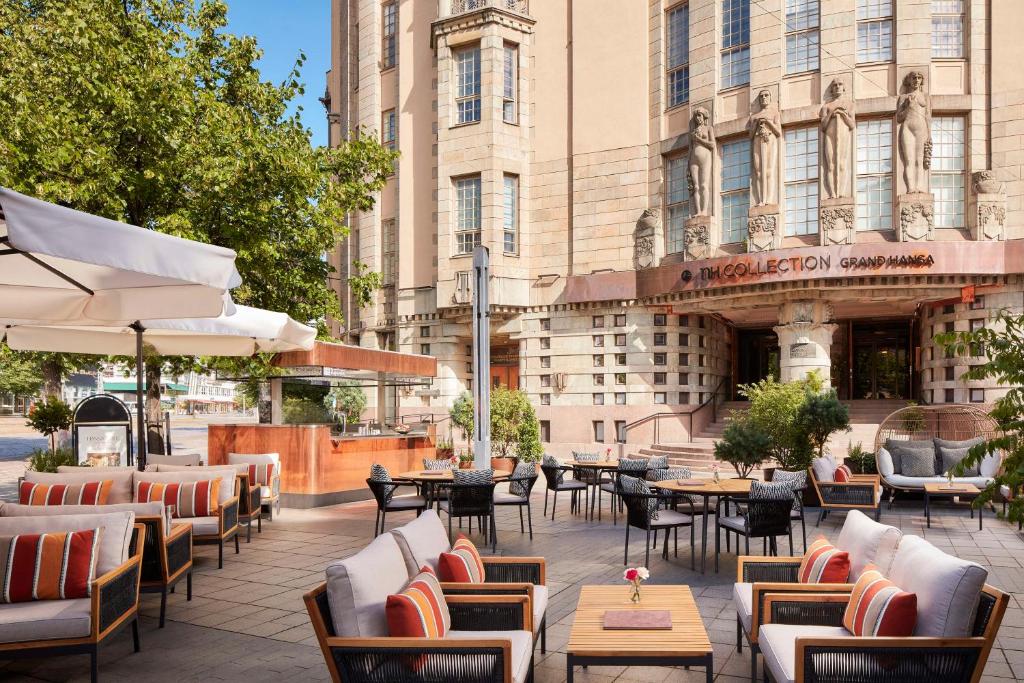
Mannerheim Statue | Helsinki General Post Office
Hotel amenities: restaurant, terrace, bar, spa, sauna, fitness center, parquet floors, soundproofing, air conditioning, free Wi-Fi, tea / coffee makers, mini-bars, desks, bathrobes, 24-hour front desk
Nearby: Kitty’s Public House (bar), Kupoli Cocktail Bar, Helsinki USVA Spa, Seastea (bubble tea store)
Within feet:
-
-
- Mannerheim Statue
- Helsinki General Post Office
- Mannerheimin Ratsastajapatsas
- Casino Helsinki
- Kamppi Metro Station
-
Within 2.9 miles:
-
-
- Seurasaari Beach
-
Within 14 miles:
-
-
- Serena Ski Lift
-
NH Collection Helsinki Grand Hansa is 10 miles from Helsinki Airport.
Approximate cost per night (Junior Suite): $540
Cost per person (three people): $180

Noli Malmi
Vanha Helsingintie 19

Malmi Train Station
Hotel amenities: lounge, terrace, sauna, fitness center, free Wi-Fi, parquet floors, soundproofing, tea / coffee makers, desks, game room, laundry service, private parking
Nearby: Ravintola Makalu (Nepalese restaurant), Bistro Palo, Restaurant Thai Thai, TT Hair (hair salon)
Within feet:
-
-
- Malmi Train Station
-
Within 2.2 miles:
-
-
- Puistolan liikuntapuisto
-
Within 5 miles:
-
-
- Ruonasalmen Beach
- Marjaniemi Beach
- Kivinokan Beach
- Tuorinniemi Beach
-
Noli Malmi is 4.6 miles from Helsinki Airport.
Approximate cost per night (Spacious-studio): $98
Radisson RED Helsinki
VUORIKATU 24, Kluuvi

Casino Helsinki
Hotel amenities: restaurant, bar, buffet breakfast, terrace, sauna, fitness center, air conditioning, free Wi-Fi, tea / coffee makers, desks, 24-hour front desk, concierge service
Nearby: RED Bar & Kitchen, Kaisla (bar), Old Tea Shop Helsinki, L-Beauty Kauneushoitola (beauty salon), Sport Village Kaisaniemi (gym)
Within feet:
-
-
- Casino Helsinki
- Ateneum Art Museum
- Senaatintori
- Helsinki City Museum
- University of Helsinki Metro Station
-
Within 1.5 miles:
-
-
- Hietaranta Beach
-
Within 3.7 miles:
-
-
- Vanhankaupunginkoski Waterfall
-
Radisson RED Helsinki is 10 miles from Helsinki Airport.
Approximate cost per night (One-Bedroom Suite): $517
Cost per person (four people): $129

Hobo Helsinki
Kluuvikatu 4, Kluuvi

Presidentinlinna
Hotel amenities: restaurant, bar, lounge, terrace, fitness center, air conditioning, free Wi-Fi, 24-hour front desk, paid shuttle service
Nearby: Mari’s Treehouse – Kämp Galleria (restaurant), The TRAY Restaurant, Fazer Café Kluuvikatu, ARKET (clothing store / café), Kämp Galleria (shopping mall)
Within feet:
-
-
- Presidentinlinna (Presidential Palace)
- Esplanade Park
- Havis Amanda
- Helsinki Central Station
-
Within 1.3 miles:
-
-
- Uunisaaren Beach
-
Within 1.8 miles:
-
-
- Sibelius Monument
-
Hobo Helsinki is 10 miles from Helsinki Airport.
Approximate cost per night (Suite): $868

Bob W Koti Ullanlinna
4 Punanotkonkatu, Ullanlinna
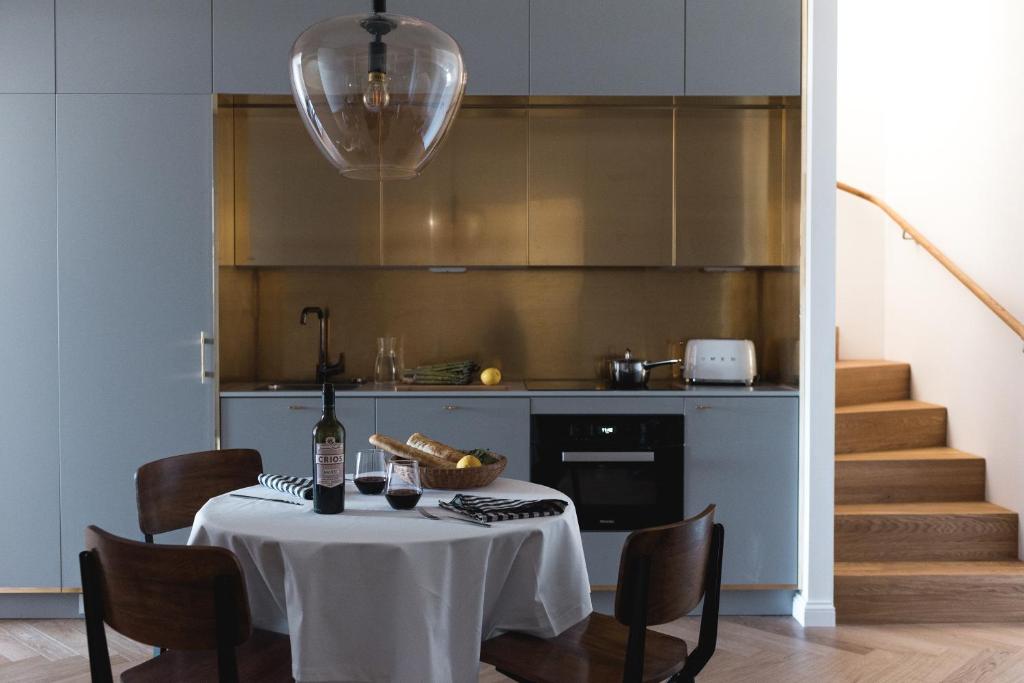
Uunisaaren Beach
Apartment amenities: city views, terrace, garden, free Wi-Fi, flat-screen TVs, kitchens
Nearby restaurants / bars: Ravintola Spis (Scandinavian restaurant), Ravintola Vinkkeli (Scandinavian restaurant), Restaurant Pastis, Skiffer Erottaja (pizza restaurant), Fazer Food Services Oy (restaurant), Hills Dumplings (restaurant), Restaurant Magu, Kortteliravintola Ego (restaurant), Juuri (restaurant), Bier-Bier (bar), Restaurant Badger & Co (bar), Goldfish Cocktail Bar (cocktail bar), Liberty or Death (cocktail bar)
Nearby misc.: G Livelab (live music venue), Helaxe (recreation center), Coffee Space (café), Brand by Kärkkäinen Hakkarainen (hair salon), Magnetic Head Spa (hair salon), Studio1a (hair salon), Kauneushoitola Delooks (beauty salon), Boutique 52 (women’s clothing store), Momono (home goods store), Pikkuroban Sähkö Oy (electronics store), Antik blomquist (antique furniture store), Oy Menita Ab (yarn store), Johanna Gullichsen Textile Craft & Design (store), Galleria G & Grafoteekki (art gallery), Puppet Theatre Sampo (performing arts theater), Helsinki City Rescue Department’s Fire Museum, Osuva Range & Training Tähtitorninmäki (shooting event area), Helsingfors Gymnastikklubb RF (gymnastics club)
Within feet:
-
-
- Uunisaaren Beach
- Design Museum
- Museum of Finnish Architecture
- Kolmikulma
- Esplanade Park
- Helsinki City Museum
- Museum of Contemporary Art Kiasma
-
Within 1 mile:
-
-
- National Museum of Finland
-
Within 1.6 miles:
-
-
- Helsinki Zoo
- Hietaranta Beach
-
- Bob W Koti Ullanlinna is 11 miles from Helsinki Airport.
Approximate cost per night (Penthouse Apartment): $441
Cost per person (three people): $147
Hotel Lilla Roberts
Pieni Roobertinkatu 1-3, Kaartinkaupunki, 00130

Esplanade Park
Hotel amenities: restaurant, city views, courtyard, seasonal courtyard terrace, 24-hour gym, air conditioning, free Wi-Fi, wireless Bluetooth-compatible sound systems, mini-bars, free bike rentals, laundry service
Also in the area: Bob W Koti Ullanlinna
Within feet:
-
-
- Esplanade Park (“Espa” – esplanade / urban park)
- Museum of Finnish Architecture
- Helsinki Design Museum
- Havis Amanda
- Old Church Park
- Helsinki Cathedral
- Helsinki Music Centre
-
Within 1.8 miles:
-
-
- Suomenlinna Maritime Fortress
-
Within 2 miles:
-
-
- Suomenlinna Maritime Fortress
-
Within 2.1 miles:
-
-
- Suomenlinna Beach
-
Within 9 miles:
-
-
- Kauniainen Ski Lift
- Science Centre Heureka
-
- Hotel Lilla Roberts is 10 miles from Helsinki Airport.
Approximate cost per night (Suite): $599
Cost per person (three people): $199

Hotel Kämp
Pohjoisesplanadi 29, Kluuvi, 00100
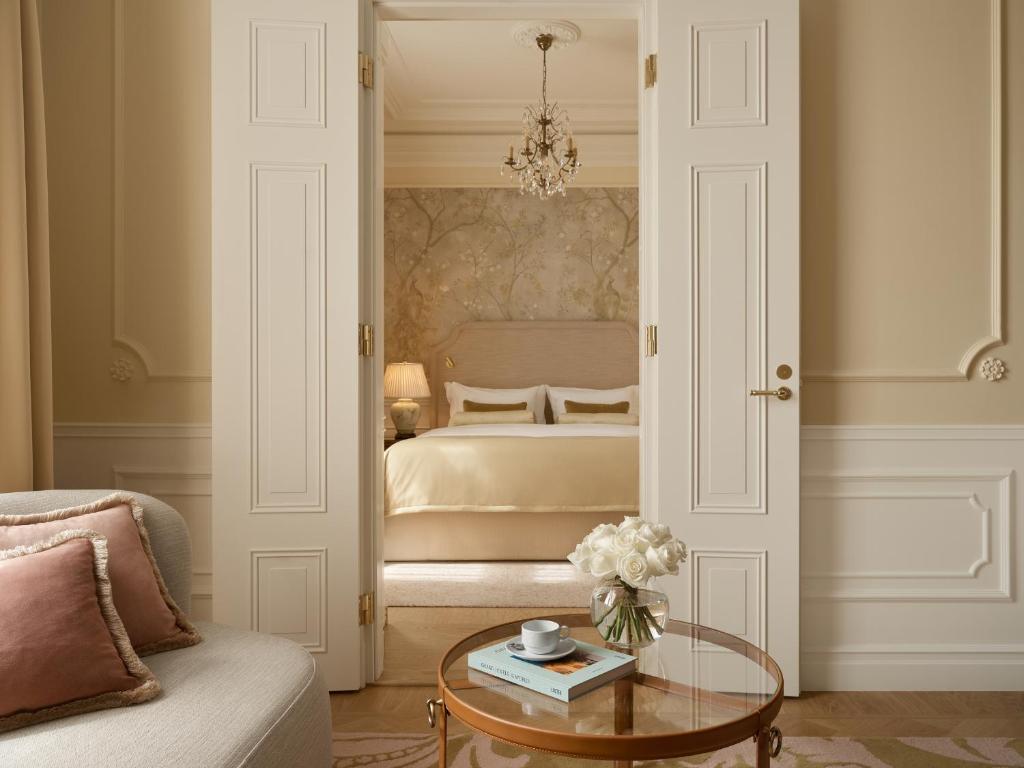
University of Helsinki
Hotel amenities: upper lounge, buffet breakfast, park, city & inner courtyard views, spa, spa lounge, sauna, steam bath, massage services, fully-equipped gym, personal trainers, marble bathrooms, in-room dining options, heated divans
Nearby restaurants: Pompier Espa (Italian restaurant), EMO (European restaurant), Brasserie Kämp, Kappeli (restaurant)
Nearby misc.: Upper Lounge Hotel Kamp, Kuuma (café), Picnic Mikonkatu (café), Espa Stage, Andiata (clothing store),Terhi Pölkki (shoe store), Luxbag Oy (handbag shop), Kalevala (jewelry store), Schoffa (men’s clothing store), RIMOWA (luggage store), Kankurin Tupa (gift shop), Pohjola Insurance Building (tourist attraction)
Within feet:
-
-
- University of Helsinki
- Aleksanterinkatu
- Havis Amanda
- Helsinki City Hall
- Old Market Hall
- Helsinki Central Station
- Helsinki Music Centre
-
Within 1.5 miles:
-
-
- Helsinki Olympic Stadium
-
Within 1.9 miles:
-
-
- Suomenlinna Maritime Fortress
-
Within 2.4 miles:
-
-
- Seurasaari Open-Air Museum
-
Within 2.6 miles:
-
-
- Seurasaari Beach
-
Within 9 miles:
-
-
- Science Centre Heureka
-
Hotel Kämp is 10 miles from Helsinki Airport.
Approximate cost per night (Executive Suite): $2,605
Cost per person (three people): $868

Hotel U14
Unioninkatu 14, Kaartinkaupunki

Old Market Hall (Vanha kauppahalli)
Hotel amenities: restaurant, bar, continental, buffet or in-room breakfast, terrace, sauna, fitness center, parquet floors, free Wi-Fi, tea / coffee makers, mini-bars, desks, bathrobes, 24-hour front desk, concierge service, free bike rentals, full-day security
Also in the area: Hotel F6
Within feet:
-
-
- Old Market Hall
- Vanha Raatihuone
- Havis Amanda
- University of Helsinki Metro Station
-
Within 1.1 miles:
-
-
- National Museum of Finland
-
Within 1.9 miles:
-
-
- Hietaranta Beach
-
Hotel U14, Autograph Collection is 10 miles from Helsinki Airport.
Approximate cost per night (Corner): $439

So there they are, Helsinki accommodations that will help make for an outstanding trip. We hope you have found this information valuable and most of all, that you enjoy your time in Finland!
Oslo Accommodations
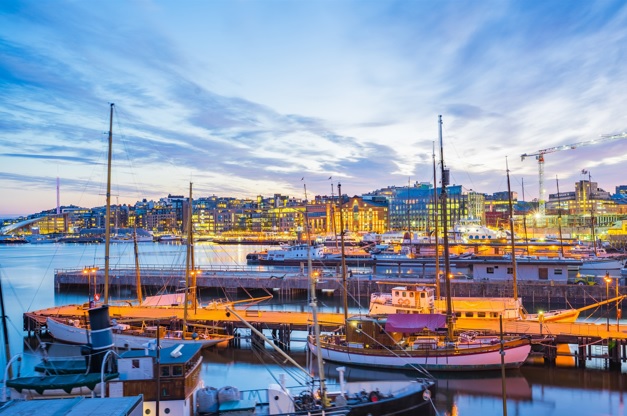
Oslo accommodations
Oslo accommodations welcome you to a destination nicknamed “The Tiger City”. Known for its fjords, bunad attire, Viking heritage, modern architecture, medieval structures, museums, parks, ski jumping, beaches, sea baths and seafood, Oslo is located in southeastern Norway, on the Oslofjord inlet. Nestled comfortably upstream from the Skagerrak strait and Inner Oslofjord, Oslo is about 200 miles northward of Gothenburg, Sweden. An incredible scenic experience, Geirangerfjord is a nearly 10-mile-long fjord located in the Sunnmøre region of Møre og Romsdal county, about 330 miles northwest of Oslo.
Oslo main attractions: Oslo Opera House, The Vigeland Park, Akershus Fortress, Viking Ship Museum, The Royal Palace, The Fram Museum, The Norwegian Museum of Cultural History, Mathallen Oslo (food court), The Botanical Garden, Mamma Pizza (pizza restaurant), Oslo S (train yard), Colosseum Kino (movie theater), National Theatre, Astrup Fearnley Museum of Modern Art, `Historical Museum, Oslo Reptile Park, Sørenga Sjøbad (sea bath – public swimming area), Naturhistorisk Museum, Deichman Bjørvika, Oslo Public Library, Norwegian Armed Forces Museum, Ekebergparken (park)
Surrounding Oslo points of interest: Risenga Svømmehall (water park), Bergsåstoppen (scenic spot), Holtsmark Golf (golf course), Solbergfossen (scenic spot), Hørtekollen (scenic spot), Oustøen Country Club (golf course), Holeveien utsikt (scenic spot), Lommedals Train Track Museum, Oslo Winter Park (ski resort), Norwegian Museum of Science and Technology (technology museum), Lillomarka arena (ski resort), Stovner Center (shopping mall), JumpYard SNØ (amusement park), Sarabråten (historical landmark), Oslo Klatresenter AS (rock climbing gym), Malmøya, Sør (scenic spot)
Oslo main airport: Oslo Airport
Rideshare service: Uber
Oslo main Christmas market: Jul i Vinterland (Christmas in Winterland – Spikersuppa Park along Karl Johans Gate – city center)
Oslo top events: Oslo Jazz Festival, Oslo International Church Music Festival, Miniøya, Øya Festival, PiP Festival, by:Larm, Musikkfest Oslo, Inferno Metal Festival, Mela Festival, Granittrock Festival, Oslo World Festival, Norwegian Wood, Holmenkollen Ski Festival, Oslo Craft Beer Festival
Part of the Norwegian First Division, or OBO S-ligaen, Vålerenga Fotball is Oslo’s professional football team that plays at Intility Arena on the city’s far eastern side. When visiting Oslo, keep in mind that tipping in restaurants is not expected, though of course is appreciated. Many Norwegians speak English and, although generally a private people, can be friendly if choosing to warm up to you. The Tiger City is a relatively safe city to behold. Currency is the Norwegian krone, cars travel on the right-hand side and the drinking age is 18 years old for beer and wine, and 20 years old for spirits. Keep in mind also that drinking in public is illegal in Norway. Museum entry and public transport is more convenient via the Oslo Pass. Apart from the Oslo Metro subway tram system, Uber rideshare is also a fine mode of transportation. Oslo’s main airport is Oslo Airport, which is about 30 miles northeast of the city. A cruise ship destination providing outstanding access to Norway’s fjords, Oslo is serviced by cruise lines such as Norwegian Cruise Line, Royal Caribbean, Viking Ocean Cruises, Princess Cruises, Oceania Cruises and Holland America Line, which dock near Akershus Fortress. Oslo accommodations are some of Scandinavia’s best. Before we get to Oslo accommodations, let’s take a look at some more background information on the area to help you along the way.
Recent archaeological findings suggest that a Christian settlement may have existed in the Oslo area prior to 1000 AD. Founded by Harald Sigurdsson as a Viking Age settlement in around 1050 AD, Oslo, from its inception, has been a center for trade, and a capital since around 1300 AD. In 1174, Hovedøya Abbey was built, with churches and abbeys owning large tracts of land and playing an important role in economic development. From the 12th through 15th centuries, Hanseatic League traders from Rostock moved into the city and dominated trade. Oslo was attacked by Sverre Sigurdsson, King of Norway, on July 25, 1197. The first king to reside permanently in the city was Haakon V of Norway, who built the Akershus Fortress and the Oslo Kongsgård. In 1349, Oslo was ravaged by the Black Death. which both diminished the churches’ holdings, and strengthened the Hanseatic League’s stranglehold as foreign traders. By around 1400, Oslo had been reduced to a provincial administrative center due to Norway’s personal union with Denmark, and the Denmark-Norway monarchy’s headquarters being positioned at Copenhagen. Like with many early cities constructed with timber, significant parts of Oslo were destroyed by fire during the early 17th century. In 1624, following the fourteenth fire calamity, Christian IV of Denmark, renaming it in his honor as “Christiania”, rebuilt the city on the other side of the bay in Akershagen near Akershus Castle. The Great Northern War of 1700-1721, caused largely by Sweden’s depravation of Russia’s direct access to the Baltic Sea, resulted in an anti-Swedish coalition victory, with the Tsardom of Russia becoming the Russian Empire, and declines in both the Swedish Empire and Polish–Lithuanian Commonwealth. Following the Great Northern War, Oslo, having been aligned with Russia, experienced a boom in both shipbuilding and trade. The Royal Frederick University, presently the University of Oslo, was founded in 1811. In 1814, Norway’s union with Denmark was dissolved and replaced by a personal union with Sweden, which resulted in Christiania becoming the independent Kingdom of Norway’s capital. From 1814 into the latter part of the 19th century, Oslo’s population grew and a number of important buildings were constructed, such as the Royal Palace, the Bank of Norway, the Storting, the National Theatre and the Oslo Stock Exchange. During this time, the famous writers Henrik Ibsen and Knut Hamsun lived in Oslo. Incorporated between 1839-1878, developing areas near Aker municipality accounted for a further uptick in population and building. In 1877, the city was renamed Kristiania, but was resorted in 1925 to Oslo, which had remained a poor suburb outside Christiania’s border since the calamitous 1624 fire. Between 1877 and 1925, while Kristiania, new areas such as Ullevål garden city and Torshov were developed. Subsequently, then having been restored to Oslo, City Hall was founded circa 1931 in the former Vika slum area. On April 9, 1940, Germany invaded Norway, with Oslo being occupied until Germany’s capitulation in 1945. Aker municipality was incorporated into Oslo circa 1948. The years following the World Wars saw to expansions in areas such as Bjørvika, Hasle, Helsfyr, Nydalen and Sinsen.
Due-north of the Oslofjord and surrounded by scenic green hills and mountains to the north, east and west, Oslo is Norway’s capital city. Over 700,000 “Oslovians” inhabit The Tiger City, which boasts first place in terms of quality of life (although also one of the world’s highest in regard to cost of living) among Europe’s large cities. Norway’s economic and governmental center, as well as a beta global city, Oslo is involved heavily in the maritime business sector. Local cruise lines are Hurtigruten and Havila Voyages. Diverse architectural styles ranging from Neoclassicism to Neo-Gothic to Functionalist can be observed throughout the city. Painter of The Scream, Edvard Munch resided in Oslo for two decades and died therein. Home to warm summers and cold winters, Olso summer July high temperatures average around 73 degrees Fahrenheit, while January winters average around freezing. Additional points of interest include Victoria Terrasse (WWII Gestapo headquarters), Munch Museum, Uranienborg Church, Frogner Park, Holmenkollen (ski jump), Aker Brygge, Oslo Harbour, Oslo Central Station, Storting (Parliament of Norway), Oslo City Hall, Barcode Project, University of Oslo, Nobel Peace Center, Bislett Stadium and Tjuvholmen. Local foods include fårikål (lamb), fenalår (cured leg of lamb), salmon, cod, prawns, herring, pulled fried mackerel, open sandwiches, veal, frikadelle (meatballs), sausage, raspeball (a type of potato dumpling), lefse (Norwegian flat bread), brunost (a type of cheese) and waffles, while drinks are akvavit (a distilled spirit), craft beer, wine, apple juice, cider and hot chocolate. With some background information on the area, we’re ready for Oslo accommodations that will help make for an unforgettable experience.
Radisson RED Oslo Økern
Lorenfaret 3, Grunerlokka, 0580
Peer Gynt-Parken
Hotel amenities: restaurant, bar, buffet, continental or gluten-free breakfast, terraces, free Wi-Fi, flat-screen TVs, safety deposit boxes, desks, 24-hour front desk, luggage storage space
Nearby restaurants: Kai Izakaya (Asian restaurant), RED Rooftop Bar and Terrace (bar), In Between (coffee shop), Bake Me Up | Løren (bakery), Elite Negler (nail salon), Alexandra Ritzi (dress store), Studio Jobbsprek Økern Portal (gym)
Within feet:
-
-
- Peer Gynt-Parken (Peer Gynt Park)
- Løren idrettspark
- Økernparken
- Økern Subway Train
-
Within 1 mile:
-
-
- Haarklous Plass
-
Within 1.2 miles:
-
-
- Natural History Museum
-
Within 2.8 miles:
-
-
- Akershus Fortress
-
- Radisson RED Oslo Økern is 19 miles from Oslo Airport.
Approximate cost per night: $178
Hotel Bristol
Kristian IVs Gate 7, 0164
Studenterlunden
Hotel amenities: restaurant, bar, sauna, gym, antique furniture, free Wi-Fi, flat-screen TVs, mini-bars
Nearby restaurants / bars / pubs: Elias mat & sånt (restaurant), Vinterhaven og Bibliotekbaren (restaurant), Løve Restaurant & Bar (restaurant), Dojo Restaurant & Garden (Asian fusion restaurant), Nordvegan (vegan restaurant), RØØR (bar), Makulator Oslo (bar), Herr Nilsen Jazz Club (pub), Per på Hjørnet (pub), Cafe Amsterdam (pub)
Nearby misc.: Kaffebrenneriet dept (coffee shop), Bristol Møtesenter (conference center), The Norwegian Theater (performing arts theater)
Within feet:
-
-
- Studenterlunden (The Student Grove)
- Universitetshagen
- Christiania Torv Square
- Kontraskjæret
- The Royal Palace
- Akershus Fortress
-
Within 1.1 miles:
-
-
- Botanical Garden
-
Within 1.3 miles:
-
-
- Munch Museum
-
Within 1.4 miles:
-
-
- Oslo City Museum
-
Within 1.5 miles:
-
-
- Vigeland Sculpture Park
- Vigeland Museum
-
Within 1.6 miles:
-
-
- Hovedøya Island Beach
-
Hotel Bristol is 23 miles from Oslo Airport.
Approximate cost per night: $238
Thon Hotel Rosenkrantz
Rosenkranzgt. 1, 0159
Oslo Parliament
Hotel amenities: restaurant, bar, lounge, fitness center, air conditioning, free Wi-Fi, flat-screen TVs, mini-bars, hairdryers, tour desk, luggage storage
Nearby restaurants / bars: Nama (restaurant), Bryggeloftet & Stuene Restaurant, The Unicorn Fish Restaurant, To Kokker (restaurant), Wafflehouse (fast food restaurant), Baklommen (bar)
Nearby misc.: Madam Felle (live music venue), Escape Bryggen (escape room center), BarBarista (coffee shop), Kaf Kafe Bryggen (coffee shop), Tedragen (tea store), Julehuset (Christmas store), Bryggen Husflid (clothing store), Theta Museum, Juhls Silver (jewelry designer), Nidhogg Tattoo (tattoo shop), Bergen Hammam (public sauna), Hanseviertel Bryggen (tourist attraction)
Within feet:
-
-
- Oslo Parliament
- Norwegian Theatre
- Historic Museum
- Karl Johans Gate
- Oslo Cathedral
- Chat Noir
- Oslo Central Station
- Norwegian National Opera & Ballet
- Oslo Bus Terminal
-
Within 1.2 miles:
-
-
- Munch Museum
-
Within 1.7 miles:
-
-
- Fram Museum
-
Within 2.6 miles:
-
-
- Bygdøy Sjøbad Beach
-
Within 2.8 miles:
-
-
- Paradisbukta Beach
-
Thon Hotel Rosenkrantz is 23 miles from Oslo Airport.
Approximate cost per night: $154
Bob W Sentralen
30 Kirkegata, 0153
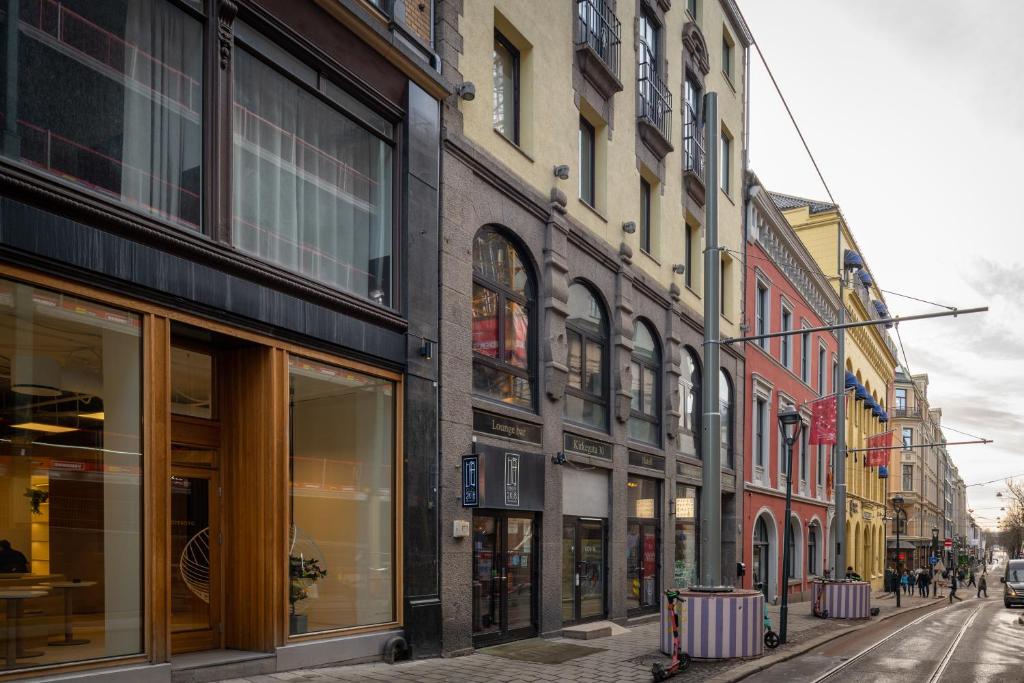
Akershus Fortress
Hotel amenities: free Wi-Fi, flat-screen TVs, desks
Nearby restaurants / bars: Mamma Pizza (pizza restaurant), Brasserie France (French restaurant), Shanghai2K18 (Chinese restaurant), Mantra by Mr India (Indian restaurant), Göteborg (bar), Posthallen Drinkhub (cocktail bar), SVANEN Cocktailbar (cocktail bar)
Nearby misc.: The Escape Games Kirkegata (escape room center), Backstube Kvadraturen (bakery), Soulcake Cafè Steen & Strøm (cake shop), Mendel’s Oslo (Patisserie), TeaOlog (bubble tea store), Gymbutikken (vitamin & supplements store), Hippi Grace (handbags shop), Hope Hair AS, Posthallen (hair salon), Hendrix Hair Sentrum AS (hair salon), White studio AS (hair salon), Oslo Dance Company (dance school), Brannvakten (historical landmark), Oslo Cathedral (Cathedral), Scandinavian Diamond Exchange Vora & Co. (goldsmith)
Within feet:
-
-
- Akershus Fortress
- Christiania Torv Square
- Vaterlands Parken
- The Norwegian Armed Forces Museum
-
Within 1.1 miles:
-
-
- Munch Museum
-
Within 1.4 miles:
-
-
- Hovedøya Island Beach
-
Within 1.7 miles:
-
-
- Frogner Park
-
Bob W Sentralen is 21 miles from Oslo Airport.
Approximate cost per night (King Studio with Sofa Bed): $186
Cost per person (three people): $62
Thon Hotel Storo
23 Vitaminveien, 0485
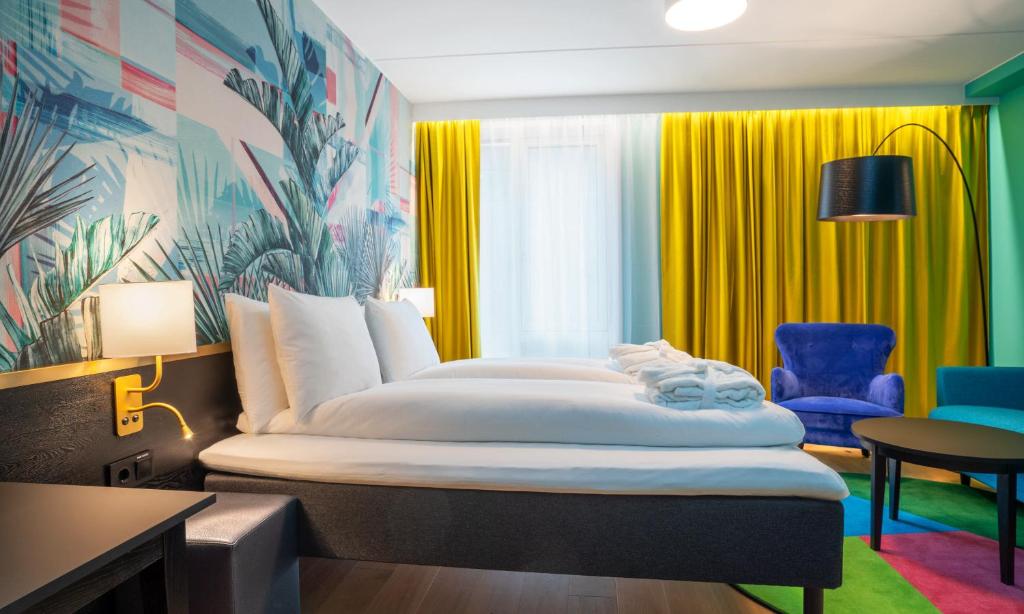
Nydalen Utepark
Hotel amenities: restaurant, seasonal outdoor dining, daily buffet breakfast, balconies, fitness center, free Wi-Fi, smart TVs, Bose stereo systems, coffee machines, mini-bars, safes, desks, Jensen beds
Nearby restaurants / bars: Brasserie Ceres (restaurant), RedSun (Asian restaurant), Sabi Sushi Storo (sushi restaurant), Kinnara Thai Restaurant (Thai Restaurant), Three Little Birds Oslo (cocktail bar)
Nearby misc.: Storo International Food (grocery store), Yummy Heaven Storo Storsenter (candy store), Cutncolors Factory (hair salon), Storo Storsenter (shopping mall), Odeon Cinema Oslo (IMAX theater)
Within feet:
-
-
- Nydalen Utepark
- Nordpolen
- Bjølsen Dumpa
- Nydalen Subway Station
-
Within 1.4 miles:
-
-
- The Norwegian Museum of Science and Technology
- The Norwegian Telecom Museum
-
Within 2.6 miles:
-
-
- The Royal Palace
-
Within 4.4 miles:
-
-
- Bygdøy Sjøbad Beach
-
Thon Hotel Storo is 19 miles from Oslo Airport.
Approximate cost per night (Superior Double Room): $219
Cost per person (three people): $73
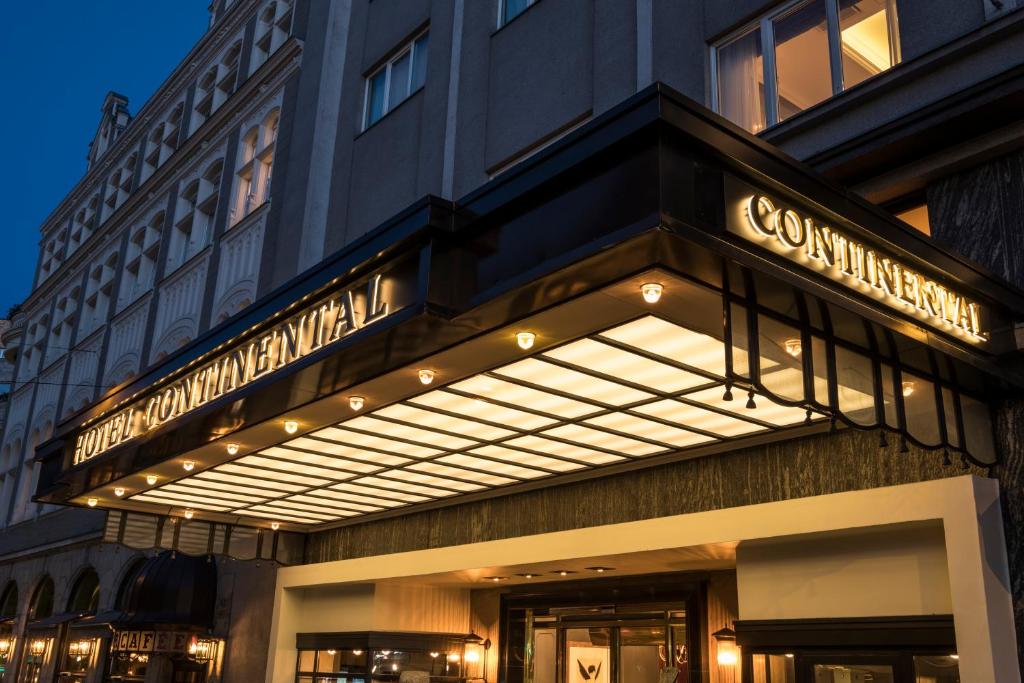
Hotel Continental
Stortingsgaten 24 / 26, 0161
The Ibsen Museum
Hotel amenities: fine dining restaurant, lobby lounge with Edward Munch lithographs, 24-hour gym, free Wi-Fi, flat-screen TVs, mini-bars, safes
Nearby restaurants / bars / pubs: Restaurant Eik Annen Etage (Norwegian restaurant), Borggården Biffrestaurant (Norweigian restaurant), Casa Pisano (Italian restaurant), Prima Fila Restaurant (Italian restaurant), CASBAR (pizza restaurant), Brasilia Oslo (Brazilian restaurant), Theatercaféen (restaurant), Banh Mi XO (Vietnamese restaurant), Dinner Restaurant (Chinese restaurant), The Fragrance of the Heart (vegetarian restaurant), The Lannisters (bar), BAR BOMAN (bar), Dr. Jekyll’s Pub (pub)
Nearby misc.: The Viking Planet (museum), Backstube Bakery, National Theatre (performing arts theater), Christiania Teater (performing arts theater), Chat Noir (performing arts theater), Kunstnerforbundet (art gallery), Bergans Flaggskipbutikk (sporting goods store), Riktige leker (toy store)
Within feet:
-
-
- The Ibsen Museum
- Universitetshagen Karl Johans Gate Oslo
- Kronprinsesse Märthas Plass
- Historic Museum
- Tullinløkka
-
Within 1.3 miles:
-
-
- Vigeland Sculpture Park
-
Within 3.8 miles:
-
-
- Grefsenheisen Ski Lift
-
Within 58 miles:
-
-
- Notodden Airport
-
Hotel Continental is 21 miles from Oslo Airport.
Approximate cost per night: $464
Amerikalinjen
Jernbanetorget 2, 0154
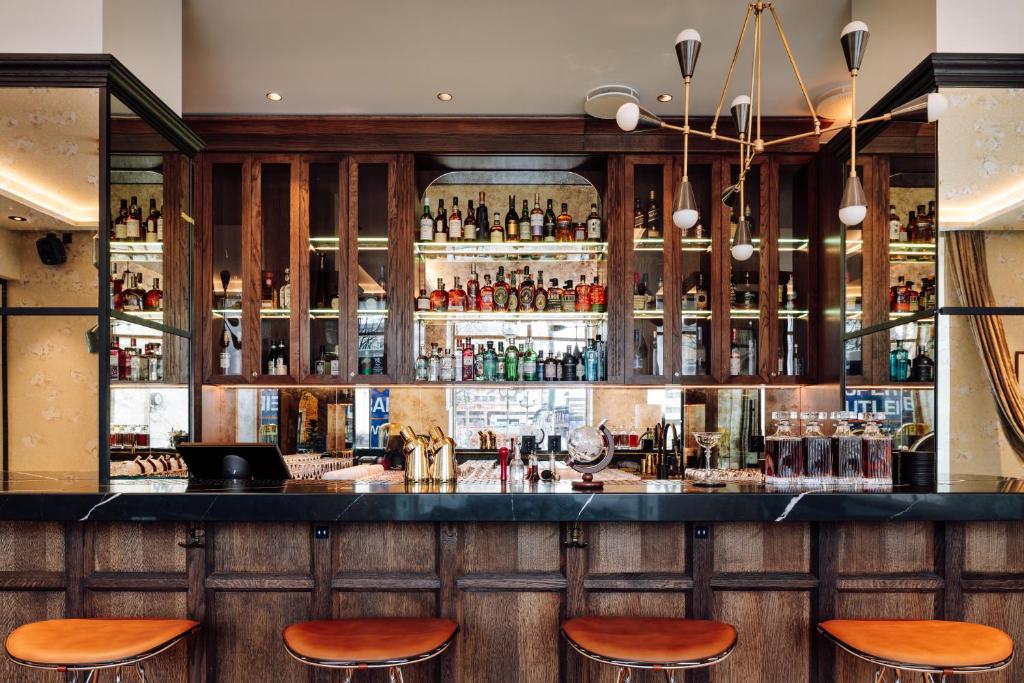
Oslo City Shopping Center
Hotel amenities: restaurants, multiple lounge bars, balconies, 24-hour fitness center, Norwegian designer lamps, unique historical objects, elegant décor, free Wi-Fi, flat-screen TVs, Nespresso coffee machines, mini-bars, desks, 24-hour front desk
Nearby restaurants / bars: Atlas Brasserie & Café, Cielito (Mexican restaurant), Pier 42 (cocktail bar)
Nearby misc.: Møtestedet (café), Boba Cha (bubble tea store), Nilson Shoes (shoe store), Bobbys (hair extension technician), Oslo Visitor Center, Christian Frederiks (park)
Within feet:
-
-
- Oslo City Shopping Center
- Oslo Central Station
- Byporten Shopping Centre
- Oslo Stock Exchange
- Film & Kino
- Oslo Spektrum Music Arena
- National Theater
- DFDS Ferry Terminal Oslo
-
Within 1.5 miles:
-
-
- Hovedøya Island Beach
-
Within 1.8 miles:
-
-
- Frogner Park
-
Within 2.8 miles:
-
-
- Huk Beach
-
Within 3.7 miles:
-
-
- Grefsenheisen Ski Lift
-
Within 4.5 miles:
-
-
- Sognsvann Lake
-
Amerikalinjen is 23 miles from Oslo Airport.
Approximate cost per night: $258

Lysebu Hotel
Lysebuveien 12, 0712
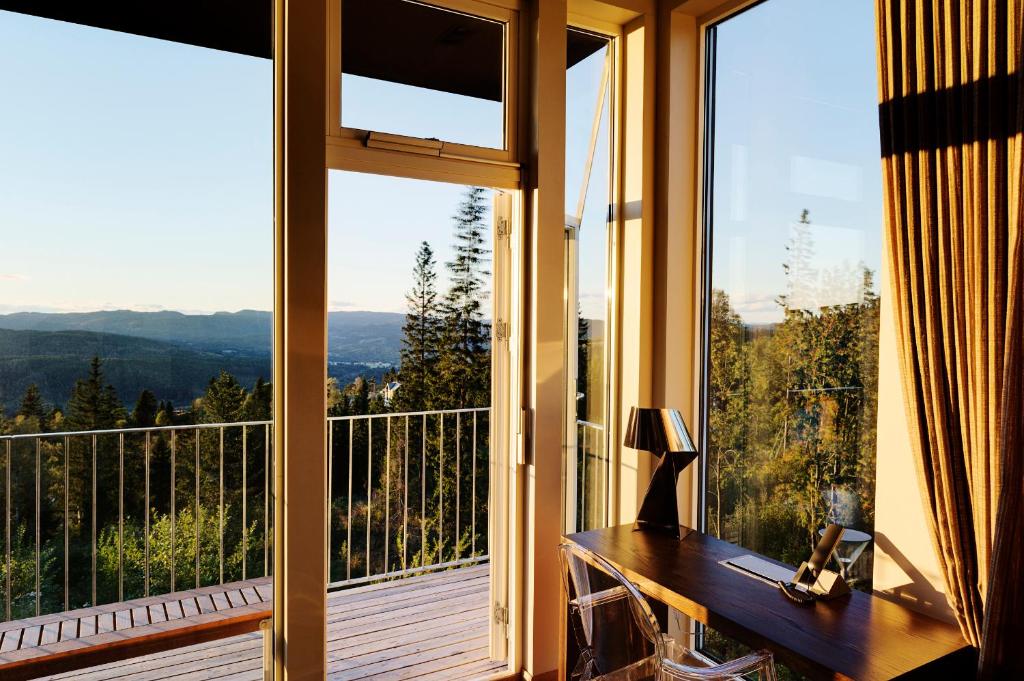
Ekornheisen
Hotel amenities: restaurant, lounge with a fireplace, wine cellar, mountain views, summer terrace, large garden, indoor swimming pool, free Wi-Fi, flat-screen TVs, desks, free private parking, art exhibitions, live music events, wine-tasting
Nearby: Bjørnsgard Selskapslokaler (restaurant), Bogstad Farm (café), Oslo Golfklubb (golf course), Holmenkollen Fitness AS (fitness center), Solstua (wedding venue), Holmenkollen Nasjonalanlegg (ski resort), Midtstubakken (ski jumping hill), Holmenkollbakken (ski jumping hill), Holmenkollen Ski Museum, Kollensvevet Zipline (tourist attraction), Holmenkollen leir (historical place), Røa Kunstisbane Bogstad (ice-skating rink), Kragstøtten (sculpture)
Within feet:
-
-
- Ekornheisen
- Elgtrekket
- Tarnbandet
-
Within 1.1 miles:
-
-
- Superpipe Wyller
-
Within 1.4 miles:
-
-
- Kleivaheisen
-
Within 1.9 miles:
-
-
- Oslo Vinterpark Ski Lift
-
Within 2.6 miles:
-
-
- Sognsvann Lake
-
Within 3.5 miles:
-
-
- Oslo University
-
Lysebu Hotel is 22 miles from Oslo Airport.
Approximate cost per night: $285
Lille Stranden Apartment
Lille Stranden, Frogner, 0252
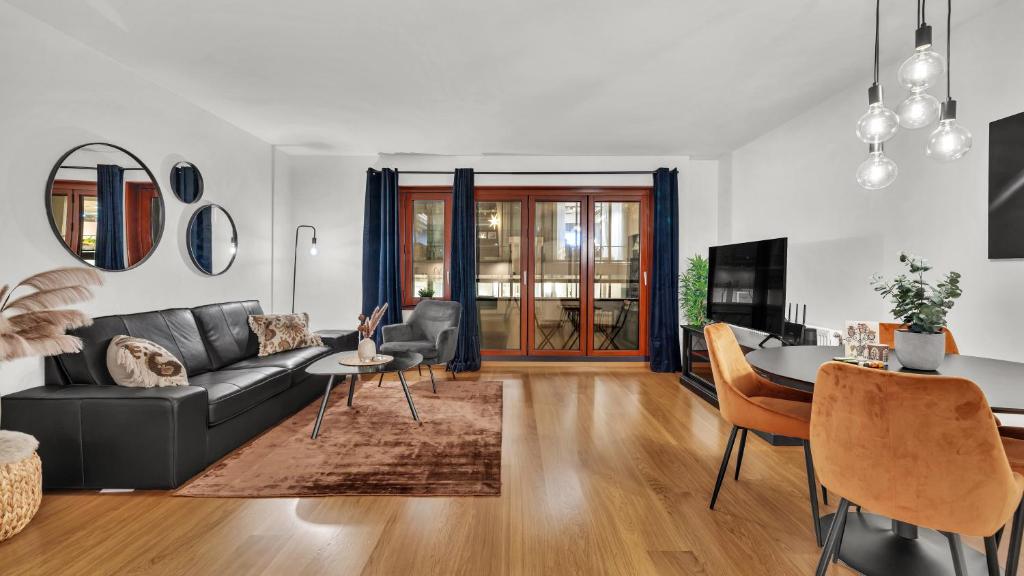
Astrup Fearnley Museum
Hotel amenities: terrace, air conditioning, free Wi-Fi, fully-equipped kitchen, coffee machine, hair dryer
Nearby restaurants / bars: Sjømagasinet (seafood restaurant), The Salmon (seafood restaurant), ARTS (Italian restaurant), Døgnvill Burger Tjuvholmen (hamburger restaurant), xef Gastronomic (restaurant), Hanami (Japanese restaurant), New Delhi (Indian restaurant), TJELD – Cocktails & Oysters (cocktail bar)
Nearby misc.: PARADIS Gelateria Tjuvholmen Strand (ice cream shop), PARADIS Gelateria Tjuvholmen (ice cream shop), Mad Goats, Tjuvholmen (sauna), Galleri Brandstrup AS (art gallery), Fineart Oslo (Galleri Fineart – art gallery), Menswear Tjuvholmen (men’s clothing store), Most Stranden Brua (bridge), The Anchor of the German war ship Blücher (historical landmark), Kiss and sail (tourist attraction)
Within feet:
-
-
- Astrup Fearnley Museum
- Tinkern
- Bervens Løkke
- Color Fatastica
- Akershus Fortress
- The Ibsen Museum
-
Within 1 mile:
-
-
- Hovedøya Island Beach
- Oslo Central Station
-
Within 1.8 miles:
-
-
- Botanical Garden
-
Within 4.7 miles:
-
-
- Trollvann 2 Ski Lift
-
Lille Stranden Apartment is 22 miles from Oslo Airport.
Approximate cost per night: $334

So there they are, Oslo accommodations that will help make for an unforgettable trip. We hope you have found this information valuable and most importantly, that you enjoy your time in Norway!
Stockholm Accommodations
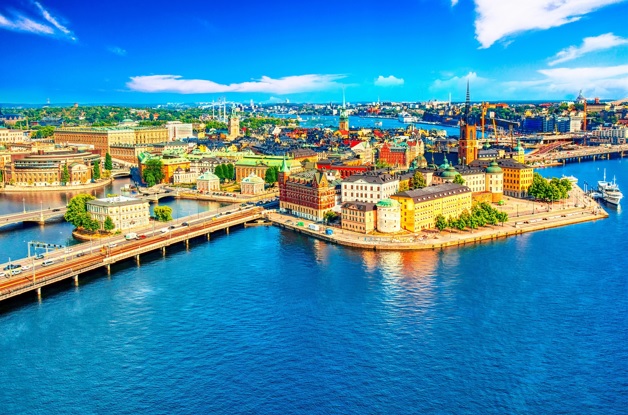
Stockholm accommodations
Stockholm accommodations welcome you to a destination nicknamed “Beauty on the Water”. Known for its canals, bridges, lakes, islands, parks, architecture, museums, restaurants, cobblestone streets, deep-orange buildings, historic alleyways, seafood and attractive inhabitants, Stockholm is located on Sweden’s southeastern coast, across the Baltic Sea from Tallinn, Estonia and Helsinki, Finland. Built on 14 islands that are connected by 57 bridges, Stockholm is accessible to St. Petersburg, Russia by water via the Gulf of Finland.
Stockholm main attractions: Vasa Museum, The Royal Palace, Westfield Mall of Scandinavia, Skansen Open Air Museum, Kungsträdgården Park, Drottningholm Palace, Gröna Lund Amusement Park, Fotografiska Photography Museum, ABBA The Museum, Avicii Arena, Solna Centrum Shopping Mall, Friends Arena, Museum of Technology, Museum of Natural History, Tele2 Arena, Hagaparken, Vällingby Centrum Shopping Mall, National Museum, Nobel Prize Museum, Swedish History Museum, Stockholmsmässan Convention Center, Rålambshovsparken Park, Odenplan Plaza, Tantolunden Park, Östermalms Food Hall, Cirkus Theater, Fjärilshuset Rainforest Museum, Eriksdalsbadet Aquatic Center, Skinnarviksberget Scenic Area, Skansen Aquarium, ThaiBoat, Stockholm City Hall, Millesgården Museum, Mariaberget Observation Deck, Bergianska Trädgården, Vitabergsparken Park, Prins Eugens Waldemarsudde Museum, Bodyflight Stockholm, Royal Djurgården National Park
Just southeast of Stockholm: Tyresta National Park and Nature Reserve (5,000-hectare national park – hiking trails, lakes, old-growth forests)
Stockholm main airport: Stockholm Arlanda Airport
Rideshare service: Uber
Airport car rental agencies: Sixt, National Car, Thrifty
Stockholm main Christmas market: Stortorget Christmas Market – Gamla Stan (Old Town)
Stockholm top events: Stockholm International Film Festival, Stockholm Jazz Festival, Lollapalooza Stockholm, Stockholm Fringe Festival, Stockholm Kulturfestival, Stockholm Music & Arts Festival, Stockholm Marathon, A Taste of Stockholm, Stockholm Beer & Whisky Festival, Midsummer, Stockholm Folk Festival, Stockholm Tap Festival
Stockholm professional football clubs are AIK Fotboll, Djurgårdens IF Fotboll and Hammarby Fotboll. English is widely spoken in Stock. Walking around is recommended, so if interested, don’t forget your sneakers or hiking boots. Many of Stockholm’s museums have free admittance. Not for sale in supermarkets, alcohol can be found at Systembolaget stores (government-owned liquor store chain). Like with most Scandinavian peoples, Swedes tend to be private, though are generally quite polite and gracious. Stockholm’s currency is the Swedish Krona, cars travel on the right-hand side and the drinking age is 18 years old. Keep in mind that some bars or nightclubs may have a higher age requirement for entry (20-25 years old). Stockholm accommodations are some of the Scandinavia’s best. Before we get to Stockholm accommodations, let’s take a look at some more background information on the area to help you along the way.
Due to the Ice Age, people migrated from, and back to (south-north), the Stockholm area. Around 1000 AD, with temperatures rising, Vikings moved back northward. Built by Vikings near Lake Mälaren, Old Town, or Gamla stan “The Town between the Bridges”, would develop into home-base for Swedish Viking trade routes. Agnafit became the Norse word to reference where Lake Mälaren met the Baltic Sea. In the summer of 1187 AD, Swedish statesman and regent Birger Jarl, after the “pillage of Sigtuna”, began developing the area to help thwart Finnish Karelia invasions. Attributing Stockholm’s founding to Birger Jarl, the Eric Chronicle is the oldest surviving Swedish chronicle. Stockholm’s first known written reference dates to 1252 AD, when iron was being mined at Bergslagen, and present-day Old Town was built. From 1296 to 1478, Stockholm’s City Council numbered 24 members, half of whom were German-speaking burghers. Strategically positioned on the Baltic Sea, Stockholm traded with, and took culture from, the mainland European cities of Lübeck, Hamburg, Gdańsk, Reval (Estonia) and Riga. Relations between the Danish Kings and the Kalmar Union were strong during the 15th century, when Christian I was king. In 1523, Gustav Vasa, or Gustav I, became king of Sweden. The Great Stockholm Fire of 1625 destroyed the southwestern section of Stockholm’s Stadsholmen island. The fire led to demolition of the city walls, which had been built throughout the centuries to defend against attacks. Stockholm became the Swedish Empire’s official capital circa 1634. Swedish Empire trade routes provided Stockholm with a virtual monopoly on trade amongst certain foreign merchants, Swedish, Baltic and Scandinavian territories. Arts, sciences and culture strengthened under queen Christina in the early 17th Century. Providing educational lessons to Queen Christina, one of Europe’s most prominent philosophers at the time, Réne Descartes, died of pneumonia in Stockholm on February 11, 1650, aged 53. A plague in 1710, along with the Great Northern War of 1700-1721, decimated population and economic growth, with Stockholm losing its long-standing status as the capital of a great Empire. The Age of Enlightenment, during the late-18th century, brought renewed prosperity. Gustav III rejuvenated the arts, sciences and culture, the Royal Swedish Opera and Stockholm Observatory were founded, and a rise in Swedish Nationalism naturally ensued. Swedish chemist, inventor, engineer and businessman Alfred Bernhard Nobel, after whom The Nobel Prize is named, was born in Stockholm on October 21, 1833. In 1897, the General Art and Industrial Exposition was held on the island of Djurgården, with the Nordic Museum still in use to this day. Stockholm hosted the 1912 Summer Olympics.
Sweden’s capital and the Nordic countries’ most populous urban city, Stockholm is home to around 1 million “Stockholmers”. Over a third of Sweden’s GDP is generated from the Stockholm region. The Nobel Prize is hosted annually at Stockholm Concert Hall and Stockholm City Hall. Stockholm Arlanda Airport is located 23 miles north of the city. The city’s metro train system is known for its impressive décor, and has been called the world’s longest art gallery. Sweden’s financial center as well as the seat of the national government, Stockholm harbors architecture that includes Baroque, Gothic and Medieval styles. Beauty on the Water’s climate is oceanic, with July summer high temperatures averaging around 75 degrees Fahrenheit, while January winters hover around freezing. During summer solstice, the sky darkens near nautical twilight, casting a brilliant blue coloration after sunset. Three Worlds’ Heritage Sites can be found in or near the city in Drottningholm Palace, Skogskyrkogården (The Woodland Cemetery) and Birka (a Viking Age trading center). Additional points of interest are The Old Town, Royal Dramatic Theatre, Stortorget Square, Strandvägen Street, Victoria Tower, Stockholm University, KTH Royal Institute of Technology, Djurgårdsbron Bridge, Stockholm Public Library, Söder Torn and Stockholm Central Station. Popular foods are kanelbulle (cinnamon buns), köttbulla, (Swedish meatballs), pickled herring, räksmörgås (open-faced sandwich), husmanskost (home-cooked food), toast skagen (a type of toast with shrimp), Crispbread, Lingonberry jam, godis (candy) and prinsesstårta (Swedish princess cake). Drinks include Swedish Punsch (liqueur), Aquavit (distilled spirit), Glögg (spiced wine), Brännvin (liquor), vodka, Lager beer, wine, Julmust (Christmas-time soft drink), coffee and tea. Now that we have some background information on the area, it’s time for Stockholm accommodations that will help make for an unforgettable experience.
Biz Apartment Bromma
Köpsvängen 18 Bromma, Bromma, 168 67
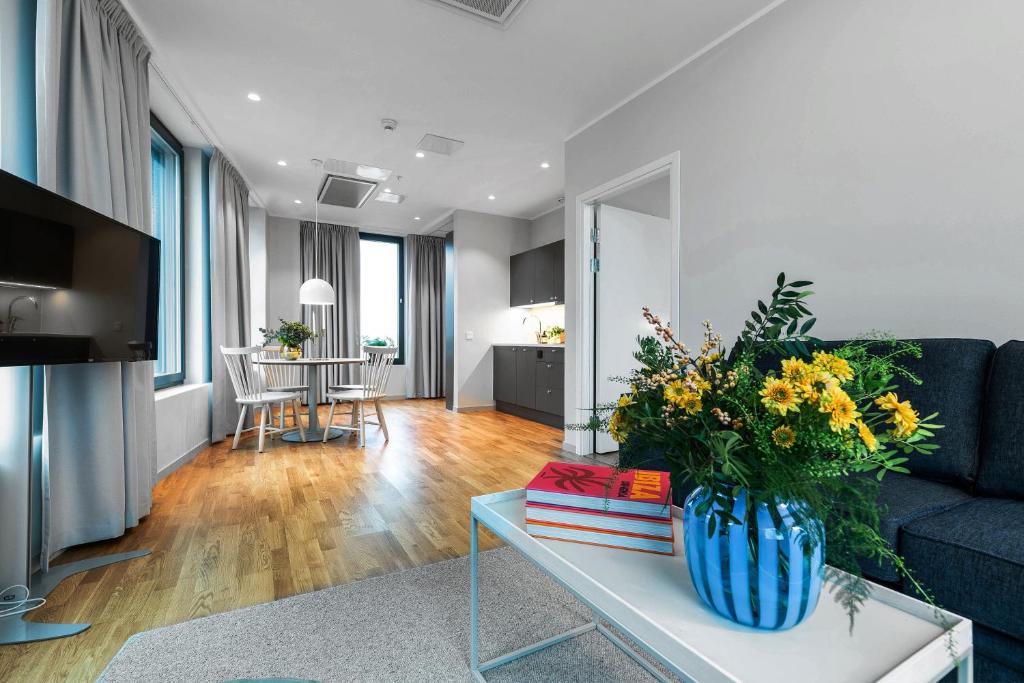
Bromma Stockholm Airport
Hotel amenities: parquet floors, flat-screen TVs, fully-equipped kitchens, coffee machines, kettles, hair dryers, snack bar, 24-hour front desk
Nearby: NYC Burger Bromma (restaurant), Restaurant H5, Thai Sweet Chili (restaurant), Grafair Jet Center (airline), Bromma Blocks (tram stop)
Within feet:
-
-
- Bromma Stockholm Airport
- Tuvanparken
- Marabouparken
- Solna Strand Subway Station
-
Within 1 mile:
-
-
- Iris Koloniområde
-
Within 3.2 miles:
-
-
- Drottningholm Palace
-
Within 3.4 miles:
-
-
- Brunnsviksbadet Beach
-
Biz Apartment Bromma is 18 miles from Stockholm Arlanda Airport.
Approximate cost per night (One Bedroom Apartment): $154
Cost per person (four people): $38
Victory Hotel
Lilla Nygatan 5, Gamla Stan, 11128
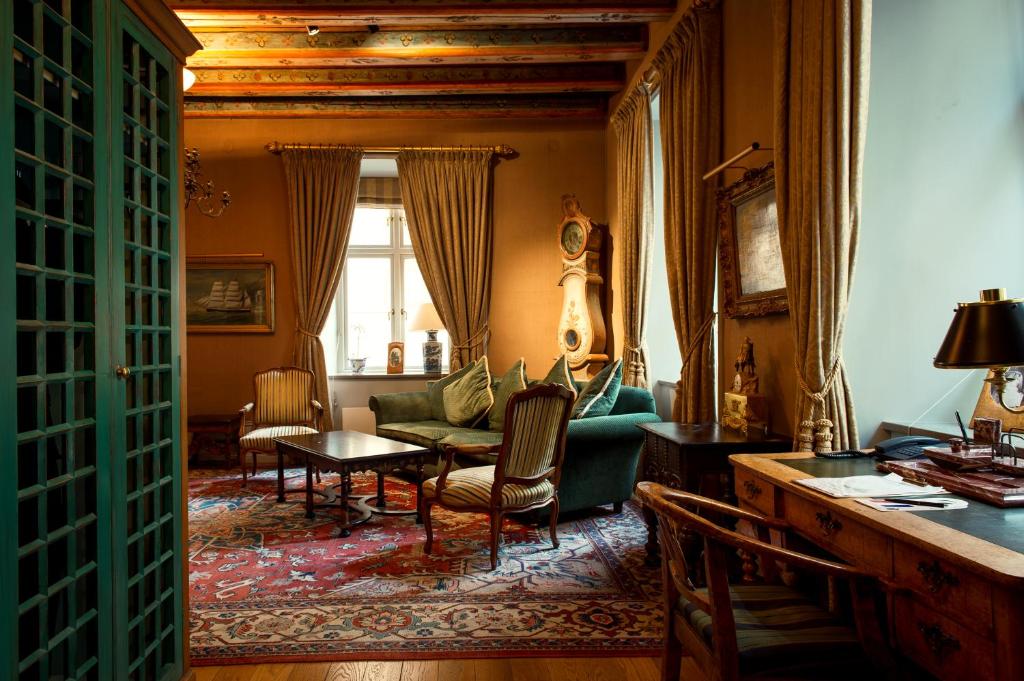
Nobel Prize Museum
Hotel amenities: restaurant, lounge bar, wine bar, plunge pool, sauna, maritime antique collections with naval themes, free Wi-Fi, flat-screen TVs, heated bathroom floors
Nearby restaurants / bars / pubs: Barrels (hamburger restaurant), Restaurang Flickan (restaurant), Cork Vinbar (restaurant), Slingerbulten (restaurant), GAMLA STAN HOF (restaurant), Restaurant C & C, Brinken (restaurant), Nara-De Koreansk &Japansk Sushi (restaurant), Mogge Sushi (sushi restaurant), Vegan-Vegetarian Restaurant Hermitage (vegetarian restaurant), Tritonia Ölverkstad (bar), Bryggeri Munkbron (brewpub, Wirströms Pub (Irish pub)
Nearby misc.: Café Sven Vintappare, PANEM (bakery), Little Britain Shop (gourmet grocery store), StikkiNikki Gamla Stan (ice cream shop), Sound Pollution AB (record store), Comics Heaven (comic book store)
Within feet:
-
-
- Nobel Prize Museum
- Stortorget Square
- Junotäppan
- House of Nobility
- The Royal Palace
-
Within 1 mile:
-
-
- ABBA The Museum
-
Within 1.6 miles:
-
-
- Prince Eugen’s Waldemarsudde
- Årsta Skog Forest
-
Within 9 miles:
-
-
- Bogesund Castle
-
Victory Hotel is 21 miles from Stockholm Arlanda Airport.
Approximate cost per night (Luxury Suite): $788
Hotel Frantz, WorldHotels Crafted
Peter Myndes Backe 5 , Södermalm, 116 46
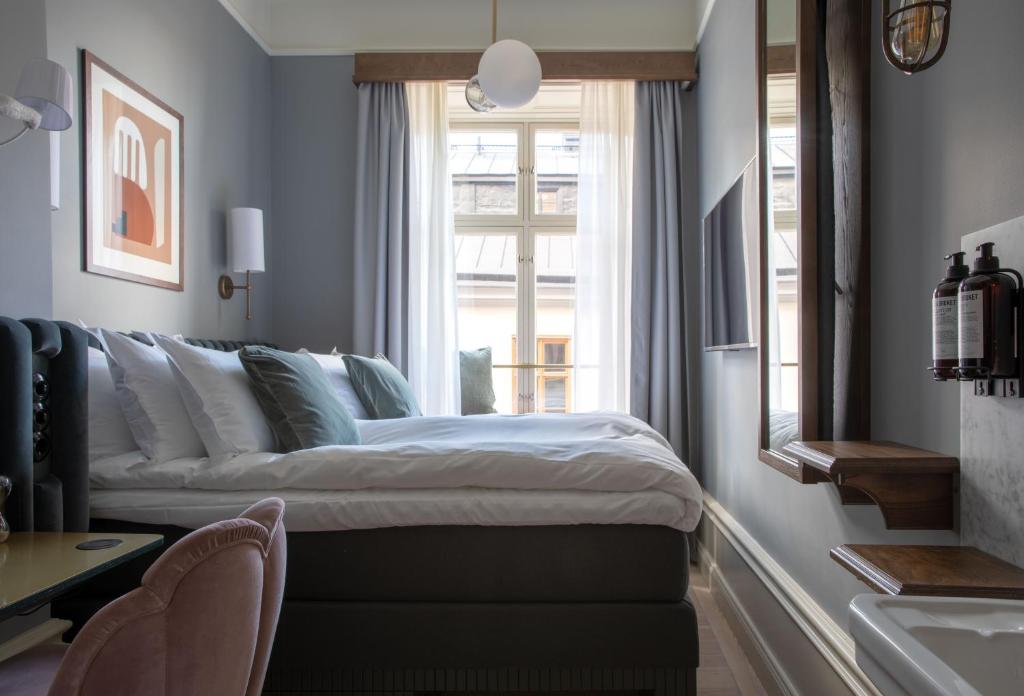
Katarina Elevator
Hotel amenities: restaurant, bar, buffet breakfast, air conditioning free Wi-Fi
Nearby restaurants/ bars / pubs: Woodstockholm (fine dining restaurant), Gondolen (restaurant), Bistro Lo (restaurant), Savor Asia (Asian restaurant), Stigbergets Fot (bar), Fåtöljen Bar / Cafe (bar), Omnipollos hatt (bar), Hernö Gin Bar, Stockholm (cocktail bar), Oliver Twist (pub), Mosebacketerrassen (beer garden)
Nearby misc.: ARYAM (ice cream shop), Lush (cosmetics store), Ninecha (bubble tea store), Stockholm City Museum, Bellman House (museum), Free Tour Stockholm Three Crowns (sightseeing tour agency), Vinyl Records (record store), Hellstone Music (music store), Fightbox (gym)
Within feet:
-
-
- Katarina Elevator
- Lekparken
- Mariatorget
- Björns Trädgård
- Slussen Subway Station
-
Within 1 mile:
-
-
- Vasa Museum
-
Within 1.1 miles:
-
-
- Army Museum
-
Within 2.2 miles:
-
-
- Sickla Beach
-
Hotel Frantz, BW Premier Collection is 21 miles from Stockholm Arlanda Airport.
Approximate cost per night: $267
Hotel Rival
Mariatorget 3, Södermalm, 118 91
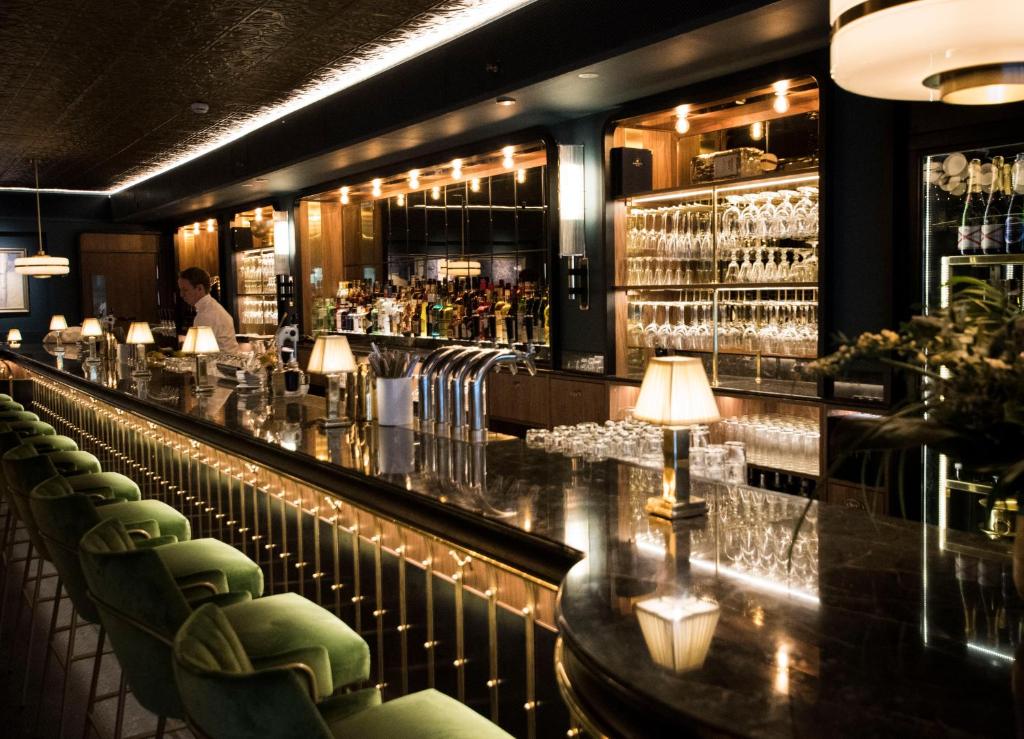
Mariatorget
Hotel amenities: restaurant, bar, Mariatorget Square views, free Wi-Fi, flat-screen TVs, iPhone docking stations, Blu-ray players, luxury beds, Egyptian cotton sheets, pillow menus, bathrobes, slippers, free tea, coffee & cookies
Nearby restaurants / bars: Söders Hjärta (restaurant), TONY’S (pizza restaurant), Hjärtats (bar)
Nearby misc.: xSKÅLEN (salad shop), Salong Beauty Hair (hairdresser), Studio Pauline (hairdresser), Salong Beauty Hair (hairdresser), Gertab Sjukvårdsprodukter (beauty supply store), Siv & Åke (vintage clothing store), Staffars (comic book store), Teater Rival (performing arts theater), Saga (gym)
Within feet:
-
-
- Mariatorget Square
- Repslagarparken
- The Royal Palace Stockholm
- Museum of Medieval Stockholm
- Fotografiska Swedish Museum of Photography
-
Within 1 mile:
-
-
- Museum of Modern Art
- Sergels Torg Square
-
Within 1.3 miles:
-
-
- Vasa Museum
- Stureplan
- Army Museum
-
Within 2.1 miles:
-
-
- Globen Ski Lift
-
Within 6 miles:
-
-
- Drottningholm Palace
- Stensöbadet Beach
-
Hotel Rival is 21 miles from Stockholm Arlanda Airport.
Approximate cost per night: $350
Hotel Skeppsholmen
Gröna Gången 1, 111 86
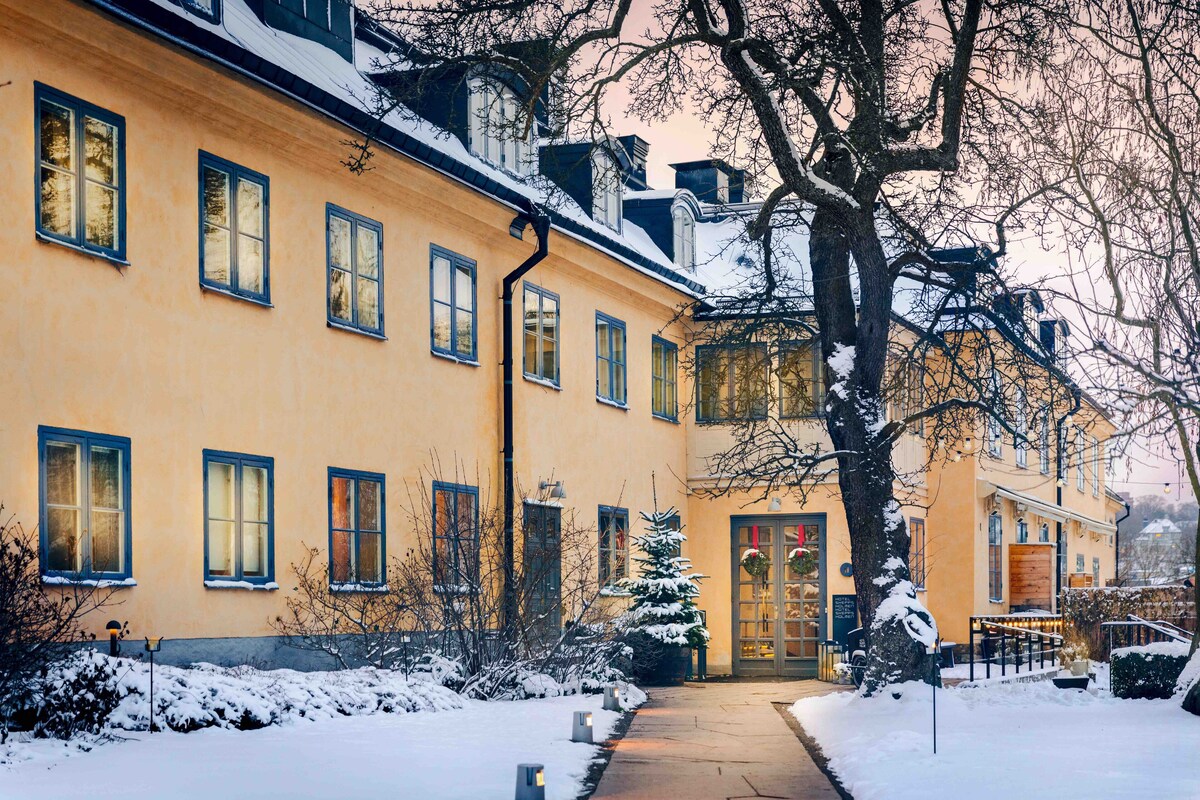
Museum of Modern Art
Hotel amenities: restaurant, terrace with waterfront views, park / sea views, mini-gym, traditional wooden window shutters, free Wi-Fi, flat-screen TVs, designer Italian sinks by Boffi, modern showers, bathrobes, slippers
Nearby: Restaurant @ Hotel Skeppsholmen, Café Blom, Swedish Centre for Architecture and Design (museum), Moderna Museet (art museum), Royal Institute of Art (art school), The National Museum’s Library & Archive (public library), Svensksundsparken (park), The Admiralty House (historical landmark)
Within feet:
-
-
- Museum of Modern Art
- Svenskuddsparken
- Aquaria Water Museum
- Vasa Museum
- Liljevalch’s Art Gallery
-
Within 1 mile:
-
-
- Sergels Torg Square
- Prince Eugen’s Waldemarsudde
-
Within 1.8 miles:
-
-
- Globen Ski Lift
- Sickla Ski Lift
-
Within 2.9 miles:
-
-
- Brunnsviksbadet Beach
-
Hotel Skeppsholmen is 21 miles from Stockholm Arlanda Airport.
Approximate cost per night (Deluxe Double Room): $564
Cost per person (three people): $188

Bank Hotel
Arsenalsgatan 6, Norrmalm, 111 47
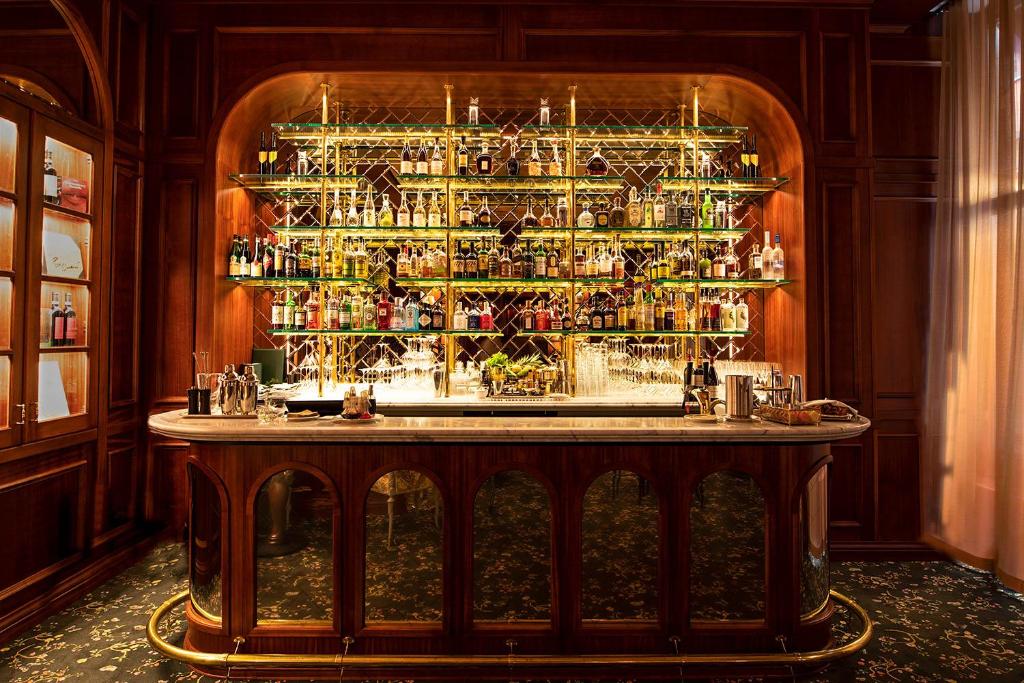
Berzelii Park
Hotel amenities: restaurant, top-floor terrace bar, lobby bar, in-room breakfast, fitness center, stylish furnishings, free Wi-Fi, flat-screen TVs, coffee machines, mini-bars, slippers
Nearby restaurants: Wedholms Fisk (seafood restaurant), Bistro Arsenalen
Nearby misc.: Stallet (live music venue), Musikaliska (live music venue), Cafe Kanvas, Sällskapet (social club), St. Eugenia’s Church (Catholic church)
Within feet:
-
-
- Berzelii Park
- Kungsträdgården
- Royal Dramatic Theater Stockholm
- Royal Swedish Opera
- Museum of Medieval Stockholm
- Stockholm City Hall
- ABBA The Museum
-
Within 1.8 miles:
-
-
- Långholmen
-
Within 4.5 miles:
-
-
- Ekholmsnasbacken Ski Lift
-
Within 5 miles:
-
-
- Käppalabadet Beach
-
Bank Hotel is 20 miles from Stockholm Arlanda Airport.
Approximate cost per night (penthouse suite): $1,384
Grand Hôtel Stockholm
Södra Blasieholmshamnen 8, Norrmalm, 103 27
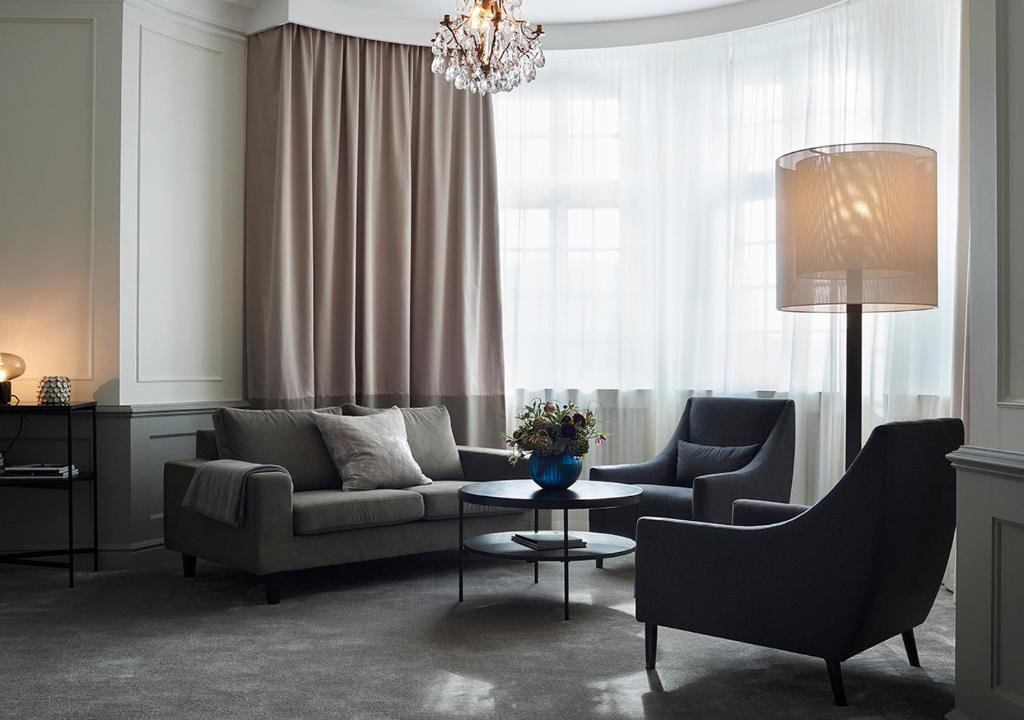
The Royal Palace
Hotel amenities: fine dining options, courtyard / waterfront views, indoor pool, spa with facials, foot massages & naprapathy, fitness room, air conditioning, free Wi-Fi, LCD TVs, mini-bars, chauffeur-driven limousine transfers
Nearby restaurants / bars: Matbaren Mathias Dahlgren (Swedish restaurant), B.A.R. (seafood restaurant), Grand Soleil (restaurant), Seafood Gastro (restaurant), Bistro Créme (restaurant), Wallmans Stockholm (restaurant), Bistro Créme AB (lunch restaurant), Restaurant Nationalmuseum (Swedish restaurant), Restaurant Verandan (Swedish restaurant), Cadierbaren (cocktail bar)
Nearby misc.: Grand Hôtel Nordic Spa & Fitness (spa and health club), Eric Ericsonhallen (event venue), SS Orion (history museum), Stockholm Toy Museum, Nationalmuseum (art museum), Arch’ by Ai Weiwei (sculpture), Strömkajen (observation deck), Skeppsholmsbron (bridge), M/S Fladen (historical landmark)
Within feet:
-
-
- The Royal Palace
- National Museum of Fine Arts
- Berzelii Park
- Museum of Medieval Stockholm
- The Hallwyl Museum
-
Within 1 mile:
-
-
- Skansen Open-Air Museum
-
Within 4.4 miles:
-
-
- Bromma Stockholm Airport
-
Grand Hôtel Stockholm is 20 miles from Stockholm Arlanda Airport.
Approximate cost per night (Executive Suite): $2,525
Cost per person (three people): $841
Hotel Ruth, WorldHotels Crafted
Dobelnsgatan 81, Vasastan, 113 52
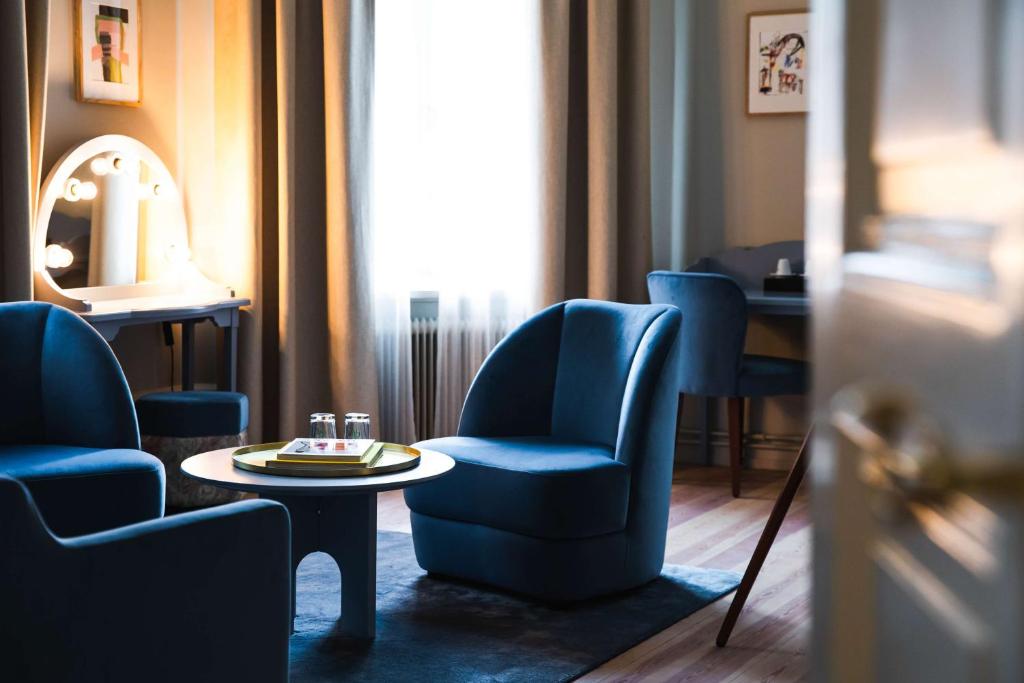
Sven-Harry’s Art Museum
Hotel amenities: restaurant, bar, buffet, continental or vegetarian breakfast, free Wi-Fi, flat-screen TVs, hairdryers, safety deposit boxes, 24-hour front desk, luggage storage space
Nearby restaurants: Bar Nombre (Spanish restaurant), Byblos Lebanese Cuisine (restaurant), Crêperie & Logi Vasastan (restaurant), Swing by golfbaren (restaurant)
Nearby misc.: Hårnästet (hair salon), Stockholm Manicure (nail salon), Stockholm Pilates Center, Vuxenbalett i Stockholm (dance school), Itrim Sveavägen (gym), Dragon’s Lair – Sveavägen (game store)
Within feet:
-
-
- Sven-Harry’s Art Museum
- Monica Zetterlunds Park
- Vanadisparken
- Bellevueparken
- Odenplan Subway Station
-
Within 1.1 miles:
-
-
- Army Museum
- Brunnsviksbadet Beach
-
Within 1.3 miles:
-
-
- Museum of Medieval Stockholm
-
Within 2.2 miles:
-
-
- Fotografiska Swedish Museum of Photography
-
Hotel Ruth, WorldHotels Crafted is 19 miles from Stockholm Arlanda Airport.
Approximate cost per night (Executive King Suite): $446
Cost per person (four people): $111
Lydmar Hotel
Södra Blasieholmshamnen 2, Norrmalm, 10324
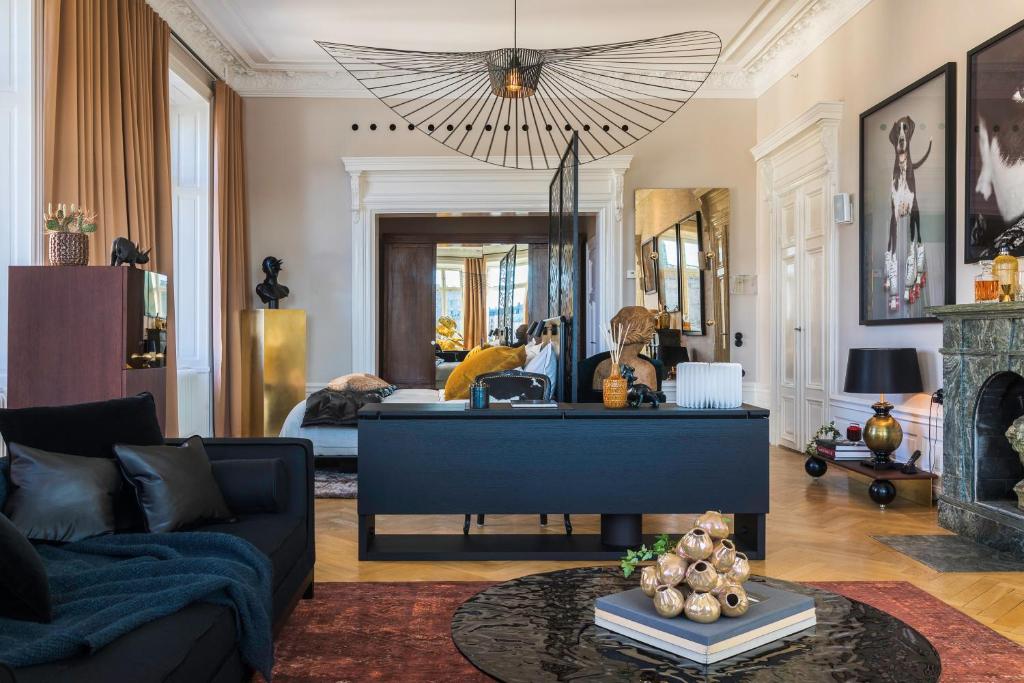
National Museum of Fine Arts
Hotel amenities: restaurant, Old Town / Royal Palace views, seasonal outdoor terrace, wooden floors, original stucco work, wooden beams, high windows, artwork, free Wi-Fi, flat-screen TVs, mini-bars
Also in the area: Grand Hôtel Stockholm
Within feet:
-
-
- National Museum of Fine Arts
- The Royal Palace
- Batteriparken
- Museum of Medieval Stockholm
- The Hallwyl Museum
- Sergels Torg Square
- Vasa Museum
-
Within 1.8 miles:
-
-
- Kaknästornet TV Tower
-
Within 2.5 miles:
-
-
- Brunnsviksbadet Beach
- Sickla Beach
-
Within 7 miles:
-
-
- Drottningholm Palace
-
Within 9 miles:
-
-
- Bogesund Castle
-
Lydmar Hotel is 20 miles from Stockholm Arlanda Airport.
Approximate cost per night (Superior Suite): $2,809
Cost per person (three people): $936
Villa Dagmar
Nybrogatan 25-27, Östermalm, 114 39
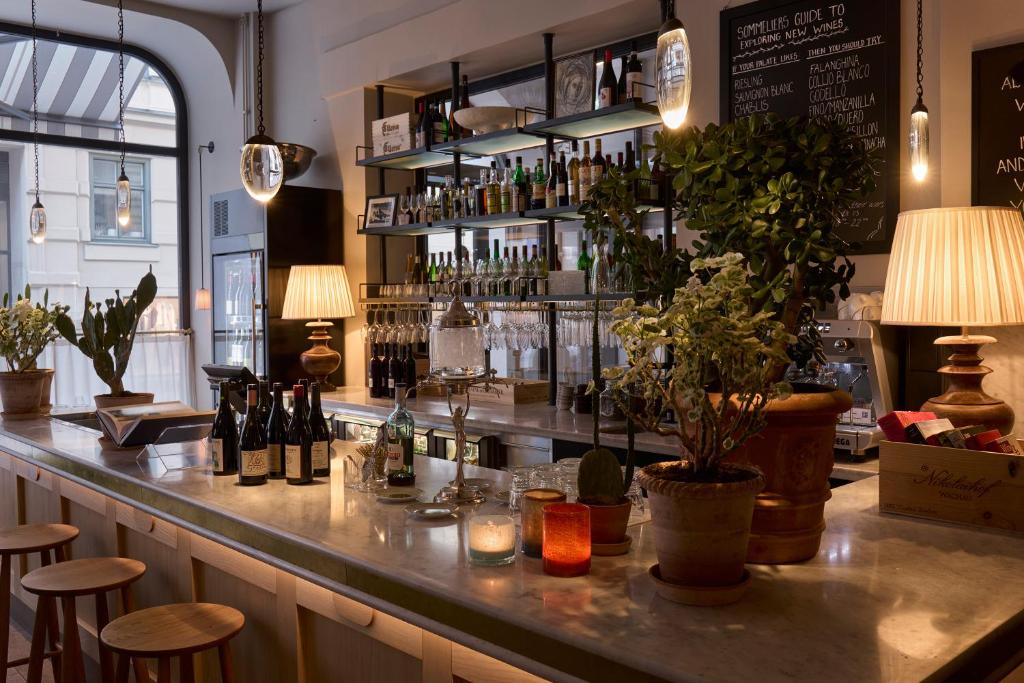
Stockholm Army Museum
Hotel amenities: restaurant, bar, buffet / continental breakfast, balconies, fitness center, free Wi-Fi, flat-screen TVs, safety deposit boxes, desks, 24-hour front desk, concierge service, private parking, airport transportation
Nearby restaurants: Lisa Elmqvist (seafood restaurant) Östermalmsgrillen (grill), Brasserie Astoria (restaurant), Nybroe Smörrebröd (restaurant), Schmaltz Bar & Delicatessen (restaurant)
Nearby misc.: Betsy Sandberg Choklad (chocolate artisan), Östermalms saluhall (market)
Within feet:
-
-
- Stockholm Army Museum
- The Hallwyl Museum
- Berzelii Park
- Swedish History Museum
- National Museum of Fine Arts
- Sergels Torg Square
-
Within 1.1 miles:
-
-
- Katarina Elevator
-
Within 1.8 miles:
-
-
- Kaknästornet TV Tower
-
Within 2.7 miles:
-
-
- Sickla Ski Lift
-
Within 5 miles:
-
-
- Lila Viken Beach
-
Villa Dagmar is 20 miles from Stockholm Arlanda Airport.
Approximate cost per night (one-bedroom suite): $1,270
Hotel Sven Vintappare
Sven Vintappares Gränd 3, Gamla Stan, 111 27
Stortorget Square
Hotel amenities: flat-screen TVs, Gustavian-style furnishings, traditional guest rooms, exposed wooden beams, pantries with china dinner sets, heated marble bathroom floors, café in a medieval wine cellar
Also in the area: Victory Hotel
Within feet:
-
-
- Stortorget Square
- Nobel Prize Museum
- Junotäppan
- House of Nobility
- Dance Museum
-
Within 1.6 miles:
-
-
- Prince Eugen’s Waldemarsudde
-
Within 5 miles:
-
-
- Lila Viken Beach
-
Hotel Sven Vintappare is 21 miles from Stockholm Arlanda Airport.
Approximate cost per night: $259

Residence Perseus
Baggensgatan 17, Gamla Stan, 11131
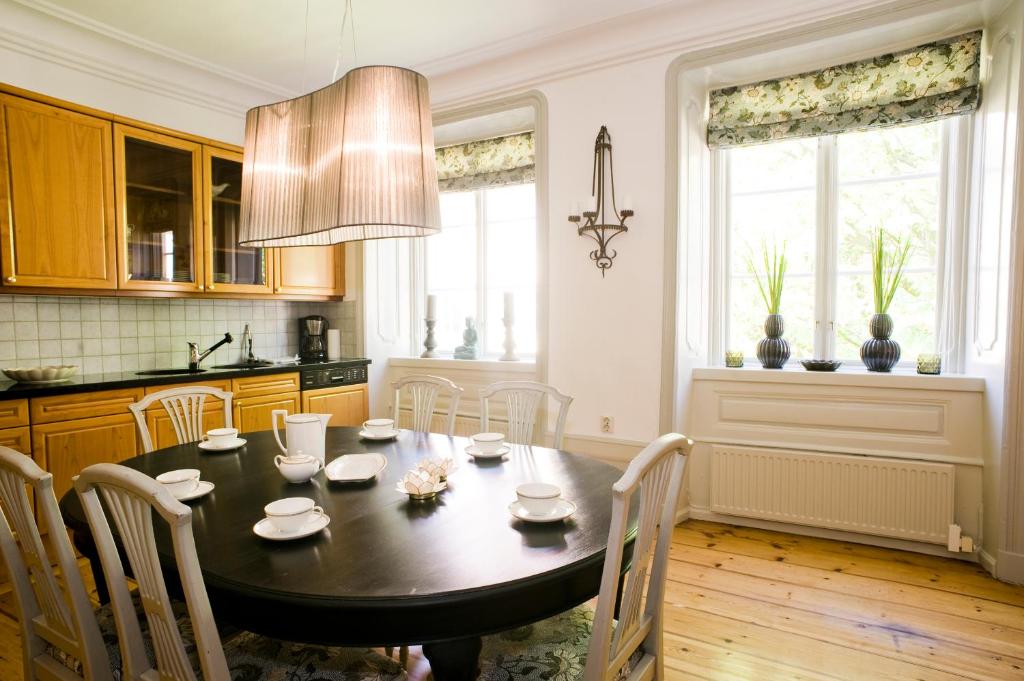
Museum of Medieval Stockholm
Apartment amenities: wooden floors, modern décor, free Wi-Fi, flat-screen TVs, iPod docks, fully-equipped kitchens, laundry facilities
Within feet:
-
-
- Museum of Medieval Stockholm
- Lekparken
- Stortorget Square
- Katarina Elevator
- Svenskuddsparken
-
Within 1.1 miles:
-
-
- Skansen Open-Air Museum
-
Within 1.7 miles:
-
-
- Årsta Skog Forest
-
Within 3.3 miles:
-
-
- Ekhagen Beach
-
Residence Perseus is 21 miles from Stockholm Arlanda Airport.
Approximate cost per night (One-Bedroom Apartment): $348
Cost per person (four people): $87

Ett Hem
2 Sköldungagatan, Ostermalm, 114 27
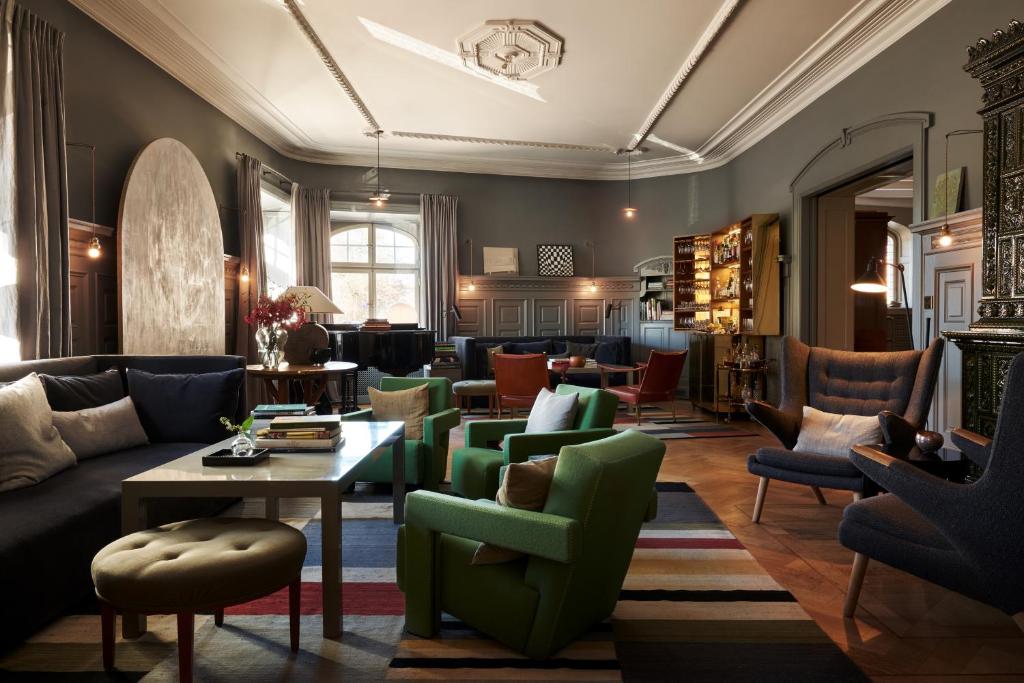
KTH Library
Hotel amenities: restaurant, bar, outdoor courtyard, sauna, fitness center, elegant décor, free Wi-Fi, flat-screen TVs, 24-hour front desk
Nearby restaurants: Flying Fish (sushi restaurant), One More (Vietnamese restaurant), Jarla Grillen (grill), Two Fat Ladies (brunch restaurant)
Nearby misc.: Bullar&Bröd (café), Macchina Espresso Bar, Mr Cake (pastry shop), Matbutiken Tekniska Högskolan (grocery store), the VENUE (hairdresser), Galerie Forsblom (art gallery), Loyal (art gallery), Sekelskifte (architectural salvage store), Embassy of Switzerland, Engelbrektskyrkan (church) iDance Studio (salsa classes)
Within feet:
-
-
- KTH Library
- Stockholm Stadium
- Stockholm Public Library
- Stockholm School of Economics
- Royal College of Music in Stockholm
- Stockholm Concert Hall
- Hotorgshallen
-
Within 1.4 miles:
-
-
- Stockholm Cathedral
-
Within 1.7 miles:
-
-
- Monteliusvägen
-
Ett Hem is 19 miles from Stockholm Arlanda Airport.
Approximate cost per night (one-bedroom mezzanine suite): $923

Villa Berkle
Fiskebyvägen, 11, Enskede – Årsta – Vantör, 122 47
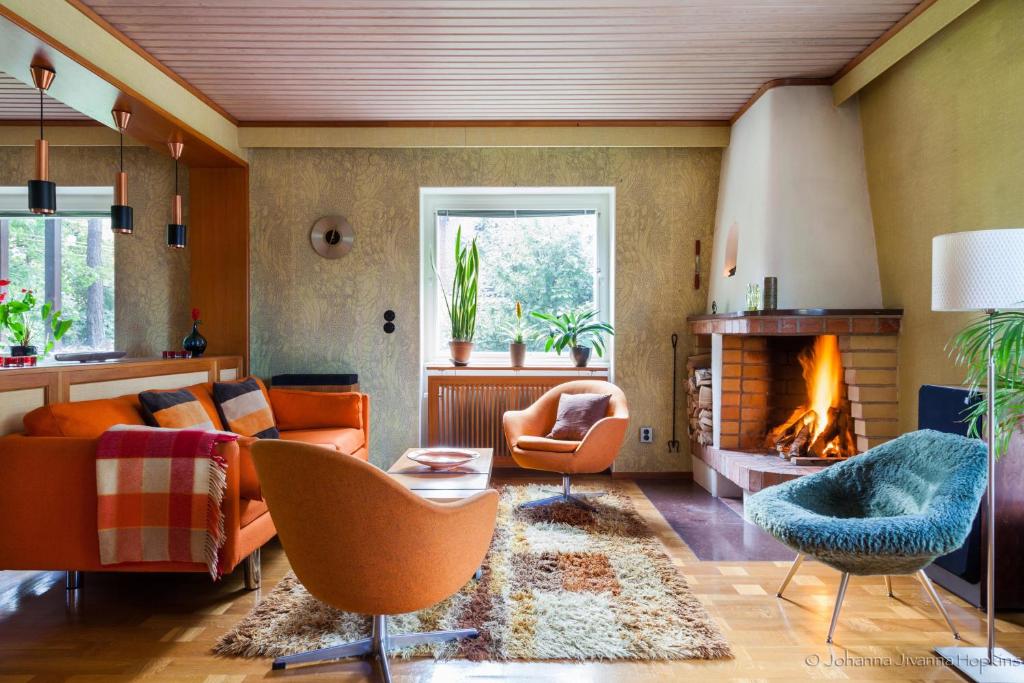
Aspvirket
Villa amenities: 6 bedrooms, 3 bathrooms, terrace, barbecue, garden, flat-screen TV, computer, fully-equipped kitchen
Nearby restaurants: Anjas Vedugn (restaurant), Burger Mansion Stockholm (hamburger restaurant), Pizzeria Tallkrogen (pizza restaurant), Ivanders pizzeria & salladsbar (pizza restaurant), 7 Bites Sushibar Svedmyra (sushi restaurant)
Within feet:
-
-
- Aspvirket
- Farfarstäppan
- Tussmöteparken
-
Within 1 mile:
-
-
- Häradsdomaren
-
Within 1.1 miles:
-
-
- Mellankrokarna
- Vårflodsparken
- Margaretaparken
-
Within 1.3 miles:
-
-
- Enskedeparken
-
Within 4 miles:
-
-
- The Royal Palace
- Museum of Modern Art
- ABBA The Museum
-
Villa Berkle is 24 miles from Stockholm Arlanda Airport.
Approximate cost per night (Superior Villa): $764
Cost per person (sixteen people): $47

So there they are, Stockholm accommodations that will help make for an exciting trip. We hope you have found this information valuable and most importantly, that you enjoy your time in Sweden!
Madrid Accommodations
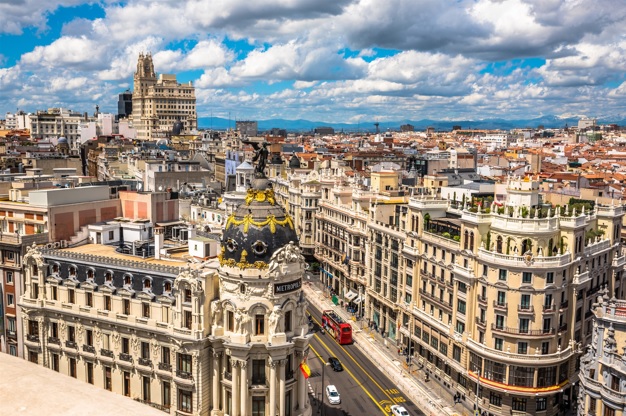
Madrid accommodations
Madrid accommodations welcome you to a destination with nicknames to include “Town and Court”, “The Forum” and “Bear and the Strawberry Tree”. Known for its museums, palaces, shopping malls, Catholic churches, theaters, art galleries, parks, gardens, fountains, plazas, monuments, statues, Tapas, Flamenco dancing and football, Madrid is located in central Spain on the Manzanares River. Madrid is about 225 miles northwesterly of Spain’s coastal city of Valencia, which is not far from Ibiza.
Madrid main attractions: El Retiro Park (19th century park – boating lake, rose garden, fountains, statues), Plaza Mayor (stately square / Philip II statue – cafes, restaurants), Mercado de San Miguel (fresh food market / 1916 covered market – local food, delicacies, events), Museo Nacional del Prado (art museum – 12th – 19th century collection – Goya, Velazquez, El Greco), Royal Palace of Madrid (18th century palace – state occasions, tours, art / antiques), Museo Nacional Centro de Arte Reina Sofía (art museum – 20th century collection – Picasso, Dali, Gris, Miro), Movistar Arena Madrid (event venue), Temple of Debod (monument / ancient Egyptian temple / museum – relocated from Aswan Egypt), Puerta de Alcalá (monument – triumphal arch, stone carvings, sculptures), Cibeles Fountain (18th century neoclassical goddess Cbelle fountain – chariot, 2 lions), Casa de Campo (park / former royal hunting ground – hills, streams, boating lake), Palacio de Cristal (museum / venue – art exhibitions), Thyssen-Bornemisza National Museum (art museum – 13th – 20th century European masterpieces), El Corte Inglés (shopping mall), Las Ventas Bullring (neo-Mudejar-style bullfighting arena built 1920s – bullfights, concerts, events), Restaurante Bel Mondo (Italian restaurant), Real Jardín Botánico (botanical garden – outdoor gardens, greenhouses, walking trails, activities), Great Pond of El Retiro (El Retiro Park central pond – colonnaded monument, rowboats, canoes), Parque del Oeste (20th century urban park – landscaped, paths, conifer & cedar trees), Catedral de Santa María la Real de la Almudena (Baroque Cathedral – colorful chapels, Romanesque crypt, museum), National Archaeological Museum (archaeological museum), CaixaForum Madrid (arts center / former power station – exhibitions, performances), Sorolla Museum (art museum), Toledo Gate (Neoclassical-style gate honoring Fernando VII – stone arches, statues), Museum of Illusions Madrid (mind & eye-tricking exhibits / installations), Mercado de San Ildefonso (food court), Parque de la Quinta de los Molinos (city park / former estate – springtime blooming almond trees), Neptune Fountain (Neoclassical fountain – Neptune on a shell-shaped chariot), Teatro Real (performing arts theater / 1850 opera house – performances, guided tours, grand design), Museo Nacional de Ciencias Naturales (science museum), Mercado de San Fernando (market – produce, butchered meats, clothes, books, etc.), Casa de Campo Lake (16th century man-made lake – boating jetty, park, bars, restaurants), Berlin Park (woods, fountains, playgrounds, Berlin Wall mementos), Naval Museum (maritime museum), IKONO Madrid (tourist attraction), Campo del Moro (sloping historic gardens – paths, trees, streams, 2 monumental fountains), Museo del Romanticismo (art museum / 18th century mansion – romantic-period paintings, furniture, garden café), Royal Basilica of Saint Francis the Great (neoclassical church – frescoed dome / chapel painted by Goya, guided tours), Basílica de Jesús de Medinaceli (Catholic basilica – Latin-cross plan, Jesús de Medinaceli statue), SALA EQUIS (bar), La Casa Encendida (cultural center – contemporary art exhibitions, workshops, fair trade shop), Estación Museo de Chamberí (museum – Madrid Metro ghost station), Lope de Vega’s House-Museum (museum / playwright Lope de Vega’s restored 17th century house – period furniture, artworks), Parque Madrid Río (riverside park – events, sports fields), Museo Geominero (minerals / rocks / fossils museum – grand central hall, balconies, glass roof), Teatro Marquina (performing arts theater), Fundación Juan March (cultural center), San Fernando Fine Art Royal Academy (art museum)
Surrounding central Madrid near the community’s ring roads (M-40 / 50): Santiago Bernabéu Stadium (Real Madrid arena – concerts, events, stadium tours, trophy room), Riyadh Air Metropolitano (Atletico Madrid stadium – event venue), Centro Comercial Plenilunio (shopping mall), La Vaguada Shopping Center (shopping mall), Parque Forestal de Valdebebas – Felipe VI (city park – artificial lagoons, river, playgrounds, cycling, walking trails), Parque Juan Carlos I (park – lake, olive grove, skating rink, free train rides, modern sculptures), Librería Akira Comics (comic book store), Museum of Aeronautics and Astronautics (history museum), Hipódromo de la Zarzuela (racecourse), Manzanares River Linear Park (hillside park – sculptures, amphitheater, views), Valdebernardo Forest Park | North Zone, Cerro del Tío Pío (hillside park – sports fields, cycle paths, sunset walks, city views), Estadio Municipal Butarque (CD Leganés stadium)
Northward of Madrid: Cuenca Alta del Manzanares Regional Park (nature preserve – granite rock formations, pine forests, Iberian ibex wild goat, wild boar, birds of prey)
Madrid main airport: Adolfo Suárez Madrid–Barajas Airport
Airport car rental agencies: Europcar, SIXT
Rideshare service: Uber
Rapid transit system: Madrid Metro
Madrid top events: La Virgen de la Paloma, Epiphany, Madrid Carnival, Mercedes-Benz Fashion Week, Mad Cool Festival, Primavera Sound Madrid, DCODE Festival, Tomavistas, Boombastic Festival, Reggaeton Beach Festival, JazzMadrid, Semana Santa, Nochevieja (New Year’s), Dos de Mayo, San Isidro Festival
Winners of 36 La Liga titles, 20 Copa del Rey and 13 Supercopa de España, world-renowned Real Madrid CF plays at Santiago Bernabéu Stadium on the city’s north side. Also a successful club, Atlético de Madrid plays at Riyadh Air Metropolitano on the city’s east side, fairly close to the airport. Additional Madrid / Community of Madrid professional football clubs are Rayo Vallecano, Getafe CF and CD Leganés. When in Madrid, dressing up, while avoiding flip flops, is recommended. Wearing shorts outside of summer months is a no-no. Tapas waiters / waitresses do not typically bring a check prior to a diner’s request, so it’s best to request la cuenta (bill) when you are ready to leave a restaurant. Be mindful of the siesta, or afternoon nap. Madrileños (Madrid people) often eat a big lunch and then tapas later at night, when Madrid becomes lively. Around 1 AM is usually when nightclubs start to fill up. Referenced in Hemingway’s classic novel The Sun Also Rises, Sobrino de Botín (opened 1725) is the world’s oldest continuously operating restaurant. In Madrid, cars travel on the right-hand side, currency is the Euro and the drinking age is 18 years old. Madrid accommodations are some of Western Europe’s best. Before we get to Madrid accommodations, let’s take a look at some more background information on the area to help you along the way.
Archaeological evidence suggests that the Madrid-area has been occupied since prehistoric times. Near Catedral de Santa María la Real de la Almudena, a Celtic Carpetani settlement, Roman villas and a Visigoth basilica have been discovered. During the Muslim age (9th century), Umayyad Emir Muhammad I built a fortress near the river Manzanares. In the early 11th century, the Caliphate of Córdoba collapsed and Madrid was integrated with the Taifa of Toledo. Alfonso VI “The Brave” of León and Castile seized Madrid circa 1079. Thereafter, Christians occupied city-center, while Muslims and Jews were displaced to the suburbs. Madrid was designated a city in 1188 and was chartered to regulate the municipal council in 1202. For the first time in 1309, the Courts of Castile convened at Madrid under Ferdinand IV, and Madrid became a Crown of Castille regimento circa 1346. The April 23, 1521 Battle of Villalar between Royalist Castilians and Comuneros rebels resulted in a Royalist victory, with Madrid subsequently being besieged and occupied by imperial troops. Phillip II set his court in Madrid in June 1561 at the Royal Alcázar of Madrid (present-day Royal Palace). During the War of Spanish Succession, the city changed hands several times amongst Bourbon Spain, the Austracist army and the Habsburg army. Charles III (1716-1788) introduced street lamps, sewers, cemeteries, monuments and cultural institutions to the city. Romantic painter and printmaker Francisco de Goya moved to Madrid in 1775 and lived there for nearly 50 years. The 1807 Peninsular War against French invaders sparked Spanish nationalism. During the 19th century, railway transport and electric street lighting were introduced. Madrid became Spain’s capital by way of the Spanish Constitution of 1931. During the Spanish Civil War, Madrid was a stronghold for Spain’s Republican faction. Following the war, which resulted in a Nationalist victory, ration coupons contributed to heightened mortality initially due to malnutrition. Despite historically being a left-wing stronghold, Francisco Franco decided to keep Madrid the country’s capital. Under Franco, Madrid, particularly the north-western districts, benefitted from the 1960s Spanish economic boom, or “Spanish miracle”. Madrid was confirmed as Spain’s capital following the Francoist collapse and a 1978 constitutional referendum.
Spain’s capital and most populous city, as well as the European Union’s second-largest, Madrid is home to around 3.4 million Madrileños. Town and Court lies on River Manzanares, which is sourced by the Sierra de Guadarrama mountain range, and empties into Jarama river, a tributary of the Iberian Peninsula’s longest river, Tagus. One of the world’s top-ten most livable cities, Madrid is Spain’s political, economic and cultural epicenter. Madrid accommodated 10.6 million visitors in 2023. Home to a Mediterranean climate, Madrid experiences cool winters and hot summers. Summer high temperatures average around 90 degrees Fahrenheit, while winters are around 50 degrees. Snowfall and frost are possible between December and February, typically. Additional points of interest include Gran Vía (central street – shopping areas), Golden Triangle of Art (Prado Museum, Reina Sofía Museum, Thyssen-Bornemisza Museum), Cybele Palace, AZCA (financial district), CTBA (business area), Bolsa de Madrid (Madrid Stock Exchange), Plaza de España, Madrid Zoo, Biblioteca Nacional de España (National Library of Spain), Longoria Palace, Parque de Atracciones de Madrid (amusement park), Caja Mágica (multi-purpose arena), Lázaro Galdiano Museum and Museo de America (art / archaeology / ethnography museum). Local foods include Tapas (small plates, various dishes), patatas bravas (potatoes, garlic aioli, spicy sauce), cocido madrileño (traditional chickpea-based stew), huevos estrellados (fried eggs, French fries, chorizo, ham), callos a la madrileñaa (beef tripe), gallinejas and entresijos (traditional offal dishes), tortilla española (Spanish potato omelet), croquetas, bocadillo de calamares (squid sandwich), caracoles a la Madrileña (snails), churros con chocolate (fried dough sticks, hot chocolate) and empanadas. Locals tend to drink beer, while mojitos, sherry, tinto de verano (similar to sangria) and horchata are also popular drinks. With some background information on the area, we’re ready for Madrid accommodations that will help make for an unforgettable experience.
Riu Plaza España
Calle Gran Vía, 84, Madrid City Center

España Building | Teatro Coliseum | Cerralbo Museum | Nomad Museo Inmersivo | Monumento Cervantes
Hotel amenities: restaurant, bar, nightclub, outdoor heated swimming pool, terrace, fitness center, air conditioning, free Wi-Fi, 24-hour front desk, concierge service
Nearby restaurants / bars: Nice To Meet You Restaurant & Lounge, El Reloj de Harry & Sally (restaurant), Casa Jancinto (restaurant), La Tradicion (restaurant), Gastro Via 61 (restaurant), O’Curruncho (Galician restaurant), Restaurante Ikigai (Japanese restaurant), Miyama Restaurant (Sushi restaurant), Sichuan Kitchen (Sichuan restaurant), SAMBHAD (cocktail bar)
Nearby misc.: Faborit (coffee shop), Panaderia Reposteria Dulce Vida (bakery), Savia Bruta (florist), Hualian Market (supermarket), Supermercado Oriental Plaza Espana (supermarket), Tienda Coreana (grocery store), MANGO (clothing store), Luthier Fernando Munoz Aladro (musical instrument repair shop), You Liang Library (book store), Cantaro (pottery store), Plaza de Espana
Within feet:
-
-
- España Building (historical landmark – 25-story tower built 1953, neo-baroque architecture)
- Teatro Coliseum (performing arts theater)
- Cerralbo Museum
- Nomad Museo Inmersivo
- Monumento Cervantes (sculptures / fountain)
- Coliseum
- Iglesia San Marcos
-
Within 1.1 miles:
-
-
- Plaza de Cibeles
-
Within 1.5 miles:
-
-
- Reina Sofia Museum
-
Within 1.7 miles:
-
-
- Retiro Park
-
Riu Plaza España is 8 miles from Adolfo Suarez Madrid-Barajas Airport.
Approximate cost per night : $478
Ilunion Alcalá Norte
San Romualdo, 30, San Blas

Riyadh Air Metropolitano
Hotel amenities: restaurant, seasonal outdoor terrace, air conditioning, free Wi-Fi, 43” flat-screen TVs, safes, desks, hairdryers, adaptations for guests with reduced mobility
Nearby restaurants / pubs: Guanabara by El Rodizio (Brazilian restaurant), Nugu Burger (hamburger restaurant), La Llanera Madrid (bar & grill), SUKINA (sushi restaurant), Mad Brewing (brewpub)
Nearby misc.: The Sippers Coffee (coffee shop), Bocaterra (sandwich shop), LA ESQUINA Café & Bar (coffee shop), Mercadona (supermarket), Lorena Campillo (hairdresser), DT Power Center (gym), MadSport Academy (gym)
Within feet:
-
-
- Riyadh Air Metropolitano (Atletico Madrid stadium)
- Libertempo
-
Within 1.1 miles:
-
-
- Parque Infantil Quinta de los Molinos
-
Within 2.5 miles:
-
-
- Mezquita de Madrid
-
Within 5 miles:
-
-
- Plaza Mayor
-
Within 8 miles:
-
-
- Monte de Valdelatas Forest
-
Ilunion Alcalá Norte is 2.8 miles from Adolfo Suarez Madrid-Barajas Airport.
Approximate cost per night (Double Room with Extra Bed): $344
Cost per person (three people): $114
Hotel Maydrit Airport
Piragua, 1, Barajas
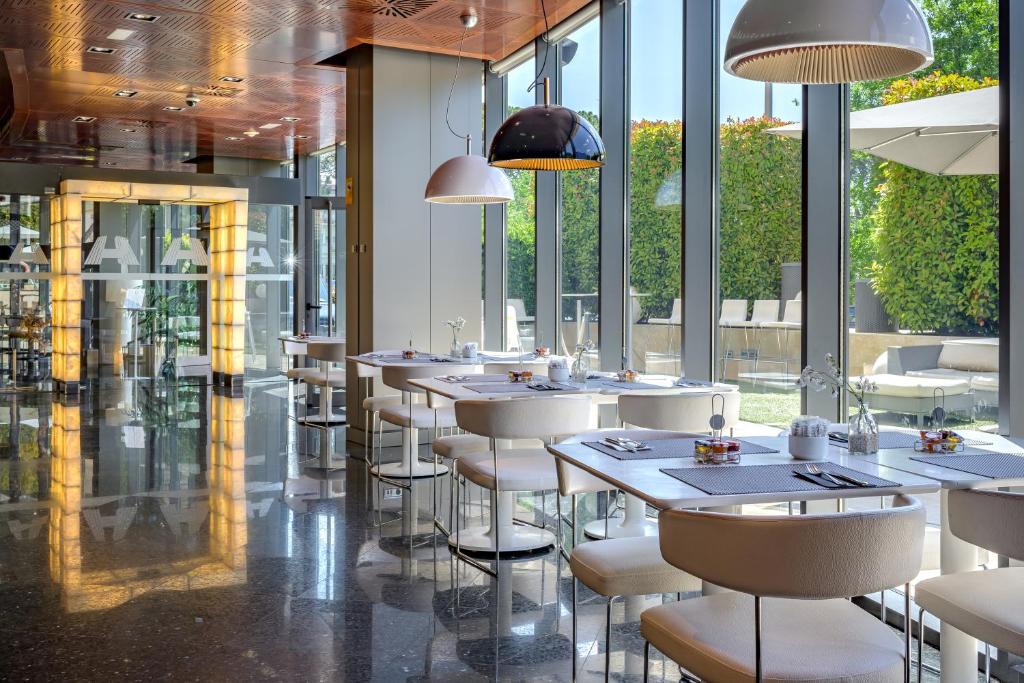
Adolfo Suarez Madrid-Barajas Airport
Hotel amenities: restaurant, café-bar, outdoor swimming pool, fitness center, air conditioning, free Wi-Fi, flat-screen TVs, mini-bars, private parking, free transfer service to Barajas Airport
Nearby restaurants / bars: Pizzería Sienna (pizza restaurant), Humos gastrobar (restaurant), El Tapeo de Yadri (tapas bar), Georgetown Bar
Nearby misc.: Caprichito (bakery), Bar Balandro, Galia (beauty salon), Coconut Barber Shop
Within feet:
-
-
- Adolfo Suarez Madrid-Barajas Airport
- El Capricho Subway Station
-
Within 1.4 miles:
-
-
- Jardín de las Tres Culturas
-
Within 2.4 miles:
-
-
- Chez Gabrielle
-
Within 6 miles:
-
-
- Torre Picasso
-
Within 7 miles:
-
-
- Temple of Debod
-
Approximate cost per night: $226
Hotel Liabeny
Salud, 3, Madrid City Center
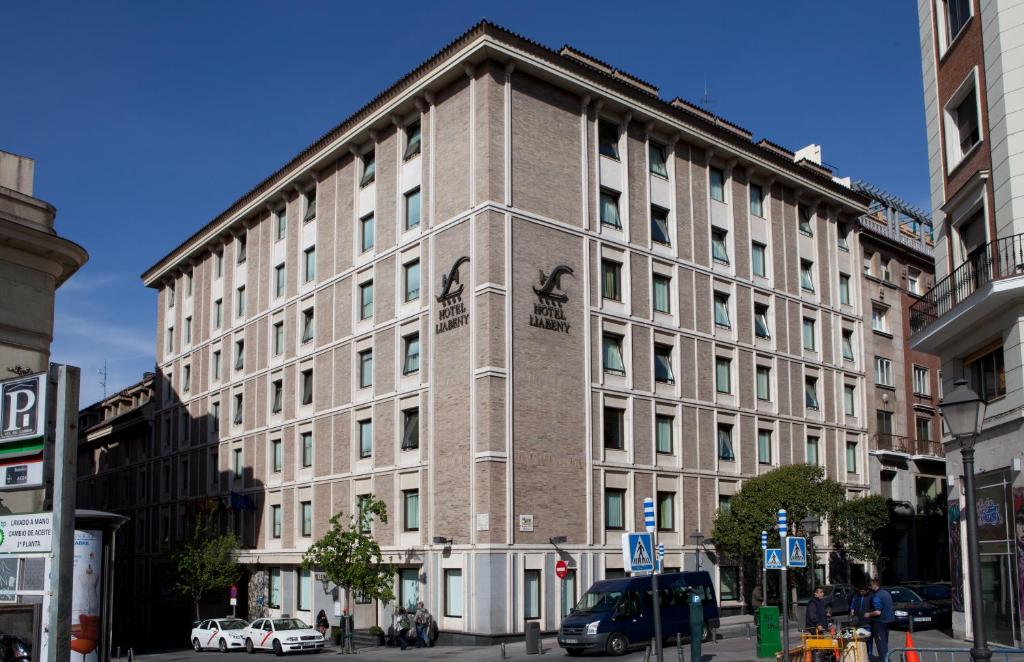
Puerta del Sol | RIBS ABADA | Takos Al Pastor
Hotel amenities: restaurant, bar, cafeteria with a lounge area, sauna, gym, free Wi-Fi, flat-screen TVs, turndown, concierge & bellboy services, meeting / conference facilities
Nearby restaurants / bars: VALDEMESO (Spanish restaurant), mu! (Argentinian restaurant), Bolus Burger Gran vía – Callao (hamburger restaurant), Galipán Montera (hot dog restaurant), Puerto Rico (restaurant), Restaurante Vegetariano Artemisa – Gran Vía (vegetarian restaurant), dNorte (bar & grill), El Jardín de Diana (bar)
Nearby misc.: Tablao Flamenco Torres Bermejas (Flamenco theater / restaurant), Secret Rooftop Garden (café), melaho’s (ice cream shop), La cachiterie Montera (bakery), Cachitos Chacaíto (bakery), El Delicioso Madrid (adult-themed dessert shop), Autoservicio Tres Cruces (grocery store), Mándalo Market (convenience store), Casa del Libro, Burlesque S.L (health and beauty shop), NIUMA BELLEZA (hair salon), Masaje y uñas – Madrid (nail salon), Lush (cosmetics store), Madrid Art Tattoo Montera (tattoo shop), Pasaje del Comercio (historical landmark), Zorba (outdoor sports store), Real Madrid Store
Within feet:
-
-
- Puerta del Sol (“Gate of the Sun” – Madrid-center square)
- RIBS ABADA
- Takos Al Pastor (Mexican restaurant)
- Iglesia de Ntra Sra del Carmen
- Jardim del Retiro
- Palacio De La Prensa
-
Within 1 mile:
-
-
- Reina Sofia Museum
-
Within 13 miles:
-
-
- Madrid-Torrejón Airport
-
Hotel Liabeny is 7 miles from Adolfo Suarez Madrid-Barajas Airport.
Approximate cost per night: $362
Elba Madrid Alcalá
Alcala, 476, San Blas

Parque Infantil Quinta de los Molinos
Hotel amenities: restaurant, café-bar, fitness center, free Wi-Fi, flat-screen TVs, hairdryers, 24-hour front desk, private parking
Nearby restaurants / bars: Restaurante La Tagliatella (Italian restaurant), Amodiño – Tapería en Madrid (restaurant), Aranda Madrid (restaurant), Cafetería Los Almendros (family restaurant), Matsuri (Asian restaurant), Restaurant Malaysia (Halai restaurant), Restaurante 3B (grill), Restaurante El Álamo (Spanish restaurant), restaurante Vicky (bar & grill), Alex’s Gastrobar, Casa Rodríguez (bar), La Galeria Café-Bar
Nearby misc.: Cafeteria Fanatico (coffee shop), Oinak Pies Grandes (shoe store), C1 CrossFit (fitness center), Brooklyn Fitboxing Ciudad lineal (gym), Morales Box Alcalá (boxing cub), Esencia Studios (function room facility), Olga Vallejo Fotógrafo (photography studio)
Within feet:
-
-
- Parque Infantil Quinta de los Molinos (city park – springtime blooming almond trees)
- Metro-Ciudad Lineal Subway Station
-
Within 1.6 miles:
-
-
- Mezquita de Madrid
-
Within 2.8 miles:
-
-
- Parroquia de la Asunción de Nuestra Señora
-
Within 3.7 miles:
-
-
- Sorolla Museum
-
Elba Madrid Alcalá is 3 miles from Adolfo Suarez Madrid-Barajas Airport.
Approximate cost per night (Triple Room): $240
Cost per person (three people): $80
Hotel BESTPRICE Alcalá
Calle Miguel Yuste 10, San Blas
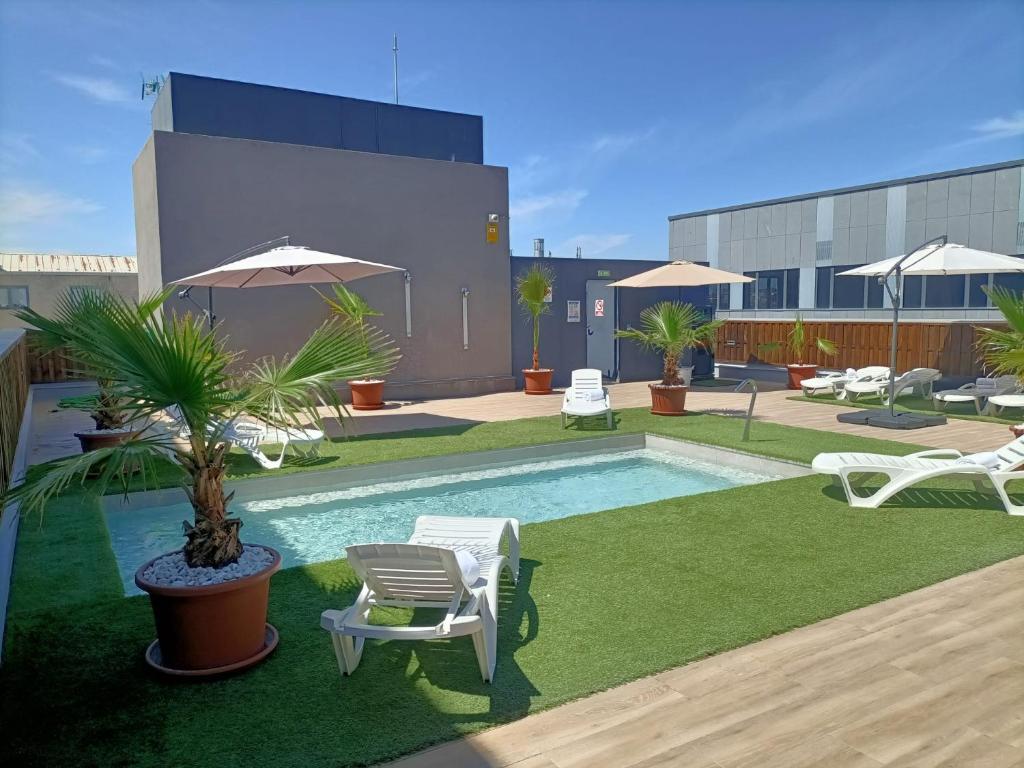
Metro-Suanzes Subway Station
Hotel amenities: outdoor swimming pool, terrace, air conditioning, free Wi-Fi, flat-screen TVs, desks, 24-hour front desk, private parking
Also in the area: Elba Madrid Alcalá
Within feet:
-
-
- Metro-Suanzes Subway Station
- Parque Infantil Quinta de los Molinos
-
Within 1.4 miles:
-
-
- Libertempo
-
Within 2 miles:
-
-
- Chez Gabrielle
-
Within 4.7 miles:
-
-
- Thyssen-Bornemisza Museum
-
Hotel BESTPRICE Alcalá is 2.7 miles from Adolfo Suarez Madrid-Barajas Airport.
Approximate cost per night: $112
Only YOU Hotel Atocha
Paseo de la Infanta Isabel, 13, Retiro
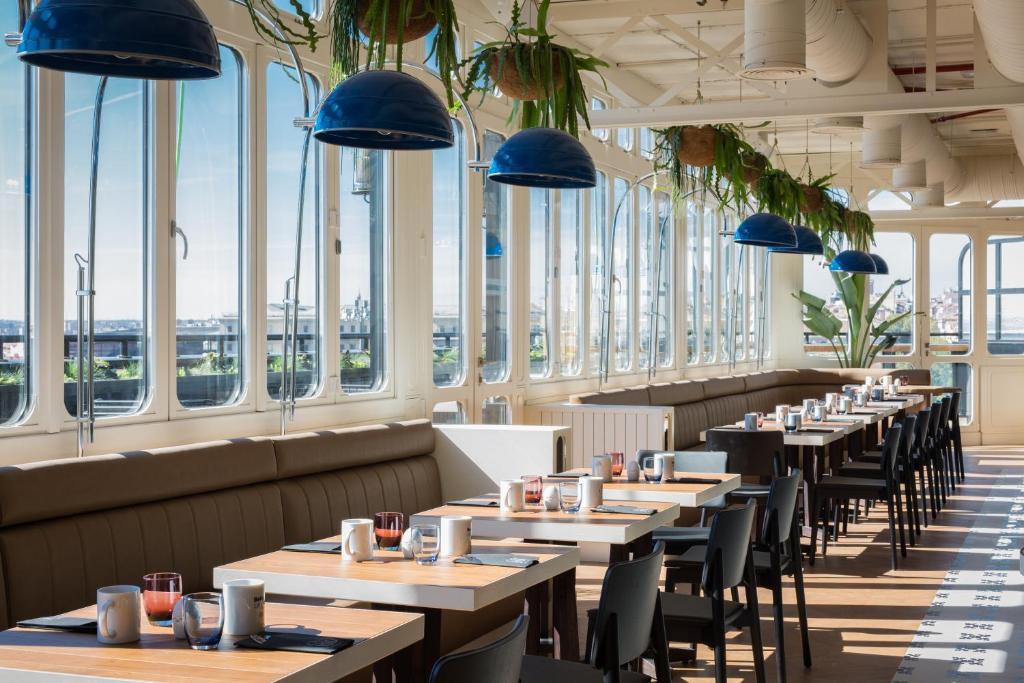
Retiro Park | Great Pond of El Retiro | La Rosaleda Cecilio Rodríguez Rose Garden | Fountain of the Fallen Angel | Palacio de Cristal | Basílica de Atocha | Real Jardín Botánico
Hotel amenities: 2 restaurants, multiple lounge areas, café-bakery, Paseo Infanta Isabel / Calle Alfonso XII views, fitness center, soundproofed rooms, free Wi-Fi, flat-screen TVs, mini-bars, bathrobes, slippers. private parking
Nearby restaurants: Oven Mozzarella Atocha (Italian restaurant), Sép7ima (restaurant), SteakBurger Atocha (hamburger restaurant)
Nearby misc.: LKM: La Casa del Maquillaje (beauty supply store), National Museum of Anthropology (Ethnographic museum), Royal Observatory of Madrid, CaixaForum Madrid (cultural center), IKONO Madrid (tourist attraction), Bosque del Recuerdo (park)
Within feet:
-
-
- Retiro Park (350-acre park – created 1680)
- Great Pond of El Retiro (central park pond – Monument to Alfonso XII colonnaded monument, rental rowboats & canoes)
- La Rosaleda Cecilio Rodríguez Rose Garden (rose bushes, stone fountains, arbors)
- Fountain of the Fallen Angel (1877 sculpture – Lucifer falling from heaven, fountain, gargoyles)
- Palacio de Cristal
- Basílica de Atocha
- Real Jardín Botánico (botanical garden)
- Panteón De Hombres Ilustres
- Royal Tapestry Factory
- Golden Triangle Art
-
Within 1 mile:
-
-
- Plaza de Santa Ana
-
Within 2.5 miles:
-
-
- Casa de Campo
-
Only YOU Hotel Atocha is 7 miles from Adolfo Suarez Madrid-Barajas Airport.
Approximate cost per night (Superior Suite): $441
The Central House Madrid Lavapiés
Calle Encomienda 16, Madrid City Center

Clue Hunter Madrid | Jodidamente Baked Potatoes
Hostel amenities: restaurant, bar, sun terrace, balconies, public bath, soundproofing, air conditioning, free Wi-Fi, flat-screen TVs, kitchenettes, desks, 24-hour front desk, concierge service
Nearby restaurants / bars: Jauja Madrid (Fusion restaurant), Piri Piri al Carbón (restaurant), La Alegría de la Huerta (takeout restaurant), La Cuchara (takeout restaurant), Antonia Pizza (pizza takeout), Shao Grill (Yakitori restaurant), DaaraJi (restaurant), POKE&GREENS (poke bar), La Encomienda (vegan restaurant), Vinoteca Alvin (wine bar)
Nearby misc.: Plántate: Better Coffee & Brunch (café), Adorado Bar Lavapies (cafeteria), Big Tree Books (espresso bar), Kraleva Specialty Coffee (espresso bar), La Barra Dulce (pastry shop), Panifiesto Lavapiés (bakery), EL ESPACIO STORE (general store), Granel Madrid (natural goods store), Martina Trashi sho (hairdresser), Bearbero Madrid (barber shop), Liquidator Music (record store), Los Artistas del Barrio (art gallery), Galería De Arte A Ciegas (art gallery), Folklores (fabric store), 28 Vintage (vintage clothing store), Dharma Store (clothing store), Pl. de Cascorro (notable street)
Within feet:
-
-
- Clue Hunter Madrid
- Jodidamente Baked Potatoes
- Iglesia de San Cayetano
- Escuela Mayor de Danza
- Posada Del Dragón
-
Within 1.3 miles:
-
-
- Temple of Debod
-
Within 14 miles:
-
-
- Madrid-Torrejón Airport
-
The Central House Madrid Lavapiés is 8 miles from Adolfo Suarez Madrid-Barajas Airport.
Approximate cost per night: $70
Hotel Regina
Alcala, 19, Madrid City Center

Casino De Madrid | San Fernando Fine Art Royal Academy | Bresca
Hotel amenities: restaurant, bar, wine cellar, air conditioning, free Wi-Fi, flat-screen TVs, desks, 24-hour front desk, airport shuttle service
Nearby restaurants / bars: Sala de Despiece 2 (restaurant), Ginos (restaurant), Restaurante de Sichuan (Asian restaurant), Wacamole Food & Drink (taco restaurant), Mojito´s (cocktail bar)
Nearby misc.: LOUÉ (boutique), The Root Madrid (sneakers store), Church of the Calatravas (Catholic church)
Within feet:
-
-
- Casino De Madrid
- San Fernando Fine Art Royal Academy
- Bresca
- Edificio La Equitativa
- Palacio De Miraflores
-
Hotel Regina is 7 miles from Adolfo Suarez Madrid-Barajas Airport.
Approximate cost per night (Penthouse Room with Terrace): $617
Hard Rock Hotel Madrid
17 Ronda de Atocha, Arganzuela
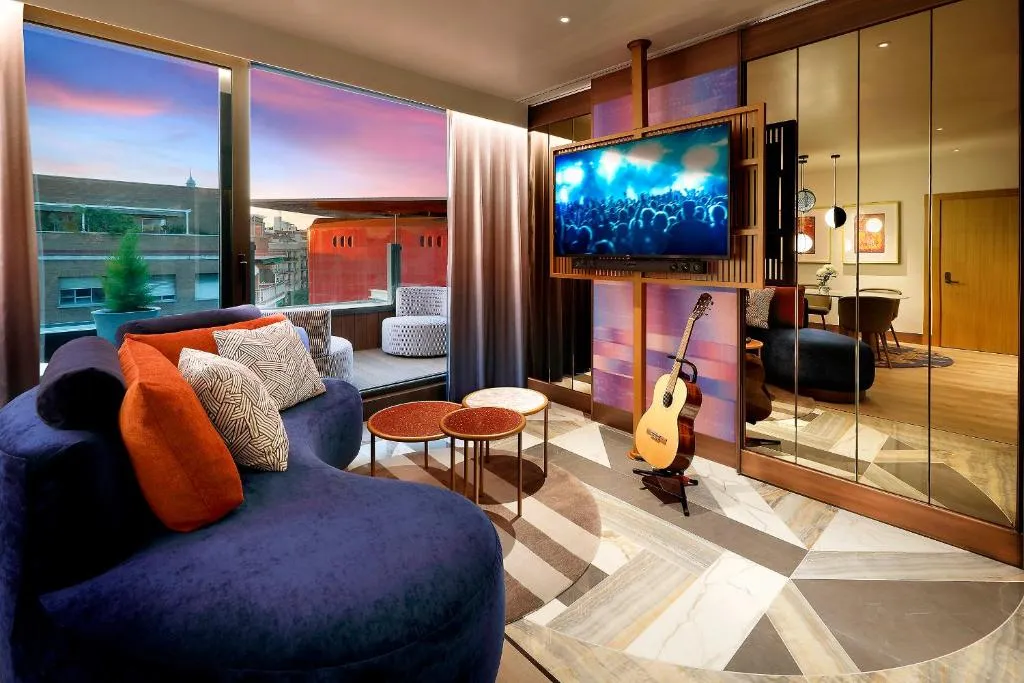
Reina Sofia Museum
Hotel amenities: multiple restaurants, bar, seasonal outdoor swimming pool, pool views, terraces, fitness center, air conditioning, free Wi-Fi, sofa beds, on-site parking
Nearby restaurants: Empanadish Atocha (restaurant), Cafetería Alfe (Galician restaurant), La Caníbal (bar & grill), Restaurante Etíope Habesha (restaurant), El rey de los tacos (taco restaurant), Restaurante ORISHAS
Nearby misc.: Hera Beauty – Estética Avanzada (beauty salon), Esmera School (beauty school), Centro de Ayuda Cristiano (church), Tango por Tango (dance school), YogaOne Lavapiés (yoga studio)
Within feet:
-
-
- Reina Sofia Museum
- Esto es una Plaza
- San Lorenzo
- Atocha Train Station
-
Within 1 mile:
-
-
- Puerta del Sol
-
Within 1.1 miles:
-
-
- Retiro Park
-
Hard Rock Hotel Madrid is 8 miles from Adolfo Suarez Madrid-Barajas Airport.
Approximate cost per night (Rock Star Suite with Terrace): $1,920
Cost per person (four people): $480
7 Islas Hotel
Valverde, 14, Madrid City Center

Convento De Las Madres Mercedarias
Hotel amenities: café, terraces, fitness center, air conditioning, free Wi-Fi, marble bathrooms, 24-hour front desk, airport shuttle service
Nearby restaurants / bars / pubs: aollo (restaurant), Desengaño 13 (Fusion restaurant), Burnout Burgers (hamburger restaurant), Taquería Tacoctelería (Mexican restaurant), Lanzhou Beef Noodles (Chinese restaurant), Rangoli (Indian restaurant), Brunch Club (restaurant), Zurch (brunch restaurant), Zenith Brunch & Cocktails (restaurant), 7 Craft Bar (restaurant), El Chiringuito Cafeteria (bar), Santamaría Coctelería (cocktail bar), La Nueva Troje (gastropub)
Nearby misc.: La Chula de Valverde (lounge), Cafetería La Austriaca (café), SWEETLAND (candy store), Harpo (cosmetics store), Ray-Ban (sunglasses store), Primark (clothing store), Church of Saint Martin of Tours (Catholic church)
Within feet:
-
-
- Convento De Las Madres Mercedarias
- Oratorio Caballero De Gracia
- Gran Via Station Metro Station
-
Within 1 mile:
-
-
- Temple of Debod
-
Within 9 miles:
-
-
- Monte del Pilar Forest
-
7 Islas Hotel is 8 miles from Adolfo Suarez Madrid-Barajas Airport.
Approximate cost per night: $545
The Hat Madrid
Calle Imperial, 9, Madrid City Center
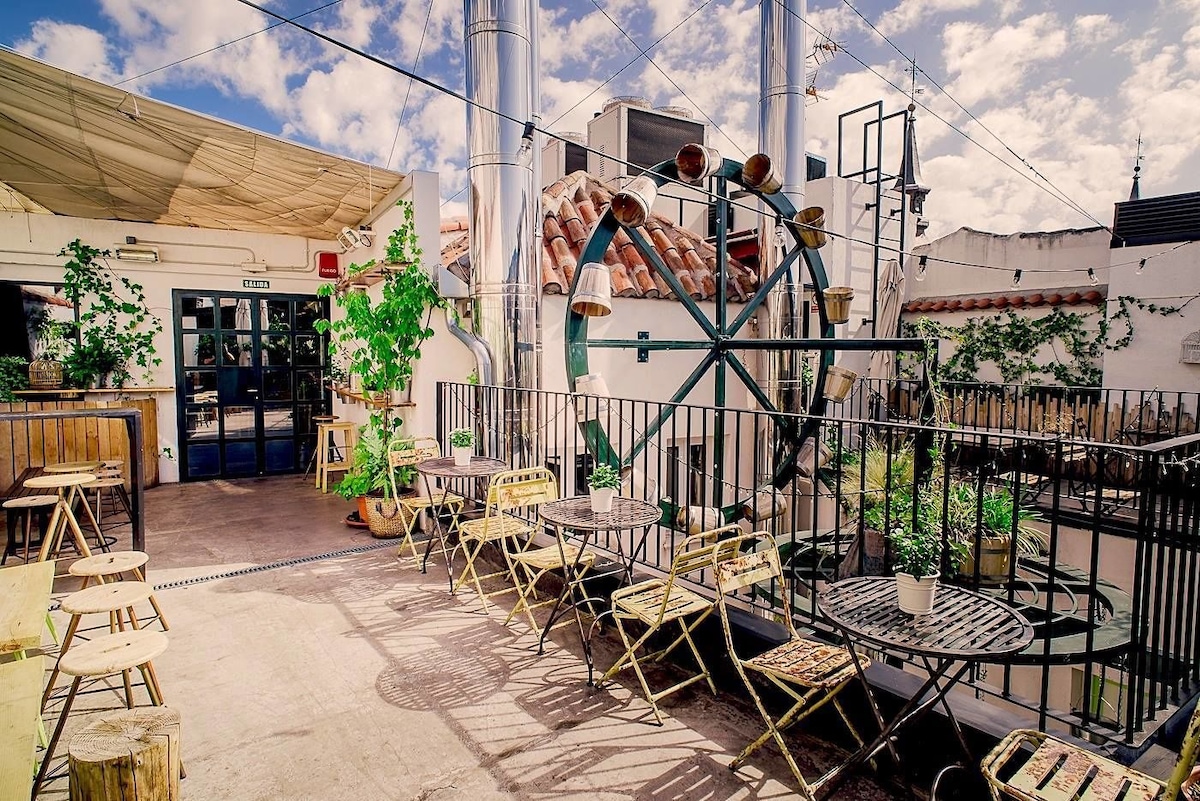
Palacio de Viana | Bar La Campana | Bar La Ideal
Hostel amenities: restaurant, rooftop bar, city / sunset views, balconies, air conditioning, free Wi-Fi, 24-hour front desk, bike rentals
Nearby restaurants / bars: Pestana Café de la Plaza (hotel restaurant), Metro Bistro (restaurant), Taberna Restaurante Bakea (restaurant), Chun Li (Asian restaurant), Ramen Shifu (Japanese restaurant), Healthy Poke (restaurant), Falafeleria (falafel restaurant), Tropicana Beach Lounge (bar & grill), Cuatro Gatos Cerveceria (bar)
Within feet:
-
-
- Palacio de Viana
- Bar La Campana (classic tapas restaurant – fried calamari sandwiches, sangria)
- Bar La Ideal (bar)
- Ministerio de Asuntos Exteriores
- Real Colegio de la Medicina
- La Latina Metro Station
-
The Hat Madrid is 8 miles from Adolfo Suarez Madrid-Barajas Airport.
Approximate cost per night: $72
UVE Marcenado
Marcenado, 9, Chamartín

Berlín Park
Hotel amenities: restaurant, balconies, air conditioning, free Wi-Fi, flat-screen TVs, safety deposit boxes, 24-hour front desk, laundry service, tour desk, private parking
Nearby restaurants / bars: Humo Smoke & Grill (restaurant), Apostasía Bar, POTE café-bar
Nearby misc.: Fusión VIP (night club), Churrería Milagros (Churreria), Panadería Don Pan (bakery), Bibì e Bibò (ice cream shop), Solmanía (tanning salon)
Within feet:
-
-
- Berlín Park
- Edificio Torres Blancas
- Prosperidad Metro Station
-
Within 1 mile:
-
-
- Plaza de Juan de la Cosa
-
Within 1.3 miles:
-
-
- Mezquita de Madrid
-
Within 2.2 miles:
-
-
- Puerta de Alcalá
-
UVE Marcenado is 5 miles from Adolfo Suarez Madrid-Barajas Airport.
Approximate cost per night: $144
Hotel Preciados
Preciados, 37, Madrid City Center
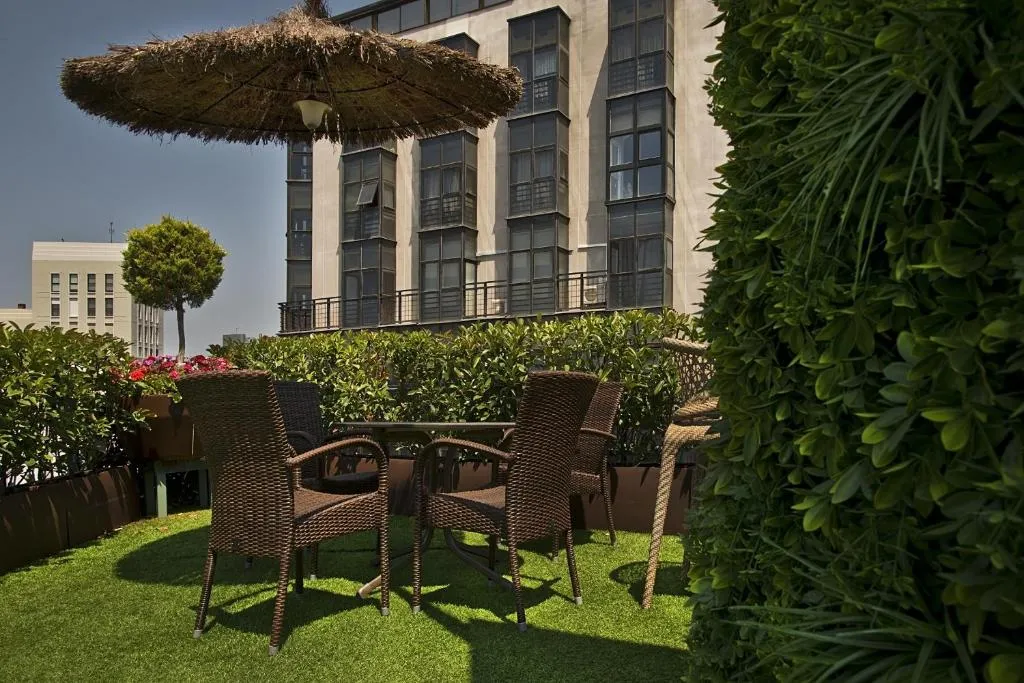
Teatro Lope de Vega
Hotel amenities: restaurant, cocktail lounge, balconies, free Wi-Fi, flat-screen TVs, free mini-bars, pillow menus, 24-hour front desk, meeting rooms, private parking, airport shuttle service
Nearby restaurants / bars / pubs: La Mi Venta (Spanish restaurant), Asador de Aranda (Castilian restaurant), Restaurante El Buey (grill), Restaurante Sando (Mediterranean restaurant), El Labriego (restaurant), La Huerta Funky Castizo (restaurant), Casa Jaguar (Latin American restaurant), Entre Suspiro y Suspiro (Mexican restaurant), La Chamana (Mexican restaurant), La Malinche (Mexican restaurant), Cuando Sali de Cuba (Cuban restaurant), Restaurante El Senador, Al-Nassim Teteria (Lebanese restaurant), MUSASHI (Japanese restaurant), Sublime Tokyo (Japanese restaurant), MUSASHI (Japanese restaurant), Igo (Ramen restaurant), Mashita (Korean restaurant), X BOWL • Noodle House (Chinese restaurant), Wok King (Chinese restaurant), Restaurante Xiaoman (Chinese restaurant), Lambuzo (tapas bar), Las Cuevas de Sando (bar), Unterwelt (bar), Alchemist 1967 (cocktail bar), Beer Station (Irish pub), Cerveceria Erte (pub)
Nearby misc.: Cafe De Chintas, Cool (disco club), Brunetti Italian Store & Caffè (Italian grocery store), La Nodriza (organic food store), Are you ready? (hairdresser), Desperate Literature (book store), Café Berlín (concert hall), El Coloso (meeting room rentals)
Within feet:
-
-
- Teatro Lope de Vega (theater)
- Santo Domingo Metro Station
-
Within 1 mile:
-
-
- Thyssen-Bornemisza Museum
-
Within 8 miles:
-
-
- Monte del Pilar Forest
-
Hotel Preciados is 8 miles from Adolfo Suarez Madrid-Barajas Airport.
Approximate cost per night (Penthouse Suite): $437
Aparto-Hotel Rosales
Marques De Urquijo, 23, Moncloa-Aravaca

Inmaculado Corazón De María
Hotel amenities: air conditioning, free Wi-Fi, fully-equipped kitchens, desks, 24-hour front desk, tour desk, dog-friendly
Nearby restaurants / bars: IL CRATERE DEL GUSTO (pizza restaurant), Aderezo 37 (bar & grill), Casa Paco (Tapas bar), Zeus Café Bar
Nearby misc.: Syra Coffee – Ferraz (café), Luna & Wanda (pastry shop), Chada Thai Massage Madrid
Within feet:
-
-
- Inmaculado Corazón De María (parish)
- Parque del Oeste
- Rosaleda del Parque del Oeste
- Arguelles Metro Station
-
Within 1.1 miles:
-
-
- Plaza de Oriente
-
Within 1.3 miles:
-
-
- Casa de Campo
-
Within 1.7 miles:
-
-
- Sorolla Museum
-
Aparto-Hotel Rosales is 8 miles from Adolfo Suarez Madrid-Barajas Airport.
Approximate cost per night (Apartment): $354
Cost per person (four people): $88
Catalonia Plaza Mayor
Atocha, 36, Madrid City Center
Parroquia De San Sebastián
Hotel amenities: bar, terrace, hot tub, gym, free Wi-Fi, flat-screen TVs, hairdryers, buffet breakfast, 24-hour front desk, private parking
Nearby restaurants: Ferretería Restaurante (Spanish restaurant), La Pizzateca (pizza restaurant), DF BAR Tortería Mexicana (Mexican restaurant), El Patio de Atocha (restaurant), ZUPPA Antón Martin (soup restaurant), Anime Ramen Madrid (Ramen restaurant), Industria Bar (Tapas bar)
Nearby misc.: Maison Thé (coffee shop), Brown Bear Bakery, más que cervezas (beer store), Thai Sol Foot Massage (massage spa), Pelucas Cabello R (wig store), 600 Tour Madrid (tour agency), Teatro Monumental (performing arts theater)
Within feet:
-
-
- Parroquia De San Sebastián
- San Ignacio De Loyola
- Plaza de Santa Ana
- Anton Martin Metro Station
-
Within 1.1 miles:
-
-
- Retiro Park
-
Catalonia Plaza Mayor is 8 miles from Adolfo Suarez Madrid-Barajas Airport.
Approximate cost per night (Imperial Suite): $377
Vincci The Mint
Gran Vía 10, Madrid City Center
Metropolis Building
Hotel amenities: gastrobar, city views, terrace, air conditioning, free Wi-Fi, parquet floors, flat-screen TVs, coffee machines, mini-bars, desks, hairdryers, drinks upon check-in/out at the reception-bar
Nearby restaurants / bars: Vinitus Gran Via (Spanish restaurant), La Primera (Cantabrian restaurant), Lettera 22 (Italian restaurant), Beata Pasta – Gran Vía (Italian restaurant), QIQIHARY CHUECA (Korean barbecue restaurant), El Manaba (Ecuadorian restaurant), Honest Greens Gran Via 7 (health food restaurant), SteakBurger Bar (hamburger restaurant), Bambubox (Thai restaurant), The Mint Roof (bar), Del Diego Cocktail Bar
Nearby misc.: Casto (espresso bar), Perfumería Rosi (perfume store), Taller del Prado (art gallery)
Within feet:
-
-
- Metropolis Building (office building)
- Oratorio Caballero De Gracia
- El 4 de Tapas
- Plaza de Cibeles
- Sevilla Metro Station
-
Within 1 mile:
-
-
- Reina Sofia Museum
-
Within 9 miles:
-
-
- Monte del Pilar Forest
-
Hotel Vincci The Mint is 7 miles from Adolfo Suarez Madrid-Barajas Airport.
Approximate cost per night (Tower Suite): $425
The Social Hub Madrid
28 Cuesta de San Vicente, Moncloa-Aravaca
Madrid Rio | Temple of Debod
Hotel amenities: multiple restaurants, bar, rooftop swimming pool, city views, solarium, terrace, balconies, fitness center, yoga / fitness classes, air conditioning, free Wi-Fi, tea / coffee makers, mini-bars, desks, game room, indoor play area
Nearby restaurants / bars: Yothai (Thai restaurant), Pizzeria Yothai (pizza restaurant), Rooftop Bar @ The Social Hub Madrid (bar), The Social Hub Restaurant & Bar Madrid (espresso bar)
Nearby misc.: Sala Temple (Flamenco theater), Rubikon Escape Room, Café de la Rivière, Tutti Frutti Heladeria (ice cream shop), Agapi-mu (bridal shop), QIK Tours (bicycle rental service)
Within feet:
-
-
- Madrid Rio (riverside park / event hub)
- Temple of Debod (ancient Nubian temple donated to Spain – erected 2nd-century BC near Aswan, Egypt)
- Sabatini Garden
- Puerta de San Vicente
- Príncipe Pío Metro Station
-
Within 1.1 miles:
-
-
- Plaza de Santa Ana
-
Within 1.4 miles:
-
-
- Thyssen-Bornemisza Museum
-
The Social Hub Madrid is 9 miles from Adolfo Suarez Madrid-Barajas Airport.
Approximate cost per night (Duplex Suite): $406
Cost per person (three people): $135
SmartRental Collection Gran Vía Capital
14 Calle Gran Vía, Madrid City Center

Oratorio Caballero De Gracia
Hotel amenities: restaurant, bar, rooftop swimming pool, city views, solarium, terrace, air conditioning, free Wi-Fi, washing machines, desks, paid parking
Also in the area: Vincci The Mint
Within feet:
-
-
- Oratorio Caballero De Gracia
- Metropolis Building
- El 4 de Tapas
- Iglesia De San José
-
Within 1 mile:
-
-
- Retiro Park
-
SmartRental Collection Gran Vía Capital is 7 miles from Adolfo Suarez Madrid-Barajas Airport.
Approximate cost per night (2 Bedroom Apartment with 2 Bathrooms): $665
Cost per person (six people): $110
Hotel Francisco I
Calle Arenal, 15, Madrid City Center

Church of Saint Genesius | La Coquette Blues Bar
Hotel amenities: free Wi-Fi, flat-screen TVs, tea / coffee makers, 24-houir front desk, car rental service, airport transfers
Nearby restaurants: Restaurante El Ñeru (Asturian restaurant), Kausa Madrid 1 (Peruvian restaurant), Brunch Colors Ópera (breakfast restaurant), Restaurante Casa Gallega (Galician restaurant), Restaurante Han, El cogollo de la descarga (restaurant), Hamburguesas | QW Foodtruck Ópera (restaurant), Steakburger (hamburger restaurant)
Nearby misc.: Churrería Chocolateria 1902 (chocolate café), La Caja de Vinos (wine store), Viena Capellanes (pastry shop), Torrons Vicens Arenal (gourmet grocery store), Extrem Puro Extremadura (grocery store), Museo del Pan Gallego (bakery), Teterimundi Tea Time (tea store), CoCo Fresh Tea & Juice (bubble tea store)
Within feet:
-
-
- Church of Saint Genesius (Catholic church)
- La Coquette Blues Bar
- Palacio De Gaviria
- Casa de la Panaderia
- Plaza Mayor
- Iglesia Santiago y S. Juan Bautista
- Ópera Metro Station
-
Within 1.1 miles:
-
-
- Casa de Campo
-
Hotel Francisco I is 8 miles from Adolfo Suarez Madrid-Barajas Airport.
Approximate cost per night (Standard Triple Room): $485
Cost per person (three people): $161
Hotel Atlántico
Gran Vía, 38 , Madrid City Center

Iglesia de Ntra Sra del Carmen
Hotel amenities: café-bar, 2 terraces with panoramic city views, classic décor, soundproofed rooms, air conditioning, free Wi-Fi, flat-screen TVs, mini-bars, safes, 24-hour front desk, luggage storage
Also in the area: 7 Islas Hotel
Within feet:
-
-
- Iglesia de Ntra Sra del Carmen (Catholic church)
- Palacio De La Prensa
- Puerta del Sol
- Callao Metro Station
-
Hotel Atlántico is 7 miles from Adolfo Suarez Madrid-Barajas Airport.
Approximate cost per night (Standard Triple Room): $294
Hostal Madrid
Esparteros, 6, Madrid City Center
Teatro Albéniz | Real Casa de Correos
Hostel amenities: wooden flooring, wrought-iron furniture, smart décor, air conditioning, free Wi-Fi, 24-hour front desk, luggage storage
Nearby restaurants / bars: L’oro di Napoli (pizza restaurant), St.James Paella (rice restaurant), Chiquita Restaurante (bar & grill), Cervecería Sol Mayor (bar), Pension Mimosas (cocktail bar)
Nearby misc.: Mimi’s Crêperie, OAKBERRY AÇAÍ – Puerta del Sol (health food store)
Within feet:
-
-
- Teatro Albéniz (performing arts theater)
- Real Casa de Correos (1768 royal postal service building / present-day government HQ)
- Carlos III Rey de España
- Casa de la Panaderia
- Sol Metro Station
-
Within 14 miles:
-
-
- Madrid-Torrejón Airport
-
Hostal Madrid is 9 miles from Adolfo Suarez Madrid-Barajas Airport.
Approximate cost per night: $166
Pestana Plaza Mayor Madrid
Calle Imperial 8, Madrid City Center
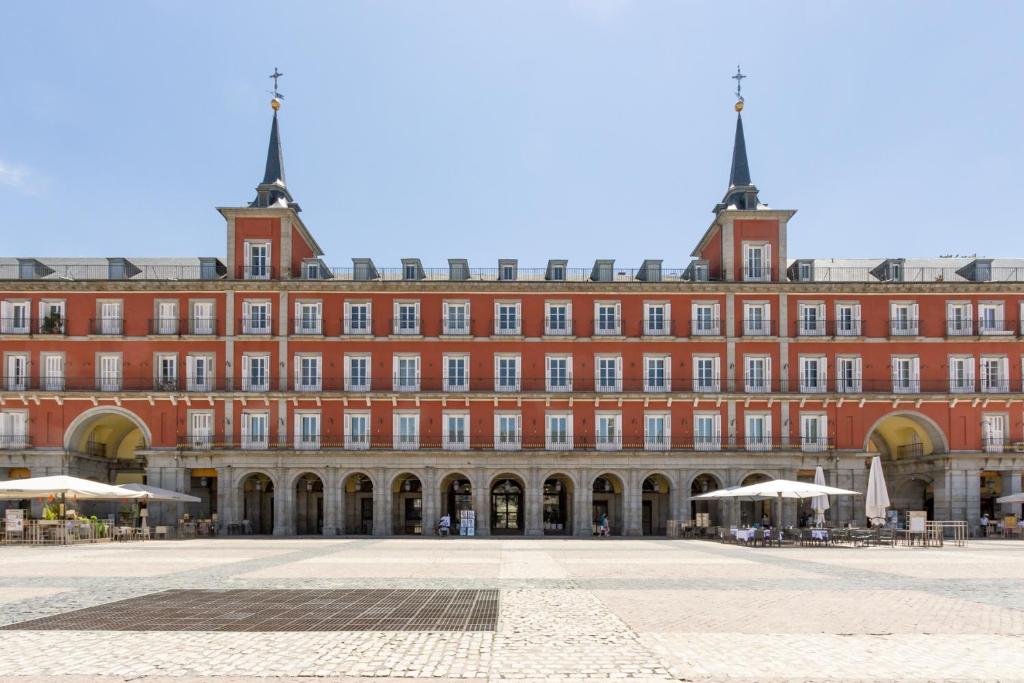
Plaza Mayor
Hotel amenities: bar, terrace, balconies, spa, air conditioning, free Wi-Fi, flat-screen TVs, desks, hairdryers, 24-hour front desk
Also in the area: The Hat Madrid
Within feet:
-
-
- Plaza Mayor (grand central square – oldest part of the city)
- Casa de la Panaderia
- Colegiata De San Isidro
- Tirso de Molina Metro Station
-
Within 1.3 miles:
-
-
- Retiro Park
-
Pestana Plaza Mayor Madrid is 8 miles from Adolfo Suarez Madrid-Barajas Airport.
Approximate cost per night: $873
Barceló Imagine
Agustin de Foxa, 32, Chamartin

Puerta de Europa
Hotel amenities: lobby bar, sky lounge, city views, rooftop terrace with an outdoor pool & garden, massage room, gym, avant-garde style, rock, jazz or flamenco-themed rooms, air conditioning, flat-screen TVs, tea / coffee makers, hairdryers, 3 meeting rooms
Nearby: Bertiz Chamartín (bakery), MENTA Beauty Place (hair salon), Attic Studio 26 (photography studio)
Within feet:
-
-
- Puerta de Europa (Gate of Europe towers)
- Plaza de Castilla Metro Station
- CTBA
- Valdeacederas Metro Station
-
Within 1.3 miles:
-
-
- Santiago Bernabéu Stadium
-
Within 3.6 miles:
-
-
- Temple of Debod
- Gran Via
-
Within 5.3 miles:
-
-
- Parque de Atracciones de Madrid
-
Within 7 miles:
-
-
- Faunia
-
Barceló Imagine is 6.1 miles from Adolfo Suarez Madrid-Barajas Airport.
Approximate cost per night (Family Premium): $734
Cost per person (six people): $122
Catalonia Puerta del Sol
Atocha, 23, Madrid City Center

Thyssen-Bornemisza Museum
Hotel amenities: restaurant, bar with a roofed terrace, patio with crystal domes, parquet floors, smart décor, air conditioning, free Wi-Fi, flat-screen TVs, mini-bars
Nearby: Yatai Market (Asian restaurant), LAREPERA (bar), Pastelería Pan Feliz (café), Mistura Ice Cream (ice cream shop), El Ángel del Jardín (florist), Joyería ALVIORO (jeweler), Muy Mucho (home goods store), Ribes y Casals (fabric store), Miss Kits (wool store), La Historia Interminable El Musical (performing arts theater), Yelmo Cines Ideal (movie theater), Teatro Calderón (performing arts theater)
Within feet:
-
-
- Thyssen-Bornemisza Museum
- Plaza de Santa Ana
- Plaza Mayor
- Metropolis Building
- The Garden of the Prince of Anglona
- Madrid Botanical Garden
- Reina Sofia Museum
- Puerta de Toledo
-
Within 1.1 miles:
-
-
- Temple of Debod
-
Within 1.6 miles:
-
-
- Sorolla Museum
-
Within 2.6 miles:
-
-
- Torre Picasso
-
Catalonia Puerta del Sol is 9 miles from Adolfo Suarez Madrid-Barajas Airport.
Approximate cost per night (Suite): $376

Hyatt Centric Gran Via Madrid
Gran Via, 31, Madrid City Center
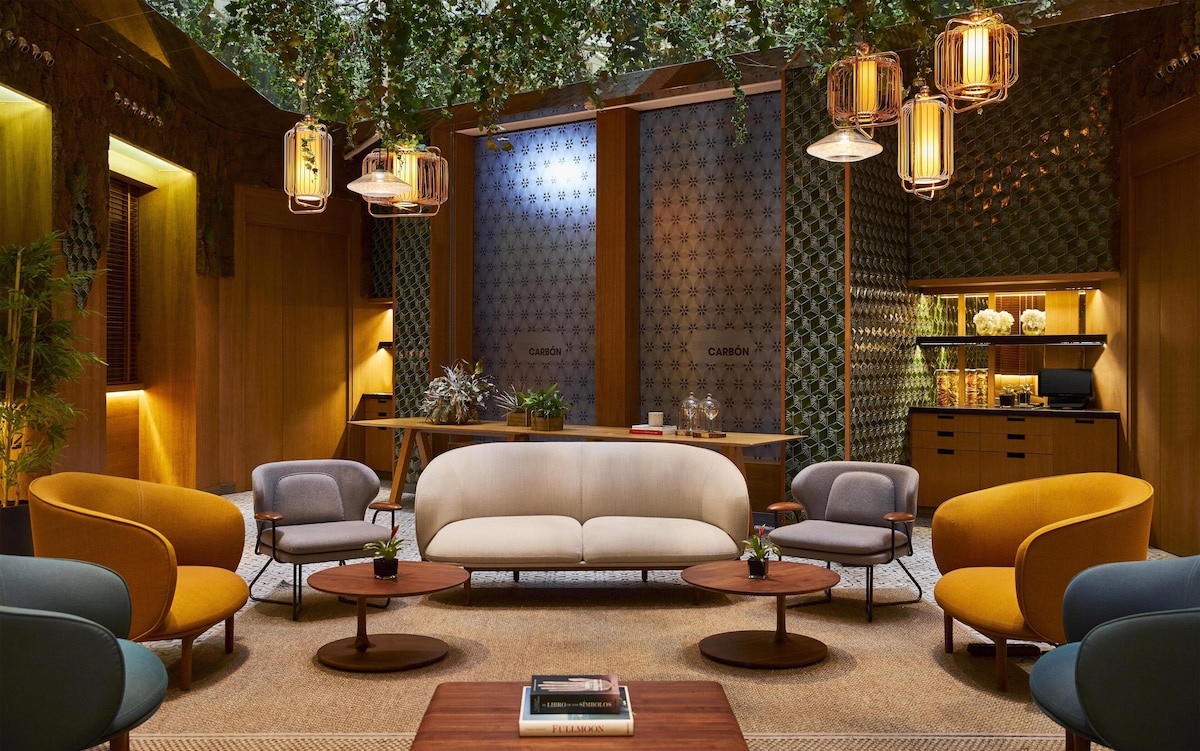
Gran Via | Casa del Libro
Hotel amenities: on-site dining, bar, secret rooftop bar with panoramic views, buffet breakfast, city views, stylish décor, custom designed furniture, 24-hour gym, air conditioning, free Wi-Fi, 55-inch TVs, hairdryers, 24-hour front desk, concierge service, functional work areas, music studio
Also in the area: Hotel Liabeny
Within feet:
-
-
- Gran Via (central street – shopping, theaters, architecture)
- Casa del Libro
- Principe Gran Via Theatre
- Muñoz Seca Theatre
- Preciados Street
- Monastery of las Descalzas Reales
- Real Academia de Bellas Artes de San Fernando
- Royal Palace of Madrid
-
Within 1.1 miles:
-
-
- Retiro Park
- Atocha Train Station
-
Within 3,7 miles:
-
-
- Chamartin Station
-
Hyatt Centric Gran Via Madrid is 8.2 miles from Adolfo Suarez Madrid-Barajas Airport.
Approximate cost per night (Terrace Suite): $1,344
Cost per person (three people):$448
VP Madroño
General Diaz Porlier, 101, Salamanca

Santo Domingo El Real
Hotel amenities: restaurant, bar, garden, air conditioning, free Wi-Fi, kitchenettes, coffee machines, 24-hour front desk, on-site parking
Nearby restaurants: Ginkgo LAB Madroño (restaurant), Nanu´s (hamburger restaurant), Pituka & Petaka (Mexican restaurant), La Mordida (Mexican restaurant), Makami (Asian restaurant), Bangalore (Indian restaurant)
Nearby misc.: BAHAY (espresso bar), Cocimona (cafeteria), Mayoma (Churreria), FANÁTICA (ice cream shop), Moika (bakery), Madrigal (hairdresser), Salón Rafael Dueñas (hair salon), Estética Elena Camarón (beauty salon)
Within feet:
-
-
- Santo Domingo El Real (Catholic church)
- Colegio de Nuestra Señora del Pilar
- Edificio Torres Blancas
- Diego de León Metro Station
-
Within 1 mile:
-
-
- Sorolla Museum
-
Within 1.1 miles:
-
-
- Iglesia De Lourdes
-
Within 1.7 miles:
-
-
- Torre Picasso
-
VP Madroño is 6 miles from Adolfo Suarez Madrid-Barajas Airport.
Approximate cost per night (Premium Triple Room): $288
Cost per person (three people):$96
Onefam Sungate
Carmen, 16, 2ª, Madrid City Center

El Corte Inglés Callao | Iglesia de Ntra Sra del Carmen
Hostel amenities: air conditioning, 24-hour front desk, kitchen, luggage storage, laundry service
Nearby: Oven Mozzarella Preciados (Italian restaurant), C. de Preciados (notable street)
Within feet:
-
-
- El Corte Inglés Callao
- Iglesia de Ntra Sra del Carmen (Catholic church)
- Palacio De Gaviria
- Maiestas Mariae De La Colección Leva
- Callao Metro Station
-
Onefam Sungate is 7 miles from Adolfo Suarez Madrid-Barajas Airport.
Approximate cost per night: $191
Only YOU Boutique Hotel Madrid
Barquillo, 21, Madrid City Center
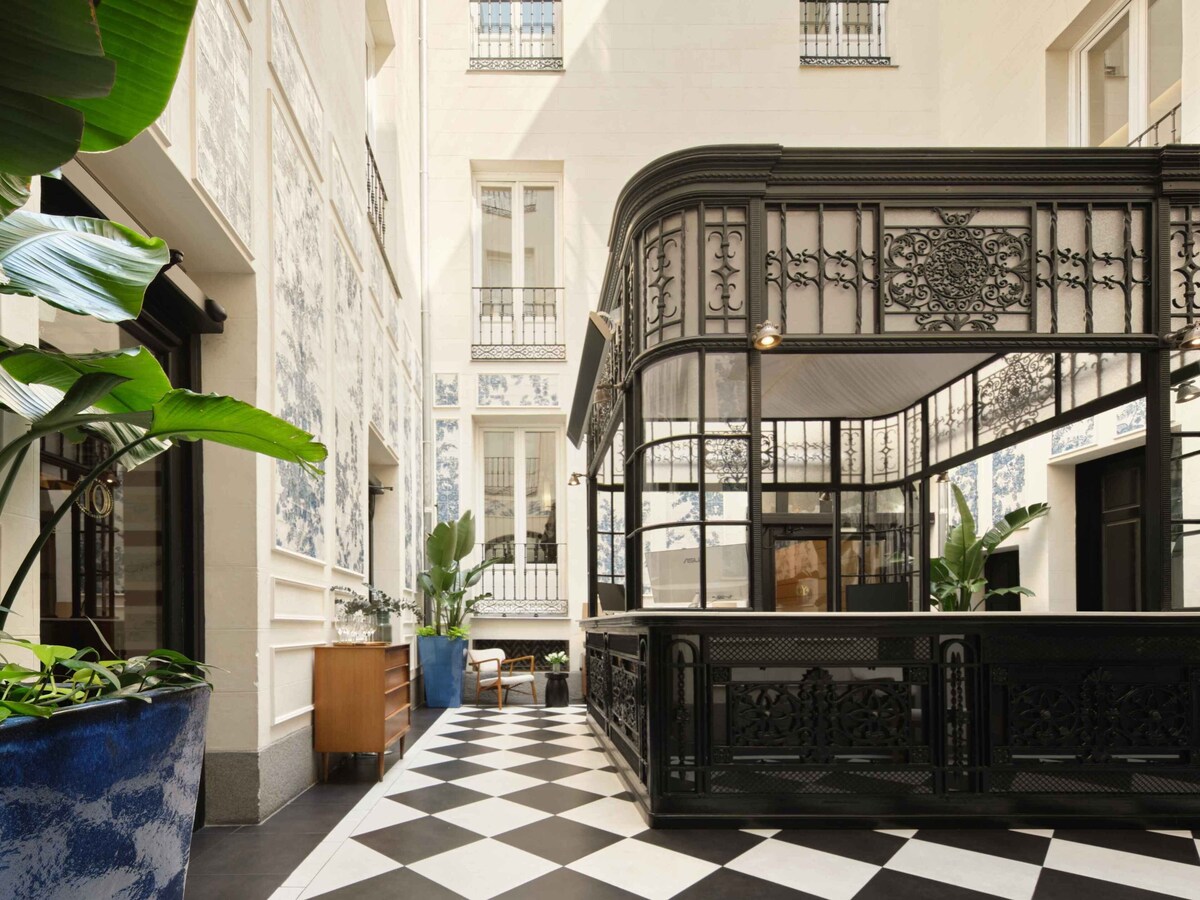
Conv. De Las Mercedarias Descalzas
Hotel amenities: restaurant, bar, lounge area with soft background music, cocktails & gourmet dishes, soundproofed rooms, free Wi-Fi, 42-inch Smart TVs, iPhone/iPod & MP3 docks, tea / coffee makers, mini-bars, electronic safes, bathrobes, slippers, luxury toiletries, 24-hour room service, 24-hour front desk, on-site parking
Within feet:
-
-
- Conv. De Las Mercedarias Descalzas (monastery)
- El Secreto de Bruno
- Iglesia Santa Bárbara
- Sociedad De Autores
- Chueca Metro Station
-
Within 8 miles:
-
-
- Monte de Valdelatas Forest
-
Only YOU Boutique Hotel Madrid is 7 miles from Adolfo Suarez Madrid-Barajas Airport.
Approximate cost per night: $463
Catalonia Las Cortes
Calle del Prado, 6, Madrid City Center

Ateneo De Madrid
Hotel amenities: restaurant, cafeteria, snack area with free sandwiches, salads, pastries, teas & drinks, classic décor, antique furnishings, authentic ceiling frescoes, air conditioning, free Wi-Fi, flat-screen TVs, Nespresso® coffee machines, kettles, complimentary welcome water bottles
Nearby restaurants / bars / pubs: Brew Wild Pizza Bar (pizza restaurant), Mune Prado (restaurant), Bestial by Rosi (restaurant), El Lacón (restaurant),La abacería del príncipe (bistro), Miss Sushi Santa Ana (Japanese restaurant), Revoltosa Prado (Tapas bar), 100 Montaditos (beer hall), Alebrije (bar), Salmon Guru (cocktail bar), Lovo Bar (cocktail bar), Pub El Pirata (pub)
Nearby misc.: Hood Dogs by Planet Club (disco club), Nomad Club (disco club), Atmosphere (hairdresser), Madrid Day Spa by Nuilea (massage spa), Licores Cabello (liquor store), Teatro Español (performing arts theater)
Within feet:
-
-
- Ateneo De Madrid
- San Ignacio De Loyola
- Plaza de Santa Ana
- Edificio Plus Ultra
-
Within 14 miles:
-
-
- Madrid-Torrejón Airport
-
Catalonia Las Cortes is 8 miles from Adolfo Suarez Madrid-Barajas Airport.
Approximate cost per night: $325
NH Collection Madrid Eurobuilding
Padre Damián, 23, Chamartin
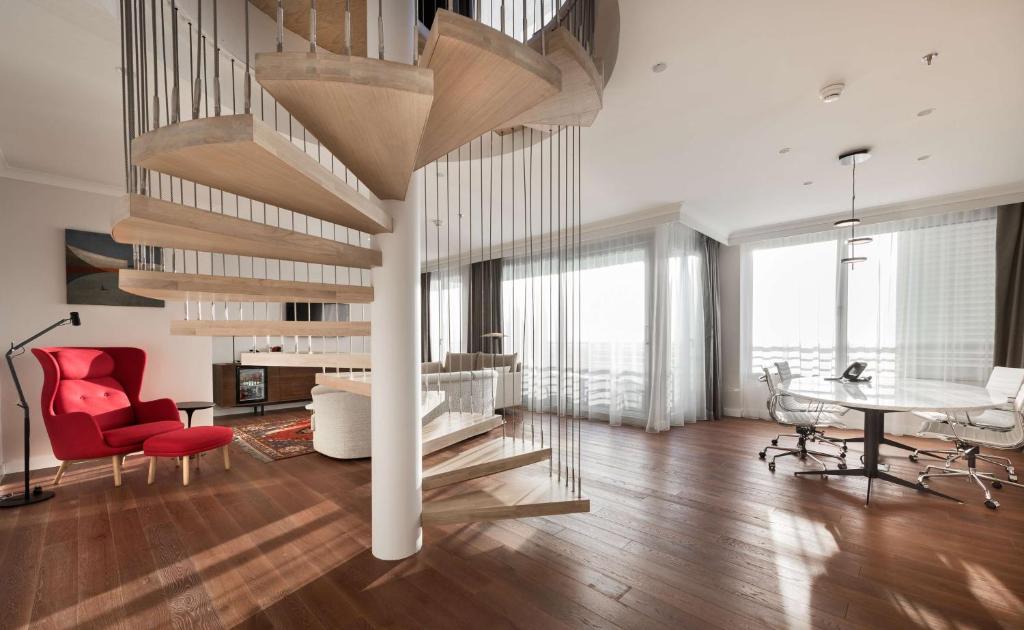
Santiago Bernabéu Stadium | Torre Picasso | Paseo de la Castellana
Hotel amenities: 2 restaurants, VIP area, daily breakfast, spa, massage services, gym, paddle tennis courts, air conditioning, free Wi-Fi, rain showers, 24-hour room service, business center
Nearby restaurants: Restaurante DOMO (fine dining restaurant), DiverXO (fine dining restaurant), La Casita De Sabino (restaurant), Rocacho (restaurant), Carta Marina (seafood restaurant), OX´s (restaurant) 99 Sushi Bar (Japanese restaurant), Naked Concept (health food restaurant), The Korner (bar & grill)
Nearby misc.: d’Elba (café), TomeVinos Panamá (wine store), Frutería D’aliste (green grocer), Indira Estilismo Peluquería (hair salon), Toque de Sastre (tailor), Brooklyn Fitboxing Cuzco (gym)`
Within feet:
-
-
- Santiago Bernabéu Stadium (Real Madrid stadium)
- Torre Picasso (skyscraper)
- Paseo de la Castellana (thoroughfare)
- Puerta de Europa
- Cuzco Metro Station
- Valdeacederas Metro Station
-
Within 3 miles:
-
-
- Retiro Park
- Puerta del Sol
-
Within 3.2 miles:
-
-
- Royal Palace of Madrid
- Plaza Mayor
-
NH Collection Madrid Eurobuilding is 6.3 miles from Adolfo Suarez Madrid-Barajas Airport.
Approximate cost per night (Junior Suite): $831
Cost per person (three people): $277

ARTIEM Madrid
Juan Perez Zuñiga, 20, Ciudad Linea
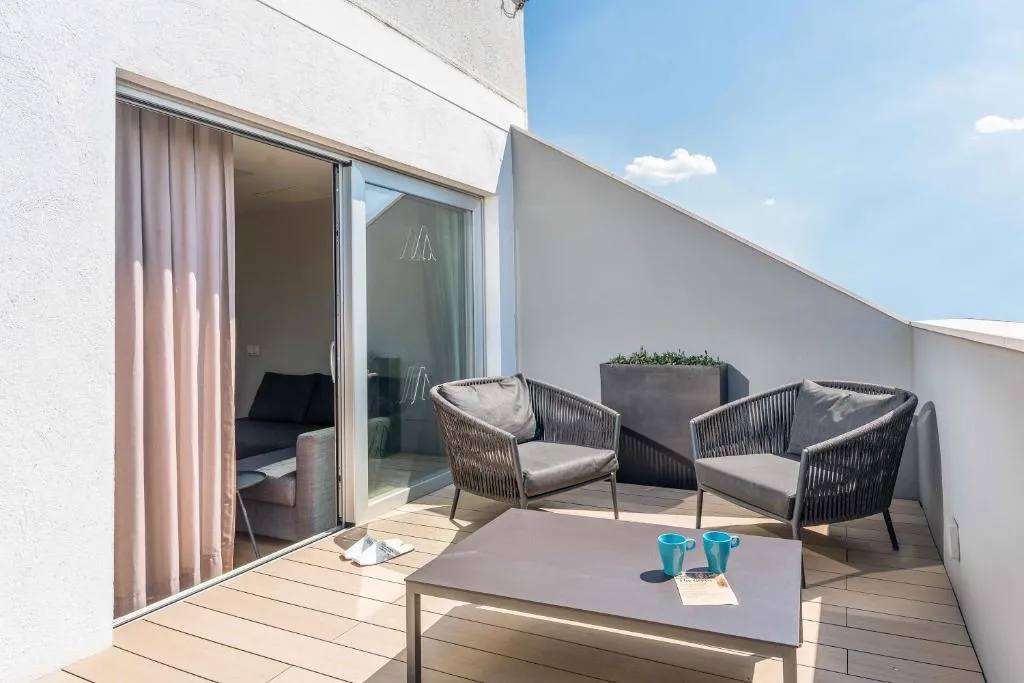
Mezquita de Madrid
Hotel amenities: terrace, fitness center, air conditioning, free Wi-Fi, flat-screen TVs, tea / coffee makers, desks, rain showers, hairdryers, 24-hour front desk, private parking
Nearby: Crítico Restaurante (American restaurant), Misterios (bar), Centro Estético Arturo Soria (beautician), Ugoki (Pilates gym), DSDivers Madrid (diving center)
Within feet:
-
-
- Mezquita de Madrid (mosque)
- Barrio de la Concepcion Metro Station
-
Within 1.2 miles:
-
-
- Parque Antonio Pirala
-
Within 1.9 miles:
-
-
- Edificio Torres Blancas
-
Within 2.1 miles:
-
-
- Magic Park Centro de Ocio Infantil
-
ARTIEM Madrid is 4 miles from Adolfo Suarez Madrid-Barajas Airport.
Approximate cost per night (Junior Suite with Terrace): $357
VP Plaza Espana Design
Plaza de Espana n.5, Madrid City Center
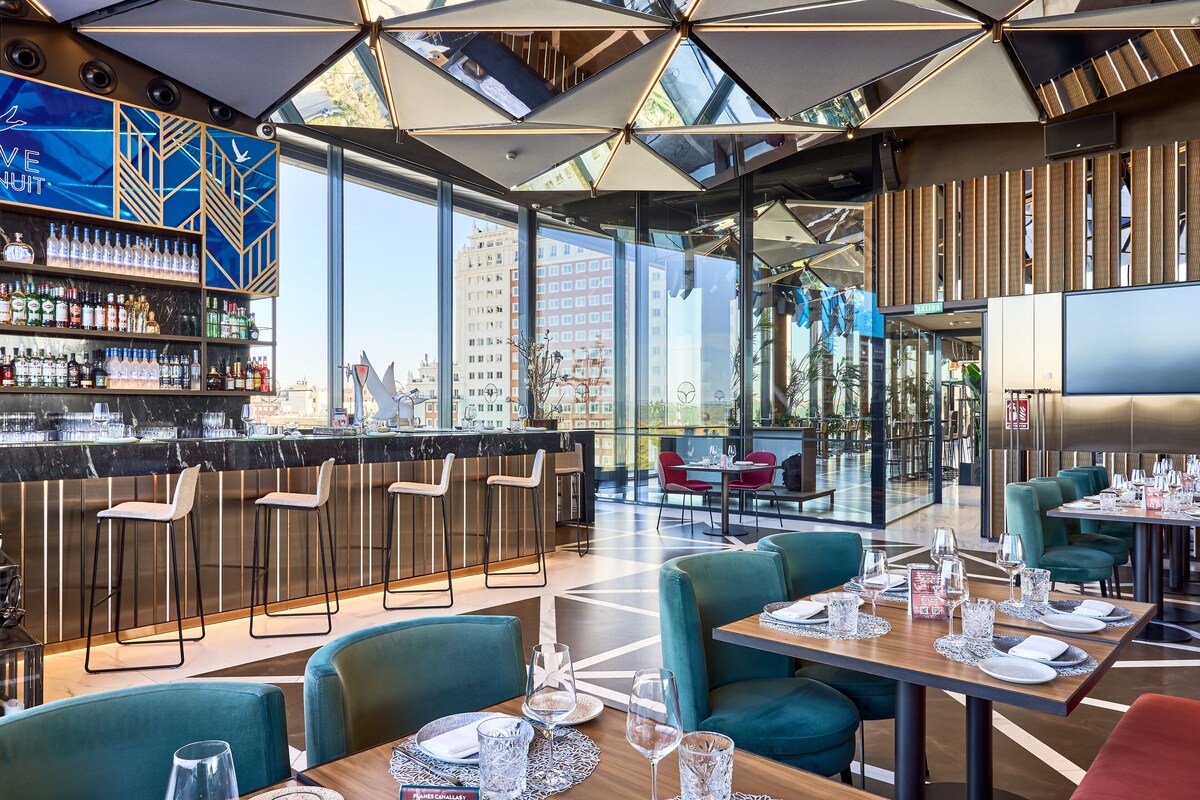
Royal Palace of Madrid | Sabatini Garden | Rialto Theater
Hotel amenities: restaurant, sky bar, buffet breakfast, seasonal pool, terraces, wellness center, exclusive décor, free Wi-Fi, flat-screen TVs, coffee machines, desks, high-end toiletries, bathrobes, meeting / conference rooms, parking
Also in the area: Riu Plaza España
Within feet:
-
-
- Royal Palace of Madrid
- Sabatini Garden
- Rialto Theater
- Palacio del Senado (Palace of the Senate)
- Calle de la Princesa
- Lope de Vega Theatre
- Compac Gran Via Theatre
- Puerta del Sol
-
Within 1.3 miles:
-
-
- Puerta de Alcalá
-
Within 1.4 miles:
-
-
- Sorolla Museum
- Reina Sofia Museum
-
Within 2.2 miles:
-
-
- Torre Picasso
-
Within 29 miles:
-
-
- Tubo Ski Resort
-
VP Plaza Espana Design is 9 miles from Adolfo Suarez Madrid-Barajas Airport.
Approximate cost per night (Junior Suite): $1,034
Cost per person (three people): $344
Wellington Madrid
Velazquez, 8, Salamanca

Puerta de Alcalá | Calle de Serrano | National Archaeological Museum | Biblioteca Nacional de España
Hotel amenities: multiple food & drink options, outdoor swimming pool, sun terrace with loungers, spa with sensation showers, hot tub, fitness center, soundproof rooms, air conditioning, free Wi-Fi, flat-screen TVs, coffee machines, electric kettles, mini-bars, safety deposit boxes, marble bathrooms, bathrobes, slippers
Nearby restaurants: Goizeko Wellington (restaurant), Kauki Wellington (Japanese restaurant), Rocket by Ollywood (health food restaurant), El Brunch del Wellington, Casa Galleta (restaurant), Floren Domezain (restaurant)
Nearby misc.: Alopeke Centro Infantil (coffee shop), El Telegrama Coffee & Bar, F. Torres Relojero (watch store), Degussa Metales Preciosos (gold dealer), Concha Barrios Gallery (art gallery)
Within feet:
-
-
- Puerta de Alcalá (Bridge of Alcalá – monument)
- Calle de Serrano (Serrano Street – luxury flagship stores)
- National Archaeological Museum
- Biblioteca Nacional de España (National Library of Spain)
- Serrano Metro Station
- Velázquez Metro Station
-
Within 1.1 miles:
-
-
- Puerta del Sol
- Atocha Train Station
-
Within 3.4 miles:
-
-
- Chamartin Station
-
Wellington Madrid is 7.3 miles from Adolfo Suarez Madrid-Barajas Airport.
Approximate cost per night (Luxury Suite – The Wellington Club): $3,906
Cost per person (five people): $781
Gran Meliá Palacio de los Duques
Cuesta Santo Domingo, 5 y 7, Madrid City Center

Plaza de Oriente | Teatro Real
Hotel amenities: multiple restaurants, cocktail bar, seasonal pool, terrace with panoramic city views, garden, wellness center, 24-hour gym, elegant décor, heated floors, free Wi-Fi, 49-inch LED TVs, iPhone docking stations, coffee machines, rain showers
Also in the area: Hotel Preciados
Within feet:
-
-
- Plaza de Oriente (square)
- Teatro Real
- Arlequin Theatre
- Lope de Vega Theatre
- Monasterio de las Descalzas Reales
- Plaza Mayor
-
Within 1 mile:
-
-
- Museo Nacional del Prado
-
Within 2.2 miles:
-
-
- Parque de Atracciones de Madrid
-
Within 6 miles:
-
-
- Faunia
-
Within 30 miles:
-
-
- Tubo Ski Resort
-
Gran Meliá Palacio de los Duques is 8.5 miles from Adolfo Suarez Madrid-Barajas Airport.
Approximate cost per night (Three Bedroom Suite Red Level): $3,027
Cost per person (eight people): $378
Relais & Châteaux Heritage Hotel
Calle de Diego de León, 43, Salamanca

Parroquia De San Francisco De Borja
Hotel amenities: restaurant, bar, rooftop sun terrace, modern décor, free Wi-Fi, bathrobes, slippers, 24-hour front desk, private parking, airport shuttle service
Nearby restaurants: Haroma Restaurante, Lamonarracha (Japanese restaurant), Frontall87 (restaurant), Botany (restaurant), Bendita Locura (brunch restaurant)
Nearby misc.: Pink Bourbon (espresso bar), STYLE & CUT (hairdresser), The Garden Madrid (wellness center), Doctora Marta García Redondo (plastic surgeon), Alondra Petite (wool store)
Within feet:
-
-
- Parroquia De San Francisco De Borja
- Santo Domingo El Real
- Núñez de Balboa Metro Station
-
Within 1.6 miles:
-
-
- Retiro Park
-
Within 1.9 miles:
-
-
- Thyssen-Bornemisza Museum
-
Relais & Châteaux Heritage Hotel is 5 miles from Adolfo Suarez Madrid-Barajas Airport.
Approximate cost per night (Junior Suite): $1,349
Arenal Suites Apartment
Calle Arenal 8, Madrid City Center
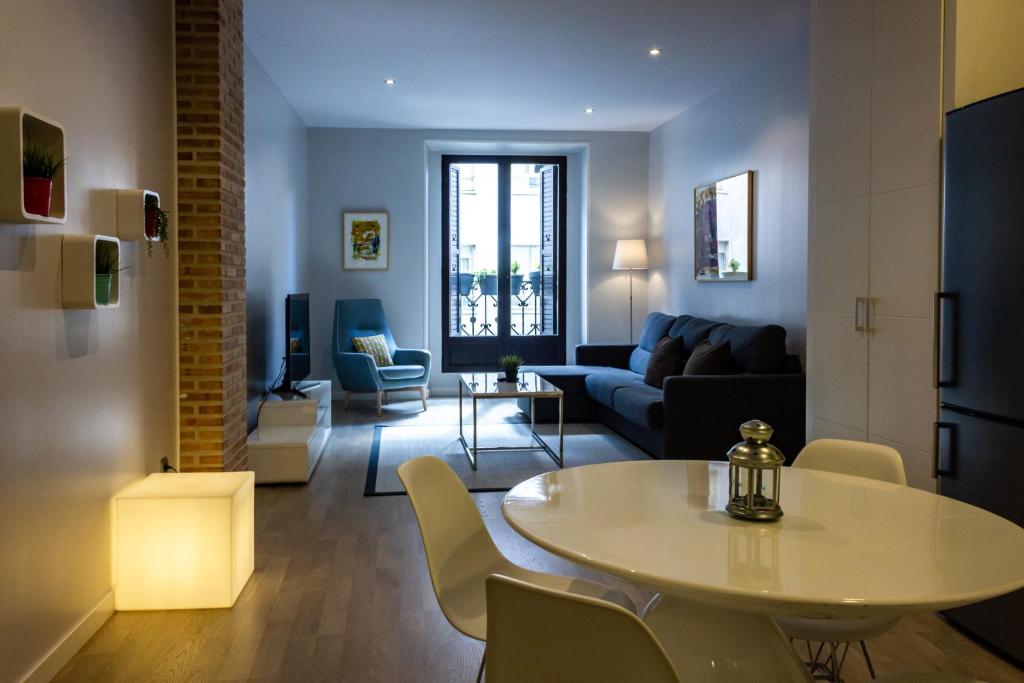
Casa de la Panaderia | Chocolatería San Ginés
Apartment amenities: balcony, air conditioning, free Wi-Fi, flat-screen TV, hairdryer, airport shuttle service
Nearby: ANTONIA PIZZA, Cañas y Tapas (Tapas bar), Casa Labra (tavern), Bico de Xeado (ice cream shop), Casita-Museo de Ratón Pérez (museum), Iris Galerie (photo gallery), La Mariblanca (sculpture), Calzados Coimbra (shoe store),Numen Yoga Estudio
Within feet:
-
-
- Casa de la Panaderia (municipal and cultural building)
- Chocolatería San Ginés
- Palacio De Gaviria
- Plaza Mayor
- Sol Metro Station
-
Within 1 mile:
-
-
- Reina Sofia Museum
-
Within 9 miles:
-
-
- Monte del Pilar Forest
-
Arenal Suites Puerta del Sol is 8 miles from Adolfo Suarez Madrid-Barajas Airport.
Approximate cost per night: $288
Cost per person (four people): $72
Gran Hotel Inglés
Calle Echegaray 08, Madrid City Center

Museo Nacional del Prado | Plaza de Santa Ana | Reina Victoria Theatre | Teatro Español | Galleria Canalejas | Legends: The Home of Football | La Cabaña Argentina | Pampa Beef | Solo de Croquetas Echegaray | Maestro Churrero |
Hotel amenities: restaurant, cocktail bar, à la carte / buffet breakfast, wellness services, stylish art-deco décor, flat-screen TVs, conference rooms
Nearby restaurants / bars: Restaurante El Luarques (Asturian restaurant), CEBO Restaurante (Mediterranean restaurant), La Cabana Argentino (Argentinian restaurant), Inti de Oro (Peruvian restaurant), Primo (Mexican restaurant), Donzoko (authentic Japanese restaurant), Chuka Ramen Bar (Japanese restaurant), Restaurante Arroceria Marina (rice restaurant), Indian Aroma (Indian restaurant), Atlantik Corner (bar & grill), El Barril de Las Cortes (seafood restaurant), Alhambra (Andalusian restaurant), Fatigas del querer (restaurant), Ichikoro Ramen, Taberna del Chato (tapas bar), La Venencia (bar)
Nearby misc.: Antigua Pasteleria del Pozo (pastry shop), Casa Mira (cake shop), Cardamomo Tablao Flamenco (flamenco theater), Teatro de la Comedia (performing arts theater), Reina Victoria Theater, Meneses Building (museum), Instituto Arabe (language school)
Within feet:
-
-
- Museo Nacional del Prado (The Prado Museum)
- Plaza de Santa Ana
- Reina Victoria Theatre
- Teatro Español
- Galleria Canalejas
- Legends: The Home of Football
- La Cabaña Argentina
- Pampa Beef
- Solo de Croquetas Echegaray
- Maestro Churrero
- Gran Via
- Royal Palace of Madrid
-
Within 1 mile:
-
-
- The Museum of Contemporary Art-Madrid
-
Within 1.2 miles:
-
-
- Temple of Debod
-
Within 2.4 miles:
-
-
- Torre Picasso
-
Within 4 miles:
-
-
- Chamartin Station
-
Gran Hotel Inglés is 8.2 miles from Adolfo Suarez Madrid-Barajas Airport.
Approximate cost per night (Presidential Suite): $3,434
Cost per person (four people): $858
Uma Suites O’Donnell
77 Calle Doctor Esquerdo, Retiro
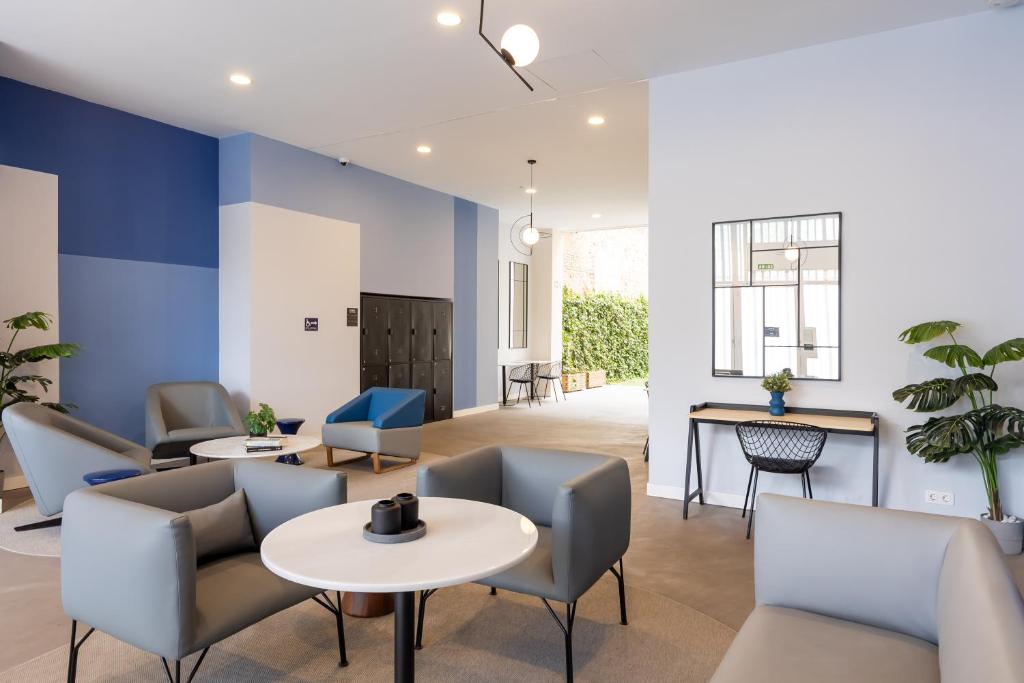
Iglesia de Nuestra Señora de la Paz
Apartment amenities: city views, sun terrace, air conditioning, free Wi-Fi, flat-screen TVs, fully-equipped kitchens, tea/coffee makers, electric kettles, desks, walk-in showers, hairdryers
Nearby restaurants: Fratelli d’Italia (Italian restaurant), Corvina Mx (seafood restaurant), O’Grove (seafood restaurant), Restaurante Ogrelo (Galician restaurant), Alex & Lola (restaurant)
Nearby misc.: KAFFEEINA (espresso bar), Doble Uve Obrador (bakery), Dulce Respiro (beauty salon)
Within feet:
-
-
- Iglesia de Nuestra Señora de la Paz (Catholic church)
- Quinta Fuente del Berro
- Torrespaña
- O’Donnell Metro Station
-
Within 1 mile:
-
-
- Retiro Park
-
Within 1.5 miles:
-
-
- Plaza de Cibeles
-
Within 8 miles:
-
-
- Monte de Valdelatas Forest
-
Uma Suites O’Donnell is 6 miles from Adolfo Suarez Madrid-Barajas Airport.
Approximate cost per night (Duplex Apartment): $403
Cost per person (six people): $67
URSO Hotel & Spa
Mejía Lequerica, 8, Madrid City Center

Parish Church of Saint Barbara | Teatros Luchana | Teatro Infanta Isabel
Hotel amenities: restaurant, spa, gym, designer details, air conditioning, free Wi-Fi, flat-screen TVs, mini-bars, slippers, bathrobes, hairdryers, 24-hour front desk, ticket service, private parking for an added cost
Nearby restaurants / bars: Tony Roma’s (American restaurant), De María (Argentinian restaurant), Tierra Burrito Bar, Veinti7 (bar), Collin’s Irish Tavern
Nearby misc.: Downtown Madrid (lounge), Marco Pasta Fresca (Italian grocery store), Malditos Bastardos (barber shop), Galería Elvira González (art gallery),Impact Hub Barceló (business center), Novasan (Chinese medicine store), Macera Taller Bar, Magic Studio House (magic store), Lobo Feliz (toy store), Darwin Social Noise (advertising agency)
Within feet:
-
-
- Parish Church of Saint Barbara (Madrid church – opened 1758)
- Teatros Luchana
- Teatro Infanta Isabel
- Puerta del Sol
- Plaza Mayor
- Alonso Martinez Metro Station
-
Within 1 mile:
-
-
- Prado Museum
- Temple of Debod
- Royal Palace of Madrid
-
Within 1.7 miles:
-
-
- Torre Picasso
-
Within 2.9 miles:
-
-
- Parque de Atracciones de Madrid
-
Within 5 miles:
-
-
- Faunia
-
URSO Hotel & Spa is 7.7 miles from Adolfo Suarez Madrid-Barajas Airport.
Approximate cost per night (suite with terrace): $880
Hotel Villa Magna
Paseo Castellana, 22, Salamanca

Plaza de Colon | Fundación Juan March
Hotel amenities: restaurant, city views, spa, antique-style furniture, modern finishes, wellness center, fitness center, built-in chargers, laptop safes, rain showers, marble bathrooms
Nearby restaurants: Sushi Bar Hannah, Fuku Restaurante Japonés (Japanese restaurant)
Nearby retail stores / boutiques: Wolford Boutique, La Condesa (dress store), Purificación García (clothing store), Salvatore Ferragamo (shoe boutique), Jimmy Choo (shoe store), TOD’S Boutique (shoe store), Lottusse (shoe store), Cartier Serrano (jewelry store), BVLGARI (jewelry store), Tiffany & Co. (jewelry store), Audemars Piguet House Madrid (watch store)
Nearby misc.: Clinica Dray (beauty salon), diptyque boutique (perfume store), Sastreria Pedro Muñoz (custom tailor)
Within feet:
-
-
- Plaza de Colón (plaza commemorating Cristobal Colon AKA Christopher Columbus)
- Fundación Juan March
- National Library of Spain
- Núñez de Balboa Metro Station
-
Within 1 mile:
-
-
- Retiro Park
-
Within 1.1 miles:
-
-
- Gran Via
- Prado Museum
-
Within 1.2 miles:
-
-
- Puerta del Sol
-
Within 2.9 miles:
-
-
- Chamartin Station
-
Hotel Villa Magna is 7.2 miles from Adolfo Suarez Madrid-Barajas Airport.
Approximate cost per night (Suite): $5,016
Cost per person (five people): $1,003
Mandarin Oriental Ritz, Madrid
Plaza de la Lealtad, 5, Retiro

Basílica de Jesús de Medinaceli | Plaza de Cánovas del Castillo | Neptune Fountain
Hotel amenities: multiple restaurants & bars, vitality pool, indoor swimming pool, spa, experience showers, steam room, fitness center, free Wi-Fi, free parking, airport transportation
Nearby restaurants / bars: Deessa (fine dining restaurant), Palm Court (restaurant), Pictura (cocktail bar)
Nearby misc.: The Beauty Concept (spa), Uizart Tours (sightseeing tour agency), Monument to Goya
Within feet:
-
-
- Basílica de Jesús de Medinaceli (Roman Catholic church / basilica)
- Plaza de Cánovas del Castillo (roundabout)
- Neptune Fountain (neoclassical fountain)
- Museo Nacional del Prado
- Banco de Espana Metro Station
-
Within 1.2 miles:
-
-
- Plaza de Oriente
-
Mandarin Oriental Ritz, Madrid is 7 miles from Adolfo Suarez Madrid-Barajas Airport.
Approximate cost per night (Turret Suite): $2,417
Cost per person (three people): $805
Home Art Apartments Bernabéu
Calle Lérida, 41, Tetuan

Museo Tiflológico de la ONCE
Apartment amenities: terraces, air conditioning, free Wi-Fi, kitchenettes, washing machines, English & Spanish-speaking reception staff, private check-in/out, paid on-site parking
Nearby: Café La Luna, Gimnasio Tandem (gym), HI FITNESS NORTE (gym), Green Patio (event venue)
Within feet:
-
-
- Museo Tiflológico de la ONCE
- Parque Jardines de Perón
- Torre Picasso
- Estrecho Metro Station
-
Within 1.1 miles:
-
-
- Escuela de Minas
-
Within 1.2 miles:
-
-
- Puerta de Europa
-
Home Art Apartments Bernabéu is 9 miles from Adolfo Suarez Madrid-Barajas Airport.
Approximate cost per night (Two-Bedroom Apartment): $310
Cost per person (six people): $51
Santo Mauro
Zurbano, 36, Chamberi

Sorolla Museum
Hotel amenities: multiple restaurants, French-inspired architecture, former library (presently a restaurant) & ballrooms (presently meeting rooms), balconies, air conditioning, free Wi-Fi, airport shuttle service
Nearby: TONI&GUY (hairdresser), Petro Valverde Alta Costura (dress store), Club Monteverdi (club)
Within feet:
-
-
- Sorolla Museum
- Rubén Darío Metro Station
-
Within 1 mile:
-
-
- Plaza de Cibeles
-
Within 2.2 miles:
-
-
- Casa de Campo
-
Santo Mauro, a Luxury Collection Hotel, Madrid is 6 miles from Adolfo Suarez Madrid-Barajas Airport.
Approximate cost per night (Junior King Suite): $1,594
Cost per person (three people): $531
So there they are, Madrid accommodations that will help make for an outstanding experience. We hope you have found this information valuable and most of all, that you enjoy your time in Spain!
Cairo Accommodations
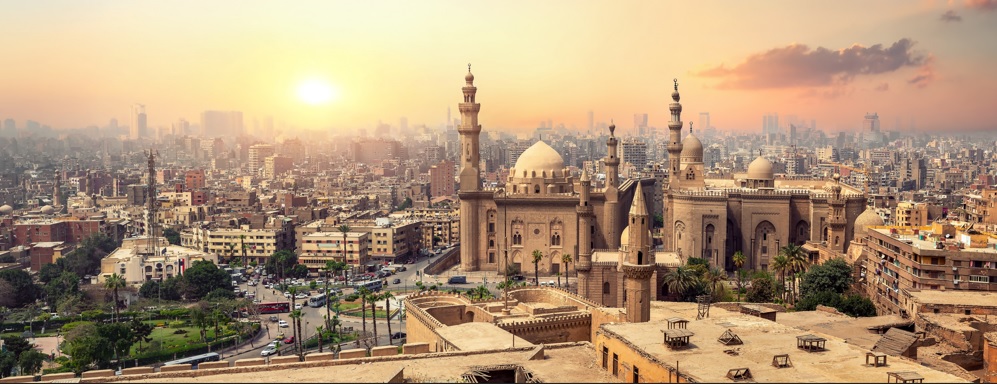
Cairo accommodations
Cairo accommodations welcome you to a destination nicknamed “The City of a Thousand Minarets”, a reference to the city’s Islamic architecture. Known for its shopping malls, museums, exhibition centers, parks, mosques, Orthodox churches, bazars, hypermarkets, Egyptian restaurants, spices, mummies and pyramids, Cairo is set alongside the Nile River’s east bank. Across the river westerly stretches the city of Giza with its great pyramids.
Within / near central Cairo main attractions: Citystars Mall (shopping mall), ELAKABER (Egyptian restaurant), Khan el-Khalili (Bazar – souvenirs, crafts, jewelry, clothing, spices), The Egyptian Museum in Cairo (archaeological artifacts museum – Tutankhamun treasures), Carrefour – Maadi City Center (hypermarket), City Centre Almaza (shopping mall), Koshary Abou Tarek (Koshari restaurant), Al-Azhar Park (manicured gardens, lawns, fountains, cafes, restaurants, open-air theater, city views), Downtown Katameya (shopping mall), Genena Mall (shopping mall), Cairo Citadel (12th-century Saladin fortress / wall – protected against Crusaders), Cairo Tower (tourist attraction), The National Museum of Egyptian Civilization (sculptures, metal-ware, pottery, hall of mummies), Abou Haidar Shawerma (Shawarma restaurant), Semsema (fast food restaurant – shawarma), Al-Azhar Mosque (Cairo’s first mosque est. 970), Pharaonic Village (Egyptian history living museum – ancient village / Tutankhamen tomb replicas), Roxy Square (park), Shooting Club Dokki (sports club), Baron Empain Palace (Stately / abandoned Indian Hindu temple – carved wooden spiral staircase, gardens), حواوشى الربيع – Notes of Spring (Egyptian restaurant), Al-Ahly Sporting Club Nasr City, Egypt’s International Exhibition Center, Amr ibn al-As Mosque (minarets, inner courtyard, engraved marble), Cairo International Convention Centre (convention center), Al-Sayyida Nafesa Mosque, Al-Hakim Mosque (10th-century mosque – grand entrance, inner courtyard, arcades, 2 minarets), Royal House – Heliopolis branch (supermarket), Wadi Al Nile Seafood (seafood restaurant), People of Egypt Walkway (park), Prince Mohamed Ali Palace (Manial Palace – historical landmark), Gamal Sholqamy (barbecue restaurant), The Hanging Church (Coptic Orthodox church – Noah’s arc-shaped wooden roof, 5th-century pulpit, icons), El Korba Square (3-sided square – grand buildings, ornate fracases, Byzantine-style basilica), Museum of Islamic Art in Cairo (art museum), Cairo Opera House, Habib Pasha El-Sakakini Palace (19th-century Rococo-style mansion – lavish interior décor, marble statues, rooftop cupola), Qasr El Nil Bridge (Nile River road bridge – 19th-century bronze lion statues), Aisha Fahmy Palace (museum), Tahona elbaba kirolos (Orthodox church), St. Simon “The Tanner” Monastery, Wadi Degla Reserve (sandy desert canyon – sheer rocky walls, camping, wilderness walks, biking trails)
Giza pyramids-area (just southwesterly): Giza Necropolis (archaeological site – Great Pyramids, Great Sphinx, other ruins), The Great Pyramid of Giza, Great Sphinx of Giza (monument), Grand Egyptian Museum (GEM), Lamour (wedding venue), Khufu’s Restaurant (Egyptian restaurant)
Extending southward along the Nile River: Saqqara Necropolis (historical place), Mit Rahina Museum, Red Pyramid (ancient Memphis necropolis – burial chamber, passages, guided tour), Serapeum of Saqqara (1400 BC Necropolis – stone tombs of sacred Api bulls)
Cairo main airport: Cairo International Airport
Rideshare service: Uber
Subway system: Cairo Metro
A unique blend of ancient and modern worlds, the Cairo-area is about 900 miles from the Red Sea. Eastward from Cairo, The Suez Gulf, an artificial waterway, connects the Mediterranean and Red Seas. Also known as the Pyramid of Khufu, the Great Pyramid of Giza (est. 2570 BC) stands at 481-feet tall, which, in comparison, is about 1/3 of the Empire State Building’s height. The Great Pyramid is estimated to have been built over a 20-year period, with costs at around $5 billion in present valuation. It is possible to visit inside The Great Pyramid. When visiting Cairo, keeping a good supply of bottled water (found in grocery stores) at your accommodation is advisable. Tipping in restaurants, dressing conservatively (especially in religious areas) and carrying your own roll of toilet paper when out in public are best practices. PDA (public displays of affection) such as hugging, kissing and even holding hands are not recommended in public. Keep in mind that security checks may occur more frequently in Cairo than with other destinations. Winners of 44 Egyptian Premier League titles, 39 Egypt Cups and 15 Egyptian Super Cups, Al Ahly SC plays at Al Ahly WE – Al Salam Stadium on the city’s north side. In Cairo, currency is the Egyptian pound, cars travel on the right-hand side of the road (most times!) and the drinking age is 21 years old. Cairo accommodations are some of northern Africa’s best. Before we get to Cairo accommodations, let’s take a look at some more background information on the area to help you along the way.
Built in the fertile Nile Delta, two of the first Cairo-area cities were Memphis (pre-31st century BC – 7th century AD) and Heliopolis (ancient Egypt). Southwesterly of present-day Cairo, Memphis served as the capital of Inebu-hedj (Lower Egypt – district number 1 nome), while Heliopolis, located in northeastern Cairo’s modern districts of Matariya and Ain Shams, was a major religious center and capital of Heliopolite (Lower Egypt – 13th nome). In ancient Egypt, provinces / districts were known as nomes, and deities such as Atum, Ra and Horus (sun gods) were worshipped. The Giza pyramid complex was built during the Fourth Dynasty (2613-2494 BC), also known as the Old Kingdom of Egypt’s “golden age”. The May 525 BC Battle of Pelusium (Egypt) between the Achaemenid Empire (Persian) and the Kingdom of Egypt resulted in a Persian victory, and Egypt being annexed by the Achaemenid Empire. Second “King of Kings” Cambyses II, who had led the Persian conquest, crowned himself pharaoh. Persian rule was disrupted briefly by the crowning of Egyptian-based Amyrtaeus of Sais circa 404 BC, though the Persians regained control by way of the Thirty-first Dynasty of Egypt (343–332 BC). Modern Cairo traces its roots to around the first millennium AD, a time when Memphis was already in decline. Known as Babylon, a large Roman fortress was built circa 300 AD by emperor Diocletian in present-day Old (Coptic) Cairo. Prior to Diocletian, Roman emperor Trajan had built a canal connecting the Nile River to the Red Sea. The 602-628 AD Byzantine-Sassanian War between the Byzantine (Roman) Empire and Sasanian (Iranian) Empire created hardship in the area and partial desertion. The Church of Saint Barbara and the Church of Saints Sergius and Bacchus are examples of churches dating to this time-period. In September 640, by way of the Muslim conquest of Byzantine Egypt led by commander / companion of Muhammad Amr ibn al-As, Babylon Fortress was besieged and subsequently fell in April 641. Amr ibn al-As founded a new settlement next to Babylon Fortress known as Fustat. Around this time, the Mosque of Amr Ibn al-As was built. In 750, the Umayyad Caliphate was overthrown and the Abbasid Caliphate established a new provincial capital northeast of Fustat known as al-Askar. A Turk, Ahmad ibn Tulun ruled the area for a relatively brief period following the Abbasid Caliphate’s collapse. The Fatimid empire conquered Egypt circa 969 and founded a new fortified city northeast of Fustat known as al-Manṣūriyyah. The al-Azhar Mosque was commissioned around this time. The name “Cairo” (al-Qāhira) originates from Qāhirat al-Mu’izz (“The Vanquisher of al-Mu’izz”), which is attributed to Caliph al-Mu’izz li Din Allah of the Fatimid Caliphate. Around this time, the Great Palaces of the Fatimid Caliphs were built. The Crusaders attempted unsuccessfully to capture Fatimid circa 1168. First Sultan of Egypt, Saladin established the Ayyubid dynasty in Cairo in 1171. Shortly thereafter in 1176, Saladin began construction on the Cairo Citadel, which was completed in 1183. Enslaved mercenaries, slave-soldiers and freed slaves of Turkic, Caucasian, Eastern and Southeastern European decent, the Mamluks ruled Egypt from 1250 to 1517. The Mamluk Empire, often violent and chaotic, repelled the Mongols and eliminated the Crusader states in the Levant. The 1516 Battle of Marj Dābiq between the Mamluk Sultanate and Ottoman Empire / Mamluk rebels resulted in an Ottoman victory and the Ottoman annexation of Syria. Subsequently, the Ottomans conquered Egypt in 1517. Sultan Selim I, ruling from Constantinople, designated Egypt a province, with Cairo its capital. Cairo became the Ottoman Empire’s second-largest city behind only Constantinople. In 1796, Napoleon arrived in Cairo. The May-June 1801 siege of Cairo, or Cairo campaign, between the French Republic and United Kingdom / Ottoman Empire resulted in an Anglo–Ottoman victory. Subsequently in 1805, Albanian Muhammad Ali Pasha became viceroy of Egypt. Often regarded as the founder of modern Egypt, Muhammad Ali governed until his death in 1848. Ali’s grandson, Isma’il Pasha, took over governance and envisioned a Cairo inspired from Paris, incurring immense debt along the way. In 1882, the British conquest of Egypt, or Anglo-Egyptian War, between Khedivalist forces / United Kingdom and Urabilist forces resulted in a British victory, and the city’s economic center moving westward from Historic Cairo toward the Nile River. British occupation lasted into the 20th century, when in 1922 Egypt gained independence. A series of riots in late-January 1952, known as the Cairo fire, saw around 750 downtown Cairo buildings being burned and looted. In 1956, British troops left the country. Between 1950 and 2010, Greater Cairo’s population grew from around 3 million to over 16 million.
Egypt’s capital city, Cairo is home to around 10 million “Cairenes”. While Arabic is Egypt’s official language, most educated Cairenes are fluent in English, French, or both. Be aware that in places such as bazars, it’s possible that vendors, and even males toward foreign women, can take an aggressive tone, though these areas generally are considered safe. One of Africa’s biggest cities, The City of a Thousand Minarets accounts for the world’s 6th-most populated metropolitan area. Air quality can be poor at times. Typically, Egypt has the largest non-oil based GDP in the Arab world, with Cairo accounting for about 22% of the country’s purchasing power. In 2023, 14.9 million tourists visited Cairo. The Arab world’s largest and oldest film and music industries are based in the city. Al-Azhar University, established in 972, is one of the world’s oldest higher education institutions. Cairo’s climate is considered hot desert. Wind storms are common between March and May. Winter high temperatures range from 57 to 72 degrees Fahrenheit, while summers often exceed 88 degrees. As with many desert climates, nighttime can be much cooler than daytime. Snowfall is extremely rare, though not impossible. Additional points of interest are Ibn Tulun Mosque, Al Hakim Mosque, Muizz Street (open-air museum / heritage site), Talaat Harb Square (historic street), Gezira Island (affluent area), Cairo University, Cairo International Stadium, Historic Cairo (Islamic Cairo) and Coptic Cairo (Babylon Fortress). Local foods include falafel, shawarma, hummus, pita bread, simit (circular bread), hawawshi (pita stuffed with minced meat, vegetables, spices) and Koshary (Egypt’s national dish- lentils, rice, tomato sauce, cayenne pepper, pasta, onions). Keep in mind that public consumption of alcohol is prohibited, though beer, liquor and wine are commonly found in bars and hotels. With some background information on the area, we’re ready for Cairo accommodations that will help check one off the bucket list.
Steigenberger Hotel El Tahrir Cairo
Kasr El Nile

The Egyptian Museum
Hotel amenities: restaurant, outdoor pool, sauna, free Wi-Fi, flat-screen TVs, hairdryers, car rental service, private parking
Nearby restaurants: Om Dahab (restaurant), Carol (bar and restaurant)
Nearby misc.: Crockfords Cairo (casino), Egypt Tours (sightseeing tour agency), Upper Deck Lounge, The Egyptian Museum Cairo, The Royal Mummies Hall, Tomb of Mariette (cemetery)
Within feet:
-
-
- The Egyptian Museum
- Tahrir Square
- Ministry of Foreign Affairs
- Ramses Hilton Hotel Shopping Mall
- Pomodoro Restaurant Downtown
- Cairo Tower
-
Within 1.5 miles:
-
-
- Mosque of Ibn Tulun
-
Within 2 miles:
-
-
- Cairo Citadel
-
Within 7.6 miles:
-
-
- Giza Pyramids
-
Steigenberger Hotel El Tahrir Cairo is 10.6 miles from Cairo International Airport.
Approximate cost per night (Capital Suite): $447
Cost per person (three people): $149
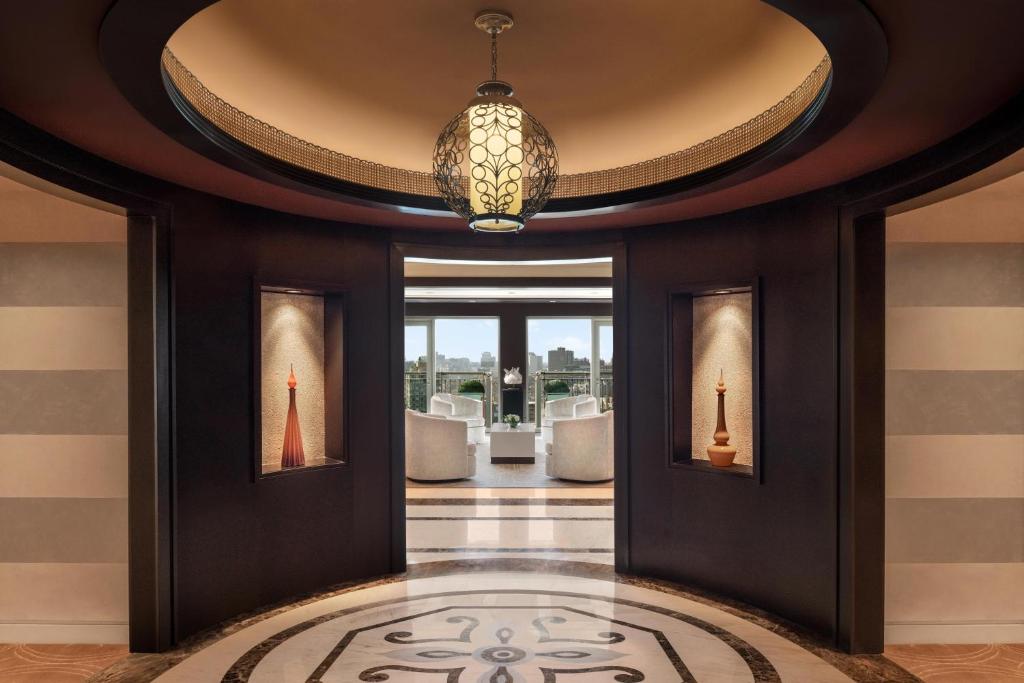
Hotel amenities: restaurant, bar, buffet, continental or vegetarian breakfast, outdoor pool, terrace, indoor pool, sauna, hot tub, fitness center, air conditioning, free Wi-Fi, flat-screen TVs, coffee machines, electric tea pots, safety deposit boxes, desks, hairdryers, Arabic, German, English and Italian-speaking reception staff, ATM, free bike usage, private parking
Nearby: La Zisa (Italian restaurant), Sirocco Restaurant & Pool Bar, J&G Steakhouse Cairo, مطعم الكوت – Al-Kout Restaurant, Sinan Pasha Mosque
Within feet:
-
-
- People of Egypt Walkway (park – river views)
- Nile Beauty (sculpture)
-
Within 1.5 miles:
-
-
- Tahrir Square
-
Within 2 miles:
-
-
- Aquarium Grotto Garden
-
Within 4.5 miles:
-
-
- Cairo Citadel
-
Within 11 miles:
-
-
- Giza Pyramids
-
The St. Regis Cairo is 11 miles from Cairo International Airport.
Approximate cost per night (Royal Suite): $19,189
Cost per person (three people): $6,396
JAZ Pyramids Resort
Alexandria Desert Road, Giza
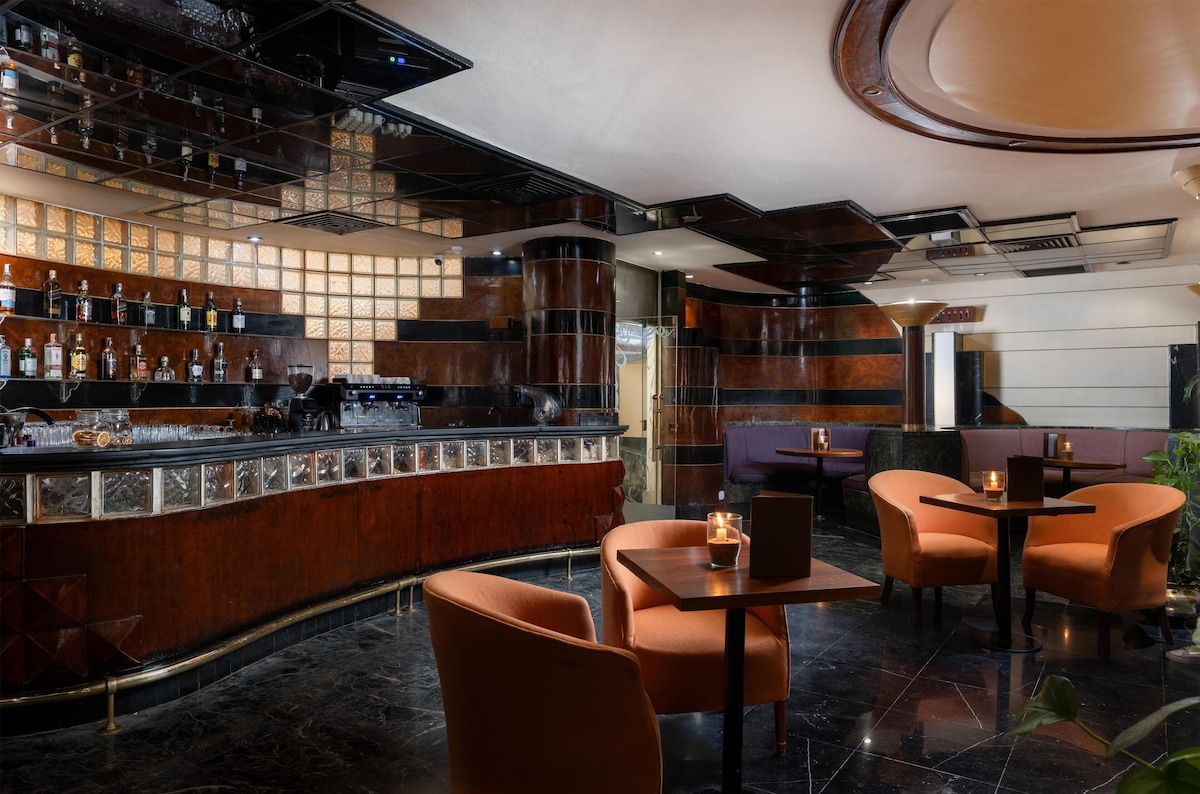
Seasons Country Club
Resort amenities: restaurant, outdoor pool, extensive gardens, garden views, spa, fitness center, air conditioning, free Wi-Fi, flat-screen TVs, hairdryers, meeting facilities
Nearby: PYRAMIDS RESORT Market (bazar)
Within feet:
-
-
- Seasons Country Club
-
Within 3.9 miles:
-
-
- Giza Pyramids
-
Within 7 miles:
-
-
- Cataract Pyramids Resort
-
Within 11 miles:
-
-
- Cairo Tower
-
Within 15 miles:
-
-
- Sphinx International Airport
-
JAZ Pyramids Resortt is 21 miles from Cairo International Airport.
Approximate cost per night (Executive Suite): $384
Cost per person (three people): $128
Madina Hostel
5 Kasr Al Nile street 10th floor, 11513

Tahrir Square
Hostel amenities: city views, terrace, shared lounge & kitchen, air conditioning, free Wi-Fi, continental, vegetarian or halal breakfast, 24-hour front desk, airport transportation
Nearby: Primo’s Pizza (restaurant), SAUDIA AIRLINES الخطوط السعودية (CTO), Bounce Luggage Storage
Within feet:
-
-
- Tahrir Square
- Qasr el-Nil Bridge
-
Within 1.1 miles:
-
-
- Abdeen Palace
-
Within 5 miles:
-
-
- The 6th of October War Panorama
-
Within 10 miles:
-
-
- Great Sphinx
-
Madina Hostel is 10 miles from Cairo International Airport.
Approximate cost per night: $63
The St Regis New Capital Cairo
New Administrative Capital, 11311
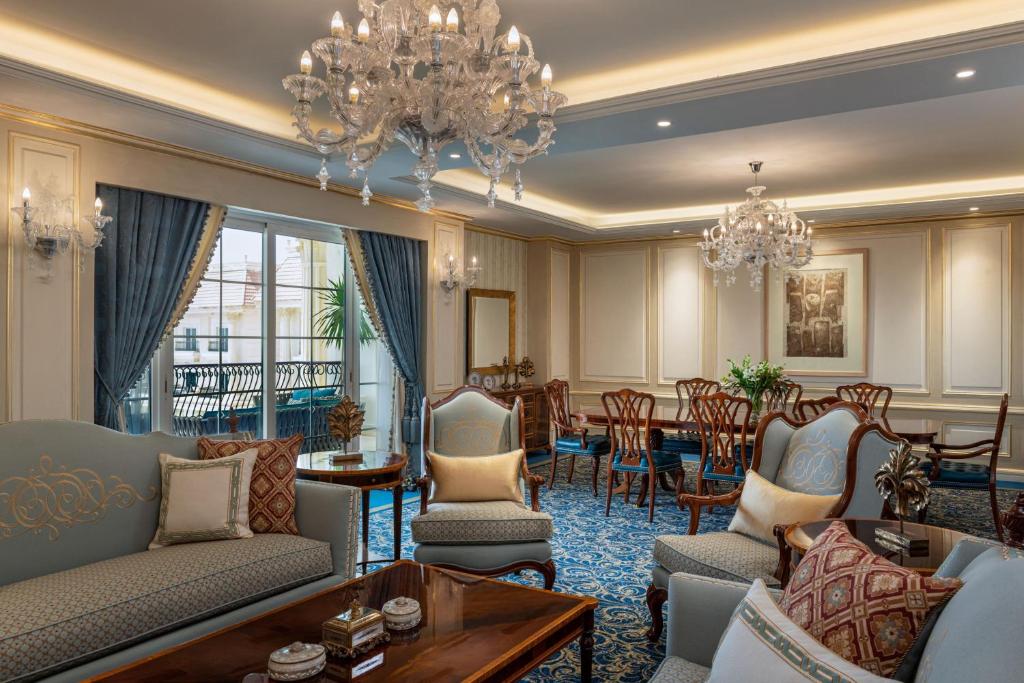
Almasa Conference Centre
Hotel amenities: multiple restaurants, artificial beach area, 4 swimming pools, lake / pool views, balconies, sauna, fitness center, free Wi-Fi, desks, 24-hour reception, children’s playground, clubhouse, extensive convention / event center
Nearby: La Sponda (Italian restaurant), Montego Restaurant (buffet restaurant)
Within feet:
-
-
- Almasa Conference Centre
-
Within 56 miles:
-
-
- Sphinx International Airport
-
The St Regis New Capital Cairo is 31 miles from Cairo International Airport.
Approximate cost per night (Royal Suite): $7,474
Tahrir Square Hostel
11 Tahrir Square, Second floor, Downtown, 11512

AUC Tahrir Square
Hostel amenities: city views, terrace, balconies, air conditioning, free Wi-Fi, 24-hour front desk, shared lounge & kitchen, continental breakfast, airport transportation
Nearby: Octa café and restaurant, Rouh Beirut (Lebanese restaurant), Truman Electronics (electronics store), Pontermoli (antique furniture store)
Within feet:
-
-
- AUC Tahrir Square
- The Egyptian Museum
- Sadat Subway Station
-
Within 1 mile:
-
-
- Cairo Tower
-
Within 2.9 miles:
-
-
- The Azhar Park
-
Within 8 miles:
-
-
- International Park
-
Tahrir Square Hostel is 10 miles from Cairo International Airport.
Approximate cost per night (Triple Room): $54
Cost per person (three people): $18
Hyatt Regency Cairo West
Km 22, Cairo-Alexandria Desert Road Pyramids Heights Business Park, Giza, 8655

Barranco Restaurant & Bar
Hotel amenities: restaurant, bar, buffet, continental / American breakfast, outdoor swimming pool, terrace, patios, garden, fitness center, air conditioning, free Wi-Fi, flat-screen TVs, coffee machines, mini-bars, safety deposit boxes, desks, 24-hour front desk, kids’ club, playground, billiards, car rental service, private parking
Nearby: Black Honey Massage Spa
Within feet:
Within 9 miles:
-
-
- Giza Pyramids
-
Within 11 miles:
-
-
- Cairo University Metro
-
Hyatt Regency Cairo West is 24 miles from Cairo International Airport.
Approximate cost per night (Executive King Suite): $354
Cost per person (three people): $118
Four Seasons Hotel Cairo at Nile Plaza
1089 Corniche El Nil – Garden City, 11519

il Nilo
Hotel amenities: restaurant, buffet breakfast, outdoor landscaped pool area, panoramic river views, indoor pool, spa, hot tub, gym, air conditioning, flat-screen TVs, marble bathrooms with double sinks, separate glass-enclosed showers, car rental & laundry services
Nearby restaurants: 8 Restaurant, E NOCI Bistro (restaurant), gcc club (restaurant)
Nearby misc.: Room Art Space & Café – Garden City, Winds of Change (tour operator), DokDok (cruise agency), Elite Seven Tours
Within feet:
-
-
- il Nilo (Italian restaurant)
- AUC Tahrir Square
- Saad Zaghloul Subway Station
-
Within 1.1 miles:
-
-
- Qasr el-Nil Bridge
-
Within 1.6 miles:
-
-
- Museum of Egyptian Modern Arts
-
Within 8 miles:
-
-
- Meriland Park
-
Four Seasons Hotel Cairo at Nile Plaza is 11 miles from Cairo International Airport.
Approximate cost per night (Premium Diplomatic Suite): $1,462
Cost per person (three people): $487
Life Pyramids Inn
5 Safi Eldien Street, Giza, 12557
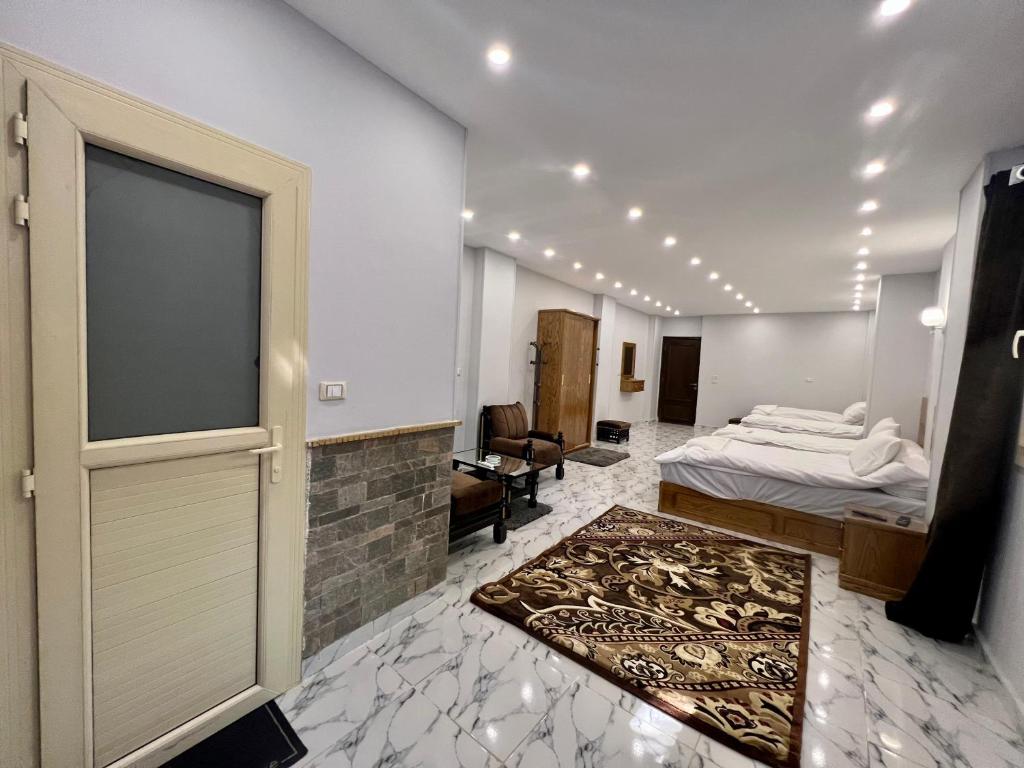
Great Sphinx | Rooftop 7000
Inn amenities: restaurant, bar, continental breakfast, city views, terrace, air conditioning, free Wi-Fi, flat-screen TVs, shared kitchen, electric tea pots, 24-hour front desk, airport transportation
Nearby: Tree Lounge Pyramids Branch (restaurant), Giza Pyramids & Sphinx Free Walking Tour with Sherif, Hamada Al-Jabri – Horse Riding Haram (horse rental service – +20 12 21357817)
Within feet:
-
-
- Great Sphinx
- Rooftop 7000 (Sphinx-area restaurant)
-
Within 1 mile:
-
-
- Giza Pyramids
-
Within 5 miles:
-
-
- Al-Mounib Subway Station
-
Within 9 miles:
-
-
- Croquet field
-
Within 21 miles:
-
-
- Sphinx International Airport
-
Life Pyramids Inn is 19 miles from Cairo International Airport.
Approximate cost per night (Junior Suite): $88
Cost per person (five people): $17
Khan Duidar Inn
10 Zaghloul, Giza, 12512

Marriott Menahouse Golf Course
B&B amenities: restaurant, bar, buffet / continental breakfast, terraces, free Wi-Fi, flat-screen TVs, kettles, safety deposit boxes, desks, slippers, hairdryers, private parking, paid airport shuttle service
Nearby: Nubian (perfume store)
Within feet:
-
-
- Marriott Menahouse Golf Course
-
Within 1.2 miles:
-
-
- Giza Pyramids
-
Within 5 miles:
-
-
- Sakiat Mekki Subway Station
-
Within 7 miles:
-
-
- Fustat Park
-
Within 10 miles:
-
-
- The Azhar Park
-
Khan Duidar Inn is 18 miles from Cairo International Airport.
Approximate cost per night (King Suite): $284
Cost per person (five people): $56
Pyramids Planet Hotel
198 W, Hadayek El Ahram, Gate 2, Giza, 12513

Mamdouh al-Husseini Mosque
Hotel amenities: city views, terrace, free Wi-Fi, shared lounge & kitchen, continental breakfast, 24-hour front desk, airport transportation
Within feet:
-
-
- Mamdouh al-Husseini Mosque
-
Within 3.6 miles:
-
-
- Great Sphinx
-
Within 10 miles:
-
-
- Al-Mounib Subway Station
-
Pyramids Planet Hotel is 22 miles from Cairo International Airport.
Approximate cost per night (Triple Room with Private Bathroom): $45
Cost per person (three people): $15

Queen Pyramids View Inn
Sayed Gabir, Nazlet El Simman, Al Haram, Giza, 12557
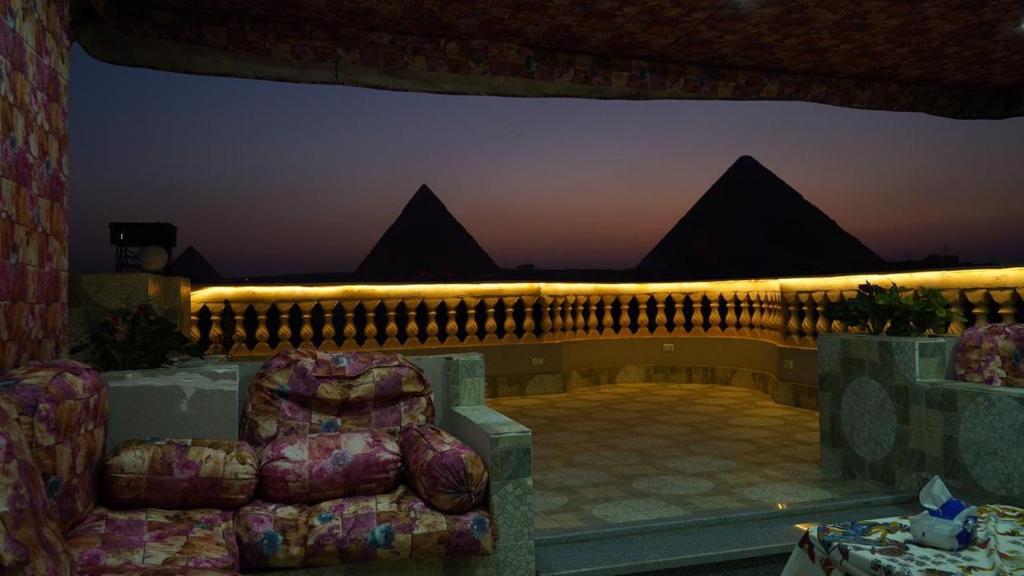
Tomb of Queen Khentkawes I | Valley Temple of Khafre
Inn amenities: terrace, air conditioning, free Wi-Fi, flat-screen TVs, electric tea pots, safety deposit boxes, 24-hour front desk, ATM, airport transportation
Within feet:
-
-
- Tomb of Queen Khentkawes I
- Valley Temple of Khafre
-
Within 1.1 miles:
-
-
- Giza Pyramids
-
Within 9 miles:
-
-
- Cairo Tower
-
Queen Pyramids View Inn is 19 miles from Cairo International Airport.
Approximate cost per night (Deluxe Queen Room): $91
Cost per person (four people): $22
Waldorf Astoria Cairo Heliopolis
Orouba Street Cairo Heliopolis

Cairo International Airport
Hotel amenities: multiple restaurants & bars, pool cabanas, personal concierge service, 5 event spaces, boardroom, business center, ballroom
Nearby restaurants / bars: Alla Grande! (Italian restaurant), BRASSERIE AYDA, Noble House (Asian restaurant), My Kind Of Place (breakfast restaurant), Darts BAR
Nearby misc.: Nola (dessert shop), Oriental Weavers (carpet store)
Within feet:
Within 3.1 miles:
-
-
- Baron’s Palace
-
Within 3.4 miles:
-
-
- Meriland Park
-
Within 5 miles:
-
-
- International Park
-
Approximate cost per night (Presidential Suite): $6,800
Cost per person (four people): $1,700
Prime Residence Kattameya
East Katameya, New Cairo City, 11865
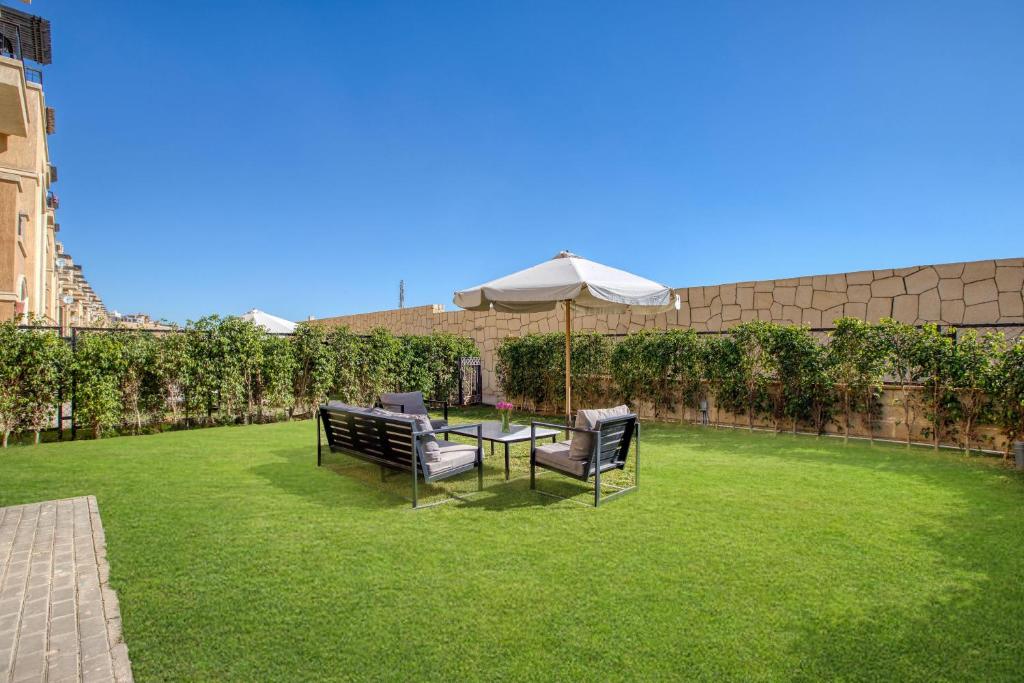
Katameya Heights Golf & Tennis Resort
Apartment amenities: outdoor pool, terrace, balconies, garden, air conditioning, free Wi-Fi, flat-screen TVs, fully-equipped kitchens, car rental service
Nearby: Richy (patisserie), Gold’s Gym Katameya Heights
Within feet:
-
-
- Katameya Heights Golf & Tennis Resort
-
Within 6 miles:
-
-
- Petrosport Club
-
Within 8 miles:
-
-
- Zahraa Madinet Nasr Military Officers Club
-
Within 10 miles:
-
-
- The 6th of October War Panorama
-
Prime Residence Kattameya is 11 miles from Cairo International Airport.
Approximate cost per night (Two-Bedroom Apartment): $110
Cost per person (four people): $27

La Perle Pyramids
16 Hadayek Al Ahram, Kafr Nassar, Al Haram, Giza Governorate

Lamour
Apartment amenities: 2 living rooms, mountain views, terrace, balcony, soundproofing, free Wi-Fi, flat-screen TV, fully-equipped kitchen, 24-hour front desk, currency exchange, bicycle & car rental service, free private parking, paid airport shuttle
Nearby: Bezzera & Pavoni (coffee shop)
Within feet:
-
-
- Lamour (wedding venue)
- Giza Pyramids
-
Within 5 miles:
-
-
- Giza Suburbs Train Statio
-
Within 8 miles:
-
-
- Coptic Museum
-
La Perle Pyramids is 19 miles from Cairo International Airport.
Approximate cost per night (Superior Apartment): $149
Cost per person (four people): $37
Mazeej Balad
7 Champollion Road, 4272111

Qasr el-Nil Bridge | Koshary Abou Tarek
Hotel amenities: restaurant, bar, à la carte breakfast, terrace, air conditioning, free Wi-Fi, flat-screen TVs, coffee machines, mini-bars, safety deposit boxes, Arabic, German, English and French-speaking reception staff, concierge services, luggage storage
Nearby: Wimpy (hamburger restaurant), Rawabet Townhouse (community center), Access art space (art gallery), Townhouse Gallery (art gallery), Rawabet Art Space (performing arts theater)
Within feet:
-
-
- Qasr el-Nil Bridge
- Koshary Abou Tarek (Koshari restaurant)
- Tahrir Square
- The Egyptian Museum
- Sadat Subway Station
-
Within 1.2 miles:
-
-
- Cairo Tower
-
Within 2.8 miles:
-
-
- Cairo Citadel
-
Mazeej Balad is 10 miles from Cairo International Airport.
Approximate cost per night: $349
Piccolo Mondo Boutique Hotel
Raed Salam, Giza, 12557
Masjed El Salhen
Hotel amenities: bar, terrace, balconies, air conditioning, free Wi-Fi, flat-screen TVs, desks, continental breakfast, 24-hour front desk, currency exchange, luggage storage space, concierge service, private check-in/out
Nearby: Topaz Bazaar, Master Roof Top (coffee shop)
Within feet:
-
-
- Masjed El Salhen (mosque)
-
Within 1.2 miles:
-
-
- Great Sphinx
-
Within 7 miles:
-
-
- Fustat Park
-
Within 20 miles:
-
-
- Sphinx International Airport
-
Piccolo Mondo Boutique Hotel is 18 miles from Cairo International Airport.
Approximate cost per night (Three-Bedroom Apartment Suite): $86
So there they are, Cairo accommodations that will help make for an unforgettable experience. We hope you have found this information valuable and most importantly, that you enjoy your time in Egypt!
Hong Kong Accommodations
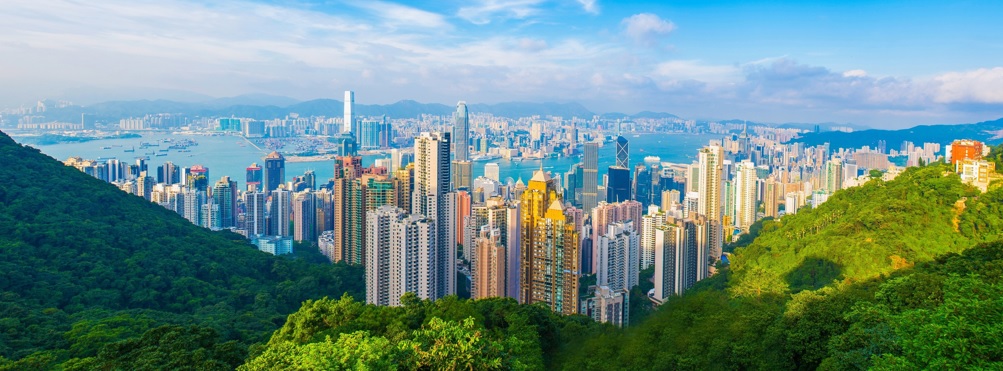
Hong Kong accommodations
Hong Kong accommodations welcome you to a destination nicknamed “Pearl of the Orient”. Known for its skyline, harbors, promenades, plazas, parks, gardens, unique geography, museums, Buddhist temples, theme parks, shopping / convention centers, night markets and trams, Hong Kong is shielded to its immediate south by Hong Kong Island.
Across Victoria Harbour from mainland Hong Kong, Hong Kong Island combines Asian tradition with modern style. A special Chinese administrative district, Hong Kong is located just south of Shenzhen, China. Across the Zhujiang River Estuary is Macau. an autonomous region known as “Las Vegas of Asia”. One-way, fast ferry service between Hong Kong and Macau takes about an hour. An additional connection between Hong Kong and Macau is Lantau Island’s Hong Kong-Zhuhai-Macao Bridge, a vehicular estuary-crossing consisting of 3 cabled bridges and a 34-mile tunnel.
Mainland Hong Kong attractions: Avenue of Stars HK (tourist attraction), Hong Kong Cultural Centre, Hong Kong Museum of History, Sky 100 Hong Kong Observation Deck, K11 MUSEA (shopping mall), Victoria Harbour (waterfront scenery, nighttime light / firework displays), Former Kowloon-Canton Railway Clock Tower (iconic landmark), Hong Kong Museum of Art, Hong Kong Palace Museum, Hong Kong Coliseum (stadium), Hong Kong Science Museum, Bruce Lee Statue, Hung Hom Kwun Yum Temple (Buddhist temple), Tsim Sha Tsui Waterfront Park (promenade, harbor/city views), Ocean Terminal Deck (observation deck), Kowloon Park, Kowloon Public Pier (boat / ferry services)
Hong Kong Island points of interest: Ocean Park (amusement park), The Peak Tower (leisure/shopping complex – tram terminal, viewing terrace, exhibitions, modern architecture), Hong Kong Observation Wheel (Ferris wheel), Tai Kwun (historical landmark – art shows, antique stores, bars/restaurants), Man Mo Temple (Taoist temple), Victoria Peak (1,181-foot mountain peak – skyline/waterfront views), Shek O Beach (calm waters, beach chairs/umbrellas, restaurant), Lugard Road Lookout (vista point – harbor views), Hong Kong Park (gardens, water features, conservatory, playground, squash facility), Big Wave Bay Beach, Dragon’s Back (hiking area), Happy Valley Racecourse (horse racing course), Red Incense Burner Summit (hiking area), Wilson Trail (hiking area), Repulse Bay Beach (960-foot beach, dining/shopping area), The Hong Kong Country Club, Royal Hong Kong Yacht Club – Middle Island, Shek O Country Club (golf club)
Lantau Island main attractions (southwesterly – across the Ma Wan Channel): Hong Kong Disneyland (theme park), Hong Kong International Airport, Tian Tan Buddha (monument – bronze Buddha, carved bell, relics, museum), Wisdom Path (path – 38 wooden monuments, sea views), Pui O Beach (public beach – quiet, fine sand, swimming, sunbathing, limited facilities), Lantau South Country Park (natural area – hiking trails, panoramic island/sea views), Inspiration Lake Recreation Centre (park), Lantau Peak (3,064-foot mountain peak), Upper Cheung Sha Beach (white sand, large boulders, few amenities), Sunset Peak (2,851-ft. hiking area peak, campsites)
Northward of downtown (mainland – closer to the China border): Tsz Shan Monastery (Buddhist temple), Tai Po Waterfront Park (scenic parkland – promenade, sports courts, amphitheater, lookout tower), Kowloon Walled City Park (Jiangnan garden-style park – 8 scenic zones), Pak Shek Kok Promenade (park area – hiking/biking path, eateries), Lion Rock Country Park (forested mountain park – Lion/Amah rocks, trails), Kowloon Peak Viewing Point (hillside viewpoint – road-accessible, benches, shelter, harbor/skyline views), Sai Kung East Country Park (natural area – hiking trails, beaches, reservoir, unique geological features), Plover Cove Reservoir Dam (weir), Pat Sin Leng Country Park (trails, grassy slopes, marshes, mountain forests, dragonflies, egrets, pangolins), The Jockey Club Kau Sai Chau (public golf course), The Clearwater Bay Golf and Country Club, Suicide Cliff (hiking area), Mai Po Nature Reserve (wetland nature preserve – migratory birds/insects, marsh/shrimp pond tours), Tai Mei Tuk Water Sports Centre, Sharp Peak (mountain peak – hiking area), Devil’s Fist (tourist attraction), UNESCO Global Geopark (park – 2 geological regions, distinct rock formations, educational exhibits), Ngong Ping Campsite (Ma On Shan – campground), Green Egg Island (scenic spot), Tai Hang Tun Kite Flying Area (recreation center), Goldfish Island (scenic spot), Stonecutters Bridge Viewing Point, Mok Min Cave (tourist attraction), The MacLehose Trail (trekking route – coastal areas, rolling hills, mountains), Sheung Luk Stream (hiking/swimming area, waterfall), Whiskey Beach (secluded beach), Bluff Island Cave (tourist attraction), Plover Cove Reservoir Country Trail (hiking area), Wong Mau Chau Beach (secluded beach)
Hong Kong main airport: Hong Kong International Airport
Rideshare service: Uber
Rapid transit railway system: MTR
Contactless electronic payment card: Octopus card
Hong Kong top events: Clockenflap, Lantern Festival, Chinese New Year, Mid-Autumn Festival, Ghost Festival, Dragon Boat Festival
Although Cantonese is Hong Kong’s most widely-spoken language, about half of the city’s population speaks English. Good to practice before traveling to Hong Kong are some Cantonese phrases and eating with chop sticks. Keep in mind that Pearl of the Orient ranks as one of the world’s most expensive cities. Hong Kong’s currency is the Hong Kong dollar, cars travel on the left-hand side and the drinking age is 18 years old. Hong Kong accommodations are some of Asia’s best. Before we get to Hong Kong accommodations, let’s take a look at some more background information on the area to help you along the way.
Humans have inhabited the Hong Kong-area for an estimated 35,000 years. A Sai Kung-area archaeological dig site (discovered 2023) unearthed knapped stone tools. Starting in the Neolithic period (about 6,000 years ago), Austronesians and Tue peoples, respectively, are believed to have inhabited semi-coastal regions. Also discovered were coarse / hard pottery, quartz / stone jewelry, small bronze implements and evidence of rice cultivation, which date to the Late-Neolithic period. In 214 BC, the Qin dynasty incorporated the Hong Kong-area into China. After the Qin collapse circa 206 BC, the Hong Kong region was consolidated into the Nanyue kingdom. Subsequently, the region was recaptured by China during the Han conquest of 111 BC. The 1279 AD Battle of Yamen between the Song dynasty and the Yuan dynasty resulted in a Yuan victory and the fall of the Song dynasty, which had ruled since 960 AD. Seven large families owned most of the region’s land by the end of the Yuan dynasty circa 1368. Throughout the subsequent Ming dynasty (1368-1644), settlers from nearby provinces migrated to Kowloon. Portuguese explorer Jorge Álvares, arriving in 1513, is the first known European to visit the area. Tamão, a trading post established by Portuguese merchants, was set up in Hong Kong waters to trade with southern China. Military clashes in the 1520s resulted in Portugal being expelled from the area for the next 300-plus years. In 1887, however, the Sino-Portuguese Treaty of Peking between the Kingdom of Portugal and the Qing dynasty gave Portugal trading rights to Macau in exchange for helping to end opium smuggling. From 1661 to 1683, the Hong Kong region was turned into a wasteland as a result of the “Great Frontier Shift”, which required the evacuation of coastal areas in order to fight Taiwan-based anti-Qing loyalists. Following Haijin “sea bans”, the 1757 Canton System was established by Qing authorities, thus restricting non-Russian ships to the port of Canton, or present-day Guangzhou. Chinese demand for European goods was limited to precious metals, which created a trade imbalance between China and Europe that favored China. As a result, Britain sold large amounts of Indian opium to China, creating a problem for the Qing dynasty. The First Opium War between the United Kingdom and Qing China resulted in a British victory, with Hong Kong Island being ceded to Britain. By early 1842, British administrative infrastructure was built, but commerce was stymied by disease, Qing policies and piracy. The 1850s Taiping Rebellion saw Chinese refugees, including wealthy merchants, flee mainland China to settle in the Hong Kong area, thus helping to improve conditions. The 1856 Second Opium War between the United Kingdom / France and China resulted in another UK victory, Kowloon Peninsula and Stonecutters Island being ceded into British Hong Kong, and Outer Manchuria being ceded to Russia. In 1898, the UK obtained a 99-year lease of the New Territories. The University of Hong Kong opened in 1911 and Kai Tak Airport began operation in 1924. On December 8, 1941, the same morning as the attack on Pearl Harbor, the Imperial Japanese Army attacked Hong Kong. Thereafter, Japan occupied the area for almost four years before Britain regained control on August 30, 1945. Following World War II, skilled Chinese migrants fled the mainland Chinese Civil War to Hong Kong, which again proved beneficial to the area. Starting in the 1950s, Hong Kong would become part of the “Four Asian Tiger” economies along with Singapore, South Korea and Taiwan. Pro-Republic of China and Chinese Communist Party protests, riots and rising labor and property costs diminished the British territory’s competitiveness. Near the end of the UK’s lease, uncertainty regarding the New Territories arose. The 1984 Sino-British Joint Declaration, whereby the United Kingdom would handover the colony to China in 1997, guaranteed Hong Kong’s economic and political systems for 50 years following the handover. After 156 years of British rule, Hong Kong was handed over to China at midnight on July 1, 1997. Around this time and thereafter, several crises ensued, to include the 1997 Asian financial crisis, avian flu and SARS epidemics.
Officially the Hong Kong Special Administrative Region of the People’s Republic of China, Hong Kong is found alongside the Pearl River estuary in southern China. One of the world’s most densely populated cities, Hong Kong is home to around 7.5 million “Hongkongers”. Around 10% of the city’s population identifies as Chinese. Pearl of the Orient has the largest number of skyscrapers of any world city, with over 550 buildings exceeding 492-feet in height. Approximately 44.5 million people visited Pearl of the Orient in the year 2024. Hong Kong enjoys a capitalist mixed-service economy, with low taxation and minimal government market intervention, emphasizing economic liberty and the rule of law. Three types of gambling are legal in Hong Kong: lottery, horse racing and football sports betting. Summers are hot and humid, whereas winters are mild and typically sunny. Snowfall is rare. Additional points of interest include HKEX (Hong Kong Stock Exchange), International Commerce Centre, Two International Finance Centre, Lui Seng Chun (Grade I historic building) and The University of Hong Kong (HKU). Local foods include pork, goose, chicken, seafood, wontons and dim sim (Cantonese, bite-sized, steamed dumplings). A popular alcoholic drink is baijiu (strong, clear liquor, served neat, typically with dinner). With some background information on the area, we’re ready for Hong Kong accommodations that will help make for an outstanding trip.
Disney Explorers Lodge
Hong Kong Disneyland Resort, Lantau Island
Hong Kong Disneyland
Hotel amenities: multiple restaurants, outdoor swimming pool, sea views, air conditioning, free Wi-Fi, 24-hour front desk, facilities for disabled guests, private parking, free shuttle service
Nearby restaurants: Dragon Wind (Mandarin restaurant), Ink & Plate (buffet restaurant)
Nearby amusement park rides / theme parks: Big Grizzly Mountain Runaway Mine Cars (rollercoaster), Mystic Manor (amusement park ride), Iron Man Experience (amusement park ride), Toy Story Land (theme park), World of Frozen (theme park)
Nearby misc.: The Archivist (lounge), Rafiki Garden
Within feet:
-
-
- Hong Kong Disneyland
- MTR Disneyland Resort Station
-
Within 5 miles:
-
-
- Central Park
-
Within 6 miles:
-
-
- Tai Pak Beach
-
Within 27 miles:
-
-
- Window of the World Alps Ice and Snow World
-
Disney Explorers Lodge is 10 miles from Hong Kong International Airport.
Approximate cost per person (four people): $116
Cordis, Hong Kong
555 Shanghai Street,Yau Tsim Mong District
Cherry Street Park
Hotel amenities: multiple dining options, outdoor heated pool, spa, wellness facilities, free Wi-Fi, flat-screen TVs, marble bathrooms, rain showers, ballrooms
Nearby: CHANEL Beaute (beauty supply store), Chow Sang Sang (jewelry store), Rado Switzerland (watch store)
Within feet:
-
-
- Cherry Street Park
- Langham Place Shopping Mall
- Mongkok Computer Centre
- Sin Tat Plaza
- Richmond Shopping Arcade
- Ladies Market
- Bruce Lee Club
-
Within 1.6 miles:
-
-
- Harbour City
-
Within 2.3 miles:
-
-
- Wong Tai Sin Temple
-
Within 3.2 miles:
-
-
- Happy Valley Racecourse
-
Cordis, Hong Kong is 14.8 miles from Hong Kong International Airport.
Approximate cost per night (Family Quad with Kitchen): $462
Approximate cost per person (four people): $115
Page148, Page Hotels
148 Austin Road, Tsim Sha Tsui, Yau Tsim Mong District

Hong Kong Museum of History
Hotel amenities: restaurant, garden views, air conditioning, free Wi-Fi, flat-screen TVs, coffee makers, kettles, 24-hour front desk, concierge service, facilities for disabled guests
Nearby: Cosmos Gourmet (Hunan restaurant), Costa del Sol (Spanish restaurant), Welcome Bar, LUXX (pub), Domie Cake Shop, Zomate fitness (gym)
Within feet:
-
-
- Hong Kong Museum of History
- KOWLOON PARK North Gate
- Hong Kong Science Museum
- Princess Margaret Road Garden
-
Within 1 mile:
-
-
- Clock Tower
- International Commerce Center
-
Within 2.7 miles:
-
-
- Hong Kong Park
-
Page148, Page Hotels is 20 miles from Hong Kong International Airport.
Approximate cost per night (Family Room): $297
Approximate cost per person (four people): $74
Hotel ICON
17 Science Museum Road, Yau Tsim Mong District
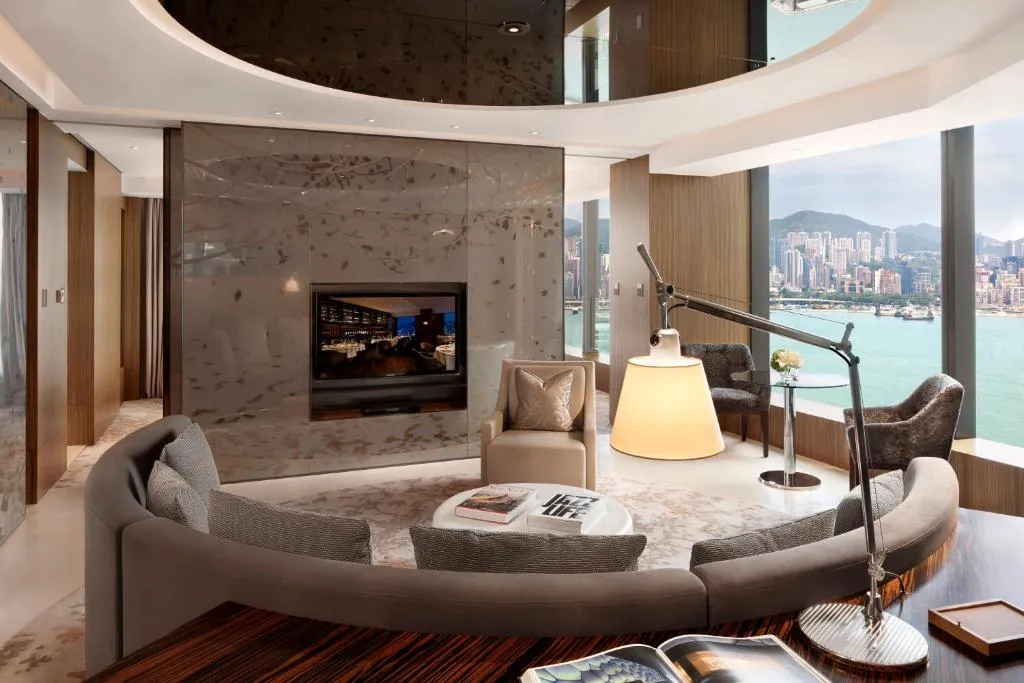
Hong Kong Science Museum
Hotel amenities: outdoor heated rooftop pool, harbor views, spa, 24-hour fitness center, air conditioning, free Wi-Fi, free mini-bars, free local calls, concierge services, business center
Nearby: Bistro 1979 (Western restaurant), Awesome Bar & Cafe
Within feet:
-
-
- Hong Kong Science Museum
- Salisbury Road Garden
- Slide Park
-
Within 1.8 miles:
-
-
- sky100 Hong Kong Observation Deck
-
Within 2.7 miles:
-
-
- Hong Kong Zoological And Botanical Gardens
-
Hotel ICON is 20 miles from Hong Kong International Airport.
Approximate cost per night (Club 80 Suite): $1,083
Approximate cost per person (three people): $361
Grand Hyatt Hong Kong
1 Harbour Road
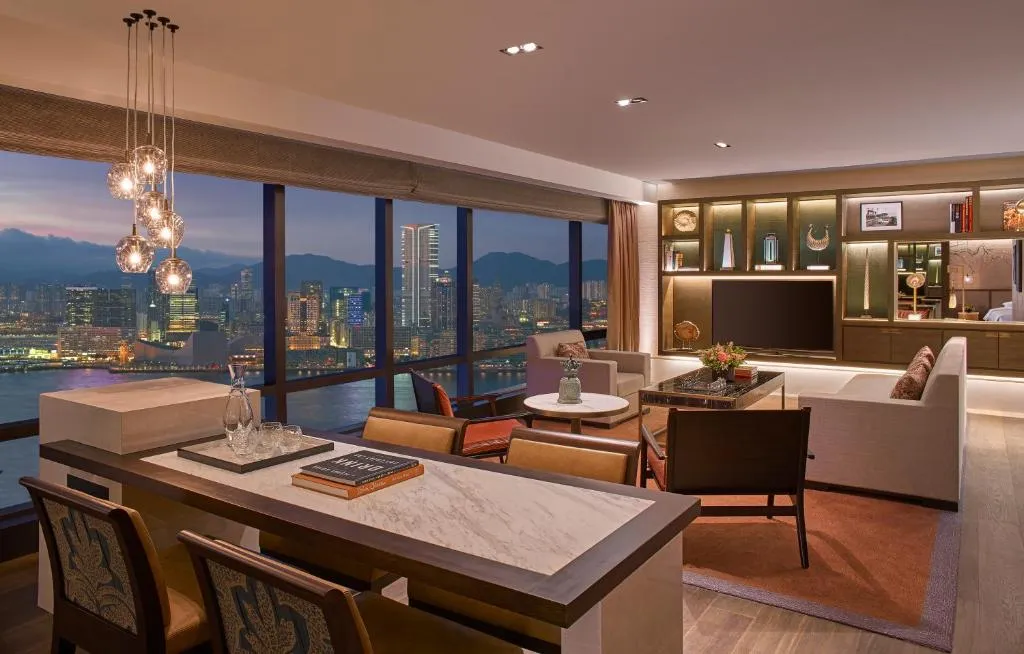
Hong Kong Convention and Exhibition Center
Hotel amenities: outdoor heated pool, Victoria Harbor views, spa, 24-hour fitness studio, tennis & racquetball courts, floor-to-ceiling windows, free Wi-Fi, flat-screen TVs, tea / coffee making facilities, mini-bars, marble bathrooms, tour desk, car rentals
Nearby restaurants / bars: Ming Court (Chinese restaurant), Grand Hyatt Steakhouse, Matsubishi Japanese Restaurant, Dynasty (restaurant), Benates Restaurant & Bar Hong Kong, Waterfall Bar, The St. Regis Bar
Nearby misc.: Victoria Harbour, Plateau Spa (spa), The Dynasty Club, Exhibition Centre Station (railway services), Hong Kong Trade Development Council SME Centre (board of trade)
Within feet:
-
-
- Hong Kong Convention and Exhibition Center
- Pacific Place Shopping Mall
- Times Square
- Lan Kwai Fong
- SoHo
- Hong Kong Space Museum
-
Within 1.1 miles:
-
-
- Hong Kong Zoological And Botanical Gardens
-
Within 1.7 miles:
-
-
- International Commerce Center
-
Within 3.1 miles:
-
-
- Mount Davis
-
Grand Hyatt Hong Kong is 16 miles from Hong Kong International Airport.
Approximate cost per night (Ambassador Suite): $2,248
Approximate cost per person (three people): $749
Kerry Hotel, Hong Kong
38 Hung Luen Road, Hung Hom Bay, Kowloon City District
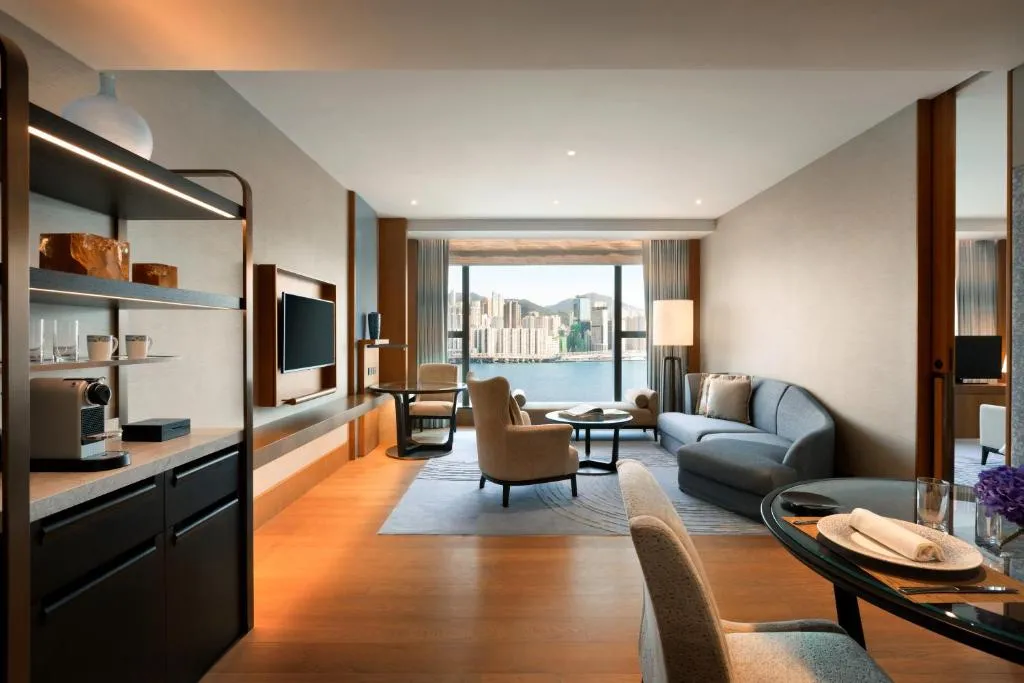
Hung Hom Promenade
Hotel amenities: multiple restaurants, bar, outdoor swimming pool, harbor views, spa, air conditioning, free Wi-Fi, complimentary mini-bars, e-concierge service, extensive meeting, event & catering facilities, private parking, shuttle service
Nearby: Red Sugar (bar)
Within feet:
-
-
- Hung Hom Promenade (harborside park)
- The Harbourfront Landmark
-
Within 1.5 miles:
-
-
- Kowloon Park
-
Within 2.4 miles:
-
-
- Victoria Park
-
Within 4.4 miles:
-
-
- Madame Tussauds Hong Kong
-
Kerry Hotel, Hong Kong is 21 miles from Hong Kong International Airport.
Approximate cost per night (Executive King Suite with Sea View): $724
Approximate cost per person (three people): $241
The Hari Hong Kong
330 Lockhart Road
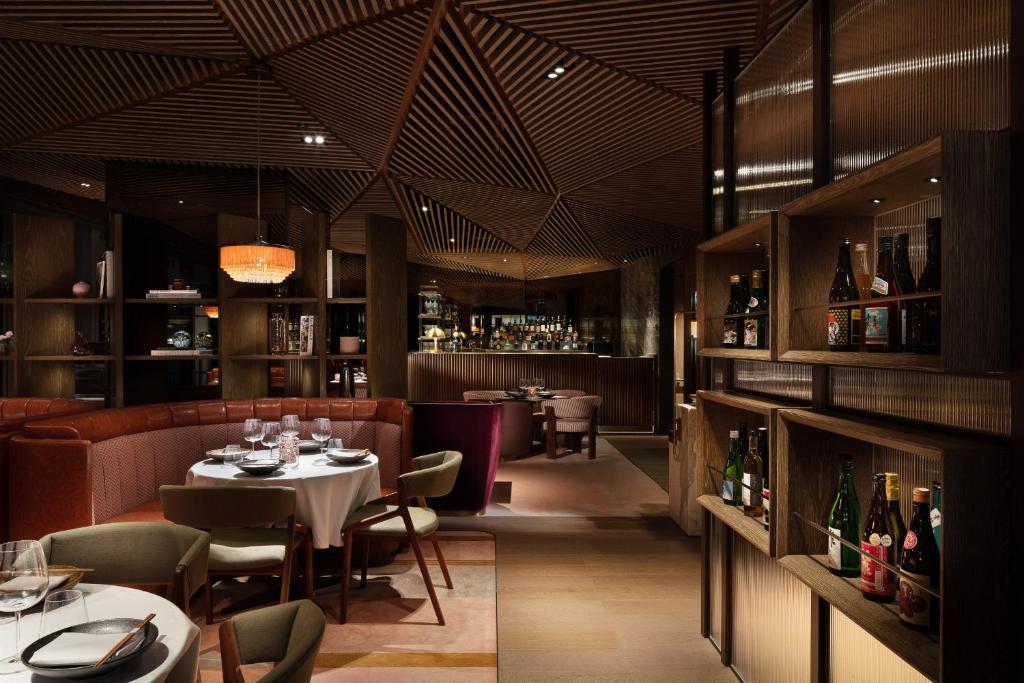
Tonnochy Road Tram Stop
Hotel amenities: restaurant, bar, city views, terrace, balconies, fitness center, air conditioning, free Wi-Fi, flat-screen TVs, coffee machines, electric tea pots, safety deposit boxes, 24-hour front desk, currency exchange, concierge services
Nearby: Punch Muay Thai Fitness Gym
Within feet:
-
-
- Tonnochy Road Tram Stop
- Hong Kong Racing Museum
- Fleming Road Garden
-
Within 1.4 miles:
-
-
- Hong Kong Park
-
Within 2.9 miles:
-
-
- sky100 Hong Kong Observation Deck
-
Within 4.7 miles:
-
-
- Repulse Bay Beach
-
The Hari Hong Kong is 23 miles from Hong Kong International Airport.
Approximate cost per night (The Library Suite): $1,095
The Silveri Hong Kong – MGallery
16 Tat Tung Road Tung Chung, 0

Hong Kong International Airport
Hotel amenities: multiple restaurants, bar, outdoor swimming pool, terrace, fitness center, free Wi-Fi, tea / coffee makers, 2 meeting rooms, free airport shuttle service
Nearby: The Enclave at The Silveri (restaurant), Shake Shack (Citygate Outlets – hamburger restaurant), Citygate Outlets (outlet mall)
Within 1 mile:
Within 3.4 miles:
-
-
- Lantau Country Park
-
Within 4.5 miles:
-
-
- Tian Tan Buddha
-
Within 10 miles:
-
-
- Tsing Ma Bridge
-
Approximate cost per night (Pool Terrace Suite): $935
Hotel Stage
1 Chi Wo Street, Yau Tsim Mong District
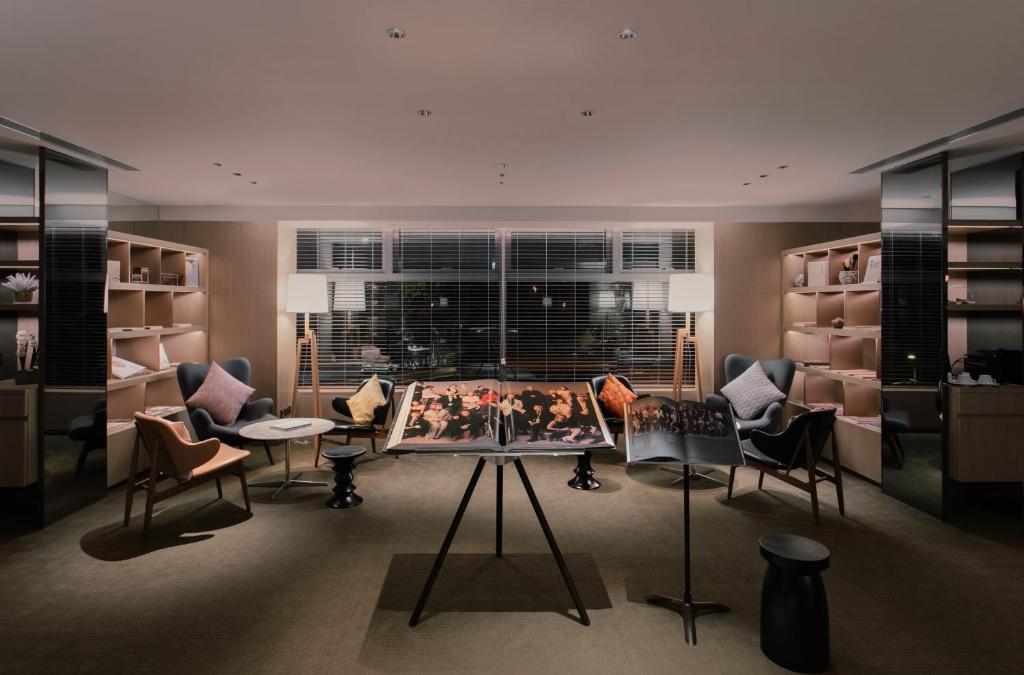
Temple Street Night Market
Hotel amenities: restaurant, city views, fitness center, air conditioning, free Wi-Fi, flat-screen TVs, 24-hour front desk, car rentals, ticketing service, luggage storage, facilities for disabled guests
Nearby: The Muse (wine bar), Kai Kai Dessert (dessert restaurant), Pacific Ocean Sports Centre (dive shop), Ex South Kowloon Magistracy (historical landmark)
Within feet:
-
-
- Temple Street Night Market
- Tin Hau Temple
- Jade Market
- King’s Park Hockey Centre
- Hong Kong International Hobby and Toy Museum
- Yau Ma Tei Theatre
- Yau Ma Tei Wholesale Fruit Market
-
Within 1.8 miles:
-
-
- Hong Kong Macau Ferry Terminal
-
Within 2.1 miles:
-
-
- The Landmark
- Lan Kwai Fong
-
Within 2.6 miles:
-
-
- Hong Kong Stadium
-
Hotel Stage is 15.1 miles from Hong Kong International Airport.
Approximate cost per night (Premium King Suite): $373
K11 ARTUS
18 Salisbury Road, Tsim Sha Tsui, Yau Tsim Mong District
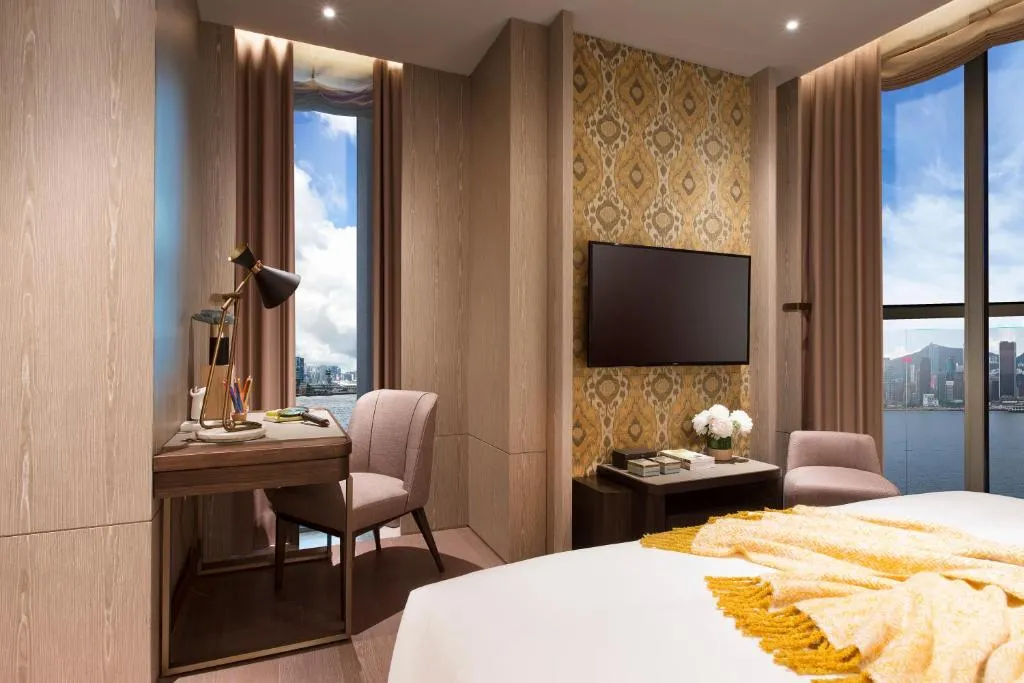
Avenue of Stars Hong Kong
Hotel amenities: restaurant, bar, outdoor pool, sun terrace, sauna, hot tubs, 24-hour gym, air conditioning, free Wi-Fi, flat-screen TVs, desks, hairdryers, 24-hour front desk, express check-in/out
Nearby restaurants / bars: The Legacy House (Chinese restaurant), YumMee (restaurant), DAMA (restaurant), XX (bar), DarkSide (cocktail bar)
Nearby misc.: Holt’s Café, Arabica (coffee store), PERROTIN (art gallery), Patagonia (outdoor sports store)
Within feet:
-
-
- Avenue of Stars Hong Kong
- Signal Hill Garden
- Hong Kong Museum of Art
- Hong Kong Space Museum
- iSquare
- K11 Shopping Mall
-
Within 1.2 miles:
-
-
- Times Square
-
Within 1.4 miles:
-
-
- Hong Kong Macau Ferry Terminal
-
Within 1.6 miles:
-
-
- Happy Valley Racecourse
- SoHo
-
K11 ARTUS is 15.3 miles from Hong Kong International Airport.
Approximate cost per night (Harbor Two): $1,542
Approximate cost per person (four people): $385
Island Shangri-La, Hong Kong
Supreme Court Road
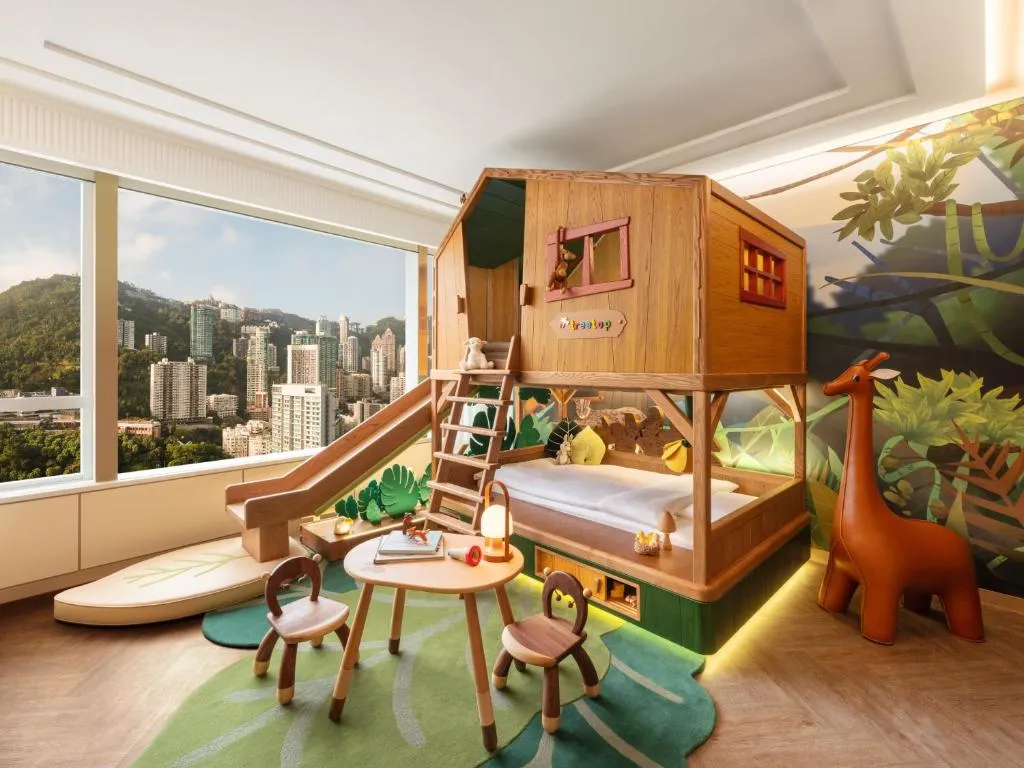
Hong Kong Park
Hotel amenities: Michelin-starred restaurant, outdoor pool, mountain / harbor views, spa, 24-hour gym, Oriental-style furnishings, full-length windows, free Wi-Fi, flat-screen TVs, mini-bars, 24-hour butler service, laundry services, limousine transfers
Nearby restaurants / bars: Summer Palace at Island Shangri-La (Chinese restaurant), The Continental (Western restaurant), The Intercontinental (restaurant), Bar Q88 (bar)
Nearby misc.: Hong Kong Park Forsgate Conservatory (greenhouse), Hong Kong Park, Edward Youde Aviary (bird watching area), The Helena May (historical landmark), St. Joseph’s Church (Catholic church), The Executive Centre (co-working space)
Within feet:
-
-
- Hong Kong Park
- Harcourt Garden
- Statue Square
- Edinburgh Place
- Hong Kong Arts Centre
- Hong Kong Zoological And Botanical Gardens
- Central Plaza
- Hong Kong House of Stories
-
Within 1 mile:
-
-
- Dr Sun Yat-sen Museum
-
Within 1.2 miles:
-
-
- Clock Tower
-
Within 5 miles:
-
-
- Nan Lian Garden
-
Island Shangri-La, Hong Kong is 16 miles from Hong Kong International Airport.
Approximate cost per night (Treetop Hideout Themed Family Suite): $2,253
Approximate cost per person (three people): $751

Wontonmeen
1/F 135 Lai Chi Kok Road Kowloon, Yau Tsim Mong District

Ex-Sham Shui Po Service Reservoir
Hostel amenities: terrace, patio, BBQ facilities, air conditioning, free Wi-Fi, paid on-site parking
Within feet:
-
-
- Ex-Sham Shui Po Service Reservoir (Ex-SSPSR – historical place museum)
-
Within 2 miles:
-
-
- International Commerce Center
-
Within 3.8 miles:
-
-
- Central Plaza
-
Within 38 miles:
-
-
- Shenzhen Bao’an International Airport
-
Wontonmeen is 18 miles from Hong Kong International Airport.
Approximate cost per night: $83
the Arca
43 Heung Yip Road, Wong Chuk Hang, Southern District

Ocean Park | Aberdeen Country Park
Hotel amenities: restaurant, bar, outdoor swimming pool, sea views, terrace, fitness center, free Wi-Fi, tea / coffee makers, 24-hour front desk, paid private parking
Nearby: The Hong Kong Golf Club, Attic V Climbing Gym (rock climbing gym)
Within feet:
-
-
- Ocean Park
- Aberdeen Country Park
- Aberdeen Square
-
Within 3.3 miles:
-
-
- Madame Tussauds Hong Kong
-
Within 4.7 miles:
-
-
- Clock Tower
-
Within 4.1 miles:
-
-
- South Bay Beach
-
the Arca is 24 miles from Hong Kong International Airport.
Approximate cost per night (Sea Family Suite): $411
Approximate cost per person (four people): $102
Hotel Madera Hollywood
53-55, Hollywood Road
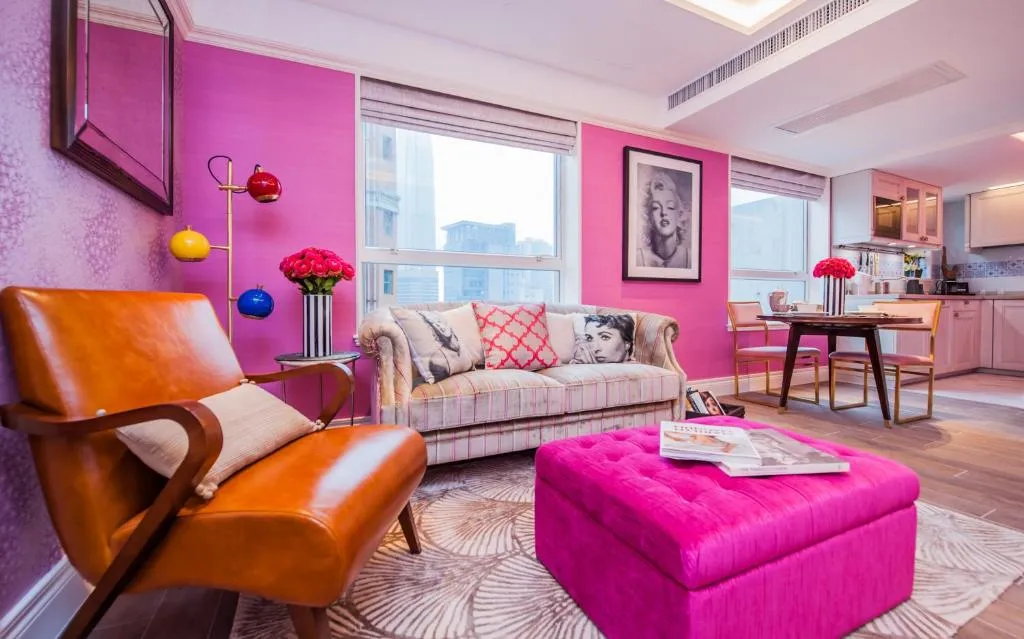
Hong Kong Zoological And Botanical Gardens
Hotel amenities: restaurant, fitness center, free Wi-Fi, flat-screen TVs, tea / coffee makers, 24-hour front desk
Nearby restaurants / bars / pubs: Le Moment (steakhouse), La Camionetta (pizza restaurant), Honky Tonks Tavern (American restaurant), Lookout Noodle (Traditional restaurant), Marimba Hong Kong (Latin American restaurant), Bella Lee (bar), Sohome (bar), 99 Bottles (bar), Quinary (cocktail bar), The Daily Tot (cocktail bar), The Opposites (cocktail bar), La Cabane Wine Bistro (wine bar), Le Tambour (wine bar), Jaa Bar (pub)
Nearby misc.: Sheer Coffee (coffee shop), Wild at Art Studio
Within feet:
-
-
- Hong Kong Zoological And Botanical Gardens
- Dr Sun Yat-sen Museum
-
Within 1.6 miles:
-
-
- Central Plaza
-
Within 6 miles:
-
-
- Repulse Bay Beach
-
Within 58 miles:
-
-
- Macau International Airport
-
Hotel Madera Hollywood is 22 miles from Hong Kong International Airport.
Approximate cost per night (Monroe Suite): $855
The Fleming Hong Kong
41 Fleming Road

Central Plaza Hong Kong
Hotel amenities: restaurant, free Wi-Fi, flat-screen TVs, mini-bars, 24-hour front desk, currency exchange, ticketing / concierge services, luggage storage, pressing, dry cleaning & laundry services
Nearby restaurants: Pirata Hong Kong (Italian restaurant), The Optimist (Spanish restaurant), Burger Home (hamburger restaurant), Zahrabel Dining Club (Lebanese restaurant)
Nearby misc.: Urban Diver (outdoor sports store)
Within feet:
-
-
- Central Plaza Hong Kong
- Harbour Centre
- Wanchai Tower
- The Hong Kong Academy for Performing Arts
- Wan Chai Market
- Wan Chai Ferry Pier
- Times Square
- Happy Valley Racecourse
-
Within 1 mile:
-
-
- Hong Kong Stadium
-
Within 1.6 miles:
-
-
- Hong Kong Macau Ferry Terminal
-
Within 2.8 miles:
-
-
- Ocean Park
-
The Fleming Hong Kong is 15.5 miles from Hong Kong International Airport.
Approximate cost per night: $406
The Ritz-Carlton Hong Kong
International Commerce Centre, 1 Austin Road West, Yau Tsim Mong District
home to the world’s highest rooftop bar
Elements Hong Kong
Hotel amenities: multiple restaurants (2 Michelin-rated), panoramic harbor views, heated indoor pool, gym, large windows, flat-screen TVs, Blu-Ray players, Nespresso machines, rain showers, 400-thread count linens, feather pillows, laundry & concierge services
Nearby restaurants / bars: Ozone Bar (world’s highest rooftop bar), Dragon Seal Restaurant & Bar (Chinese restaurant), Tosca (Italian restaurant), Cafe Boheme (Italian restaurant), Le 39V (restaurant), Tin Lung Heen (Cantonese restaurant), Dragon Seal Restaurant & Bar, OZONE (bar)
Nearby misc.: Sky 100 Hong Kong Observation Deck, La Maison Du Chocolat, Hooman By The Sea (art café)
Within feet:
-
-
- Elements Hong Kong
- International Commerce Centre
- Union Square Hong Kong
- China Hong Kong City
- Hong Kong Heritage Discovery Centre
- Harbour City
-
Within 1.1 miles:
-
-
- Hong Kong Macau Ferry Terminal
-
Within 1.5 miles:
-
-
- SoHo
- The Landmark
-
Within 2.3 miles:
-
-
- Victoria Peak
-
The Ritz-Carlton Hong Kong is 14.4 miles from Hong Kong International Airport.
Approximate cost per night (Premier Executive Suite): $3,198
Approximate cost per person (three people): $1,066
Four Seasons Hotel Hong Kong
8 Finance Street
ifc Hong Kong
Hotel amenities: 2 Michelin-rated restaurants, panoramic harbor views, spa, steam rooms, saunas, 24-hour fitness center, floor-to-ceiling windows, air conditioning, free Wi-Fi, 42-inch flat-screen TVs, iPod docking stations, Nespresso machines, marble bathrooms, deep soaking tubs, walk-in rain showers, laundry & babysitting services
Nearby: IFC Rooftop Garden, The Beer Bay (bar), Jean-Paul Hévin Chocolatier, Godiva Chocolatier, Yo Mama (frozen yogurt shop)
Within feet:
-
-
- ifc Hong Kong
- MTR Hong Kong Station
- Central Star Ferry Pier
- Connaught Place
- World Wide House
- The Mixing Bowl
-
Within 1 mile:
-
-
- Harbour City
-
Within 2.2 miles:
-
-
- Mount Davis
-
Within 4.5 miles:
-
-
- Wong Tai Sin Temple
-
Four Seasons Hotel Hong Kong is 14.2 miles from Hong Kong International Airport.
Approximate cost per night (Deluxe Suite): $5,445
Approximate cost per person (three people): $1,815
Mandarin Oriental Hong Kong
5 Connaught Road, Central
Prince’s Building Hong Kong
Hotel amenities: multiple dining options (including Michelin-rated), panoramic city / harbor views, indoor heated pool, spa, sauna, steam room, hot tub, fitness center, floor-to-ceiling windows, 37-inch flat-screen TVs, iPod docking stations, mini-bars
Nearby restaurants: Beefbar (restaurant), Cipriani Hong Kong (Italian restaurant), Lawry’s The Prime Rib (restaurant), Arcane (Western restaurant), Foxglove (Cantonese restaurant), Mott 32 (Chinese restaurant), Pierre (French restaurant), Man Wah (Chinese restaurant), Clipper Lounge (buffet restaurant)
Nearby misc.: Café Causette, China Club HK (social club)
Within feet:
-
-
- Prince’s Building Hong Kong
- Statue Square
- World Wide House
- Central Ferry Pier
- Hong Kong City Hall
- Hong Kong Macau Ferry Terminal
-
Within 1 mile:
-
-
- Victoria Peak
-
Within 1.5 miles:
-
-
- Times Square
-
Within 3.8 miles:
-
-
- Repulse Bay Beach
-
Mandarin Oriental Hong Kong is 14.5 miles from Hong Kong International Airport.
Approximate cost per night (Harbor View Suite): $1,703
Approximate cost per person (three people): $567
The Murray
22 Cotton Tree Drive, Central
The Peak Tram | Connaught Place | St John’s Cathedral
Hotel amenities: multiple dining options (including a rooftop restaurant & bar with panoramic views), city, park & garden views, terraces around the arches, indoor pool, fitness center, floor-to-ceiling windows, free Wi-Fi, Smart TVs, marble bathrooms, walk-in showers, bathrobes, slippers, bedside lighting controls
Within feet:
-
-
- The Peak Tram (transportation service – city views)
- Connaught Place (square)
- St John’s Cathedral
-
Within 1.1 miles:
-
-
- Central Plaza
-
Within 1.7 miles:
-
-
- Clock Tower
-
Within 3.4 miles:
-
-
- Mount Davis
-
Within 6 miles:
-
-
- Nan Lian Garden
-
The Murray, Hong Kong, a Niccolo Hotel is 23 miles from Hong Kong International Airport.
Approximate cost per night (Signature Suite): $765
The Peninsula Hong Kong
Salibury Road, Yau Tsim Mong District
iSquare
Hotel amenities: multiple dining options & bars (including a rooftop restaurant), Roman-style indoor pool, spa, hot tubs, fitness center, free Wi-Fi, LED TVs, Blu-Ray players, LED touchscreen wall panels, marble bathrooms, spa bathtubs, interactive bedside panels, on-site shopping arcade, business center, function rooms
Nearby restaurants: Felix (modern European restaurant), The Lobby (restaurant), Spring Moon (Chinese restaurant)
Nearby misc.: Chanel (clothing store), , RS Fashions (custom tailor)
Within feet:
-
-
- iSquare
- Hong Kong Space Museum
- SOGO Tsim Sha Tsui
- Hong Kong Museum of Art
- Hong Kong Cultural Centre
- 1881 Heritage
- Clock Tower
- The Sun Arcade
-
Within 1.3 miles:
-
-
- Hong Kong Macau Ferry Terminal
- The Landmark
- Times Square
-
Within 1.4 miles:
-
-
- Lan Kwai Fong
-
Within 1.9 miles:
-
-
- Hong Kong Stadium
-
The Peninsula Hong Kong is 15.1 miles from Hong Kong International Airport.
Approximate cost per night (Superior Harbor View Suite): $2,340
Approximate cost per person (four people): $585
The Upper House
Pacific Place, 88 Queensway
Pacific Place Hong Kong
Hotel amenities: panoramic harbor / city views, fitness center, free weekend yoga classes, free Wi-Fi, flat-screen TVs, free mini-bars, rain showers
Nearby: Pici (Italian restaurant), kapok St. Francis Yard (fashion accessories store), O.N.S (men’s clothing store), Asia Society Hong Kong Center, Olympic Square (amphitheater), Vantage Point (observation deck), Hong Kong Park, Hong Kong Park Playground
Within feet:
-
-
- Pacific Place Hong Kong
- Far East Finance Centre
- The Hong Kong Academy for Performing Arts
- Choco L’ART Studio
- Hung Shing Temple – Wan Chai
- Hong Kong Arts Centre
-
Within 1.2 miles:
-
-
- Victoria Peak
- Hong Kong Macau Ferry Terminal
- Harbour City
-
Within 2.7 miles:
-
-
- Ocean Park
-
Within 4.8 miles:
-
-
- Turtle Cove Beach
-
The Upper House is 15 miles from Hong Kong International Airport.
Approximate cost per night (Upper Suite with Harbor View): $2,209
Approximate cost per person (three people): $736

So there they are, Hong Kong accommodations that will help make for an outstanding trip. We hope you have found this information valuable and most of all, that you enjoy your time in Hong Kong!
Bangkok Accommodations
Bangkok accommodations
Bangkok accommodations welcome you to a destination nicknamed “City of Angels”. Known for its Buddhist temples, shrines, museums, art galleries, exhibition halls, shopping malls, night / floating markets, parks, monuments, squares, murals, canals, bridges, fishing ponds, universities, red-light districts, cannabis stores and elephants, Bangkok is located in southern Thailand on the Gulf of Thailand. Roughly half-way between the countries of Myanmar (westerly) and Cambodia (easterly), Bangkok is characterized by its winding, bending Chao Phraya River (“River of Kings”), which is sourced by the Ping and Nan Rivers’ confluence at the city of Nakhon Sawan. Thailand’s longest river, the Chao Phraya River flows into the Gulf of Thailand.
Bangkok main attractions: Asiatique The Riverfront (night market), The Grand Palace (palace complex / museum, est. 1782), Siam Paragon (shopping mall), Chatuchak Weekend Market (traditional market), ICONSIAM (shopping mall), Wat Arun Ratchawararam Ratchawaramahawihan (Buddhist temple), The Temple of the Emerald Buddha (Buddhist temple), Lumphini Park (central urban park, manicured lawns, playgrounds, artificial lake, boat rentals), Platinum Fashion Mall (shopping mall), Central Rama 9 (shopping mall), Sanam Luang (iconic park, community / royal events), Seacon Square Srinagarindra (shopping mall), Central Pinklao (department store), SEA LIFE Bangkok Ocean World (aquarium), King Power Mahanakhon (skyscraper), EmQuartier (shopping mall), Wat Trai Mit Witthayaram Worawihan (Buddhist temple), Chinatown Bangkok, Central Rama 2 (shopping mall), Big C Supercenter Ratchadamri (hypermarket), Bangkok Art & Culture Centre, The Mall Lifestore Bangkae (shopping mall), Queen Sirikit National Convention Center, Suan Luang Rama IX (state park), Train Night Market Srinakarin (night market), Kodtalay The Riverfront Seafood Buffet (seafood restaurant), Jim Thompson House Museum (heritage museum), Seacon Bangkae (shopping mall), Or Tor Kor Market (farmers’ market), The Mall Lifestore Tha Phra (shopping mall), Pak Khlong Talat (flower market), Sri Maha Mariamman Temple (Hindu temple),
Indy Market @Dao Khanong (night market), Sai Tai Center (night market), Khlong Lat Mayom Floating Market, The Mall Lifestore Ngamwongwan (shopping mall), Mungkorn Seafood Buffet & Fish Market (seafood restaurant), Wat Paknam Phasi Charoen (Buddhist temple), Food Villa Ratchaphruek (fresh food market), Benchakitti Park (lake, running / biking path, fish, turtles), Madame Tussauds BANGKOK (wax museum), Mungkorn Seafood Sukhumvit (seafood restaurant), Wachirabenchathat Park (Rot Fai Park), National Museum Bangkok, Ob Aroi Town In Town (seafood restaurant), Museum Siam, Tawandang German Brewery (beer hall), Thonburi Market Place, Children’s Discovery Museum, Rak Thale Bangkhunthian Bridge (tourist attraction)
Bangkok main airport: Suvarnabhumi Airport
Rideshare service: Grab
Subway system: Bangkok MRT (Metropolitan Rapid Transit)
Bangkok top events: Wonderfruit, Full Moon Party, Big Mountain Festival, Songkran (Thai New Year), Chinese New Year, The King’s Birthday, Loy Krathong, Candle Festival
An English-speaking Asian city, Bangkok is home to a wide range of restaurants and establishments. When in Bangkok, one should be cognizant of the tenants of Buddhism, or five precepts, while also showing respect for the Thai royal family. Kissing in public, throwing chewed gum onto the ground and pointing the soles of one’s feet at anyone should be avoided. Scams, such as overcharging and dual pricing, do exist. A known scam is the gem scam, where overpriced, or even worthless, gems are sold to tourists. Aside from temples and shrines, red-light districts also do exist in the city. Although prostitution technically is illegal in Thailand, enforcement typically is lax. Cannabis recently was legalized in Bangkok (medical prescription now required – individual dispensary websites may be helpful to check in advance). Cannabis partakers should avoid smoking in public places, as the act could result in up to three months in prison. Bangkok currency is the Thai Baht, cars travel on the left-hand side and the drinking age is 20 years old. Bangkok accommodations are some of Southeast Asia’s best. Before we get to Bangkok accommodations, let’s take a look at some more background information on the area to help you along the way.
Bangkok started as a village on the Chao Phraya River’s west bank around the early 15th century. Under the rule of Ayutthaya, or the Empire of Ayutthaya (1351-1767 AD), the early village served as a customs outpost, with forts on both sides of the river. Fought between the Kingdom of Siam and the Kingdom of France (which had established a presence in the area), the 1688 Siege of Bangkok resulted in a decisive Siamese victory, and the subsequent expulsion of France from Siam. In 1767, Ayutthaya fell to the Burmese, with the Thonbun Kingdom’s King Taksin the Great establishing a capital therein. Succeeding Taksin, King Phutthayotfa Chulalok, or Rama I, moved the capital to Rattanakosin Island and established the Rattanakosin Kingdom (1782-1932). Regarded as the city’s founding date, April 21, 1782 marks the day when the Bangkok City Pillar was erected. International trade with China, and then with Western merchants, expanded Bangkok’s economy during the early-to-mid 19th century. The steam engine, the printing press, rail transport, utilities infrastructure, formal education and healthcare were introduced during the reigns of Rama IV and Rama V (1851-1910). In 1932, absolute monarchy was abolished in Thailand, with Bangkok becoming a focal point for power struggles between the political elite and the military. Allied with Japan during World War II, Bangkok experienced Allied bombings. Following the war, however, as a result of US aid and government-sponsored investment, Bangkok became a US military R&R destination. Tourism, along with sex tourism, received a definitive boost. Following the US’ withdrawal from Vietnam circa 1973, Japan took over investments in Bangkok. The 1980s and 90s ushered in economic growth, which was stymied by the 1997 Asian financial crisis.
Home to around 8.5 million Bangkokians, Bangkok is Thailand’s capital and most populous city. Located in the Chao Phraya River delta in central Thailand, the city spans over 600 square miles. Colloquially, Bangkok is known as Krung Thep. Often the world’s most visited city, Bangkok accommodated 32.4 million international visitors in 2024. Traffic congestion is common, especially during rush hour, which makes subway transport more ideal at times. Violent crime is relatively low in Bangkok, though pickpocketing is known to occur. The City of Angels enjoys a tropical savanna climate. Average high temperatures stay around 90 degrees Fahrenheit throughout the year, while average lows remain in the 70s. The city’s record low is 50 degrees Fahrenheit. Additional points of interest include Sathon (district), Sao Chingcha (Giant Swing), Victory Monument, Rama VIII Bridge, Royal Plaza, Khao San Road (tourist street), Siam Discovery (shopping mall), Museum of Contemporary Art, National Stadium and Hua Mak Sports Complex. Local foods include hot and sour soup, fried noodles, sticky rice and spicy meats. Popular drinks are beer, whiskey, iced tea and coffee. With some background information on the area, we’re ready for Bangkok accommodations that will help make for a memorable experience.
Eastin Grand Hotel Sathorn
33/1 South Sathorn Road, Yanawa, Sathorn, 10120
Sathorn Park
Hotel amenities: multiple dining options, outdoor infinity-edge pool, fitness center, air conditioning, free Wi-Fi, flat-screen TVs, tea / coffee making facilities, fully-stocked mini-bars, safes, slippers, currency exchange, laundry / ironing services, babysitting services, business center, free parking
Nearby: Blue Elephant (Thai restaurant), OCKEN (Fusion restaurant), The Glass House (buffet restaurant), Chef Man (Chinese restaurant), Laab Ubon Kontrakran (restaurant), Swizzles (coffee shop)
Within feet:
-
-
- Sathorn Park
- British Club
- Taksin Bridge
- BTS-Surasak Train Station
-
Within 1 mile:
-
-
- Bangkokian Museum
- Thailand Creative & Design Center
-
Within 1.9 miles:
-
-
- Lumpini Park
-
Within 2.6 miles:
-
-
- SEA LIFE Bangkok Ocean World
-
Eastin Grand Hotel Sathorn is 19 miles from Suvarnabhumi Airport.
Approximate cost per night (Premium Executive Deluxe): $344
SKYVIEW Hotel Bangkok – Sukhumvit
12 Sukhumvit Soi 24 Klongton, Khlong Toei, 10110
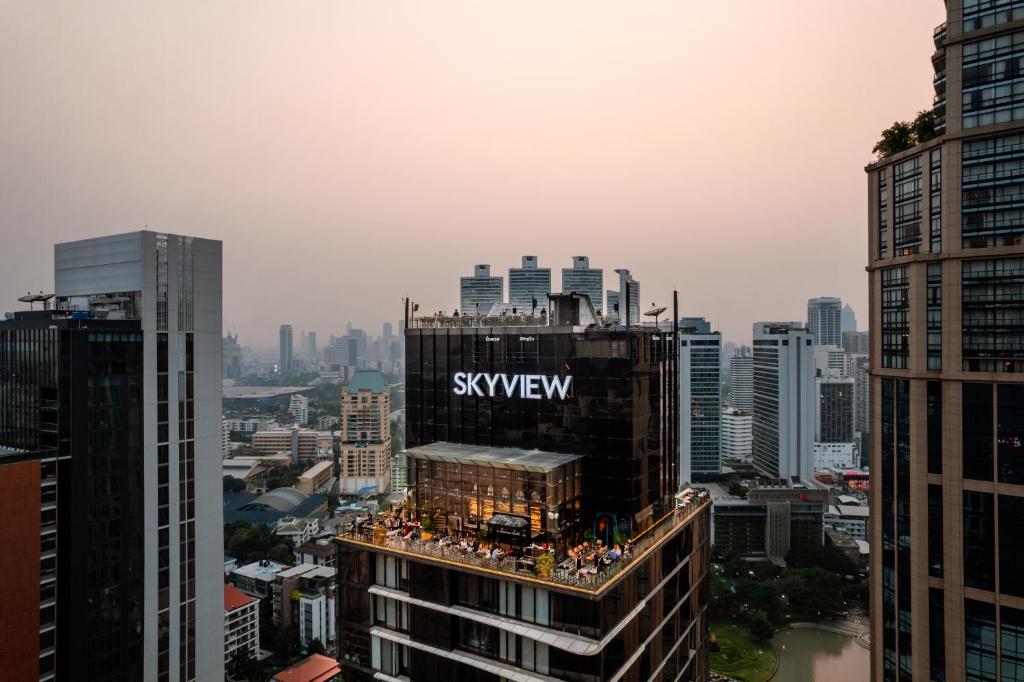
Cocoon Parc
Hotel amenities: outdoor saltwater swimming pool, pool bar, city / park views, sun terrace, fitness center, floor-to-ceiling windows, free Wi-Fi, flat-screen TVs, fully-equipped kitchens (select rooms), tea / coffee facilities, electric kettles, dental kits, 24-hour front desk staff, private parking, paid airport shuttle service
Nearby: TEN-SHOW Live kitchen (Japanese restaurant), Club Leone (night club), Platinum Lounge, PAUL The Emporium (bakery), Loft Thai Spa & Wellness – Sukhumvit 24 (day spa), ThaiThai Massage The Signature S24 (Thai massage shop), Migaku Fitness Club (Muay Thai boxing gym), EMPRIVE CINECLUB (movie theater), Emporium (department store)
Within feet:
-
-
- Cocoon Parc
- Sukhumvit Park
- Jamboree Digital Playground
- Benjasiri Park
- BTS-Phrom Phong Train Station
-
Within 1.1 miles:
-
-
- Little Maple Playground
-
Within 1.3 miles:
-
-
- Tt Palazzo
-
Within 2.9 miles:
-
-
- Madame Tussauds Bangkok
-
SKYVIEW Hotel Bangkok – Sukhumvit is 17 miles from Suvarnabhumi Airport.
Approximate cost per night (SkyView Executive Suite): $287
Bangkok Saran Poshtel
11/1, Sampraya Road, Wat Samphraya, Phranakhon, 10200

The National Gallery
Hostel amenities: air conditioning, free Wi-Fi, à la carte, American or Asian breakfast, paid airport shuttle service
Nearby: Hiranyakul House (restaurant), Papa & Mama Coffee (café), Vespa Cafe Coffee Roaster (coffee shop), DIRTY WEED (cannabis store)
Within feet:
-
-
- The National Gallery (art gallery)
- Santichaiprakarn Park
- Phra Pin-klao Bridge
-
Within 1 mile:
-
-
- Sanam Luang
-
Within 1.2 miles:
-
-
- Bangkok City Pillar
-
Within 1.5 miles:
-
-
- Grand Palace
-
Bangkok Saran Poshtel is 23 miles from Suvarnabhumi Airport.
Approximate cost per night (Family Room with Bathroom): $78
Cost per person (four people): $19
Sindhorn Midtown Hotel Bangkok
68 Langsuan Rd, Soi Langsuan, Pathumwan, 10330
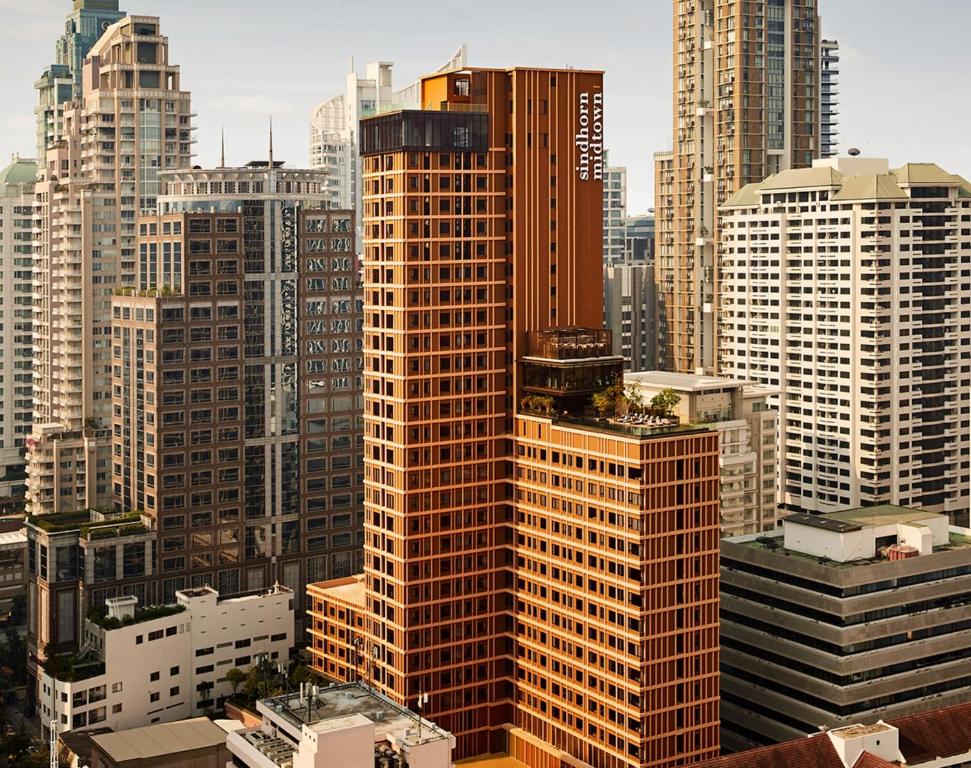
The Exclusive 6th
Hotel amenities: restaurant, bar, buffet, continental or American breakfast, year-round outdoor pool, terrace, sauna, fitness center, air conditioning, free Wi-Fi, flat-screen TVs, kitchens (select rooms), electric tea pots, safety deposit boxes, hairdryers, 24-hour English, Korean, Thai and Chinese-speaking front desk staff, free private parking, paid airport shuttle service
Nearby restaurants / bars: Bangkok’78 (Thai restaurant), Sushi Kuuya (sushi restaurant), Shoutaian Tokyo Shabu Shabu (Shabu-shabu restaurant), RYU Izakaya (Izakaya restaurant), ANJU Korean Rooftop Bar, Hidden Room Lang Suan (bar)
Within feet:
-
-
- The Exclusive 6th (restaurant)
- Merry Go Round
- Ayothaya Elephant Village
- Chit Lom Subway Station
-
Within 1.4 miles:
-
-
- Madame Tussauds Bangkok
-
Within 2 miles:
-
-
- Benjakitti Park
-
Within 2.2 miles:
-
-
- Victory Monument
-
Sindhorn Midtown Hotel Bangkok, Vignette Collection by IHG is 18 miles from Suvarnabhumi Airport.
Approximate cost per night (Two-Bedroom Suite): $429
Cost per person (three people): $143
Carlton Hotel
491 Sukhumvit Rd. Klongtoey Nua, Wattana, 10110

Prima Gems | Nikusho
Hotel amenities: restaurant, buffet, continental or Full English/Irish breakfast, outdoor swimming pool, city views, terrace, sauna, fitness center, air conditioning, free Wi-Fi, flat-screen TVs, electric tea pots, safety deposit boxes, desks, hairdryers, 24-hour front desk, kids’ club, free private parking, airport transportation
Nearby restaurants / bars: Antonio’s (Italian restaurant), El Toro Steak House, Prime Burger Sukhumvit (hamburger restaurant), Mizuki Omakase & Bar (sushi restaurant), Wah Lok Cantonese Restaurant, Plate Restaurant (buffet restaurant), Ministry of Crab Bangkok (seafood restaurant), LOBS Lobster Brunch and Bistro (Western restaurant), Bella Napoli (pizza restaurant), Thai Chicken Noodle Soup (Asian restaurant), Hiko Sushi (Japanese restaurant), Taraba Prime Japanese Restaurant, LELE by le mai anh (Vietnamese restaurant), Sai Nam Phueng Noodle Shop, Cooling Tower Rooftop Bar, Brewski (bar), Baa Bar Bangkok (bar), Wine Connection Sukhumvit 31 (wine bar)
Nearby misc.: Tuxedo Espresso Bar, Bumpsy Daisy (café), Antique Café & Cakes, Chu (café), Duc De Praslin Belgium (chocolate shop), Grow Tea (tea house), Merry Day Nail Care (nail salon), Nature Thai Massage & Spa BTS Asoke (massage spa), Body Care Works Soi 18 (massage spa), Kush House (cannabis store), THE DISPENSARY Sukhumvit (cannabis store)
Within feet:
-
-
- Prima Gems (jewelry store)
- Nikusho (Yakiniku restaurant)
- Cocoon Parc
- Sukhumvit Park
- Benjasiri Park
- MRT-Sukhumvit Subway Station
-
Within 2.3 miles:
-
-
- SEA LIFE Bangkok Ocean World
-
Within 3 miles:
-
-
- The Jim Thompson House
-
Within 3.3 miles:
-
-
- King Power Mahanakhon
-
Carlton Hotel Bangkok Sukhumvit is 19 miles from Suvarnabhumi Airport.
Approximate cost per night (Executive Suite): $458

Eastin Grand Hotel Phayathai
18 Phayathai Road, Thanon Phayathai, Ratchathewi, 10400

Phaya Thai Station | Suan Pakkad Palace Museum | Red Panda Yakiniku
Hotel amenities: restaurant, buffet, continental or Full English/Irish breakfast, outdoor swimming pool, sun terrace, garden, fitness center, air conditioning, free Wi-Fi, flat-screen TVs, electric tea pots, mini-bars, safety deposit boxes, desks, 24-hour front desk, ATM, currency exchange, concierge service, free private parking
Nearby restaurants / bars: SOMAEK Korean Bar (Korean restaurant), kin.d (Asian restaurant), BlueRayBar Rooftop (bar), Tillie Bar
Nearby misc.: After You Dessert Cafe, Mixue BTS Phaya Thai (ice cream shop), Weed Delivery Bangkok (cannabis store), Sonata Dancewear (dance store)
Within feet:
-
-
- Phaya Thai Station
- Suan Pakkad Palace Museum
- Red Panda Yakiniku (Phaya Thai – Yakiniku restaurant)
- Villa Ratchatewi
-
Within 1 mile:
-
-
- Madame Tussauds Bangkok
-
Within 1.1 miles:
-
-
- Bangkok Dolls Museum & Factory
-
Within 14 miles:
-
-
- Don Mueang International Airport
-
Eastin Grand Hotel Phayathai is 19 miles from Suvarnabhumi Airport.
Approximate cost per night (Premium One Bedroom Suite): $425
Ayathorn Bangkok
615/1 Thanon Phra Sumen, Phra Nakhon, 10200

Rattanakosin Exhibition Hall | King Prajadhipok Museum
Hotel amenities: restaurant, bar, buffet, American or Asian breakfast, outdoor pool, terrace, garden, fitness center, air conditioning, free Wi-Fi, flat-screen TVs, electric tea pots, mini-bars, safety deposit boxes, desks
Nearby restaurants: Ban Phanfa (restaurant), KLAIRE – Coffee & Brunch (brunch restaurant)
Nearby misc.: The Queen’s Gallery (art museum), Statue of King Rama III (monument), Royal Pavilion Mahajetsadabadin (park)
Within feet:
-
-
- Rattanakosin Exhibition Hall
- King Prajadhipok Museum (history museum)
- MDog Run
- Democracy Monument
- The National Gallery
-
Within 1 mile:
-
-
- Sanam Luang
-
Within 1.1 miles:
-
-
- Bangkok National Museum
-
Within 1.5 miles:
-
-
- Vimanmek Mansion
-
Ayathorn Bangkok is 22 miles from Suvarnabhumi Airport.
Approximate cost per night (Deluxe King Suite): $339
The Quarter Ari by UHG
10 Phahonyothin Road Samsaen Nai Phaya Thai, 10400
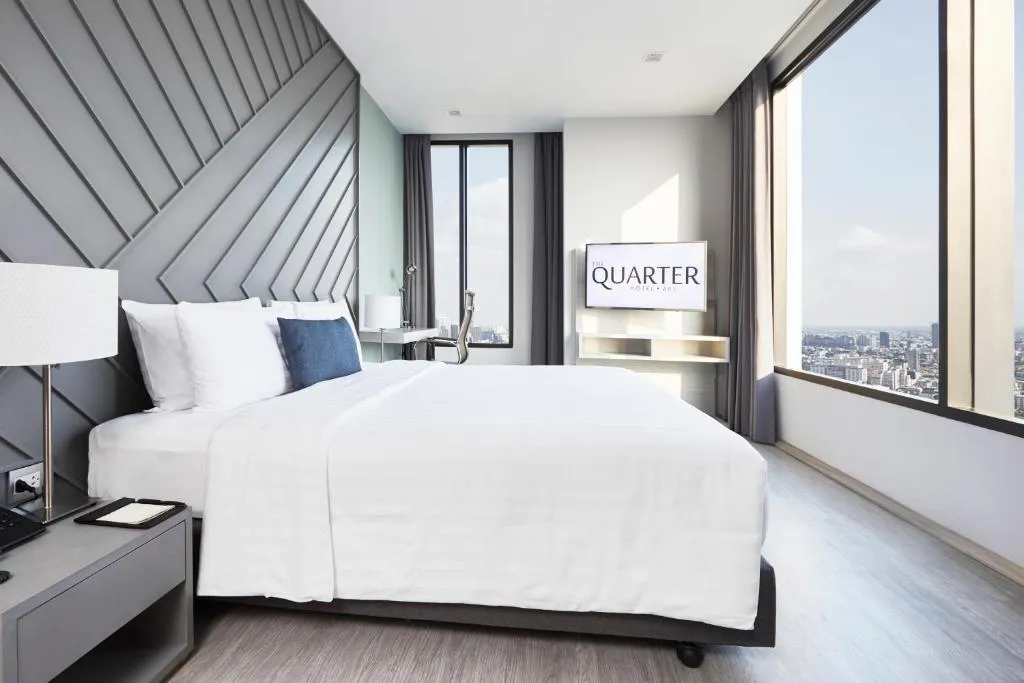
Soikoinae | GAMSA Korean BBQ House
Hotel amenities: restaurant, sky bar, rooftop lap pool, kids’ swimming pool, panoramic city views, hot tub, fitness center, air conditioning, flat-screen TVs, desks, hairdryers, meeting facilities
Nearby restaurants / bars: Smizzle Burger – Ari (hamburger restaurant), Tao Tan Noodles & Rice (Thai restaurant), Toom’s Kitchen OV (Thai restaurant), HIJIRI SUSHI (Japanese restaurant), Yu Baan Eatery (restaurant), accent.Ari (bar)
Nearby misc.: Bedtime cafe & Coffee (coffee shop), The House (hair salon), Looks Studio Ari (hair salon), Benz Rajchakru Retail Space (car dealer)
Within feet:
-
-
- Soikoinae (Thai restaurant)
- GAMSA Korean BBQ House (Korean barbecue restaurant)
- BTS-Ari Train Station
-
Within 1.5 miles:
-
-
- Victory Monument
-
Within 1.8 miles:
-
-
- Queen Sirikit Park
-
Within 5 miles:
-
-
- Grand Palace
-
The Quarter Ari by UHG is 18 miles from Suvarnabhumi Airport.
Approximate cost per night (Two-Bedroom Suite): $1,117
Cost per person (four people): $279
Chatrium Hotel Riverside Bangkok
28 Chareonkrung Soi 70, Bangkholame, Bang Kho Laem, 10120

Wat Yannawa
Hotel amenities: multiple dining options, outdoor pool, city views, private balconies, spa, fitness center, dark wood furnishings, floor-to-ceiling windows, free Wi-Fi, flat-screen TVs, fully-equipped kitchens, slippers, bathrobes, free parking
Nearby restaurants / bars: Riva Del Fiume (Italian restaurant), Sushi Saito Thailand (sushi restaurant), Sun (bistro), Mukata Heng Heng Korat (barbecue restaurant), Kurissara Thai Cuisine, Pier 28 (Asian fusion restaurant), Onzen Sushi, Silver Waves (Chinese restaurant), Tang Jai Yang (Chinese delivery restaurant), Westwood Restaurant, DEDE ROTI (restaurant), River Barge Restaurant (buffet restaurant), Kimpo Fish Porridge – Charoenkrung Road (Porridge restaurant), BKK Social Club (bar), Stella (bar)
Nearby misc.: Cafe Madeleine, Tea Lounge at Capella Bangkok (tea house), Dojicha (bubble tea store), Starbucks, Auriga (spa), SARIN THAI MASSAGE & SPA, Culture Collective Studio (performing arts center)
Within feet:
-
-
- Wat Yannawa (Buddhist Temple)
- Sathorn Pier
- Asiatique The Riverfront
- Calypso Cabaret
-
Within 2.5 miles:
-
-
- Lumpini Park
-
Within 2.7 miles:
-
-
- MBK Shopping Mall
-
- Chatrium Hotel Riverside Bangkok is 15.8 miles from Don Mueang International Airport.
Approximate cost per night (Two Bedroom Club Suite): $756
Cost per person (five people): $151
Ascott Embassy Sathorn
No. 59 South Sathorn Road, Thungmahamek Sathorn, 10120
King Power Mahanakhon
Hotel amenities: outdoor swimming pool, city views, sun terrace, garden, sauna, hot tub, fitness center, air conditioning, free Wi-Fi, flat-screen TVs, coffee machines, electric tea pots, safety deposit boxes, desks, hairdryers, buffet, American or Asian breakfast, 24-hour front desk, kids’ club, free private parking
Nearby restaurants: Il Bolognese (Italian restaurant), Mimosa Italian Mediterranean Restaurant, Baan Khanitha & Gallery (Thai restaurant), Saawaan (Thai restaurant), Sorrento (Italian restaurant), Plu (Thai restaurant)
Nearby misc.: Naga Cafe, Sunny Chan (bakery)
Within feet:
-
-
- King Power Mahanakhon (formerly MahaNakhon)
- BTS-Sala Daeng Train Station
-
Within 1 mile:
-
-
- Queen Saovabha Memorial Institute
-
Within 1.1 miles:
-
-
- Arch Canteen, British Club
-
Within 1.7 miles:
-
-
- Thailand Creative & Design Center
-
Ascott Embassy Sathorn Bangkok is 18 miles from Suvarnabhumi Airport.
Approximate cost per night (Three-Bedroom Premier): $821
Cost per person (six people): $136
Sivatel Bangkok Hotel
53 Wittayu Road, Lumpini, Patumwan, 10330
Central Embassy | Ayothaya Elephant Village
Hotel amenities: multiple dining options, infinity pool, city views, spa, fitness center, free Wi-Fi, 40-inch flat-screen TVs, Apple TV systems, iPod docks, mini-bars, personal safes, floor-to-ceiling bathroom windows, concierge, tour desk, business center
Nearby restaurants / bars: Savelberg Restaurant, Nan Bei (Chinese restaurant), Toby’s at Noble Play (brunch restaurant), Penthouse Bar + Grill, Oriental Bar, The Macallan Bar, Lennon’s (cocktail bar)
Nearby misc.: Cafe Claire, The Coffee Club, Great Earth CafeTeaRia, Starbucks, Myth Massage, Rolex Service Centre, Kalwit Studio & Gallery (art gallery)
Within feet:
-
-
- Central Embassy (shopping mall)
- Ayothaya Elephant Village
- Oxxy Dancing
- Merry Go Round
- BTS – Phloen Chit Train Station
-
Within 1 mile:
-
-
- SEA LIFE Bangkok Ocean World
-
Within 1.2 miles:
-
-
- Lumpini Park
-
Within 1.7 miles:
-
-
- The Jim Thompson House
-
Sivatel Bangkok Hotel is 19 miles from Suvarnabhumi Airport.
Cost per person (four people): $487

Grande Centre Point Surawong Bangkok
299 Thanon Surawong, Bang Rak, 10500
Bangkokian Museum
Hotel amenities: restaurant, buffet, American or Asian breakfast, outdoor swimming pool, terrace, sauna, fitness center, air conditioning, free Wi-Fi, flat-screen TVs, safety deposit boxes, hairdryers, 24-hour front desk, billiards, darts, free private parking, airport transportation
Nearby: Bangrak Grill (steakhouse), Hua Restaurant (Cantonese restaurant)
Within feet:
-
-
- Bangkokian Museum
- British Club
- Siam Pet
- Thailand Creative & Design Center
-
Within 2.6 miles:
-
-
- Museum of Siam
-
Within 3 miles:
-
-
- Suan Pakkad Palace Museum
-
Within 16 miles:
-
-
- Don Mueang International Airport
-
Grande Centre Point Surawong Bangkok is 19 miles from Suvarnabhumi Airport.
Approximate cost per night (Family Executive): $517
Cost per person (five people): $103
Tamni
476/4-5 Soi Phraya Sinhaseni Rama 4 Rd, Pathumwan, 10330

Bangkok Train Station
Hostel amenities: restaurant, bar, terrace, garden, air conditioning, free Wi-Fi, desks, 24-hour front desk, free private parking
Nearby: 511 Cafe & Bistro (Thai restaurant), Ruyi (Vegan restaurant), Samatha – Thai Massage (massage spa)
Within feet:
-
-
- Bangkok Train Station
- Thailand Creative & Design Center
- Samyan Sky Garden
- MRT-Hua Lamphong Subway Station
-
Within 1.5 miles:
-
-
- Madame Tussauds Bangkok
-
Within 2.6 miles:
-
-
- Suan Pakkad Palace Museum
-
Tamni is 19 miles from Suvarnabhumi Airport.
Approximate cost per night (Family Room): $169
Cost per person (six people): $28
Daraya Boutique Hotel
80 Soi Kasemsan 3, Rama 1 Road, Wangmai Patthumwan, 10330
SEA LIFE Bangkok Ocean World | Jim Thompson House Museum | Jim Thompson A Thai Restaurant | Madame Tussauds Bangkok | Chao Phraya Sky Park
Hotel amenities: restaurant, outdoor swimming pool, sun terrace, city views, balconies, air conditioning, free Wi-Fi, flat-screen TVs, electric tea pots, safety deposit boxes, desks, hairdryers, concierge services, business center, paid airport transportation service
Nearby restaurants / bars: Amici (Italian restaurant), TAAN Bangkok (Thai restaurant), Baan Dalaa by Angkana (restaurant), Sra Bua by Klin Klin (Thai restaurant), AOI Japanese Restaurant, The Grill Tokyo (Japanese restaurant), Karemeen & Sobereen (restaurant), Brasserie Europa, Niche (buffet restaurant), Philtration (bar)
Nearby misc.: Mandarin Oriental Shop (café), Baan Saen Saep (coffee shop), Sip ‘n Drip (coffee shop), Siam Paragon (shopping mall), Siam Discovery (shopping mall), MBK Center (shopping mall), The Moonlight Hall Jim Thompson Heritage Quarter (banquet hall), Bangkok Art and Cultural Center, Queen Savang Vadhana Museum, Scala Theatre (movie theater), The Poet’s Walk (park), Suphachalasai Stadium
Within feet:
-
-
- SEA LIFE Bangkok Ocean World
- Jim Thompson House Museum
- Jim Thompson A Thai Restaurant
- Madame Tussauds Bangkok
- Chao Phraya Sky Park
- BTS-National Stadium Train Station
-
Within 1.3 miles:
-
-
- Suan Pakkad Palace Museum
-
Within 1.6 miles:
-
-
- Victory Monument
-
Within 2.2 miles:
-
-
- MahaNakhon
-
Daraya Boutique Hotel is 20 miles from Suvarnabhumi Airport.
Approximate cost per night (Junior Suite): $305
The Rose Residence
118 Surawongse Road, Si-phaya,, Bang Rak, 10500

Samyan Sky Garden | British Club
Hotel amenities: restaurant, bar, outdoor swimming pool, city views, terrace, garden, air conditioning, free Wi-Fi, flat-screen TVs, coffee machines, safety deposit boxes, desks, hairdryers, free private parking
Nearby restaurants: Ruen Urai (Thai restaurant), Rolling Ribs Brew Bar & BBQ (restaurant), EKKA Indian Grill and Bar (Indian restaurant)
Within feet:
-
-
- Samyan Sky Garden (rooftop garden)
- British Club
- Queen Saovabha Memorial Institute
- MRT-Sam Yan Subway Station
-
Within 2.3 miles:
-
-
- Suan Pakkad Palace Museum
-
Within 2.8 miles:
-
-
- Bangkok Dolls Museum & Factory
-
Within 3.8 miles:
-
-
- Bangkok National Museum
-
The Rose Residence, Bangkok is 18 miles from Suvarnabhumi Airport.
Approximate cost per night (Suite): $239
Siam Kempinski Hotel Bangkok
991/9 Rama I Road, Pathumwan, Pathumwan, 10330
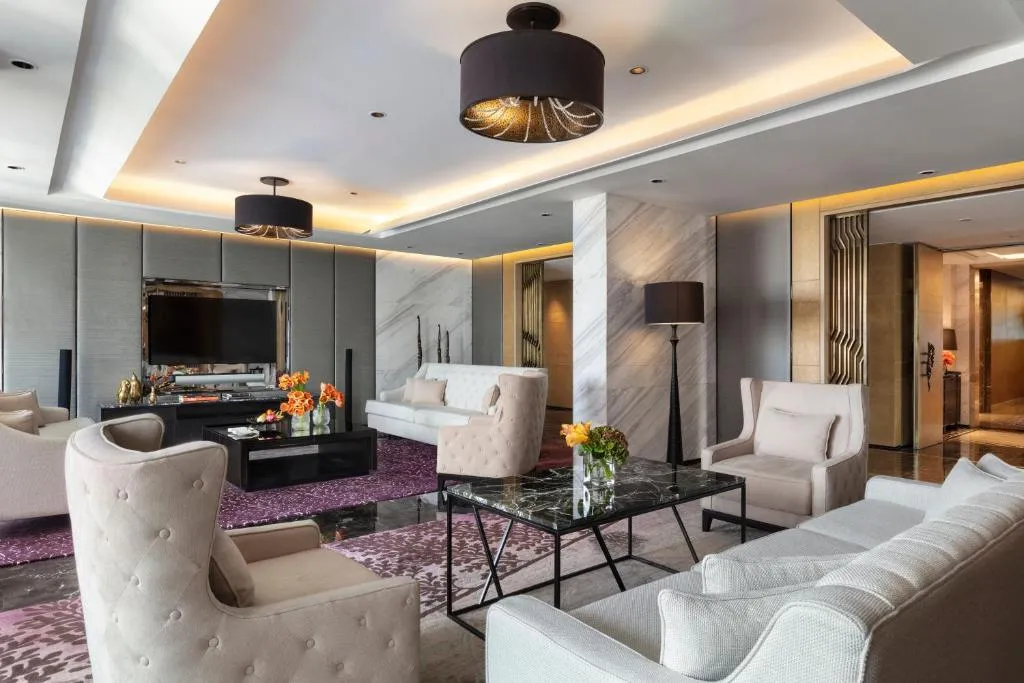
Siam Paragon | MBK Center | Siam Center
Hotel amenities: fine-dining restaurant, international buffet breakfast, swimming pools set within landscaped grounds, spa, free Wi-Fi, flat-screen TVs, electric kettles, mini-bars, slippers
Also in the area: Daraya Boutique Hotel
Within feet:
-
-
- Siam Paragon (shopping mall)
- MBK Center (shopping mall)
- Siam Center (shopping canter)
- KidZania Bangkok
- Amarin Plaza
-
Within 1.3 miles:
-
-
- Lumpini Park
- Arab Street
-
Siam Kempinski Hotel is 12.7 miles from Don Mueang International Airport.
Approximate cost per night (Royal Suite): $9,762
Cost per person (five people): $1,952

Once Again Hostel
22 Soi Samranrat, Mahachai Road, Phra Nakhon, 10200

Wat Suthat Thep Wararam Ratchaworamahawihan | Wat Saket Ratchawora Mahawihan | Sao Chingcha
Hostel amenities: restaurant, rooftop terrace, air conditioning, free Wi-Fi, personal reading lights, in-room lockers, shared TV room, luggage storage, laundry service
Nearby restaurants: Jia Uan Duck Porridge (Asian restaurant), Jackson (restaurant)
Nearby misc.: ONIBUS COFFEE Bangkok (coffee shop), Passport Bookshop (book store), First Moment – Thai Costume Rental
Within feet:
-
-
- Wat Suthat Thep Wararam Ratchaworamahawihan (Buddhist temple)
- Wat Saket Ratchawora Mahawihan (Buddhist temple)
- Sao Chingcha (Giant Swing – Tourist attraction)
- Rattanakosin Exhibition Hall
- Democracy Monument
- Wang Burapha Train Starion
-
Within 1 mile:
-
-
- Bangkok National Museum
- The National Gallery
-
Within 1.2 miles:
-
-
- Museum of Siam
-
Within 3.8 miles:
-
-
- Lumpini Park
-
Once Again Hostel is 21 miles from Suvarnabhumi Airport.
Approximate cost per night: $30
Bangkok Marriott Hotel The Surawongse
262 Surawong road Si Phraya, Bang Rak, 10500

Neilson Hays Library
Hotel amenities: restaurant, outdoor swimming pool, fitness center, air conditioning, free Wi-Fi, flat-screen TVs, kitchens, coffee machines, desks, 24-hour English, Chinese and Thai-speaking front desk staff
Nearby restaurants: Wongnai (restaurant), Day to Night (restaurant), Saima Food Master (restaurant), Mohsen (Persian restaurant), Bonita Cafe and Social Club (vegan restaurant)
Nearby misc.: Cafe De Famille, Warm Up Coffee, Neilson Hays Library
Within feet:
-
-
- Neilson Hays Library
- Sri Mariamman Temple
- Bangkokian Museum
- Bangkok Fashion Outlet
- MahaNakhon
-
Within 1.3 miles:
-
-
- MBK Shopping Mall
-
Within 1.5 miles:
-
-
- SEA LIFE Bangkok Ocean World
-
Bangkok Marriott Hotel The Surawongse is 14.4 miles from Don Mueang International Airport.
Approximate cost per night (Two-Bedroom Residential Suite): $414
Cost per person (four people): $103

Rich8 Hostel
102 Soi Woraphong, Ban Phan Thom, Phra Nakhon, 10200

Panda Thai Food & Vegetarian | Try Me Thai Restaurant
Hotel amenities: terrace, garden, air conditioning, buffet breakfast, 24-hour front desk, airport transportation
Nearby restaurants: Momo Samsen (restaurant), 372 Ramen And Sake (Ramen restaurant), Suda – Thai & Vegetarian Restaurant, Pen Little Coffee & Restaurant
Within feet:
-
-
- Panda Thai Food & Vegetarian (restaurant)
- Try Me Thai Restaurant
- Democracy Monument
- Santichaiprakarn Park
-
Within 1.2 miles:
-
-
- Bangkok City Pillar
-
Within 1.5 miles:
-
-
- Grand Palace
-
Within 15 miles:
-
-
- Don Mueang International Airport
-
Rich8 Hostel is 23 miles from Suvarnabhumi Airport.
Approximate cost per night (Classic Quadruple Room): $40
Cost per person (four people): $10
Chatrium Grand
728 Petchaburi Road, Ratchathewi, 10400

Chaloemla Gardens | Chilling House Café
Hotel amenities: restaurant, buffet, continental or Italian breakfast, outdoor swimming pool, sun terrace, fitness center, air conditioning, free Wi-Fi, flat-screen TVs, coffee machines, electric tea pots, mini-bars, safety deposit boxes, desks, 24-hour front desk, ATM, kids’ club, free private parking, airport transportation
Nearby: Savio (restaurant), Wagyu Kurabu Premium Yakiniku (Japanese restaurant), STOCKROOM (café)
Within feet:
-
-
- Chaloemla Gardens (small square, colorful wall murals)
- Chilling House Café (pub)
- Madame Tussauds Bangkok
- BTS-Ratchathewi Train Station
-
Within 1 miles:
-
-
- SEA LIFE Bangkok Ocean World
-
Within 1.1 miles:
-
-
- Siam Paragon The Flying Fantasy
-
Within 2.6 miles:
-
-
- Chitralada Royal Villa
-
Chatrium Grand Bangkok is 19 miles from Suvarnabhumi Airport.
Approximate cost per night (Three-Bedroom Suite): $1,447
Cost per person (six people): $241

Sheraton Grande Sukhumvit
250 Sukhumvit Road, Khlong Toei, 10110

Benchakitti Park
Hotel amenities: multiple restaurants, library, outdoor pool, spa, sauna, gym, free Wi-Fi, flat-screen TVs, mini-bars, welcome fruits, 300-thread cotton sheets, 24-hour room service
Nearby restaurants: Rossini’s (Italian restaurant), Pala Pizza, Indulge (Asian fusion restaurant), DOYAJI Korean BBQ Buffet Asok, My Veggie Home (vegetarian restaurant)
Nearby misc.: The Living Room (jazz club), Vonae Beauty & Spa (facial spa), The Grande Spa, My Spa Bangkok, Phoenix Health Care (spa), The ambassador barbershop, Throne Of Game (board game club)
Within feet:
-
-
- Benchakitti Park
- Korean Town
- Kamthieng House Museum
- Health Land Asoke
- Jaisamarn Church
- Arab Street
-
Within 1 mile:
-
-
- Central Embassy
-
Within 1.6 miles:
-
-
- Pratunam Market
-
Sheraton Grande Sukhumvit is 13 miles from Don Mueang International Airport.
Approximate cost per night (Family Suite): $800
Cost per person (six people): $133
Avani + Riverside Bangkok Hotel
257 Charoennakorn Road, Thonburi, 10600
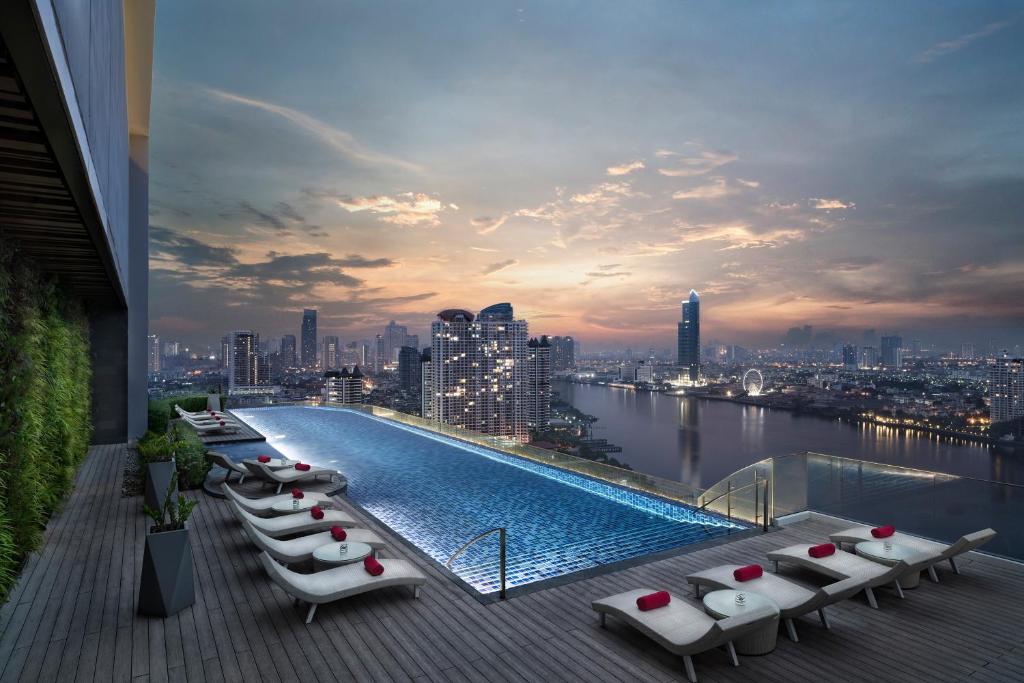
Rama III Bridge
Hotel amenities: multiple restaurants, buffet breakfast, rooftop infinity pool, river views, air conditioning, free Wi-Fi, flat-screen TVs, mini-bars, safety deposit boxes, hairdryers, 24-hour front desk, free parking, complimentary shuttle-boat service to-from Sathorn Pier
Nearby restaurants / bars: SEEN Restaurant & Bar, Bangkok Bold Kitchen (Thai restaurant), Trader Vic’s (Asian fusion restaurant), Mukdahan (restaurant), Skyline (buffet restaurant), Riverside Terrace (buffet restaurant), The Market (buffet restaurant), Longtail (cocktail bar)
Nearby misc.: The Coffee Club, First Presbyterian Church, Samray, Bukkhalo Police Station
Within feet:
-
-
- Rama III Bridge
- Asiatique The Riverfront
- Calypso Cabaret
-
Within 1 mile:
-
-
- The Mall Thapra
-
Within 1.1 miles:
-
-
- BTS-Pho Nimit
- BTS-Wongwian Yai
-
Within 3.1 miles:
-
-
- Grand Palace
-
Avani + Riverside Bangkok Hotel is 16.7 miles from Don Mueang International Airport.
Approximate cost per night (Avani River View Three Bedroom Suite): $1,149
Cost per person (seven people): $164
SILQ Hotel & Residence
41 Soi Sukhumvit, Khet Khlong Toei, 10110
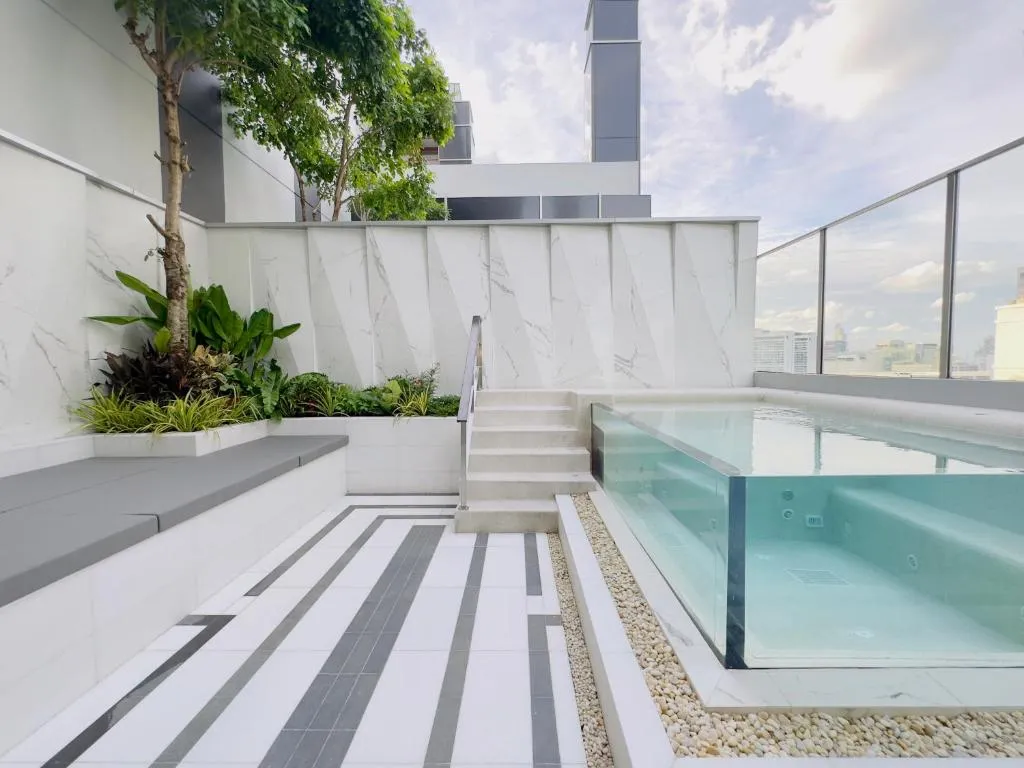
Benjasiri Park
Hotel amenities: restaurant, bar, buffet, continental or Full English/Irish breakfast, outdoor swimming pool, sun terrace, garden, sauna, hot tub, fitness center, balconies, air conditioning, free Wi-Fi, 24-hour front desk, free private parking, airport transportation
Nearby: The White Mulberry Bar, Beyond Bread (bakery), Selena on 24 (hair salon), THE QLUB (wellness center), California’s Finest (cannabis store), The Ripple Club (gym)
Within feet:
-
-
- Benjasiri Park
- Jamboree Digital Playground
- Cocoon Parc
- BTS-Phrom Phong Train Station
-
Within 2.6 miles:
-
-
- Lumpini Park
-
Within 3.8 miles:
-
-
- Suan Pakkad Palace Museum
-
SILQ Hotel & Residence, Managed by The Ascott Limited is 17 miles from Suvarnabhumi Airport.
Approximate cost per night (2-Bedrooms Premier): $914
Cost per person (five people): $182
Hansa Bangkok House
1750 Arun Amarin Rd, Bangplad, Bang Phlat, 10700

Phra Pin-klao Bridge
B&B amenities: sun terrace, balconies, garden, air conditioning, free Wi-Fi, flat-screen TVs, desks, luggage storage space
Nearby: Kaze No Sushi (sushi restaurant)
Within feet:
-
-
- Phra Pin-klao Bridge
-
Within 1.2 miles:
-
-
- Santichaiprakarn Park
- The National Gallery
-
Within 2.1 miles:
-
-
- Vimanmek Mansion
-
Within 3.7 miles:
-
-
- The Jim Thompson House
-
Hansa Bangkok House is 25 miles from Suvarnabhumi Airport.
Approximate cost per night: $50
Oriental Residence Bangkok
110 Wireless Road, Lumpini Patumwan, 10330

Central Chidlom | Gaysorn Village Shopping Mall
Suite amenities: lounge, indoor pool, fitness center, floor-to-ceiling glass walls, free Wi-Fi, flat-screen TVs, iPod docking stations, fully-equipped kitchens, marble bathrooms, 24-hour front desk, tour desk, business center, free shuttle buses
Also in the area: Sivatel Bangkok Hotel
Within feet:
-
-
- Central Chidlom
- Gaysorn Village Shopping Mall
- Embassy of the United States of America
- Amarin Plaza
- Arab Street
-
Within 10.9 miles:
-
-
- Mega Bangna
-
Oriental Residence Bangkok is 14.1 miles from Don Mueang International Airport.
Approximate cost per night (Three-Bedroom Suite): $848
Cost per person (seven people): $121
Tints of Blue Hotel
47 Sukhumvit 27 Wattana Klongtoey, Wattana, 10110
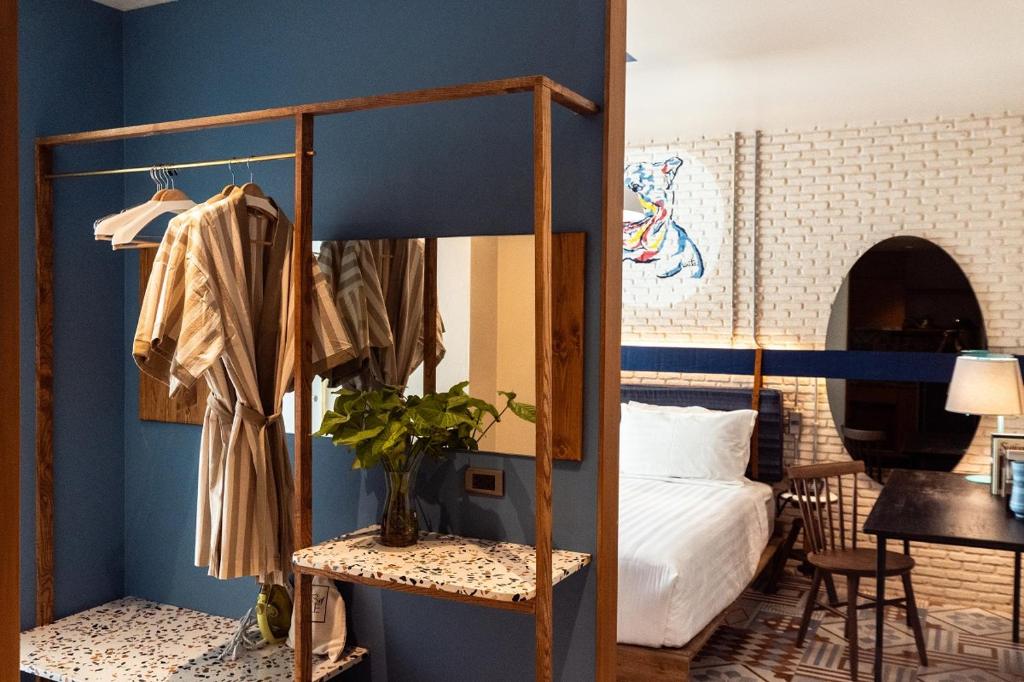
The 31 Park
Hotel amenities: outdoor pool, sun terrace, balconies, fitness center, free Wi-Fi, flat-screen TVs, kitchenettes, safety deposit boxes, luggage storage space, laundry / shuttle services
Nearby restaurants / bars / pubs: Baan Khanitha (Thai restaurant), Barcelona Gaudi Restaurant (Catalonian restaurant), Barney’s Burger Joint (hamburger restaurant), WHISGARS (bar), Scruffy Murphy’s Irish Pub
Nearby misc.: Calm Kraam (café), Massage Near Me, Worrapan Massage (massage spa), The Breathing Room Studio (wellness center), Thai Cannabis Club – Cowboy (cannabis store)
Within feet:
-
-
- The 31 Park
- Prima Gems
- Cocoon Parc
- MRT-Sukhumvit Subway Station
-
Within 1 mile:
-
-
- Benjakitti Park
-
Within 7 miles:
-
-
- Mo Chit Northern Bus Terminal
-
Tints of Blue Hotel is 19 miles from Suvarnabhumi Airport.
Approximate cost per night (Family Suite): $233
Cost per person (four people): $58
Kimpton Maa-Lai Bangkok
78 Soi Tonson, Lumpini, Pathumwan, 10330
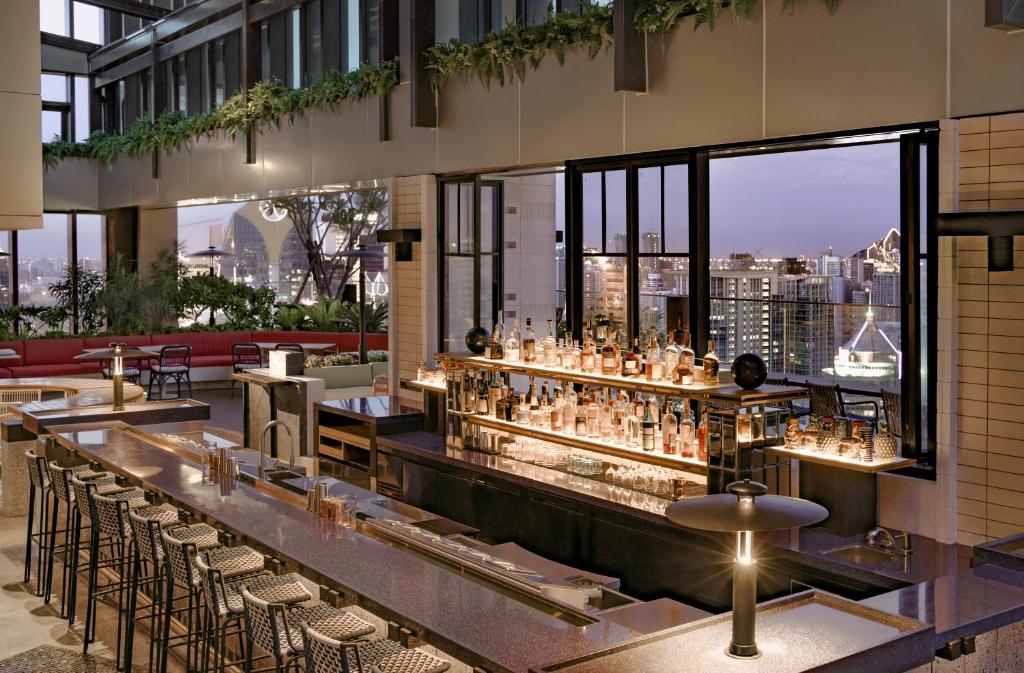
Velaa Sindhorn Village | Asiatique Merry Go Round
Hotel amenities: restaurant, buffet, continental or American breakfast, outdoor swimming pool, city views, terrace, balconies, garden, sauna, hot tub, fitness center, free Wi-Fi, 24-hour front desk, free bike usage, private parking, airport transportation
Nearby restaurants / bars: Bisou Bangkok (French restaurant), VILAS (restaurant), INDDEE (restaurant), Per Te (Italian restaurant), KURA Premium Yakiniku and Sushi (Yakiniku restaurant), Maison Saigon (Vietnamese restaurant), Rongsi Pochana Langsuan (restaurant), Acai Story (dessert restaurant), Crimson Room (bar), Bar.Yard (bar), The Pickwick Chronicles (cocktail bar), The Wine Merchant Lang Suan (wine bar)
Nearby misc.: Kad Kokoa at Velaa (café), CRAFT (café), The Coffee Academics (coffee shop), HOPPE Coffeehouse, Peace 和 Oriental Teahouse (tea house), GOOD CHĀ MATCHA – Velaa Langsuan (traditional tea house), MYKITA Bangkok (sunglasses store), Green Duck (cannabis store)
Within feet:
-
-
- Velaa Sindhorn Village
- Asiatique Merry Go Round
- Ayothaya Elephant Village
- Uob Heartbeat At Lumpini Park
-
Within 1.2 miles:
-
-
- SEA LIFE Bangkok Ocean World
-
Within 1.7 miles:
-
-
- Benjakitti Park
-
Within 1.9 miles:
-
-
- MahaNakhon
-
Kimpton Maa-Lai Bangkok by IHG is 18 miles from Suvarnabhumi Airport.
Approximate cost per night (Bill Kimpton Suite): $3,141
Cost per person (six people): $523
Sindhorn Kempinski
80 Soi Tonson, Lumphini, Pathumwan, 10330

Uob Heartbeat At Lumpini Park
Hotel amenities: restaurant, bar, buffet breakfast, outdoor swimming pool, terrace, balconies, garden, fitness center, free Wi-Fi, safety deposit boxes, 24-hour Arabic, German, English & Spanish-speaking front desk staff, ATM, currency exchange, free private parking
Hotel bar & lounge: Firefly Bar, Lobby Lounge at Sindhorn Kempinski Hotel Bangkok (lounge)
Also in the area: Kimpton Maa-Lai Bangkok by IHG
Within feet:
-
-
- Uob Heartbeat At Lumpini Park
- Play Space By Kiddyplay
- Lumpini Park
- Central Friendly Land
-
Within 1.9 miles:
-
-
- The Jim Thompson House
-
Within 2.6 miles:
-
-
- Victory Monument
-
Sindhorn Kempinski Hotel Bangkok is 18 miles from Suvarnabhumi Airport.
Approximate cost per night (Sindhorn Royal Suite): $4,764
Cost per person (six people): $794
Priya Boutique House
328 ปรินายก ซอย 4, Phra Nakhon, 10100

Democracy Monument | Bangkok National Museum
B&B amenities: bar, terraces, garden, air conditioning, free Wi-Fi, desks, baby safety gates, bicycle rental service, picnic area, airport transfers
Nearby: Ku Bar, KANGKAO (wine bar), Café Velodome (coffee shop)
Within feet:
-
-
- Democracy Monument
- Rattanakosin Exhibition Hall
-
Within 1 mile:
-
-
- The National Gallery
- Santichaiprakarn Park
-
Within 1.1 miles:
-
-
- Sanam Luang
- Bangkok National Museum
-
Within 1.8 miles:
-
-
- Chitralada Royal Villa
-
Priya Boutique House is 23 miles from Suvarnabhumi Airport.
Approximate cost per night (Deluxe Double Room with Balcony): $144
Cost per person (four people): $36
Mandarin Oriental Bangkok
48 Soi Charoenkrung, Bang Rak, 10500

Thailand Creative & Design Center
Hotel bells and whistles: multiple dining options (Michelin-starred included), outdoor pool, river views, spa, hot tubs, gym, personal trainers, Thai boxing, yoga lessons, tennis courts, teak wood furnishings, floor-to-ceiling windows, flat-screen TVs, Thai silk, Thai cooking classes, herbal scrubs, private butler service, free shuttle boat
Nearby restaurants / bars: Lord Jim’s (seafood restaurant), Sood Kua by Supanniga (Thai restaurant), About white Cafe&Bistro, Kha Mu Charoensang Silom (restaurant), Ocharos Munkong (restaurant), The Bamboo Bar
Nearby misc.: SIWILAI Sound Club (live music venue), CARMINA coffeehouse
Within feet:
-
-
- Thailand Creative & Design Center
- Lerdsin Hospital
- ICONSIAM Shopping Mall
- Taksin Bridge
- Bangkokian Museum
-
Within 1.7 miles:
-
-
- MBK Shopping Mall
-
Within 1.9 miles:
-
-
- Bangkok Art & Culture Centre
- Lumpini Park
- Siam Discovery
-
Mandarin Oriental Bangkok is 14.8 miles from Don Mueang International Airport.
Approximate cost per night (Premier Two-Bedroom Suite King): $2,652
Cost per person (five people): $530
Kasayapi Hotel
Itsaraphap alley 34-32, Bangkok Yai, 10600

Itsaraphap Subway Station | Tid Munz Buffet
Hotel amenities: outdoor swimming pool, terrace, garden, air conditioning, free Wi-Fi, flat-screen TVs, electric tea pots, safety deposit boxes, desks
Nearby: Achcha (café), Jamming Thailand (sightseeing tour agency)
Within feet:
-
-
- Itsaraphap Subway Station
- Tid Munz Buffet (buffet restaurant)
-
Within 1 mile:
-
-
- Bangkokyai Park
-
Within 1.4 miles:
-
-
- King Taksin the Great Monument
-
Within 1.7 miles:
-
-
- Museum of Siam
-
Within 4.1 miles:
-
-
- Vimanmek Mansion
-
Kasayapi Hotel is 22 miles from Suvarnabhumi Airport.
Approximate cost per night: $146
Coconut Lane
26/6 Soi 22 Phetchahueng road Bang Krasop, 10130

Chao Phraya River
Resort amenities: restaurant, terraces, balconies, patios, garden, garden views, air conditioning, free Wi-Fi, flat-screen TVs, electric tea pots, desks
Nearby: Ban Ban Bang Kachao (Thai restaurant), Kuenwang The Garden Boutique Eatery (Thai restaurant), Pae Heng (restaurant)
Within feet:
-
-
- Chao Phraya River
-
Within 2.5 miles:
-
-
- Bang Krachao
-
Within 4.2 miles:
-
-
- Supalai City Resort Relax Park
-
Within 4.3 miles:
-
-
- Klong Toey Community Lantern
-
Coconut Lane Bangkok is 24 miles from Suvarnabhumi Airport.
Approximate cost per night (Deluxe Triple Room): $159
Cost per person (three people): $53
The Siam
3/2 Thanon Khao, Vachirapayabal, Dusit, 10300
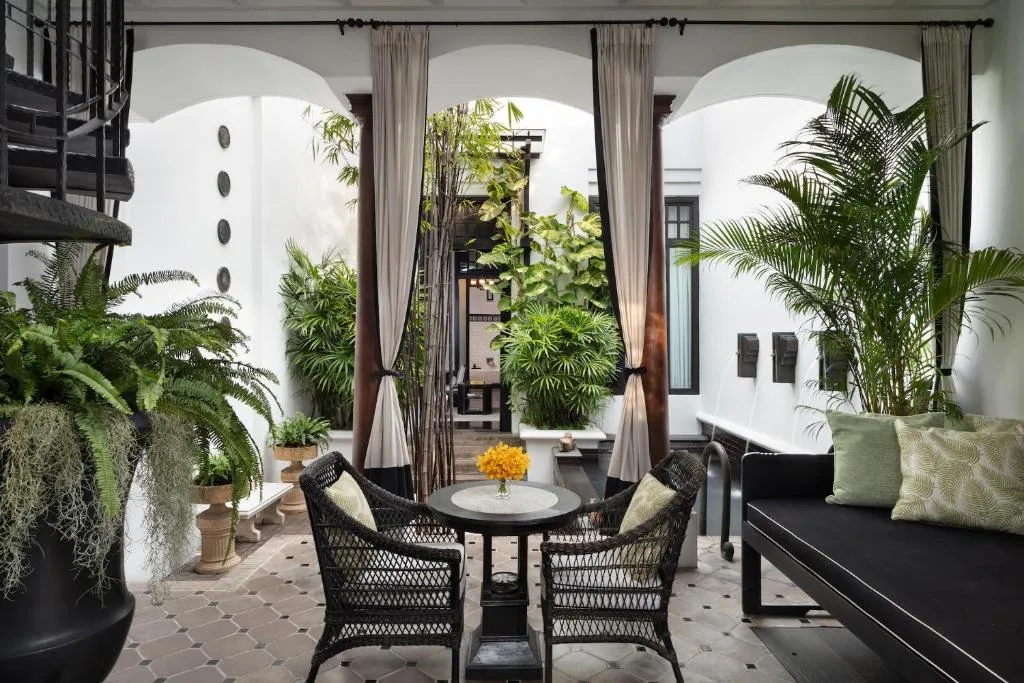
Park Vajira | Navamindradhiraj University | Kuakarun Faculty of Nursing
Suite / Villa amenities: restaurant, bar, library, outdoor pool, spa, fitness center, air conditioning, free Wi-Fi, flat-screen TVs, mini-bars, unlimited local phone calls, fruit baskets, 24-hour front desk, currency exchange, babysitting / butler services, on-site parking facilities, free shuttle boat to Sathorn Pier (1000-1800 hours)
Nearby: Opium Spa, The Story House (restaurant), ongkulcafe (café), Wat Prasart Boonyawat (Buddhist temple)
Within feet:
-
-
- Park Vajira
- Navamindradhiraj University
- Kuakarun Faculty of Nursing
- Lego Running Away
-
Within 1.1 miles:
-
-
- Vimanmek Mansion
- Ananta Samakhom Throne Hall
-
Within 1.7 miles:
-
-
- Chitralada Royal Villa
-
Within 2.1 miles:
-
-
- Santichaiprakarn Park
-
The Siam is 20 miles from Suvarnabhumi Airport.
Approximate cost per night (Riverside Pool Villa): $1,845
Pannarai’s
40/18 Soi Ekkamai 12 Klongton nua, Wattana, 10110
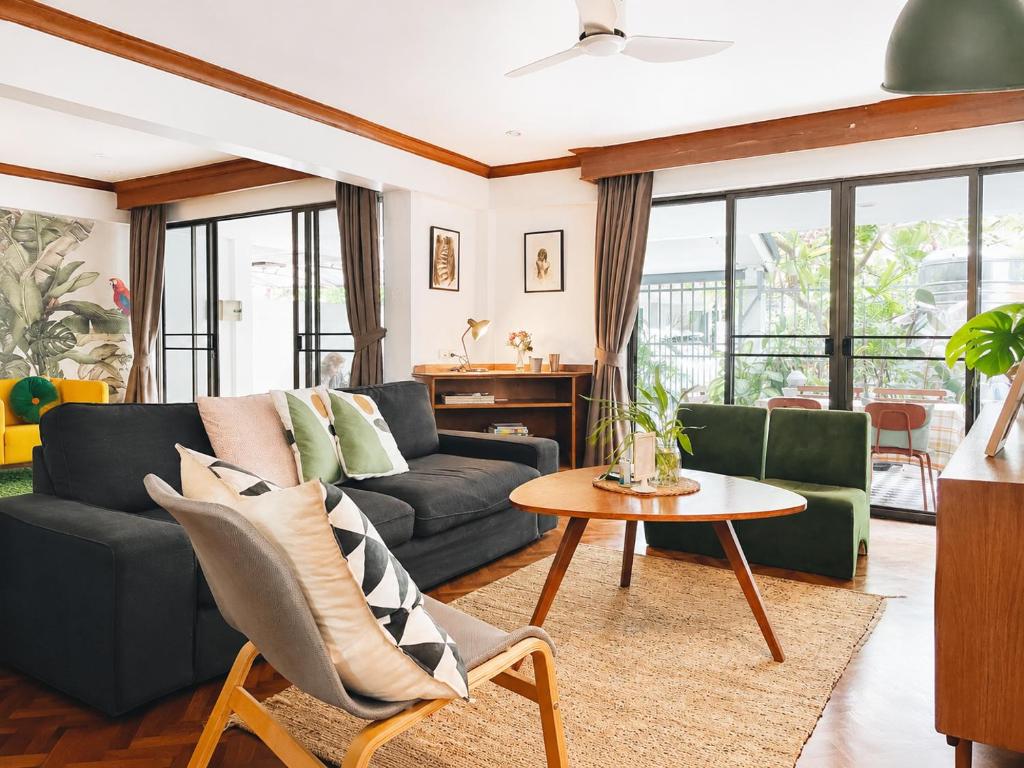
BABYCCINO
Villa amenities: 3 bedrooms, terrace, balcony, patio, garden, barbecue facilities, free Wi-Fi, flat-screen TV, fully-equipped kitchen, chocolates / cookies, baby safety gate, indoor play area, 24-hour front desk, private entrance, free private parking, paid airport shuttle service
Nearby restaurants: GOAT Bangkok (fine dining restaurant), Sole Mio (Italian restaurant), Featherstone (restaurant), Brew Cafe Ten Ekamai (restaurant), Cadence by Dan Bark (restaurant), Caper by Dan Bark (restaurant), Raleuk Taste of memories (steakhouse), The Tree Camping Mookrata BBQ (barbecue restaurant), Manarola.bkk (Italian restaurant), Mother May I Kitchen (Thai restaurant), Tamnak Isan Ekamai (Thai restaurant), Sinaburo Bangkok (Korean restaurant), French Ramen – Ekamai Experimental Bar (Fusion restaurant), Chef’s Table by Chef Art (restaurant), PRIDI (lunch restaurant), Mandalay Rooftop Bar, KUBBY.BKK (bar), Mikkeller Bangkok (bar), Suea Ekkamai (bar), The Bar Vagabond (bar)
Nearby misc.: LIV BANGKOK (night club), Sherbet Club Bangkok (night club), Bare Nail Spa – Ekkamai (nail salon), La Zensa SPA (massage spa), Milrik (massage spa), Cyntier Sleep Salon (massage spa), WOLF Wellness & Training (fitness center), Bird of Yoga (yoga studio), GOLFZON PARK SOOHO (indoor golf course)
Within feet:
-
-
- BABYCCINO (café)
-
Within 1.1 miles:
-
-
- Ymiyakes Secret Space
-
Within 1.3 miles:
-
-
- Hato Home
- Somdet Saranrat Manirom Park
-
Within 3.2 miles:
-
-
- Benjakitti Park
-
Within 5 miles:
-
-
- Madame Tussauds Bangkok
-
Pannarai’s House is 16 miles from Suvarnabhumi Airport.
Approximate cost per night (Villa): $171
Cost per person (five people): $34
Cataleya Estate
88 Soi Punna Withi, Phra Khanong, 10260
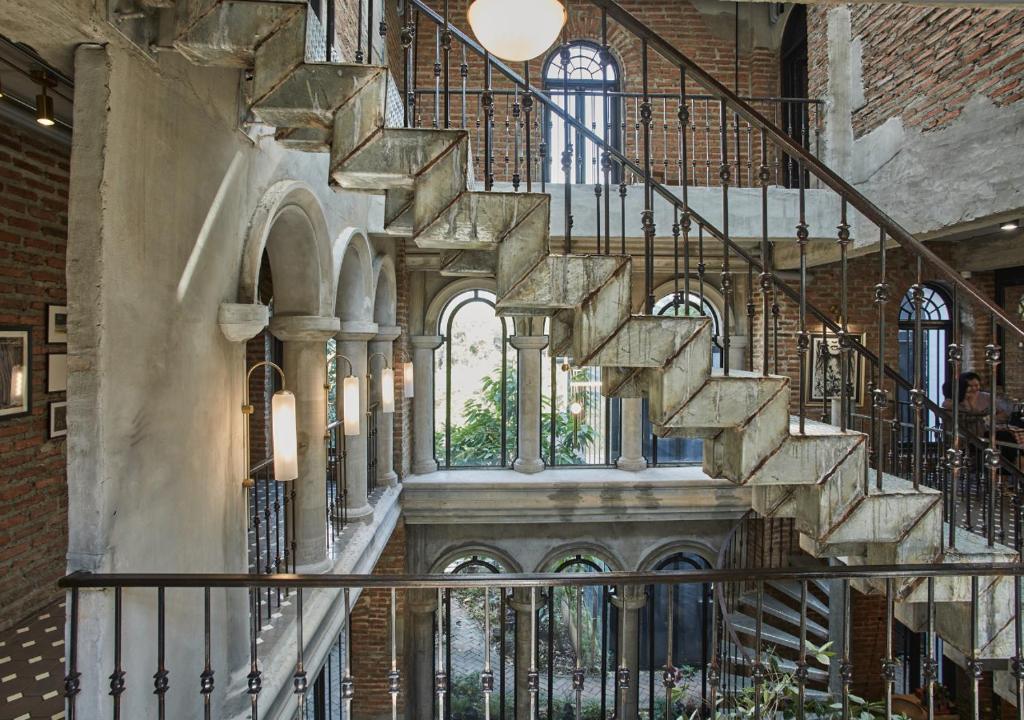
Wat Dhammamongkol
Hotel amenities: restaurant, garden, hot tub, free Wi-Fi, fully-equipped kitchenettes (select rooms), full-day security, facilities for disabled guests, free private parking
Nearby: Cataleya Estate Cafe, AURA Facials & Rejuvenation Treatments (massage spa)
Within feet:
-
-
- Wat Dhammamongkol (Buddhist temple)
-
Within 4.4 miles:
-
-
- King Rama IX Park
-
Within 10 miles:
-
-
- Bangkok Dolls Museum & Factory
-
Cataleya Estate is 13 miles from Suvarnabhumi Airport.
Approximate cost per night (Two-Bedroom Deluxe Apartment): $102
Cost per person (four people): $25
The Black Kingdom
7 ซอย จรัญสนิทวงศ์ 84, Bang Phlat, 10700

Krungthon Park
Villa amenities: 4 bedrooms, 5 bathrooms, bar, outdoor swimming pool, garden, sauna, hot tub, air conditioning, free Wi-Fi, flat-screen TV, fully-equipped kitchen, washing machine, dressing room, private entrance, private parking
Nearby: Ban Bang O Coffee (café)
Within feet:
-
-
- Krungthon Park
- Bangkoko Maw Chit
-
Within 1.2 miles:
-
-
- Walking With Polo
-
Within 2.4 miles:
-
-
- Park Vajira
-
Within 5 miles:
-
-
- Queen Sirikit Park
-
The Black Kingdom is 22 miles from Suvarnabhumi Airport.
Approximate cost per night (Villa): $1,113
Cost per person (eight people): $139

Timber & Terrace
25/1 Sukhumvit 7 Alley, Wattana, 10110

Soi Sukhumvit 11
Apartment amenities: 3 bedrooms, 2 bathrooms, private pool, balcony, hot tub, free Wi-Fi, flat-screen TV, fully-equipped kitchen, washing machine, free private parking
Nearby restaurants / bars: Tony’s Sukhumvit 11 (Italian restaurant), Hemingway (Western restaurant), Pastel Rooftop Bar & Mediterranean Dining, Old German Beerhouse on 11 (German restaurant), Breakfast Story Eleven (restaurant), Frying Pan Jerk Grill (Jamaican restaurant), Cappadocia Turkish Restaurant Bangkok, Moom Muum Park Soi 11 (Thai restaurant), Burapa (Thai restaurant), Oskar Bistro Bangkok, Ibrahim Restaurant (Pakistani restaurant), Above Eleven (bar), One Two Two Bar Club (cocktail bar)
Nearby misc.: THE COFFEE CLUB (coffee shop), Grand Massage and Spa – Nana (massage spa), Diamond Wax Studio (waxing hair removal service)
Within feet:
-
-
- Soi Sukhumvit 11 (notable street)
-
Within 1.1 miles:
-
-
- Md Town
-
Within 1.2 miles:
-
-
- Benjakitti Park
-
Within 1.6 miles:
-
-
- SEA LIFE Bangkok Ocean World
-
Within 2.3 miles:
-
-
- Suan Pakkad Palace Museum
-
Timber & Terrace is 19 miles from Suvarnabhumi Airport.
Approximate cost per night (Three-Bedroom Apartment): $261
Cost per person (eight people): $32

So there they are, Bangkok accommodations that will help make for an outstanding experience. We hope you have found this information valuable and most importantly, that you enjoy your time in Thailand!
Seoul Accommodations
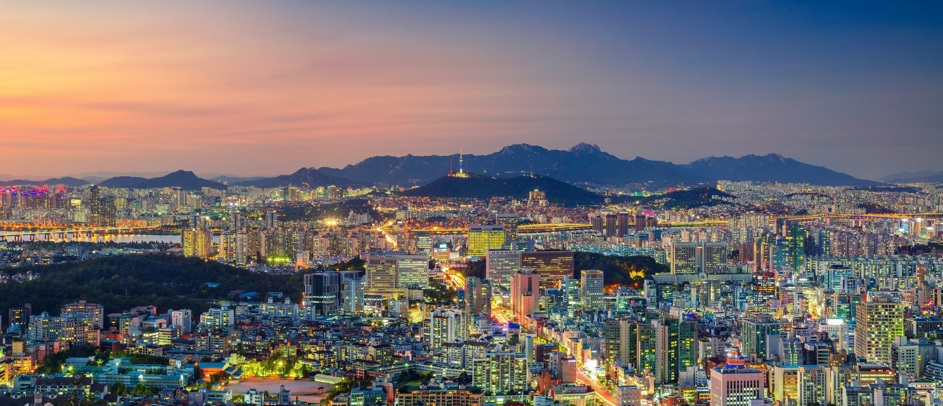
Seoul accommodations
Seoul accommodations welcome you to a destination that was once known as “Hanseong”. Known today for its iconic tower, theme parks, royal palaces, museums, temples, historic villages / gates, traditional markets, shopping streets, bridges, parks, plazas, gardens, statues, convention centers, universities, scenic viewpoints, nightlife, kimchi-based cuisine, cosmetics industry, television dramas and K-pop music, Seoul is located just 24 miles northeasterly of Incheon (South Korea’s third-largest city), and 30 miles from the DMZ (Korean Demilitarized Zone). South Korea’s capital and largest city, Seoul is characterized by the Han River, which rises in the Taebaek Mountains’ western slopes.
Seoul main attractions: N Seoul Tower (iconic tower, revolving restaurant, panoramic city views), Lotte World Tower, Lotte World (theme park – rides, water flumes, marine life exhibits), Gyeongbokgung Palace (14th century royal palace, museum, gardens), Dongdaemun Design Plaza (DDP – architectural events, design market, food venues), Myeongdong Shopping Street, Starfield Coex Mall (underground shopping mall, convention center, theater, aquarium, restaurants), National Museum of Korea, Bukchon Hanok Village (14th century village, narrow streets, restored traditional home), Deoksugung Palace (historic palace, changing of the Royal Guard ceremony), Yeouido Hangang Park (riverside, scenic views, running paths, swimming pool – 17,282), War Memorial of Korea (war museum), Lotte World Aquarium, Seoul Children’s Grand Park (amusement park – classic rides, Ferris wheel, zoo, playground, grassy areas), Wiggle Wiggle Dosan (gift shop), Lotte World Magic Island (amusement park), Bugak Palgakjeong (colorful mountaintop pavilion, city views, wildflower garden, trails, The Hyundai Seoul (department store),
Seoul Forest Park (lake, bike path, roses, deer feeding, butterfly house), Hongdae Shopping Street, Cheonggyecheon (recreational area, revived stream, walkways, bridges, greenery), Seoul World Cup Stadium (football venue, shopping mall, movie theater), Mangwon Market (traditional indoor market – local produce, food stalls), Haneul Park (landscaped paths, tall grasses, hilltop, city views), Seodaemun Prison History Hall (history museum), Banpo Hangang Park (riverside, illuminated bridge fountain), Seoul Botanic Park (botanical garden), Bongeunsa Temple (Buddhist temple / statue), National Palace Museum of Korea (Joseon Dynasty & royal families exhibits, artifacts, audio tour), Hangaram Art Museum, Naksan Park (hilltop green space, exercise paths, observation decks, city views), Seoul Sky (observation deck), Dream Forest (wooded city park, cherry blossoms, maple trees, pond, waterfall, art center), Seonyudo Park, Seoul Central Mosque, Banpo Bridge Moonlight Rainbow Fountain (colored lights fountain), Changgyeonggung Palace (4 grand traditional Korean palaces, shrines, gardens, tours), Seoul Station (major train station, eateries, tourist information, kids’ playroom), YG Entertainment (entertainment agency), Gyeongui Line Forest Park (former train line, pathways, lawns, streams, cafes), Gilsangsa Temple (Buddhist temple, tours, meditation halls, cultural classes, tea ceremonies), Gwanghwamun Gate (historical landmark), Olympic Park / World Peace Gate (city park – green space, sculptures, sports venues), LG Arts Center (performing arts theater), Leeum Museum of Art (art museum), Hwarangdae Railway Park, Dongnimmun Arch (Independence Gate – 19th century granite arch), Byeoryangjip (Korean barbecue restaurant), Namsan Mountain Park (Seoul’s largest park, tranquil, hilly forest, trails, observatory tower, cable car), Namsan Baekbeom Square, Dosan Park (memorial hall, statue), National Aviation Museum of Korea, Peace Park, SAMO ONDOH Flagship Store (handbag store), Seokchon Lake (walking paths, artificial island, cafes, seasonal blossoms), Noeul Park, World Cup Park (parkland, river, pond, gardens, scenic outlooks), Yonsei University, Sinchon Campus, Eungbongsan Palgakjeong Pavilion (observation deck), Ewha Womans University, Nanjicheon Park, Korea University, Seoul Campus, Buramsan Butterfly Garden
Bordering Seoul points of interest: Seoul Grand Park (theme park), Gwangmyeong Cave (tourist attraction), Dumulmeori (tourist attraction), Gwacheon National Science Museum, Suwon Hwaseong Fortress (Joseon dynasty burial fortress est. 1796), Incheon Grand Park, Baegundae, Bukhansan Mountain Peak (national park), Byeongmogan Citizens’ Park (city park), Goyang Children’s Museum, Buramsan (nature preserve), Bukhansanseong Fortress (1700s fort – 6 gates, 8 secret gates, 2 water entrances), Hongneung and Yureung Royal Tombs, Uiryeong Trails (hiking area)
Seoul main airport: Incheon International Airport (ranked world’s best airport 15+ years)
Rideshare service: Uber
Railway system: Seoul Metropolitan Subway
South Korea bullet train system: KTX (capable of traveling 199 MPH)
Transportation, payment, affiliate discount card: Korea Tour Card
Seoul top events: Seoul Jazz Festival, Ultra Korea, ETP Fest, Dream Concert, Seoul World DJ Festival, Zandari Festa, Ssamzi Sound Festival, DMZ Peace Train Music Festival, Seoul Fringe Festival, Lotus Lantern Festival, Seongbuk World Beer Festival, Tea World Festival, Yeouido Cherry Blossom Festival, Royal Culture Festival, Hanseong Baekje Cultural Festival, Seoul Rose Festival, Seoul Gugak Festival, Chuseok, Boryeong Mud Festival
Seoul’s professional football club is FC Seoul, which plays at Seoul World Cup Stadium. When in Seoul, it’s customary to accept items using both hands. If calling a taxi, use your palm. Keep in mind that in Seoul, English is not widely spoken. Basic, helpful Korean words to know are annyeonghaseyo (an-yoo-uh-seyo – hello), annyeonghi gaseyo (an-yoo-nee gaseyo – goodbye), gamsahabnida (khun-sanga – thank you) and dangsin-eun yeong-eoleul hal su issnayo (honch-nin yomo-dinuh swee-niyo – do you speak English?). In Seoul, cars travel on the right-hand side, currency is the South Korean Won and the drinking age is 19 years old. Seoul accommodations are some of Eastern Asia’s best. Before we get to Seoul accommodations, let’s take a look at some more background information on the area to help you along the way.
Humans have inhabited the Seoul-area for an estimated 40,000 years. Umjip, pit-houses with lowered floors, housed the area’s people around 4,000 BC. Stone Age materials have been discovered at Amsa-dong Neolithic Site. Following the 108 BC Wiman Joseon dynasty collapse, Chinese Warring State refugees fled to the Han River basin. These Chinese refugees brought with them culture and technology that would influence the Seoul-area during the Iron Age. After the refugees’ arrival, the region’s Jin confederacy of statelets having been disintegrated, dozens of new statelets emerged, which all competed for influence over the Han River basin. By the 2nd century AD, the region’s dominant local power became the kingdom of Baekje, with its capital located at Wiryeseong (modern-day Seoul area). In the summer of 553, Baekje ceded control of the region to the eastern kingdom of Silla. Early-on, the Han River likely was named Namcheon (Nam River). In 603, the Goguryeo dynasty (located near Pyongyang), allied with Silla, attacked Seoul’s Bukhansanseong fortress and won. The following year, Silla abolished Namcheon Province, which had been established in 568 by Silla’s 24th monarch, Jinheung Taewang. Silla subsequently reestablished Bukhansan Province, thus strengthening the Kingdom’s northern border. Unified Silla was succeeded by the Korean state of Goryeo in the 11th century, and a summer palace was built in modern-day Seoul. Referred to as the “Southern Capital”, Seoul started to become a larger settlement around this time. Founding father of the 505-year Joseon dynasty, Yi Seong-gye chose Seoul as Korea’s planned capital sometime around 1392, the year when Yi Seong-gye enthroned himself at then-capital, old Goryeo. Yi Seong-gye changed the Kingdom’s name from Goryeo to Joseon in 1393. Hanyang (Seoul) officially was chosen as Joseon’s new capital in September 1394. An embodiment of Korean Confucianism, the new capital city Hanyang started being built in October 1394. Gyeongbokgung (palace) and Seoul City Wall were two of Hanyang’s major early developments. Governed by the national agency Hanseongbu, Hanyang’s two main sections were partitioned into Seong-jung (inside the Fortress Wall ) and Seongjeosimni (around the Fortress Wall). Hanyang city’s downtown area became known as Doseong-an, or more popularly Sadaemun-an, meaning ‘areas inside of the Four Great Gates’. Not until the late-19th century did Seoul open its gates to foreigners. Modernization thus ensued, and Gyeongbokgung became East Asia’s first palace to introduce electricity, while electrical street lights were implemented shortly thereafter. In 1897, the Korean Empire was proclaimed by the monarch Gojong. Temporarily called Hwangseong, Seoul engaged in trade with foreign countries such as France and the United States. Seoul Electric Company, Seoul Electric Trolley Company and Seoul Fresh Spring Water Company were examples of joint Korean–US owned enterprises. The Japan-Korea Treaty of 1910 resulted in the annexation of the Korean Empire by the Empire of Japan, and Hwangseong’s renaming to Gyeongseong. Under Japanese colonial rule, Gyeongseong’s city walls were removed, roads were paved and Western-style buildings were built. During the Second Sino-Japanese War, Yeongdeungpo District was annexed into Gyeongseong in order to serve as a steel and metalworking industrial complex. Following World War II, Gyeongseong was liberated by US forces. The American military assumed control of what would become known as Seoul in 1945, with the city becoming a municipal corporation. Soviet-Chinese-backed North Korean forces and American-backed South Korean forces swapped control of Seoul four times during the Korean War. Seoul’s extensive Korean War damages resulted in South Korea’s capital being relocated to Busan for a short period. The Seoul metropolitan area’s population reached around 1.5 million by 1955. During the late-1960s, Hannam Bridge and Gyeongbu Expressway were constructed. North Korea had claimed Seoul as its de jure capital until 1972. Seoul hosted the 1986 Asian Games and 1988 Summer Olympics, and was a 2002 FIFA World Cup venue.
Home to around 9.5 million inhabitants, Seoul is known officially as Seoul Special Metropolitan City, with over 26 million people inhabiting the overall metropolitan area. US citizens comprise around 7.5% of Seoul’s population. The word Seoul means “capital city”. Around 16,360 high-rise buildings, to include 126 skyscrapers, illuminate the Seoul skyline. At 1,821 feet tall, Lotte World Tower is the city’s tallest building. Seoul typically ranks in the world’s top-five metropolitan economies, with a GDP at around $635 billion. In 2023, over 8 million foreign tourists visited the city. High temperatures hover around 85 degrees in August, and 35 degrees in January. Additional points of interest include Changdeok Palace (15th-century Joseon Dynasty palace), Jongmyo Shrine (Joseon dynasty royals Confucian shrine), Namhansanseong (fortress / military stronghold), Royal Tombs of the Joseon Dynasty (40 Joseon Dynasty tombs), Gangnam (affluent district / nightlife area), Sungnyemun (historic gate), National Museum of Modern and Contemporary Art, Seoul Museum of Art, Myeongdong Cathedral and Jamsil Baseball Stadium. Local foods include bibimbap (rice dish), bulgogi (“fire meat”), samgyetang (ginseng chicken soup), tteokbokki (stir-fried rice cakes), hotteok (stuffed pancake) and odeng (fish cake). Seoul street foods can be found at places such as pojangmacha (street stalls) and bunsikjip (snack bars). A traditional Korean side dish, Kimchi (salted and fermented vegetables) is a South Korean staple. Popular Seoul drinks include soju (a sweet spirit), bokbunja ju (fruit wine), banana milk and various teas, while lager-style is the most popular beer. With some background information on the city, we’re ready for Seoul accommodations that are sure to inspire.
Mercure Ambassador Seoul Hongdae
144, Yanghwa-ro, Mapo-gu, Mapo-Gu, 04050
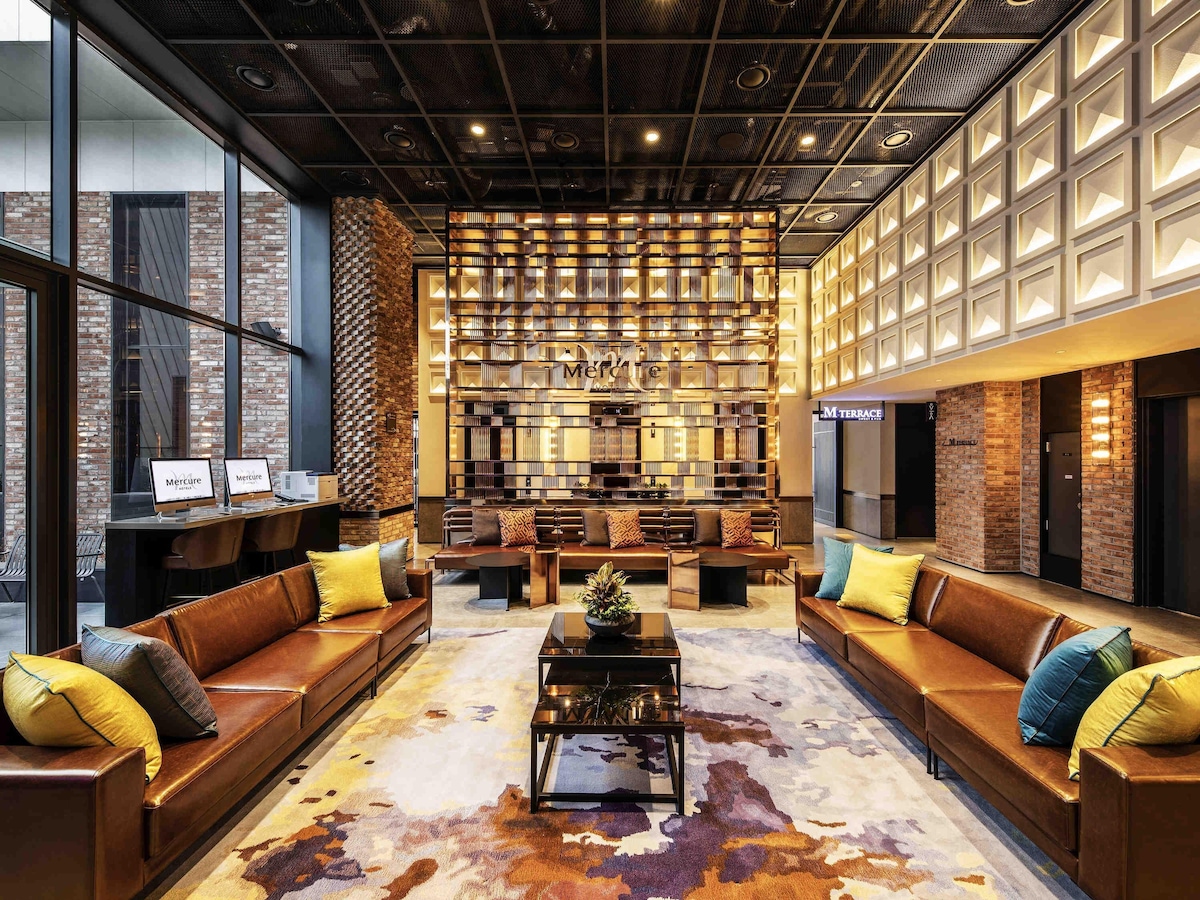
War and Women’s Human Rights Museum
Hotel amenities: restaurant, bar, buffet / American breakfast, city views, terrace, garden, fitness center, air conditioning, free Wi-Fi, flat-screen TVs, safety deposit boxes, hairdryers, 24-hour front desk, business center
Nearby: Rosso1924 (pizza restaurant), ungteori saenggogi – Hongdae (Korean barbecue restaurant), Carole King (jazz club), Roof Cat Me (café), Blue Bottle Coffee (coffee shop), Salon de Blue (hair salon)
Within feet:
-
-
- War and Women’s Human Rights Museum
- Hongdae Shopping Street
- Love Museum
- Gyeongui Line Forest Park
- Hongik University Station
-
Within 1.5 miles:
-
-
- Seonyudo Park
- Seodaemun Museum of Natural History
-
Within 4.8 miles:
-
-
- Changdeokgung Palace
-
Mercure Ambassador Seoul Hongdae is 32 miles from Incheon International Airport.
Approximate cost per night: $271
Hotel First Stay Myeongdong
66, Sejong-daero, Jung-gu, Jung-Gu, 04526

Seoul Museum of Art | Deoksugung Palace | National Museum of Modern and Contemporary Art | Dokdo Museum Seoul
Hotel amenities: terrace, air conditioning, free Wi-Fi, flat-screen TVs, electric tea pots, safety deposit boxes, hairdryers
Nearby: Hangaram (traditional Korean restaurant), Nongmin Baekam Sundae (Sundae restaurant), purpapa (café)
Within feet:
-
-
- Seoul Museum of Art
- Deoksugung Palace
- National Museum of Modern and Contemporary Art
- Dokdo Museum Seoul
- Bank of Korea Money Museum
- Seoul Plaza
- Korea Postage Stamp Museum
- Grevin Seoul Museum
-
Within 1.3 miles:
-
-
- Gyeongbokgung Palace
-
Within 1.7 miles:
-
-
- Changdeokgung Palace
-
Within 6 miles:
-
-
- COEX Aquarium
-
Hotel First Stay Myeongdong is 35 miles from Incheon International Airport.
Approximate cost per night (Triple Room): $424
Cost per person (three people): $141
RYSE
130, Yanghwa-ro, Mapo-gu, Mapo-Gu, 04038
Hongdae Shopping Street
Hotel amenities: library, fitness center, free Wi-Fi, flat-screen TVs, Bluetooth speakers, safety deposit boxes, walk-in rain showers, bathrobes, business center, meeting rooms, valet parking
Also in the area: Mercure Ambassador Seoul Hongdae
Within feet:
-
-
- Hongdae Shopping Street
- Love Museum
- Hongdae Shopping Street
- E-Land
- Hongik University
-
Within 1.2 miles:
-
-
- Han River
-
Within 2.9 miles:
-
-
- I’Park Mall
-
RYSE, Autograph Collection Marriott is 7 miles from Gimpo International Airport.
Approximate cost per night (Director Suite): $447
Cost per person (four people): $111
L’Escape Hotel
67, Toegye-ro, Jung-gu, Jung-Gu, 04529
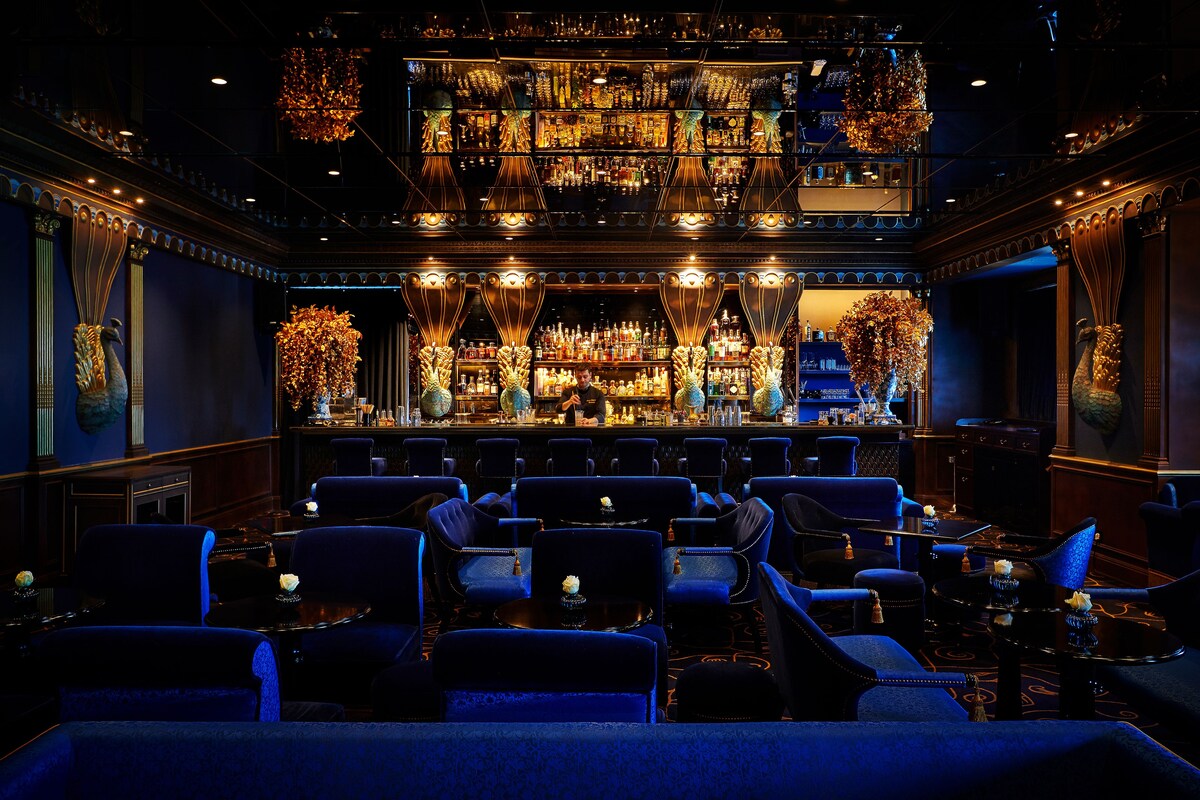
Bank of Korea Money Museum | Namdaemun Market
Hotel amenities: restaurant, bar, fitness center, free Wi-Fi, flat-screen TVs, coffee machines, 24-hour front desk
Nearby: L’Amant Secret (Western restaurant)
Within feet:
-
-
- Bank of Korea Money Museum
- Namdaemun Market
- Korea Postage Stamp Museum
- Hwangudan Altar
- Culture Station Seoul 284
- Namsan Peak
-
Within 1.5 miles:
-
-
- N Seoul Tower
-
Within 1.6 miles:
-
-
- Gyeongbokgung Palace
-
Within 11 miles:
-
-
- Gimpo International Airport
-
L’Escape Hotel is 35 miles from Incheon International Airport.
Approximate cost per night (Atelier Suite King): $378
Lotte Hotel World
240, Olympic-ro, Songpa-gu, Songpa-Gu, 05554
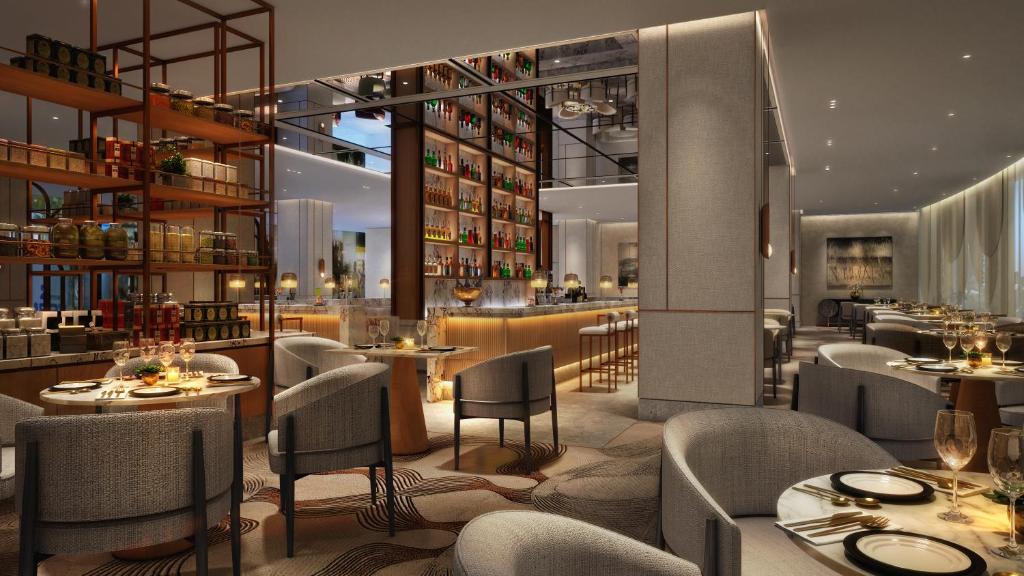
Lotte World Tower | Lotte World Theme Park | Lotte World Magic Island | Lotte Concert Hall | Samjeondobi
Hotel amenities: 3 dining options, buffet breakfast, free Wi-Fi, 37-inch flat-screen TVs, hairdryers, afternoon tea, happy-hour service, free parking
Nearby: LOTTE Department Store Jamsil, Charlotte Theater (performing arts theater)
Within feet:
-
-
- Lotte World Tower
- Lotte World Theme Park
- Lotte World Magic Island (amusement park)
- Lotte Concert Hall
- Samjeondobi (monument)
- Songpa Naru Park
- Lotte World Folk Museum
- Seoul Sky
- Jamsil Station
-
Within 1.3 miles:
-
-
- Olympic Museum
-
Within 1.8 miles:
-
-
- Mongchontoseong Fortress
-
Within 17 miles:
-
-
- Star Hill Resort Lift
-
Lotte Hotel World is 43 miles from Incheon International Airport.
Approximate cost per night (Junior Suite Family Triple Room): $428
Cost per person (four people): $107

Lotte Hotel Seoul
30, Eulji-ro, Jung-gu, Jung-Gu, 04533

Grevin Museum
Hotel amenities: Michelin-rated restaurant, lounge, city views, free Wi-Fi, flat-screen TVs, coffee machines, mini-bars
Nearby: Toh Lim (Chinese restaurant), Myeongdong Korean BBQ (restaurant), The Drawing Room (cocktail bar), LOTTE Department Store Main Store, Pushkin Plaza, Seesaw statue (tourist attraction)
Within feet:
-
-
- Grevin Museum (wax museum)
- Hwangudan Altar
- T.um – SK Telecom Ubiquitous Museum
- Seoul Plaza
- Berlin Square
- Art Center Nabi
-
Within 1.2 miles:
-
-
- Gyeongbokgung Palace
-
Within 4.2 miles:
-
-
- National Museum of Korea
-
Lotte Hotel Seoul is 36 miles from Incheon International Airport.
Approximate cost per night (Executive Deluxe Suite): $1,625
Sofitel Ambassador Seoul Hotel & Serviced Residences
209, Jamsil-ro, Songpa-gu, Songpa-Gu, 05552
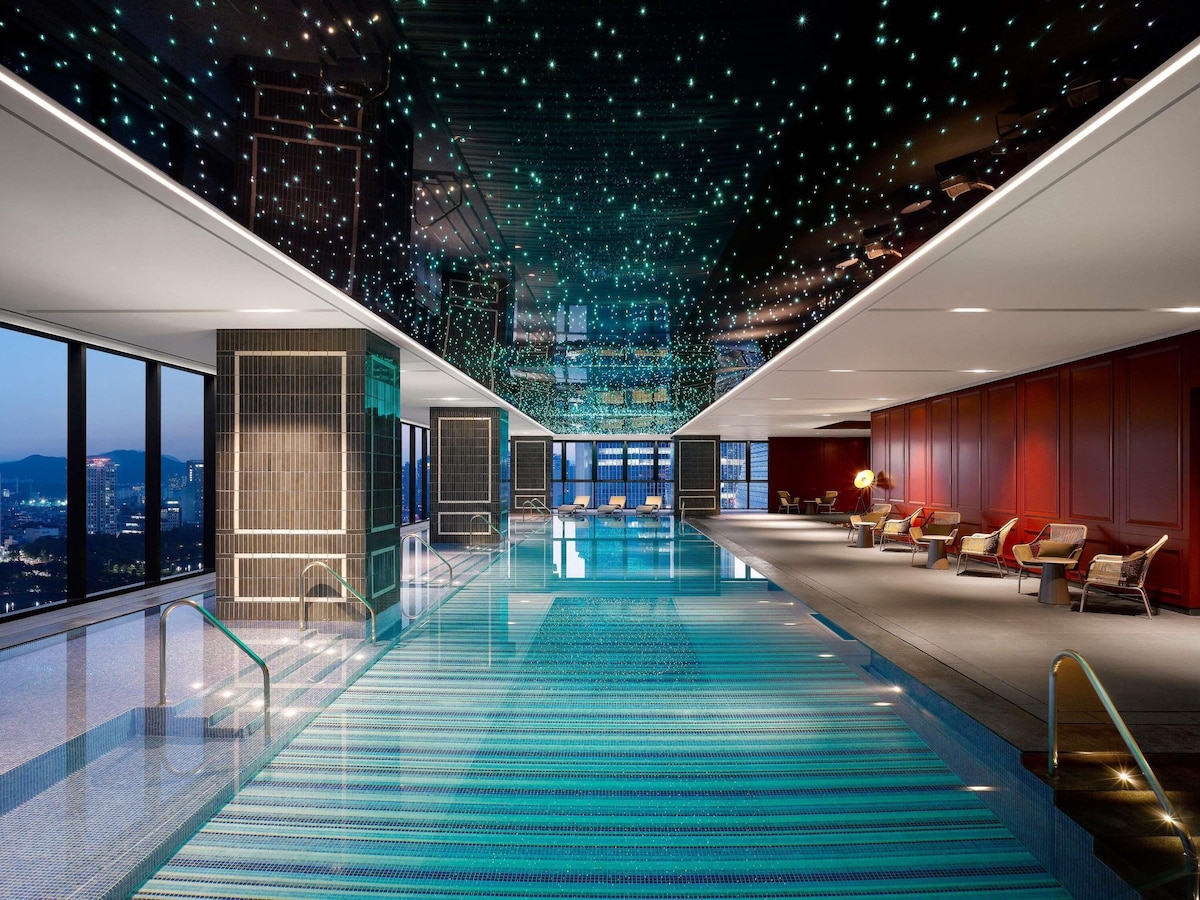
Seoul Sky | Lotte World Folk Museum
Hotel amenities: restaurant, bar, buffet, continental or Italian breakfast, indoor pool, fitness center, air conditioning, free Wi-Fi, flat-screen TVs, kitchenettes, coffee machines, electric tea pots, mini-bars, safety deposit boxes, 24-hour front desk, free bike rentals, kids’ club, business center, airport transportation
Nearby: The Italian Club (Italian restaurant), Ji Kang (restaurant), The Original Pancake House Jamsil (breakfast restaurant), Latitude32 (bar)
Within feet:
-
-
- Seoul Sky
- Lotte World Folk Museum
- Samjeondobi
- Songpa Naru Park
- Monchontoseong Station
-
Within 1.1 miles:
-
-
- Seoul Baekje Museum
- Seoul Seokchon-dong Ancient Tombs
-
Within 1.5 miles:
-
-
- Mongchontoseong Fortress
-
Within 2.8 miles:
-
-
- Ttukseom Hangang Park
-
Sofitel Ambassador Seoul Hotel & Serviced Residences is 45 miles from Incheon International Airport.
Approximate cost per night (Opera Suite): $1,219
Sotetsu Hotels The Splaisir Seoul Dongdaemun
226, Jangchungdan-ro, Jung-gu, Jung-Gu, 04565

Gwanghuimun
Hotel amenities: 24-hour fitness center, air conditioning, free Wi-Fi, 40-inch flat-screen TVs, safety deposit boxes, bathrobes, 24-hour front desk, currency exchange, luggage storage service
Nearby: Tennis Square (sporting goods store), MBC (beauty school)
Within feet:
-
-
- Gwanghuimun (Jongno District gate)
- Dongdaemun History & Culture Park
- Dongdaemun History Museum 1398
- Jongienara Paper Art Museum
- Dongdaemun Gate
-
Within 1 mile:
-
-
- Jongmyo Square Park
-
Within 1.2 miles:
-
-
- National Theater of Korea Museum of Performing Arts
-
Sotetsu Hotels The Splaisir Seoul Dongdaemun is 37 miles from Incheon International Airport.
Approximate cost per night (Deluxe Corner Family Twin): $223
Cost per person (three people): $107
Four Seasons Hotel Seoul
97, Saemunan-ro, Jongno-gu, Jongno-Gu, 03183
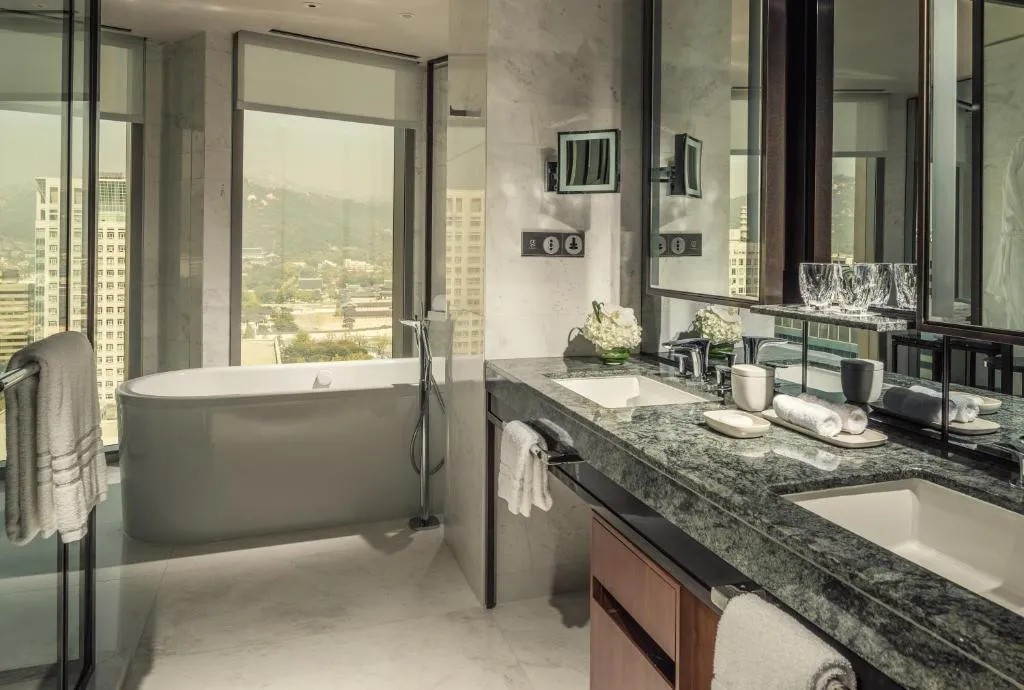
Jogyesa Temple | Statue of Admiral Yi Sun-Sin
Hotel amenities: multiple dining options, 24-hour in-room dining, city views, swimming pool, traditional Korean saunas, fitness center, floor-to-ceiling windows, remote-controlled drapes, free Wi-Fi, flat-screen TVs, indoor 3-D golf, free parking
Nearby cafes: Angelinus, Hollys, Rosebud
Within feet:
-
-
- Jogyesa Temple
- Statue of Admiral Yi Sun-Sin
- Namdaemun Market
- Myeongdong Cathedral
-
Within 1.1 miles:
-
-
- Seoul Station
- Changdeokgung Palace
-
Within 3.2 miles:
-
-
- National Museum of Korea
-
Four Seasons Hotel Seoul is 10 miles from Gimpo International Airport.
Approximate cost per night (Executive King Suite): $1,867
Cost per person (three people): $622
Grand InterContinental Seoul Parnas
521, Teheran-ro, Gangnam-gu, Gangnam-Gu, 06164

COEX Aquarium | Seolleung & Jeongneung Royal Tombs
Hotel amenities: multiple dining options, indoor pool, air conditioning, free Wi-Fi, flat-screen TVs, tea/coffee making facilities
Nearby restaurants: Restaurant RIPE (Korean beef restaurant), Gourmet Lamb (Korean barbecue restaurant), Grand Kitchen (buffet restaurant)
Nearby misc.: My Art Museum, Knotted (café), Four Stones Coffee Roasters (coffee shop), lululemon, Hyundai Department Store, COEX (convention center)
Within feet:
-
-
- COEX Aquarium
- Seolleung & Jeongneung Royal Tombs (Joseon dynasty burial ground)
- N Seoul Tower
-
Within 1.5 miles:
-
-
- Gangnam Finance Center
- Ttukseom Hangang Park
-
Within 1.9 miles:
-
-
- Coreana Art & Culture Complex
-
Grand InterContinental Seoul Parnas is 15 miles from Gimpo International Airport.
Approximate cost per night (Corner Suite): $1,003
Cost per person (three people): $334
Starria Hostel
38, Toegye-ro 20-gil, Jung-gu, Jung-Gu, 04630

Namsan Cable Car
Hotel amenities: wooden flooring, air conditioning, free Wi-Fi, flat-screen TVs, desks, hairdryers, 24-hour front desk, luggage storage, laundry / dry cleaning services, business center
Nearby: SAYU Wine Restaurant & Cafe (Italian restaurant), Kampungku (Halal restaurant), Vegan Kitchen (Vegan restaurant), Sim (coffee shop)
Within feet:
-
-
- Namsan Cable Car (glass cable car, panoramic city views)
- Seoul Animation Center
- Korea Postage Stamp Museum
- Street Museum
- Berlin Square
-
Within 1 mile:
-
-
- Cheonggyecheon
-
Within 1.9 miles:
-
-
- Gyeongbokgung Palace
-
Within 11 miles:
-
-
- Gimpo International Airport
-
Starria Hostel is 36 miles from Incheon International Airport.
Approximate cost per night (Triple Room): $159
Cost per person (three people): $53
The Shilla Seoul
249, Dongho-ro, Jung-gu, Jung-Gu, 04605

Dongguk University Seoul
Hotel amenities: 6 dining options, spa, gym, air conditioning, free Wi-Fi, flat-screen TVs, tea / coffee machines, safety deposit boxes, mini-bars, indoor golf range, walking path through a sculpture garden, yoga / aerobics classes, free shuttle service
Nearby restaurants / bars: Continental (French restaurant), Ariake (Japanese restaurant), La Yeon (Korean restaurant), The Parkview (buffet restaurant), Balvenie Glenfiddich (whiskey bar)
Nearby misc.: Pastry Boutique (bakery), Graff Seoul (jewelry store), Yeong Bin Gwan (banquet hall)
Within feet:
-
-
- Dongguk University Seoul
- Jangchungdan Park
- Supyogyo Bridge
- Jangchung Arena
- Bangsan Market
-
Within 1 mile:
-
-
- Dongdaemun Market
- Gwangjang Market
-
Within 1.8 miles:
-
-
- Changgyeonggung Palace
- Jogyesa Temple
-
The Shilla Seoul is 11 miles from Gimpo International Airport.
Approximate cost per night (Superior Suite): $1,292
Cost per person (four people): $323
Moxy Seoul Myeongdong
38, Myeongdong 8na-gil, Jung-gu, Jung-Gu, 04535

Korea Postage Stamp Museum | Wangbijib
Hotel amenities: bar, air conditioning, free Wi-Fi, flat-screen TVs, safety deposit boxes, 24-hour front desk, currency exchange, free private parking
Nearby restaurants / bars: Bongchu Jjimdak (restaurant), Hyodam Kalguksu Dakhanmari Myeongdong (chicken restaurant), Bar Moxy (bar)
Nearby misc.: TWG Tea (tea store), Hoehyeon Underground Shopping Center (shopping mall), Body Flex Gym
Within feet:
-
-
- Korea Postage Stamp Museum
- Wangbijib (Korean barbecue restaurant)
- Bank of Korea Money Museum
- Hwangudan Altar
- Cheonggyecheon
-
Within 1 mile:
-
-
- Seoul Station
-
Within 1.4 miles:
-
-
- Changdeokgung Palace
-
Moxy Seoul Myeongdong is 36 miles from Incheon International Airport.
Approximate cost per night (Queen and Single): $385
Cost per person (three people): $128
Roynet Hotel Seoul Mapo
67, Mapo-daero, Mapo-gu, Mapo-Gu, 04157
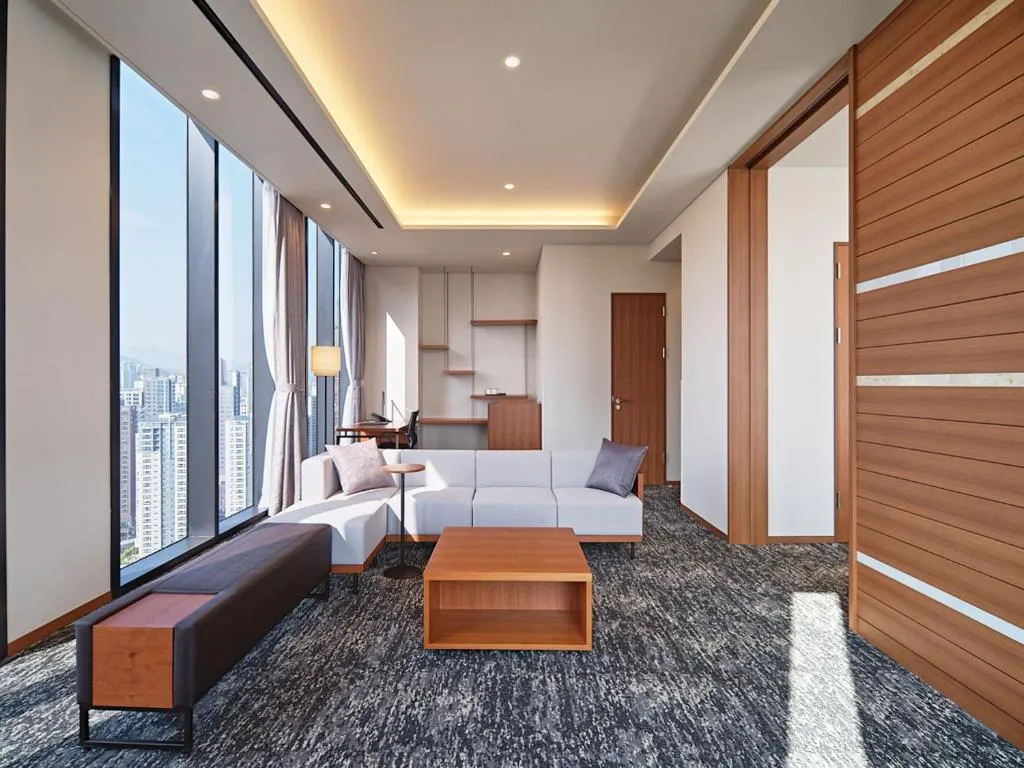
Mapo Bridge
Hotel amenities: fitness center, air conditioning, free Wi-Fi, flat-screen TVs, electric tea pots, safety deposit boxes, desks, 24-hour front desk, ironing services, business center
Nearby restaurants: Woowolso Gopchang (Offal barbecue restaurant), Tsukeru’s Virtue (Japanese restaurant), Wanbyeonkhan Gimbap (restaurant)
Nearby misc.: Fritz Coffee Company, Dohwa (coffee shop), Aroma (Thai massage spa), F45 Training Gongdeok (gym)
Within feet:
-
-
- Mapo Bridge
- Mapo Train Station
-
Within 1 mile:
-
-
- Kim Koo Museum
-
Within 1.1 miles:
-
-
- Hyochang Park
-
Within 1.7 miles:
-
-
- Ewha Woman’s University Museum
- Seoullo 7017
- Yeouido Han River Park
- Modern Design Museum
-
Roynet Hotel Seoul Mapo is 33 miles from Incheon International Airport.
Approximate cost per night (Royal Suite): $652
Cost per person (four people): $163
voco Seoul Gangnam
144 Dosan daero (Nonhyun dong), Gangnam-Gu, 06040

Coreana Art & Culture Complex
Hotel amenities: restaurant, bar, buffet, continental or American breakfast, terrace, fitness center, free Wi-Fi, electric tea pots, safety deposit boxes, hairdryers, 24-hour front desk, currency exchange, business center, private parking
Nearby restaurants / bars: Gogimani (Korean beef restaurant), Brooklyn The Burger Joint Garosugil (hamburger restaurant), Chickpeas Garosu-gil (Mediterranean restaurant), Seoulleo (wine bar)
Within feet:
-
-
- Coreana Art & Culture Complex
- Horim Museum Sinsa
- Dosan Ahn Chang Ho Memorial Hall
- Sinsa Station
-
Within 1.1 miles:
-
-
- Figure Museum W
-
Within 1.4 miles:
-
-
- Hannam Bridge
-
Within 1.9 miles:
-
-
- Seolleung & Jeongneung Royal Tomb
-
voco Seoul Gangnam is 39 miles from Incheon International Airport.
Approximate cost per night (One-Bedroom King Suite): $587
Cost per person (three people): $195
Nine Tree Premier ROKAUS Hotel Seoul Yongsan
25, Hangang-daero 23gil, Yongsan-gu, Yongsan-Gu, 04378
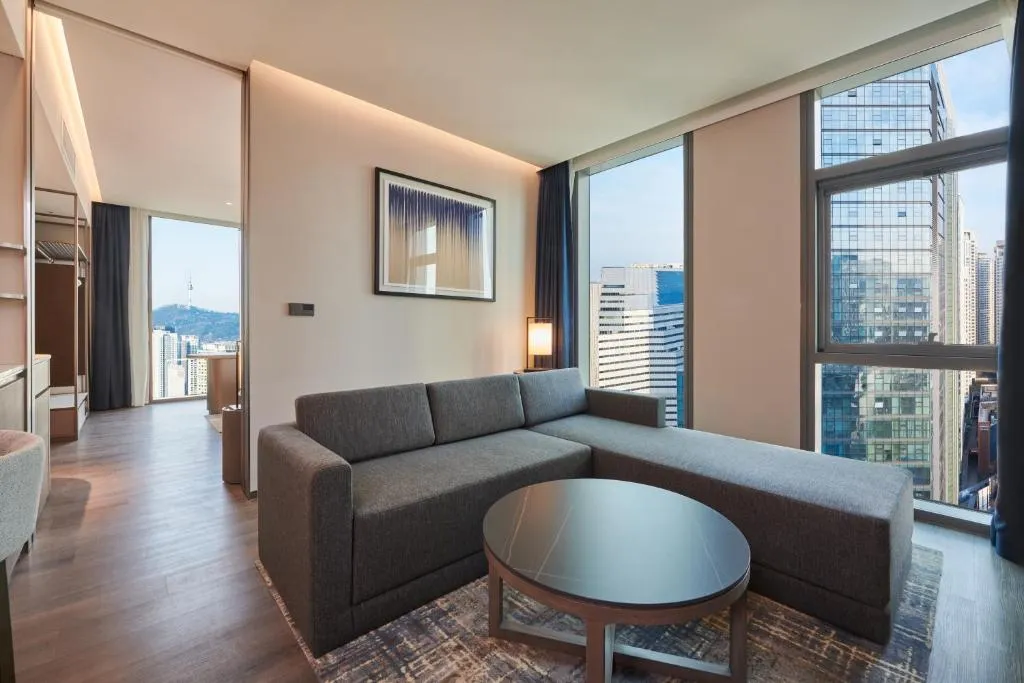
CGV Yongsan I’Park Mall | Yongsan History Museum
Hotel amenities: restaurant, buffet, American or Asian breakfast, fitness center, air conditioning, free Wi-Fi, flat-screen TVs, electric tea pots, safety deposit boxes, 24-hour front desk, ATM, currency exchange, business center
Nearby: Seo Yong Gwan (Korean restaurant), Korean Chicken Club (chicken shop), Youngpoong Bookstore Yongsan I’Park Mall (book store)
Within feet:
-
-
- Yongsan History Museum
- CGV Yongsan I’Park Mall (IMAX theater)
- Emart Yongsan (hypermarket)
- Yongsan Subway Station
-
Within 1.1 miles:
-
-
- The War Memorial of Korea
-
Within 1.3 miles:
-
-
- National Museum of Korea
-
Within 2.6 miles:
-
-
- Namsan Botanical Gardens
- Banpo Bridge
-
Nine Tree Premier ROKAUS Hotel Seoul Yongsan is 35 miles from Incheon International Airport.
Approximate cost per night (Residence Suite): $431
Signiel Seoul
300, Olympic-ro, Songpa-gu, Songpa-Gu, 05551
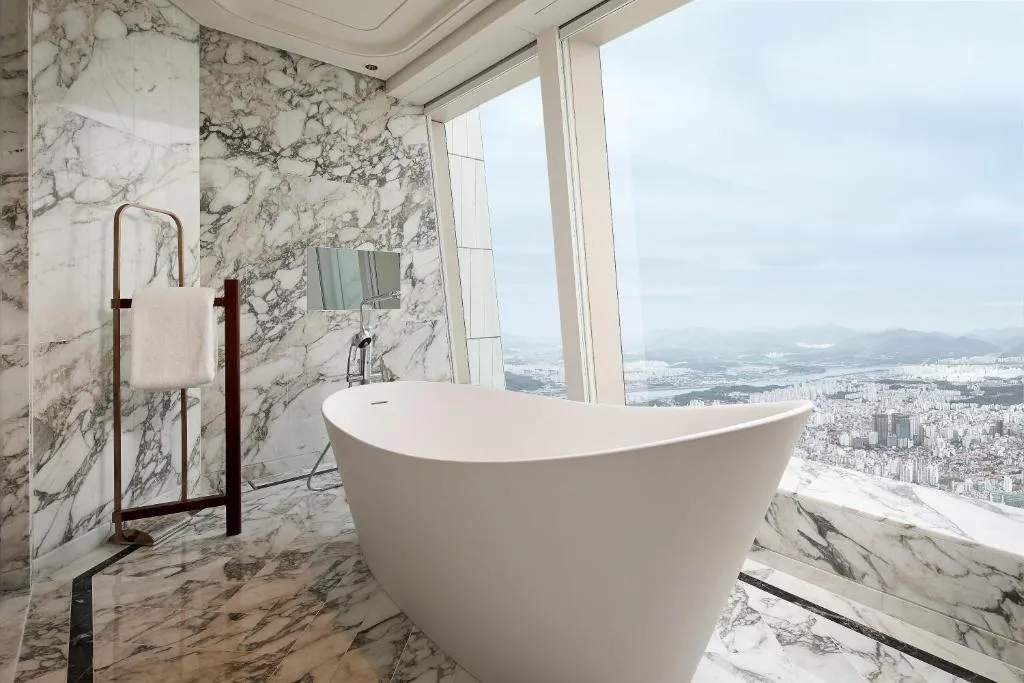
Lotte World Tower Mall | Lotte World Aquarium
Hotel amenities: Michelin-starred restaurant, champagne bar, panoramic city views, indoor swimming pool, spa, sauna facilities, fitness center, free Wi-Fi, flat-screen TVs, coffee makers, mini-bars, safety deposit boxes, hairdryers, slippers, electronic bidets, luggage storage, dry cleaning, laundry & ironing services, concierge services, valet parking, banquet facilities
Nearby: Lotte Mart, Paris Baguette, Red Mango (restaurant), Lotteria (restaurant), Haagen-Dazs (ice cream shop)
Within feet:
-
-
- Lotte World Tower Mall
- Lotte World Aquarium
- Seoul Sky
- Seokchon Lake
- Hard Rock Cafe Seoul
-
Within 1.2 miles:
-
-
- Olympic Park
- Han River
-
Within 1.5 miles:
-
-
- Garak Market
-
Signiel Seoul is 17 miles from Gimpo International Airport.
Approximate cost per night (Presidential Suite): $8,315
Hanok Guesthouse Suni
42, Bomun-ro 32-gil, Seongbuk-gu, 02849

Donam-dong Catholic Church
Guesthouse amenities: garden, soundproofing, air conditioning, free Wi-Fi, kitchenettes, in-room breakfast, 24-hour front desk, private entrance, airport transfers
Nearby: Seongbuk Son Tofu (restaurant), Milltan Charcoal Grill (barbecue restaurant), Sandwich House (sandwich shop), Routine (café)
Within feet:
-
-
- Donam-dong Catholic Church
- Sungshin Women’s Univ. Station
-
Within 1.2 miles:
-
-
- Naksan Park
-
Within 1.3 miles:
-
-
- Jeongneung Royal Tomb
-
Within 1.5 miles:
-
-
- Arko Art Center
-
Within 18 miles:
-
-
- Star Hill Resort Lift
-
Hanok Guesthouse Suni is 38 miles from Incheon International Airport.
Approximate cost per night: $103
Zzzip Guesthouse
32-16, Seongji 1-gil, Mapo-gu, Mapo-Gu, 04072

Love Museum
Hostel amenities: city views, terrace, air conditioning, free Wi-Fi, American breakfast, shared kitchen / lounge, hairdryers
Nearby: Irie (Ramen restaurant), UniQorn Craft Beer & Wine (beer hall), Debunk (café)
Within feet:
-
-
- Love Museum
- Kakao Friends Concept Museum
- Hapjeong Station
-
Within 1 mile:
-
-
- Seonyudo Park
-
Within 2.2 miles:
-
-
- Memorial Museum National Assembly of South Korea
-
Within 4.6 miles:
-
-
- Namsan Peak
-
Zzzip Guesthouse is 31 miles from Incheon International Airport.
Approximate cost per night: $31
White Linen House
40, Nonhyeon-ro 149-gil, Gangnam-gu, Gangnam-Gu, 06040

Hakdong Park
Apartment amenities: air conditioning, free Wi-Fi, flat-screen TVs, fully-equipped kitchens (select rooms), kettles, free private parking
Within feet:
-
-
- Hakdong Park (wetland garden, learning garden, forest)
- Museum of Korean Embroidery
- Sinsa Station
-
Within 1.1 miles:
-
-
- Figure Museum W
-
Within 2.1 miles:
-
-
- D Museum
-
Within 5 miles:
-
-
- Gyeongbokgung Palace
-
White Linen House is 39 miles from Incheon International Airport.
Approximate cost per night (Deluxe Apartment): $161
Cost per person (four people): $40
Josun Palace
231 Teheran-ro, Gangnam-gu, Gangnam-Gu, 06142
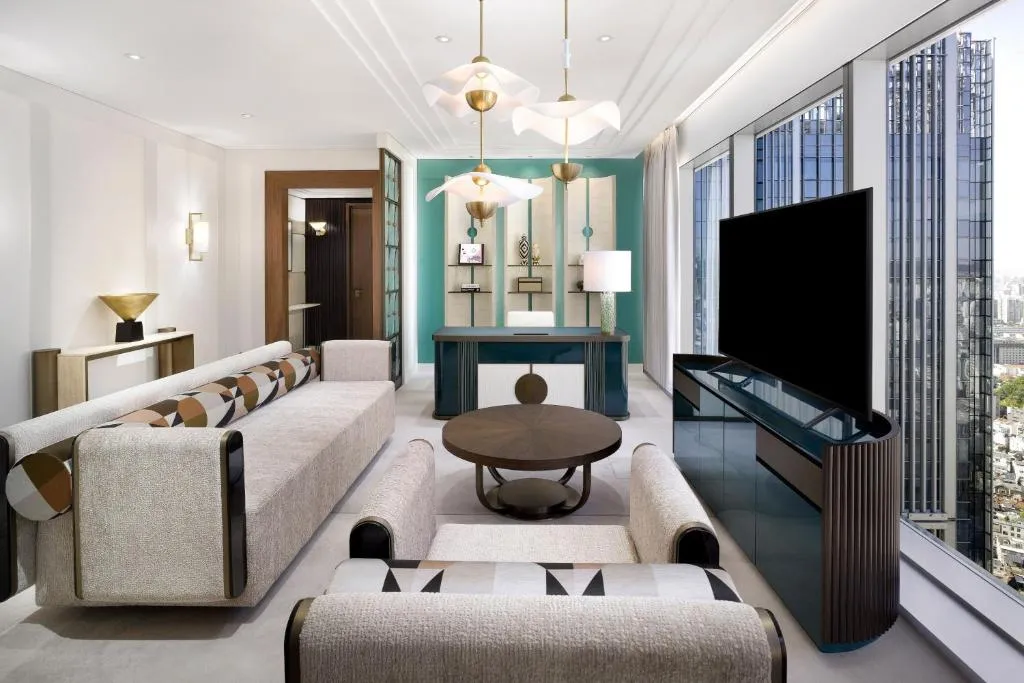
Gangnam Finance Center
Hotel amenities: restaurant, bar, buffet breakfast, city views, indoor swimming pool, air conditioning, free Wi-Fi, flat-screen TVs, coffee machines, hairdryers, 24-hour front desk, currency exchange
Nearby: Restaurant Allen (haute French restaurant), The Great Hong Yuan (Chinese restaurant), Jinsu (Japanese restaurant), Wabisabi (Japanese restaurant), Dongnam Hall (Korean barbecue restaurant), Wine & More Yeoksam Centerfield Branch (liquor store)
Within feet:
-
-
- Gangnam Finance Center
- Seolleung & Jeongneung Royal Tomb
- Yeoksam Station
-
Within 1.1 miles:
-
-
- Museum of Korean Embroidery
-
Within 3.8 miles:
-
-
- Ttukseom Hangang Park
-
Within 5 miles:
-
-
- Namsan Peak
-
Josun Palace, a Luxury Collection Hotel is 39 miles from Incheon International Airport.
Approximate cost per night (Grand Masters One-Bedroom Suite): $1,015
Marriott Executive Apartment
8, Yeoui-daero, Yeoungdeungpo-gu, Yeongdeungpo-Gu, 07320
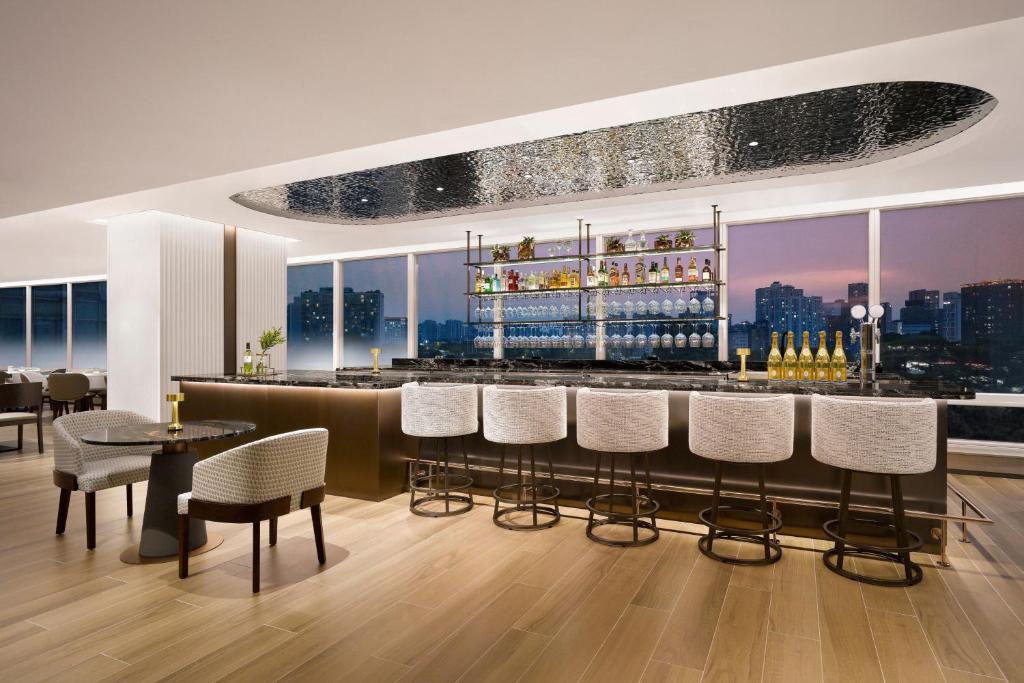
Singil Station
Hotel amenities: indoor pool, spa, fitness center, flat-screen TVs, fully-equipped kitchens, laundry facilities, mini-golf course, kids’ room, free parking
Nearby: Bath Burger, Lamousine Yeouido (mutton barbecue restaurant), Ssangdaepo (Korean restaurant), Republique (bar), Bar Glenwood, Tenuto (cocktail bar), MarkT (cocktail bar), Jubean Coffee
Within feet:
-
-
- Singil Station
- KBS On Broadcasting Museum
- Yeouido Park
- Memorial Museum National Assembly of South Korea
-
Within 2.2 miles:
-
-
- Love Museum
-
Within 2.8 miles:
-
-
- The Korean Christian Museum at Soongsil University
-
Marriott Executive Apartment is 7 miles from Gimpo International Airport.
Approximate cost per night (One-Bedroom Executive Suite): $385
Cost per person (three people): $128
La Loge
119 Changsin-gil, Jongno-gu, Jongno-Gu, 03091

Dongdaemun Gate
House amenities: 3 bedrooms, terrace, garden, free Wi-Fi, fully-equipped kitchen, washing machine, hairdryer, full-day security, free private parking
Nearby: Soulgul (bar), Donut Jungsu (donut shop)
Within feet:
-
-
- Dongdaemun Gate
- Seoul City Wall Museum
- Naksan Park
- Changsin Train Station
-
Within 1.1 miles:
-
-
- Gwanghuimun
-
Within 1.2 miles:
-
-
- Jongmyo Square Park
-
Within 6 miles:
-
-
- COEX Aquarium
-
La Loge is 37 miles from Incheon International Airport.
Approximate cost per night (Three-Bedroom House): $418
Cost per person (five people): $83

Seochon Secret Cave House
26-22, Ogin 6-gil, Jongno-gu, Jongno-Gu, 03038

Gyeongbokgung Palace | National Palace Museum of Korea | Gwanghwamun Gate
House amenities: 4 bedrooms, 3 bathrooms, mountain / garden views, sun terrace, garden, outdoor dining area, free Wi-Fi, air conditioning, fully-equipped kitchen, coffee machine, slippers
Nearby: Patic (French restaurant), enoteca chin chin (wine bar), La Boite Bleue (bakery), Alkimia Seo Chon (ice cream shop), TonginSweet (dessert shop)
Within feet:
-
-
- Gyeongbokgung Palace
- National Palace Museum of Korea
- Gwanghwamun Gate
- Gyeongbokgung Station
-
Within 1 mile:
-
-
- Sejongno Park
-
Within 1.1 miles:
-
-
- Statue of King Sejong the Great
- Gyeonghuigung
-
Within 1.7 miles:
-
-
- Changdeokgung Palace
-
Seochon Secret Cave House is 35 miles from Incheon International Airport.
Approximate cost per night (Four-Bedroom House): $363
Cost per person (twelve people): $30
Eunpyung Hanok
11-44, Yeonseo-ro 50-gil, Eunpyeong-gu, Eunpyeong-Gu, 03308

Jingwansa Temple
Hanok (traditional Korean house) amenities: terrace, garden, air conditioning, free Wi-Fi, kitchenettes
Nearby: Mulpule (café), Novelty (coffee shop), Eunpyeong Hanok Village (tourist attraction)
Within feet:
-
-
- Jingwansa Temple (Buddhist temple)
-
Within 1.9:
-
-
- Memory of Hillstate
-
Within 2.8 miles:
-
-
- Kim Chong Yung Museum
- Gana Art Center
- Total Museum of Contemporary Art
-
Within 4.7 miles:
-
-
- Gyeongbokgung Palace
-
Eunpyung Hanok is 10 miles from Gimpo International Airport.
Approximate cost per night (Private Hanok): $779
Cost per person (six people): $129
Haiyan SKY
23-740, Changsin-dong, Jongno-gu, Jongno-Gu, 03095
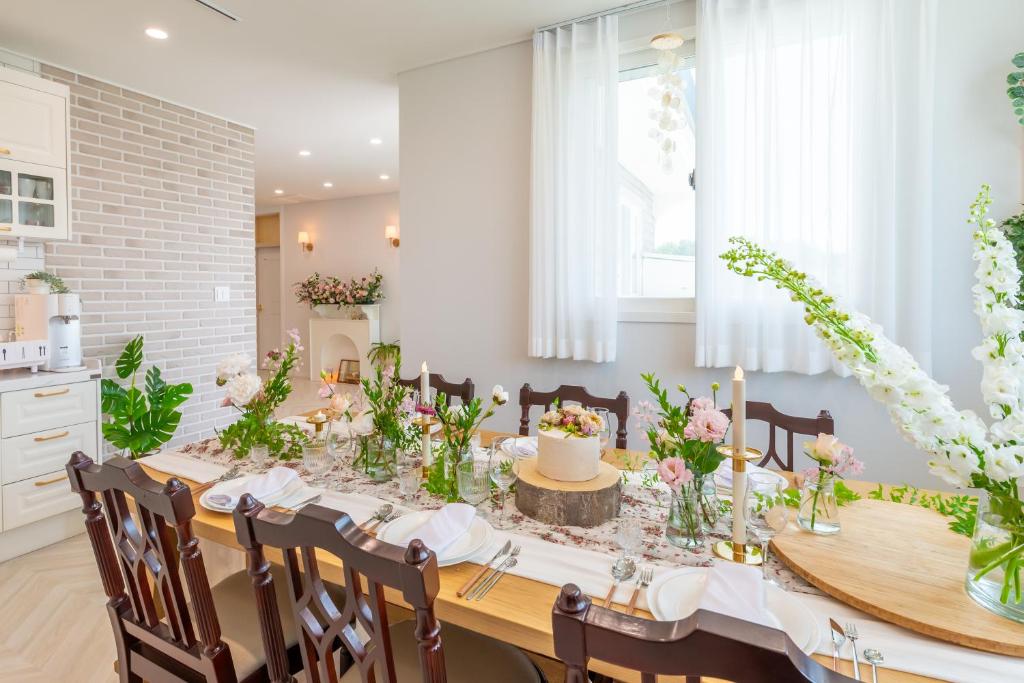
Seoul City Wall Museum
Apartment amenities: 3 bedrooms, 2 bathrooms, terrace with city views, garden, soundproofing, free Wi-Fi, flat-screen TV, fully-equipped kitchen, slippers, private entrance, full-day security, paid airport shuttle service
Also in the area: La Loge
Within feet:
-
-
- Seoul City Wall Museum
- Naksan Park
- Dongdaemun Gate
- Changsin Station
-
Within 1.1 miles:
-
-
- Dongdaemun History Museum 1398
-
Within 1.5 miles:
-
-
- Changgyeonggung Palace
- Changgyeonggung Palace Greenhouse
-
Within 3.4 miles:
-
-
- N Seoul Tower
-
Haiyan SKY is 38 miles from Incheon International Airport.
Approximate cost per night (Three-Bedroom Apartment): $528
Cost per person (seven people): $75
Mapo-Gu Apartment
4F, 115, Donggyo-ro 51-gil, Mapo-Gu, 03979
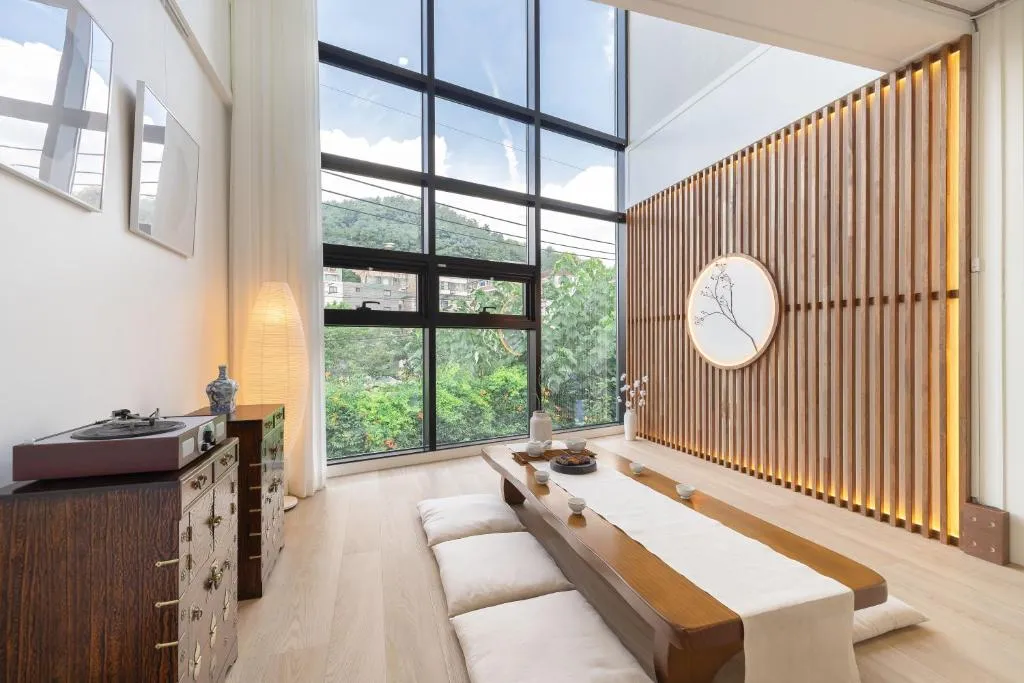
Gyeongui Line Forest Park
Hotel amenities: city views, terrace, balcony, garden, hot tub, air conditioning, free Wi-Fi, flat-screen TV, fully-equipped kitchen, coffee machine, kettle, slippers, free private parking
Nearby: Okza (restaurant), Dooroomi (bar), VER’S GARDEN (café), Witch and Gretel (café), Pie In The Shop (dessert shop), Melted (ice cream shop)
Within feet:
-
-
- Gyeongui Line Forest Park
- War and Women’s Human Rights Museum
- Kakao Friends Concept Museum
- Gajwa Station
-
Within 1.1 miles:
-
-
- Love Museum
-
Within 1.9 miles:
-
-
- Seoul Energy Dream Center
-
Mapo-Gu Apartment is 33 miles from Incheon International Airport.
Approximate cost per night: $412
Cost per person (eight people): $51
So there they are, Seoul accommodations that will help make for a memorable trip. We hope you have found this information valuable and most importantly, that you enjoy your time in South Korea!
Krakow Accommodations
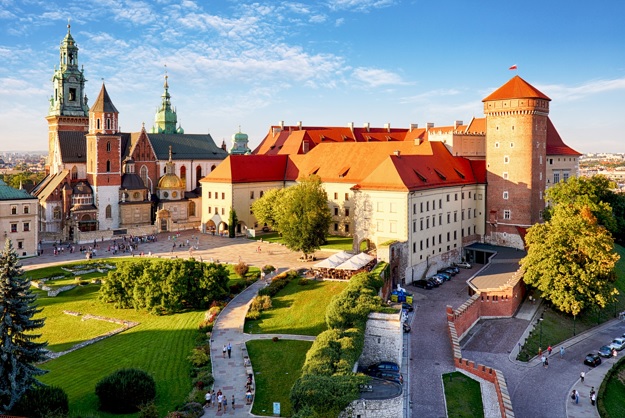
Krakow accommodations
Krakow accommodations welcome you to a destination that’s also spelled Cracow. Known for its museums, historic architecture, academics, international cuisine, vibrant atmosphere, nightlife and legendary Wawel Dragon, Krakow is located in southern Poland, close to the Czech Republic and Slovakia borders. Pronounced Kiddack-oof, Krakow was once Poland’s capital city. The Vistula River bends through Krakow’s southerly sections.
Krakow main attractions: Old Town, Rynek Główny (plaza), Galeria Krakowska (shopping mall), Centrum Handlowe Bonarka (shopping mall), Wawel Cathedral, TAURON Arena Krakow, Kraków Zoo, Smok Wawelski (dragon statue), Oskar Schindler’s Enamel Factory (museum), Planty (park), Kościuszko Mound (museum), M1 Kraków (shopping mall), St. Mary’s Basilica, Polish Aviation Museum, Old Kleparz (farmers’ market), Henryk Jordan Park, Father Bernatek’s Bridge, Cinema City Bonarka (movie theater), National Museum in Kraków, Krakus Mound (historical landmark), Polish Airmen Park, New Kleparz (market), Błonia Park, GoJump (recreation center), Saints Peter and Paul Church, Stadion Miejski im. H. Reymana w Krakowie (Wisla Krakow stadium), GOjump Park Trampolin Mateczny (recreation center), Czartoryski Museum, Expo (convention center), Kraków Barbican, Manggha Museum of Japanese Art and Technology, Kijów Cinema (movie theater), Stadion Cracovii im. Józefa Piłsudskiego (stadium), Park im.Wojciecha Bednarskiego w Podgórzu (park), Klub Studio (live music venue), Museum of Illusions, Józef Piłsudski’s Mound, Skałki Twardowskiego w Krakowie (park), Kraków Opera, Remains of the Ghetto Wall (historical landmark)
Bordering / surrounding Krakow points of interest: Bielańsko-Tyniecki Landscape Park (outdoor recreation, historic buildings, monasteries), Tenczyński Park Krajobrazowy (trails, medieval castles, wooden folk buildings), Wieliczka Salt Mine (about 8 miles southeasterly), Auschwitz (about 45 miles westward)
Krakow main airport: John Paul II International Airport Kraków-Balice
Rideshare service: Uber
Tramway: MPK Krakow (operating since 1882)
Krakow’s professional football clubs are Wisła Kraków and MKS Cracovia. In Krakow, advanced reservations / tickets to popular restaurants / major attractions (ex. Wawel Royal Castle) may be required. Coin operated, public restrooms often charge a fee for admittance. Bathroom door symbols are triangular for men and circular for women. A 10% or more tip is customary in cafes, bars and restaurants, which often have designated smoking areas. Numerous throughout Krakow, nightclubs and bars typically have strict dress codes, so it’s best to check individual establishment policies beforehand on their website. Getting caught drinking in public places or jaywalking can result in fines. Krakow residents are known to be friendly and approachable, with the younger population especially comprehending English. Krakow’s currency is the złoty (pronounced zwoh-tay), the drinking age is 18 years old and cars travel on the right-hand side of the road. Krakow accommodations are some of Poland’s best. Before we get to Krakow accommodations, let’s take a look at some more background information on the area to help you along the way.
Dating to the 7th century, Krakow was Poland’s official capital until 1596. Archeological findings at Wawel Hill suggest that a Stone Age settlement had existed in the Krakow area. Krakus, a mythical ruler who built the settlement above the dragon Smok Wawelski’s cave, is told in legends to have been Krakow’s founder. Early-on, Krakow was controlled first by Moravia circa 876 AD, captured by Bohemian duke Boleslaus I in 955, and ultimately retaken from the Bohemians by Mieszko I, who incorporated the city into Piast dynasty holdings. In 1038, Krakow became the seat of the Polish government. Shortly thereafter, the city had become a leading center for trade, with brick buildings such as Royal Wawel Castle, and churches such as St. Andrew’s Church, being constructed. The first Mongol invasion of Poland in 1241, however, resulted in the city being sacked and burned. In turn, Bolesław V the Chaste rebuilt the city almost identically and quickly, incorporating it in 1257. Mongols invaded again in 1259 and 1287, the second attack being repelled with the help of newly built fortifications, or St. Florian’s Gate. King Casimir III the Great named two western suburbs Kazimierz in his honor circa 1335, around which time defensive walls were constructed. Founded in 1362, The University of Krakow, or Jagiellonian University, became Poland’s oldest and most prestigious university. Under the Jagiellonian dynasty the city continued to grow. The Kingdon of Poland‘s capital, as well as Hanseatic League member, Krakow attracted craftsmen, businesses and guilds, and science, arts and literature flourished. Poland’s Golden Age, promoting Renaissance art and architecture, contributed to the Polish-Lithuanian Commonwealth’s becoming one of Europe’s largest all-time kingdoms during the 15th and 16th centuries. The Kingdom’s borders stretched from modern-day Estonia to Moldavia north-to-south, and from Moscow to Brandenburg east-to-west. Royal Sigismund Bell, Wawel Cathedral’s largest of five bells, was cast by Hans Behem circa 1520. King Sigismund II, dying childless in 1572, was the last king of the Jagiellon dynasty. Sigismund II’s death resulted in Poland’s throne being passed to Henry III of France, and subsequently to foreign rulers. Sigismund III of the House of Vasa, prompted by a Swedish invasion and a bubonic plague outbreak, moved the Polish–Lithuanian Commonwealth ‘s administrative capital from Krakow to Warsaw circa 1596. Near the end of the 18th century, the Partitions of Poland, conducted by the Kingdom of Prussia, the Russian Empire and the Habsburg monarchy, saw to a 123-year Poland-Lithuanian dissolution. On November 16, 1846, the Free City of Cracow was incorporated into Austria, which created the Grand Duchy of Krakow. A Polish center for culture and art, Krakow was once a place where Polish artists such as Jan Matejko resided. In 1901, running water and streetcars were introduced, and between 1910 and 1915, Krakow and the surrounding suburban communities had combined into Greater Krakow. As the World Wars approached, conditions naturally deteriorated. In 1914, the city was besieged briefly by Russian troops. The Polish Liquidation Committee assumed power in 1918, thus ending Austria’s rule over Krakow, and establishing a Second Polish Republic. Universities such as AGH University of Science and Technology and the Jan Matejko Academy of Fine Arts were established, and the city became a cultural center for Zionist and Bundist Jews. In September 1939, Nazi Germany invaded Poland and Krakow became part of the General Government, or General Governate for the Occupied Polish Region, which was a separate administrative region of the Third Reich. Nazi Governor-General Hans Frank, now based in Wawel Castle, was tasked with turning Krakow into a completely Germanized city after the removal of Jews and Poles. Locations and streets were to be renamed into the German language, and propaganda would portray the city as historically German. Krakow’s Jewish ghettos formed in December 1939, and Auschwitz concentration camp became operational in May 1940. By the end of World War II, Krakow had remained relatively undamaged. On January 18, 1945, the Soviet Union entered and took control of the city. The “Polish People’s Republic” (1947-1989), a Central European puppet country under a Stalinist totalitarian regime, saw Krakow transform from a once-enlightened city, turned Nazi stronghold, into a Marxist industrial center. Krakow’s cardinal archbishop Karol Wojtyła, who would eventually be elevated to his more famous name, Pope John Paul II, between 1964 and 1978, successfully lobbied for permission to build Marxist Krakow’s newly industrialized suburbs’ first churches. Also in 1978, Krakow Old Town became a UNESCO World Heritage Site. Starting with a Polish workers’ mass-strike in 1986, The Revolutions of 1989 throughout Central and Eastern Europe, Latin America, Africa and Asia, also known as the Fall of Communism, resulted in the end of most communist states, the end of the Cold War, the beginning of the end of the Soviet Union and the collapse of the one-party state.
Poland’s second largest city behind Warsaw and home to around 800,000 “Cracovians”, Krakow is nestled on the Vistula River in Lesser Poland. Considered one of Europe’s most beautiful cities, Krakow is home to Gothic, Renaissance and Baroque architecture. Krakow is surrounded by uplands to the north, lowlands to the east, and Carpathian foothills to the south. Home to a temperate oceanic climate, Krakow experiences pleasant summers and cold, often snowy, winters. July high temperatures average around 78 degrees Fahrenheit, while January winters average around 35 degrees. Due to its proximity to the Tatra Mountains, the city often experiences “foehn wind” (halny), or dry, warm downslope wind, which can cause temperatures to rise relatively rapidly. Around 40 parks with gardens or forests can be found throughout the city, which is divided into 18 administrative districts, or dzielnica. Annually, around 13 million tourists visit Krakow, including 3 million from abroad. A traditional, five-note bugle call known as St. Mary’s Trumpet Call can be heard hourly at Saint Mary’s Basilica. The masculine form of the Polish adjective “golden”, the złoty is Poland’s official currency. Additional points of interest include Main Square, Cloth Hall, Juliusz Słowacki Theatre, Kraków Philharmonic, Palace of Art, Wielopolski Palace, New Town Hall of Podgórze, Matejko Square, Mickiewicz Monument, Floriańska Street, Saint Anne’s Church, Skałka (“Small Rock”) Church, St. Leonard’s Crypt, Tyniec Abbey, Camaldolese Hermit Monastery, Unity Tower and ICE Krakow Congress Centre. Local foods include dumplings (pierogis), sausages (kielbasa), golonka (ham hock), kotlet schabowy (schnitzel / breaded cutlet), zapiekanka (open-face sandwich), ziemniaczane (potato pancakes), golabki (cabbage rolls), bigos (meat and cabbage “hunters” stew), barszcz (sour beetroot soup), obwarzanek krakowski (braided ring-shaped bread), pączki (doughnuts), sernik (cheese cake), miodownik (layer cake), kremówka (cream pastry), gherkins (mini pickles) and strawberries. Drinks include vodka, krupnik (a sweet liqueur), lager beer, mulled wine/beer, craft beer and tea. With some background information on the area, we’re ready for Krakow accommodations that will help make for an incredible trip.
PURO Kraków Kazimierz
ul. Halicka 14a, Old Town, 31-036
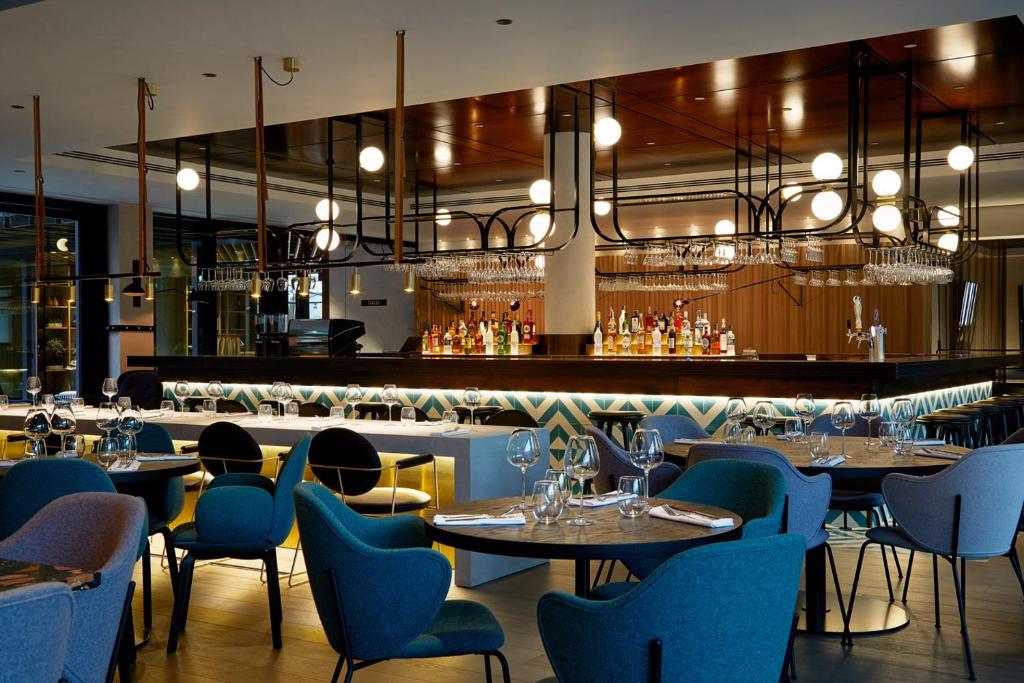
Ghetto Heroes Square
Hotel amenities: restaurant, bar, terraces, garden, sauna, fitness center, air conditioning, flat-screen TVs, desks, 24-hour front desk, free bike rentals
Nearby restaurants / bars / pubs: Corner Burger (hamburger restaurant), Lokal 27 Banda Burgers (hamburger restaurant), Gruba Buła (hamburger restaurant), Everest Curry (Indian restaurant), Halicka Eatery & Bar (lunch restaurant), Pancake House (pancake restaurant), Artefakt Cafe (bar), Craftownia (bar), Duffy’s Irish Bar, Czarna Owca • Wino Bar • Kraków (wine bar), Chabry z Poligonu (wine bar), Ulica Krokodyli Pub & Cafe (pub)
Nearby misc.: Dobro&Dobro Cafe (coffee shop), Cukiernia (dessert shop), Lody (ice cream shop), Lajkonik Piekarnia i Kawiarnia (bakery), Bagelmama (bagel shop), Piwo Świeże z Browaru Tenczynek (beer store), Studio fryzjerskie (hair salon), Hair Club La Bush (barber shop)
Within feet:
-
-
- Ghetto Heroes Square
- Schindler Factory Museum
- Wawel Royal Castle
- St. Florian’s Gate
-
Within 1 mile:
-
-
- Historical Museum of Krakow
-
Within 1.4 miles:
-
-
- National Museum of Krakow
-
Within 7 miles:
-
-
- Wieliczka Salt Mine
-
PURO Kraków Kazimierz is 8 miles from John Paul II International Airport Kraków–Balice.
Approximate cost per night: $233
AC Hotel by Marriott Krakow
Aleja 3 Maja 51, Krowodrza, 30-062
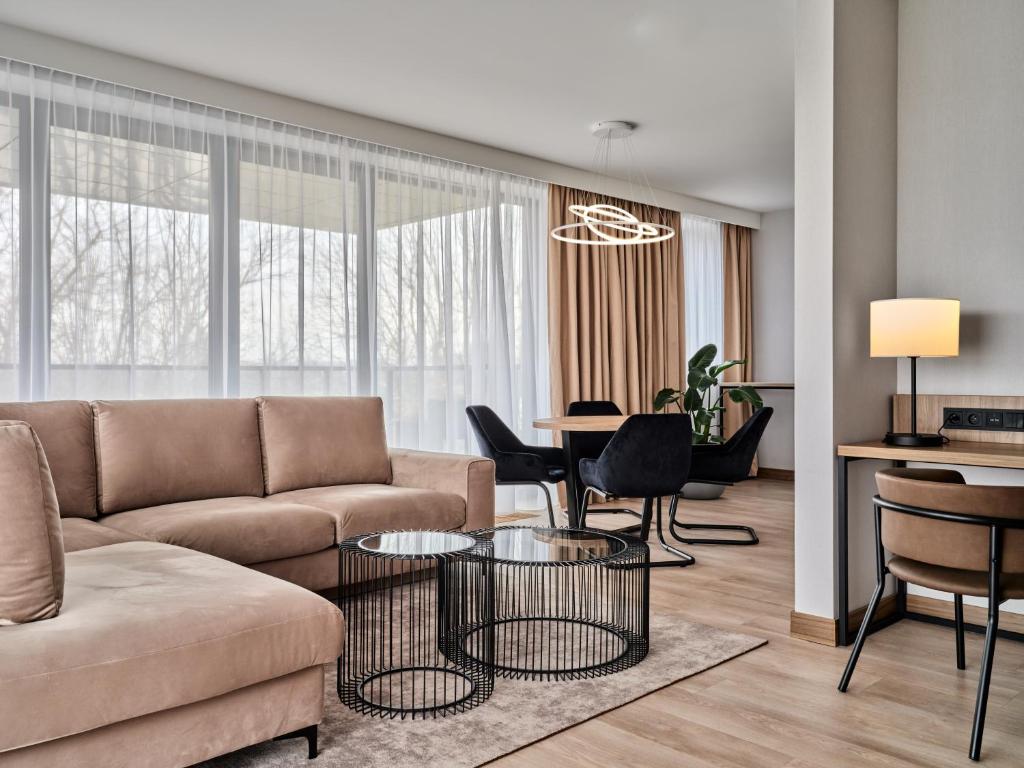
Błonia Park
Hotel amenities: restaurant, bar, buffet breakfast, terrace, balconies, garden, indoor pool, sauna, fitness center, air conditioning, free Wi-Fi, flat-screen TVs, coffee machines, electric tea pots, mini-bars, safety deposit boxes, desks, 24-hour front desk, express check-in/out, paid airport shuttle service
Nearby restaurants: Błonia Bistro (restaurant), Gospoda na Piastowskiej (restaurant), Trattoria Cichy Kącik (family restaurant), Pak Man Pizzeria (pizza restaurant), Gai’s (restaurant), Strefa Błonia (restaurant), SOBRE de la MESA Restaurant
Nearby misc.: Stadion Miejski im. H. Reymana w Krakowie (Wisla Krakow stadium), Żabka (grocery store), Grupa Taneczna Atelie (dance company), Błonia Sport (sports complex), Błonia w Krakowie (park)
Within feet:
-
-
- Błonia Park
- Plac Zabaw przy ul. Bydgoskiej
- Park Kieszonkowy Pierwszy Ogród
- National Museum of Krakow
-
Within 1.3 miles:
-
-
- Town Hall Tower
- Cloth Hall
-
Within 1.5 miles:
-
-
- Barbican of Krakow
-
AC Hotel by Marriott Krakow is 4.6 miles from John Paul II International Airport Kraków–Balice.
Approximate cost per night (One-Bedroom Premium Suite): $374
Cost per person (three people): $124
Sky Hotel Krakow
Lubicz 9, Old Town, 31-034

Julius Slowacki Theatre
Hotel amenities: restaurant, bar, continental / buffet breakfast, fitness center, air conditioning, free Wi-Fi, flat-screen TVs, safety deposit boxes, desks, luggage storage, private parking
Nearby: Fear Factory House of Fear (escape room center), Noblesse (Polish restaurant), Cat Café Kociarnia (café), Dobra Pączkarnia (donut shop), Cukiernia | Chimney Cake Bakery (cake shop), Awiteks (bakery)
Within feet:
-
-
- Julius Slowacki Theatre
- Barbican of Krakow
- Krakow’s City Walls
- Jan Matejko’s House
-
Within 1.1 miles:
-
-
- National Museum of Krakow
-
Within 2.2 miles:
-
-
- Polish Aviation Museum
-
Sky Hotel Krakow is 7 miles from John Paul II International Airport Kraków–Balice.
Approximate cost per night: $118
DoubleTree by Hilton Krakow Hotel & Convention Center
ul. Dąbska 5 , Grzegórzki, 31-572
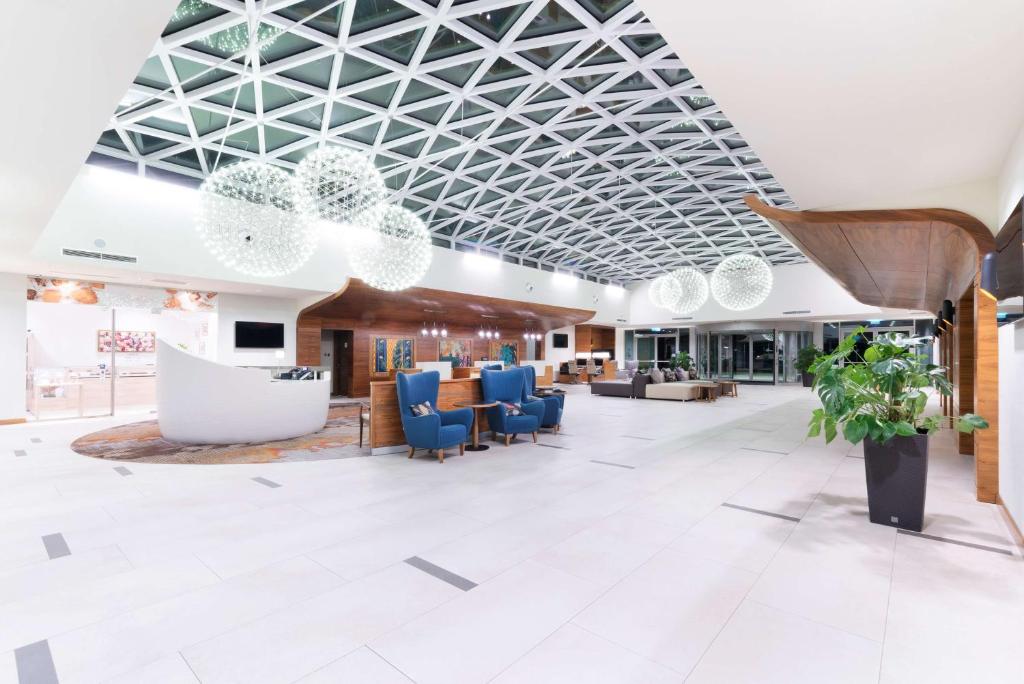
Park Dąbie
Hotel amenities: restaurant, bar, swimming pool, sauna, hot tub, 24-hour gym, free Wi-Fi, flat-screen TVs, hairdryers, 24-hour front desk, concierge & luggage storage service
Nearby: 5th Avenue Restaurant & Lounge Bar, Staw Dąbski (fishing pond)
Within feet:
-
-
- Park Dąbie
- Boisko do Koszykówki
- Park Kieszonkowy Ogród Ptasi
-
Within 1 mile:
-
-
- Polish Aviation Museum
-
Within 1.1 miles:
-
-
- The Botanic Garden of the Jagiellonian University
-
Within 2.8 miles:
-
-
- Bonarka Forest
-
DoubleTree by Hilton Krakow Hotel & Convention Center is 7 miles from John Paul II International Airport Kraków–Balice.
Approximate cost per night (One-Bedroom King Suite): $322
1891 Garni Hotel
4 Podbrzezie, Old Town, 31-054
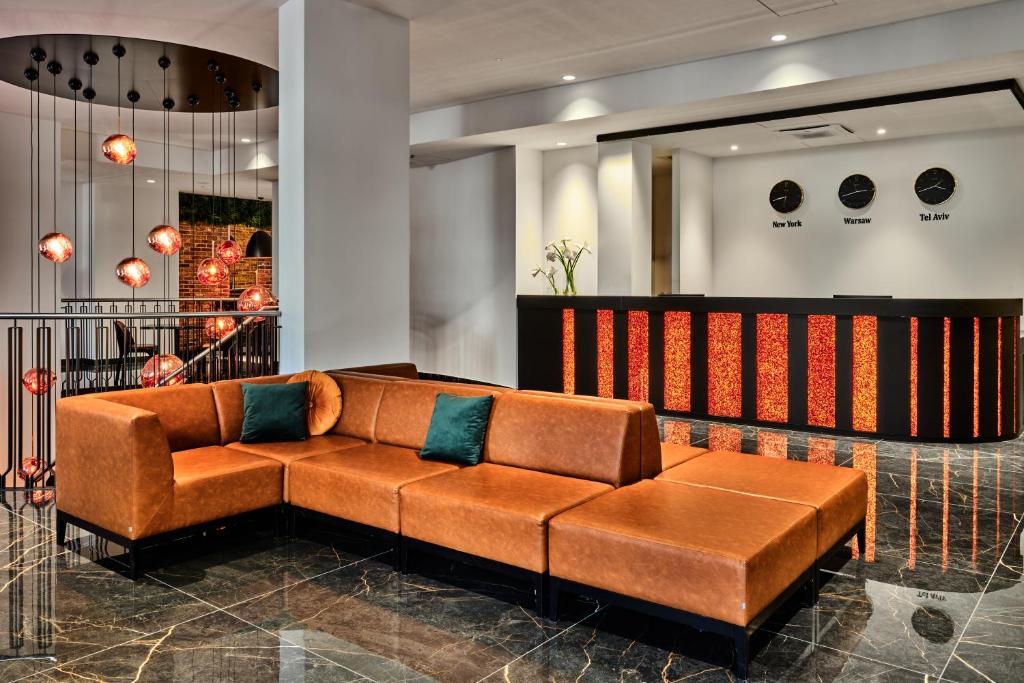
Dragon’s Den
Hotel amenities: restaurant, city views, garden, fitness center, air conditioning, free Wi-Fi, flat-screen TVs, electric tea pots, safety deposit boxes, desks, 24-hour front desk, private parking, paid airport shuttle service
Nearby restaurants / bars / pubs: Garnish Food&Wine (Modern French restaurant), Szynk (Polish restaurant), The Tokio Tower (restaurant), La Habana (bar), Propaganda Pub (pub)
Nearby misc.: LEON & MIKO ceramic studio (pottery manufacturer), Tempel Synagogue, Kraków (synagogue)
Within feet:
-
-
- Dragon’s Den
- Planty
- Wawel Royal Castle
- Europacare24 sp. z o.o.
-
Within 1 mile:
-
-
- National Museum of Krakow
-
Within 6 miles:
-
-
- Wieliczka Salt Mine
-
1891 Garni Hotel is 6 miles from John Paul II International Airport Kraków–Balice.
Approximate cost per night: $158
Hilton Garden Inn Krakow Airport
Medweckiego 3, 32-083
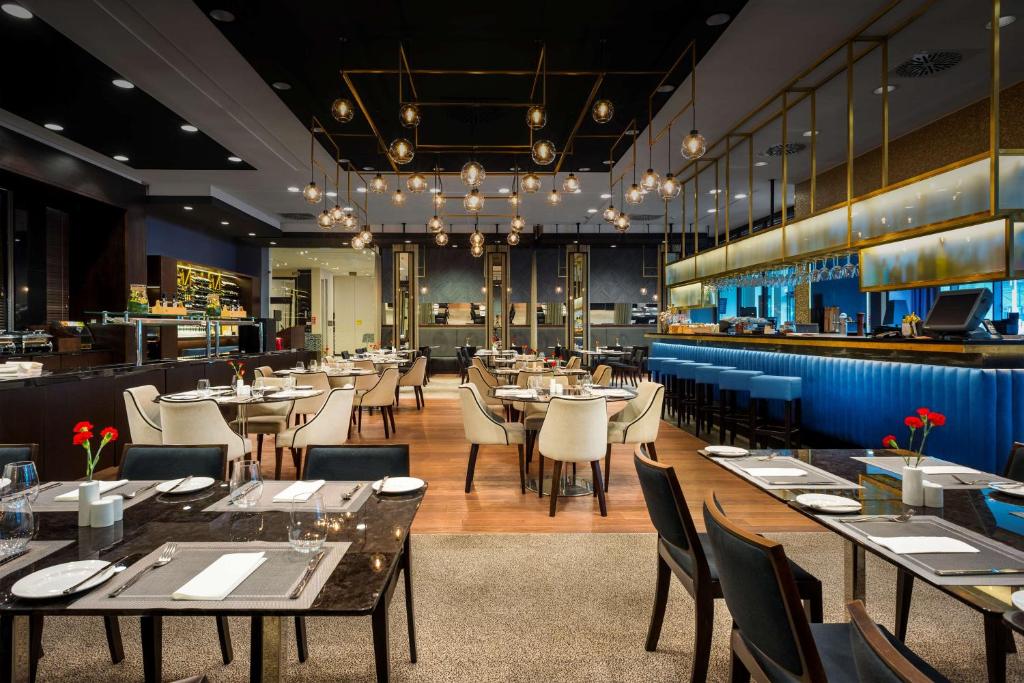
John Paul II International Airport Kraków–Balice
Hotel amenities: restaurant, bar, fitness center, air conditioning, free Wi-Fi, flat-screen TVs, safety deposit boxes, hairdryers, concierge service, luggage storage, meeting & banquet facilities, business center
Nearby restaurants / bars: L’atmosphère Restaurant & Bar (restaurant), Subtilité Wine & Bar (wine bar)
Nearby misc.: CarFree | Wypożyczalnia Samochodów Kraków Lotnisko Balice – Brak Kaucji (car rental agency), Krakow Airport.Taxi / Tours and Transfers (airport shuttle service), Taras widokowy Kraków Airport (scenic spot)
Within feet:
-
-
- John Paul II International Airport Kraków–Balice
- Kraków Lotnisko Train
-
Within 2.1 miles:
-
-
- Błonia Zabierzowskie, Park linowy
-
Within 2.2 miles:
-
-
- Rezerwat Skała Kmity Forest
-
Within 3 miles:
-
-
- Las Wolski
-
Approximate cost per night: $167
Metropolo by Golden Tulip Krakow
Ul. Orzechowa 11, Lagiewniki, 30-422
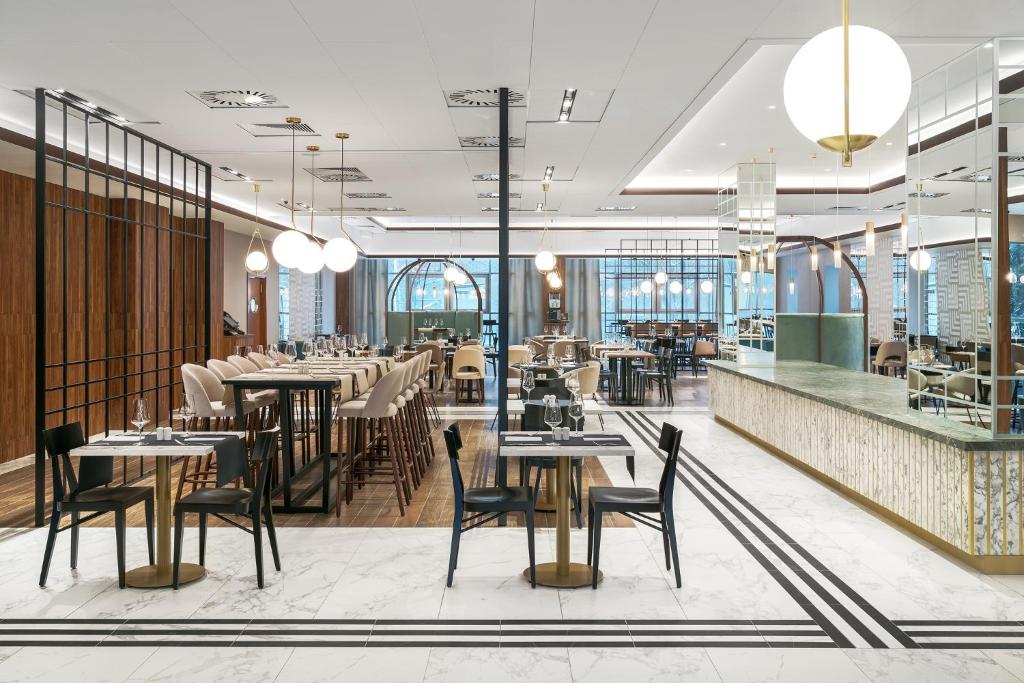
Kraków Sanktuarium Train
Hotel amenities: restaurant, bar, buffet, continental or vegetarian breakfast, terrace, garden, air conditioning, free Wi-Fi, flat-screen TVs, safety deposit boxes, 24-hour front desk, luggage storage, private parking, paid airport shuttle service
Nearby restaurants: Mięso w Bułce – Burgery, Obiady, Kawa (bistro), Maglen (restaurant), Sekret Smaku (dumpling restaurant)
Nearby misc.: Easy Auchan (grocery store), Borek Farmer’s Market (farmers’ market), CrossFit 72D (recreation center), Solarium Platinium (tanning salon), Elita Dance Center (dance school)
Within feet:
-
-
- Kraków Sanktuarium Train
- Dolina Wilgi – Park Rzeczny Wilgi
-
Within 1.3 miles:
-
-
- Plac Zabaw ul. Szwai
- Park Kieszonkowy Ogód Technologiczny
-
Within 2.9 miles:
-
-
- Schindler Factory Museum
-
Metropolo by Golden Tulip Krakow is 6 miles from John Paul II International Airport Kraków–Balice.
Approximate cost per night (Junior Suite): $136
Cost per person (four people): $34
Leonardo Boutique Hotel Krakow Old Town
ul. Św. Gertrudy 12, Old Town, 31-048
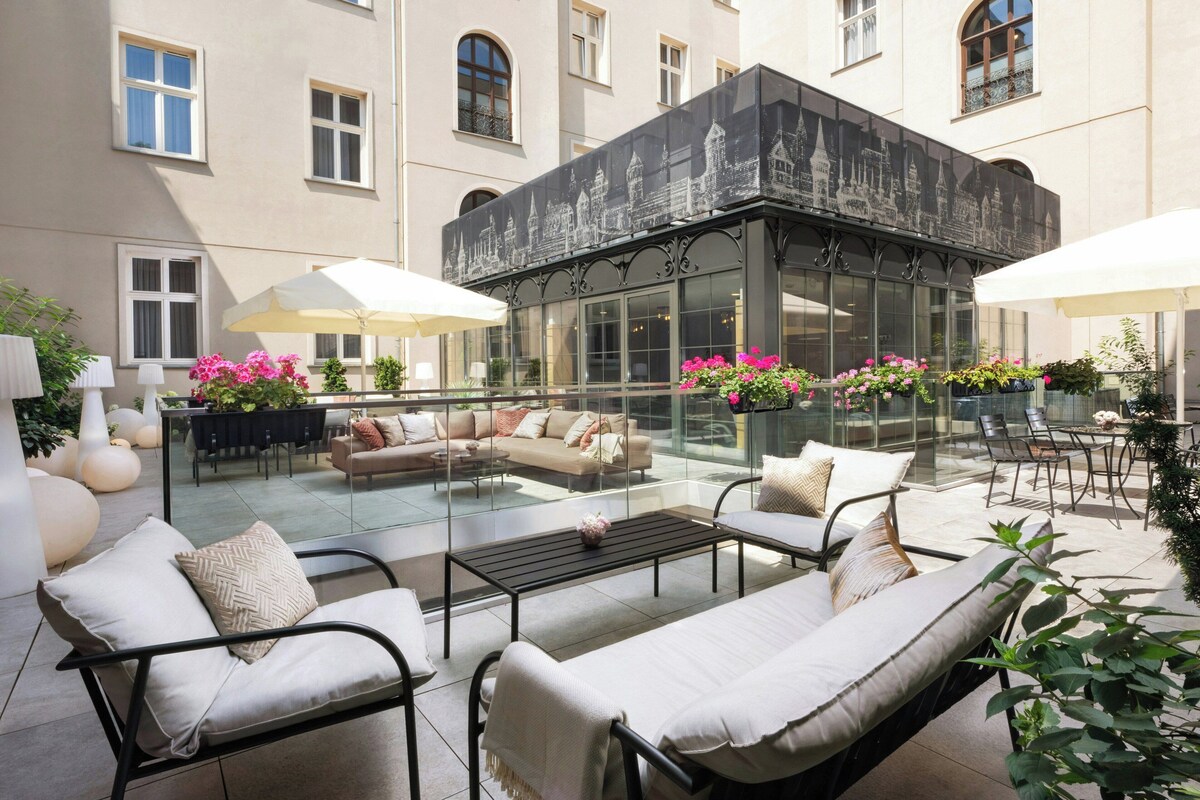
Archeological Museum
Hotel amenities: restaurant, bar, buffet breakfast, terrace, air conditioning, free Wi-Fi, flat-screen TVs, safety deposit boxes, desks, express check-in/out, 24-hour front desk, business center, private parking
Nearby restaurants / bars: Soup Culture Kraków (restaurant), Nago Sushi & Sake (sushi restaurant), Restauracja MidTown (restaurant), Od Jajka Do Jabłka (breakfast restaurant), Radocha (bar)
Nearby misc.: Yellow Monkey (café), Wytwórnia świec kościelnych (candle store), Z.BROWS – pmu academy (permanent makeup clinic), Scena Teatru Bagatela (performing arts theater), Mijn Krakau Tours – MijnTours.com – Bike & Walking Tours (tour operator), Saints Peter and Paul Church (Catholic church), St. Andrew’s Church, Kraków (Catholic church)
Within feet:
-
-
- Archeological Museum
- Planty
- Wawel Royal Castle
- Cloth Hall
-
Within 1.1 miles:
-
-
- Krakow Central Station
-
Within 7 miles:
-
-
- Wieliczka Salt Mine
-
Within 10 miles:
-
-
- Siepraw Ski Lift
-
Leonardo Boutique Hotel Krakow Old Town is 6 miles from John Paul II International Airport Kraków–Balice.
Approximate cost per night: $134
PURO Kraków Stare Miasto
Ogrodowa 10, Old Town, 31-155
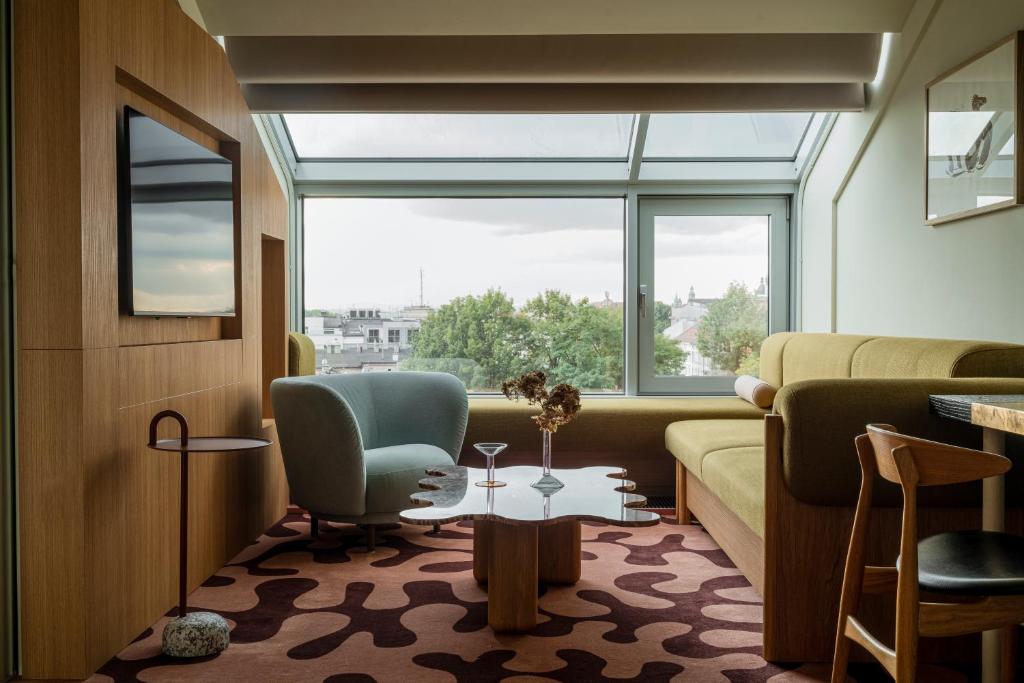
Barbican of Krakow
Hotel amenities: gastropub, air conditioning, free Wi-Fi, large windows, 49-inch flat-screen TVs, tablets, safety deposit boxes
Nearby: Tre viet (Vietnamese restaurant), Kebab Soltan (kebab shop), Smaki Śródziemnomorskie (bar), Polibuda Pub (pub), Green Caffe Nero (café), Kraków Street Food Market (food court), IMPERIAL Barbershop & Academy (hair salon), FryzuLOVE – Studio Fryzjerskie (hairdresser), Kuba Świstowski – Hairstylist (hair salon), Kwiaciarnia La Flor ( Łodyga) Galeria Krakowska poziom -1 (florist), Bonito (book store), SFD (vitamin & supplements store), My Fitness Place (fitness center), WOMAI Kraków Centrum Nauki i Zmysłów (tourist attraction)
Within feet:
-
-
- Barbican of Krakow
- Plac Zabaw Kulkowo
- Park Strzeleckiego
- Main Market Square
-
Within 1.1 miles:
-
-
- Wawel Royal Castle
-
Within 2.2 miles:
-
-
- Polish Aviation Museum
-
PURO Kraków Stare Miasto is 6 miles from John Paul II International Airport Kraków–Balice.
Approximate cost per night (Suite): $233
Focus Hotel Premium Kraków
ul. Sucha 1d, Lagiewniki, 30-601
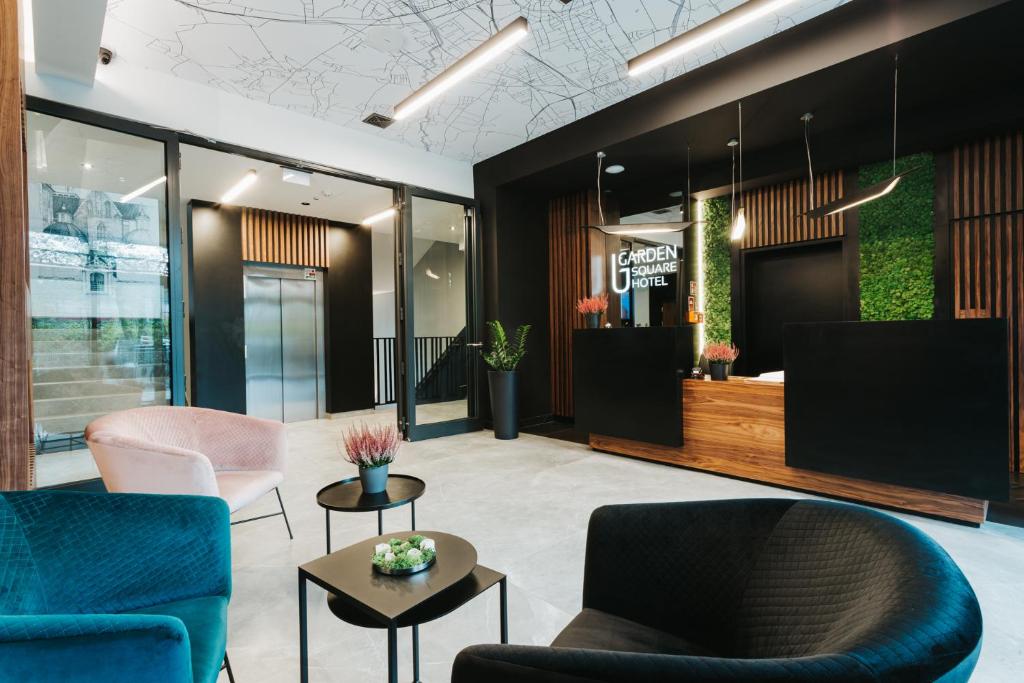
Divine Mercy Sanctuary in Krakow-Lagiewniki
Hotel amenities: restaurant, bar, continental / buffet breakfast, sauna, fitness center, air conditioning, free Wi-Fi, flat-screen TVs, electric tea pots, safety deposit boxes, desks, 24-hour front desk, concierge service, private parking, airport transportation
Nearby: Oranżeria Faustyny 14 (restaurant), Friday Bistro (restaurant)
Within feet:
Within 1.3 miles:
-
-
- Park Kurdwanów
-
Within 1.4 miles:
-
-
- Park imienia Wojciecha Bednarskiego
- Planty Floriana Nowackiego
-
Within 2.1 miles:
-
-
- Wawel Royal Castle
-
Focus Hotel Premium Kraków is 6 miles from John Paul II International Airport Kraków–Balice.
Approximate cost per night (Apartment): $143
Q Hotel Kraków
ul. Radzikowskiego 142, Pradnik Bialy, 30-198
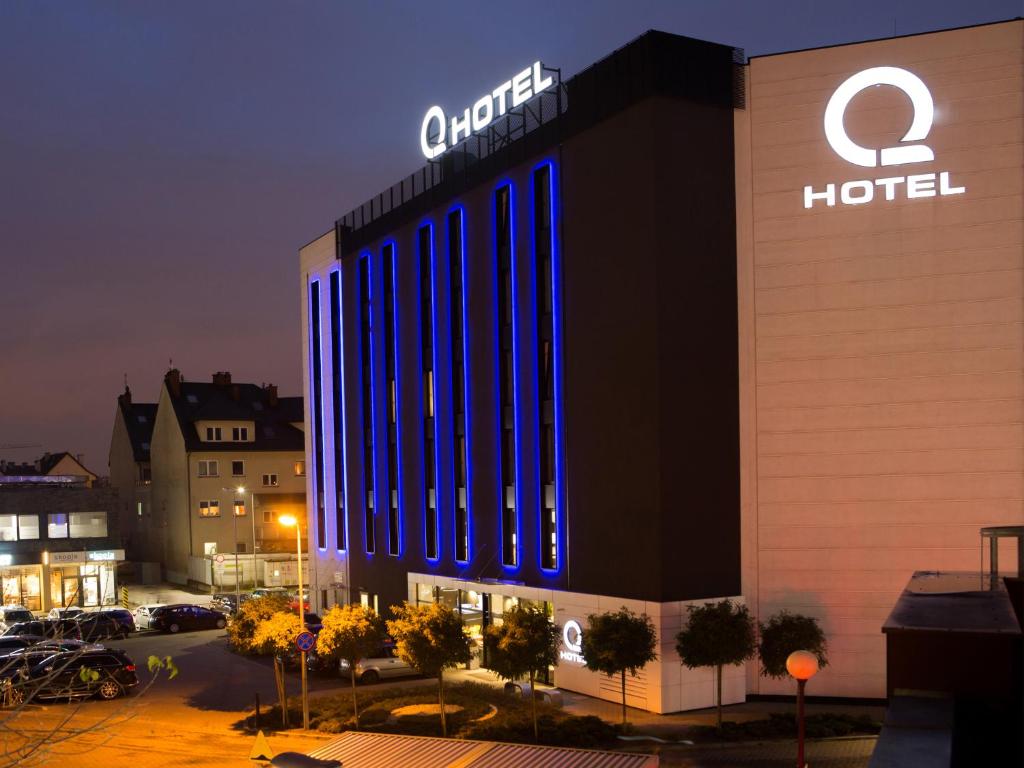
Plac Zabaw
Hotel amenities: restaurant, air conditioning, free Wi-Fi, electric kettles, desks, hairdryers, 24-hour front desk, luggage storage
Nearby: SmaQ Brasserie (restaurant), Radzik Kebab (kebab shop), Vininova (wine store), Kraft Punk Beer Shop (beer store), Good Lood – lody rzemieślnicze (ice cream shop), Warzywniak (greengrocer), Bazarek – owoce, warzywa, kwiaty i miody (fruit and vegetables store), Bella Rosa Kwiaciarnia (florist), Salon masażu Natu (massage therapist), Impol Nova (shopping mall), Toy Store Kimland (toy store)
Within feet:
-
-
- Plac Zabaw
- Wybieg dla Psów
- Miniświat
-
Within 1 mile:
-
-
- Park Kieszonkowy Ogród Filtrowy
-
Within 1.3 miles:
-
-
- Park Kieszonkowy – Ogród Literacki
-
Within 3.9 miles:
-
-
- Rezerwat Skała Kmity Forest
-
Q Hotel Kraków is 3.9 miles from John Paul II International Airport Kraków–Balice.
Approximate cost per night: $91
Hotel Pod Wawelem
pl. Na Groblach 22, Old Town, 31-101
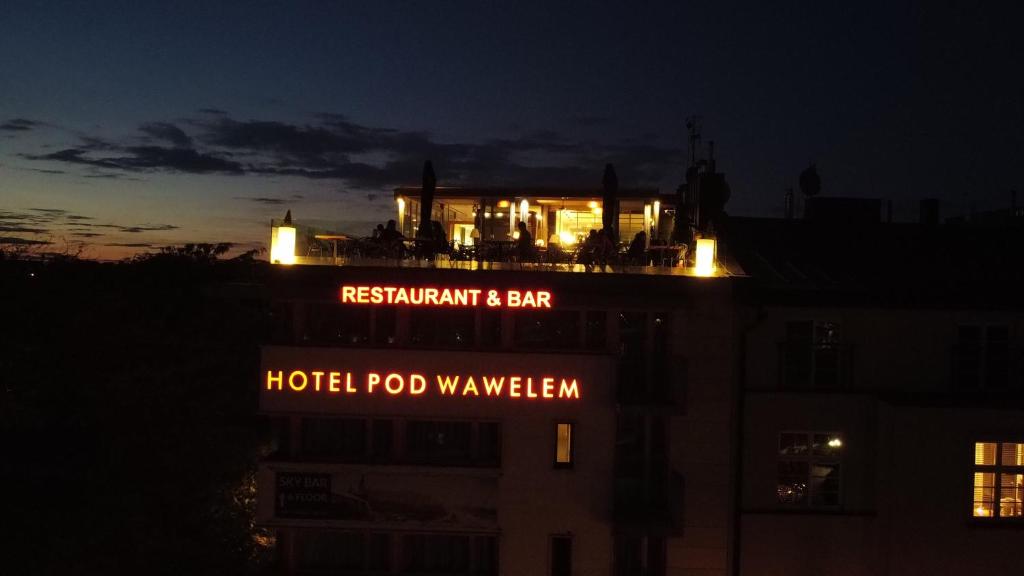
Wawel Royal Castle-State Art Collection
Hotel amenities: restaurant, bar, rooftop terrace with Wawel & Vistula bend views, buffet breakfast, wooden furniture, air conditioning, free Wi-Fi, flat-screen TVs, electric kettles, desks, 24-hour front desk, free welcome drinks, airport shuttle service
Nearby restaurants / bars: Groble Skybar Lounge (restaurant), KROMA (breakfast restaurant), Roof Top Terrace (cocktail bar)
Nearby landmarks: Monument of John Paul II, Wawel Danish Tower, Wawel Bernardine Gate, Zbrojownia, Tadeusz Kościuszko Monument, Brama Wazów, Baszta Sandomierska
Nearby tourist attractions: Napoleon’s Great Army Square, Senatorska Tower, Smok Wodny – figurka, Brama Herbowa, Skarbiec Wawel, Reprezentacyjne Komnaty Królewskie
Nearby misc.: Wawel Castle, Wawel Museum, Cathedral Museum (history museum), Wawel Zaginiony (museum), The Royal Sigismund Bell (monument), Sklep Firmowy i Kawiarnia Wawel (café), KR Bike Rental (bicycle rental service), Bulwary Wisły (hiking area)
Within feet:
-
-
- Wawel Royal Castle-State Art Collection
- Planty
- Dragon’s Den
- Town Hall Tower
-
Within 3 miles:
-
-
- Polish Aviation Museum
-
Within 15 miles:
-
-
- Krakow Valley Ski Lift
-
Hotel Pod Wawelem is 5 miles from John Paul II International Airport Kraków–Balice.
Approximate cost per night (Deluxe Apartment): $266
Vienna House by Wyndham Andel’s Cracow
ul. Pawia 3, Old Town, 31-154
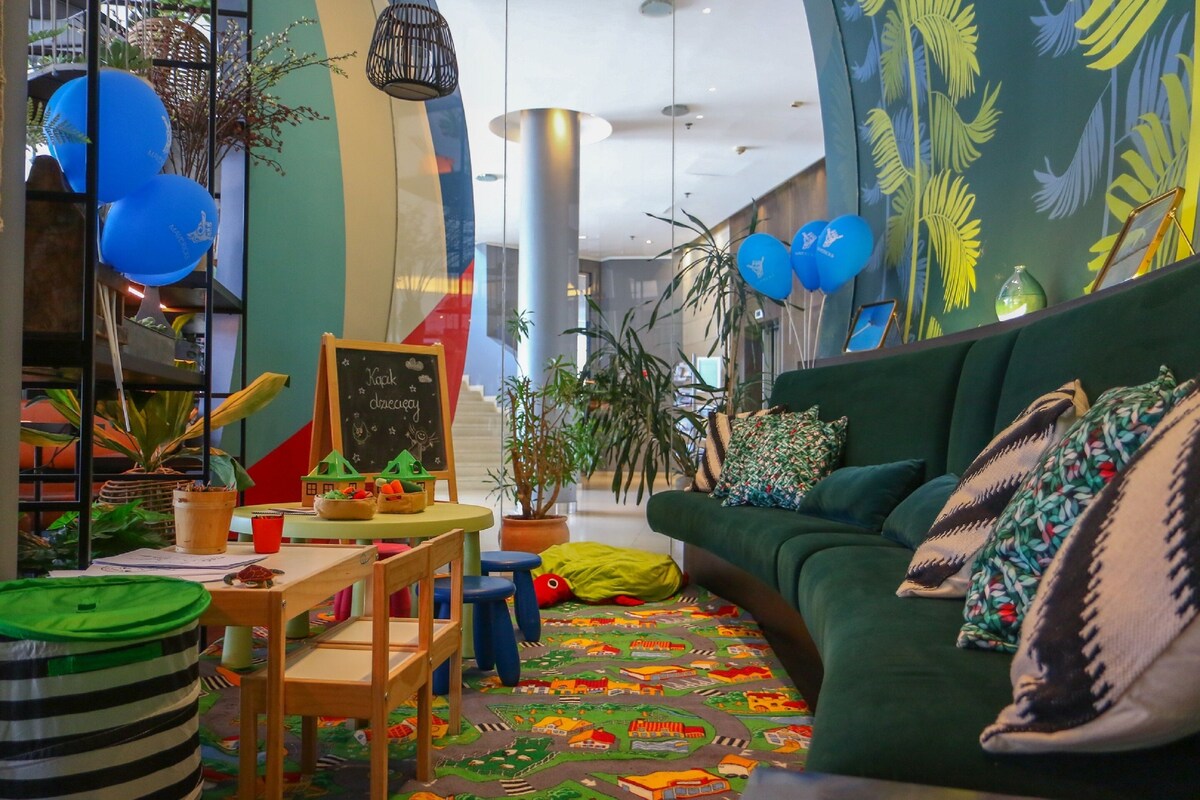
Krakow Central Station
Hotel amenities: restaurant, bar, buffet breakfast, panoramic Old Town views, sauna, fitness center, air conditioning, flat-screen TVs, laptop safe boxes, 24-hour front desk, airport shuttle service
Nearby restaurants / bars: Giga Buła Kraków (American restaurant), Restauracja Polonia (Polish restaurant), Bar Smok Kraków (bar)
Nearby misc.: Lajkonik Piekarnia i Kawiarnia (coffee shop), GORĄCY PRECEL F-WIATRAK (bakery), Pałac Wołodkiewiczów w Krakowie (historical landmark), Legendy Krakowa (tourist attraction)
Within feet:
-
-
- Krakow Central Station
- Plac Zabaw Kulkowo
- Barbican of Krakow
-
Within 1 mile:
-
-
- National Museum of Krakow
-
Within 2.4 miles:
-
-
- Bonarka Forest
-
Vienna House by Wyndham Andel’s Cracow is 6 miles from John Paul II International Airport Kraków–Balice.
Approximate cost per night (Suite): $446
Cost per person (four people): $111
Browar Lubicz Residence
Lubicz 17J, Grzegórzki, 31-503
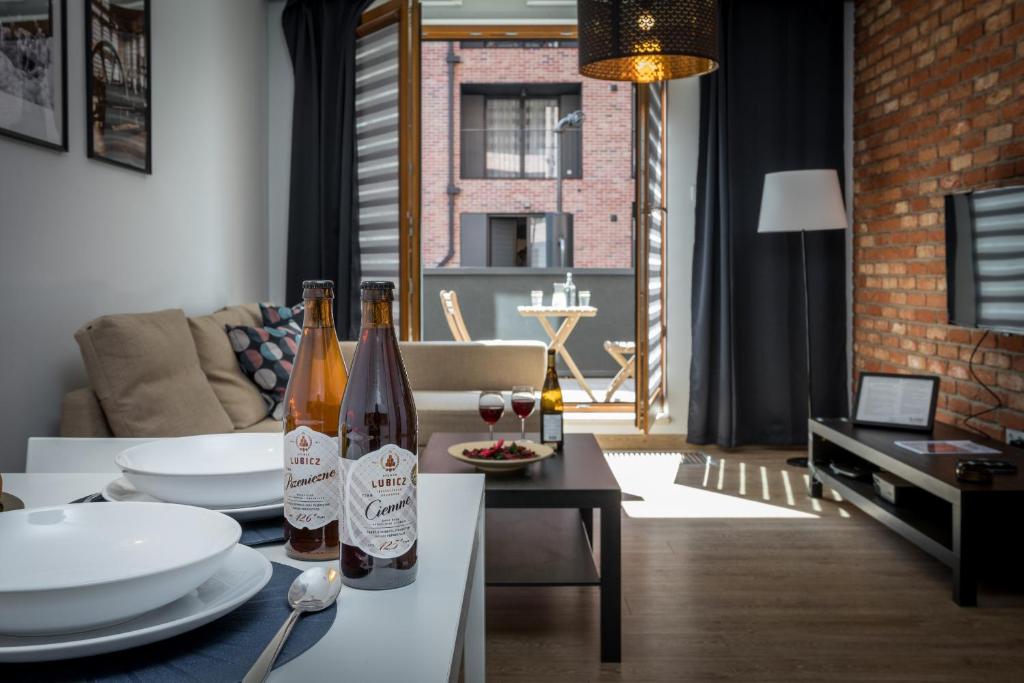
Plac Zabaw Kulkowo
Hotel amenities: restaurant, bar, city views, terrace, parquet floors, air conditioning, free Wi-Fi, flat-screen TVs, fully-equipped kitchenettes, coffee machines, kettles, hairdryers, bike rentals, private parking, paid airport shuttle service
Nearby: INDIVIDUAL: coffee & friends (coffee shop)
Within feet:
-
-
- Plac Zabaw Kulkowo
- Planty
- Barbican of Krakow
- St. Florian’s Gate
-
Within 1.1 miles:
-
-
- National Museum of Krakow
-
Within 46 miles:
-
-
- Katowice Airport
-
Browar Lubicz Residence is 6 miles from John Paul II International Airport Kraków–Balice.
Approximate cost per night (Deluxe One-Bedroom Apartment): $224
Cost per person (four people): $56
Q Hotel Plus Kraków
ul. Wygrana 6, Debniki, 30-311
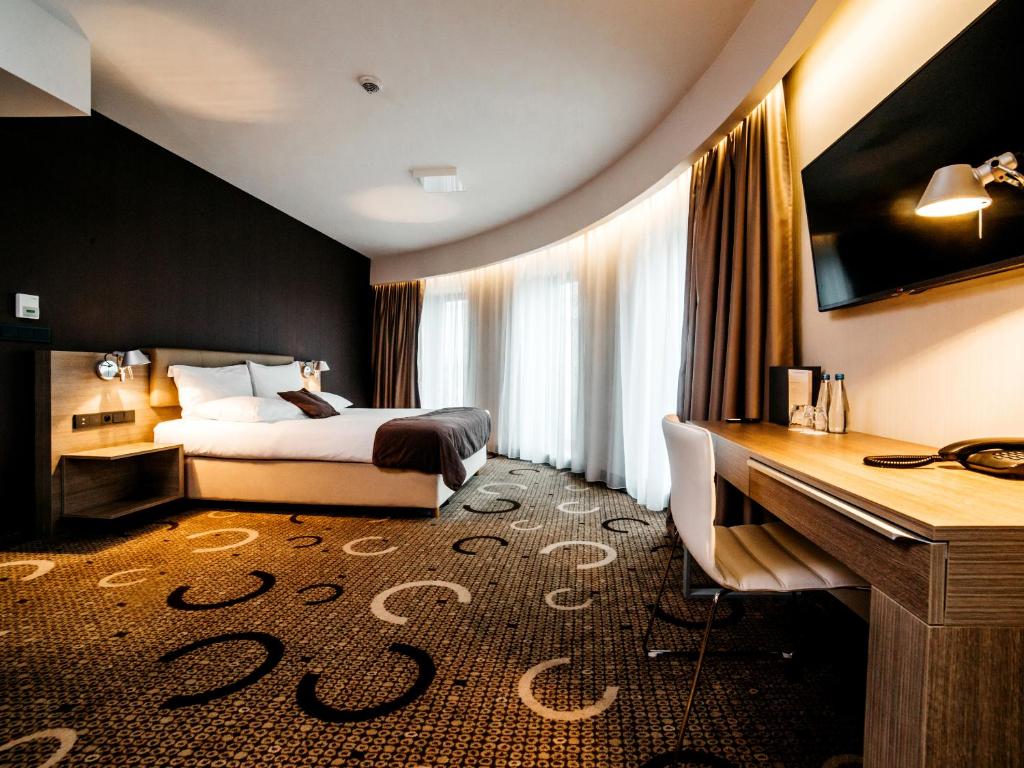
ICE Krakow Congress Centre
Hotel amenities: restaurant, air conditioning, free Wi-Fi, flat-screen TVs, 24-hour front desk, private parking for a surcharge
Nearby restaurants / bars: Qualita (restaurant), Restauracja Pino River (restaurant), Lucky Food Burger Kraków (hamburger restaurant), Ima Sushi Kraków (restaurant), Pan Twardowski Bistro (family restaurant), Q-Hotel Bar
Nearby misc.: Forum Przestrzenie (food court), Lody Tradycyjne Bracia Hodurek (ice cream shop), Łysa Góra (pastry shop), P.R studio (hairdresser), Brixston Barbershop (hair salon), Mommys Home (beauty salon), Retro Strefa Masaż (massage therapist), Fabryka Urody (barber shop), Dworska4 Golf (indoor golf course), Forum Tańca (dance school), Krakow Eye (tourist attraction), Balon widokowy (tourist attraction), Volhynia Boulevard (hiking area), REJSY KRAKÓW – Armada rejsy po Wiśle (cruise agency)
Within feet:
-
-
- ICE Krakow Congress Centre
- Park Dębnicki
- Manggha Museum of Japanese Art and Technology
- Dragon’s Den
- Archeological Museum
-
Within 1 mile:
-
-
- Town Hall Tower
-
Within 1.4 miles:
-
-
- Barbican of Krakow
-
Within 30 miles:
-
-
- Beskid Żywiecki Mountain
-
Q Hotel Plus Kraków is 5 miles from John Paul II International Airport Kraków–Balice.
Approximate cost per night (Junior Suite): $172
ibis Styles Kraków Centrum
Mogilska 53, Grzegórzki, 31-545
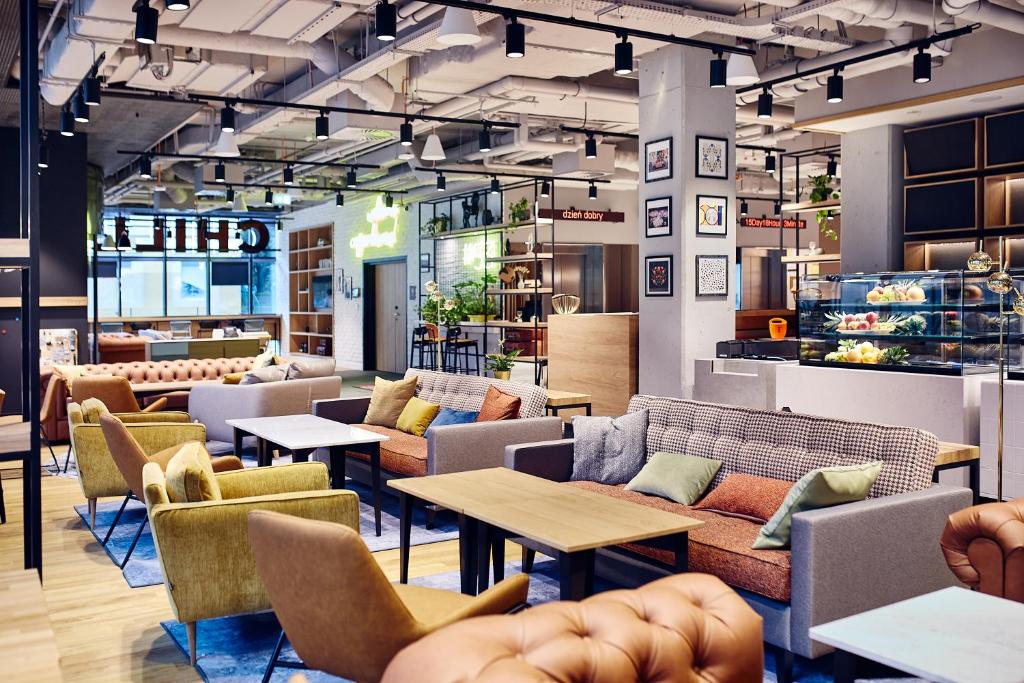
Boisko do Koszykówki
Hotel amenities: restaurant, bar, buffet / continental breakfast, garden, air conditioning, free Wi-Fi, flat-screen TVs, desks, 24-hour front desk with English & Polish-speaking staff, express check-in/out, private parking
Nearby restaurants: Niezły Młyn – Pierogarnia (dumpling restaurant), Chill #53 Cafe & Bar (restaurant), Ramen Shop Kraków (Ramen restaurant)
Nearby misc.: Angelo’s Caffé (café), Dobra Cafe (coffee shop), Luna Nail (nail salon), CYWA Barbershop Mogilska (barber shop), Kartel Barber (barber shop), Kwiaciarnia „Natura i Sztuka” (stones and minerals store), Am Nat Muay Thai Gym (sports club)
Within feet:
-
-
- Boisko do Koszykówki
- The Botanic Garden of the Jagiellonian University
- Park Kieszonkowy Ogród Ptasi
-
Within 1 mile:
-
-
- Krakow Central Station
-
Within 1.3 miles:
-
-
- Polish Aviation Museum
-
Within 11 miles:
-
-
- Siepraw Ski Lift
-
ibis Styles Kraków Centrum is 7 miles from John Paul II International Airport Kraków–Balice.
Approximate cost per night: $86
Mercure Krakow Stare Miasto
Pawia 18 B, Old Town, 31154
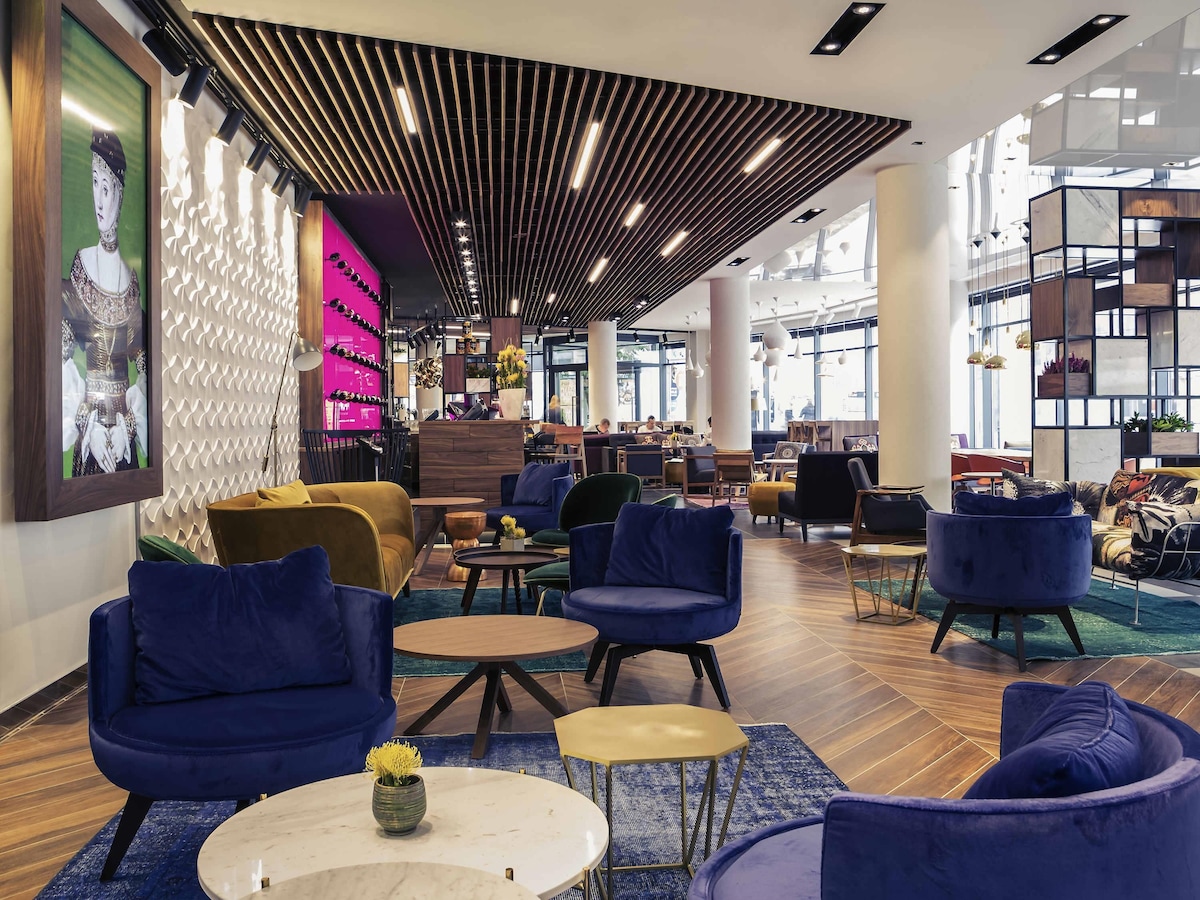
Krakow’s City Walls
Hotel amenities: restaurant, buffet, à la carte or vegetarian breakfast, city views, terraces, fitness center, air conditioning, free Wi-Fi, flat-screen TVs, safety deposit boxes, desks, 24-hour front desk, bike rentals, private parking, express check-in/out, paid airport shuttle service
Nearby restaurants / bars: La Stazione (Italian restaurant), Corn Dog Bar (bistro), Royal Curry (Indian restaurant), KORBA Piwo Kawiarnia (bar)
Nearby misc.: Lock House Zacisze (escape room center), Lind (chocolate store), Bright Look (hairdresser), Olimp Store (vitamins and supplements store), Hebe (cosmetics store), Perfumeria (perfume store), Clodi (lingerie store), Tommy Hilfiger (clothing store)
Within feet:
-
-
- Krakow’s City Walls
- Plac Zabaw Kulkowo
- Park Strzeleckiego
- Czartoryski Museum
-
Within 1.5 miles:
-
-
- Schindler Factory Museum
-
Within 15 miles:
-
-
- Krakow Valley Ski Lift
-
Mercure Krakow Stare Miasto is 6 miles from John Paul II International Airport Kraków–Balice.
Approximate cost per night: $182
Hotel Polski Pod Białym Orłem
ul. Pijarska 17, Old Town, 31-015
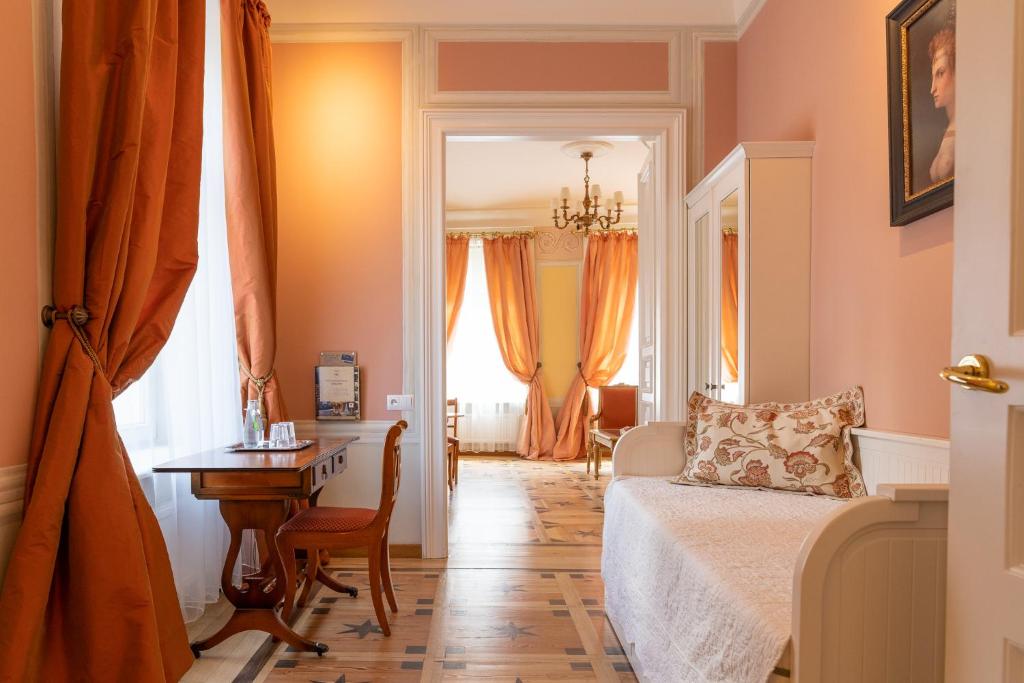
St. Florian’s Gate
Hotel amenities: restaurant, free Wi-Fi, flat-screen TVs, tea / coffee making facilities, mini-bars, safes, 24-hour front desk, concierge service
Nearby restaurants / bars / pubs: Restauracja Piwnica pod Złotą Pipą (Traditional restaurant), Stodola 47 Restaurant, Trattoria Degusti (Italian restaurant), URARA (sushi restaurant), M22 Burger, Pijalnia wódki i piwa (bar), Beer House, Dobry Kumpel Pub, Swieta Krowa (brewpub)
Nearby misc.: ExitRoom ™, Klub Społem Deluxe (live music venue), Spolem Deluxe (live music venue), Karmello Chocolatier (café), Costa Coffee (café), Internet Garinet Club (café), Zarowka Cafe, Cafe Camelot, Manekin Cafe, Farewell to Africa (coffee store), Sklep (grocery store), ThaiBali Garden Salon Masażu Tajskiego (Thai massage therapist), Thai Bali Massage, Antiquarian Bookshop, ORSAY (clothing store), Flying Tiger Copenhagen (gift shop), Dom Jana Matejki (museum), Walkative! FREE walking TOUR Kraków (sightseeing tour agency), Rock’n’Roll Tattoo and Piercing Kraków (tattoo shop), Euphora Tattoo & Piercing, Kult Tattoo, Kantor (currency exchange)
Within feet:
-
-
- St. Florian’s Gate
- Jan Matejko’s House
- Cloth Hall
- Main Market Square
-
Within 2.4 miles:
-
-
- Polish Aviation Museum
-
Within 46 miles:
-
-
- Katowice Airport
-
Hotel Polski Pod Białym Orłem is 6 miles from John Paul II International Airport Kraków–Balice.
Approximate cost per night): $307
Mercure Krakow Fabryczna City
Fabryczna 13, Grzegorzki, 31553

The Botanic Garden of the Jagiellonian University
Hotel amenities: restaurant, bar, buffet breakfast, indoor swimming pool, hot tub, fitness center, air conditioning, free Wi-Fi, flat-screen TVs, electric tea pots, desks, hairdryers, 24-hour front desk, concierge service, luggage storage space, private parking, airport transportation
Nearby restaurants / bars: Pino Italia (Italian restaurant), Destilo (restaurant), Restauracja Nowa Wytwórnia (restaurant), Dozo Asia Food & Bar (restaurant), Utopia Bar (cocktail bar)
Nearby misc.: Fabryczna 13 (food court), Vodka Factory (museum), CKF13 (conference center), Ciao Factory (recreation center)
Within feet:
-
-
- The Botanic Garden of the Jagiellonian University
- Bungee Jumping
- Park Grzegórzecki
-
Within 1.2 mile:
-
-
- Schindler Factory Museum
-
Within 1.3 miles:
-
-
- Polish Aviation Museum
-
Within 1.7 miles:
-
-
- Wawel Royal Castle
-
Mercure Krakow Fabryczna City is 8 miles from John Paul II International Airport Kraków–Balice.
Approximate cost per night (Superior King Suite): $233
Cost per person (three people): $77
Ventus Rosa Boutique Aparthotel
15 Wielopole, Old Town, 33-332
Town Hall Tower
Hotel amenities: air conditioning, flat-screen TVs, fully-equipped kitchenettes, coffee machines, kettles, hairdryers, buffet / Full English/Irish breakfast, paid airport shuttle service
Nearby restaurants: Szamot na Wielopolu (restaurant), GOGO Burger (hamburger restaurant), The Masala Rolls (Indian restaurant), Queen of Kebab’s (kebab shop), Mazaya Falafel (Vegan restaurant), Vegab (Vegan restaurant), Mo-ja Café & Bistro (brunch restaurant)
Nearby misc.: Shine Club Kraków (live music venue), Artisan Strudel (café), Coffee Kiosk Krakow (café), Kawiarnia i piekarnia Sofia (bakery), PodwaFelskie Bubble Waffle (ice cream shop), Tao Tao SPA Kraków (massage therapist), Face & Body Institute (skin care clinic), Embe Piercing Kraków (body piercing shop), Krakowski Dom Aukcyjny ® (auction house)
Within feet:
-
-
- Town Hall Tower
- Planty Daszyńskiego
- Europacare24 sp. z o.o.
- Archeological Museum
-
Within 7 miles:
-
-
- Wieliczka Salt Mine
-
Ventus Rosa Boutique Aparthotel is 6 miles from John Paul II International Airport Kraków–Balice.
Approximate cost per night (Exclusive Two Level Apartment): $271
Cost per person (four people): $67
Metropolitan Boutique Hotel
ul. Berka Joselewicza 19, Old Town, 31-031
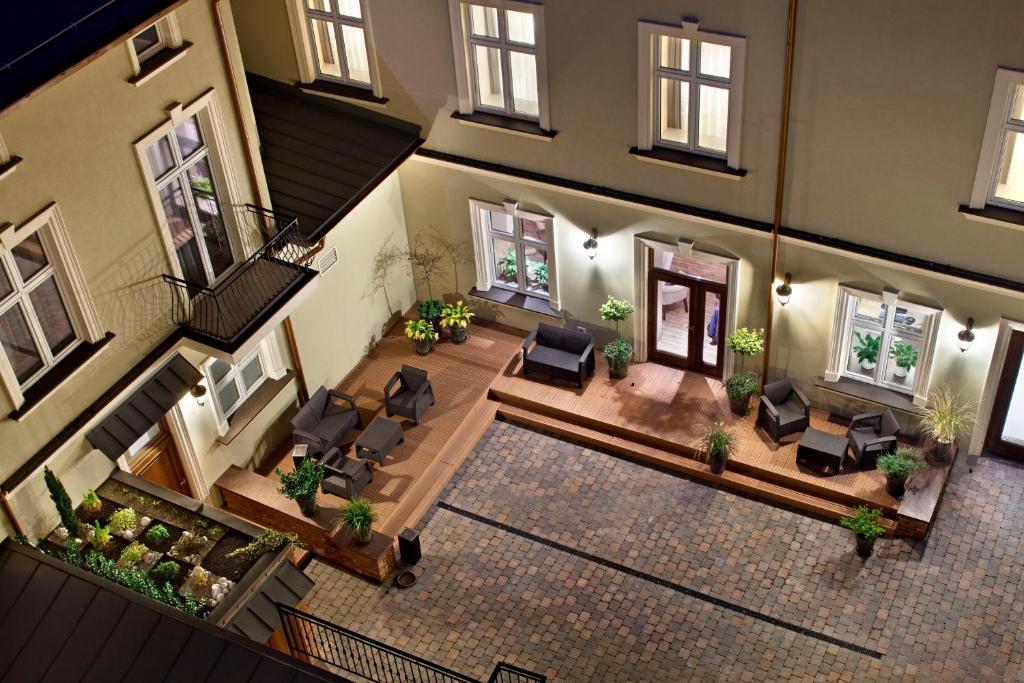
Schindler Factory Museum
Hotel amenities: restaurant, lobby bar, fitness center, modern designs, air conditioning, free Wi-Fi, flat-screen TVs, private bathrooms with seasonal underfloor heating, 24-hour front desk
Nearby restaurants: Fab Fusion Restaurant (fusion restaurant), Indus Tandoor (Indian restaurant)
Nearby misc.: The Moon Lounge Bar & Shisha (hookah bar), SEMPRE Taniec & Fitness (dance school), Piercing Room (body piercing shop), Sklep Wędkarski Głowatka (fishing store)
Within feet:
-
-
- Schindler Factory Museum
- Wawel Royal Castle
- Archeological Museum
- Town Hall Tower
-
Within 1.1 mile:
-
-
- National Museum of Krakow
-
Within 2.5 miles:
-
-
- Polish Aviation Museum
-
Metropolitan Boutique Hotel is 7 miles from John Paul II International Airport Kraków–Balice.
Approximate cost per night (luxury apartment): $230
Hotel H15 Luxury Palace
ul. Św. Jana 15, Old Town, 31-017
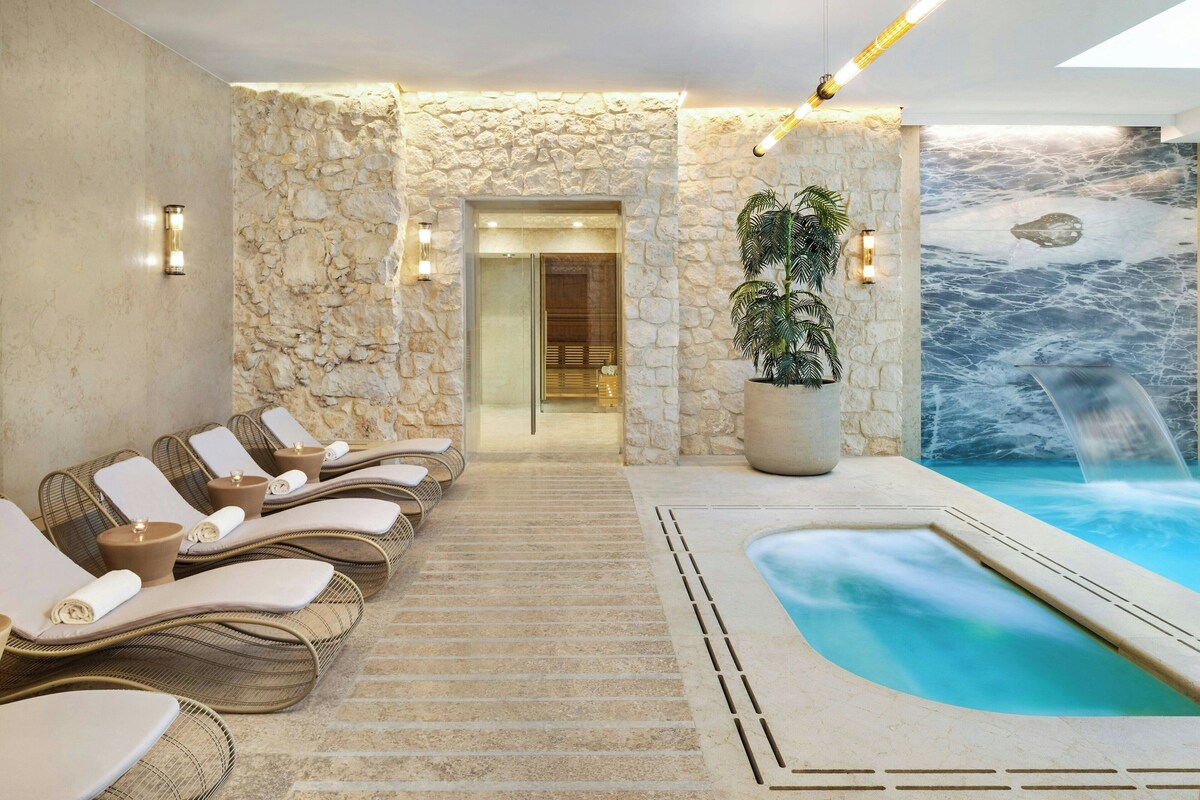
National Museum of Krakow
Hotel amenities: restaurant, bar, buffet breakfast, garden, indoor pool, sauna, hot tub, fitness center, air conditioning, free Wi-Fi, flat-screen TVs, coffee machines, mini-bars, safety deposit boxes, desks, 24-hour front desk, express check-in/out
Nearby restaurants: Artesse Restaurant, Farina Restaurant, Brasserie L’Olympique, Gossip Cafe (breakfast restaurant)
Nearby misc.: Czartoryski Museum, Leonardo Cafe, Patisserie Petit Délice (café), Herbaty Świata (tea store), Salon Fryzjerski E. Przewłocka (hair salon), Les Perles (nail salon), ANNA POLLEN buty w Krakowie (shoe store), FOGGY KRAKOW Shisha & Cocktail Bar (hookah bar)
Within feet:
-
-
- National Museum of Krakow
- Czartoryski Museum
- Jan Matejko’s House
- Barbican of Krakow
-
Within 1 mile:
-
-
- Manggha Museum of Japanese Art and Technology
-
Hotel H15 Luxury Palace is 5 miles from John Paul II International Airport Kraków–Balice.
Approximate cost per night (Suite): $474
Cost per person (three people): $158
Wyndham Grand Krakow Old Town
ul. Florianska 28 , Old Town, 31-020
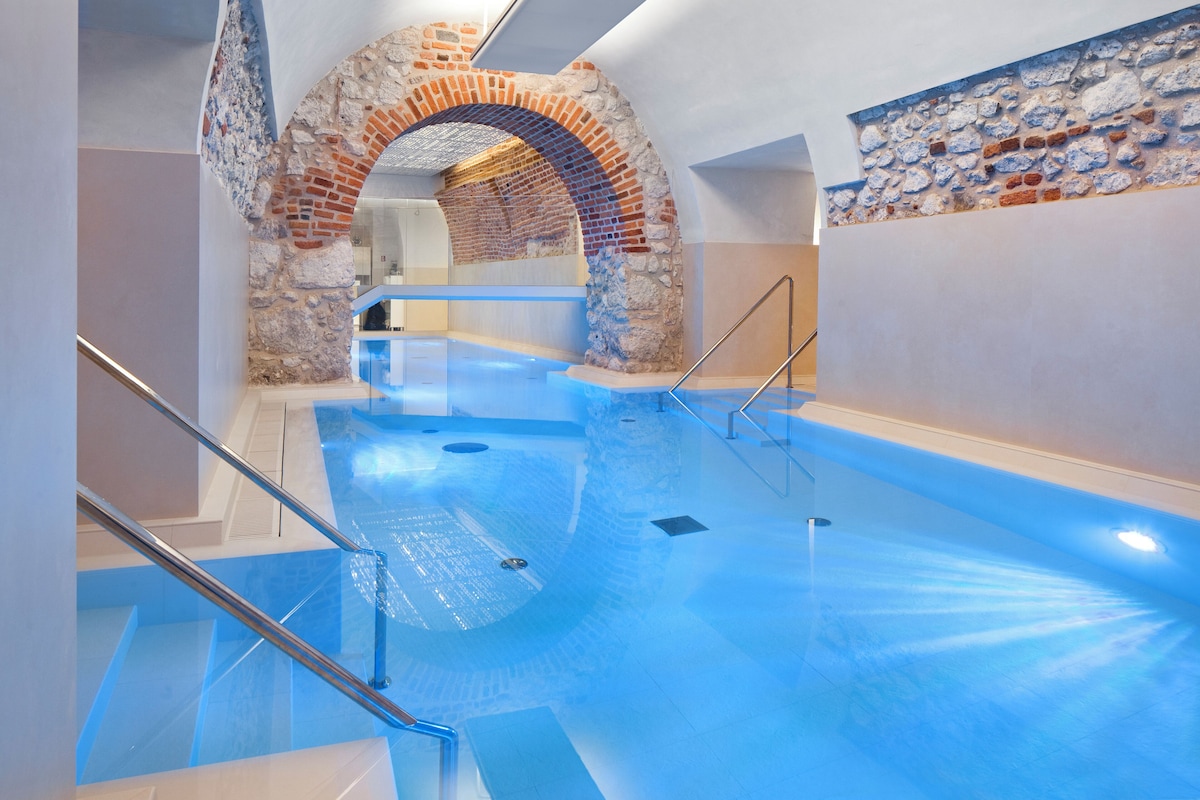
Jan Matejko’s House
Hotel amenities: restaurant, bar, indoor pool, spa, sauna, hot tub, fitness center, air conditioning, free Wi-Fi, flat-screen TVs, desks, 24-hour front desk, bike / car rental service, private parking
Also in the area: Hotel Polski Pod Białym Orłem
Within feet:
-
-
- Jan Matejko’s House
- Czartoryski Library
- Lost Souls Alley
- Krakow’s City Walls
- Julius Slowacki Theatre
-
Within 1.5 miles:
-
-
- Schindler Factory Museum
-
Within 1.4 miles:
-
-
- National Museum of Krakow
-
Hotel Unicus Palace is 6 miles from John Paul II International Airport Kraków–Balice.
Approximate cost per night (King Suite Deluxe): $424
Cost per person (four people): $106
Fragola Apartments Old Town
Św. Jana 2 (Reception), Old Town, 31-018
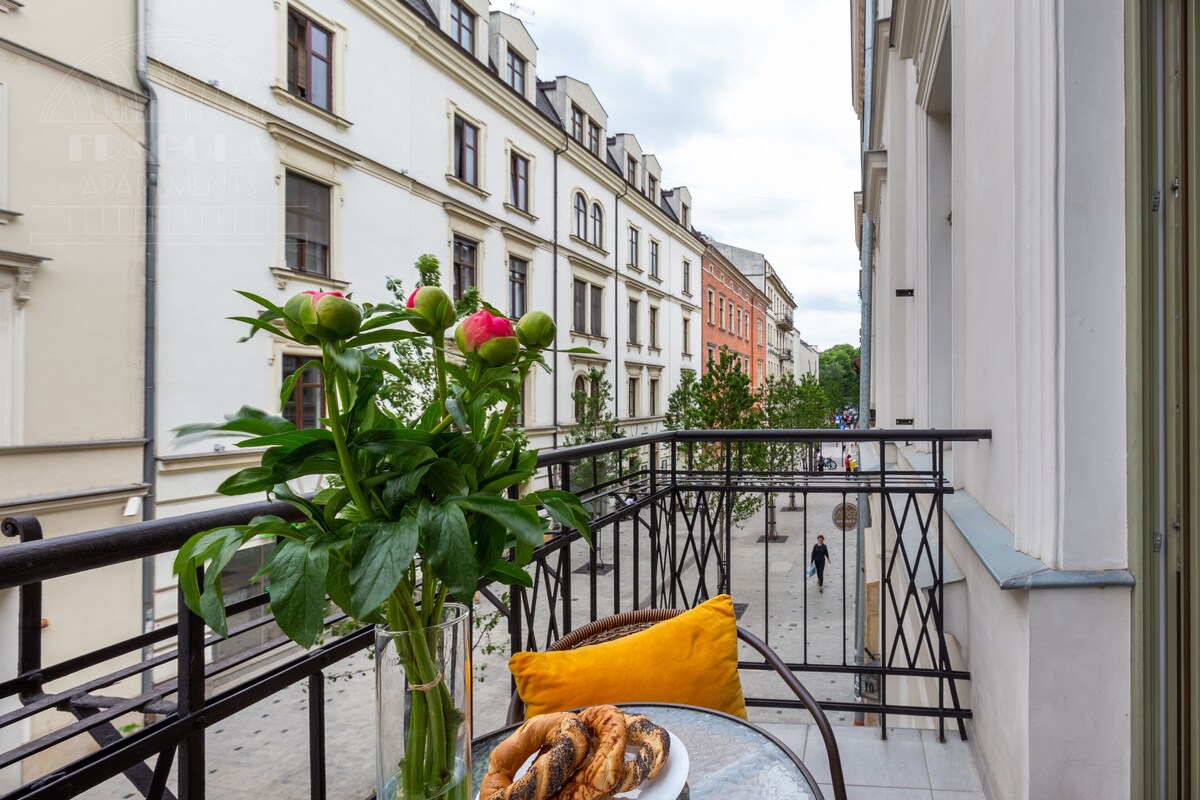
Lost Souls Alley
Apartment amenities: free Wi-Fi, flat-screen TVs, fully-equipped kitchens
Nearby restaurants / bars: Morskie Oko (Polish restaurant), Scandale Royal (Polish restaurant), Pino (modern European restaurant), Charlotte (French restaurant), Restauracja pod Gruszką (restaurant), Buffalo Restaurant, Restauracja Sławkowska 1 (meat dish restaurant), Krowarzywa Vegan Burgers (vegan restaurant), Bunkier Cafe (breakfast restaurant), Caffe Zaćmienie Bar, U Jožina (bar), Winosfera Plac Szczepański (wine bar)
Nearby misc.: Betel (night club), Gold Club (night club), Muzeum Narodowe (art museum), Amber Museum (natural history museum), Bunkier (contemporary art gallery), Rio. coffee shop (café), Kawiarnia Skinny Creme w Krakowie (coffee shop), Salon Firmowy Loake (shoe store), Kurant (book store), Grosz (currency exchange service), Cruising Krakow Bike and Segway Tours & Rentals, 9th Circle (tattoo shop), Discover Cracow (tourist center), Plac Szczepański (tourist attraction), InfoKraków (tourist information center), Pod Jeleniem House (historical landmark), Diamond Gentlemen’s Club
Within feet:
-
-
- Lost Souls Alley
- Historical Museum of Krakow
- Cloth Hall
- Main Market Square
-
Fragola Apartments is 5 miles from John Paul II International Airport Kraków–Balice.
Approximate cost per night (Apartament Lucky 13): $563
Cost per person (thirteen people): $43
Art Suites Boutique Hotel
Mieszczańska 10, Debniki, 30-337
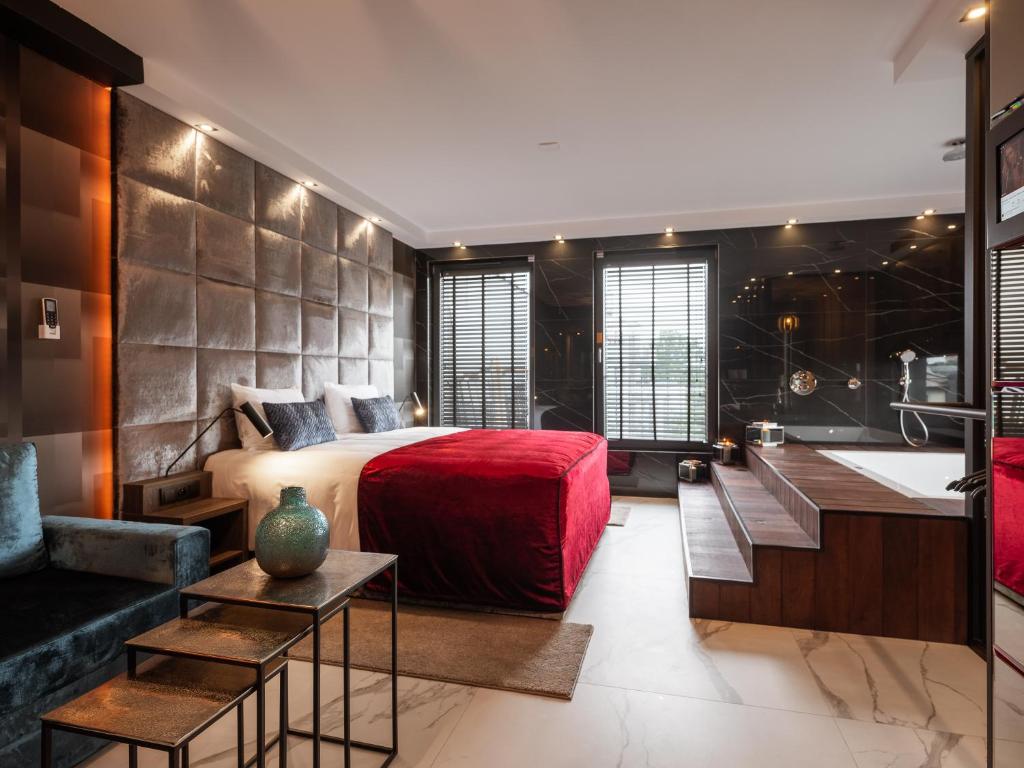
Park Kieszonkowy Pierwszy Ogród
Hotel amenities: air conditioning, free Wi-Fi, flat-screen TVs, kitchenettes, coffee machines, luxury Prija toiletries, hairdryers, underground parking, airport shuttle service
Nearby: Restauracja A’Bracciate Pasta & Wine (Italian restaurant), Hair by Kot HAIR STYLISTS (hair salon)
Within feet:
-
-
- Park Kieszonkowy Pierwszy Ogród
- Manggha Museum of Japanese Art and Technology
- Park Skały Twardowskiego
- Ethnographic Museum in Kraków
-
Within 1 mile:
-
-
- National Museum of Krakow
-
Within 1.1 miles:
-
-
- Adam Mickiewicz Monument
-
Within 1.5 miles:
-
-
- Kraków Bonarka Train
-
Art Suites Boutique Hotel – Krakow Center is 5 miles from John Paul II International Airport Kraków–Balice.
Approximate cost per night (Penthouse Suite): $1,265
Cost per person (four people): $316
Hotel Stary
ul. Szczepańska 5, Old Town, 31-011
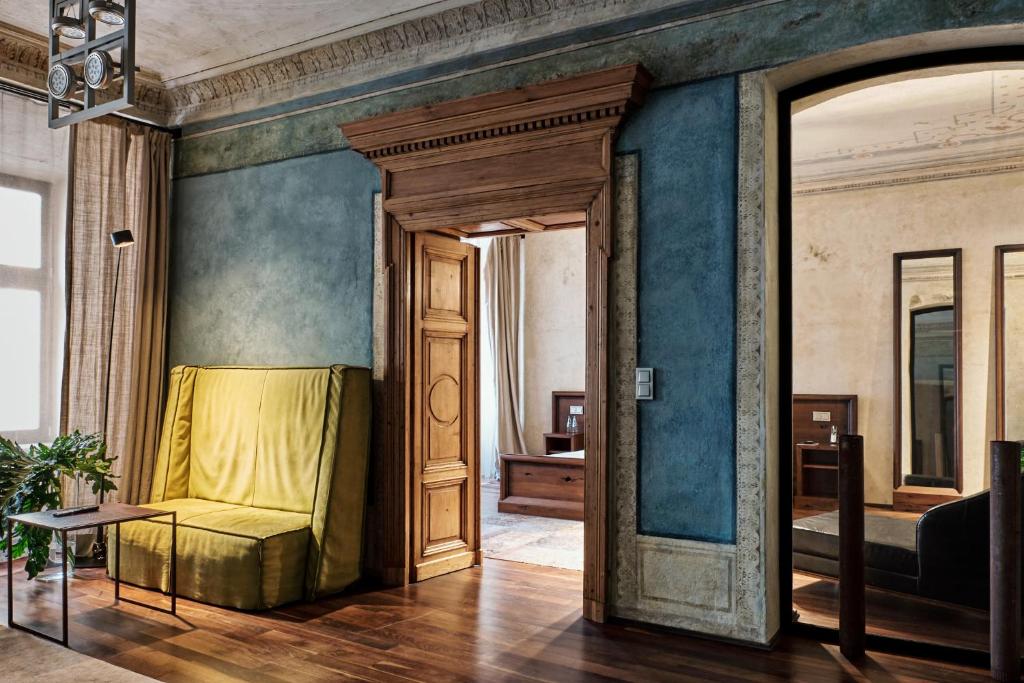
Cloth Hall
Hotel amenities: restaurant, club, seasonal rooftop terrace bar with Main Market & Old Town views, traditional Polish breakfast, balconies, 2 swimming pools with swim jets, spa, sauna, steam bath, gym, air conditioning, free Wi-Fi, flat-screen TVs, spa baths, mineral water, newspapers
Also in the area: Fragola Apartments
Within feet:
-
-
- Cloth Hall
- Museum of Krakow
- Old Theatre
- Piano Nobile Gallery
- Main Market Square
-
Within 7.7 miles:
-
-
- Wieliczka Salt Mine
-
Hotel Stary is 6 miles from John Paul II International Airport Kraków–Balice.
Approximate cost per night (Luxury Suite): $443
Amber Design Residence
ul. Sw. Marka 35, Old Town, 31-024
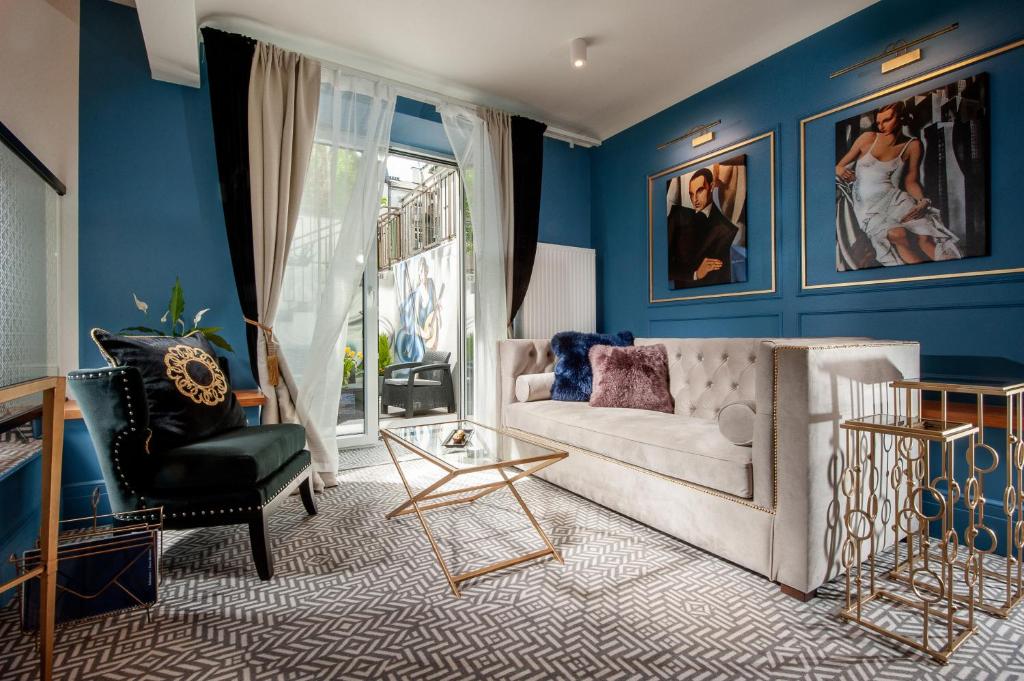
Slowacki Theatre
Apartment amenities: bright / modern interiors, vibrant artwork, air conditioning, flat-screen TVs, tea / coffee facilities
Nearby restaurants / bars / pubs: MooMoo (restaurant), Nota Resto (modern European restaurant), Zen Sushi, Milkbar Tomasza (breakfast restaurant), House of Beer (bar), Metrum Rooftop Restobar, BeerGallery – Luxury (bar), Relaks Craft Beer & food, Fortuna and Friends (bar), Sticky Fingers (pub)
Nearby misc.: Strefa (live music venue), Cakester Cafe, Witaminka (grocery store), Gentleman Barber, Military Store, Akademia Muzyczna (music school), Tourism Idea (tour operator)
Within feet:
-
-
- Slowacki Theatre
- Saint Cross Church
- Jan Matejko’s House
- Autosave Car Park
- Lost Souls Alley
-
Within 2.6 mile:
-
-
- Krakow Aqua Park
-
Amber Design Residence is 6 miles from John Paul II International Airport Kraków–Balice.
Approximate cost per night (Luxury One-Bedroom Apartment): $420
Topolowa Residence LoftAffair Collection
Topolowa 27, Grzegórzki, 31-506
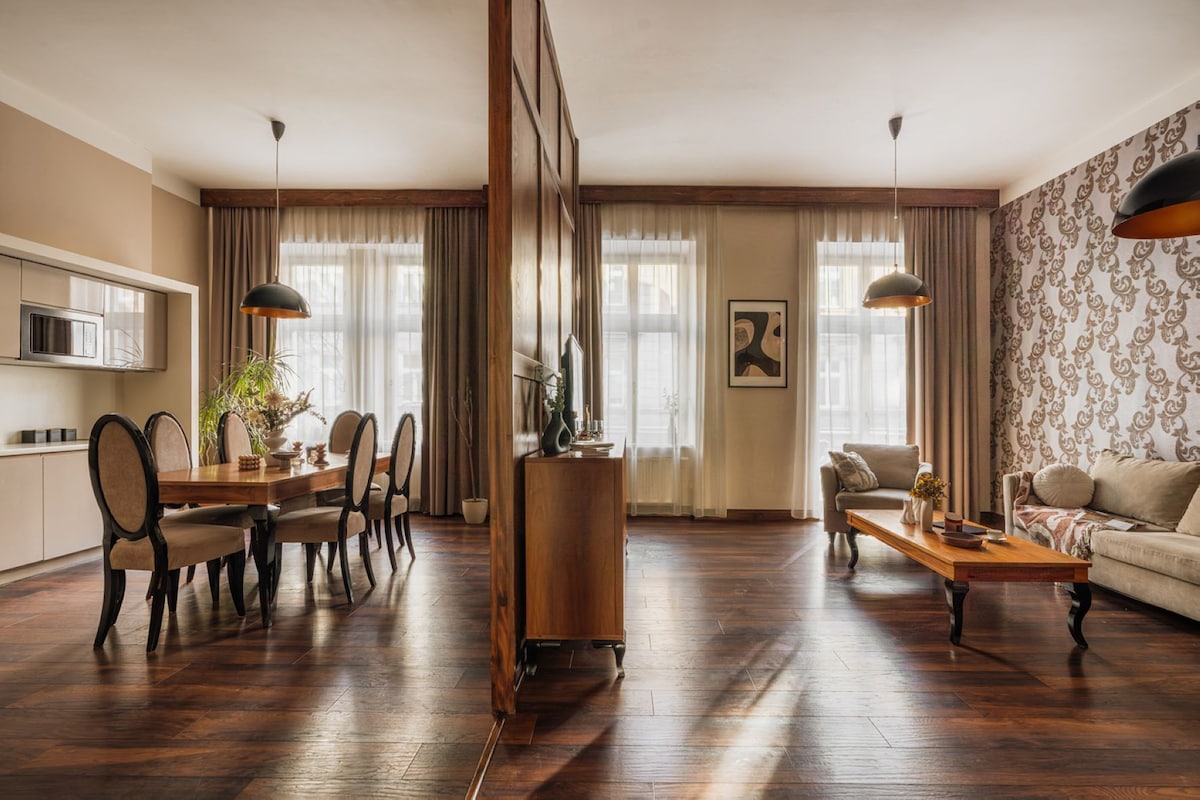
The Krakow Opera
Apartment amenities: free Wi-Fi, flat-screen TVs, kitchenettes, safes, bathrobes
Nearby restaurants / bars: Ciao ragazzi (Italian restaurant), Pizza Garden (pizza restaurant), Novum Bistro (bistro), Mañana (tapas bar), Schizofrenia Café (bar)
Nearby misc.: Boardowa (café), Green Caffè Nero (café), Wesoła Cafe, ONUTS (donut shop)
Within feet:
-
-
- The Krakow Opera
- Park Strzelecki
- The Botanic Garden of the Jagiellonian University
- St. Florian’s Gate
- Jan Matejko’s House
-
Within 1.4 miles:
-
-
- National Museum of Krakow
-
Within 1.8 miles:
-
-
- Polish Aviation Museum
-
Within 7 miles:
-
-
- Wieliczka Salt Mine
-
Topolowa Residence LoftAffair Collection is 8 miles from John Paul II International Airport Kraków–Balice.
Approximate cost per night (Executive Apartment): $346
Cost per person (four people): $86
K4 Aparthotel Krakow
ul. Krótka 4, Old Town, 31-149
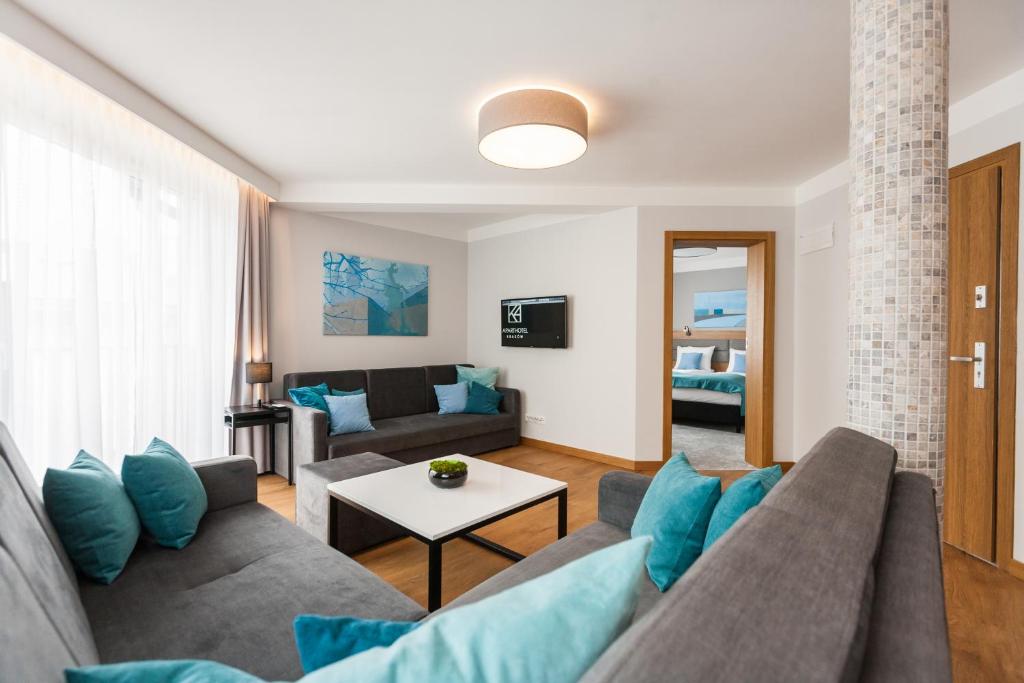
Czartoryski Museum
Hotel amenities: restaurant, air conditioning, free Wi-Fi, flat-screen TVs, kitchens, hairdryers
Nearby: Restauracja Atrium (restaurant), Rock’n’Ink Tattoo & Piercing (tattoo shop)
Within feet:
-
-
- Czartoryski Museum
- Barbican of Krakow
- Krakow’s City Walls
- St. Florian’s Gate
- Cloth Hall
-
Within 1.7 miles:
-
-
- Schindler Factory Museum
-
Within 8 miles:
-
-
- Wieliczka Salt Mine
-
K4 Aparthotel Krakow is 7 miles from John Paul II International Airport Kraków–Balice.
Approximate cost per night (One-Bedroom Apartment Kitchenette): $444
Cost per person (seven people): $63
Feniks Fragola Apartments
2 Świętego Jana, Old Town, 31-018
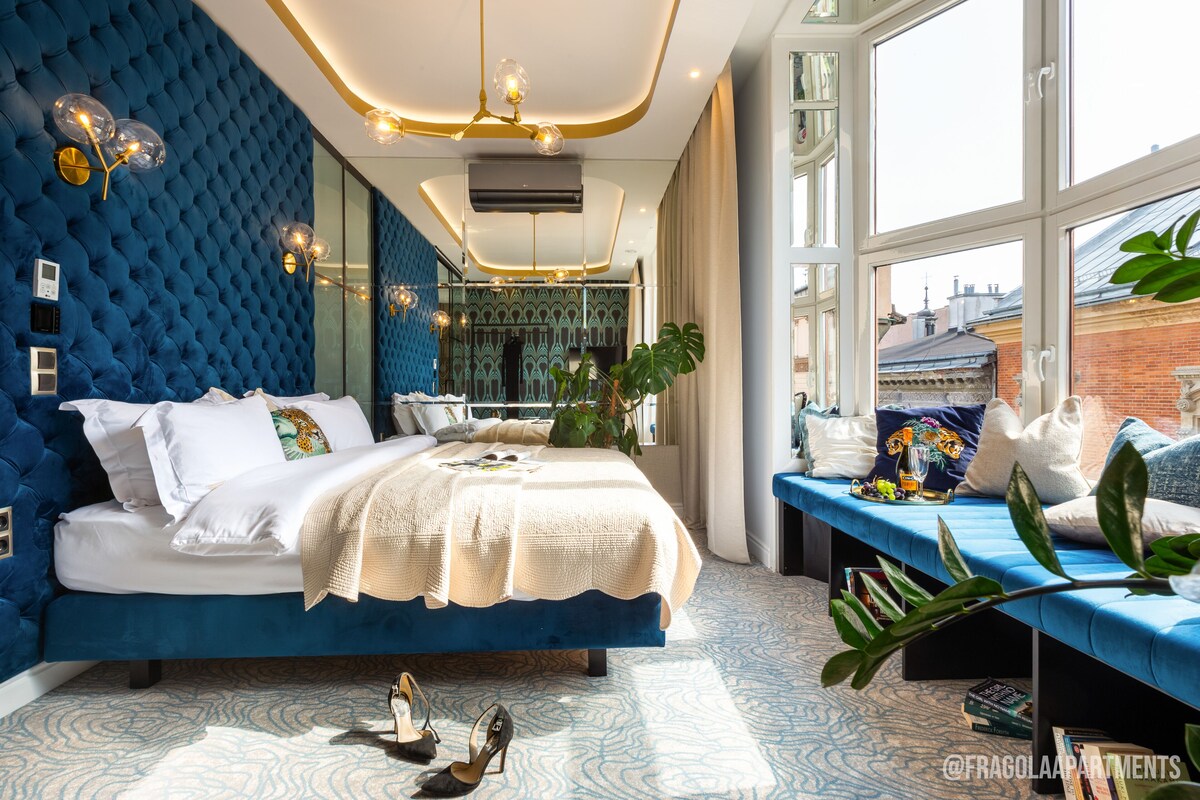
Europacare24 sp. z o.o.
Apartment amenities: balconies, air conditioning, free Wi-Fi, flat-screen TVs, kitchenettes, kettles, cold catered breakfast
Also in the area: Fragola Apartments
Within feet:
-
-
- Europacare24 sp. z o.o.
- Cloth Hall
- Main Market Square
- Jan Matejko’s House
-
Within 1.3 miles:
-
-
- Kraków Zabłocie Train
-
Within 11 miles:
-
-
- Siepraw Ski Lift
-
Feniks Fragola Apartments is 5 miles from John Paul II International Airport Kraków–Balice.
Approximate cost per night (2-Bedroom Apartment): $444
Cost per person (four people): $63
Bachleda Luxury Hotel
Plac Kossaka 6, Old Town, 31-106
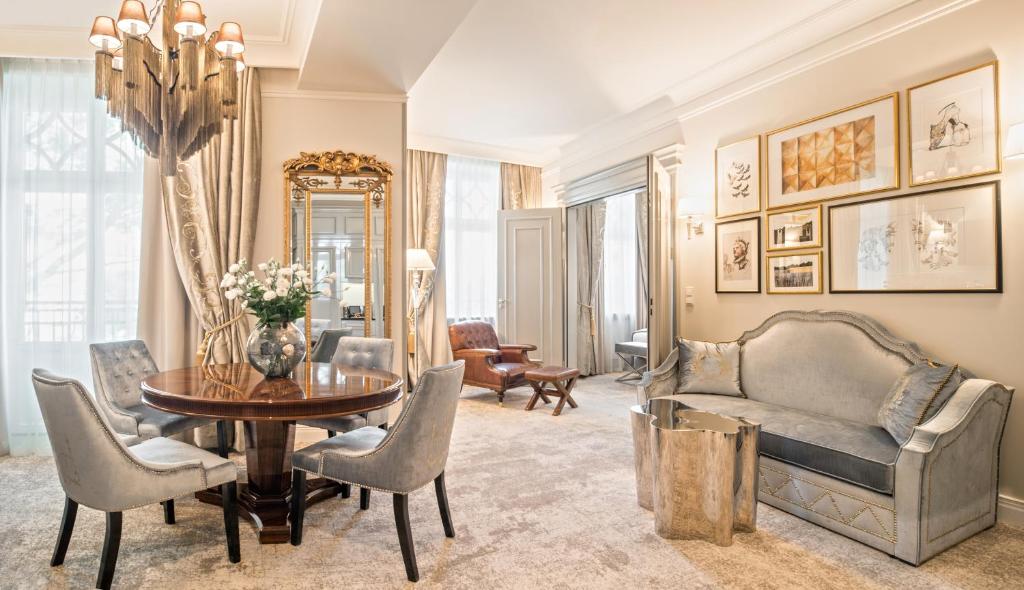
Planty Park
Hotel amenities: restaurant, Opus Lounge Bar, buffet breakfast, indoor pool with hydro massage, spa, sauna, caldarium, fitness center, flat-screen TVs, coffee machines, safes, Christian Lacriox cosmetics
Nearby restaurants: Oranzeria Cafe Restaurant, Sette (southern Italian restaurant)
Nearby misc.: Cukiernia LUMO (pastry shop), Kocyk (grocery store), BikeTrip (bike rental service), Notary Public Office of Agnieszka Kozek
Within feet:
-
-
- Planty Park
- Potocka Gallery
- 20th Century Polish Art Gallery
- Archaeological Museum
- Dragon’s Den
-
Within 1.2 miles:
-
-
- Krakow Central Station
-
Within 7.6 miles:
-
-
- Wieliczka Salt Mine
-
Bachleda Luxury Hotel Krakow MGallery Hotel Collection is 6 miles from John Paul II International Airport Kraków–Balice.
Approximate cost per night (Executive King Suite): $970
Balthazar Design Hotel
ul. Grodzka 63, Old Town, 31-001
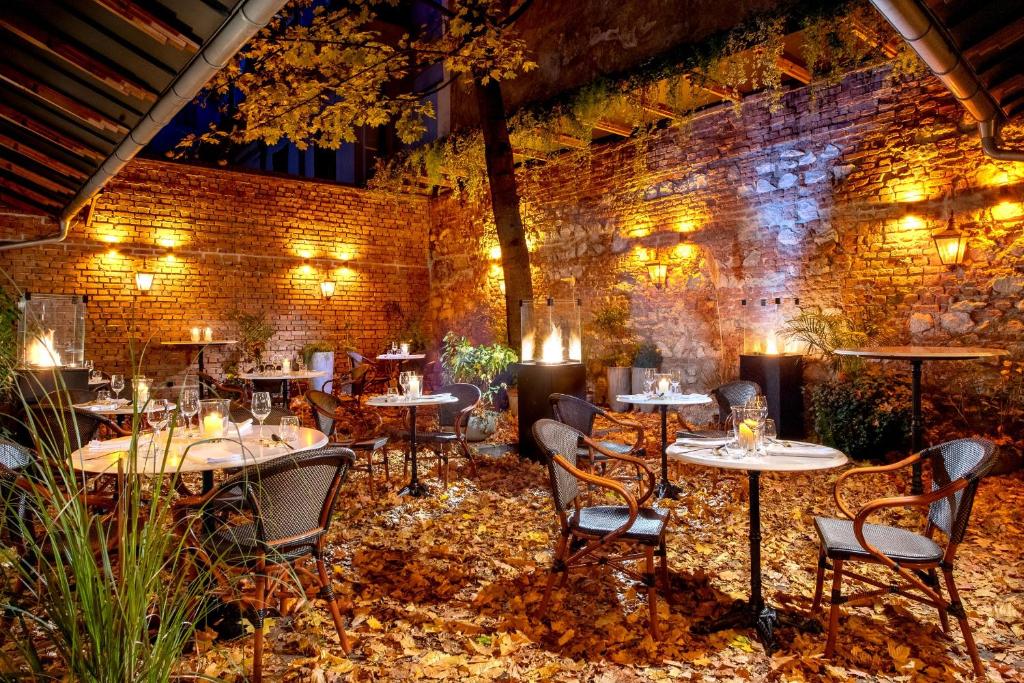
Main Market Square
Hotel amenities: restaurant, la carte breakfast, garden, air conditioning, free Wi-Fi, flat-screen TVs, coffee machines, hairdryers, 24-hour front desk, concierge & ticket service, private parking
Nearby restaurants / pubs: La Campana (fine dining restaurant), Fiorentina Dom Polski (Polish restaurant), Restaurant Corleone (Italian restaurant), Pizzeria Three Papryczki, Pod Wawelem (restaurant), Pod Baranew (restaurant), Miod Malina (restaurant), Pod Aniolami (restaurant), Smak Ukrainski (restaurant), Sushi 77, Pontifical University, Art (restaurant), Corse (restaurant), Bon Ami (bistro), Rock Shot (pub)
Nearby misc.: MNK The Ciolek (museum), Naleśniki (creperie), BAJO (toy store), Mumerus. Teatr (performing arts theater), Imperia Film (film production company), St. Andrew’s Church, Church Piotr i Pawel, Pomnik Piotra Skargi (sculpture), Dean’s House (historical landmark), Wyspianski Pavilion, Dom Kapituły Katedralnej (monument), Kantor PARANA (currency exchange), The Institute of Art History (university)
Within feet:
-
-
- Main Market Square
- Church of St. Giles
- St. Andrew’s Church
- Church of the Holy Apostles Peter and Paul
- Wawel Royal Castle
-
Within 1.3 miles:
-
-
- Wisla Krakow Stadium
-
Balthazar Design Hotel is 6 miles from John Paul II International Airport Kraków–Balice.
Approximate cost per night: $378
STRADONIA Serviced Apartments
Stradomska 7, Old Town, 31-068
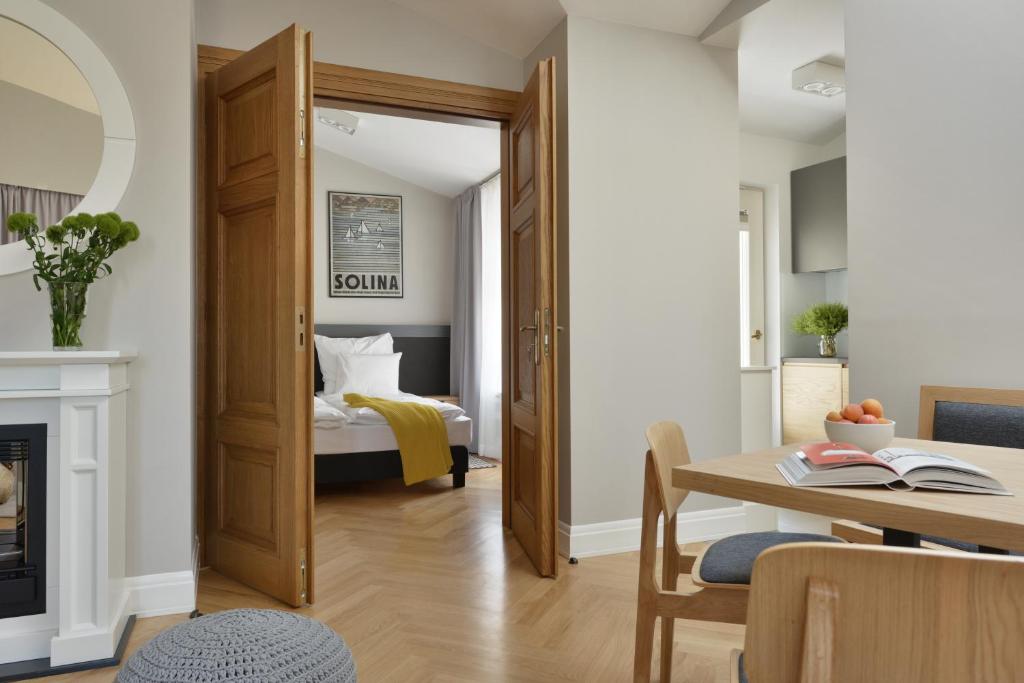
Church of St. Giles
Apartment amenities: lounge, city / garden views, terraces, balconies, air conditioning, free Wi-Fi, full kitchenettes, hairdryers, 24-hour reception, bike rentals, paid parking
Nearby restaurants: Bestwin RESTO BAR Kraków (New American restaurant), RESTAURACJA TAWERNA MIEJSKA (restaurant), Gate of India (Indian restaurant)
Nearby misc.: Lajkonik – Bakery & Cafe, Kawiarnia Cafe Millimo (café), Masaż tajski Thai Mai (Thai massage therapist)
Within feet:
-
-
- Church of St. Giles
- Wawel Royal Castle
- Dragon’s Den
- Historical Museum of Krakow
-
Within 2.8 mile:
-
-
- Polish Aviation Museum
-
STRADONIA Serviced Apartments is 7 miles from John Paul II International Airport Kraków–Balice.
Approximate cost per night (One-Bedroom Apartment Fireplace): $214
Cost per person (four people): $53
Hotel Ferreus Modern Art Deco
6 Mikołaja Kopernika, Old Town, 31-034
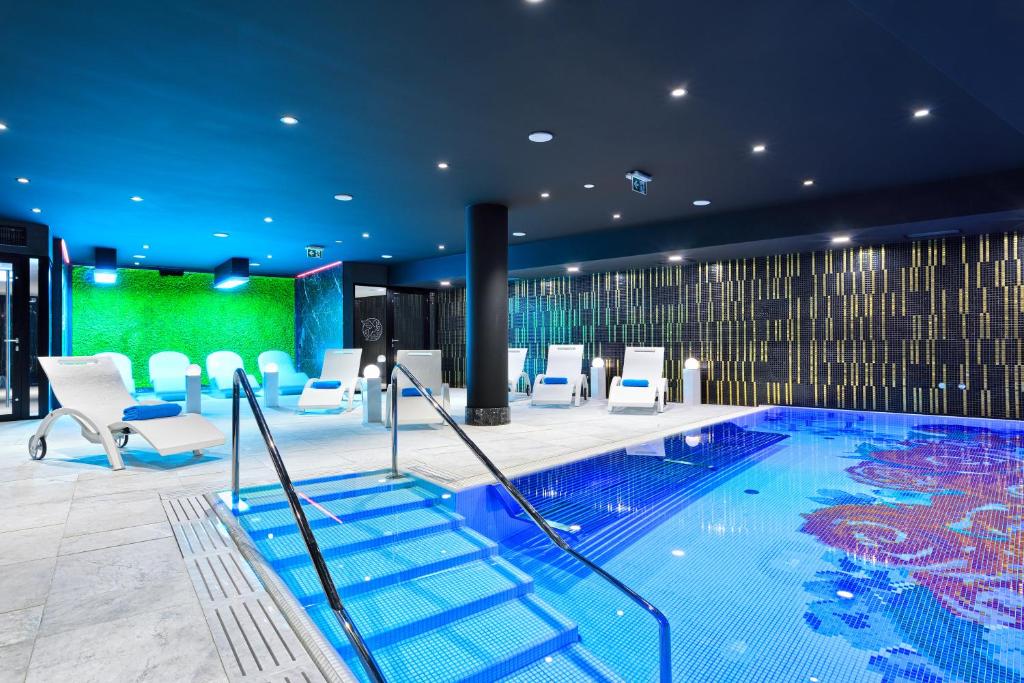
Diament Billiard Club
Hotel amenities: restaurant, bar, buffet breakfast, terrace, indoor pool, sauna, fitness center, air conditioning, free Wi-Fi, flat-screen TVs, electric tea pots, mini-bars, safety deposit boxes, desks, 24-hour front desk, private parking, paid airport shuttle service
Nearby restaurants: Pinsaria 22 Kopernika (Italian restaurant), Pierogarnia Krakowiacy (self service restaurant), Restauracja Tużurek (lunch restaurant)
Nearby misc.: Anatomy Museum of the Jagiellonian University (museum), Karaoke Spot (karaoke bar), Fox Orange Tattoo (tattoo shop), Road Bike Cracow (bicycle rental service), TangoNuevo (dance school), Church of St. Nicholas (Catholic church), Katedra Anatomii (Uniwersytet Jagielloński Collegium Medicum – graduate school)
Within feet:
-
-
- Diament Billiard Club
- Planty
- St. Florian’s Gate
- Barbican of Krakow
-
Within 2.4 miles:
-
-
- Polish Aviation Museum
-
Hotel Ferreus Modern Art Deco is 6 miles from John Paul II International Airport Kraków–Balice.
Approximate cost per night (Luxury Suite): $426
Cost per person (three people): $142
Mint Luxury Apartments
Stolarska 11, Old Town, 31-043
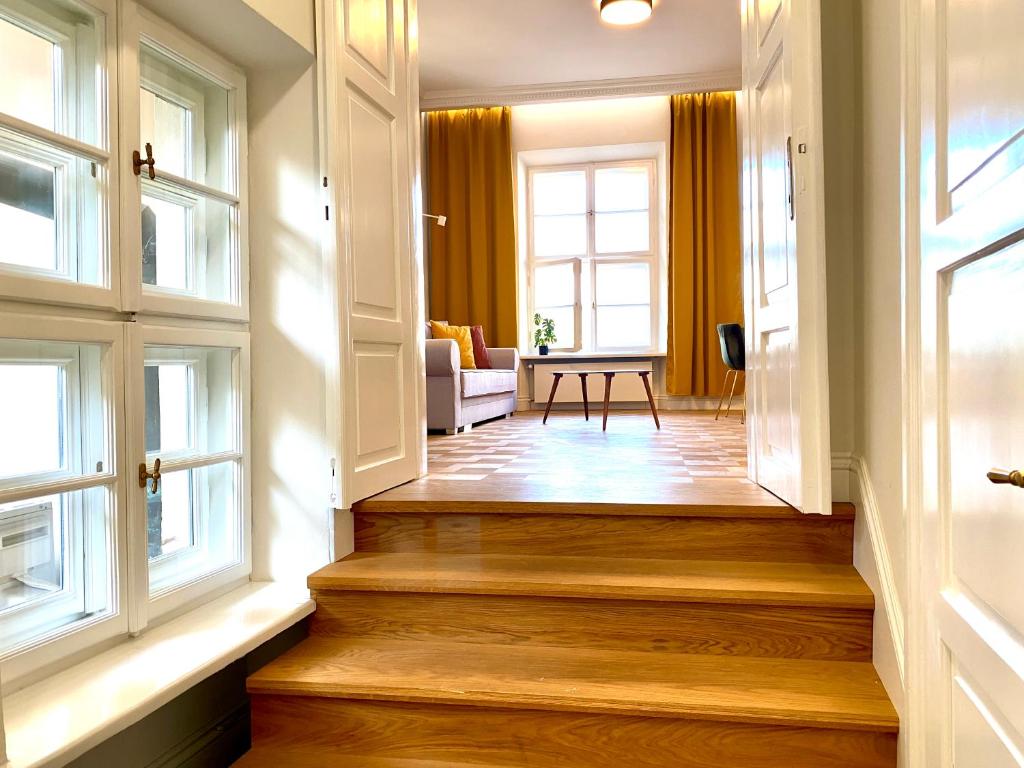
House of Attractions
Hotel amenities: free Wi-Fi, flat-screen TVs, kitchenettes, hairdryers
Nearby restaurants / bars / pubs: Szara Gęś w Kuchni Restaurant (Polish restaurant), Pimiento Argentino Grill (Argentinian restaurant), Dolabella Due (pizza restaurant), Nami Beef and Reef (restaurant), Khachapuri Restaurant (Georgian restaurant), Molto (restaurant), Zakątek Cafe & Wine Bar (wine bar), Cybermachina Game Pub (pub), Ambasada Śledzia (gastropub)
Nearby misc.: Siesta Café, Fable Cafe (coffee shop), B.O.H.O Coffee&Bar (coffee shop), Vitkac Kraków (shopping mall), Cracow Poster Gallery (art gallery), Iris Galerie (art gallery), Bookland | Księgarnia (book store), Dominikańskie Duszpasterstwo Akademickie “Beczka” (Catholic church), Krakow Animals Crawl (party planner)
Within feet:
-
-
- House of Attractions
- Europacare24 sp. z o.o.
- Adam Mickiewicz Monument
- Cloth Hall
-
Within 15 miles:
-
-
- Krakow Valley Ski Lift
-
Mint Luxury Apartments at the Main Square is 5 miles from John Paul II International Airport Kraków–Balice.
Approximate cost per night (Luxury Apartment): $426
Cost per person (six people): $71
Hotel Copernicus
ul. Kanonicza 16, Old Town, 31-002
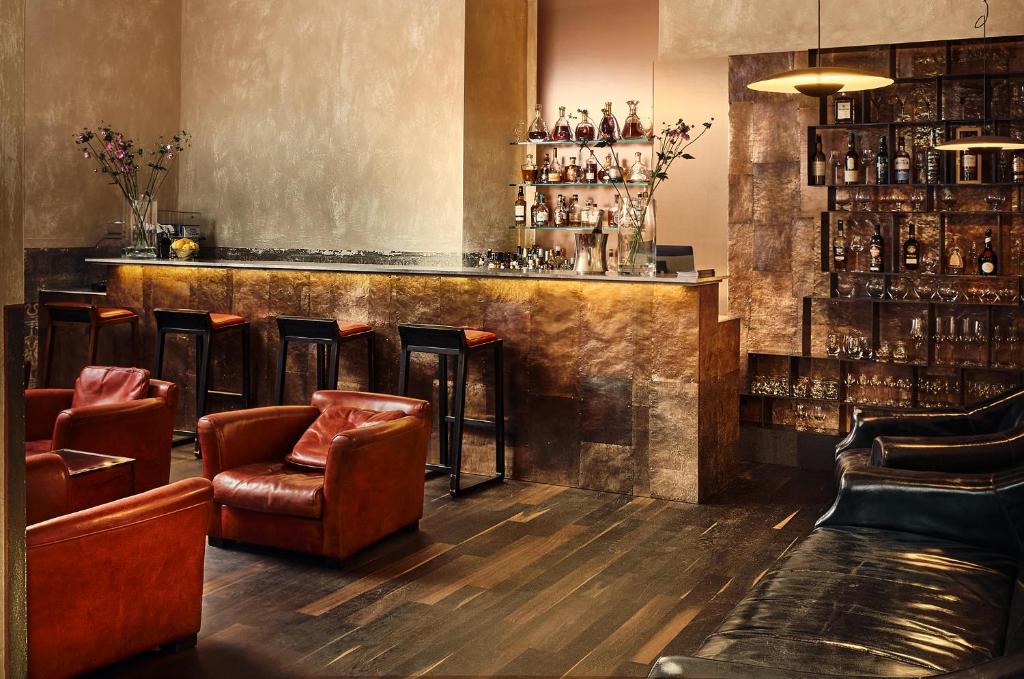
Artemis Gallery
Hotel amenities: restaurant, terrace with panoramic Wawel views, swimming pool, spa, sauna, fitness club, wood ceilings, 14th-century décor, vaulted cellars, air conditioning, free Wi-Fi, marble bathrooms, free mineral water, free newspapers, 24-hour front desk, dry cleaning & laundry services
Also in the area: Balthazar Design Hotel
Within feet:
-
-
- Artemis Gallery
- St. Andrew’s Church
- Church of St. Giles
- Wawel Royal Castle
-
Within 3.1 mile:
-
-
- Krakow Aqua Park
-
Hotel Copernicus is 6 miles from John Paul II International Airport Kraków–Balice.
Approximate cost per night: $252
Stradom House
12-14 Stradomska street , Old Town, 31-058
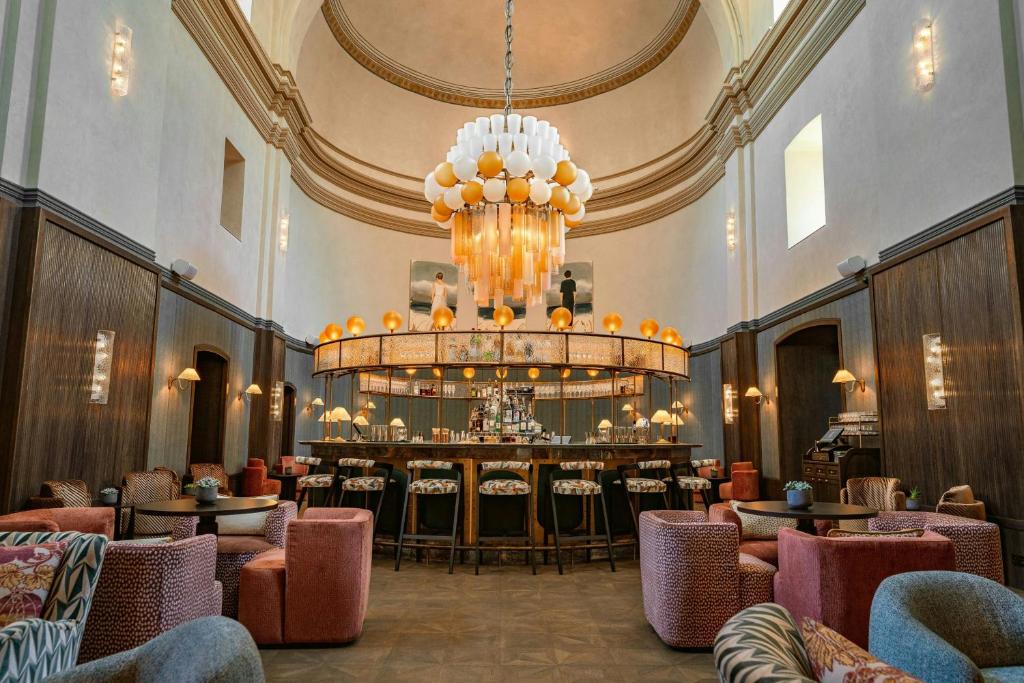
Planty Daszyńskiego
Hotel amenities: restaurant, bar, buffet, à la carte or continental breakfast, city views, terrace, indoor pool, sauna, fitness center, air conditioning, free Wi-Fi, flat-screen TVs, coffee machines, electric tea pots, mini-bars, safety deposit boxes, desks, 24-hour front desk, express check-in/out, business area, paid airport shuttle service
Nearby restaurants / bars / pubs: Stradomska 12 Modern Polish Cuisine (restaurant), Restauracja Orientalna Hoang Hai 13 (Vietnamese restaurant), Gate of India (Indian restaurant), Taste of India Restaurant (Indian restaurant), Bhajan Cafe | Indian Vegetarian & Vegan Restaurant (vegetarian restaurant), Hedwig’s (cocktail bar), BroPub | Craft Beer & Burgers (brewpub)
Nearby misc.: SÓL SPA (spa), Frania Cafe, Tartelette Café, Dora.the.cook (coffee shop). Chimney Cake Bakery (cake shop), ACADEMY FREE STYLE (hair salon), KABAK Kraków (clothing store), Atlantic Squash Fitness Gym
Within feet:
-
-
- Planty Daszyńskiego
- Wawel Royal Castle
- Dragon’s Den
- Cloth Hall
-
Within 1 mile:
-
-
- Schindler Factory Museum
-
Within 7 miles:
-
-
- Wieliczka Salt Mine
-
Stradom House, Autograph Collection is 6 miles from John Paul II International Airport Kraków–Balice.
Approximate cost per night (Heritage Junior King Suite): $410
Cost per person (three people): $136

Rynek Główny Apartments
Rynek Główny 6, Old Town, 31-042
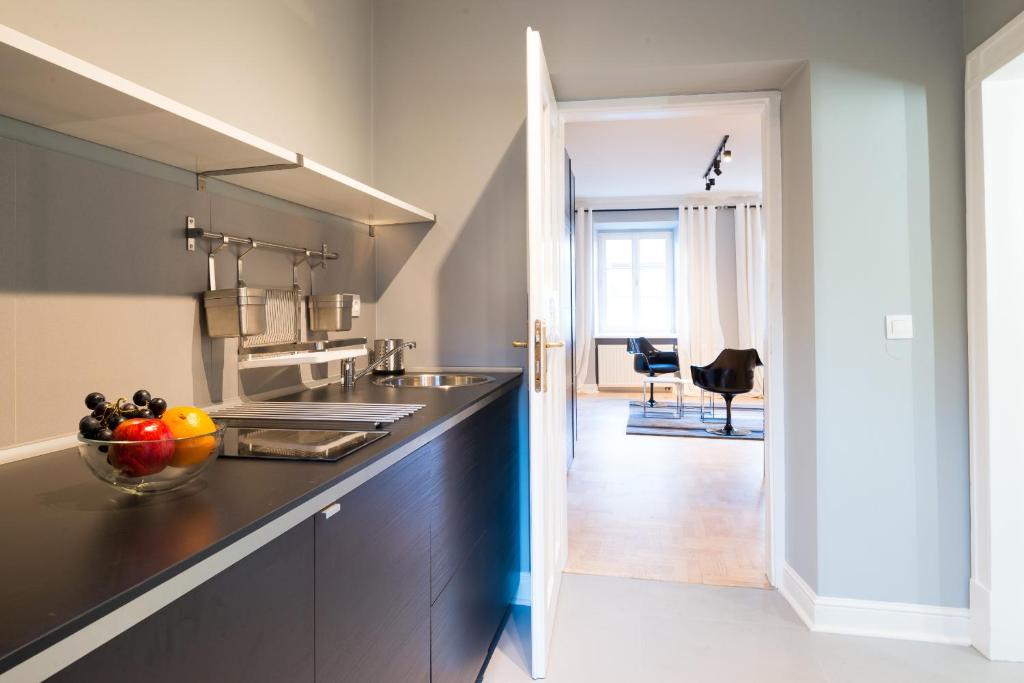
Sukiennice
Apartment amenities: free Wi-Fi, flat-screen TVs, kitchens / kitchenettes, hairdryers
Also in the area: Amber Design Residence
Within feet:
-
-
- Sukiennice
- Main Market Square
- Town Hall Tower
- Archeological Museum
-
Within 7 miles:
-
-
- Wieliczka Salt Mine
-
Rynek Główny Apartments is 5 miles from John Paul II International Airport Kraków–Balice.
Approximate cost per night (One-Bedroom Apartment): $168
Cost per person (four people): $42
Art Suites Luxury Hotel
Władysława Mitkowskiego 6, Debniki, 30-337
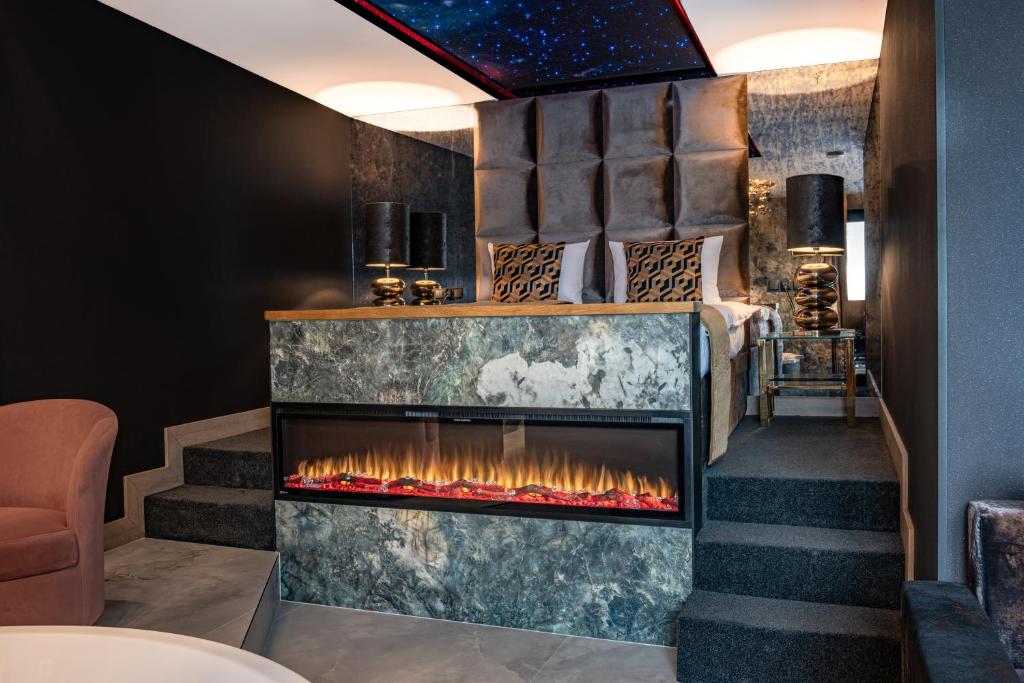
Park Skały Twardowskiego
Hotel amenities: restaurant, bar, à la carte, continental or Full English/Irish breakfast, city views, air conditioning, free Wi-Fi, flat-screen TVs, coffee machines, safety deposit boxes, slippers, hairdryers, 24-hour front desk, express check-in/out, private parking, paid airport shuttle service
Also in the area: Art Suites Boutique Hotel – Krakow Center
Within feet:
-
-
- Park Skały Twardowskiego
- Manggha Museum of Japanese Art and Technology
- Park Dębnicki
- Dragon’s Den
-
Within 1.2 miles:
-
-
- Adam Mickiewicz Monument
-
Within 30 miles:
-
-
- Beskid Żywiecki Mountain
-
Art Suites Luxury Hotel is 5 miles from John Paul II International Airport Kraków–Balice.
Approximate cost per night (Royal Suite with Jacuzzi): $758
Cost per person (three people): $252
Dietla Apartments
ul. Dietla 81, Old Town, 31-050
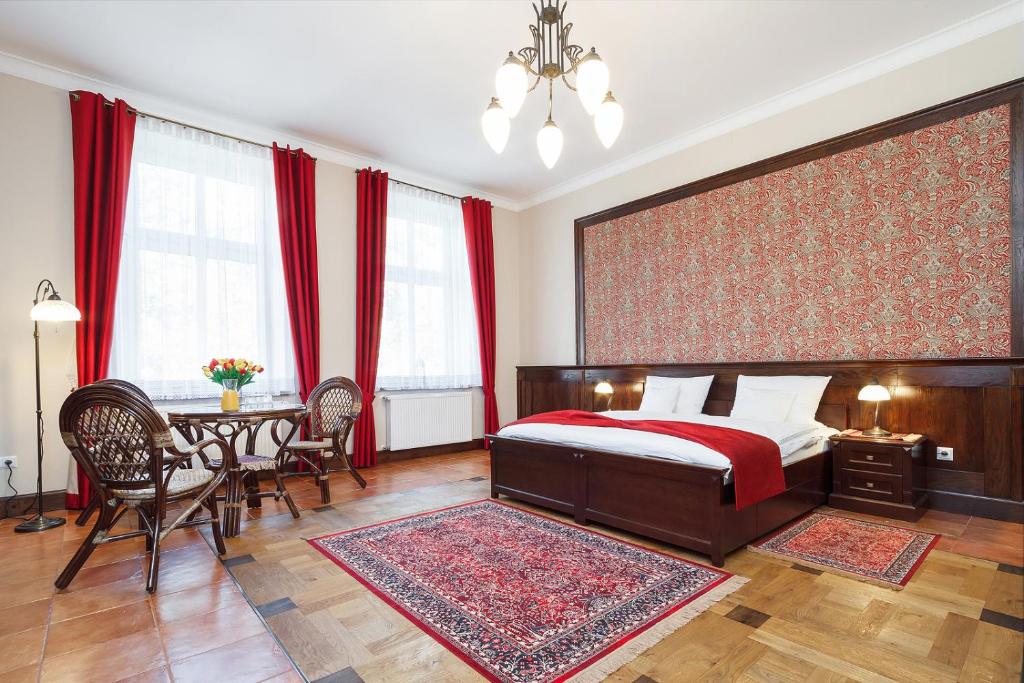
Mirror Bistro
Hotel amenities: free Wi-Fi, flat-screen TVs, kitchenettes, desks
Nearby restaurants / bars / pubs: Delta Dietla Wine & Food (restaurant), Vienna Snacks (Austrian restaurant), Layla Lounge Bar (Mediterranean restaurant), Kółeczko Cafe (breakfast restaurant), Grill Bar Mombo (bar & grill), Galeria Pod Palmą (bar), Beznazwy | Cocktails & Art (cocktail bar), Runa Game Cafe & Pub (brewpub)
Nearby misc.: Muzeum Banksy (art museum), Beautiful Flower (florist), Barbara Płaczek Fryzjer (hairdresser), Frisor Barber Shop (barber shop), Contrast’Ink (tattoo shop), ByClouds Shisha Bar (hookah bar), The Moon Lounge Bar & Shisha Kraków (hookah bar), Invictus Training (personal trainer), Szkoła Tańca Sempre (dance school), MyTap (dance school)
Within feet:
-
-
- Mirror Bistro (pierogi restaurant)
- Wawel Royal Castle
- Archeological Museum
- Ethnographic Museum in Kraków
-
Within 1 mile:
-
-
- National Museum of Krakow
-
Dietla Apartments is 6 miles from John Paul II International Airport Kraków–Balice.
Approximate cost per night (Deluxe Two-Bedroom Apartment): $225
Cost per person (five people): $45
Sandomierska Apartments
Sandomierska 3, Debniki, 30-301
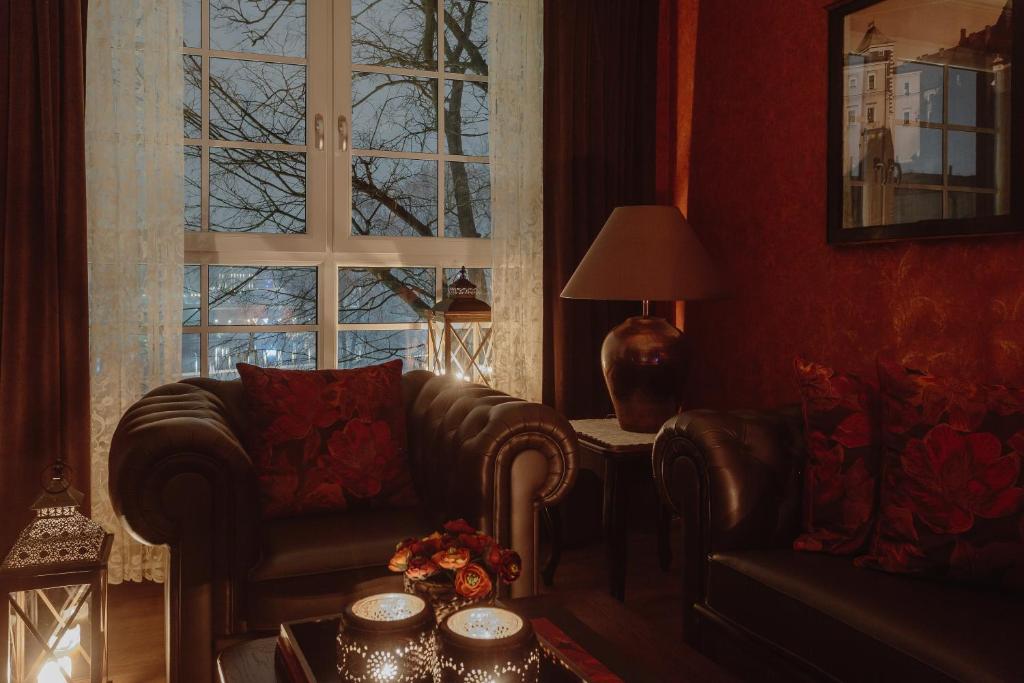
Manggha Museum of Japanese Art and Technology
Apartment amenities: balconies, free Wi-Fi, kitchenettes, coffee machines, kettles, assigned garage spots
Nearby restaurants / bars: Tasty Beast Burger (hamburger restaurant), Konopnickiej 11 Brick Oven Pizza (pizza restaurant), Wschód Bar (Asian restaurant), Café Manggha (Japanese restaurant), Winiarnia i Sklep Wino i Miód (wine bar)
Nearby misc.: Rynek Dębnicki (farmers’ market), Oliwkowóz – Rynek Dębnicki (deli), Zawsze Naturalnie (health food store), Nemezink Tattoo Studio (tattoo shop), Nemearis Piercing Studio (body piercing studio), Volver (Casa de Tango – dance school), Library of Krakow (public library)
Within feet:
-
-
- Manggha Museum of Japanese Art and Technology
- Park Skały Twardowskiego
- Park Dębnicki
-
Within 1.1 miles:
-
-
- Barbican of Krakow
-
Within 30 miles:
-
-
- Beskid Żywiecki Mountain
-
Sandomierska Apartments is 5 miles from John Paul II International Airport Kraków–Balice.
Approximate cost per night (Deluxe Apartment): $197
Cost per person (four people): $49
Orlowska Townhouse Apartments
ul. Sławkowska 26, Old Town, 31-014
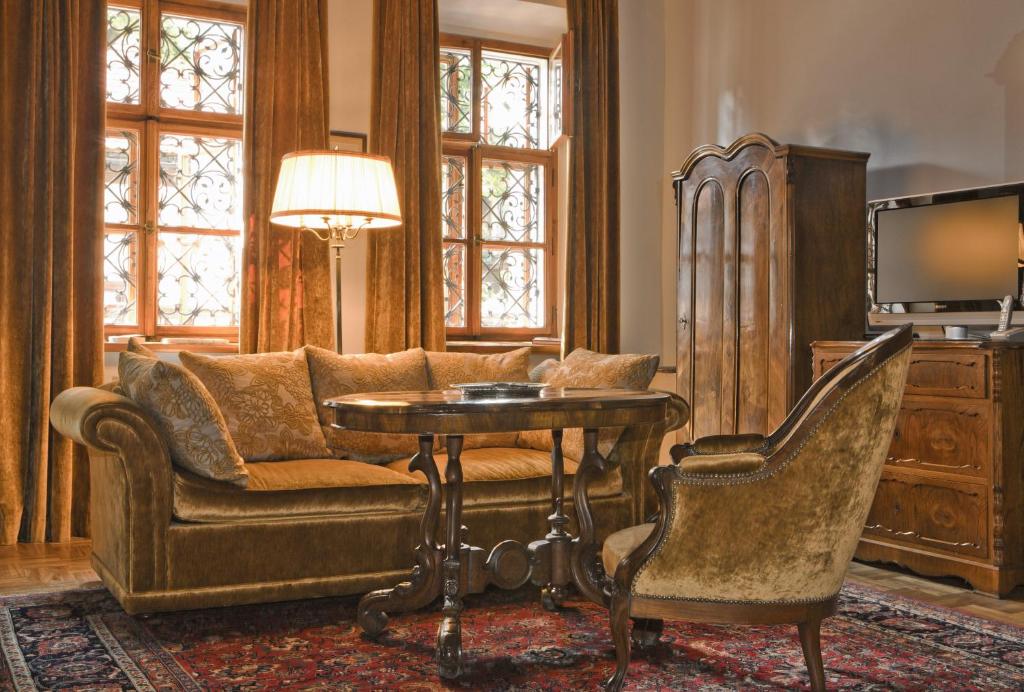
Church of St Mark the Evangelist
Apartment amenities: terrace, garden, antique furniture, flat-screen TVs, fully-equipped kitchenettes, tea / coffee making facilities, airport shuttle
Nearby restaurants / bars: Domowe Przysmaki (Polish restaurant), Galicyjska Restaurant (Polish restaurant), Restauracja Cyrano de Bergerac (European restaurant), Przypiecek (dumpling restaurant), The Artist Cocktail Bar, Rumour Cocktail Bar
Nearby misc.: NIĆ. Kawiarnio-księgarnia (café), American Bookstore Księgarnia Amerykańska (book store)
Within feet:
-
-
- Church of St Mark the Evangelist
- Czartoryski Museum
- Krakow’s City Walls
- Jan Matejko’s House
-
Within 15 miles:
-
-
- Krakow Valley Ski Lift
-
Orlowska Townhouse Apartments is 5 miles from John Paul II International Airport Kraków–Balice.
Approximate cost per night (Superior Studio): $196
Cost per person (three people): $65

Zinar Castle
13 Jodłowa, Zwierzyniec, 30-251
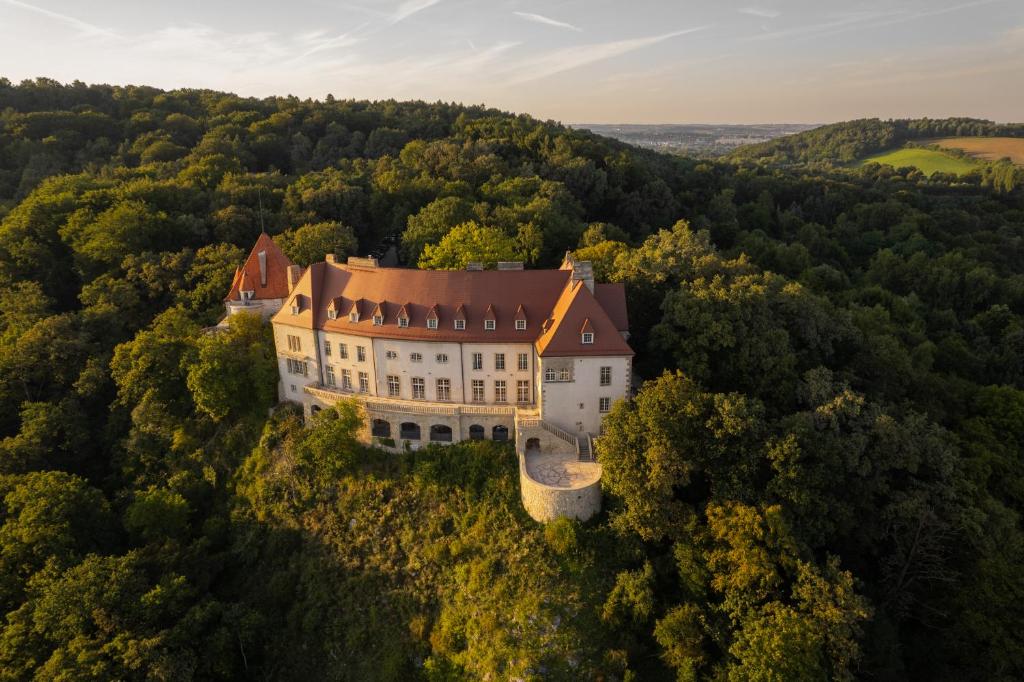
Kościuszko Mound
Hotel amenities: restaurant, bar, buffet / à la carte breakfast, mountain views, terraces, garden, air conditioning, free Wi-Fi, flat-screen TVs, kettles, safety deposit boxes, desks, 24-hour front desk, luggage storage, bike / car rentals, picnic area
Nearby restaurants: U Ziyada, Srebrna Góra
Nearby misc.: Willa Baszta (castle), Paintball Center, Skałki Przegorzalskie (nature preserve), Polana Piknikowa na Sikorniku (scenic area), Sikornik Zachodni (scenic spot), Diabelski Most (bridge)
Within feet:
-
-
- Kościuszko Mound
- Las Wolski
-
Within 1.2 miles:
-
-
- Park Decjusza
-
Within 2.1 miles:
-
-
- Błonia Park
-
Within 3.1 miles:
-
-
- Wawel Royal Castle
-
Zinar Castle is 3.2 miles from John Paul II International Airport Kraków–Balice.
Approximate cost per night (Panorama Suite): $623
Dom Pugetów
Starowislna 15a, Old Town, 31-038
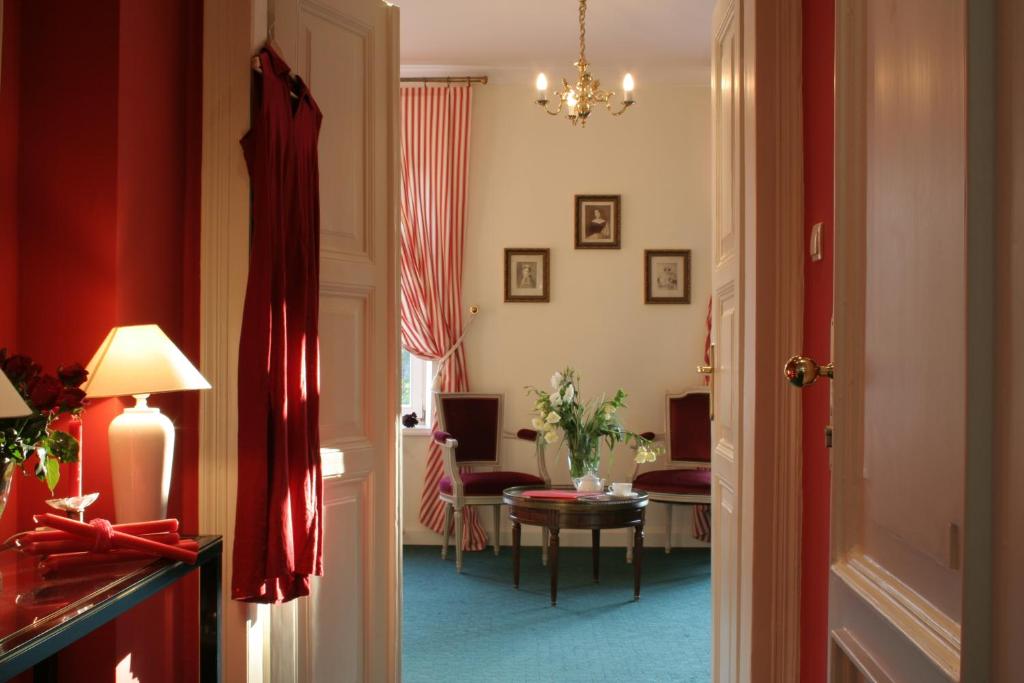
Kraków Zabłocie Train
Apartment amenities: 6 bedrooms, 7 bathrooms, 3 living rooms, antique paintings, elegant furnishings, air conditioning, free Wi-Fi, fully-equipped kitchen, tea / coffee making facilities, washing machine, mini-bar, modern bathrooms with heated floors
Nearby: Il Calzone (Italian restaurant), Cukiernia kawiarnia Cichowscy (pastry shop), PIERRE Boulangerie francaise (bakery), Bez Ograniczeń (beauty salon), KNIŻKA (book store), KOKOworld (boutique), SzlafrOK. – Smoking Jacket shop (clothing store), Aclari Diamonds (jewelry store), Contemporary Theatre in Krakow (performing arts theater), Narodowy Stary Teatr im. Heleny Modrzejewskiej – Scena Kameralna (performing arts theater)
Within feet:
-
-
- Kraków Zabłocie Train
- Planty
- Archeological Museum
- Adam Mickiewicz Monument
- Cloth Hall
-
Within 2.6 miles:
-
-
- Polish Aviation Museum
-
Dom Pugetów is 6 miles from John Paul II International Airport Kraków–Balice.
Approximate cost per night (Apartment): $781
Cost per person (ten people): $78
Kanonicza 22
Kanonicza 22, Old Town, 31-002
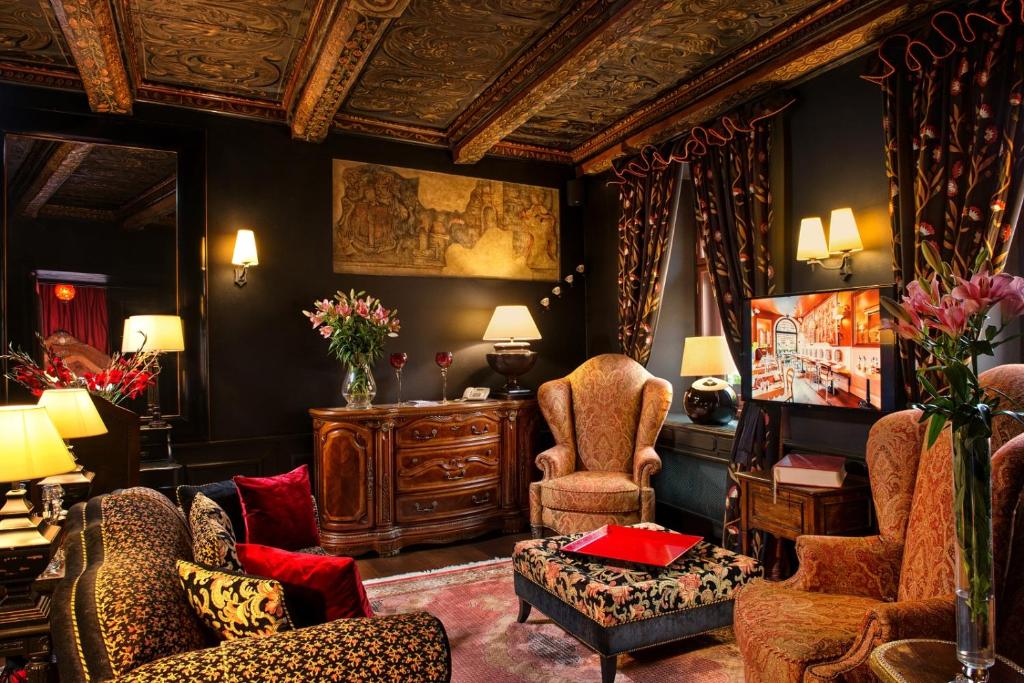
Wawel Royal Castle
Apartment amenities: award-winning Polish restaurant, bar, original historic elements (ex. ceiling dating to 1688), unique furniture, air conditioning, coffee machines, electric kettles, mini-bars, 24-hour front desk, luggage storage
Also in the area: Balthazar Design Hotel, Hotel Copernicus
Within feet:
-
-
- Wawel Royal Castle
- Planty
- Archeological Museum
- Historical Museum of Krakow
-
Within 10 miles:
-
-
- Siepraw Ski Lift
-
Kanonicza 22 is 5 miles from John Paul II International Airport Kraków–Balice.
Approximate cost per night (Royal Suite): $493
Stradomska Apartment
15 Stradomska, Old Town, 31-068

Kraków Pinball Museum
Apartment amenities: city views, soundproofing, free Wi-Fi, fully-equipped kitchenette, washing machine, private check-in/out, paid airport shuttle
Also in the area: Stradom House, Autograph Collection
Within feet:
-
-
- Kraków Pinball Museum
- Archeological Museum
- Galicia Jewish Museum
- Adam Mickiewicz Monument
-
Within 1.2 miles:
-
-
- Kraków Podgórze Train
-
Stradomska Apartment is 6 miles from John Paul II International Airport Kraków–Balice.
Approximate cost per night: $125
Krzyża Residence
Świętego Krzyża 5, Old Town, 31-028
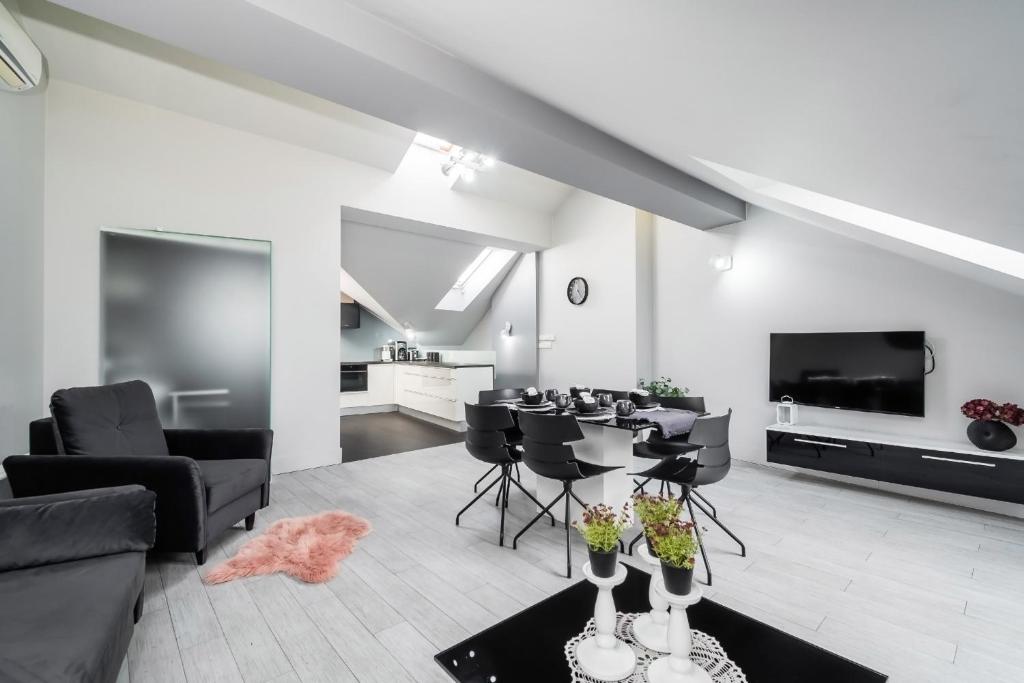
Holy Trinity Church
Apartment amenities: terraces, air conditioning, free Wi-Fi, flat-screen TVs, fully-equipped kitchenettes, walk-in showers, hairdryers, ironing facilities, private entrance, paid airport shuttle service
Nearby restaurants / bars / pubs: RISTORANTE SANT’ANTIOCO (Italian restaurant), Pizzeria Cyklop (pizza restaurant), Moo Moo (steakhouse), Papryczki 5 (Mediterranean restaurant), Moaburger (hamburger restaurant), Kogel Mogel (restaurant), Resto Bar Pierogarnia Zielony Kredens (Polish restaurant), Andrus Maczanka Po Krakowsku – Sienna (Polish restaurant), Restaurant Venue by Chez Nicholas (Modern French restaurant), Metrum Restobistro (restaurant), Jadłodajnia U STASI (restaurant), Czerwone Korale (family restaurant), Restauracja Royal India Kraków (Indian restaurant), Krakowska Koliba (bar & grill), Wodka Bar (bar), Albo tak cafe (bar), Movida | Cocktail Bar, GulGul (wine bar), English Football Club (pub), The Mask (pub)
Nearby misc.: Klub Re (live music venue), Busz (coffee shop), Bonobo (coffee shop), Bread & spread (bakery), AWARIA (club), VIVO (nail salon)
Within feet:
-
-
- Holy Trinity Church
- Europacare24 sp. z o.o.
- Cloth Hall
- Main Market Square
-
Within 15 miles:
-
-
- Krakow Valley Ski Lift
-
Krzyża Residence is 6 miles from John Paul II International Airport Kraków–Balice.
Approximate cost per night (Three-Bedroom Apartment): $259
Cost per person (eight people): $32

So there they are, Krakow accommodations that will help make for an outstanding trip. We hope you have found this information valuable and most importantly, that you enjoy your time in Poland!