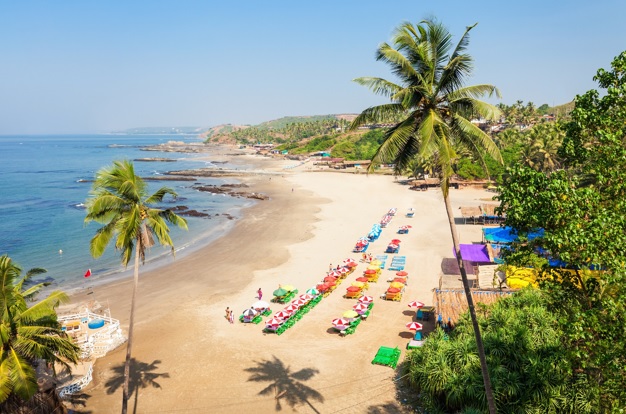
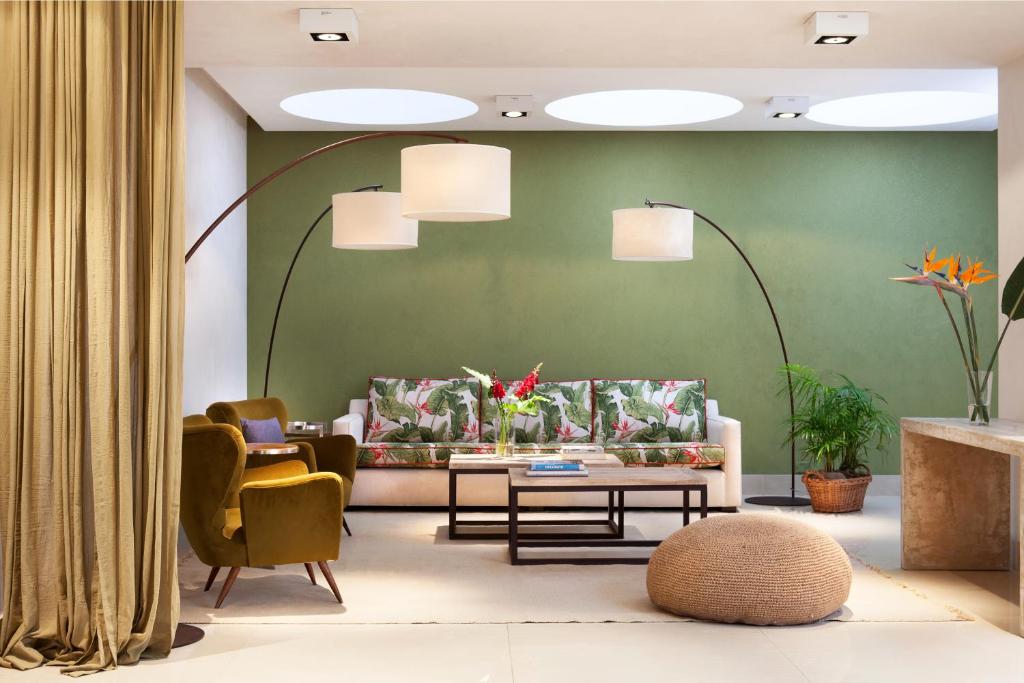
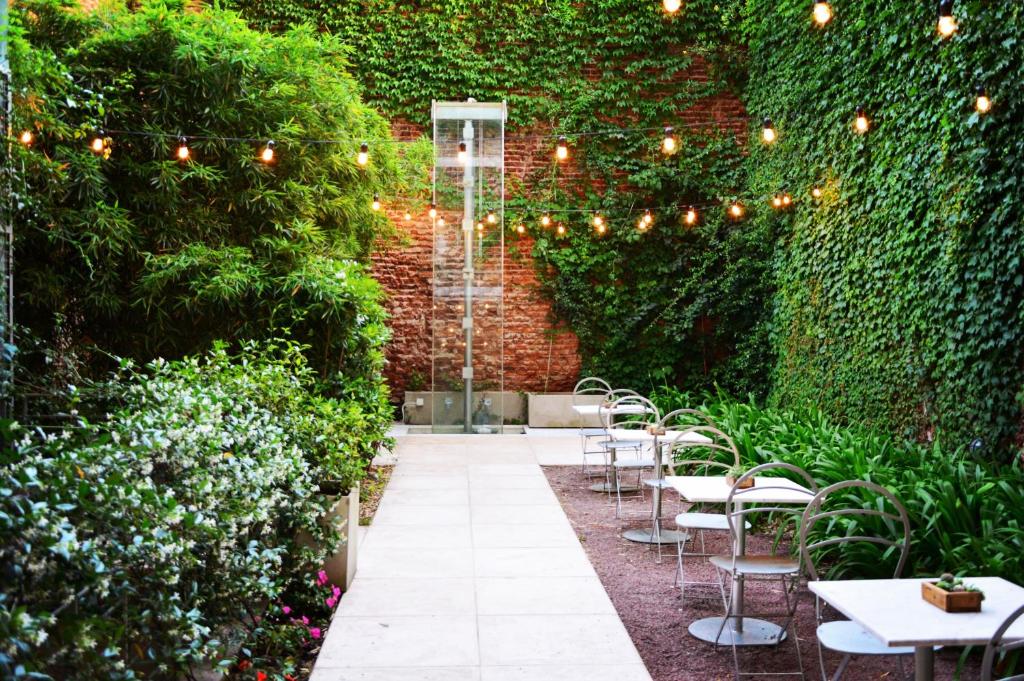
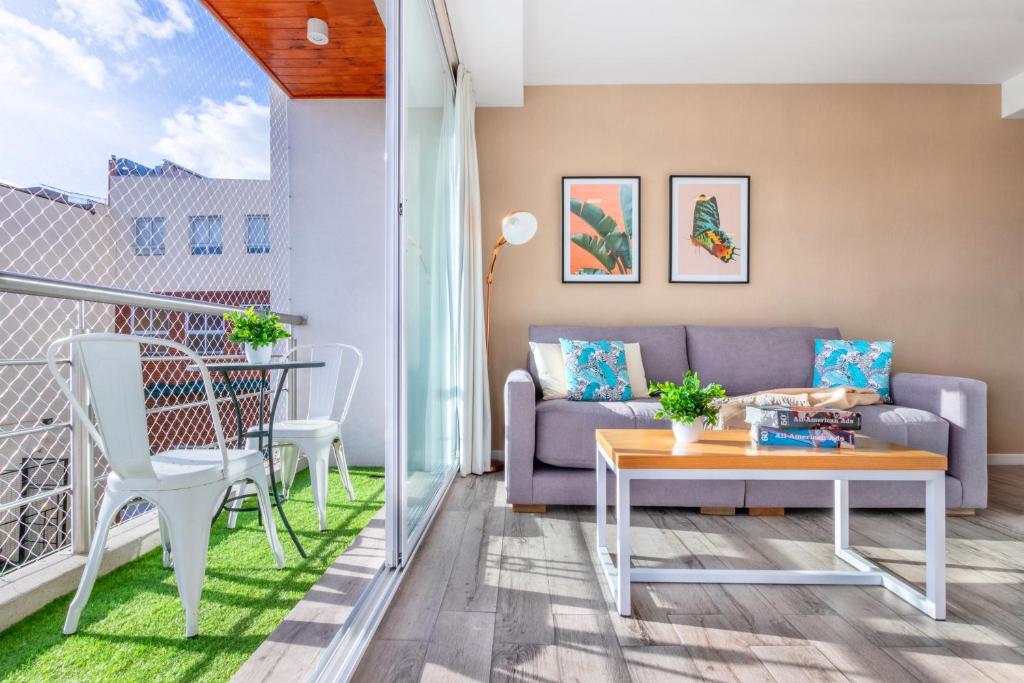
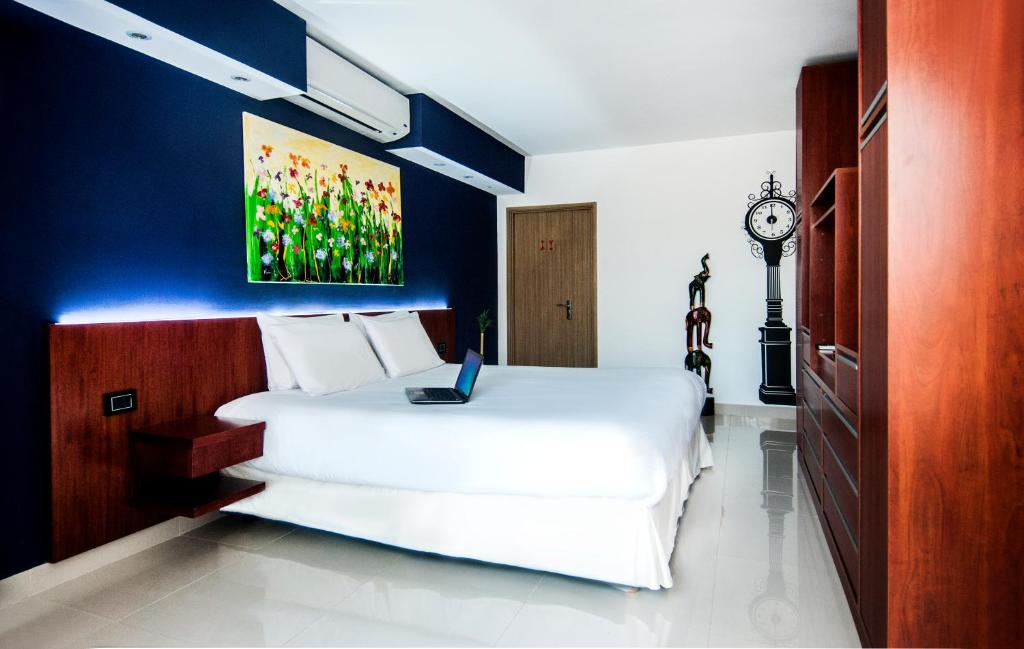
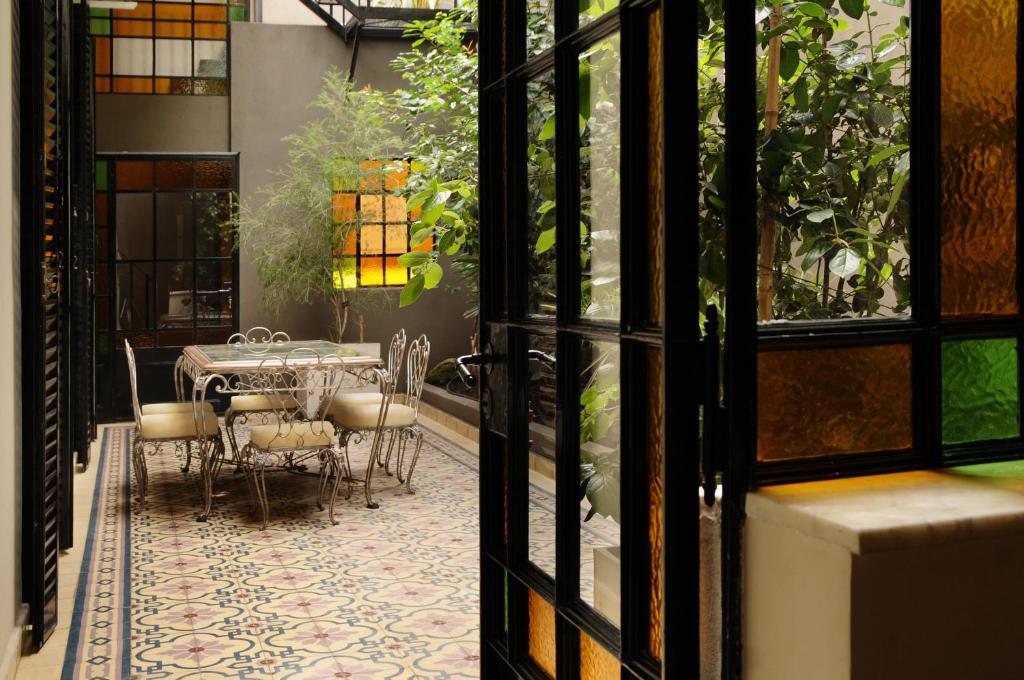
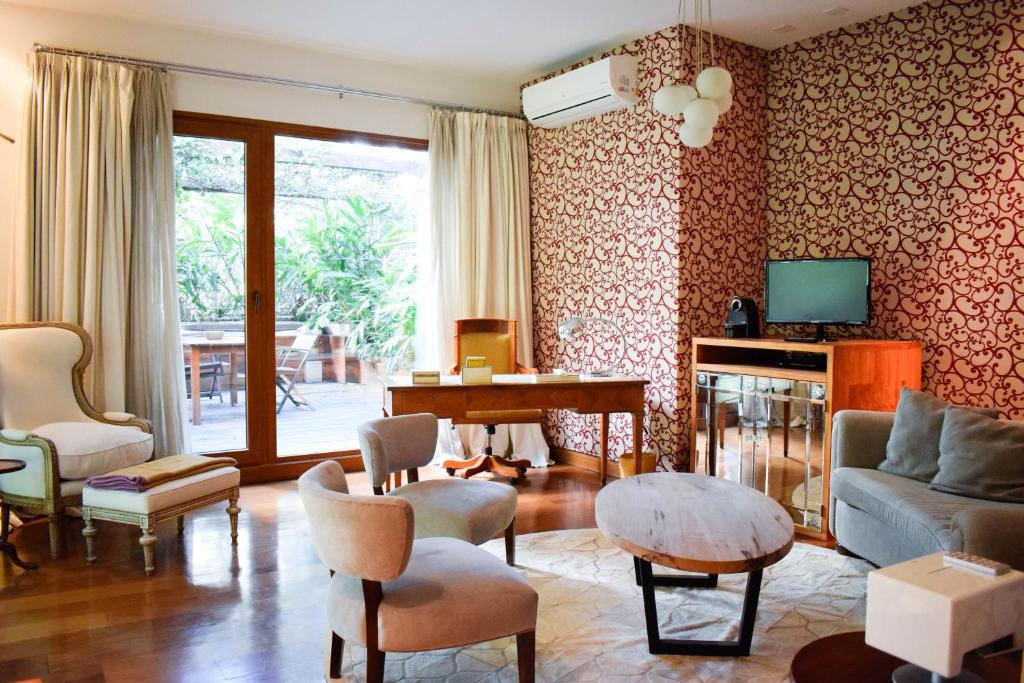
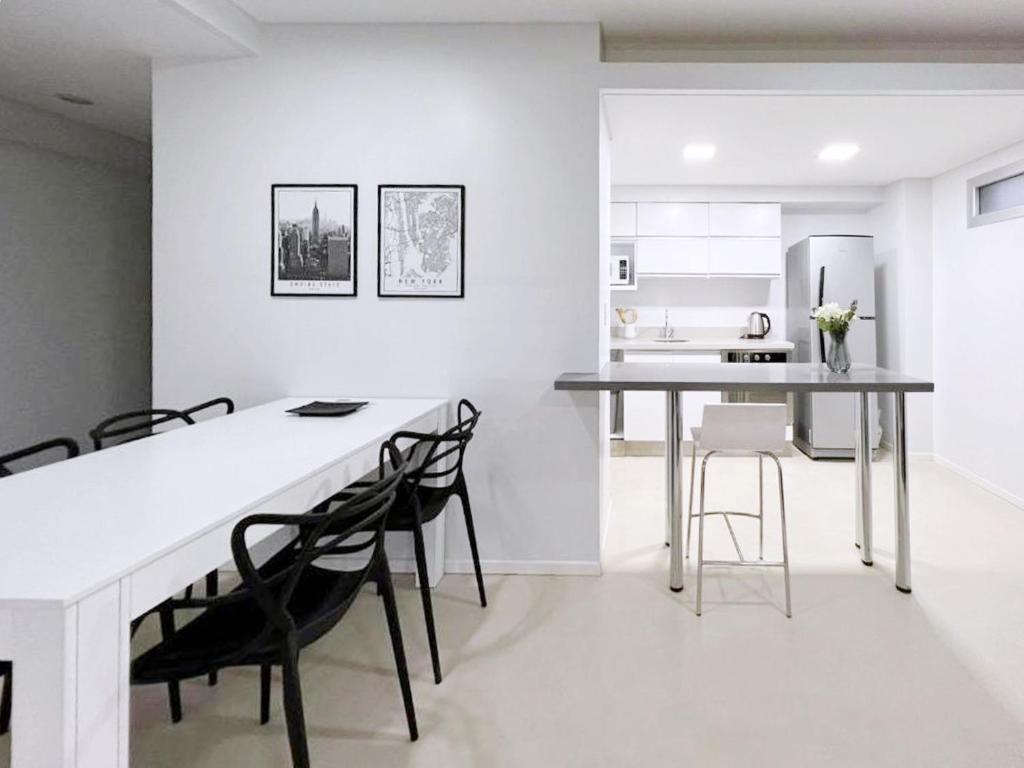
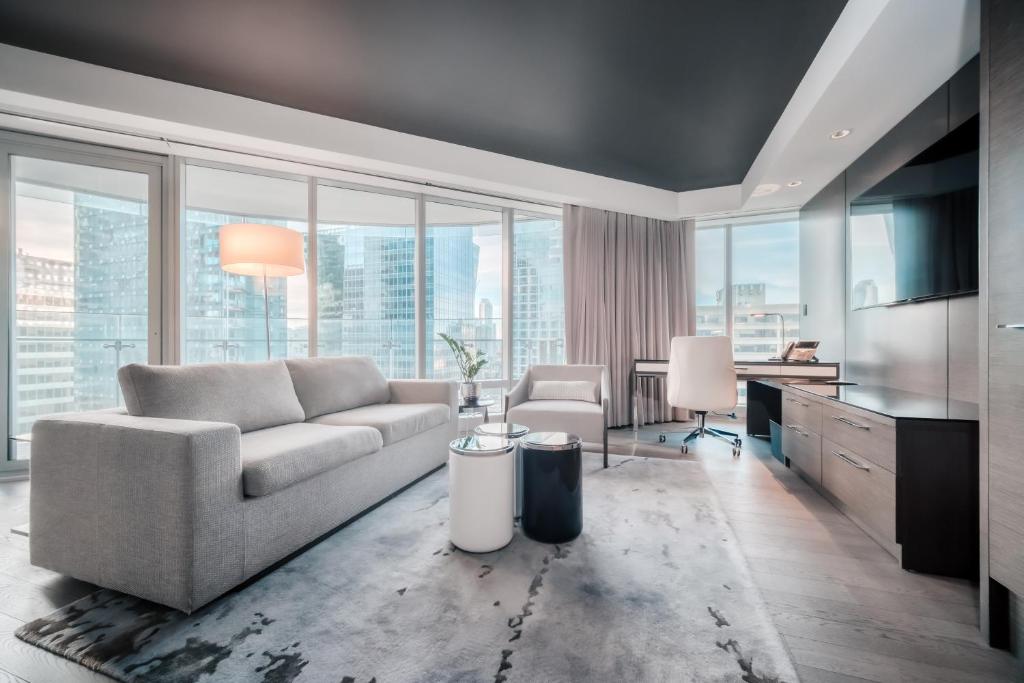
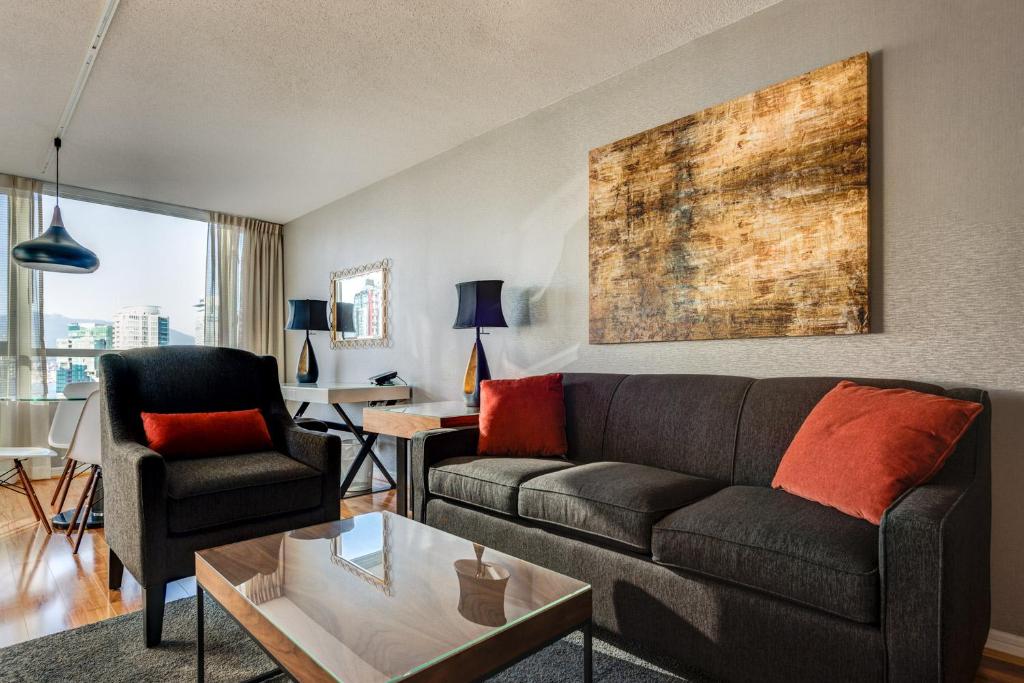
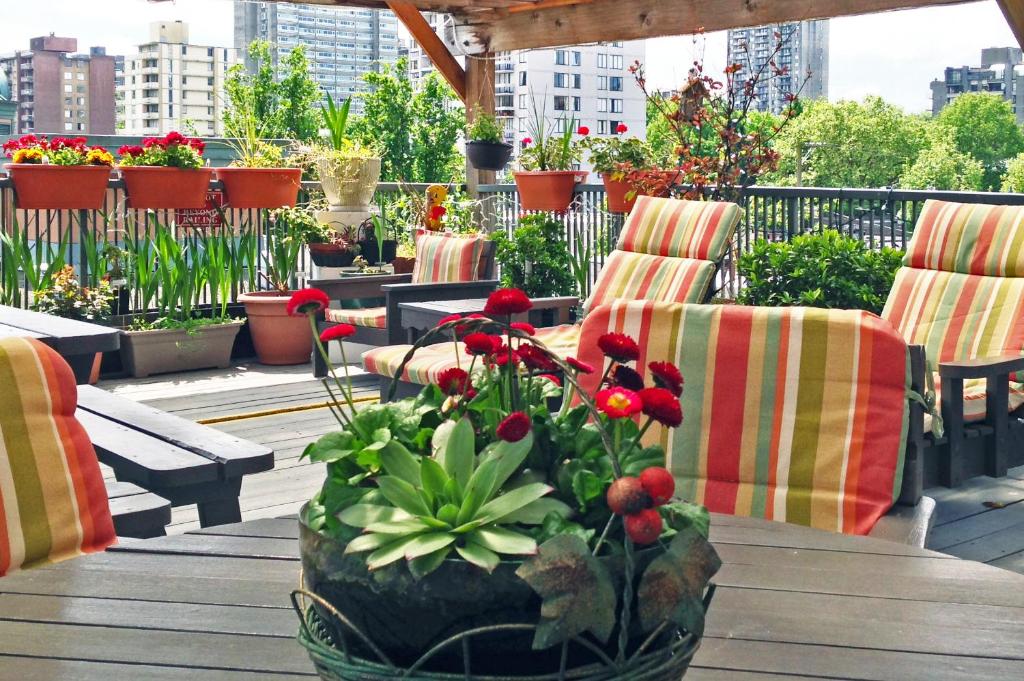
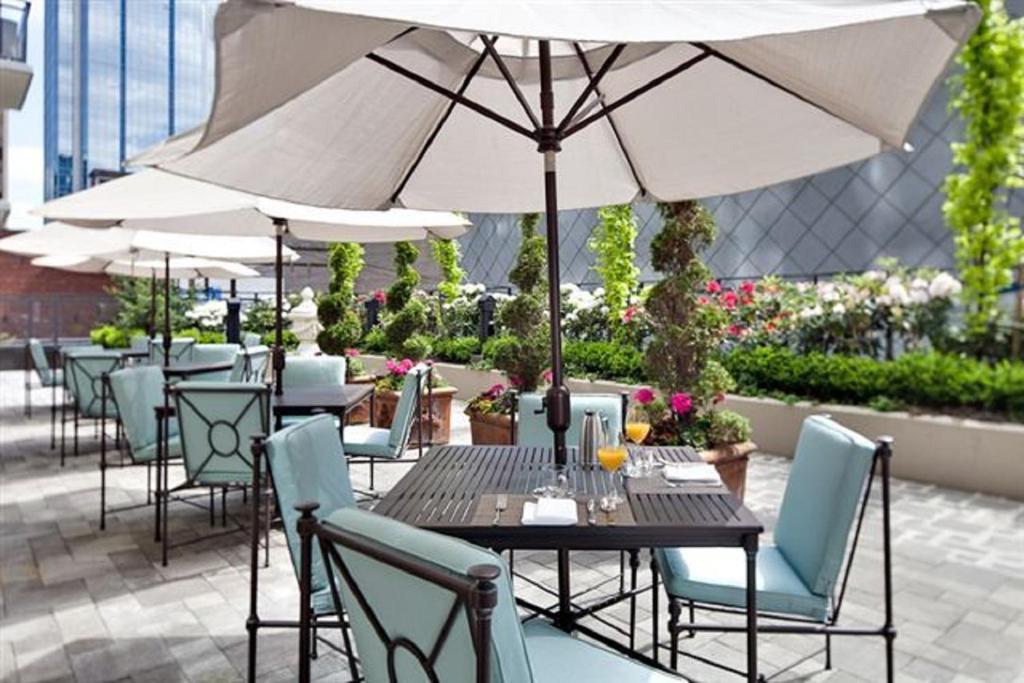
Goa accommodations welcome you to a destination nicknamed “Pearl of the Orient”. Known for its palm-tree-lined golden beaches, 17th-century Portuguese churches, forts, tropical spice plantations, fishing villages, nightlife and regional Goan food, Goa is Bharat’s smallest state by area. Located along India’s western, Arabian Sea coastline, Goa is about 375 miles south of Mumbai, and 350 miles northwest of Bangalore. 21 miles in length, the Zuari River flows through Vasco da Gama, Goa and into the Marmagao Bay.
Goa main attractions: Aguada Fort (1612 Portuguese fortress, 1864 abandoned lighthouse, ocean views), Calangute Beach (watersports, boating, waterskiing, parasailing, food stalls), Baga Beach (watersports, eateries, bars, nightspots), Candolim Beach (sunset views, parasailing, beer / seafood shacks, nearby market), Britto’s (seafood restaurant), Curlies Beach Shack (beachside restaurant, bar, nightclub), Mall De Goa (shopping mall), Chapora Fort (ruined fortress, sunset sea views), Anjuna Beach (parasailing, banana boats, jet ski rentals), Purple Martini (Continental restaurant), Cabo de Rama Fort (1763 Portuguese fortress remains, small chapel, seaside cliff), Baba Au Rhum Anjuna (European restaurant), Arambol Beach (golden sand, mild waves, eateries, snack stands, visitor facilities), Reis Magos Fort (restored 16th century fort, cultural center, river / sea views), Cola Beach, Morjim Beach, Jumpin Heights Goa (bungee jumping center), Mandrem Beach (secluded, accessed by small wooden bridge, lounge chairs, covered cafes), Se Cathedral (Catholic cathedral), Majorda Beach (watersports, rentable loungers, food shacks), Butterfly Beach (narrow stretch of sand, scenic, sunset views), Querim Beach (secluded, food vendors), Shri Kamakshi Temple (Hindu temple), St. Augustine Tower (1602 church complex), Majestic Paradise (casino), Ashvem Beach (fine sand, swimming, sunbathing, restaurants), Ozran Beach (green hills, rock formations, chairs, palapas), AAA All About Alcohol Museum, St Anthony Church (Catholic church), Arambol Mountain (scenic spot), Our Lady of Piety Church (Catholic church), Shri Vijayadurga Temple (Hindu temple)
Goa top events: Goa Carnival, Goa Food & Culture Festival, Feast of Saint Francis Xavier, Sao Joao Festival, Sunburn Festival, Vh1 Supersonic (multi-genre music festival), Grape Escapade (wine festival)
Prior to traveling, it’s best to exchange some currency to use in markets and for small items. Carrying large amounts of cash while out is not advisable. Portuguese and Indian are the area’s main cultures. Goa largely is considered safe. Smoking in public is prohibited, and appropriate attire is required when visiting temples or churches. Generally, the north side is where one may find nightlife. The southside is good for scenery, while Panaji (central) is home to restaurants. Along the coastline many fine beaches are to be discovered. In Goa, cars travel on the left-hand side, currency is the Indian rupee and the drinking age is 18 years old. Goa accommodations are some of India’s best. Before we get to Goa accommodations, let’s take a look at some more background information on the area to help you along the way.
Some of India’s earliest traces of human life have been discovered in Goan rock art engravings, particularly in Usgalimal (South Goa) and Kajur. Acheulean stone tools have also been discovered in the area. Early Goan culture was defined by Indo-Aryan and Dravidian migrants, who amalgamated with aboriginal locals. Goa was part of the Buddhist Maurya Empire during the 3rd century BC, followed by the Kadambas of Goa dynasty. During medieval times in 1312, the Delhi Sultanate came to govern Goa, though they were subsequently forced to surrender the region to the Hindu Vijayanagara Empire circa 1370. In 1469, the Bahmani Sultanate took control of the territory, but fell to the Sultanate of Bijapur, who established their auxiliary capital Velha Goa, or Old Goa (as it became known under the Portuguese). By 1510, the Bijapur sultan Yusuf Adil Shah was defeated by the Portuguese with help from a local ally and privateer, Timoji. The Portuguese settled permanently at Velha Goa, which marked the beginning of their four-and-a-half century rule over the area. In 1560, the Goa Inquisition formal tribunal was established to enforce Catholic orthodoxy and allegiance to the Apostolic See of the Pontifex. During the late-18th century, the territory of Goa was split into two segments, the Velhas Conquistas (Old Conquests – central nucleus) and the Novas Conquistas (New Conquests – added territories). The 1787 Pinto Revolt against the Portuguese, led by a Goan noble family, resulted in a rebel suppression. Having been revealed by a Goan Catholic baker, the Pinto Revolt conspiracy saw to 47 conspirators being arrested and punished (17 priests and 7 army officers included), and 15 being executed publicly at the old Panjim pillory near the present-day GPO (General Post Office) in Panjim. The Portuguese moved Goa’s capital from Old Goa to Cidade da Nova Goa (City of New Goa – present-day Panjim) circa 1843. India gained independence from British rule in 1947. At this time, India requested that Portugal cede the Indian subcontinent territories to India, which the Portuguese refused. The December 19, 1961 Operation Vijay, initiated by India against Portugal, led to an Indian victory and the territories of Goa, Daman and Diu being annexed into the Republic of India. On May 30, 1987, Goa split from the union territory (with Daman and Diu) to become India’s twenty-fifth independent state.
Home to around 1.5 million Goans, Goa lies on western India’s Konkan region and is separated from the Deccan highlands plateau by the Western Ghats mountain range, which stretches 990 miles and peaks at 8,842 feet (Anamudi, Eravikulam National Park). At 1,429 square feet, Goa is India’s smallest state by area. However, among all Indian states, Goa has the highest GDP per capita. In 2019, about 8.5 million tourists visited Goa. Two of Goa’s main cities are Panaji, the state capital, and Vasco da Gama, the state’s largest city. Evidence of Goa’s Portuguese roots exists in the historic city of Margão, or “Madgaon”, which is home to palatial mansions and Catholic churches. Not cricket but football is Goa’s most popular sport. Forca Goa, or FC Goa, plays in the Indian Super League. Additional points of interest include Old Goa, Fontainhas (Latin Quarter), Mahadev Temple (ancient temple), Dona Paula (monument), Dudhsagar Falls (waterfall), Marmagao (port town), Panaji (state capital), Miramar Beach, Our Lady of Immaculate Conception and Margao (commercial center). Goan cuisine involves spices, seafood, meat, pork, rice, vegetables and coconut. One of the area’s most popular dishes is fish curry. Drinks include beer, wine, tequila, coconut water and Feni (a strong liquor made from cashews or coconuts). With a little background information on the area, we’re ready for Goa accommodations that will help make for an exciting getaway.
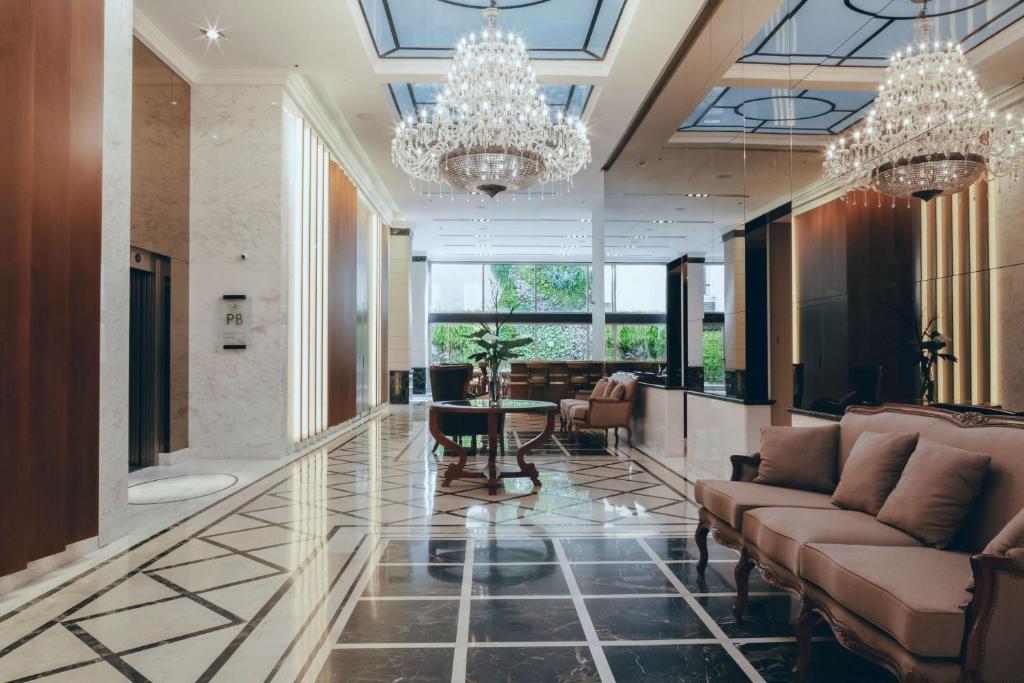
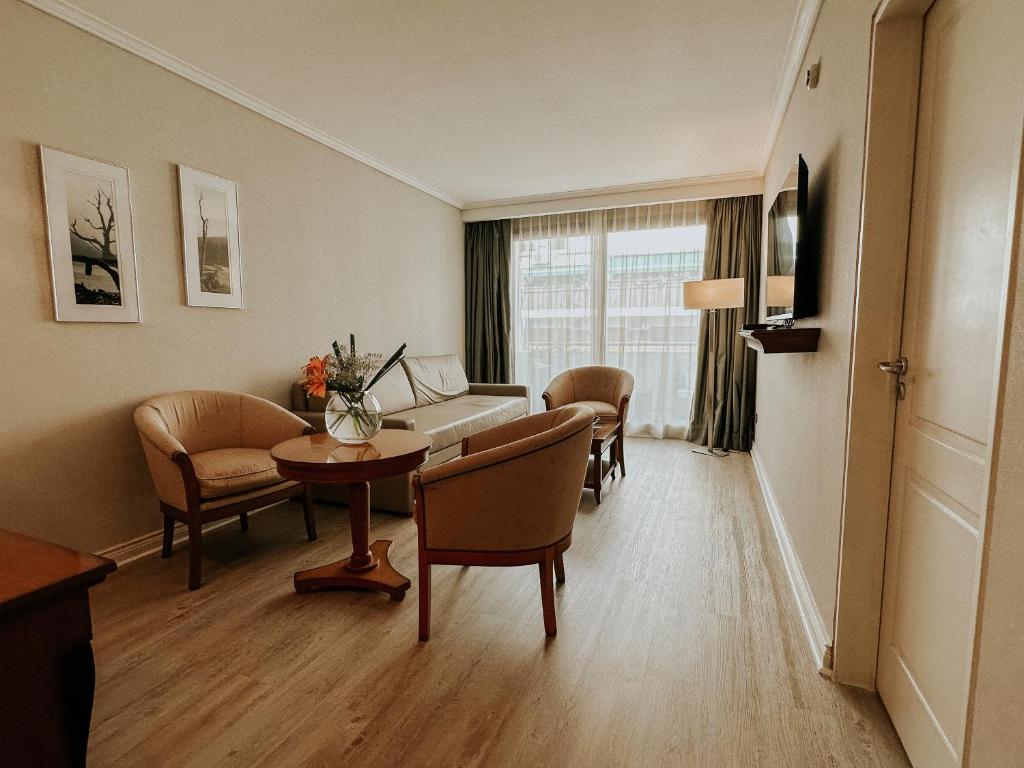
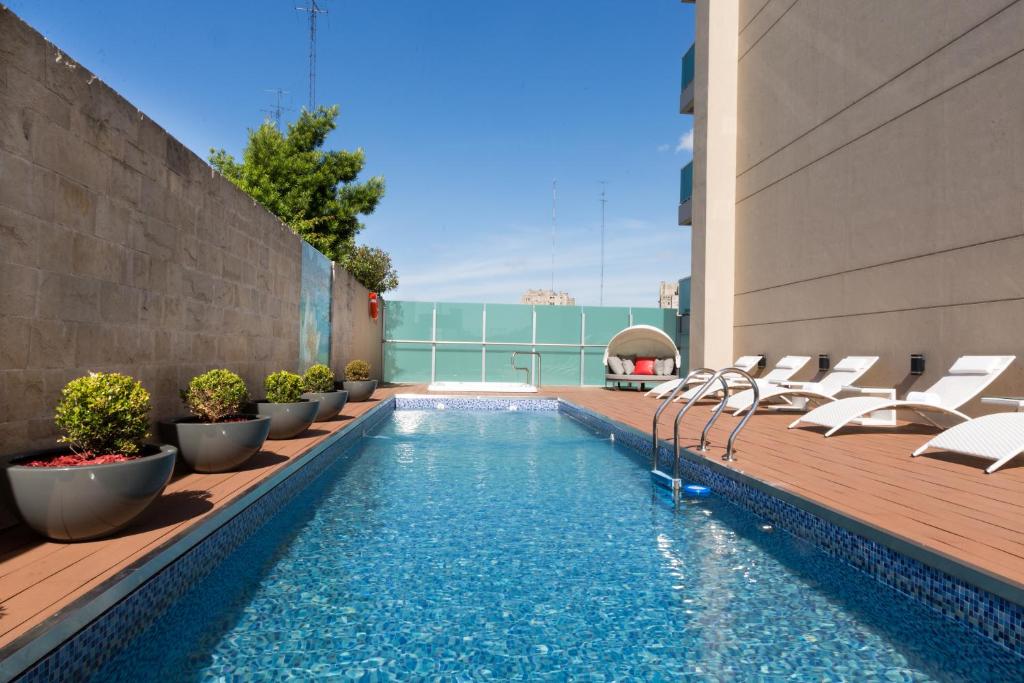
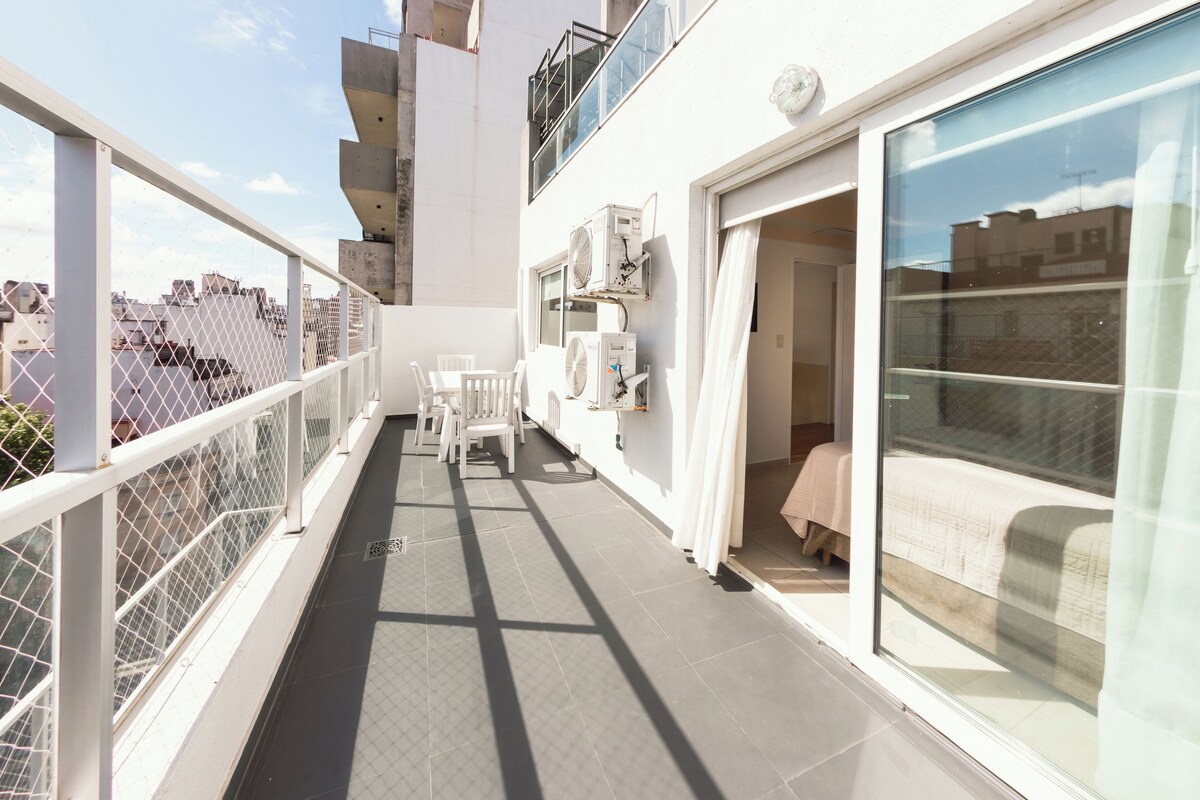
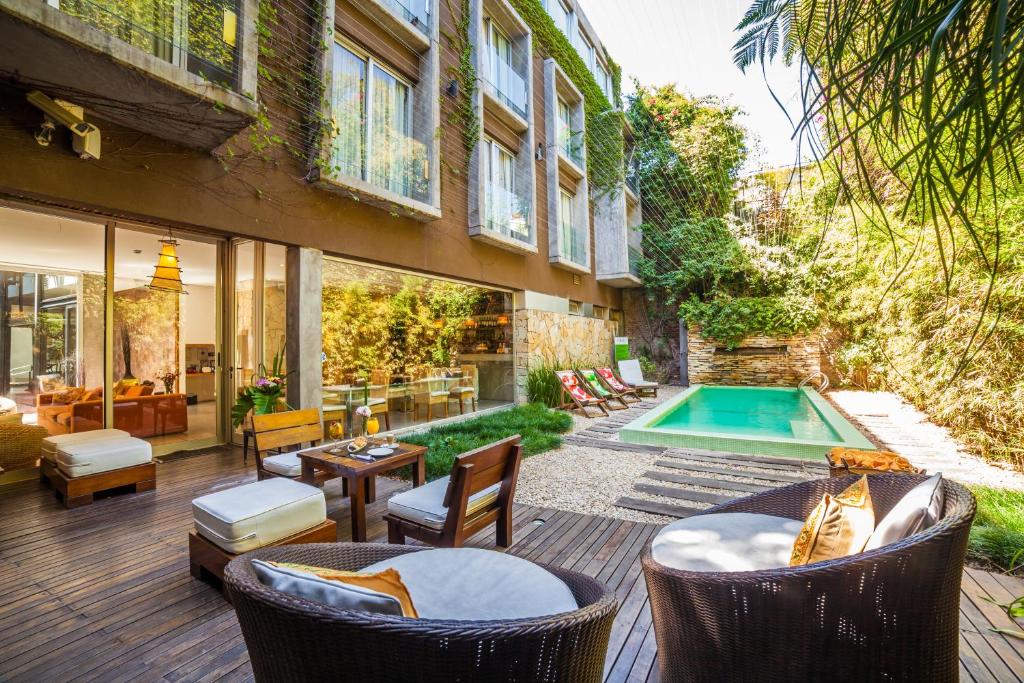
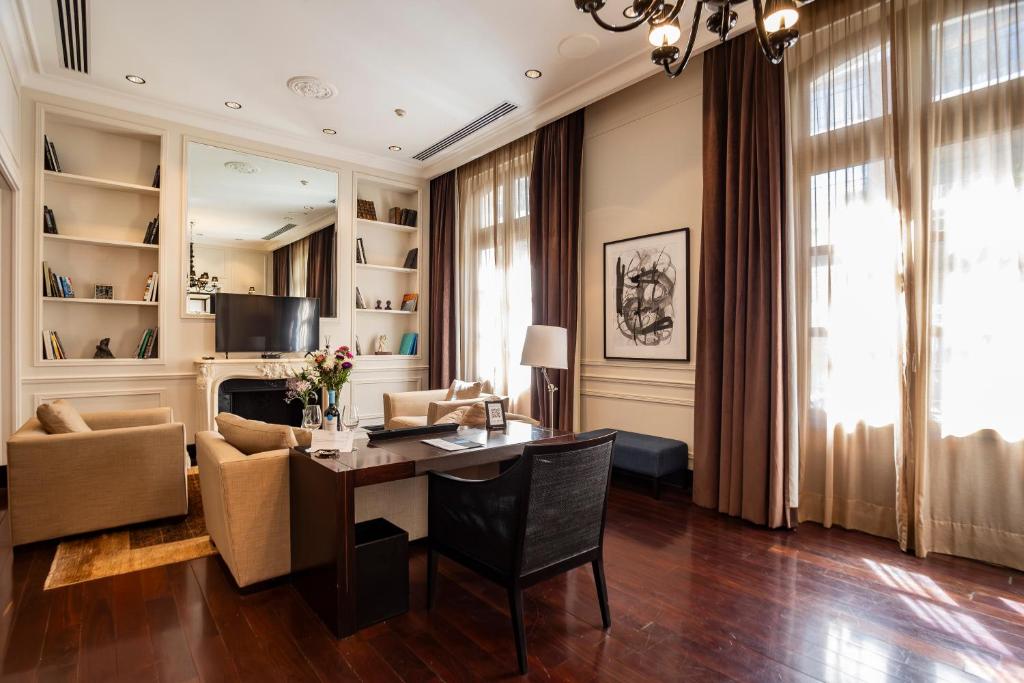
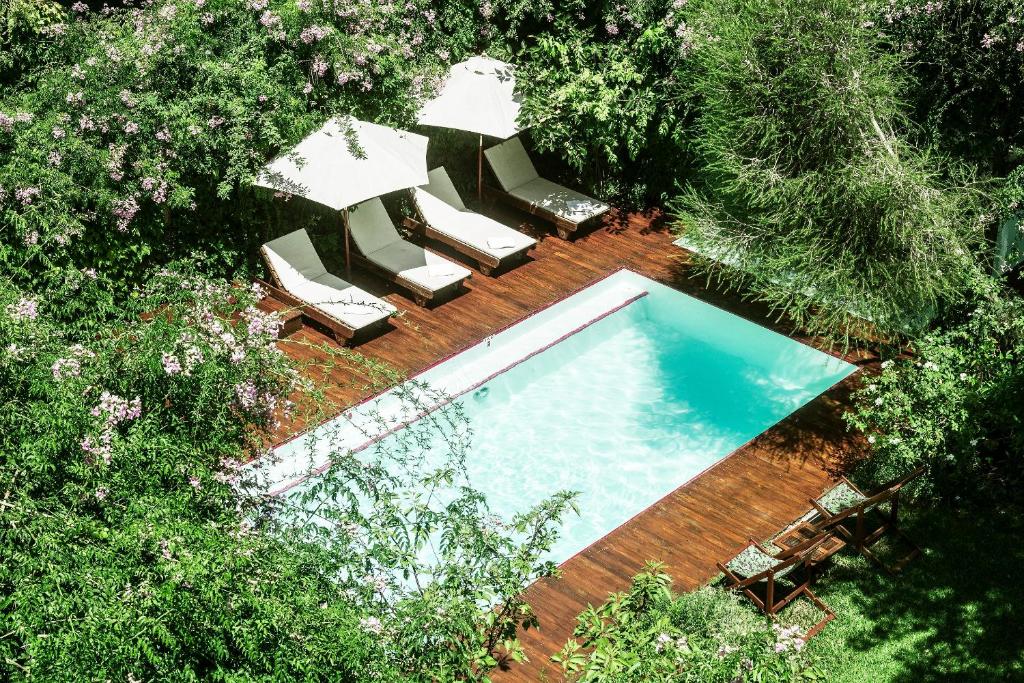
Hotel amenities: outdoor swimming pool, balconies, air conditioning, free Wi-Fi, flexible check-in/out, flexible breakfast hours, in-room tea / coffee service, local artisanal food
Nearby restaurants: Shambhavi Restaurant, R N Restaurant, Master Chef (restaurant), Adlem Goi (restaurant), Amparo Bar and Restaurant, Greenyard Restaurant & Bar
Nearby misc.: Goa Streetz (café), Sanjay’s Cafe, Old Goa Wine Shop, Wine Terminal, Fulari’s Eater’s Den (grocery store), Old Goa Book Stall, Fashion Spirit, Old-Goa Jetty, Statue of Jesus (historical landmark), Mill Stones of Gun Powder Factory (historical landmark), St. Augustine Tower, Archaeological Museum of Goa, Archaeological Survey of India, Museum of Christian Art, Se Cathedral, Church of St Francis of Assisi, Chapel of St. Catherine of Alexandria, St. Basilica Church, Baingineshwar Shrine, Avinash Medical Stores
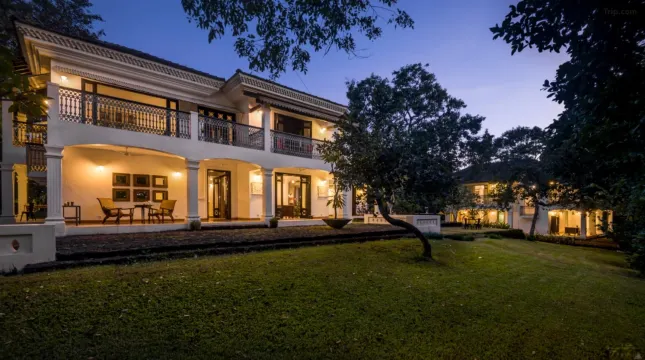
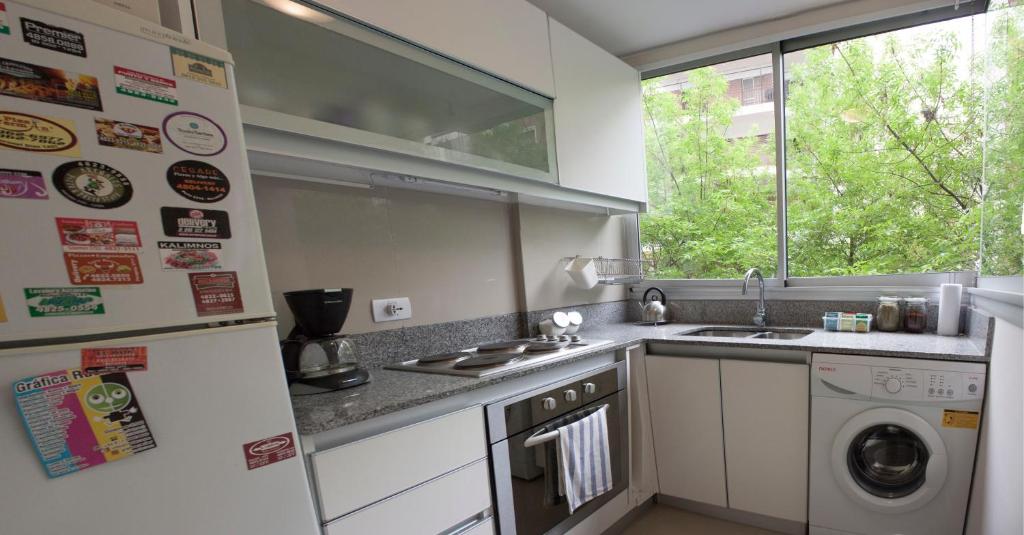
Villa amenities: 5 bedrooms, 5 bathrooms with a walk-in shower & dressing room, bar, daily à la carte, continental or full English/Irish breakfast, pool with a view, pool bar, hot tub, terrace, balcony, air conditioning, free Wi-Fi, flat-screen TV, fully-equipped kitchen, washing machine, full-day security, laundry service, free private parking
Nearby restaurants / bars: Kanha Pure Veg Family Restaurant, Stringfellos (restaurant), Tidal Wave Beach Shack (bar)
Nearby misc.: Pure Bliss Russian Massage Centre (massage spa), John’s Boat Tours (boat tour agency), Liquor Spot Candolim (wine store), Shri Shantadurga Devasthan (Hindu temple)
So there they are, Goa accommodations that will help make for an exciting trip. We hope you have found this information valuable and most of all, that you enjoy your time in India!
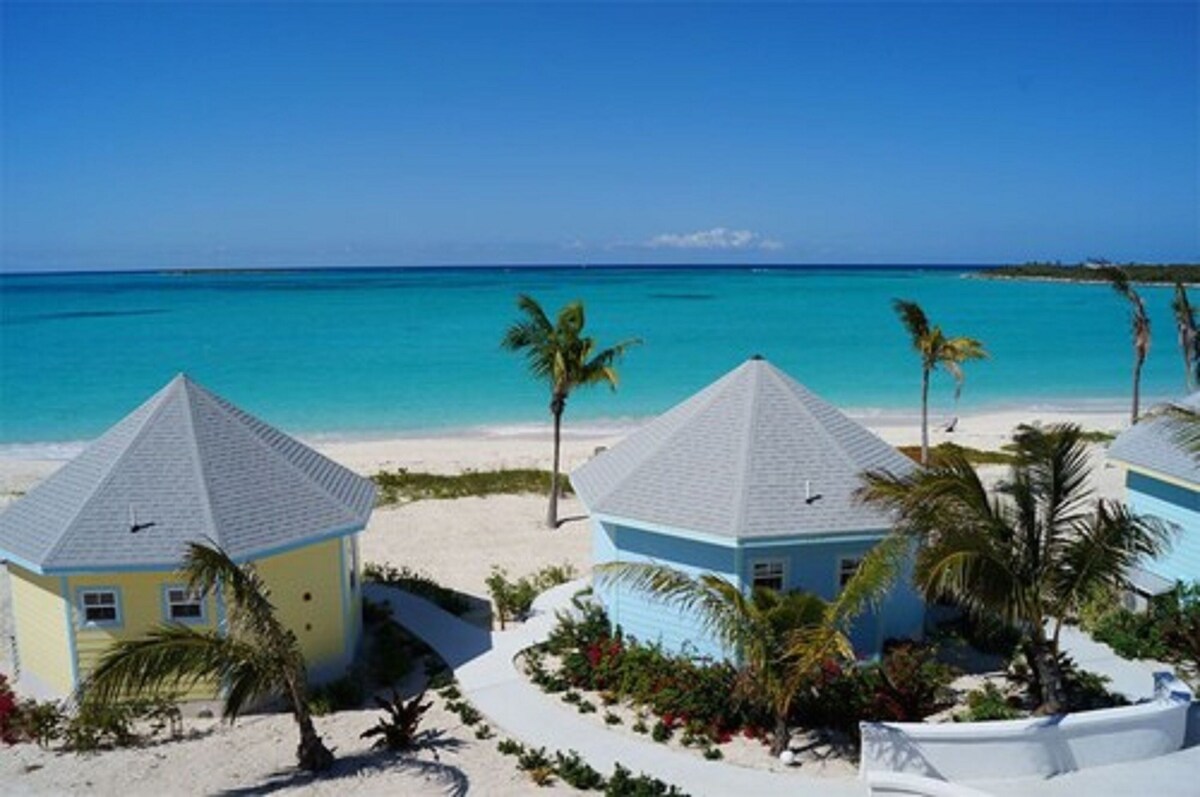
Bahamas accommodations welcome you to a destination nicknamed “The Islands of Song”. Known for its beaches, water activities, fishing, underground caverns, mangrove estuaries, Conch, Bahama Mama cocktails, swimming pigs and pirates, The Bahamas is a 700-island, 2,400-cay archipelago located 315 miles southeasterly of Florida. With visibility upwards of 200-feet below the surface, turquoise, Bahamian waters are some of the world’s clearest. Also some of the world’s best, The Bahamas’ white and pink sand beaches are main draws. Once home to pirate legends such as Henry Every (Long Ben), Benjamin Hornigold (turncoat pirate hunter), Henry Jennings (turncoat pirate hunter), Edward Teach (Blackbeard), John Rackham (Calico Jack), Samuel Bellamy (Black Sam) and Charles Vane, Nassau (New Providence) was probably the greatest first example of a Republic. The Bahamas has become popular for mobile business. In some areas, services such as massage therapy, catering and even bars/bartenders will come to you. When traveling to The Bahamas, keep in mind that English is the primary language, the United States Dollar is readily accepted, cars drive on the left-hand side of the road and the drinking age is 18 years old. Officially, the national currency is the Bahamian Dollar. Colloquial words include tings, meaning “things”, and tanks, meaning “thanks”. While generally a safe destination, it might be wisest not to venture out too much at night, especially outside of tourist areas. Good to know is that all official taxis have the word “Taxi” on the license plate. Lynden Pindling International Airport, located on Nassau, is the islands’ main international airport, with 19 other airports also providing international service. Avis Bahamas provides car rental service at the main airport, while ferrying from Nassau to other islands is possible via the ferry service Bahamas Ferries. Bahamian top events include Junkanoo, Bahamian Music and Heritage Festival, Cat Island Rake And Scrape Festival, Eleuthera Pineapple Festival and All Andros Crab Festival. Bahamas accommodations are some of the West Indies’ best. Before we get to Bahamas accommodations, let’s take a look at some more background information on the area to help you along the way.
The Taino people, moving from Hispaniola, first inhabited The Bahamas sometime around 500 AD. Known as the Lucayan people, original Bahamian residents numbered around 30,000 upon Christopher Columbus’ arrival circa 1492. The first European to discover The Bahamas, Columbus likely made landfall in what he named San Salvador, an island locally known as Guanahani. Columbus exchanged goods with “Indians” in this “New World”, which he claimed for the Crown of Castile. The Treaty of Tordesillas circa 1494 between Portugal and Castile placed The Bahamas in Spanish control. From 1513 to 1648, Castile shipped native Lucayans as slaves back to Hispaniola, resulting in The Bahamas’ desolation. The Bahamas’ first European settlers were known as the Eleutheran Adventurers, led by William Sayle, who commenced development between 1646 and 1648. Sayle, wanting a place to worship God freely while establishing England’s claim to The Bahamas archipelago, settled on the Island of Segatoo, which was renamed Eleuthera after the Greek word meaning “freedom”. King Charles II granted the islands to the Lords Proprietors of the Carolinas circa 1670. From there, the age of piracy and attacks ensued. In 1684, Spanish corsair Juan de Alcon raided the capital of Charles Town (later renamed Nassau). In March 1696, the English pirate Henry Every, captaining the ship Fancy, anchored at Royal Island off Eleuthera. Avery, bribing then-governor Nicholas Trott with gold and silver, established Nassau as a safe-haven pirate base. At this time, the legendary pirate Blackbeard, under Benjamin Hornigold’s tutelage, sought refuge in Nassau. In 1703, a joint Franco-Spanish expedition briefly occupied Nassau during the War of the Spanish Succession. Hornigold, in 1713, led the establishment of Nassau’s Republic of Pirates. The English sea captain, privateer and slave trader Woodes Rogers was sent by the British crown to restore order in The Bahamas. After a difficult struggle, Rogers succeeded in suppressing piracy by way of George I‘s “Kings Pardon“, which would grant clemency to any pirate who agreed no later than September 5, 1718. Many pirates, including Hornigold, agreed to the King’s Pardon and became “pirate hunters”. Others, such as Calico Jack and Charles Vane, were ultimately gibbeted, while Blackbeard was covertly killed in action by way of decapitation. Following the Golden Age of Piracy, African slaves brought to the island made up the majority of the population until 1834, when slavery was abolished. The Bahamas became an independent Commonwealth realm in 1973, and thereafter has relatively flourished by way of tourism and offshore finance.
Officially the Commonwealth of The Bahamas, The Bahamas is an island country in the West Indies’ Lucayan Archipelago. Consisting of an island chain spread out over 500 miles and over 100,000 square miles of ocean, The Bahamas is home to over 400,000 “Bahamians”. One of the Americas’ richest countries, The Bahamas and its currency keeps a 1-to-1 fixed exchange rate with the United States Dollar. Tourism accounts for about 70% of the country’s GDP, and employs about half of its workforce. In 2012, 5.8 million people visited The Bahamas, 70% of which were cruise visitors. Militarily, The Bahamas has only a navy, the Royal Bahamas Defence Force, mandated in the name of the King to defend the territory. Goombay, a musical method of storytelling and dancing with a tropical calypso-style melody, is the islands’ official music, while Rake ‘n’ Scrape and Junkanoo are other music types. Named after the Lucayan people, a branch of the Tainos, the Lucayan Archipelago enjoys a tropical Savannah climate, with average high temperatures ranging from 77 degrees Fahrenheit in January, to 90 degrees in August. Historically, hurricane season has been strongest during the August and September months. Bahamian wildlife includes Conch, flamingoes, sea turtles, Abaco Parrots, Bahamian rock iguanas (vulnerable), Sandy Cay iguanas (critically endangered), dolphins and of course, the infamous Exumus pigs. Tiger Beach, an hour-long boat ride from the Grand Bahamas’ West End, in particular is home to tiger sharks. If and when diving, no matter where but especially at Tiger Beach, it is of course wisest to be with a local guide. Not advisable is ocean-swimming anywhere at night. The most common shark species found around the islands is the Caribbean Reef Shark (endangered), which is typically harmless unless provoked. Inland, Hamilton’s Cave, where the Lucayans are thought to have lived at about 500 AD, is the islands’ largest cave system. Found in shallow waters throughout the islands, mangroves are important ecosystems filled with various wildlife in summer and winter. Bahamas points of interest include Blue Lagoon Island, Atlantis Aquaventure Water Park, Dean’s Blue Hole, Cable Beach and Paradise Island. Local foods include cracked conch (a Bahamian signature dish), rock lobster, stew fish, Johnnycakes (a type of cornmeal flatbread that was an early American staple food), conch salad, pigeon peas and rice, baked crab, souse (head cheese), grouper with grits and rum cake. Fun drinks include the Bahama Mama (rum, orange and pineapple juice, crushed ice), Rum Punch, the Bushwacker (rum-based coffee-like cocktail), Hibiscus Margaritas and more. The Bahamian national drink is switcha, a non-alcoholic, lemon-lime flavored beverage. Excited perhaps by a little background information on the area, we’re ready for Bahamas accommodations that will help make for an unforgettable experience.
Hotel amenities: restaurant, 82-foot lap pool, terrace, spa center, fitness room, local art, flat-screen TVs, energy-conserving automated lights, hairdryers, 24-hour front desk, free yoga classes, squash court, paddle tennis court, water sports facilities, cinema, car rentals
Nearby: Cocoplum Bistro, Island Brothers Cie (French bistro), The Captain’s Table (restaurant), St Paul The Apostle Catholic Church, Captains Beach, Lyford Cay Club Marina
Within feet:
Old Fort Bay Nassau
Within 7 miles:
Cable Beach
Within 12.4 miles:
Atlantis Aquaventure Water Park
Within 2.9 miles:
Lynden Pindling International Airport
Approximate cost per night (executive suite): $1,063
Hotel amenities: outdoor pool, air conditioning, free Wi-Fi, flat-screen TVs, fully-equipped kitchens, free parking
Nearby restaurants / bars: Buccaneer Club (restaurant), Pammy’s (restaurant), New Sunset Inn (restaurant), Four Friends Restaurant, Fish Fry – Home of the “Rum Bubba” (restaurant), 1648 – An Island Restaurant, Tootsie’s Treats (takeout restaurant), Cocojo (bar), Ronnies Hi-D-Way (bar)
Nearby misc.: LMN’s Sweet Treats (ice cream shop), Bacchus Fine Foods (grocery store), Burrows One-Stop Grocery Store, The Tea Kettle Gift Shop & Cafe, Norma’s (gift shop), Edwin’s Turtle Lake Marine Reserve, Leon Levy Native Plant Preserve (national park), Twin Coves Beach, French Leave Beach, RBC ATM
Hotel amenities: fine dining restaurant, 2 outdoor pools, private marina, private terraces with marina views, central air conditioning, cable TVs, fully stocked kitchens, washers & dryers, irons, hair dryers
Nearby restaurants: Manta Ray Beach Club (seafood restaurant), Ocean’s Blue (restaurant), Bernie’s Tekie Hut (restaurant), Michelle’s Kitchen (restaurant)
Hotel amenities: restaurant, outdoor pool, fitness center, air conditioning, free Wi-Fi, flat-screen TVs, coffee machines, bathrobes, hairdryers, snorkeling activities, car rentals
Inn amenities: restaurant, beach bar, free continental breakfast, beach with lounge chairs & snorkeling activities, outdoor pool, tile / wood floors, large windows, light colors, flat-screen TVs, mini-safes, billiards game room, tennis court
Nearby restaurants / bars: Caribbean Pot On Wheel’s Cuisine (Caribbean restaurant), Da Vine Wine Merchants (restaurant), Rock House Restaurant, The Dunmore Restaurant, Sweet Spot Café (Vegan restaurant), Angela’s Starfish Restaurant (restaurant), Famous Brian’s BBQ (restaurant), Ms. V’s Bar & Grill (barbecue restaurant), Arthur’s Bakery (restaurant), On Da Hill Restaurant, The Shack (restaurant), Gusty’s Bar, Vichum Club (bar)
Nearby misc.:Bahamas Coffee Roasters (café), bluwatur bakery (bakery), Kay Markets (supermarket), Captain Bobs Marketplace (grocery store), Pigly Wigly (grocery store), Bristol Wine and Spirits (liquor store), Morlyfe Wholesale & Retail Liquor Store (liquor store), TIP Touch Massage (massage therapist), The Blue Rooster (clothing store), ConchPearlCatering (mobile caterer), Princess Street Gallery (art gallery)
Approximate cost per night (One bedroom Oceanfront Cottage): $1,411
So there they are, Bahamas accommodations that will help make for an unforgettable trip. We hope you have found this information valuable and most of all, that you enjoy your time in the Caribbean!
Jamaica accommodations welcome you to a destination nicknamed “Rock” and “Jamrock”. Known for its beaches, coral reefs, diving, snorkeling, mountains, rainforests, waterfalls, mineral springs, British-colonial architecture, jerk food (dry-rubbed / wet-marinated with hot spices), Caribbean restaurants, bars, rum, Red Stripe beer and Blue Mountain coffee, Jamaica is found atop teal Caribbean Sea, and relatively close to Haiti, Cuba and Cayman Islands. A Caribbean island nation, Jamaica is home to tourist towns such as Negril (western coast), Montego Bay (northwestern coast) and Ocho Rios (northern coast), while its capital city, Kingston, is located on the island’s southeastern coast. The word “Jamaica” derives from an indigenous Caribbean word meaning either “land of wood or water” or “land of springs”.
Jamaica main attractions:Rick’s Cafe (Negril Caribbean restaurant), Dunn’s River Falls, Mystic Mountain, Emancipation Park (Kingston state park), Bob Marley Museum (Kingston Museum), YS Falls (tourist attraction), Bamboo Beach Club (Falmouth beach club), Appleton Estate Rum Tour (tourist attraction), Doctor’s Cave Beach (Montego Bay beach), Green Grotto Caves (Discovery Bay tourist attraction), Jamaican Bobsled Rollercoaster (Ocho Rios tourist attraction), Reach Falls (Manchionea ecological park – waterfall, swimming area, wildlife), Old Spanish Bridge (tourist attraction), Island Gully Falls (tourist attraction – waterfalls, pools, jumping, rope swinging), Rocklands Bird Sanctuary (Montego Bay bird watching area), White River Calypso Rafting & Tubing (tourist attraction), Benta River (Pennycooke park), Mayfield Falls & Mineral Springs (Pennycooke tourist attraction), Blue Mountain Peak (mountain peak), Sun Valley Plantation Hummingbird Garden
Jamaica’s official language is English, though most islanders speak a dialect known as Patois. Patois examples are Weh Yuh Ah Seh (what are you saying?), Small up yuhself (make room), Mi Deh Yah (everything is okay), Mi Soon Come (I’ll be right there), Inna di morrows (I’ll see you tomorrow) and Wah Gwaan (what’s up?). When visiting Jamaica, be sure to take extra precautions in Kingston, and be mindful of your surroundings even in Montego Bay, while not flaunting jewelry or smartphones. When traveling outside of tourist areas, it’s best to use a tour agency. In Jamaica, Cars travel on the left-hand side, the drinking age is 18 years old and currency is the Jamaican Dollar. Jamaica accommodations are some of the Caribbean’s best. Before we get to Jamaica accommodations, let’s take a look at some more background information on the area to help you along the way.
Archaeological evidence suggests that the first human presence in Jamaica dates to around 600 AD. At that time, it is believed that the “Redware people” arrived, followed by the South American Taíno people circa 800. The Taino, possibly numbering 60,000 at one point, farmed and fished in south Jamaica near Old Harbour. When England took control of the island in 1655, some of the remaining Taino fled into interior regions and merged with African Maroon communities. Prior to England, however, Spain was the first European country to spot Jamaica. Christopher Columbus, in 1494 on his second voyage to the Americas, claimed the island for Spain. Columbus’ first sighting was of St. Ann’s Bay, which he named “Saint Gloria”. Columbus returned to Jamaica in 1503 and became shipwrecked, causing him and his crew to live on the island for a year while awaiting rescue. Juan de Esquivel established the island’s first Spanish settlement, Sevilla, circa 1509 just west of St. Ann’s Bay. Deemed unhealthy, Sevilla was abandoned in 1524, and Spanish Town became the new capital around 1534. The Taino perished in large numbers due to introduced diseases and enslavement by the Spanish. Consequently, Spain began importing African slaves, many of which escaped enslavement to the mountainous interior and became known as Maroons. Jamaica’s population dwindled to no more than 3,000 by the early17th century. Beginning with the 1655 invasion of Jamaica, England took control of the island from Spain by way of the 1657 Battle of Ocho Rios and the 1658 Battle of Rio Nuevo, with support from the Maroon community. Spain made several attempts to recapture Jamaica. In turn, Britain supported pirates’ attacks on Spanish ships in the Caribbean. Port Royal, at the mouth of Kingston Harbour, became a notorious pirate center. With the 1670 Treaty of Madrid, Spain gave up their ambitions to recapture Jamaica. Jamaica’s population numbered about 4,500 white and 1,500 in 1660. A decade later, African slaves working on English sugar cane plantations made up a majority of the population. Becoming indentured laborers as a consequence of the Wars of the Three Kingdoms, Irish made up about two-thirds of the island’s white population around 1655. Sugar, coffee, cotton and indigo accounted for a strong economy in Jamaica during the 1700s. During the 18th century, slaves ran away to join the Maroons, which resulted in a number of wars such as the Maroon and Tacky’s Wars. In 1807, the British abolished the slave trade, but not the institution itself, which led to the 1831 Baptist War. Also known as the Sam Sharp Rebellion, the Baptist War between the Colony of Jamaica and slave rebels resulted in a suppressed rebellion. In 1872, Jamaica’s capital transferred from Spanish Town to Kingston. Jamaica gained independence on August 6, 1962, albeit with a membership in the Commonwealth of Nations.
The Caribbean’s third-largest island at 4,240 square miles, Jamaica is home to around 2.8 million Jamaicans. Roughly 77% of the population is made up of Afro-Jamaicans. Around 70% of Jamaica’s population identifies as Christian, almost entirely practicing Protestantism. Jamaica’s government is a unitary parliamentary constitutional monarchy, meaning that a hereditary monarch (Great Britain) is the sovereign and head of state. Heavily dependent on tourism, Jamaica welcomes around 4.3 tourists annually. Top sports are cricket and football, while the island also is known for its world-class track-and-field sprinters. Jamaica’s climate is tropical, with hot, humid weather throughout the year along the coastline. Inland regions tend to be more temperate, and hurricanes are entirely possible. Jamaica’s national bird is the red-billed streamertail, which is a type of hummingbird. Other animals include Jamaican boas, Jamaican hutias (endangered rat-like mammal), fig-eating bats, wild boars, mongoose, American crocodiles, black-billed parrots, Jamaican blackbirds, Greater flamingos, treefrogs, Jamaican sliders (freshwater turtle), Jamaican parrotfish, dolphins and manatees. Additional points of interest include Doctor’s Cave Beach Club and St. Ann Parish. Located in Montego Bay, Luminous Lagoon is a bioluminescent bay that glows at night when disturbed due to dinoflagellate plankton. Local foods include jerk chicken, pork & fish, pea soup, oxtail, fried breadfruit and goat curry, while Jamaica’s national dish is ackee and saltfish. Popular drinks are beer (Red Stripe), rum, tea, ginger beer, rum punch and the “dirty banana” (rum, coffee liqueur, banana liqueur, a fresh banana, half and half cream). With some background information on the island, we’re ready for Jamaica accommodations that will help make for an exciting adventure.
Resort amenities: private cove, restaurant, bar, outdoor pool, sea views, hot tub, massage services, flat-screen TVs, kitchenettes
Nearby: The Lodge Restaurant at Tensing Pen Hotel (Caribbean restaurant), Kool Vybes (Jamaican restaurant), Sunset Walk (Jamaican restaurant), Shark (restaurant), Just Natural (restaurant), Murphy’s West End (restaurant), Ivan’s (restaurant & bar), Sir D’s (bar), Whoopees Park (bar), Wake N Bake Café
Hotel amenities: private beach area, restaurant, bar, outdoor swimming pool, terrace, balconies, garden, free Wi-Fi, 24-hour front desk, free private parking, airport transportation
Nearby restaurants / bars:Blue Mahoe (restaurant & bar), Chicken Lavish Restaurant (restaurant), Pirates Dock (bar & grill), Connie’s Country & Western Bar, Canoe Beach Bar
B&B amenities: bar, outdoor swimming pool, sun terrace, patio, garden views, fitness center, air conditioning, free Wi-Fi, flat-screen TVs, à la carte breakfast, free private parking
Resort amenities: multiple restaurants & bars, lounge, private beach, swimming pool, swim-up pool bar, spa, fitness center, golf course, basketball / volleyball courts, 4 squash courts, 11 tennis courts, Equestrian center, 24-hour medical center
Nearby restaurants / bars: Il Giardino Restaurant, Island Juices (restaurant), The Jerk Hut, Splendid Jam Cafe & Grill, Renus Sports Bar & Gaming Lounge
Hotel amenities: restaurant, outdoor pool, sun terrace, balconies with hammocks, spa, air conditioning, free Wi-Fi, flat-screen TVs, hairdryers, 24-hour front desk, concierge service, car rentals, water sports facilities, billiards, darts, free parking
Hotel amenities: restaurant, patios, spa, fitness center, hardwood floors, modern décor, mini-bars, digital surround systems, mobile phone upon arrival, 500 thread-count cotton sheets, on-site recording studio
Nearby:Woody’s Low Bridge Place (Jamaican restaurant), Pellew Island (Monkey Island), Blue Lagoon (swimming lake)
Within feet:
Frenchman’s Cove Beach
Within 2.4 miles:
Rotary Park
Within 3.1 miles:
Bikini Beach
Within 30 miles:
Norman Manley International Airport
Tinson Pen Airdrome
Approximate cost per night (Three-Bedroom Villa): $1,770
Hotel bells and whistles: on-site dining, private cave dining for an extra cost (reserved upon check-in), rum bar, bar made from two limestone grottos, 24-hour self-service bar, private terraces, cliff-side guest suites, cottages with ocean views, cliffside hot tub, coffee-making facilities, mini-bars, in-room dining options, free bike rentals, snorkeling tours, local transfer service
Hotel amenities: dining options, golden sand beach, pool with bay views, spa, air conditioning, free Wi-Fi, iPod docking stations, Jamaican Blue Mountain Coffee
House amenities: 2 bedrooms, outdoor swimming pool, terrace, free Wi-Fi, flat-screen TV, fully-equipped kitchen, washing machine, indoor play area, outdoor play equipment, private entrance, full-day security, free private parking
Within feet:
Caymanas Golf Club
Within 5 miles:
West Cumberland Park
Worlian Park
Within 7 miles:
Portmore Mall Entertainment Complex
Portmore Park
Within 23 miles:
Norman Manley International Airport
Approximate cost per night: $109
Cost per person (four people): $27
So there they are, Jamaica accommodations that will help make for an outstanding trip. We hope you have found this information valuable and most importantly, that you enjoy your time in the Caribbean!
Cayman Islands accommodations welcome you to a destination also known as “The Caymans”. Known for its 7-mile beach, turquoise waters, white sand, parks, ponds, bays, points, waterfront restaurants, snorkeling, scuba diving, sport fishing, endangered iguanas, seabirds, red-footed boobies, sea turtles and stingrays, Cayman Islands is located about 270 miles westward of both Cuba and Jamaica. A British Overseas Territory, the Cayman Islands consist of 3 islands, Grand Cayman (largest), Cayman Brac and Little Cayman (smallest).
Keep in mind that Cayman Airways is the only airline that operates between Grand Cayman and Cayman Brac, with no ferry service.
Named after rum barrels that once washed up along its shoreline, Rum Point is one of the Caribbean’s most picturesque beaches / snorkeling areas. Starfish Point, home to shallow-water starfish, is in the vicinity of Rum Point. A popular yet secluded recreational spot, Stingray City consists of a series of shallow sandbars in Grand Cayman’s North Sound. Snorkelers may encounter / swim with southern stingrays at Stingray City. Relative to other Caribbean getaways, The Caymans tend to be more expensive. Cayman Islands, where sandals and sunscreen are essential items, offer more of a laid-back setting than an energetic nightlife scene. On Cayman Islands, cars travel on the left-hand side of the road, currency is the Cayman Islands Dollar (KYD) and the drinking age is 18 years old. USDs are accepted readily as well. Cayman Islands accommodations are some of the Caribbean’s best. Before we get to Cayman Islands accommodations, let’s take a look at some more background information on the area to help you along the way.
A lack of archaeological evidence suggests that prior to European arrival, Cayman Islands was uninhabited. During his final voyage to the Americas, Christopher Columbus is thought to have been the first European to sight the islands on May 10, 1503. Columbus named the new islands “Las Tortugas” in honor of the large turtle population discovered there. In turn, the turtles were hunted to near-extinction. Also present on the islands were caimans, a type of alligatoroid. Thus, the islands were referred to as “Caimanas” or “Caymanes”, and eventually were so-named. Following Columbus, no immediate colonization ensued. However, a variety of settlers arrived on the islands such as pirates, Cromwell deserters and shipwrecked sailors. Legendary pirate Blackbeard, whose real name was Edward Teach, was known to operate in Cayman Islands waters. As legend goes, treasure buried by Blackbeard still rests somewhere in a Cayman Brac cave. In 1586, Sir Francis Drake visited the islands briefly. Grand Cayman’s first permanent inhabitant, Isaac Bodden, was born on the island sometime around 1661. Bodden was the grandson of an original settler, who is thought to be one of Cromwell’s deserters involved in the British capture of Jamaica from Spain circa 1655. The 1670 Treaty of Madrid resulted in England’s formal control of Cayman Islands and Jamaica. During the 1730s, a permanent English-speaking population, along with the introduction of slaves by way of Scottish colonial administrator and governor of Jamaica Robert Hunter, appeared. A famous event in Cayman Islands’ history was the Wreck of the Ten Sail, an East End shipwreck that occurred on February 8, 1794. During the shipwreck, Caymanians rescued crews from ten merchant ships to include HMS Convert. In 1802, the islands’ first census tallied a total population of 933 on Grand Cayman, with 545 being slaves. The British Parliament’s Slavery Abolition Act in 1833 abolished slavery in the Cayman Islands. A dependency of the Crown Colony of Jamaica, Cayman Islands was officially declared on June 22, 1863. Cayman Islands became a separate Crown colony following Jamaica’s independence as a Commonwealth realm. In 1952, Owen Roberts International Airport opened, and a tourism boom ensued. Following Jamaica’s Independence in 1962, Cayman Islands came under direct British rule, though the islands historically have been a tax-exempt destination. In 1972, a new constitution was written, and Cayman Islands was granted a large degree of internal autonomy. Hurricane Ivan caused 2 deaths and $4.61 billion in damages on Cayman Islands in 2004.
Home to around 88,000 “Caymanians”, Cayman Islands is the largest (by population) self-governing British Overseas Territory. Over 100 square miles in total area, the territory is part of the Western Caribbean zone and Greater Antilles. The Cayman Islands’ government is a Parliamentary dependency under a constitutional monarchy, meaning that is does not possess full political independence or sovereignty as a sovereign state. Cayman Islands’ capital, George Town, has a population of around 40,000. Around 70% of the islands’ population identifies as Christian. Naturally, English is the territory’s official language. In 2019, The Caymans’ GDP totaled around $4.78 billion. Caymanians, as well as Cayman Islands companies, enjoy zero direct taxation. Apart from tourism, shipping is also a key economic contributor. Home to a tropical wet and dry climate, The Caymans’ average high temperature remains in the 80s degrees Fahrenheit throughout the year. The islands’ rainiest months are September and October. Although rare, hurricane landfall is entirely possible, with Ivan being the last hurricane to hit land in 2004. Hurricane season occurs from June to November. Additional points of interest are George Town, Heroes Square , Mastic Trail, Pedro St. James Castle, East End Light, Hell and Truman Bodden Sports Complex. Local foods include seafood, coconut shrimp, jerk chicken, turtle soup and stew. The Caymans’ unofficial national dish is cassava (heavy cake, margarine, vanilla, boiled coconut milk, brown sugar, spices, grated cassava). Fun drinks are rum punch, daiquiris, piña coladas, bikini martinis and the seven mile breeze (local vodka, cranberry / grapefruit juices, over ice, garnished with lime). The Mudslide frozen drink (vodka, coffee liqueur, Irish cream, vanilla ice cream, chocolate syrup) originates from Rum Point circa the 1970s. With some background information on the area, we’re ready for Cayman Islands accommodations that will help make for an outstanding experience.
Hotel amenities: restaurant, bar, à la carte, continental or American breakfast, outdoor swimming pool, air conditioning, free Wi-Fi, flat-screen TVs, tea / coffee makers, safety deposit boxes, hairdryers, 24-hour front desk, luggage storage space, facilities for disabled guests, free parking
Hotel amenities: 6 restaurants, bar, snack bar, outdoor pool, sea views, terraces, balconies, spa, hot tub, air conditioning, free Wi-Fi, desks, concierge services, tennis court, on-site shops, facilities for disabled guests, free on-site parking
Nearby restaurants / bars:The Falls Steakhouse, Luca Restaurant (Italian restaurant), Good Mood Food Co. (restaurant), Yoshi Sushi, Edoardo’s (Italian restaurant), Blue by Eric Ripert (restaurant), Andiamo (restaurant), Seven (restaurant), Sunshine Grill, Legendz Bar and Grille, Bar Jack, Barolo Bar
Hotel amenities: restaurant, bar, Full English/Irish, American or vegetarian breakfast, nightclub, private beach area, 2 swimming pools, sea views, terrace, garden, hot tub, fitness center, air conditioning, free Wi-Fi, flat-screen TVs, tea / coffee makers, mini-bars, 24-hour front desk with English, Spanish, French and Italian-speaking staff, free bike usage, table tennis, water sports facilities, free private parking
Nearby misc.: The Wine Cellar, Big Daddy’s Liquor Store, Smoothie King, Buy Smart (discount store), The Grand Pavilion (business center), Waterman Cayman Surf Co
Hotel amenities: restaurant, bar, à la carte / American breakfast, private beach area, 3 swimming pools, sea views, terraces, balconies, garden, fitness center, air conditioning, flat-screen TVs, coffee machines, electric tea pots, safety deposit boxes, desks, tennis court, free shuttle service
Nearby: The Farm Restaurant
Within feet:
Cayman Brac
Within 7 miles:
The Bluff Mountain
Within 18 miles:
Hungry Iguana Restaurant & Bar
Le Soleil D’or is 4.9 miles from Charles Kirkconnell International Airport.
So there they are, Cayman Islands accommodations that will help make for an incredible trip. We hope you have found this information valuable and most importantly, that you enjoy your time in the Caribbean!
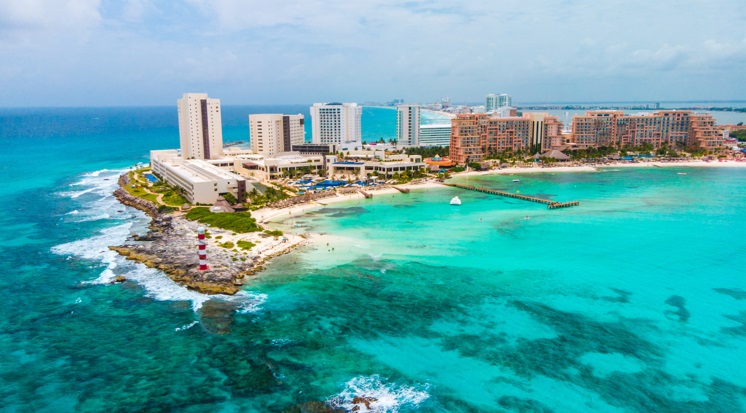
Cancun accommodations welcome you to a destination that was once a deserted island, separated from the mainland by two narrow canals. Known for its playas (beaches – white sand), clear turquoise waters, nightclubs, restaurants, bars, parks, marinas, Mayan ruins, shopping malls, watersport activities and dolphin sightings, Cancun is located on the Yucatán Peninsula’s northeastern coast, about 70 miles north of Cozumel island, and about 190 miles east of the Mexican state of Yucatán’s capital city, Merida.
Cancunmain attractions: Mercado 28 (flea market, food stalls, shops), Plaza Las Americas (shopping mall), La Isla Cancún (shopping mall), Playa Delfines (white-sand beach, umbrellas, restaurants, dolphin sightings), Playa Langosta (public beach, white sand, playground, restaurants, public restrooms), Marina Puerto Cancún (shopping mall), Las Plazas Outlet Cancun (shopping mall), Gran Plaza Cancún (shopping mall), Bubba Gump Shrimp Co. Cancún (restaurant), Ferris Wheel Cancun (tourist attraction), Interactive Aquarium Cancún (aquarium), Museo Maya de Cancún (Mayan museum), Playa Marlín (public beach, white sand, bathrooms, showers, nearby restaurants), Captain Hook Cancun (tourist attraction), Parque Ecológico Kabah (ecological park, vegetation, wildlife, running paths, playground), El Rey Archaeological Zone (250 AD Mayan ruins), Torre Escénica del Embarcadero de Cancún (tourist attraction tower, rotating observation deck), Santuario Maria Desatadora de Nudos (Catholic church), Zona Arqueológica de El Meco (archaeological site)
4.3 miles long and about a half-mile wide, Isla Mujeres (island) is reachable via a short ferry ride courtesy of Ultramar.
Isla Mujerespoints of interest:Playa Norte (public beach, palm tree-lined, beach chairs, restaurants, bars), Punta Sur (ecological park, beaches, lighthouse, large sculptures, path overlooking the ocean), Dolphin Discovery Isla Mujeres (theme park – swim with dolphins), Parador Fotográfico (beachside observation deck – ocean views, photo spot), Garrafon Natural Reef Park (theme park), Café Mogagua (coffee shop), Mango Cafe (breakfast restaurant), Playa Centro, Playa Lancheros “La casa del Tikinxic” (restaurant), Zama Beach and Lounge, Oscars Grill (restaurant), North Garden (restaurant), MUSA (underwater art museum), Soggy Peso (bar & grill), Parque de Los Sueños (water park, ocean slides, pools, zip-lines, restaurant, swim-up bar), Green Verde (Mexican restaurant), Rancho Capricho (bar & grill), Mirador Punta Sur (observation deck), La Palapa del Capitan (restaurant), Isla Brewing Company (brewery), Mayakita Restaurant (breakfast restaurant), Playa El Cocal, Hermosa Caleta (beach), Piscina del Rey (natural ocean pool)
The most popular ways to explore Isla Mujeres are by golf cart, scooter or bicycle, with Good Mexican (golf carts/moped rentals) and BiCi Express (bicycles) being top rental choices.
About a 2-hour drive from Cancun, Chichén Itzá and Tulum are home to some of the world’s most well-preserved Mayan ruins.
Cancun’s professional football club is Cancún F.C., which plays at Estadio Olímpico Andrés Quintana Roo (capacity 20,000) not far from the hotel zone. Of course, Cancun is a college spring break epicenter. When in Cancun, tap water is best avoided for drinking, and even when brushing teeth when possible. Apart from restaurants/bars, be wary of ice in beverages. Cancun’s beaches are known to have strong undertows. Generally, Cancun’s hotel zone, along with Isla Mujeres, are safe places. Nevertheless, and as with any destination, one should remain vigilant, while traveling / going out in a group when possible. Avoiding the city’s inland outskirts is advised. Keep in mind that nightclub drinks can be expensive, so some form of “pre-gaming” might be best. Of course, rideshare service should be utilized when partying if there is no designated driver. Cancun’s currency is the Mexican peso, cars travel on the right-hand side and the drinking age is 18 years old. Cancun accommodations are some of Mexico’s best. Before we get to Cancun accommodations, let’s take a look at some more background information on the area to help you along the way.
Prior to European arrival, the Cancun-area’s Mayan inhabitants referred to the area as Nizuc, meaning ‘promontory’ or ‘point of grass’. The name Cancun derives from the Mayan name kàan kun, which translates to ‘nest of snakes’ or ‘place of the golden snake’ (even though snakes are essentially non-existent in Cancun). Following the Spanish conquest of Yucatán circa the early-16th century, the Mayan population was largely decimated due to warfare, disease and famine. Smaller Mayan settlements survived only on the islands of Isla Mujeres and Cozumel. Apart from the Mayans and Spanish conquistadors, Cancun’s history is largely void until the 20th century. A planned city, Cancun developed to foster tourism at the onset of the 1970s. At that time, Isla Cancan had only three residents, who were Don José de Jesús Lima Gutiérrez’s coconut plantation caretakers. These caretakers lived on Isla Mujeres. The nearby fishing village and military base of Puerto Juárez had a population of around 120. Tourism investors were reluctant to gamble on the unknown and uninhabited area. As such, Cancun’s first nine hotels were financed by the Bank of Mexico. Playa Blanca, which became a Blue Bay Hotel and eventually Temptation Resort, was the first hotel built. Throughout its recent history, Cancun has transformed rapidly from a fishing village into a world-renowned tourist destination.
Founded on April 20, 1970, Cancun today is home to around 630,000 ‘Cancunenses’. The Mexican state of Quintana Roo’s most populous city, Cancun is also the seat of the municipality of Benito Juárez. Cancun is one of Mexico’s easternmost points and is just north of the Riviera Maya resort area. The city’s highest elevation is 30 feet. In 2023, 21 million tourists visited Cancun. Historically, Cancun has accounted for about 15% of total international spring break travel. Home to a tropical climate, Cancun remains hot throughout the year, and benefits from sea breezes that generally keep the temperature below 100 degrees Fahrenheit. Rainy season occurs between August and December, with dry season commencing from December through April. Hurricane season lasts from June through November. Sea temperatures are always warm thanks to the Yucatan current from the south. Additional points of interest include Coco Bongo (night club), The City Nightclub, Puerto Juárez (Isla Mujeres access point), Playa Tortugas, Luxury Avenue (boutique mall), San Miguelito Ruins, Kukulcan Boulevard (resorts, shopping malls, restaurants), Fuente del Ceviche (fountain), Punta Cancun LightHouse and Estadio de Béisbol Beto Ávila. Local foods include fajitas, tacos, burritos, carnitas, empanadas, guacamole and various seafoods. Popular drinks are margaritas, mojitos, daiquiris, piña coladas and the banana monkey (chilled drink, made with coffee liquor, banana, chocolate and coconut). With some background information on the area, we’re ready for Cancun accommodations that are sure to help make for an exciting trip.
Hotel amenities: private marina, poolside restaurant, Palapa thatched hut bar, continental breakfast, outdoor swimming pool with lagoon views, spacious accommodations set in gardens, tiled floors, air conditioning, flat-screen TVs, kitchenettes, mini-bars
Nearby restaurants:LOS DE PESCADO (seafood restaurant), Smashing Burgers (hamburger restaurant)
Nearby misc.: Golden Scissors Barbershop, Magic Sea (boat rental service), Cancun Scuba Center (diving center)
Within feet:
Playa Ancha
Playa Chac Mool
El Rey Beach
Within 1.6 miles:
Jardín de Zona Hotelera
Within 4.1 miles:
Mayan Museum
Sina Suites is 10 miles from Cancun International Airport
Playa Caracol | Cancun Center | Playa Gaviota Azul | Forum By The Sea | Punta Cancun LightHouse
Hotel amenities: multiple fine dining restaurants, outdoor pool, 40,000-square-foot full-service spa, gym with an ocean view, children’s club, balconies, mini-bars, in-room safes
Nearby restaurants / bars:Señor Frog’s, Hard Rock Cafe Cancun, Hooters Cancun, Restaurante Mextreme (Mexican restaurant), Casa Tequila (Mexican restaurant), El Timón De Cancún (restaurant), Casa Persa (Persian restaurant), Ember Kosher (Kosher restaurant), Marinero’s (seafood restaurant), Mocambo Restaurantes (seafood restaurant), PEPPERS Tacos & Caldos, playa gaviotas (seafood restaurant), Calypso’s (Mexican restaurant), La Joya (restaurant), Almadía Cancún (restaurant), Monkey Business (restaurant), Hanaichi (Japanese restaurant), Hiroya Ramen (Japanese restaurant), Tacos Rigo (bar & grill), Abolengo Cancun (bar & grill), Botanero Nacional (bar), Divax Nightclub (bar), Cotorritos (bar)
Nearby misc.:Mandala Cancun (nightclub), Coco Bongo (nightclub), The City Nightclub, Mandala Beach Club, Stones Hair and Spa, Häagen-Dazs (ice cream shop), Súper Chedraui Selecto (supermarket), Plaza La Fiesta (shopping mall), Forum By The Sea (shopping mall), Zingara (swimwear store), Wind & Wave (surf school), Caracol Beach, Playa Lagarto (beach)
Resort amenities: restaurant, buffet breakfast, private beach, outdoor pool, hot tub, fitness center, free Wi-Fi, flat-screen TVs, 24-hour front desk, car rental service
Nearby restaurants:Toscana (Italian restaurant), Duke’s Lobster (American restaurant), El Suspiro (restaurant), Las Olas (restaurant), Chez Isabelle (restaurant), Sports Bar (restaurant), Tinto & Tapas (restaurant)
Nearby misc.:Casino Macao, Westin Lagunamar Main Pool (outdoor swimming pool), Plaza La Fiesta Flamingo Mall, Yamil Lu’um (historical place – 13th century Mayan temple)
Nearby restaurants / bars: La Buena Barra (Mexican restaurant), Cenacolo Hotel Zone Cancún (restaurant), El Fisherman Cancun (seafood restaurant), La Tia Juana (restaurant), Despecho Cancún (bar)
Approximate cost per night (Junior Suite Ocean Front Elite Club): $2,561
Cost per person (three people): $853
So there they are, Cancun accommodations that will help make for an incredible trip. We hope you have found this information valuable and most importantly, that you enjoy your time in Mexico!
New Orleans accommodations welcome you to a destination nicknamed “The Big Easy” and “NOLA”. Known for its fleur-de-lis (heraldic lily symbol ⚜️), streetcars, steamboats, ferries, distinctive neighborhoods, Creole/Cajun restaurants, live music/cocktail bars, coffee houses, cafes, festivals, notable streets, parks, squares, monuments, statues, museums, theaters, art galleries and voodoo shops, New Orleans is located in southernmost Louisiana, not far from the Mississippi border. Flowing in a serpentine path, the Mississippi River passes through the city’s southside before bending southward for 100 miles, splitting into four distributaries (Head of Passes) and emptying into the Gulf of Mexico. A charming city, NOLA is home to Bourbon Street, which hosts the world-famous Mardi Gras celebration. Not far from the Central Business District, Bourbon Street is found in the city’s oldest neighborhood of Vieux Carre Historic District, or French Quarter. Founded by the French in 1718, the French Quarter is home to colorful buildings with cast-iron balconies, jazz clubs, Cajun restaurants, lively bars, street performers and more.
Bordering / surrounding New Orleanspoints of interest: Lake Pontchartrain, Lake Pontchartrain Causeway Bridge (northward, 24-miles long), Lake Borgne, Lake Cataouatche, Jean Lafitte National Historical Park and Preserve (National reserve – wetland area, boat tours, battlefield, cemetery, cultural centers), Bayou Sauvage Urban National Wildlife Refuge (protected marshland, alligators, various bird species, walkways, fishing, hunting), Fort Proctor (historic fort ruins – accessible by boat only), Hopedale Marina, Venice Marina, Pass A Loutre State Wildlife Management Area (wildlife refuge accessible by boat – fishing, camping, crabbing…), Grand Isle State Park (state park – breakwater beach, wildlife viewing, fishing, swimming, hiking, 2.5-mile trail), Grand Isle Beach, Elmer’s Island Wildlife Refuge, Elmer’s Island Beach, Fourchon Marina, Oak Alley Plantation (history museum), Maurepas Swamp Wildlife Management Area (wetland forest, bird-watching, hunting, fishing, camping), Fontainebleau State Park
New Orleans public transportation, including the city’s historic streetcar and ferry services, is managed by New Orleans Regional Transit Authority. New Orleans operates four streetcars, which cost $1.25 one-way (using exact change), with $.25 transfers. Additionally, one may purchase a Jazzy Pass, or utilize the Le Pass app, for unlimited/seamless streetcar rides.
Winners of one Super Bowl, the New Orleans Saints play at Caesars Superdome in the Central Business District. Not far southwest from Caesars Superdome, Smoothie King Center is the New Orleans Pelicans‘ home arena. NOLA vibes are generally laid-back and easy-going. New Orleans is pronounced “New AHL-lee-ins” by locals, or more commonly “New OR-lins”. Some locals speak a unique dialect known as the Yat accent, an example of which being “Where y’at?” (how are you?). Additional accents are Uptown and Black and White working-class dialects. If visiting The Big Easy during Mardi Gras, or Fat Tuesday, there are some things to keep in mind. You’ll want to try and book your hotel at least 8 months in advance. During Mardi Gras, hotels often require 4-to-5-day minimum stays. Mardi Gras rules to remember are to keep coolers and grills at least 6 feet from the curb and to drink beverages in cans or cups, as glass bottles are not permitted. Prolonged flashing/nudity, as well as public urination, can lead to arrest. Be sure to arrive at least 4 hours early for Mardi Gras and remember that the general public’s vehicles are not allowed within the French Quarter during this time. Aside from Mardi Gras, year-round live music seekers may find lively entertainment on Frenchmen Street. New Orleans accommodations are some of the Gulf Coast’s best. Before we get to New Orleans accommodations, let’s take a look at some more background information on the area to help you along the way.
Prior to European settlement, the Choctaw referred to the New Orleans-area as Bulbancha, or “land of many tongues”. Early in 1718, La Nouvelle-Orléans (New Orleans) was founded by the French Mississippi Company, a corporation that held a business monopoly in North America and other places. Named after French prince, soldier and statesman Philippe II, Duke of Orléans, the new city was established on land inhabited by the Chitimacha people of Louisiana’s Southeastern Woodlands. Early-on, the French came into conflict with numerous Native America tribes. Most notably, the Natchez, during the 1720 Natchez Revolt, overran Fort Rosalie and killed approximately 230 French colonists. As a consequence of their revolt, the Natchez were either killed, enslaved or dispersed among other tribes. The actions between the Natchez and French led to the 1730s Chickasaw Wars, from which the Chickasaw, aligned with Great Britain, arose victorious. The Chickasaw tribe persisted in their remote, heavily fortified villages, and were never defeated by the French. Spurred by Chickasaw raids in 1748, French-Louisiana residents near Baton Rouge traveled south to take refuge in New Orleans proper. Following France’s defeat by Great Britain in the Seven Years’ War and the 1763 Treaty of Paris, France ceded Louisiana to the Spanish Empire. The French Quarter’s remaining (to this day) 18th-century architecture, with the exception of Old Ursuline Convent, actually was built during the Spanish period. New Orleans became an important port for smuggling aid, military equipment and supplies farther up the Mississippi River for American revolutionaries. France retook control of New Orleans and Louisiana by way of the 1800 Third Treaty of San Ildefonso (a secret agreement between Spain and France). In turn, however, Napoleon sold the city and state to the United States through the 1803 Louisiana Purchase. The term “Dixie”, as applied to currency, originated in New Orleans. Following the Louisiana Purchase, various ethnic groups immigrated to the city, and slave labor ensued full-throttle on nearby large plantations. By 1809, 63 percent of the Territory of Orleans‘ population was black. Over half a million slaves had been brought to the area by 1810, which fueled the Confederate economy. Altogether, slaves were valued at around half a billion dollars. The “largest slave rebellion in US history” occurred on January 8, 1811, when about 500 enslaved Africans rose up and killed 2 white men, but were ultimately controlled by the local militia. During the War of 1812, the Battle of New Orleans between the United States (led by Major General Andrew Jackson) and the United Kingdom resulted in an American victory. The antebellum period, which spanned from the War of 1812’s end to the onset of the American Civil War, saw the port of New Orleans playing a major role in the Atlantic slave trade. Exports and imports were warehoused in the area, with imports being distributed up-river by smaller vessels along the Mighty Mississippi watershed. Cotton was exported to England and New England. New Orleans had both the Antebellum South’s largest slave market and the nation’s largest community of free persons of color. Horse-drawn, New Orleans’ first streetcar began operating on April 23, 1831 along Elysian Fields Avenue by the Pontchartrain Railroad Company. By 1840, New Orleans had become America’s wealthiest city. New Orleans’ per capita income ranked second in the nation. German and Irish immigrants arrived during the 1840s to work as port laborers. By 1859, New Orleans’ port was handling 659,000 tons of imported goods annually, making it third in tonnage behind Boston and New York. Creole elite were permanently disrupted by way of the American Civil War. A pivotal Civil War battle that would allow the Union unfettered control of the Mississippi River, the Battle of Forts Jackson and St. Philip saw the Union Navy overtake the city in April, 1862. The 1863 Emancipation Proclamation brought with it violence throughout the south. At least 34 blacks and 4 whites died as a consequence of The New Orleans Massacre of 1866. The 1874 Battle of Liberty Place between the White League and Louisiana State Government ultimately resulted in a Louisiana state government victory (with Federal influence). Near the 1890s, Dixiecrats passed Jim Crow laws that established racial segregation. The famous Plessy v. Ferguson Supreme Court decision in 1896 upheld Jim Crow measures. Often credited with the creation of the po’ boy sandwich, the 1929 New Orleans streetcar strike commenced, as Amalgamated Association of Electric Street Railway Employees, Division 194, members sought better pay and working conditions. During World War II, a wartime Rationing Board office was established in the city. By the 1960s, New Orleans had fallen behind Houston, Dallas, Atlanta and Miami in terms of size, and the 1970 census tallied the city’s first absolute population decline since 1803. New Orleans’ tallest building, One Shell Square, now known as Hancock Whitney Center, was completed in 1972. Tourism became an important economic contributor beginning around the mid-1980s. Named Louisiana Superdome (opened August 3, 1975), Mercedes-Benz Superdome and Caesars Superdome, respectively, present-day Caesars Superdome has hosted 7 Super Bowls.
Home to around 385,000 “New Orleanians”, New Orleans, officially a consolidated city-parish, is Louisiana’s most populous city. A major Gulf Coast port city, New Orleans is the United States’ fifth-largest port in terms of cargo volume. Just south of Lake Pontchartrain, NOLA is located in the Mississippi River Delta, a three-million-acre area of land where the Mississippi River confluence meets the Gulf of Mexico. Naturally, both freshwater and saltwater fishing are popular outdoor activities, with fish species to include largemouth bass, speckled trout, redfish, flounder, tuna, red snapper and more. The city’s tallest building at 697 feet is Hancock Whitney Center, formerly known as One Shell Square. Most other skyscrapers are located near Canal and Poydras Streets in the Central Business District, which is just north and west of the Mississippi River. New Orleans famously is home to a range of architectural styles, which include Greek Revival, American Colonial, Victorian, Queen Anne and Italianate, along with shotgun houses, bungalows, cottages, townhouses, double-gallery houses and mansions. Embedded in Roman Catholicism, the area also is characterized by its large European-style Catholic cemeteries. Large tanker ships and smaller steam boats alike can be observed navigating the city’s waterways. Famed playwright Tennessee Williams lived in New Orleans for over 40 years. Williams’ play A Streetcar Named Desire takes place in the French Quarter circa the late-1940s. American trumpeter and vocalist Louis Armstrong was born in New Orleans on August 4, 1901. New Orleans enjoys short, mild winters, while summers are hot and humid. 105°F is the city’s record-high temperature. Snowfall is rare, but is entirely possible. Additional points of interest are New Orleans Museum of Art, Fair Grounds Race Course & Slots, Central Business District, St. Charles Avenue, Crescent City Connection (cantilever bridges), Tulane University and The University of New Orleans. Local foods include gumbo, jambalaya, crawfish etouffee (sweet, meaty crawfish in rich, flavorful gravy), po-boys (traditional Louisiana sandwich – roast beef / fried seafood), muffuletta (round Sicilian sesame bread sandwich), beignets (deep-fried choux pastry) and bananas foster (dessert – bananas / vanilla ice cream). Some fun Mardi Gras drinks are Brandy Milk Punch, Vieux Carre (a variation of the Sweet Manhattan), Sazerac (a cognac / whiskey cocktail) and French 75 (sugary, lemon, gin & champagne cocktail, which dates to World War I). Keep in mind that boozy brunches are quite popular in New Orleans. With some background information on the area, we’re ready for New Orleans accommodations that will help make for a, hopefully, memorable experience.
Hotel amenities: restaurant, bar, continental, American or vegetarian breakfast, air conditioning, free Wi-Fi, concierge service, luggage storage, pool table
Hotel amenities: outdoor swimming pool, whirlpool, 24-hour fitness center, free Wi-Fi, flat-screen TVs, business center, same-day dry cleaning, complimentary breakfast
Nearby restaurants / bars:Reginelli’s Pizzeria (pizza restaurant), The Simple Greek (Mediterranean restaurant), Juan’s Flying Burrito (Mexican restaurant), Johnny Sánchez (Mexican restaurant), Daisy Mae’s® Southern Fried Chicken & Breakfast (breakfast restaurant), Vegan Wit’ a Twist (restaurant), Maypop (Contemporary Louisiana restaurant), Sorella5 (seafood restaurant), Olive (restaurant), P & G Restaurant, Baroness on Baronne (bar), Voodoo Two (cocktail bar)
Hotel amenities: restaurant, complimentary daily breakfast buffet, seasonal outdoor pool, fitness center, free Wi-Fi, flat-screen TVs, 24-hour front desk
Woldenberg Park | The Escape Game New Orleans | Canal Place | The Sazerac House
Hotel amenities: restaurant, bar, continental breakfast, outdoor swimming pool, terrace, balconies, air conditioning, free Wi-Fi, flat-screen TVs, 24-hour front desk, ATM
Hotel amenities: bar, heated rooftop swimming pool, spa, fitness center, high ceilings, coffee machines, safes, marble / granite bathrooms, bathrobes, business center
Hotel amenities: restaurant, American breakfast, nightclub, sun terrace, balconies, fitness center, air conditioning, free Wi-Fi, safety deposit boxes, 24-hour front desk, ATM
Hotel amenities: terrace, air conditioning, free Wi-Fi, flat-screen TVs, coffee machines, hairdryers, 24-hour front desk, concierge service, business center, private parking for an extra charge
Hotel amenities: restaurant, bar, a la carte American breakfast, city views, terrace, fitness center, air conditioning, free Wi-Fi, flat-screen TVs, desks, hairdryers, 24-hour front desk, newspapers, ATM
Nearby restaurants / bars / pubs:Arabella Casa Di Pasta (Italian restaurant), The Franklin (American restaurant), Shank Charcuterie (restaurant), Who Dat Coffee Café (breakfast restaurant), Marie’s Bar and Kitchen, Cafe Istanbul (bar), The John (bar), Artisan Bar and Cafe (bar), Pepp’s Pub
Hotel amenities: 4-Diamond restaurant, lounge, outdoor pool, traditional décor, free Wi-Fi, flat-screen TVs, iPod clock radios, mini-bars, Italian marble baths, concierge, tour desk, child care services, fitness & business rooms
B&B amenities: terrace, garden, air conditioning, free Wi-Fi, flat-screen TVs, bathrobes, hairdryers, à la carte / American breakfast, free private parking
Nearby restaurants / bars:Paladar 511 (Italian restaurant), Marigny Brasserie (American restaurant), Adolfo’s (Italian restaurant), Bamboula’s (Southern restaurant), Royal Sushi & Bar (sushi restaurant), SukhoThai (Thai restaurant), Dat Dog (hot dog restaurant), HORN’S EATERY (breakfast restaurant), 13 (bar & grill), The Yard on Frenchmen (bar & grill), The Friendly Bar (bar), Check Point Charlie (cocktail bar)
Approximate cost per night (King Room with Spa Bath): $452
So there they are, New Orleans accommodations that will help make for an outstanding trip. We hope you have found this information valuable and most importantly, that you enjoy your time in Louisiana!
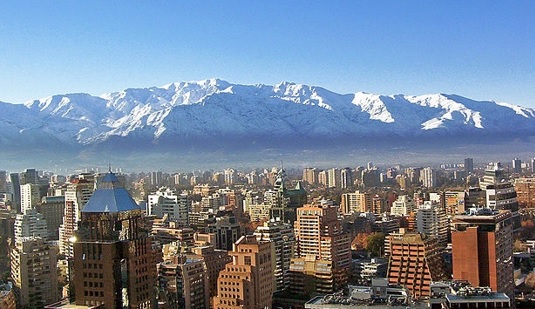
Santiago accommodations welcome you to a destination nicknamed “Santi”. Known for its mountainous backdrop, ski resorts (1.5 / 2-hour drive eastward), beaches (1.5-hour drive westward), hills, cable cars, squares, plazas, parques (parks), gardens, fountains, statues, museums, theaters, shopping malls, markets, restaurants, bars, vineyards and Catholic churches, Santiago is located at about the mid-point of the narrow, elongated, coastal country of Chile. Unique to Santiago, both skiing and beach-lounging make for easily-accessible day trips from the city. Near Santiago’s eastern border, the Andes Mountains reach 22,838 feet in height. The Andes is the world’s longest continental mountain range at 5,500 miles, with widths varying from 120 to 430 miles. Sourced by the Andes, The Mapocho River flows through central Santiago, dividing the city into two districts. The city’s outer ring road is Route 70, also known as CH-70 or the Autopista Circunvalación Américo Vespucio.
Santiago main attractions:Cenco Costanera (shopping mall), Plaza de Armas de Santiago (central square, statues, stately buildings), Parque Arauco. (shopping mall), Mallplaza Egaña (shopping mall), Parque Bicentenario (green space, dog agility course, playground, sports/picnic areas, walking paths), Fantasilandia (amusement park), Santiago Central Market, Movistar Arena (concert hall), Parque Metropolitano de Santiago (large park, green space, cable cars, zoo, forest, statues, pools…), Araucano Park (rose gardens, basketball/tennis, playground, skate park), Estadio Nacional Julio Martínez Pradanos (stadium), Parque Quinta Normal (green space, museums, paddle boats, children’s fountain, food vendors), Plaza Ñuñoa (open-air restaurants/bars, fountains), Reyes Park (sports fields, skatepark, pool, flea market, arts center), Centro Comercial Apumanque (shopping mall), Parque Padre Hurtado (large park, bike paths, mini-golf, skating rink, amphitheater, cafeteria), Mall Barrio Independencia (shopping mall), Gabriela Mistral Cultural Centre, La Fábrica Patio Outlet (shopping mall), Golfo di Napoli Trattoria e Pizzeria (Italian restaurant), Parque Almagro (park, artwork, sculptures), Lo Valledor (produce market), National Zoo, Teatro Caupolican (performing arts theater), Parque Fluvial (riverfront park, paved paths, boat rentals, artificial lagoon, night-time light shows), Mercado Matadero (shopping mall), La Moneda Cultural Center (cultural center), Inés de Suárez Park (fountains, table tennis, avenue of palms, jogging, dog walking), Mercado la Vega (fresh food market), National Museum of Fine Arts (art museum), Museum of Memory & Human Rights (local history museum), Juan Pablo II Park (green space, pond, fountain, playground, sculptures), Fuente Mardoqueo (restaurant), Municipal Theatre of Santiago (performing arts theater – built 1857), National Museum of Natural History, Los Buenos Muchachos (Chilean restaurant), Cerro San Cristóbal (tourist attraction), Parque Bicentenario de Cerrillos (elongated green space, playgrounds, picnic tables, artificial lake, kayaking), Open Plaza Kennedy (shopping mall), Parque Bustamante (green space, bike paths, exercise equipment, literary café, skate park), Chilean Museum of Pre-Columbian Art (ethnographic museum), Drugstore Boulevard (shopping mall), Constitution Place (palace-front square, paved/grass sections, military parades, civic monuments), Club Hípico de Santiago (horse racecourse founded 1869), Bicentenario de la Infancia Park, Pedro de Valdivia Metropolitan Park, National Aerospace Museum (national museum), Santa Laura Stadium, Centro Cultural Matucana 100 (cultural center), Gruta de Lourdes (Catholic grotto inaugurated 1908), Sanctuary on San Cristóbal Hill (Catholic church), Las Pipas de Einstein (wine store), Church of the Blessed Sacrament (Catholic church)
Santiago-area ski resorts (1.5 / 2-hour drive eastward):Valle Nevado, La Parva, Lagunillas del Cajón del Maipo
Santiago-area beaches (1.5 hours westward):Playa El Quisco, El Canelillo (popular white-sand beach – pine forest, swimming, sunbathing), Playa Canelo Canelillo, Playa Grande Las Cruces
Winners of 33 Primera División de Chile titles and 13 Copa Chile titles, Colo-Colo is the city’s top football club, while Universidad Católica and Club Universidad de Chile are the two other professional clubs. When in Santiago, keep in mind that English is not widely understood outside of tourist areas. Chileans tend to be patriotic, and are known to be honest verbally, sometimes even brutally. Aside from New Years, drinking in public places, such as streets or squares, is illegal. Like in Barcelona, dinner can be late, sometimes as late as 11pm. As USDs are seldom accepted in establishments, it’s a good idea to exchange your currency for Chilean Pesos. Santiago’s crime rate is relatively low, though pickpocketing is known to occur. Not far outside the city, some of the world’s largest copper mines operate continuously. As such, air quality can be poor at times. In Santiago, cars travel on the right-hand side and the drinking age is 18 years old. Santiago accommodations are some of South America’s best. Before we get to Santiago accommodations, let’s take a look at some more background information on the area to help you along way.
Around 10,000 BC, nomadic hunter-gatherers from the Pacific coast are thought to have arrived at the Santiago basin. Permanent settlements were not established until around 800 AD, when maze, potatoes and beans started being cultivated along the Mapocho River. From the late 1400s to early 1500s, the area’s Picunche and Promaucae peoples were ruled by The Incas, who established mitimas, or forced resettlement areas, in the center of present-day Santiago. It is believed that the Santiago area, which was a junction along the 25,000-mile long Qhapaq Ñan (pre-Columbian, Andean road system), served as a respite base for failed southerly Inca expeditions. On December 13, 1540, Spanish conquistador Pedro de Valdivia arrived in the Mapocho valley from Peru. Valdivia began interacting with the Picunche people on behalf of Spain’s Charles IV. The city of Santiago del Nuevo Extremo was founded on February 12, 1541 in honor of Spain’s patron saint, the Apostle James the Great. Near Huelén, which Valdivia renamed Santa Lucía, a grid plan was designed by soldier and master builder Pedro de Gamboa. Plaza Mayor, the town’s central hub, was to be developed along with a cathedral (eventual Santiago Metropolitan Cathedral), a jail and the royal governor’s house. Forming the city’s street grid, eight blocks were constructed from north-to-south, along with ten blocks from east-to-west. Chilean colonial architecture became characteristic along the streets. On September 11, 1541, following Valdivia’s departure to the south in order to initiate the Arauco War, the Mapuche chief Michimalonco destroyed most of Santiago del Nuevo Extremo. However, Mapuche and Picunche warriors ultimately retreated thanks to Spanish conquistadora and Valdivia’s mistress Inés de Suárez. Leading the defense from within the city’s fort, Suárez ordered the execution of all indigenous prisoners, and the displaying of their heads (some of which were thrown at the indigenous attackers) on pikes. Suárez’s beheading tactics caused the natives to flee in fear. Thereafter, Santiago was slowly rebuilt, while the new city of Concepción took over briefly in terms of political prominence. The Arauco War, along with frequent earthquakes, delayed Santiago’s overtaking of the political arena. In 1607, the establishment of the Royal Court in Santiago solidified the city as a capital. Food and clothing shortages plagued the city in its early years. Dog, cat, seal lion and fox hides would have to suffice as clothing for some Spaniards. Indigenous attacks, earthquakes and floods continued to hamper the city, but Santiago proved resilient. The city’s first cathedrals were built from 1561-1572, around which time other significant buildings were constructed and tens of thousands of livestock were introduced to the surrounding fertile lands. An earthquake, a smallpox epidemic and flooding created further adversity during the 16th and 17th centuries. Once again, the city pressed onward, with Plaza de Armas established as Chile’s focal point. Constructed in 1767 by Luis Manuel de Zañartu, Calicanto Bridge, which crossed the Mapocho River on the city’s northside, provided a connection to La Chimba. Zañartu also built embankments to help with flooding. Palacio de La Moneda, designed by Italian architect Joaquín Toesca, began construction in 1784, and was completed in 1805. Following the deposition and imprisonment of Spain’s King Ferdinand VII by Napoleon Bonaparte, the September 18, 1810 First Government Junta of Chile was organized to establish post-colonial rule in Chile. The Chilean War of Independence (1812-1827) between Patriots and Royalists, ultimately resulting in a Patriot victory, proved challenging for Santiago. Significant Santiago-area battles during this time were the Battle of Rancagua, the Battle of Chacabuco and the Battle of Maipú, respectively. Following the War, Chilean Independence leader Bernardo O’Higgins became Supreme Director, or Head of State. O’Higgins, during the Patria Nueva (New Fatherland) era, reopened institutions, built the city’s largest cemetery (General Cemetery), completed the San Carlos Canal and converted a southerly drying riverbed into Alameda de las Delicias, the city’s main avenue. From 1820 to 1864, Santiago’s population grew from 46,000 to 69,018, and by 1865 it had reached 115,337. Academic institutions, including the University de Chile, parks and museums were founded during the ensuing Republican era. Connecting communication from Santiago to the Port of Valparaíso, the area’s first telegraph system was inaugurated circa 1851. On September 14, 1857, the first railway arrived in the city, terminating at present-day Alameda. From 1940 to 1960, the city’s population increased from 952,075 to 1,907,378. Gran Torre Costanera, South America’s tallest building, was completed in 2013.
Today, Santiago is home to around 6.2 million santiaguinos (males) and santiaguinas (females). People in Santiago speak Chilean Spanish, which is different than regular Spanish, especially when it comes to slang. English and German are also spoken, but it might be best to learn at least a few Chilean Spanish words/phrases such as cachai?, or “do you understand?”. The world’s second-longest country from north-to-south behind only Brazil, Chile spans just 217 miles east-to-west compared to 2,670 miles north-to-south. The city of Santiago sits at the center of the Santiago Basin, which is flush with fertile land. In the distance, the snow-capped Andes Mountain range can make for impressive, dramatic scenery. Chile’s capital and industrial and financial center, Santiago generates about 45% of the country’s GDP. Santi enjoys a semi-arid climate with Mediterranean patterns. High summer temperatures range in the 90s degrees Fahrenheit while winter highs stay in the 50s. Snowfall is rare. Additional points of interest include Gran Torre Costanera (skyscraper), Torre Entel (TV/telecommunications tower), Titanium La Portada (skyscraper), Barrio Bellavista (skyscraper), Edificio Ariztía (downtown building), Paseo Ahumada (downtown retail street), Sanhattan (financial district), Santa Lucía Hill, Metropolitan Cathedral of Santiago, Church of Santo Domingo, La Moneda Palace (presidential building), National Library of Chile, National Historical Museum, Contemporary Art Museum of Santiago, Central Post Office Building and Universidad de Chile. Local foods include empanadas, pastel de choclo (corn casserole pie with meat stuffing), chacarero (steak sandwich), curanto (seafood, meat and vegetable stew), caldillo de congrio (fish stew/soup), the completo (a type of hot dog), alfajores (cookies) and sopaipilla (fried dough). Popular drinks are wine, pisco (brandy), piscola (Chile’s national drink, pisco, Coca-Cola), pisco sour (grape brandy, lime juice, sugar, egg whites), terremoto (strong and sweet, fermented white wine, local brandy, pineapple ice cream), borgoña (holiday drink, chilled red wine, strawberries) and mote con huesillos (non-alcoholic peach drink). With some background information on the area, we’re ready for Santiago accommodations that will help make for an outstanding experience.
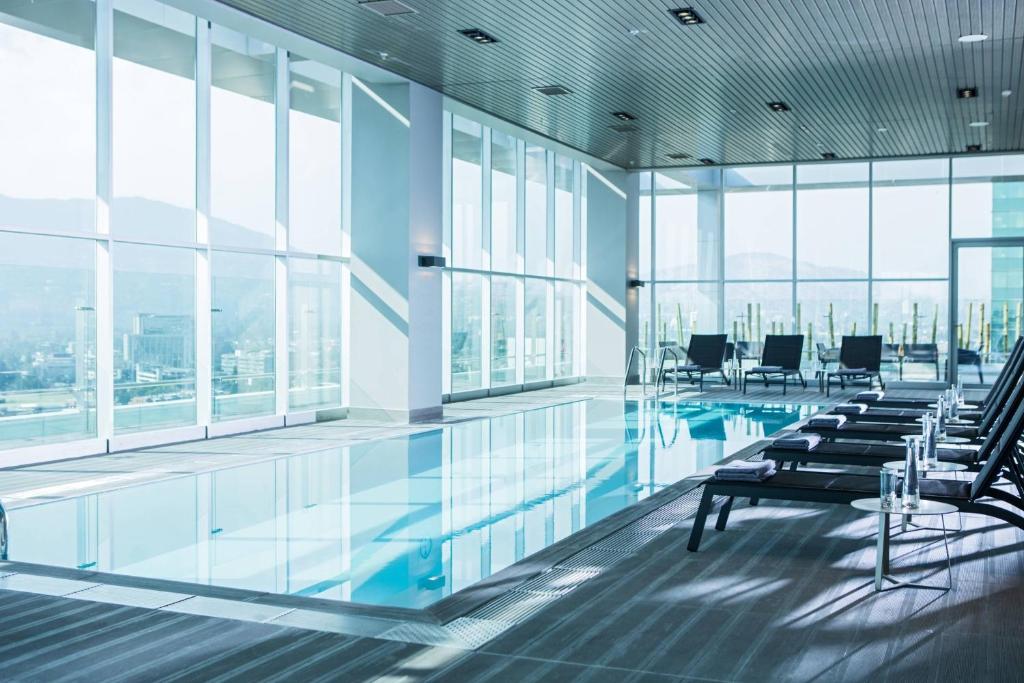
Hotel amenities: restaurant, indoor swimming pool, fitness center, air conditioning, free Wi-Fi, flat-screen TVs, desks, business facilities, free airport shuttle service (request in advance)
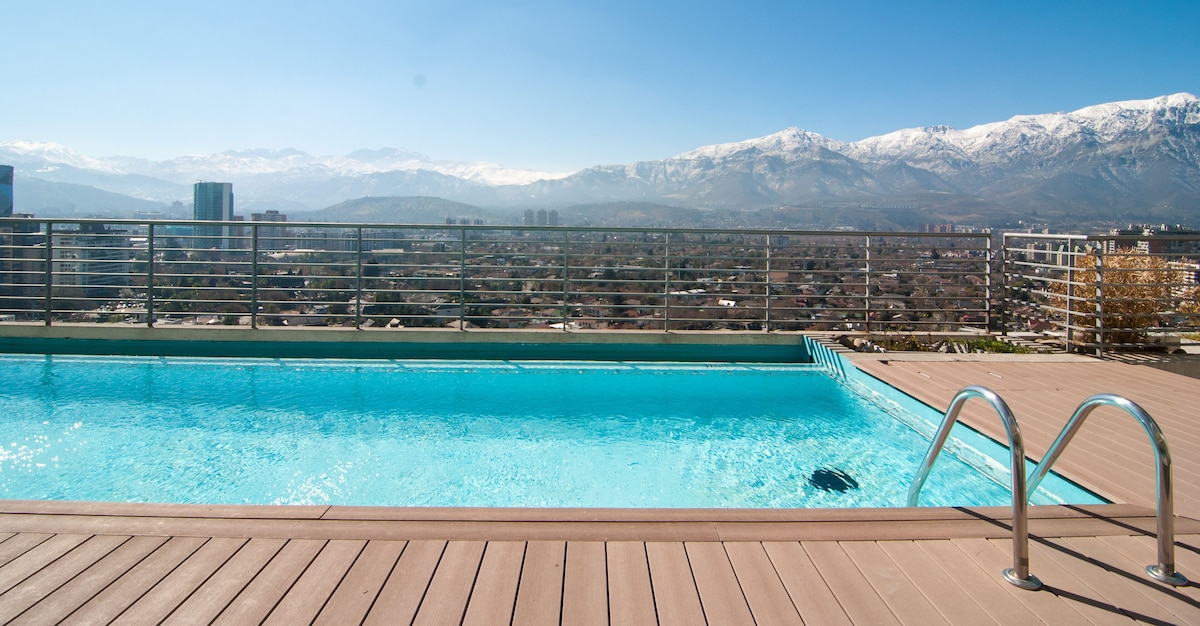
Hotel amenities: restaurant, daily breakfast, seasonal outdoor pool, city views, terrace, fitness center, free Wi-Fi, flat-screen TVs, 24-hour front desk, free private parking
Hotel amenities: restaurant, bar, buffet, continental or American breakfast, outdoor swimming pool, garden, fitness center, air conditioning, free Wi-Fi, flat-screen TVs, 24-hour front desk, free private parking
Hotel amenities: restaurant, bar, buffet breakfast, city views, terrace, fitness center, air conditioning, free Wi-Fi, coffee machines, desks, English & Spanish-speaking reception staff, business area
Nearby:Cacao Much PROVIDENCIA (chocolate café), Jumbo (supermarket), Cineplanet Costanera Center (movie theater)
Hotel amenities: seasonal outdoor swimming pool, sun terrace, garden, free Wi-Fi, continental breakfast, 24-hour front desk, business center, free private parking
Hotel amenities: restaurant with a terrace, outdoor swimming pool surrounded by gardens, balconies, complementary welcome drinks, air conditioning, free Wi-Fi, safety deposit boxes, free parking
Nearby misc.: Da Fud (café), Cafetería “El Jardín” (coffee shop), SUK (dessert shop), Teatro La Memoria (performing arts theater), Montecarmelo Cultural Center (museum), Iglesia Epifanía del Señor (Catholic church)
National Museum of Fine Arts | Museum of Visual Arts | Parque Forestal
Hotel amenities: restaurant, outdoor pool, fitness center, air conditioning, free Wi-Fi, safety deposit boxes, luggage storage, meeting & laundry facilities
Nearby restaurants / bars:Chipe Libre (fine dining restaurant), Holy Moly (restaurant), Bocanáriz (Chilean restaurant), Papachecos Barrio Lastarria (restaurant), Buffalo Waffles (restaurant), Le Bistrot Viet (restaurant), The Singular Restaurant, Bajo Llave (restaurant), El Diablito (restaurant), PIZZABELLA (pizza restaurant), Hao Hwa Restaurant (Chinese restaurant), Red Pub (bar & grill), Liguria (bar), Bar Berri (bar)
Gabriela Mistral Cultural Centre | Plaza Baquedano
Hotel amenities: restaurant, breakfast, outdoor pool, city views, spa, wellness center, fitness center, free Wi-Fi, flat-screen TVs, mini-bars, tour desk, luggage storage, meeting facilities
located within Santa Rita vineyard (one of Chile’s oldest wine cellars) & surrounded by 40-hectares of parks, a lagoon, black-necked swans and Roman-style baths
Viña Santa Rita
Hotel amenities: 2 restaurants, outdoor swimming pool, garden / pool views, fitness center, neoclassical style, wine activities / tastings, free parking
Nearby: Doña Paula Restaurant, Empanadas Belén (restaurant), Viña Santa Catalina (vineyard), Bodega 120 patriotas (wine store), La Panaderia (café), Almacen “Rikitin” (grocery store), Museo Andino (museum)
Approximate cost per night (Six-Bedroom House): $1,349
Cost per person (twelve people): $112
So there they are, Santiago accommodations that will help make for a memorable experience. We hope you have found this information valuable and most importantly, that you enjoy your time in Chile!
Buenos Aires accommodations welcome you to a destination nicknamed “The Paris of South America”. Known for its street art, tango dancing, shopping malls, steakhouses, parks, museums, theaters, opera and natural surroundings, Buenos Aires is located on Argentina’s eastern coast, about 185 miles southeast of Rosario. Buenos Aires is across Samborombón Bay from Montevideo, Uruguay. Buenos Aires’ bay waters are replenishing by the Río de la Plata estuary. Also known as the “River Plate”, the Río de la Plata estuary forms at the Paraná and Uruguay Rivers’ confluence. 48 neighborhoods, or “barrios”, comprise Buenos Aires, with 2 of the most affluent barrios being Palermo and Recoleta.
Argentina’s most successful football club, Club Atlético River Plate plays its matches at Estadio Mâs Monumental near the city’s northern coastline. Additional Buenos Aires professional football clubs are Boca Juniors, Racing Club, Independiente and San Lorenzo. When in Buenos Aires, keep in mind that the siesta, or afternoon nap, is practiced and that a 10% tip is customary in restaurants. Unlike Brazil, but as with other South American countries, Argentina’s national language is Spanish. Currency is the Argentine Peso, cars travel on the right-hand side and the drinking age is 18 years old. Buenos Aires accommodations are some of South America’s best. Before we get to Buenos Aires accommodations, let’s take a look at some more background information on the area to help you along the way.
Portuguese/Spanish navigator and explorer Juan Díaz de Solís, in 1516, became the first European to reach the Río de la Plata. Sailing in the name of Castile, Diaz de Solis’s Buenos Aires expedition ended abruptly, however, as he was killed during an indigenous Uruguayan Charrúa tribal attack. On February 2, 1536, Ciudad de Nuestra Señora Santa María del Buen Ayre, or “City of Our Lady Saint Mary of the Fair Winds”, (Buenos Aires) was first settled by Europeans. Spanish conquistador, soldier and explorer Pedro de Mendoza established himself at the present-day San Telmo district at this time. This first settlement at San Telmo lasted only 6-years though, as it was abandoned circa 1542 due to further indigenous attacks. Spanish conquistador Juan de Garay, having braved the Paraná River from Asunción (Paraguay), established a second settlement on June 11, 1580 as “Santísima Trinidad”, with the port “Puerto de Santa María de los Buenos Aires.” Foreign trade, controlled by the Spanish, was key during the 17th century. However, due to long transport times for goods and high taxation, trade became prohibitive. A contraband industry developed inside the “Viceroyalties” and with the Portuguese. Pirate menacing, alongside a deep resentment among porteños towards the Spanish authorities, led to Charles III of Spain’s easing of taxation, and the declaration of Buenos Aires as an open port in the late-18th century. With Buenos Aires named its capital in 1776, the Viceroyalty of the Río de la Plata became the shortest-lived of the Spanish Viceroyalties. From 1805-1807, the British invaded the River Plate, only to see Spain emerge victorious. May Revolution week from May 18-25, 1810 saw to the ousting of Spanish viceroy Baltasar Hidalgo de Cisneros by way of the Primera Junta (Argentina’s first government). The nearly 8-year-long Argentine War of Independence between the United Provinces of the Río de la Plata and the Spanish Crown, resulting in an Argentine victory, emancipated Argentina from Spanish colonial rule on April 5, 1818. Throughout the 1830s and 40s the French attempted, unsuccessfully, to blockade the city. In 1880, Buenos Aires was federalized, becoming Argentina’s national seat of government. Commissioned in 1909, local architects Eduardo Lanús and Pablo Hary designed the Buenos Aires Customs House, which would help to ignite the city’s economy. Raw materials flowed into factories. Through 1930, Buenos Aires became a leading immigrant destination, particularly for Italians and Spanish. Rebuilt over a period of 20 years, the new Teatro Colon opera house reopened on May 25, 1908. Originally opening in 1857, the second Teatro Colon became the world’s best opera house for acoustics, and the second-best for concerts, according to a survey carried out by acoustics expert Leo Beranek. Also around this time, Buenos Aires became a center for radio, television, cinema, and theater. Main avenues were built, the city’s tallest buildings arose, and its first underground subway system was constructed. An influx of Argentine laborers during the 1930s led to Shanty towns, or Villa miseria, propping up around the city’s industrial areas. The October 17, 1945 Loyalty Day, spurred by Juan Domingo Perón’s jailing, led to the politician’s ultimate release. In the latter-half of the 1900s, a second construction boom reshaped downtown and other parts of the city. The 1970s brought with it political clashes between left-wing Montoneros, ERP and F.A.R. and right-wing Triple A groups. A 1974 Isabel Perón presidency followed her husband Juan Perón’s death. Isabel’s short-lived presidency began with the February 5, 1975 Operativo Independencia. A March 24, 1976 Argentine coup d’état saw to Isabel Perón’s ultimate overthrow and exile to Spain, with Jorge Rafael Videla installed as President of Argentina. Pope John Paul II visits in 1982 and 1987 gathered some of the largest crowds in the city’s history. The age of South American terrorism commenced with the March 17, 1992 bombing of Buenos Aires’ Israeli Embassy. On June 30, 1996, by way of an amendment to the Argentine Constitution, Buenos Aires voters chose their first-elected mayor, Jefe de Gobierno.
Argentina’s capital, Buenos Aires today has a population of over 2.8 million porteños, while its greater metropolitan area is home to nearly 14 million. The city’s formal name is Autonomous City of Buenos Aires, as its 1880 federalization removed it from Buenos Aires Province and made it an autonomous district. Around this time of federalization, Tango dancing originated in the area. Over 2.5 million people per year visit Buenos Aires, making it South America’s most visited city. Eclectic European architecture is a defining characteristic of The Paris of South America. Many of the city’s over-250 parks and green spaces are found on the east side, where the Recoleta and Palermo barrios are also located. Home to a humid subtropical Köppen climate, Buenos Aires’ summer (January) high temperatures average in the upper-80s degrees Fahrenheit, while winter (July) highs stay in the upper-50s. Additional points of interest include Kirchner Cultural Centre, Cervantes Theatre, Avenida Theatre, Teatro Gran Rex, National Museum of Fine Arts, MALBA, Faena Arts Center, Buenos Aires Museum of Modern Art, Recoleta Cultural Center, Museum of Decorative Arts, La Boca, Torre Monumental, Casa Rosada, Buenos Aires Metropolitan Cathedral, Palace of the Argentine National Congress, 9 de Julio Avenue, Buenos Aires Botanical Garden, Buenos Aires City Hall, University of Buenos Aires, Buenos Aires Stock Exchange, Galerías Pacífico, Puente de la Mujer, Gaumont Cinema, Cabildo, Campo Argentino de Polo and Buenos Aires Lawn Tennis Club. Buenos Aires is renowned for its steakhouses. Other popular foods include asados (barbecued meat), empanadas, choripan (chorizo sandwich), faina (pizza) and pastelitos (Cuban pastry). Argentina’s national drink is Fernet (an amaro liquor that promotes digestion), while wine pairs well with steak. Now that we have some background information on the area, it’s time for Buenos Aires accommodations that are sure to help make for an unforgettable experience.
Hotel amenities: bar, sun terrace, fitness center, air conditioning, free Wi-Fi, flat-screen TVs, hairdryers, 24-hour front desk, business center, private parking
Nearby restaurants / bars:Chiquilin (restaurant), Las Cañas (restaurant), Asu Mare Barra Cevichera Manduca (Peruvian restaurant), Lalo de Buenos Aires (restaurant), Liberación Cocina Vegana (restaurant), New Fama (bar), Nixxon pub (bar), Dado Bar (bar), Temple La Plaza (bar)
Nearby misc.:Escape Games Studios (escape room center), CHAVAL (espresso bar), La Bouchée (bakery), Etzio (ice cream shop), KalipaySpa (massage therapist), Fiambrería Maria la O (cold cut store), Teatro Politeama (performing arts theater), Paseo La Plaza (performing arts theater), Belisario Teatro (performing arts theater), Museo Beatle (history museum), Centro Cultural San Martín (cultural center)
Suite amenities: seasonal outdoor pool, sun terrace, terraces, balconies, sauna, air conditioning, free Wi-Fi, flat-screen TVs, kitchens, hairdryers
Nearby restaurants / pubs:Oviedo Restaurante (Spanish restaurant), Luxenburger Bar (hamburger restaurant), Jay’s (diner), Fábrica de Empanadas (pizza restaurant), Los Mil Y Un Sabores (restaurant), BS. AS. Pizza, La Cocina (down home cooking restaurant), Cerveza Patagonia (brewpub)
Hotel amenities: outdoor swimming pool, terrace, hot tub, air conditioning, free Wi-Fi, safety deposit boxes, 24-hour front desk, private parking, paid airport shuttle service
Nearby:Carrefour Market (supermarket), Verdulería El Gocho (fruit and vegetable store), Nune Delgado Peluquería (beauty salon), Dance Studio InDance (dance school), Casa Mayo (pilates studio)
Hotel amenities:terrace, spa facilities, sauna, massage room, hot tub, fitness center, free Wi-Fi, flat-screen TVs, mini-bars, wooden work desks, buffet breakfast, afternoon tea, 24-hour front desk, airport shuttle service
Nearby restaurants:El Burladero (Spanish restaurant), Brut Nature (Argentinian restaurant), Abdala – Club Sirio Libanés (Lebanese restaurant), Los Pinos (restaurant), Luba Café Store (kosher restaurant)
Nearby misc.:Confiteria El Ca on (bakery), Magnolia’s Cakes (cake shop), PH Nails Studio (nail salon)
Hotel amenities: restaurant, buffet breakfast, outdoor swimming pool, terrace, balconies, hot tub, fitness center, free Wi-Fi, flat-screen TVs, English & Spanish-speaking staff
Nearby: Brownie Planet (cookie shop), The Federal Star (florist), Club Saludable (health food store), Chess Club Argentino (chess club), Casa Nacional del Bicentenario (cultural center), Plaza Rodríguez Peña (city park)
Within feet:
Palacio Barolo
Plaza Rodríguez Peña
Plaza Houssay
Auca Saiayc
Within 1 mile:
Museo Nacional de Bellas Artes
Within 1.6 miles:
Museum of Latin American Art of Buenos Aires (MALBA)
Hotel amenities: bar, seasonal outdoor swimming pool, terrace, balconies, garden, fitness center, air conditioning, free Wi-Fi, flat-screen TVs, coffee machines, safety deposit boxes, desks, buffet, continental or American breakfast, 24-hour front desk, concierge service, airport transportation service
Hotel amenities: bar, city views, air conditioning, free Wi-Fi, flat-screen TVs, safety deposit boxes, German, English, Spanish and Portuguese-speaking 24-hour front desk staff, paid airport shuttle service
Nearby restaurants / pubs:El Tropezón (restaurant), La Continental (pizza restaurant), Restaurante Bodega Campo (Traditional American restaurant), Cervantes (restaurant), Celta Bar (gastropub)
Nearby misc.: Maluco Beleza (night club), Club Bahrein (dance club), WAX Buenos Aires (dance club), Daniel Diaz Hair – English Speaking Hairdresser (hair salon), Ayurdeva’s – Centro (health and beauty shop), Pilates postural y estiramiento VK (Pilates studio), Sir Fausto (barber shop), Teatro El Vitral (performing arts theater), Teatro CPM Multiescena (performing arts theater), Maria Fux (artist)
Within feet:
Congreso Square
Plaza Lorea
Auca Saiayc
The Obelisk of Buenos Aires
Within 1.2 miles:
Plaza de Mayo
Within 2.8 miles:
El Rosedal Park
Hotel Chemin is 15 miles from Ezeiza International Airport.
Hotel amenities: restaurant, bar, panoramic city views, spa, hot tubs, fitness center, silk curtains, free Wi-Fi, marble bathrooms, Egyptian cotton bed linen
Nearby restaurants / bars / pubs: Contraluz (restaurant), PIZZERIA EL CORRENTINO (pizza restaurant), Green Eat (restaurant), Saigon Noodle Bar Retiro (Vietnamese restaurant), Bar Calixto, Nubes Restaurant (gastropub), Seven Days Bar (brewpub)
Nearby misc.: El Club de la Ensalada (salad shop), Carrefour Express (supermarket), Zorro Patagónico (clothing store), Autoria B.S. ACE. (art supply store), Rapitac (clothing alteration store)
Suite amenities: garden views, sun terrace, balconies, garden, air conditioning, free Wi-Fi, flat-screen TVs, fully-equipped kitchenettes, desks, bicycle rentals, breakfast (extra cost), laundry service, airport shuttle
Nearby:Escape Games San Telmo (escape room center), Bierlife (beer hall), La Simbólica (grocery store), Bayres Center Gym (gym), Espacio T (art gallery), Casa Carlos (function room facility)
Within feet:
Rosario Vera Peñaloza
Museo Penitenciario Antonio Ballve
Buenos Aires Museum of Modern Art
Plaza de los Trabajadores
Natural History Museum
Within 1.2 miles:
Centro Cultural Kirchner
Within 2.7 miles:
Museo Nacional de Bellas Artes
Within 3.6 miles:
Japanese Gardens
Lemon Suites is 15 miles from Ezeiza International Airport.
Costanera Sur Ecological ReserveHotel amenities:multiple dining options, bar, summer outdoor heated pool & solarium, panoramic city / river views, indoor heated pool with a retractable roof, spa, sauna, steam bath, hot tubs, fitness center, free Wi-Fi, marble bathrooms, shower boxes, Scottish shower & treatment cabinets
Nearby restaurants:Kayla (restaurant), Osaka (Japanese restaurant), Parrilla La Doña (grill), Parrilla El Chiribín (restaurant)
Apartment amenities: air conditioning, free Wi-Fi, flat-screen TVs, kitchens, coffee machines, kettles, safety deposit boxes, walk-in showers, hairdryers, full-day security, private parking for an extra charge, paid airport shuttle service
Nearby: Jazz Uriarte (jazz club), JUANA PALERMO (night club), Open Folk (live music bar), Kimochii Studio (massage therapist), Falafelandia (Vegan restaurant), Dietética Uriarte (natural goods store), Tattoo Old School (tattoo shop), YAGÉ – Ropa Deportiva y Urbana (sportswear store), La Casa del Árbol | Bar + Centro Cultural + Librería (cultural center), El Ruido Records (concert hall)
Hotel amenities: coffee bar, pool, pool lounge chairs, garden, courtyard with a water fountain, concrete floors, designer décor, large windows, free Wi-Fi, flat-screen TVs, buffet breakfast, 24-hour front desk, secure shuttles to Ezeiza airport
Nearby misc.:Tealosophy By Ines Berton (café), Panaderia y Confiteria Medio Oriente (bakery), Cocu Boulangerie (bakery), Sweet Krypton (cake shop), RED DOOR hair studio (hairdresser), Rola Nails Beauty Studio (nail salon), Eliend Nails (nail salon), Kiehl’s Argentina (cosmetics store), VZ Casa Gorriti (beauty supply store), Idraet Pro Make Up Studio & Lashes Soho (beauty supply store), Locas de Atar (women’s clothing store), NAUM (women’s clothing store), MAGGMA (clothing store), NIMES – Cuero Natural y Curtido Vegetal (clothing store), Victoria Cossy Lingerie (clothing store), 28 Sport Calzado (shoe store), Alucinna Suc. Palermo Soho (shoe store), Salvaje City (men’s clothing store), RILIV (men’s clothing store), Armenia Barber Shop, Estudio Samu (gym), Paul French Gallery (interior decorator), Criolla Cooking & Wine (cooking class), Menlo Park Student House (student housing center), STUDY OF DANCES AND ART Reina Reech (dance school)
Within feet:
Calesita
Plazoleta Julio Cortazar
Plaza Viejo Palermo
Parque de las Ciencias
Within 1.6 miles:
El Rosedal Park
Within 2.8 miles:
Palacio Barolo
Mine Hotel is 15 miles from Ezeiza International Airport.
Hotel amenities: multiple dining options, buffet breakfast, indoor heated pool with a pool bar & solariums, spa, fitness center, French-inspired public areas & suites, free Wi-Fi, butlers
Nearby restaurants / bars:Le Pain Quotidien (restaurant), L’ Orangerie Alvear Palace Hotel (restaurant), La Rambla (restaurant), Alvear Grill, MARTi (vegetarian restaurant), Alvear Roof Bar
Nearby misc.:Grand Cru Argentina (wine store), Alvear Café (bakery), Vasalissa Chocolatier (chocolate shop), team Petro estilistas (hair salon), Llongueras (hair salon), Hermès (leather goods store), Evangelina Bomparola (women’s clothing store), El camarín (women’s clothing store), María Mateos (clothing store), James Smart (formal wear store), Ariete (gift shop), CAMBIO POSADAS (currency exchange service), Mozarteum Argentino (symphony theater), Grandmart Gallery (museum)
Recoleta’s only hotel with an outdoor pool inside of a garden
Museo de Arte Hispanoamericano Isaac Fernandez Blanco
Hotel amenities: gourmet restaurants & bars, charming gardens, spacious luxury suites, spa, gym, upscale décor, air conditioning, free Wi-Fi, mini-bars, TVs, marble bathrooms with HD TV mirrors
Nearby restaurants:Piegari Ristorante, Elena (South American restaurant), Figata (Italian restaurant), Iñaki Restaurante (Basque restaurant), SushiClub
Nearby misc.:Pony Line (lounge), Mansión Alzaga Unzué (historical landmark)
Within feet:
Museo de Arte Hispanoamericano Isaac Fernandez Blanco (Isaac Fernandez Blanco Museum of Hispanic American Art)
House amenities: 4 bedrooms, 4 bathrooms, terrace, inner patio, air conditioning, free Wi-Fi, flat-screen TV, spa bath
Nearby restaurants / bars / pubs:Sipan (Peruvian restaurant), Arte de Mafia (restaurant), Espacio Brunis (restaurant), Chori (fast food restaurant), La Baita (Italian restaurant), Aurelia Cantina (Mexican restaurant), Chuntaro Style (Mexican restaurant), DORA cocina peruana (Peruvian restaurant), Cerezo Sushi (restaurant), Cacho rotisería (restaurant), Al Árabe (Middle Eastern restaurant), Isabel (bar), Ro (bar), La Espuma de los Días (bar), Rocky star (Resto Palermo – gastropub)
Nearby misc.:Bebop Club (jazz club), Home Hairdressing (hairdresser), HERMANA (women’s clothing store), ALOUD (clothing store), Magia Libros (book store), Maitri BA (yoga studio), Hacha Brava Palermo Soho (barber shop), Pasaje de los murales (tourist attraction), Soho street art (tourist attraction)
Within feet:
Plaza Serrano Square
Plazoleta Julio Cortázar
Armenia Square
Plaza Italia
Within 1.4 miles:
Bosques de Palermo
Within 3 miles:
The Obelisk of Buenos Aires
Casabiertais 15 miles from Ezeiza International Airport.
Approximate cost per night (Four-Bedroom House): $590
Apartment amenities: garden / city views, fitness center, parquet floors, elegant décor, air conditioning, flat-screen TVs, coffee machines, mini-bars, á la carte breakfast, private airport transfers for an extra fee
Nearby restaurants / bars / pubs:Puerto Cristal (fine dining restaurant), Chila (fine dining restaurant), La Parolaccia Trattoria (Italian restaurant), Marcelo (Italian restaurant), Pizzeria Popular (pizza restaurant), Villegas Restó (grill), Juan Bautista Parrilla Gaucha (grill), MARE by Fran (restaurant), El Boleo – Bar (bar), Kraken bar (bar), Puente Gran Bar (bar), Temple Craft Madero (brewpub)
Hotel amenities: outdoor swimming pool, city views, private terraces, garden, spa facilities, stylish décor, air conditioning, flat-screen TVs, spa baths, full breakfast, tour desk
Nearby restaurants / bars / pubs: Il Gran Caruso (Italian restaurant), Caras y Caretas Bar y Restaurante (restaurant), Tigre Morado (restaurant), Bros and Hops (bar), Parador Antares Palermo Hollywood (brewpub)
Nearby misc.: Rie Borboleta (fashion accessories store), Julieta Grana (clothing store), Potit Vivero (garden center), La Granjita de Honduras (butcher shop)
Within feet:
Palermo Hollywood
Braga Menendez Contemporary Art
Carranza Train Station
Centro Cultural de la Ciencia
Palermo Subway Station
Within 1.4 miles:
Palermo Lakes
Buenos Aires Eco-Park
Within 2.6 miles:
River Plate Stadium
Museo Nacional de Bellas Artes
Home Hotel is 15 miles from Ezeiza International Airport.
Nearby restaurants:Compadres “parrilla urbana” (grill), Matsu (sushi restaurant), Los Muchachos de Punto y Banca (pizza restaurant), Maldito Tano (pizza restaurant), Maula Cantina (restaurant), Comidas Caseras Lo de Las Chicas (restaurant), Iwaki Sushi (restaurant), Omakase by kuda (restaurant), Camila (restaurant)
Nearby misc:Bankedo Wines (wine store), La Liria (cold cut store), New Garden (natural goods store), Grido Helados (ice cream shop), Fratello (ice cream shop), Todo Tartas (pie shop), Buenos Aires Bakery, DepiLife (hair removal service), Boulevard Charcas (park)
Apartment amenities: swimming pool, sea / city views, sun terrace, garden, spa facilities, fitness room, air conditioning, free Wi-Fi, flat-screen TVs, kitchens, coffee machines, kettles, safety deposit boxes, hairdryers, Italian breakfast, 24-hour front desk, paid airport shuttle service
Nearby restaurants:Rëd Resto & Lounge (restaurant), Michel Rolland Grill & Wine (Western restaurant), OSTEN restaurante & bar (bar & grill), RAÍZ (vegetarian restaurant)
Nearby misc.: Patio Rodrigo Bueno (food court), Cabaña Juramento (butcher shop), The Barber Job (barber shop), TiendaMoto Argentina (motorcycle shop), Madero Walk Eventos (function room facility), Museo de la Cárcova (art museum), Fuente de las Nereidas (tourist attraction), Puerto Madero Park (park), Puerto Madero (historical landmark), La Glorieta Costanera Sur (scenic spot), RPM (sports school)
Within feet:
Museo Penitenciario Antonio Ballve (Antonio Ballve Penitentiary Museum)
So there they are, Buenos Aires accommodations that will help make for an outstanding trip. We hope you have found this information valuable and most importantly, that you enjoy your time in Argentina!
Vancouver accommodations welcome you to a destination with several nicknames. Known for its seaplanes, ferries, ski resorts, beaches, bridges, mountains, seafront, parks, gardens, squares, theatres, museums, art galleries and churches, Vancouver is located in southeastern British Columbia, 127 miles north of Seattle, Washington. A seaport city, Vancouver lies across the Strait of Georgia from Vancouver Island. Once referred to as “Gastown” after John “Gassy Jack” Deighton, Vancouver has grown from a small saloon town into a major Canadian city. Gastown, the city’s first neighborhood, exists to this day and is home to Victorian buildings, restaurants, cocktail lounges, art galleries, souvenir shops and its iconic, whistling Steam Clock.
Vancouver main attractions: Stanley Park (beaches, trails, family attractions, seawall), Gastown Steam Clock (steam-powered, antique-style clock that whistles – built 1977), Canada Place (convention center), Granville Island Public Market, English Bay Beach (beach, volleyball courts, concession stand, café), Queen Elizabeth Park (set on a hill, manicured gardens, conservatory, sculptures, sports courts), Science World (science museum), BC Place (stadium), Rogers Arena, Vancouver Art Gallery, VanDusen Botanical Garden (greenery, flowers, art installations, fine dining, café), CF Pacific Centre (shopping mall), Vancouver Aquarium, Sunset Beach Park (bayside, sandy beach, open lawn, sunset views), Kitsilano Beach Park (sand, lawn, playground, tennis courts, heated outdoor saltwater pool), Totem Poles (nine totem poles preserved from remote British Columbia areas), Jericho Beach Park (bayside, sandy beach, picnic fields, sports courts, sailing center), Museum of Anthropology at UBC (heritage museum). Queen Elizabeth Theatre, Orpheum Theatre
Bordering / surrounding Vancouverpoints of interest:Capilano Suspension Bridge Park, Lighthouse Park | West Vancouver (forest, trails, cedar / fir trees, lighthouse, city views), Cypress Provincial Park (hiking trails, road biking, ski resort), Cypress Mountain (ski resort), Grouse Mountain (ski resort), Cleveland Dam (long-running dam, spillway, hatchery, trails, vistas), Norvan Falls (waterfall), Buntzen Lake Recreation Area (reservoir, sandy beach area, picnic tables, boat launches, docks, hiking trails), Crystal Falls (waterfall), Golden Ears Provincial Park (lake, 3 campgrounds, hiking trails), WildPlay Maple Ridge (amusement park), Mundy Park (forest habitat, 2 lakes, sports facilities, disc golf, outdoor pool), Deer Lake Park (picnic areas, lakeside trails, art gallery, other attractions), Fraserview Golf Course, Garry Point Park (riverside park, modern sculpture, Japanese garden, beach access, snack bar)
One of the NHL’s oldest teams never to have won a Stanley Cup, the Vancouver Canucks play downtown at Rogers Arena. A popular movie and television filming location due to its impressive scenery, Vancouver is sometimes referred to as “Hollywood North”. The Vancouver Seawall along Stanley Park’s perimeter is the world’s largest uninterrupted paved path. When in Vancouver, keep in mind that fall-spring can be rainy, with minimal snowfall. Generally, the city is considered safe. Vancouver’s currency is the Canadian Dollar, cars travel on the right-hand side and the drinking age is 19 years old. Vancouver accommodations are some of western Canada’s best. Before we get to Vancouver accommodations, let’s take a look at some more background information on the area to help you along the way.
As evidenced by archaeological discoveries, Aboriginal peoples of the Coast Salish group are thought to have inhabited the Vancouver-area for at least 8,000 years. In 1791, Spanish naval officer, explorer and navigator José María Narváez became, possibly, the first European to explore Point Grey and the Burrard Inlet, though Francis Drake may have first navigated the area circa 1579. The first-known Europeans to step foot on Vancouver land were North West Company trader Simon Fraser and his crew, who in 1808 sailed from the east down the Fraser River. In 1858, the Fraser Gold Rush saw 25,000 men pass through nearby New Westminster on their way to Fraser Canyon. Vancouver’s first European settlement dates to 1862 at McCleery’s Farm on the Fraser River. In present-day North Vancouver, a sawmill was established the following year. Captain Edward Stamp built more sawmills, with Hastings Mill forming the eventual city’s nucleus. English-Canadian John Deighton established a makeshift tavern close to Hastings Mill, in what would become known as Gastown. Nicknamed “Gassy Jack” due to his talkative nature and storytelling ability, Deighton built his Globe Saloon with the help of idle sawmill workers, who, in exchange, were given all the whisky they could drink in one sitting. With the establishment of Granville townsite, which would later become the townsite of Vancouver, the Globe Saloon was demolished in the 1870s. In the 1880s, installation of the Canadian Pacific Railway diminished Hastings Mill’s central role at the settlement, though the mill remained important to the local economy until its closure in the 1920s. A relatively young city, Vancouver was incorporated on April 6, 1886, around which time the first transcontinental train arrived. Vancouver was named after British Royal Navy officer George Vancouver, who explored and charted North America’s northwest Pacific Coast. On June 13, 1886, the Great Vancouver Fire razed the entire city. As a result, the Vancouver Fire Department was established in the same year, and the city rebuilt quickly. From 1881 to 1911, Vancouver’s population grew from around 1,000 to 20,000. In the 1890s, Woodward’s, Spencer’s, and Hudson’s Bay department stores formed the core of the city’s retail sector, with fur becoming a hot item. Logging, railway commerce, sugar refining and seaport exports remained major economic contributors into the 20th century. Labor strikes were prevalent in the early 1900s. Internment work camps were set up during the Great Depression. During World War I, alcohol was prohibited in the city, and thereafter opium became a rising problem in the Chinatown and Japantown areas. As a consequence of the attack on Pearl Harbor, Vancouver’s Japanese-Canadian population was either interned or deported and was never allowed to return, resulting in Japantown’s demise.
Seaside in Canada’s westernmost province of British Columbia, Vancouver is home to around 660,000 “Vancouverites”. One of Canada’s, as well as the world’s, most livable cities, Vancouver ranks as Canada’s highest in terms of population density, albeit second-highest behind Toronto in cost of living. The Port of Vancouver is America’s fourth-largest port by tonnage. Forestry and tourism are the area’s largest industries today. In 2017, over 10 million people visited the city. Vancouver Island, which shields the city from the Pacific Ocean, is the largest by area and most populous island along the Americas’ entire western coastline, while Stanley Park is one of North America’s largest parks. Visible from most areas in the city, the northerly North Shore Mountains rise to a height of 6,663 feet. Southeasterly, Washington state’s snow-capped Mount Baker volcano can be seen on clear days. Home to one of Canada’s mildest and most temperate climates, Vancouver experiences warm summers and mild winters. Summer highs average in the low 70s degrees Fahrenheit, while winters remain above freezing. Additional points of interest include Vogue Theatre, Commodore Ballroom, Gastown, Granville Entertainment District, Downtown Vancouver, Granville Island, Chinatown, Harbour Centre, VIFF Centre, Pacific Coliseum, Port of Vancouver, Robson Square, Lions Gate Bridge and University of British Columbia. Local foods include oysters and various other seafoods (salmon, halibut, sablefish, prawns, crab, etc.). Wine naturally pairs well with seafood and is found notably at Vancouver Island vineyards. Craft beer is popular throughout the city. A gin-based cocktail known as the “Vancouver” consists of sweet vermouth, Benedictine, orange bitters and lemon peels. With some background information on the area, we’re ready for Vancouver accommodations that will help make for a remarkable experience.
Hotel amenities:indoor swimming pool, hot tub, fitness center, free Wi-Fi, flat-screen TVs, tablet computers, coffee machines, desks, hairdryers, 24-hour front desk, laundry facilities, business center
Hotel amenities: cocktail lounge, indoor pool, spa, wellness center, European Oak hardwood floors, floor-to-ceiling windows (that open partially), free Wi-Fi, 55″ to 65’’ Samsung TVs, Nespresso coffee machines, Italian heated marble bathroom floors, bathrobes, slippers, 24-hour front desk, bike / car rentals
Hotel amenities: library, outdoor heated salt water lap pool, garden patio, hot tub, 24-hour gym, fireplaces, free Wi-Fi, flat-screen TVs, iPod docking stations, Italian marble bathrooms, bathrobes, concierge service, business center
Hotel amenities:multiple dining & lounge options, indoor saltwater lap pool, spa, gym, flat-screen TVs, spa-inspired bathrooms with heated floors, bathrobes, slippers, 24-hour room service, business center, car rental service
Hotel amenities:restaurant, bar, city / courtyard views, fitness center, Nespresso machines, desks, heated bathroom floors, 24-hour room service, bicycles
Hotel amenities: multiple dining options, rooftop with a pool, lounge, fire pits, spa, hot tub, gym, flat-screen TVs, iPod docking stations, iPads, coffee makers, in-room safes, bathrobes, 24-hour in-room dining service
Hotel amenities: restaurant, spa, fitness center, yoga mats, floor-to-ceiling windows, free Wi-Fi, flat-screen TVs, designer bath amenities, 24-hour room service, concierge service, business center, car / bicycle service
Approximate cost per night (Premium One-Bedroom Suite): $758
So there they are, Vancouver accommodations that will help make for a memorable experience. We hope you have found this information valuable and most of all, that you enjoy your time in Canada!
Toronto accommodations welcome you to a destination nicknamed “Hogtown”. Known for its skyline, streetcars, parks, gardens, ravines, outdoor skating rinks, beaches, squares, museums, theaters, conference / event centers, shopping malls and sporting events, Toronto is located across Lake Ontario from Niagara Falls and Buffalo, New York. The Toronto downtown-area’s Inner Harbor is shielded largely by Centre Island. Due-east of the Inner Harbor, the Port of Toronto lies within the Port Lands area.
Bordering / surrounding Toronto: Humber Bay Park West (lakeside, dog-friendly, picnic spot, shorebirds, bike / foot paths), Humber Bay Park East (lakeside, butterfly habitat, cycling trails, ponds), Humber Bay Arch Bridge (lakeside, Martin Goodman Trail, walkers / cyclists), Humber Bay Shores Park (lakeside, birdwatching, pathways, skyline views), Colonel Samuel Smith Park (lakeside, off-leash area, ice skating trail, bird watching, hiking), Marie Curtis Park (beach, splash pad, picnic spots, off-leash dog zone), Toronto Golf Club, Centennial Park Conservatory (greenhouse, 200+ tropical plant species, arid cacti section), Bubble Planet: An Immersive Experience (exhibit), Earl Bales Park (amphitheater, playgrounds, dog area, sports, sensory garden), Alexander Muir Memorial Garden (landscaped, colorful flowerbeds, footpaths), Sherwood Park (leafy, playground, wading pools, off-leash dog area, wooded boardwalks, trails), Toronto Botanical Garden, Comedy Bar Danforth (comedy club), Balmy Beach Park (lakefront, kayak rentals, volleyball, boardwalk trails, beach, gym equipment), Scarboro Crescent Park (lawned clifftop, lake views, playground, splash pad, 4 tennis courts), Bluffer’s Park Beach
Second in NHL trophies behind only their rival Canadiens, the Toronto Maple Leafs have won 13 Stanley Cups. Both the Maple Leafs and Toronto Raptors play downtown at Scotiabank Arena. Not far westward from Scotiabank Arena, Rogers Centre is home to MLB’s Toronto Blue Jays, winners of two World Series titles. When visiting Toronto, keep in mind that traffic can get congested, especially during rush hour. Naturally, roadways may be icy in winter. When taking public transportation, allow people to exit before entering. On sidewalks, escalators and corridors, keep to the right when standing or walking slowly. Purchasing event / sports tickets well in advance is recommended, while 15-20% is customary when tipping. Toronto’s currency is the Canadian Dollar, cars travel on the right-hand side and the drinking age is 19 years old. Toronto accommodations are some of Canada’s best. Before we get to Toronto accommodations, let’s take a look at some more background information on the area to help you along the way.
Archaeological evidence suggests that humans have occupied the Toronto-area for thousands of years. Huron, Iroquois, and Ojibwe native tribes established the area at the entrance to one of the oldest northwesterly trade routes. The word “Toronto” gets its roots from an Iroquoian word that means “place where trees stand in the water”. Natives used tree saplings to help corral fish. Ganatsekwyagon and Teiaiagon, two Iroquois villages, were established in the area during the 1660s. The Iroquois, having abandoned Ganatsekwyagon and Teiaiagon at the end of the Beaver Wars, were replaced by the Mississauga at the turn of the 18th century. In 1750, French traders founded Fort Rouillé (present-day Exhibition Place). Like the Iroquois, however, the French abandoned the area in 1759 during the Seven Years’ War. After Britain defeated France circa 1763, the area became part of Britain’s Quebec colony. The Toronto Purchase, through which the Mississauga surrendered to the British Crown, secured more than a quarter-million acres of land for Britain during the American Revolutionary War. The area’s first town (in present-day Old Town) was named York in 1793 by Governor John Graves Simcoe. Following the War of 1812’s Battle of York, the United States briefly captured and plundered the town. The United State’s acts of arson and looting instilled a strong sense of Canadian nationalism that helped forge the nation. On March 6, 1834, York was incorporated as the City of Toronto, with Scottish Canadian-American journalist William Lyon Mackenzie becoming the city’s first mayor. In 1834, slavery was banned in Upper Canada, and Toronto absorbed some United States slaves. Irish Catholics resettled in Toronto as a consequence of the Great Irish Famine, and by 1851, Irish-born became the city’s largest single ethnic group. Smaller numbers of Orange Order Protestant Irish immigrants were welcomed by the Scottish and English. From 1850 to 1950, nearly every Toronto mayor was a member of the Orange Order, and the city was once referred to as “Belfast of Canada”. Twice briefly Toronto was the Province of Canada’s capital. During the 19th century, an extensive sewage system, gas street lights and long-distance railway lines were constructed. Toronto was North America’s largest alcohol distillation center in the latter-half of the 19th century, with Gooderham and Worts Distillery becoming the world’s largest whiskey factory by the 1860s. In 1891, electric streetcars replaced horse-drawn streetcars. A large section of downtown was destroyed during the 1904 Great Toronto Fire. The Toronto Transportation Commission, later renamed the Toronto Transit Commission, became publicly owned circa 1921. By 1934, the Toronto Stock Exchange had become Canada’s largest stock exchange. After World War II, a land boom ensued. Toronto experienced an influx of Chinese job-seekers and Italian / Portuguese construction laborers and, subsequently, immigrants from all over the world. In 1976, CN Tower was completed. Toronto surpassed Montreal as Canada’s most populous city by the 1980s.
Ontario’s capital and most populous city, Toronto is home to around 2.8 million “Torontonians”. Hogtown is also North America’s fourth-most populous city. The city’s nickname comes from its large meatpacking and livestock trading industry, which started in the late 19th century. The Toronto region received around 43 million visitors in the year 2017. Once the world’s, and presently the Western Hemisphere’s, tallest free-standing structure, Toronto’s iconic CN Tower reaches 1,815 feet in height. Port of Toronto cruise lines include Viking, Victory and Pearl. Although over 160 languages are spoken in Toronto, English is the city’s primary language. Toronto Stock Exchange is the world’s 7th-largest stock exchange. The largest ravine system of any world city, the Toronto ravine system, consisting of deep ravines and large urban forest, is spread out over 42 square miles. Accessible by ferry, Centre Island, a part of the Toronto Islands, is a fine place to take children and to view the city’s skyline. Additional points of interest include Downtown, Old Town, Exhibition Place, Scarborough Bluffs (sedimentary rock cliffs, beaches, trails, parks), Rouge National Urban Park (29 square mile urban park), Royal Alexandra Theatre, Four Seasons Centre for the Performing Arts, Roy Thomson Hall, Princess of Wales Theatre, Massey Hall, Meridian Arts Centre, Elgin & Winter Garden Theatres, Meridian Hall, Ontario Place, Coca-Cola Coliseum, Humber Bay Arch Bridge (pedestrian / bicycle through arch bridge), Toronto Islands (15 small island chain), James Gardens (botanical garden), University College and Woodbine Racetrack. Local foods include poutine (fries, cheese curds and gravy), peameal bacon sandwiches (cooked peameal bacon on a Kaiser roll topped with mustard / other toppings), smoked meats, salted codfish, sushi pizza, dim sum, tourtiere (French-Canadian meat pie), Montreal bagels (smaller, sweeter, wood-fired, larger holes), bannock (flatbread), donair (Turkish kebab), butter tarts (small pastries), maple cookies and BeaverTails (fried dough). Canada’s national drink is the Caesar, a type of bloody Mary, while the Toronto cocktail consists of Canadian whiskey, bitters, and sugar. Popular also are lager beer, and coffee / hot chocolate during wintertime. With some background information on the area, we’re ready for Toronto accommodations that will help make for an exciting trip.
Hotel amenities: restaurant, bar, à la carte, continental or gluten-free breakfast, fitness center, air conditioning, flat-screen TVs, desks, 24-hour front desk, currency exchange, concierge service, tour desk
Hotel amenities: indoor pool, terrace, air conditioning, flat-screen TVs, 24-hour front desk, currency exchange, business center
Nearby restaurants / pubs:La Fenice (Italian restaurant), Victor Restaurant (Modern French restaurant), Nobu Toronto (restaurant), Tahini’s (Middle Eastern restaurant), Khao San Road (Thai restaurant), Bar Hop (gastropub)
Hotel amenities: restaurant, bar, à la carte breakfast, outdoor swimming pool, terrace, fitness center, free Wi-Fi, 24-hour front desk, concierge service, private parking
Roy Thomson Hall | Toronto Symphony Orchestra | Princess of Wales Theater
Hotel amenities: multiple dining & bar outlets, lake / skyline views, indoor salt water pool, spa, sauna, hot tub, 24-hour fitness center, floor-to-ceiling windows, free Wi-Fi, flat-screen TVs, deep soaker tubs, valet parking service
Hotel amenities: indoor lap pool, spa, hot tub, fitness center, floor-to-ceiling windows, free Wi-Fi, bathrobes, multilingual concierge service, 24-hour business center, babysitting / child care services
Hotel amenities: restaurant, juice bar, city views, indoor pool, infrared sauna, hot tub, fitness center, floor-to-ceiling windows, 46-inch LCD TVs, iPads, Nespresso machines, mini-bars
So there they are, Toronto accommodations that will help make for an excellent trip. We hope you have found this information valuable and most importantly, that you enjoy your time in Canada!
We use cookies on our website to give you the most relevant experience by remembering your preferences and repeat visits. By clicking “Accept All”, you consent to the use of ALL the cookies. However, you may visit "Cookie Settings" to provide a controlled consent.
This website uses cookies to improve your experience while you navigate through the website. Out of these, the cookies that are categorized as necessary are stored on your browser as they are essential for the working of basic functionalities of the website. We also use third-party cookies that help us analyze and understand how you use this website. These cookies will be stored in your browser only with your consent. You also have the option to opt-out of these cookies. But opting out of some of these cookies may affect your browsing experience.
Necessary cookies are absolutely essential for the website to function properly. These cookies ensure basic functionalities and security features of the website, anonymously.
Cookie
Duration
Description
cookielawinfo-checkbox-analytics
11 months
This cookie is set by GDPR Cookie Consent plugin. The cookie is used to store the user consent for the cookies in the category "Analytics".
cookielawinfo-checkbox-functional
11 months
The cookie is set by GDPR cookie consent to record the user consent for the cookies in the category "Functional".
cookielawinfo-checkbox-necessary
11 months
This cookie is set by GDPR Cookie Consent plugin. The cookies is used to store the user consent for the cookies in the category "Necessary".
cookielawinfo-checkbox-others
11 months
This cookie is set by GDPR Cookie Consent plugin. The cookie is used to store the user consent for the cookies in the category "Other.
cookielawinfo-checkbox-performance
11 months
This cookie is set by GDPR Cookie Consent plugin. The cookie is used to store the user consent for the cookies in the category "Performance".
viewed_cookie_policy
11 months
The cookie is set by the GDPR Cookie Consent plugin and is used to store whether or not user has consented to the use of cookies. It does not store any personal data.
Functional cookies help to perform certain functionalities like sharing the content of the website on social media platforms, collect feedbacks, and other third-party features.
Performance cookies are used to understand and analyze the key performance indexes of the website which helps in delivering a better user experience for the visitors.
Analytical cookies are used to understand how visitors interact with the website. These cookies help provide information on metrics the number of visitors, bounce rate, traffic source, etc.
Advertisement cookies are used to provide visitors with relevant ads and marketing campaigns. These cookies track visitors across websites and collect information to provide customized ads.