Prague accommodations
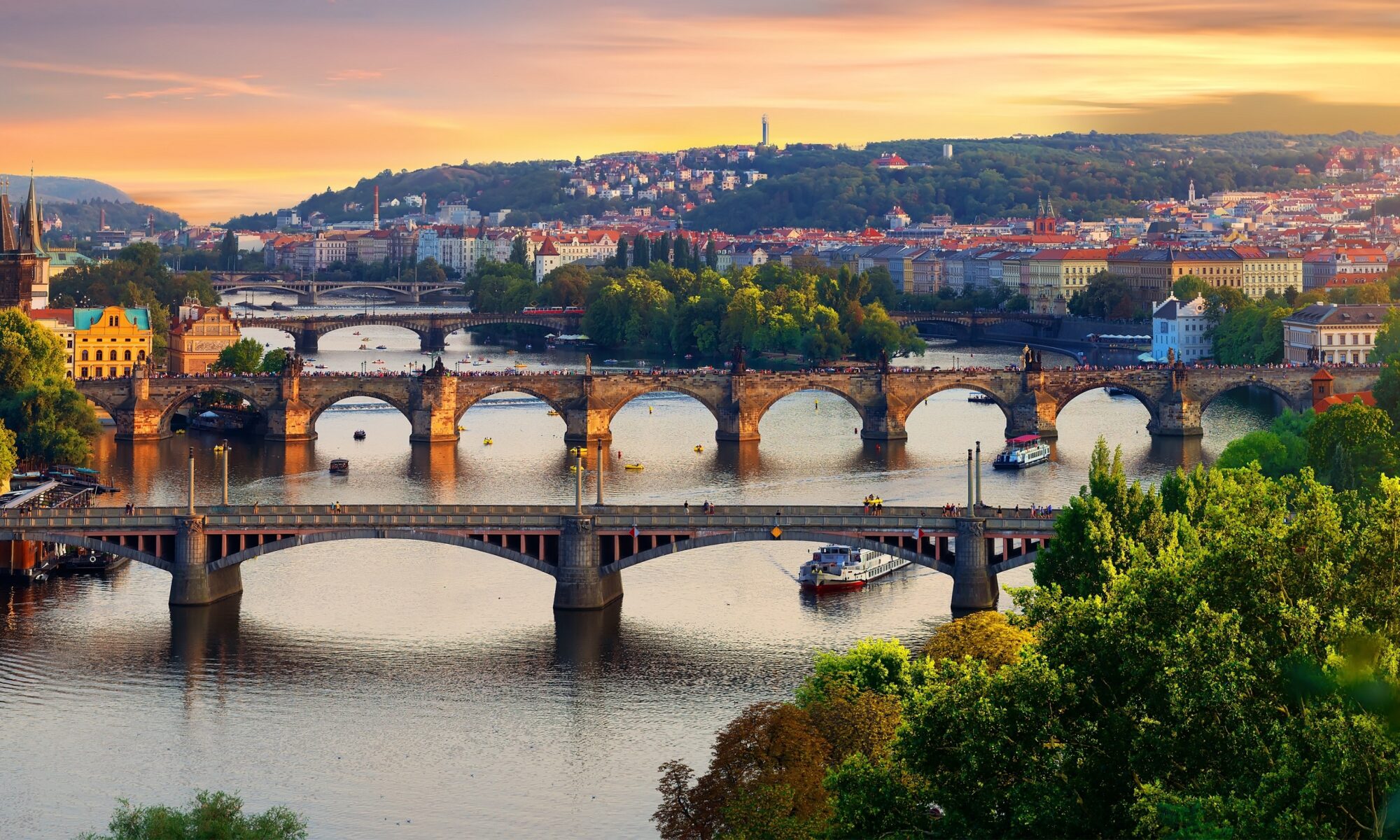
Prague accommodations offer elegant accommodations in a destination nicknamed “Golden City”. Known for its castles, palaces, cathedrals, medieval squares, bridges, parks, gardens, riverways, art galleries, cobblestone streets, beer spas, shopping malls, salons and nightlife, Prague is located in central Czechia (Czech Republic). A Central-European focal point, Prague is encompassed largely by Berlin (217 miles northward), Krakow (333 miles eastward), Vienna (207 miles southeasterly) and Munich (236 miles southwesterly). Bisecting Prague’s Old and New Towns, the Vltava River is the Czech Republic’s longest river. Prague streets (some cobblestone) are lined with historic buildings. Architectural styles vary and include Gothic, Baroque, Romanesque, Renaissance, Art Nouveau and Rococo. Prague’s high-end luxury shopping street is Parizska (Paris) Street, located on the border of Old Town Square and Josefov (former Jewish ghetto), while its most affluent neighborhood is Vinohrady. Prague main attractions include Prague Castle, Charles Bridge, Wenceslas Square (plaza), Prague Astronomical Clock (tourist attraction), PALLADIUM (shopping mall), Prague Zoo, Dancing House (landmark), Vyšehrad (fortress), Prašná brána (Powder Tower – historical landmark), Národní Muzeum, Duplex (night club), U Fleků (Czech restaurant), Petrin Tower (scenic spot), Havelské tržiště (urban market est. 1232 AD), Franz Kafka – Rotating Head by David Cerny (sculpture), Letna Park (hilltop park), O2 arena, Petřín Gardens (park), Obchodní centrum Letňany (shopping mall), Klementinum (historical place), Žižkov Television Tower (tourist attraction), Hard Rock Cafe, Fashion Arena Prague Outlet (outlet mall), Lokál Dlouhááá (Czech restaurant), National Technical Museum, Královská obora Stromovka (city park), The Golden Lane (historical landmark), Výstaviště Praha Holešovice (event venue), Atrium Flora (shopping mall), Old Town Bridge Tower (historical landmark), Karlovy Lazne (night club), National Theatre (performing arts theater), Café Imperial (Czech restaurant), Grébovka (Havlíčkovy sady – park), Fortuna Arena (stadium), Výtopna Railway Restaurant – Wenceslas Square, EUROPARK (shopping mall), Přírodní park Šárka – Lysolaje (park), Sex Machines Museum, PVA EXPO PRAHA (conference center), Riegrovy Sady (park), Kantýna (meat dish restaurant), Statue of Saint Wenceslas (historical landmark), Rudolfinum (concert hall), Church of Our Lady Victorious and The Infant Jesus of Prague, Karlovo náměstí (park), Lego Museum (toy museum), Kinsky Garden, Franciscan Gardens, Botanical Garden of the City Prague , Prague Congress Centre (conference center), Museum of Fantastic Illusions, St. Nicholas Church, Museum of Senses, Trojský zámek (manor house), Pizza Nuova (Italian restaurant), Church of Our Lady before Týn (Catholic church), Mucha Museum (art museum), Prague Metronome (tourist attraction), Café Savoy, IAM Illusion Art Museum Prague (art museum), Vítkov (historical landmark), Lobkowicz Palace (art museum), Forum Karlín (event venue), Restaurant Kulaťák, Prokopské Valley (nature preserve), Království Železnic (rail museum), Kafka Museum, Botanická zahrada Přírodovědecké fakulty UK (botanical garden), Petrin Hill (park), epet ARENA (stadium), Restaurace Červený jelen (restaurant), Loreto (historical landmark), Letenský zámeček (beer garden), Manifesto Market Anděl (food court), Smíchovský radniční sklípek (Czech restaurant), Jazz Dock (jazz club), State Opera (opera house), Golf Resort Black Bridge (golf course) and Beachklub Ládvi (sports complex). Surrounding Prague, points of interest include Modřanská rokle (wooded river valley – rare flowers, hiking, biking, winter sledding), Chráněná krajinná oblast Český kras (limestone landscape – rivers, canyons, caves, trails), Křivoklátsko Protected Landscape Area (national park – hiking, biking, equestrian trails, rivers, castles, forest areas), Protected landscape area Kokořínsko – Mácha’s Region (hiking, sandstone cliffs, gorges, rock chimneys, castle ruins), Český ráj (nature preserve – rock pillars, forest, rivers, hiking / biking trails, castles), Železné hory (biking / hiking paths, pine forest, rock pillars, mining museum) and Zdarski Mountains (dense forest – rocky peaks, fields, meadows, ponds, peatland). Prague’s main airport is Václav Havel Airport Prague, while its rapid transit network is Prague Metro. Good to know is that Uber does operate in Prague, with rideshare service to include the airport. Prague’s professional football clubs are AC Sparta Praha, SK Slavia Prague, FK Dukla Prague, Bohemians 1905, FK Viktoria Žižkov and FC Slavoj Vyšehrad. The city’s professional hockey team is HC Sparta Praha. When in Prague, be aware of misleading currency exchanges that claim to have zero commissions but, in reality and in small print, charge high exchange rates. Prague generally is considered safe. Pickpocketing is known to occur, however. Matryoshka dolls, which are found in souvenir stores, are actually Russian and not Czechian. Be advised that Czechs tend to be unfriendly sometimes, with a relative majority outside of tourist areas speaking little English. Although brothels are prohibited, prostitution is technically legal in the Czech Republic, so enforcement is typically lax. It’s best to exchange your currency for Czech Crowns. Tipping is customary in restaurants, where one should use Czech Crowns rather than Euros / Dollars to avoid paying excessive exchange rates. Prague’s currency is the Czech Koruny (Crown), cars travel on the right-hand side and the drinking age is 18 years old. Prague top events include Prague Spring International Music Festival, Khamoro, Prague Beer Fest, Wine Prague, Mercedes-Benz Prague Fashion Week, Prague Art Week, Film Music Prague Festival, Tanec Praha, Prague Fringe, United Islands Festival, Čarodějnice, Prague Summer Nights, Prague Signal Festival, Designblok, Prague International Film Awards, Febiofest, One World Film Festival, Prague Writers’ Festival, Summer Shakespeare Festival, Prague Marathon, Erofest and Festival of Sensuality. Prague accommodations are some of Central Europe’s best accommodations. Before we get to Prague accommodations, let’s take a look at some more background information on the area to help you along the way.
Settled as early as the Paleolithic age, modern Prague developed from a settlement at Prague Castle, which expanded southward to the area around Vyšehrad fort. Celts established a presence in the area sometime around the 5th or 4th century BC. Closer to anno Domini, Germanic tribes drove out the Celts. Roman geographer Ptolemaios, on a 2nd century AD map, depicted a Germanic city named Casurgis where present-day Prague stands. Following the collapse of the Western Roman Empire, the great “Migration Period” of the late 5th century AD, also known as the Barbarian Invasions, saw Bohemian Germanic tribes move westward, and Slavic tribes settle in the Central Bohemian Region. Thereafter, West Slavic Czech tribes built relatively prominent fortified settlements in Butovice, the Šárka valley and Levý Hradec in and around Prague. Legendary duchess and prophetess Libuše, along with her husband Přemysl “the Ploughman”, founder of the Přemyslid dynasty, are attributed as Prague’s founders circa the 8th century. Prague Castle, expanding from an 800 AD fortified settlement, began construction at the end of the 9th century. Just 70 years later, Vyšehrad fort was founded. In 973, under Duke of Bohemia Boleslaus II “the Pious”, Prague became a bishopric ruled by a bishop. The Archbishopric of Mainz, one of the Holy Roman Empire’s most prestigious and influential states, ruled the area until 1344, when Prague was elevated to its own archbishopric status, and the Gothic Saint Vitus Cathedral began construction under John of Bohemia.. Once home to a prominent slave market, Prague was an important trading seat for many Jewish merchants, who had settled in the area from across Europe. Still standing, the Old New Synagogue was built in 1270. Today’s Charles Bridge, originally built in 1170 as “Judith Bridge”, was named after King Vladislaus I’s wife Judith of Thuringia. Judith Bridge was destroyed by flood in 1342. Under King Ottokar II, the “Iron and Golden King”, Malá Strana, or “Lesser Quarter”, was founded for German people, who had the right to administer the law autonomously pursuant to Magdeburg rights, or town privileges. Just across the river from Lesser Town stood Staré Město, or “Old Town”, which, having borough status, was bordered by walls and fortifications. Under Charles IV, Holy Roman Emperor, Prague flourished during the 14th century. Adjacent to Old Town, Nové Město, or “New Town”, was designed by Charles IV himself. Central Europe’s oldest university, Charles University was founded in 1347. A center of trade for German and Italian bankers and merchants, Prague had its own mint (an industrial facility where coins are manufactured), which undoubtedly set precedent for today’s Czech Koruna. Prague took a turn for the worse due to internal conflicts within craftsmen’s guilds, increasing numbers of poor and a famine in the 1360s. In 1378, Charles IV died. His son, King Wenceslaus IV, saw a period of intense turmoil. During Easter 1389, when Prague clergy members announced that Jews had desecrated the Eucharistic wafer, mobs were encouraged to take retaliatory measures against the Jewish quarter. Around 3,000 Jews were murdered. Inspired by John Wycliffe, theologian and rector Jan Hus spoke out against radical reforms of a corrupt Church in his sermons at Old Town’s Bethlehem Chapel. Consequently, in 1415, Hus was burned at the stake for heresy by the Council of Constance. Hus’ execution spurred Prague’s first defenestration (people thrown out of windows) along with the Hussite Wars between proto-Protestant Hussites and Crusaders / Catholic loyalists, which resulted in a moderate Hussite victory, compromise between themselves and the Catholic church, and a radical Hussite defeat along with their rites being forbidden. Following the Hussite Wars, Prague strengthened its position as a merchant city, and Gothic buildings, along with Vladislav Hall in Prague Castle, were constructed. In 1526, Prague’s House of Habsburg era began by way of Ferdinand I. Habsburg Catholicism brought them into conflict with Prague Protestantism, which was gaining popularity. Rudolf II, elected King of Bohemia in 1576, chose Prague as his home and lived in Prague Castle, where he invited astrologers, magicians, scientists, musicians and artists during a relatively prosperous period. The Thirty Years’ War, one of Europe’s longest and most destructive conflicts, was provoked by Prague’s second defenestration in 1618. Ferdinand II of Habsburg was deposed by Frederick V, Elector Palatine, whose army, in turn, was defeated at the Battle of White Mountain (an early and significant Thirty Years’ War battle) near Prague. Following the white mountain battle, 27 Czech Protestant leaders were executed in Old Town Square, and Prague, followed by the rest of Czech lands, was forcibly converted back to Roman Catholicism. The Thirty Years’ War came full circle in 1648, when the Swedish Empire sought to pillage the city one final time during The Battle of Prague (the war’s final action). A great fire devastated Prague in 1689, followed by plague in 1713. Frederick the Great of Prussia invaded Bohemia in 1744, around which time he besieged and overtook Prague. Jews were expelled from Prague by Habsburg Empress Maria Theresa in 1745. In 1757, Frederick the Great was defeated and forced to retreat from Bohemia. Prague’s economy improved during the 18th century, a time when Baroque styles were introduced. New factories, coal mines and ironworks developed during the Industrial Revolution. The Czech National Revival during the 18th and 19th centuries aimed to revive the Czech language, culture and national identity. Following World War I and the Austro-Hungarian Empire’s defeat, Czechoslovakia was created, with Prague chosen as its capital. Between the World Wars, the city’s population increased markedly to 850,000 by 1930. On March 15, 1939, Hitler ordered the German Army to enter Prague and, from Prague Castle, Hitler proclaimed Bohemia and Moravia to be a German protectorate. High-ranking German SS and police official Reinhard Heydrich was assassinated in Prague during the 1941 Operation Anthropoid. Several air raids in February 1945, carried out by US Army Air Forces, resulted in 701 deaths and over 1,000 injuries, though damages to buildings were slight compared to other cities Two days before Germany capitulated on May 5, 1945, bloody street fighting ensued throughout Prague, with many atrocities occurring on both sides. On May 9, 1945, the Red Army’s 3rd Shock Army took the city nearly unopposed. The Beneš decrees in the war’s aftermath saw to any remaining Germans’ expulsion from the city. Following World War II, Prague disappeared behind the Iron Curtain, remaining under Soviet Union control throughout the Cold War. The world’s largest Stalin Monument (later destroyed) was unveiled on Letná hill in 1955. Czechoslovakia’s occupation by the Red Army lasted until 1991. Two years prior to that time, the Velvet Revolution took form as a non-violent protest against the Communist Party of Czechoslovakia’s one-party government. The dissolution of Czechoslovakia, known as the 1993 Velvet Divorce, resulted in Prague becoming the capital city of the new Czech Republic.
Also known as Praha, Prague today is home to nearly 1.4 million “Praguers”. The Czech Republic’s capital and largest city, Prague has a total metro area of 4,411 square miles The city’s motto in Latin is “Praga Caput Rei publicae”, or “Prague, Head of the Republic”, while its colors are yellow and red. In 2017, Prague received over 8.5 million international visitors. The city’s historic Old Town has been designated a UNESCO world heritage site. Also nicknamed “City of a Hundred Spires”, Prague is home to a temperate climate, with warm summer highs averaging in the mid-70s degrees Fahrenheit, and cold winters averaging in the mid-20s. During winter, Ski Resort Chotouň, a mere half-hour drive south of Prague, is a small, 1,000-foot ski slope with 2 chair lifts, while Old Town Square becomes home to Prague’s Christmas market. Additional points of interest include Petřín funicular, Chairlift in Prague Zoo, Mirror Maze on Petřín Hill, DinoPark Prague, Strahov Monastery, Church of St. Ludmila, Basilica of St Peter and St Paul, Vyšehrad Cemetery, U Medvídků Brewery, Old Town City Hall, National Monument on Vítkov Hill and Monument to František Palacký, Prague foods include vepřo knedlo zelo (pork roast, knedliky-dumplings, and sauerkraut), oblozene chlebíčky (open sandwich), svíčková (beef tenderloin with cream sauce and dumplings), pork knuckle. pork schnitzel, goulash, duck with cabbage and dumplings, cabbage pancakes, potato soup served in bread, fried cheese, vetrnik (cream puffs) and trdelník (a cinnamon pastry). Popular drinks are Czech Pilsner beer, dark beer, Becherovka (Czech national spirit), Zelená (mint liquor) and wine. One of Prague’s best places to enjoy absinthe is Hemingway Bar. With some background information on the area, we’re ready for Prague accommodations that will help make for an unforgettable experience.
Zelivskeho Subway Station
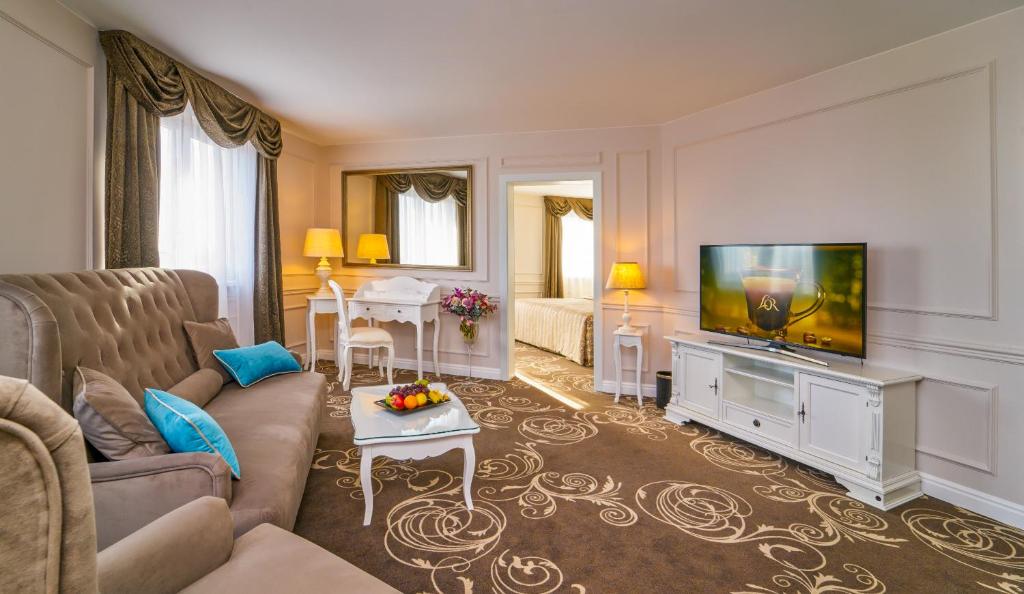
Tried-and-true, Don Giovanni Hotel Prague – Great Hotels of The World features a garden, private parking, a shared lounge, a terrace, a restaurant, a bar, a 24-hour front desk, airport transportation, free WiFi, desks, safety deposit boxes, city views and buffet, continental or Full English/Irish breakfast. In the area you may find Kosmetika Libuše Rohlíčková (beauty salon), Lidl (supermarket), Punta’s Dog-themed Sweet-shop (dog café), Ester Brows (eyebrow bar), Friedhof Praha (Franz Kafka Grave – cemetery) and more.
Within feet:
-
-
- Zelivskeho Subway Station
- Flora Metro Station
Within 1.1 miles:
Within 1.4 miles:
-
-
- National Memorial on the Vítkov Hill
Within 2.1 miles:
Within 3.4 miles:
Don Giovanni Hotel Prague is 8 miles from Vaclav Havel Airport Prague.
Approximate cost per night (Presidential Suite): $258
Fortuna Arena
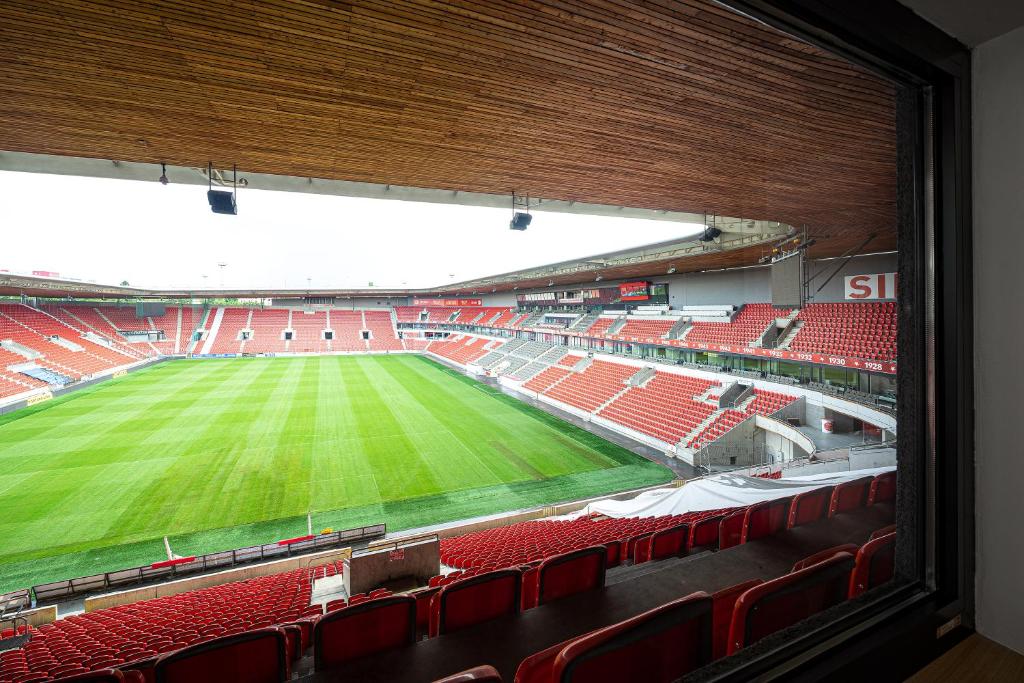
A unique accommodation located inside SK Slavia Prague‘s stadium, Iris Hotel Eden has a restaurant with a terrace, air conditioning, flat-screen TVs, free WiFi, free on-site parking and facilities for disabled guests. Nearby are SK Slavia Praha Fanshop (sports memorabilia store), Slavia Museum, skicentrum Eden (ski shop), Eden Shopping Center (shopping mall), Queen’s Kebab (fast food restaurant), Fuski (lingerie store), D&N (grocery store), Massage By Romana.Ink (massage therapist), Turnovská pivnice Vršovice (brewpub), Typhoon Coffee (coffee shop), RELAX 4 YOU (wellness center), Waldeska Restaurant (Czech restaurant) and more.
Within feet:
Within 1.2 miles:
Within 1.9 miles:
Within 2.1 miles:
Within 2.6 miles:
-
-
- Prague Astronomical Clock
Iris Hotel Eden is 8 miles from Vaclav Havel Airport Prague.
Approximate cost per night (Superior Double Room – Stadium View): $164
Bertramka Villa
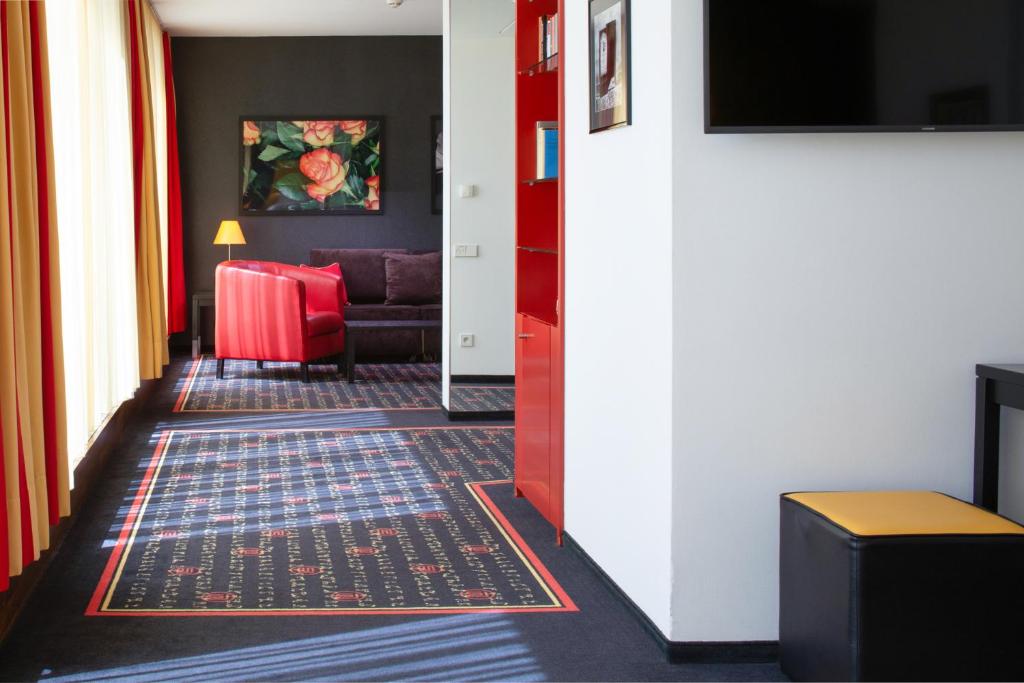
OREA Hotel Angelo Praha offers flat-screen TVs, free WiFi, a restaurant, a café, buffet breakfast, a terrace and, next door, a fitness center, sauna and whirlpool. Café Alegre, TRIEXPERT (running store), Wonder Wines Bar (wine bar), Space Café, Ladislav Floreán – Private Chef (fine dining restaurant), Tradice Original Czech Restaurant, Originál Formanka (Czech restaurant), STOKLASA Praha Smíchov (haberdashery), Modrý zub Anděl (restaurant), Sejmor (restaurant), Thomas’s Barbershop, Kavárna co hledá jméno (café), Café Perón, Pho Anděl (restaurant), Arslan Kebab & Pizza (kebab shop), Klub Knoflík (pub), Smíchovna (Czech restaurant), steamed head (hairdresser), Prolog Noodle Bar (Asian restaurant), Sekery deli (cafeteria), Pastva (vegan restaurant), Taro (restaurant), Rozmarýna (natural goods store), Hospoda Brouk (pub), Rangoli – Smichov (Indian restaurant), Cherrys Indian Super Market (grocery store), BON Fresh Ramen & Soba (restaurant), Pauwel Kwak Bierhuis (bar), U Váhy měšťanský hostinec (pub), Libeřské lahůdky (deli), Le Pizze di Frankie (Anděl – pizza restaurant), Bukèt flowers Anděl (florist), Factory Pro (fitness center), Manifesto Market Anděl (food court), Dirty Dog Barbeque (barbecue restaurant), Masala Anděl Indian Restaurant, Hair Boom (hairdresser), Kytky od Pepy (florist), Ty kávo! (coffee shop), Give flowers – Angel (florist), U MAMLASŮ Praha Anděl (restaurant), Pilsner Urquell restaurant Anděl (Czech restaurant), BEERTIME.pub (Czech restaurant), BONCO Asian Fusion Restaurant, EM Hair Salon, Back Doors | Well Hidden Cocktail bar, Nail House Anděl (beauty salon), Bistro Anděl (restaurant), Synergy Club Anděl (fitness center), Království Železnic (rail museum) and more are within range.
Within feet:
-
-
- Bertramka Villa (historical landmark where Mozart stayed)
- Petřín
- Botanical Garden
- Vysehrad Castle
- Anděl Metro Station
Within 1 mile:
Within 1.2 miles:
Within 1.6 miles:
OREA Hotel Angelo Praha is 4.9 miles from Vaclav Havel Airport Prague.
Approximate cost per night (Executive Suite): $312
O2 Arena Prague
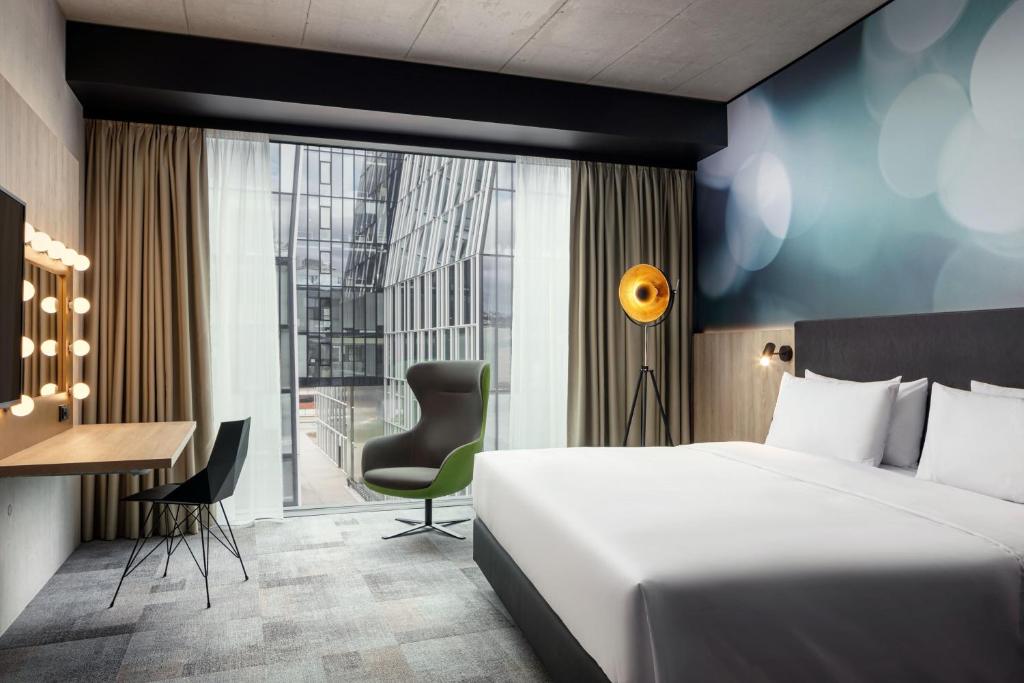
With a restaurant, a bar, a garden, free bike rentals, free WiFi, a 24-hour front desk, an ATM, hairdryers, flat-screen TVs, air conditioning, buffet breakfast and a business center, STAGES HOTEL Prague, a Tribute Portfolio Hotel is next to O2 Arena.
Within feet:
Within 2 miles:
-
-
- Dětské hřiště Nové Letňany
Within 3.3 miles:
Within 3.8 miles:
STAGES HOTEL Prague is 9 miles from Vaclav Havel Airport Prague.
Approximate cost per night (Connecting Family Room): $371
Cost per person (four people): $92
Museum of Alchemy – Speculum Alchemiae
Metropolitan Old Town Hotel – Czech Leading Hotels comes with free WiFi, 4 restaurants, 2 traditional Czech pubs, an art café, a spa, a sauna, a solarium, a fitness room, racquetball courts, safety deposit boxes and hairdryers. You may find B4 | CAFÉ PUB (restaurant), Golden Hands Therapy (day spa), Perníčkův sen (bakery), Orange Bar Prague, onesip coffee (espresso bar), Restaurace Haštalský Dědek (restaurant), La Degustation (fine dining restaurant), the Banker’s Bar (cocktail bar), Základna restaurace (restaurant), Bánh mì ba (Vietnamese restaurant), Lokál (Czech restaurant), NoD (café), La Casa Argentina (Argentinian restaurant), La Casa del Habano (cigar shop), Sports Bar Pohoda, Bokovka (wine bar), MyRaw Café, Naše maso (butcher shop), Sisters Bistro v Dlouhé (bistro), Cukrář Skála v Dlouhé (dessert restaurant), Klubovna 2. patro (bar), Babiččina spíž (bakery) and more in the area.
Within feet:
Within 1.1 miles:
Within 2.7 miles:
Metropolitan Old Town Hotel is 5 miles from Vaclav Havel Airport Prague.
Approximate cost per night (Apartment): $1,064
Cost per person (six people): $177
Šternberg Palace – Czech National Gallery
Featuring an indoor swimming pool, a fitness center, a Finnish sauna, daily breakfast, a lounge bar and a seasonal garden terrace, OREA Hotel Pyramida Praha is near Dlabačov (movie theater), Pizzeria PICCOLO MONDO (pizza restaurant), Hotel pyramida Gym and Pool (indoor swimming pool), Moje Kredenc (bakery), Ca phe Brown (coffee shop), Atmosphere bar Břevnov (bar), ONLY MENS CLUB (barber shop), Angelato Bělohorská 50 (ice cream shop), 20m2 by Kapkafe (coffee shop), The Winery Břevnov (wine bar), Astra Praha (dance hall), Restaurace Na Marjánce (restaurant), Curry King (Indian restaurant), Jamonarna (Tapas restaurant), FATFUCK smash burgers (hamburger restaurant), Točna Dlabačov (bistro), Beachclub Strahov (sports club) and more.
Within feet:
Within 1 mile:
Within 1.2 miles:
Within 1.3 miles:
-
-
- Queen Anne’s Summer Palace
Within 14 miles:
OREA Hotel Pyramida Praha is 3.9 miles from Vaclav Havel Airport Prague.
Approximate cost per night (Classic Suite – Free Pool Access): $241
Municipal House
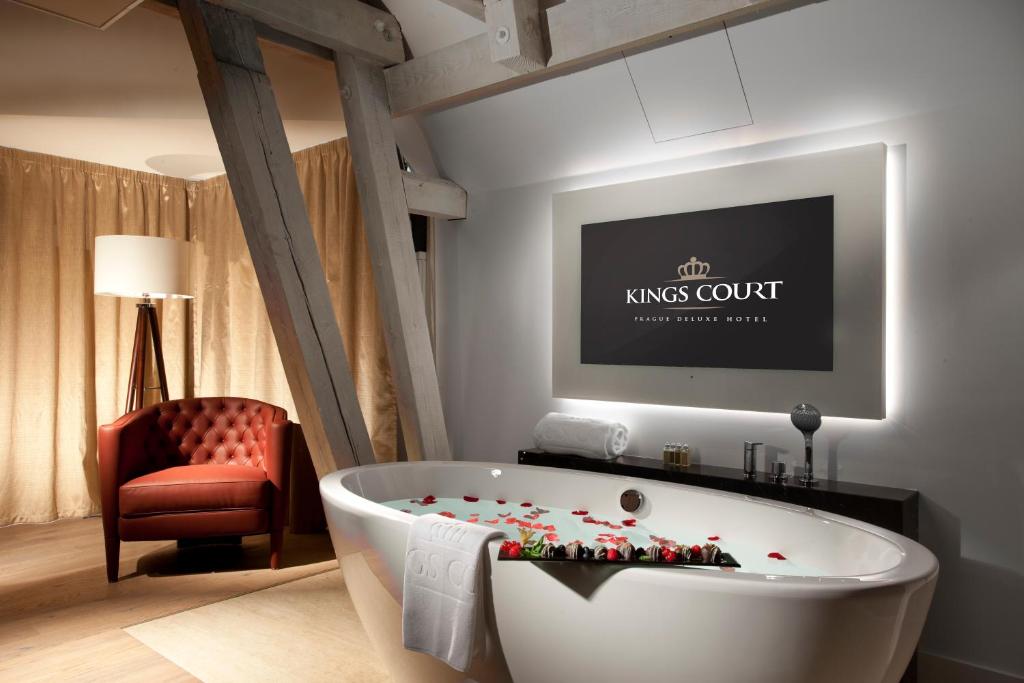
Amenities at Hotel KINGS COURT include a small pool, a Finnish sauna, a steam bath, fitness facilities, complimentary luxury L’Occitane toiletries, air conditioning, flat-screen TVs, Nespresso coffee makers, tea making facilities, laptop-sized safes, a lounge, a restaurant and a bar. In the area are ADELE Restaurant & Bar, Majesty Lounge (bar), Náměstí Republiky (scenic spot), PALLADIUM (shopping mall), Men’s Therapy Barbershop, Salon Petra Měchurová (hairdresser), Ava by Adrien (wine bar), Coffee Cube (espresso bar), Buddha-Bar Prague (restaurant), Mozart Dinner Prague, PRO THAI massage, City Bike Prague (tour agency), GOLD PRALINES (candy store), Zkušební Provoz (cocktail bar), Gabina Paralova (boutique), Cafe No. 3 (espresso bar), Pachtovský Palace, Den Noc (restaurant), GamberoRosso (Italian restaurant), Celetná Theater, Delije restaurace (restaurant) and more.
Within feet:
-
-
- Municipal House
- Powder Tower
- Ungelt
- Henry’s Tower
- Náměstí Republiky Metro Station
Within 1.1 miles:
-
-
- Queen Anne’s Summer Palace
Within 1.2 miles:
Within 2.8 miles:
Hotel KINGS COURT is 6 miles from Vaclav Havel Airport Prague.
Approximate cost per night (Tower Duplex Suite): $1,086
Cost per person (three people): $362
Prague Astronomical Clock
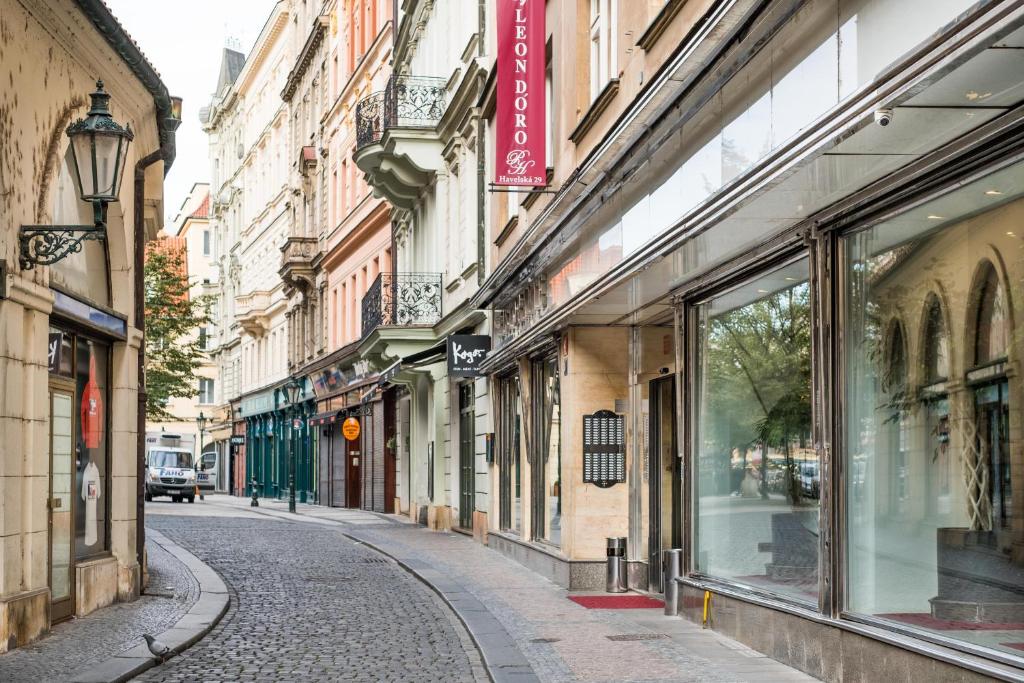
Hotel Leon D´Oro has free WiFi, air conditioning, hairdryers, flat-screen TVs, safety deposit boxes, balconies and limited private parking upon request. Kogo Havelská ristorante (Italian restaurant), Church of St. Gallen (Catholic church), Karolinum – Arkýřová kaple (chapel), Karolinum (university), Charles University, TWINSET Prague (women’s clothing store), LIVIANA CONTI (women’s clothing store), Fashion Church (boutique), Luisa Spagnoli (women’s clothing store), AghaRTA Jazz Club, The Miners Coffee Old Town (coffee shop), U Špirků (restaurant), Bowla Bar, Čili bar, House at the Two Golden Bears (historical landmark), MANUFAKTURA (cosmetics store), Restaurace U Dvou velbloudů (Czech restaurant), Durty Nelly’s Irish Pub, Double Trouble Bar (bar / club), Country Life Restaurant (vegetarian restaurant), Le Cinque Corone (Italian restaurant), Ribs of Prague (restaurant), El Gaucho | Melantrichova (steak house), Česká mincovna (coin dealer), IAM Illusion Art Museum Prague, HistoryTrip s.r.o. (transportation escort service), Komorní divadlo Kalich (theater company), Havelská Koruna (restaurant), Hooters (restaurant) and more are in proximity.
Within feet:
Within 2.2 miles:
Within 3 miles:
Hotel Leon D´Oro is 5 miles from Vaclav Havel Airport Prague.
Approximate cost per night (Quadruple Room): $272
Cost per person (four people): $68

Kasárna Karlín
COLORFACTORY SPA Hotel – Czech Leading Hotels provides a wellness center, paid private parking, free WiFi, a restaurant and a gym. Near here are Colorcafé (restaurant), The Hudson Barber (barber shop), Slice Slice Baby Pizza Club (restaurant), ZAU & Bun Cha Asian (vegan restaurant), The Winery Holešovice (wine bar), Město_Moře (event venue), Hell.cz (tattoo and piercing shop), Osada (coffee shop), Restaurace U Holiše (Czech restaurant) and more.
Within feet:
-
-
- Kasárna Karlín
- Praha-Bubny Vltavská Train Station
- Nádraží Holešovice Metro Station
Within 1.1 miles:
-
-
- National Memorial on the Vítkov Hill
Within 1.4 miles:
Within 1.6 miles:
Within 16 miles:
-
-
- Šibeniční vrch – Mnichovice Ski Lift
COLORFACTORY SPA Hotel is 6 miles from Vaclav Havel Airport Prague.
Approximate cost per night (Two-Bedroom Apartment): $326
Cost per person (six people): $54

Vysehrad Castle
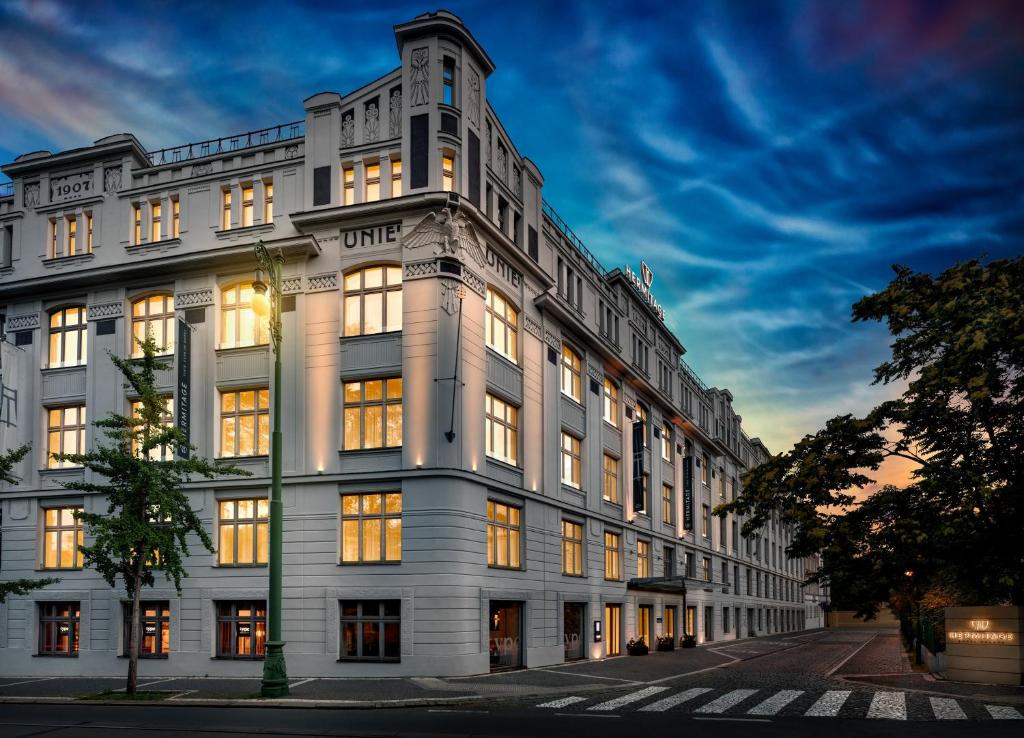
Built in 1907, Hermitage Hotel Prague has free WiFi, a rooftop gym, Art Deco design, a 24-hour front desk, garage parking, a restaurant, air conditioning, flat-screen TVs, hairdryers, safety deposit boxes and electric kettles. Hookahs Aladin-Shop (hookah store), Nepal House Restaurant, café louis výtoň (restaurant), U Bráchy (bar), Banna House (tea house), Restaurace U voraře (restaurant), Pala Bistro Grill (hamburger restaurant), Metronome CrossFit (gym), Restaurace U Tří Bojovníků (Czech restaurant), Hookkaido Prague (bar), Square Café (espresso bar), Baigali Sushi Praha (restaurant), Bar Hidden (bar), Lang Biang Restaurace (Asian restaurant), COFFEE BREAK AND CAKE – Albertov (coffee shop), Church of Our Lady of Sorrows, Merrybeans (coffee roasters), Techno Bar, Pivovar Chříč – podniková prodejna (beer hall), Academy-s Praha (permanent make-up clinic), DelMar (hookah bar), U Kroka (restaurant), Kavárna Čekárna (cafe), Pod Vyšehradem (restaurant), Letní Scéna Na Vyšehradě (amphitheater), St. Wenceslas in Vyšehrad (sculpture), YachtBoat Prague (boat tour agency), President yacht (boat tour agency), Plavba s kapitánem (boat rental service), TheWave.cz (boat tour agency), Kayak Beach Bar (sports bar), Kovařovicova Vila (historical landmark), Transphere bike rentals and tours (bicycle rental service), Railway Bridge, Hostinec na Výtoni (restaurant), Výtoň (ferry service), Lázně na lodi (spa), Limnigraf na Výtoni (historical landmark), Puro Gelato (ice cream shop), Na břehu Rhôny (wine bar), Imago Mundi (boat tour agency), Herbivore (vegan restaurant), Harmony Spa Výtoň – Tantra Masáže (day spa), Mystery boat (performing arts theater), Tomi Sushi (sushi takeaway), Plavecká Polévka (bistro), Vallmo restaurant, Restaurace U Libuše (restaurant), Café AdAstra (café) and more share the area.
Within feet:
-
-
- Vysehrad Castle
- Botanical Garden
- Lanové centrum
- Karlovo Náměstí Metro Station
Within 1 mile:
Within 1.2 miles:
Within 2.7 miles:
Hermitage Hotel Prague is 5 miles from Vaclav Havel Airport Prague.
Approximate cost per night (Executive Suite): $340
Vysočanská Metro Station
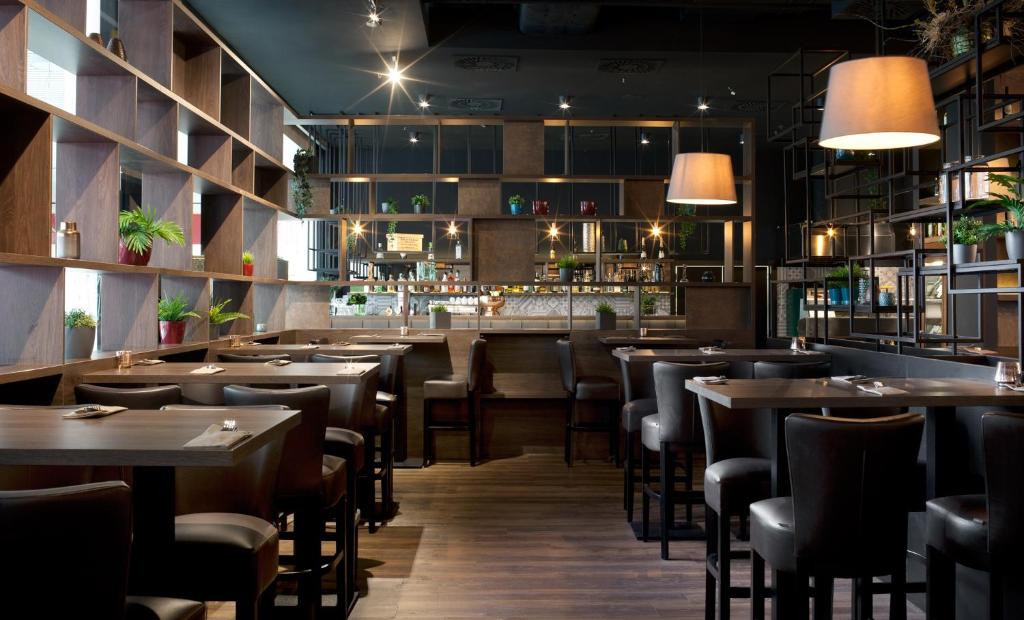
With an on-site shopping mall, wellness and fitness facilities free of charge during certain times of day, free WiFi and air conditioning, Clarion Congress Hotel Prague is in proximity to Cukrárna DORTINI (dessert restaurant), La Karosa (bistro), Hospůdka Na Radnici (restaurant), I’M FIT Wellness Fitness (gym), NC Fenix (shopping mall), Lidl (supermarket), Chef Sultan (Indian restaurant), 2Baldies Restaurant, Restaurace U Pecků (restaurant) and more.
Within feet:
-
-
- Vysočanská Metro Station
- Prague – Vysočany Train Station
- Rokytka – sportovní park
Within 1.6 miles:
-
-
- Dětské hřiště Nové Letňany
Within 1.7 miles:
Within 3.9 miles:
Clarion Congress Hotel Prague is 9 miles from Vaclav Havel Airport Prague.
Approximate cost per night (Family Room): $240
Florentinum
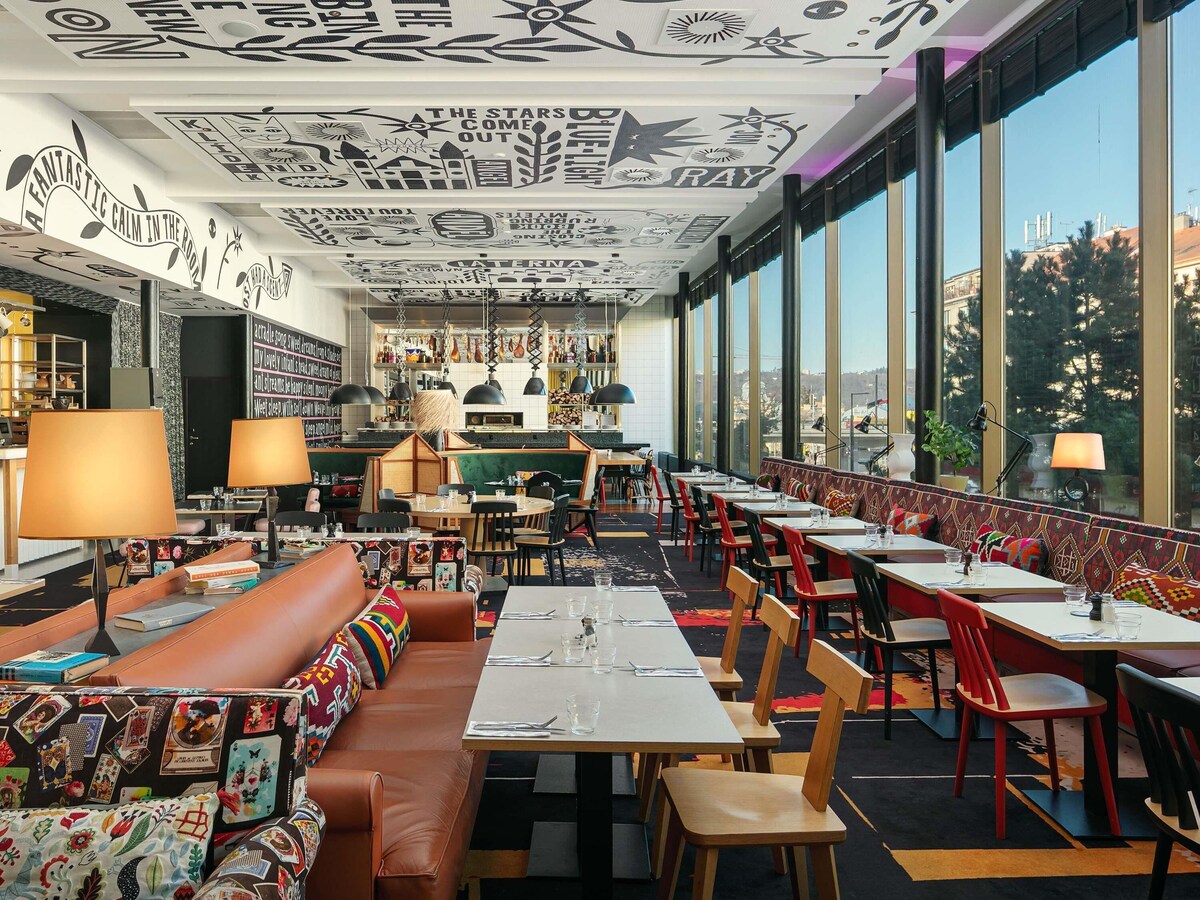
You’ll have free WiFi, 2 restaurants, 2 bars, meeting rooms and public parking for an extra cost at Mama Shelter Prague. Nearby you may find Funny Sassy (hairdresser), Lidl (supermarket), OC Stromovka (shopping mall), Burger Letná (hamburger restaurant), Cafe Hrnek (coffee shop), OdKarla.cz (consignment shop), Alfred ve dvoře (theater company), Happy Divers (dive shop), National Gallery Prague – Trade Fair Palace (art gallery), Studio Hrdinů (theater company), KOLEKTOR (coffee shop), GLOW UP BARBER SHOP, Teplá kačka (restaurant), Cukrárna U Hrdinů (pastry shop), Vinotéka Vínečko s.r.o. (wine store), Pivnice Ferdinand (pub), Cafe 7 Bar (coffee shop), Le due torri (restaurant), PAPRIKA (Mediterranean restaurant), Naber si – bez obalu (grocery store), Čokoládovna Čo-Xo (chocolate shop), Restaurace U Kohouta (restaurant), U Malého Berlína (Czech restaurant) and more.
Within feet:
-
-
- Florentinum
- Museum of Alchemy – Speculum Alchemiae
- Vltavská Metro Station
Within 1 mile:
Within 1.2 miles:
Within 57 miles:
Mama Shelter Prague is 6 miles from Vaclav Havel Airport Prague.
Approximate cost per night (MAMA Penthouse): $482
Cost per person (three people): $160
Charles Bridge
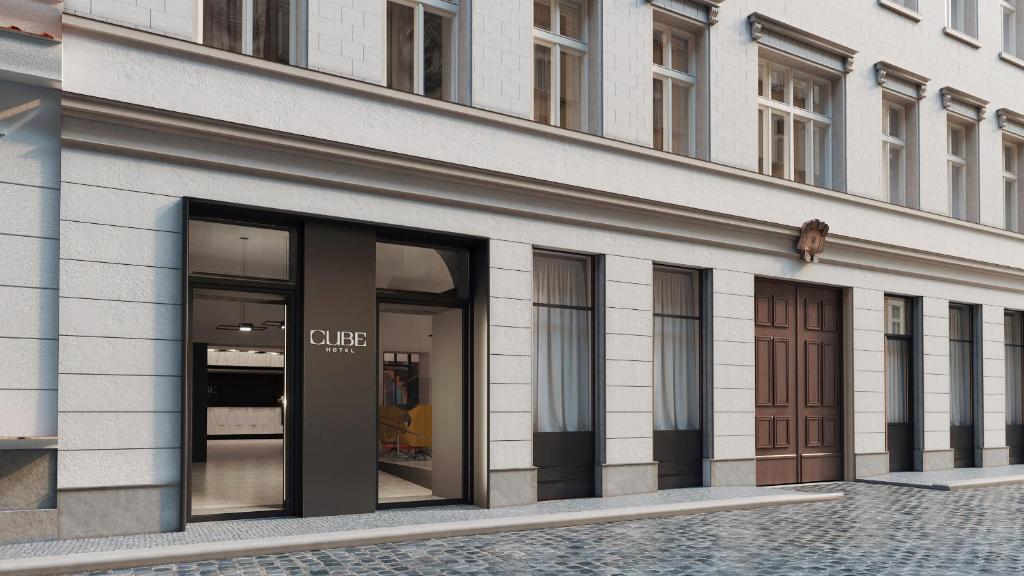
Hotel CUBE Prague boasts buffet breakfast, free WiFi, private parking, air conditioning, flat-screen TVs, safety deposit boxes, hairdryers, coffee machines, kitchens in select rooms, mini-bars, a fitness center, a 24-hour front desk with Czech, German, English and Russian-speaking staff and paid airport shuttle service. You’ll find U Matěje Kotrby (Czech restaurant), VIN—ARNA (wine bar), Restaurant Alma Prague, Pizzeria Kmotra Kavárna (pizza restaurant), Vajtfiš BAR (espresso bar), Bar 23, Khromberry (dessert shop), Kafe v Klidu (café), Wine Story Praha (Zážitková VINOTÉKA – wine bar), La Bon Restaurant, Bar No. 7 (bar), MyRaw Café, Just Bagel (bistro), ESPRESSO Pštrossova 27 (coffee shop), ARTE Hair Salon, Věnečky Janeček (pastry shop), MindMaze (escape room center), Super Tramp Coffee (cafe), Coffee and Riot (coffee shop) and more in the area.
Within feet:
-
-
- Charles Bridge (medieval stone arch bridge)
- Prague Astronomical Clock
- Old Town Square
- Mucha Museum
- Jan Palach Memorial
Within 1 mile:
Within 1.5 miles:
Within 3 miles:
Hotel CUBE Prague is 5 miles from Vaclav Havel Airport Prague.
Approximate cost per night (Superior Suite): $418
Cost per person (three people): $139
Powder Tower
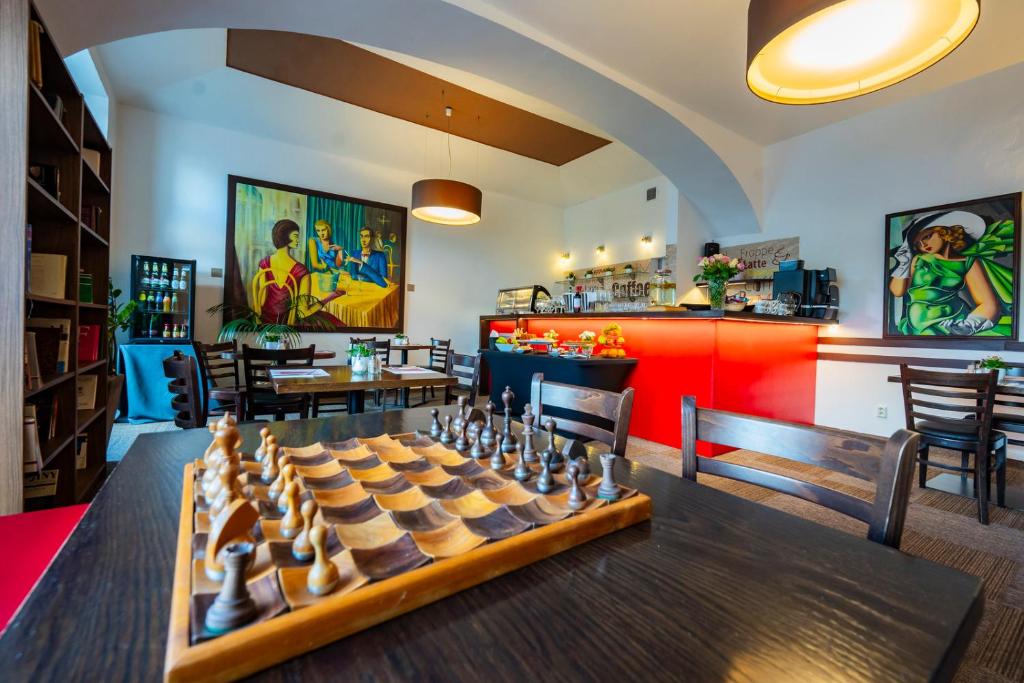
Featuring flat-screen TVs, free WiFi, a restaurant, traditional homemade breakfast, hairdryers and private parking, Hotel Merkur – Czech Leading Hotels is in the vicinity of Lidová jídelna Těšnov (cafeteria), Phở Bar Na Poříčí 43 (bistro), Amano (Italian restaurant), Urban Café, K-Remember (Vietnamese restaurant), St. Peter at Poříčí (church), “K” – The Two Brothers (Indian restaurant), Hanabi Sushi House, BeefHouse,Praha (restaurant), Cibo da Dio (Italian restaurant), Las Adelitas (Petrská – Mexican restaurant), Sansho (restaurant), Dance school, La Tropical, Fun Arena (amusement center), Florists Fleur Fatale (florist) and more.
Within feet:
-
-
- Powder Tower (Gothic tower)
- Florentinum
- Kasárna Karlín
- Florenc Metro Station
Within 1 mile:
Within 1.2 miles:
Within 13 miles:
Hotel Merkur – Czech Leading Hotels is 6 miles from Vaclav Havel Airport Prague.
Approximate cost per night (Quadruple Room): $617
Cost per person (four people): $154
DupleX Club Prague
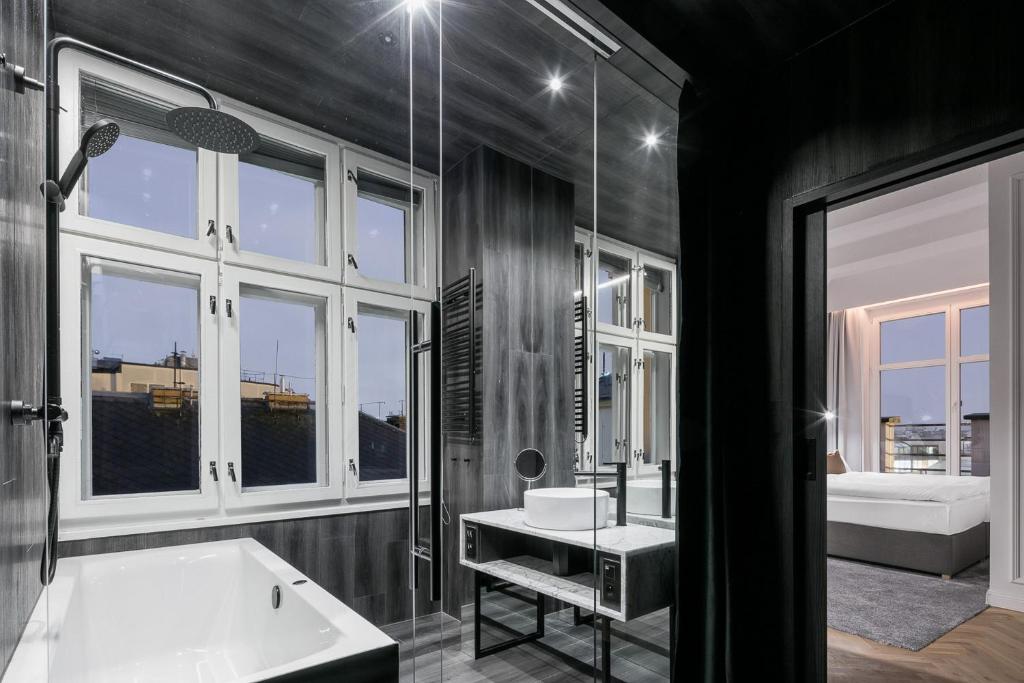
With modern designs, courtyard and garden views, individually controlled air conditioning, flat-screen TVs, Nespresso machines, mini-bars, safes, LED lighting, automatic toilets, bathtubs with sparkling systems, hairdryers, terraces, balconies, buffet breakfast and a restaurant, Pytloun Boutique Hotel Prague sits close to Dobrá čajovna (tea house), Cubist Lamp Post (tourist attraction), Blažek (men’s clothing store), TRITON Restaurant, Franciscan Gardens, Café Truhlárna (coffee shop), Church of Our Lady of the Snows, GATE (shopping mall) and more.
Within feet:
Within 3.4 miles:
Within 8.4 miles:
Pytloun Boutique Hotel Prague is 5 miles from Vaclav Havel Airport Prague.
Approximate cost per night (Superior Suite): $442
Cost per person (four people): $110
Botanical Garden
Boasting free bike rentals, a garden, a restaurant, a bar, free WiFi, a 24-hour front desk, concierge service, air conditioning, desks, coffee machines, electric tea pots, mini-bars, safety deposit boxes, flat-screen TVs, terraces, city views and buffet or American breakfast, MOSAIC HOUSE Design Hotel is close to QQ Asian Kitchen (Pan-Asian restaurant), Woman with umbrella (tourist attraction), Giant Glowing Mushrooms (sculpture), Bar Dear Mother in Law (bar), PokeHaus Myslíkova (Hawaiian restaurant), Slight Uncertainty / Hanging Umbrella Man (sculpture), Meza Cruz (restaurant), Lola – Vermut y Tapas (Spanish restaurant), Beers & Cheers (American restaurant), Prosekárna Myslíkova (wine bar), Lemon Leaf (Thai restaurant), Pula – Shisha & Lounge Bar (hookah bar), Mead House – Good Cider (store), Muzeum medoviny – Mead Museum (store), Mead museum (bar), Kafé Kaple (espresso bar), Studio 5 (facial spa), Salon Papilio Prague (hair salon), Restaurace Karlův sklep (restaurant), MAT (restaurant), OMG restaurant (Japanese restaurant), Buddha Tea House, Cafe 25 Bistro (cafe), The Nest (Asian fusion restaurant), Bobek Tattoo (tattoo shop), Charlie Vínko (wine bar), Exclusive Barbershop Praha (barber shop), Mikela da Luka Showroom (clothing store), Café Modi (espresso bar), Meat Vandals Myslíkova (restaurant), Ekant Indian Restaurant, Artic Bakehouse (bakery), Bassotto – Kavárna – Vinárna (espresso bar), The Globe Bookstore And Café, Gran Fierro (restaurant) and more.
Within feet:
-
-
- Botanical Garden
- Historical Building of the National Museum of Prague
- Jan Palach Memorial
- Národní Metro Station
Within 1 mile:
Within 2.7 miles:
Within 16 miles:
-
-
- Šibeniční vrch – Mnichovice Ski Lift
MOSAIC HOUSE Design Hotel is 5 miles from Vaclav Havel Airport Prague.
Approximate cost per night: $271

Nádraží Holešovice Metro Station
Offering free nearby parking or paid private parking at the property, air conditioning, free WiFi, mini-bars, a free bottle of mineral water upon arrival, tea and coffee-making facilities, bathrobes and bathroom cosmetics, Plaza Prague Hotel – Czech Leading Hotels is near Puglia Bistrot (Italian restaurant), The Eatery (restaurant), Snack Time Pizza, Bubalus CrossFit (gym), Kühnův dětský sbor o.p.s. (art gallery), Kontejner (coffee shop), Express Döner Kebab, DOX Centre for Contemporary Art (art gallery), DOX – Rentals (event venues) and more.
Within feet:
-
-
- Nádraží Holešovice Metro Station
- Praha-Holešovice Train Station
Within 1.1 miles:
Within 1.2 miles:
Within 1.7 miles:
Within 1.8 miles:
Plaza Prague Hotel is 7 miles from Vaclav Havel Airport Prague.
Approximate cost per night (Family Room): $245
Cost per person (four people): $61

Mucha Museum
Provided at MeetMe23 are a restaurant, a bar, free WiFi, flat-screen TVs, a 24-hour front desk and an escape game with a free drink prize. Restaurant Meat Beer, ĐÊM restaurance (Asian restaurant), Art House Atelier (art studio), Foggy Prague (hookah bar), Mystic Temple Thai Massage (day spa), Jarky Čechové (hairdresser), Bredovský Dvůr (restaurant), Vision Body (spa and health club), Centrum Tance (dance school), The Cold War Museum, Film Legends Museum of Prague, EscapeX (escape room center), Monkey Coffee House, Theater Radek Brzobohatý (performing arts theater), Rawaz Barber & Beauty salon (hairdresser), Butik LE CHATON (lingerie store), Galata Restaurant (Turkish restaurant), Moskyt (bar), Singles in Prague (event management company) and more are nearby.
Within feet:
-
-
- Mucha Museum
- Jan Palach Memorial
- Henry’s Tower
- Historical Building of the National Museum of Prague
- Main Station Metro Station
Within 1 mile:
Within 2.6 miles:
Within 13 miles:
MeetMe23 is 6 miles from Vaclav Havel Airport Prague.
Approximate cost per night (Deluxe Suite): $258
Cost per person (three people): $86
Petřín
Occupying a 17th century building in Prague’s Lesser Town, Pytloun Old Armoury Hotel Prague, Stará Zbrojnice has free WiFi, a historical restaurant, flat-screen TVs and mini-bars. Summer Garden Old Armoury (restaurant), Mlýnská kavárna (cafe), Tlustá myš (Czech restaurant), BUGABOO (sporting goods store), NOI (Thai restaurant), Cantina (Mexican restaurant), Caffe Vescovi (cafe), Cukrárna U knoflíčků (dessert shop), The Josef Sudek Studio (art gallery), Újezd (notable street), Angelato (ice cream shop), Rebell Barbers Újezd (barber shop), Czech Slovak Restaurant (Czech restaurant), Memory Restaurant, furs Kubin (bag shop), Prague by E-Bike (bicycle rental service), Prague By Vespa (scooter rental service), Divadlo Na Prádle (performing arts theater), Bella Vida café, Pastař (Italian restaurant) and more are close by.
Within feet:
-
-
- Petřín (hill)
- Charles Bridge
- Wallenstein Garden
- Prague Castle
- Újezd Train Station
Within 1 mile:
Within 1.4 miles:
Within 2.5 miles:
Pytloun Old Armoury Hotel Prague, Stará Zbrojnice is 5 miles from Vaclav Havel Airport Prague.
Approximate cost per night (Royal Double Room): $286
Henry’s Tower
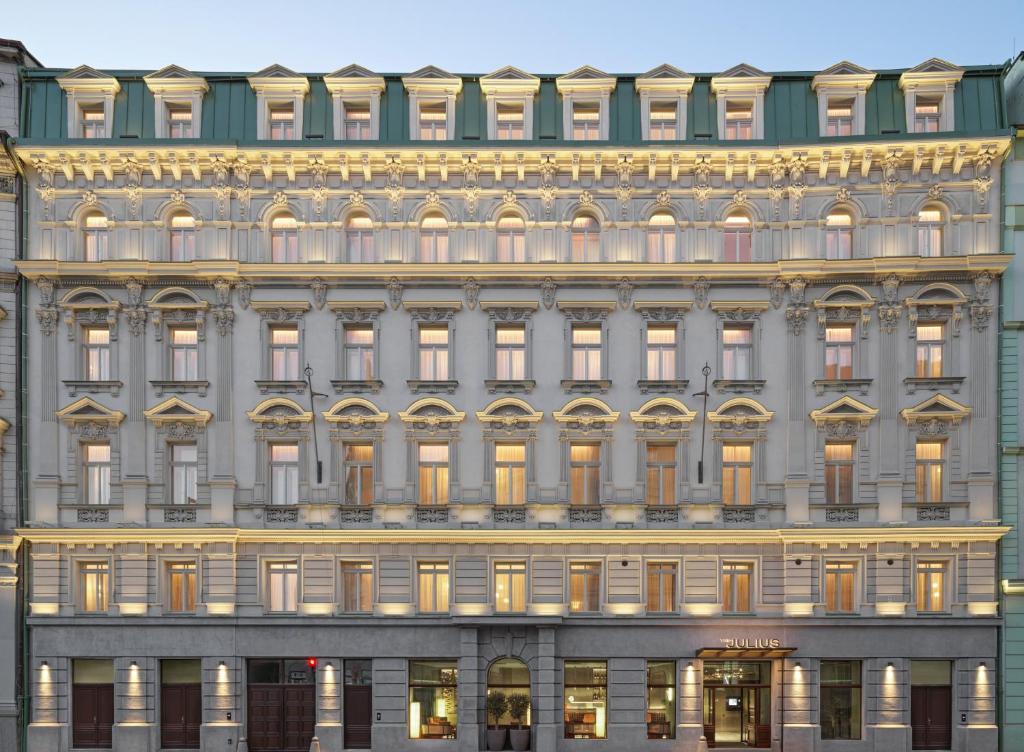
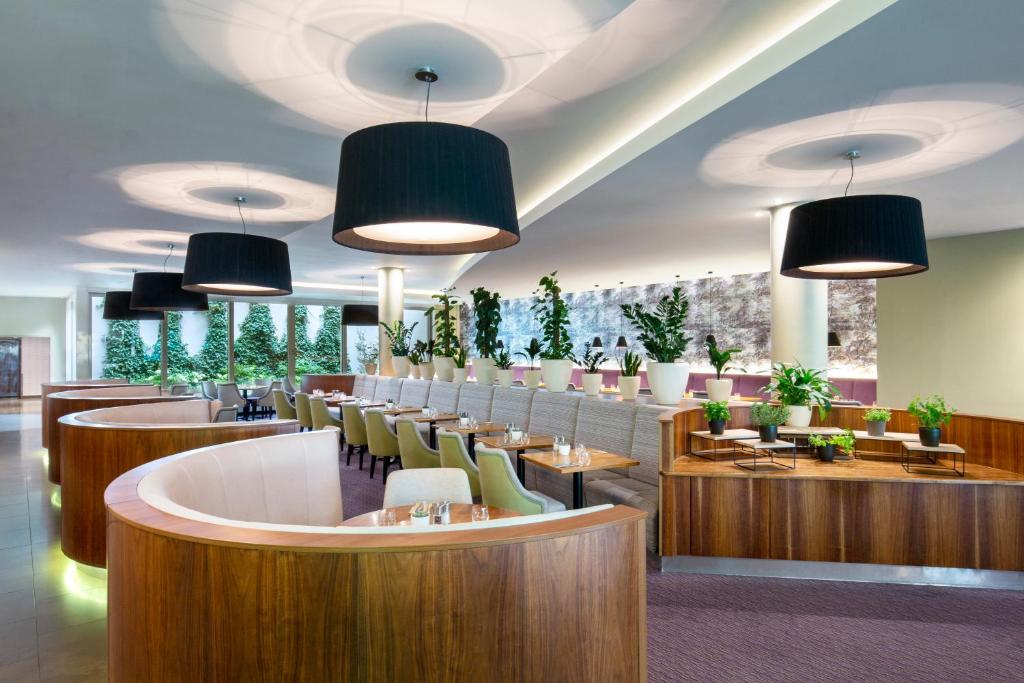
The Julius Prague boasts a fitness center, private parking, a restaurant, a bar, concierge service, luggage storage space, a 24-hour front desk, airport transportation, free WiFi, air conditioning, coffee machines, safety deposit boxes, flat-screen TVs, electric tea pots, kitchens and buffet, continental or Full English/Irish breakfast. Near here are Brasserie The Julius (bistro), House of Julius Meinl Gourmet Shop (supermarket), Meat&Greet Burgerhouse (hamburger restaurant), Sicily café (coffee shop), Studio Fleur (nail salon), TAKUMI PRAHA (Ramen restaurant), Espresso bar by Vinograf (coffee shop), STOKLASA (haberdashery), ZEM Prague (restaurant) and more.
Within feet:
-
-
- Henry’s Tower
- Powder Tower
- Mucha Museum
- Municipal House
- Náměstí Republiky Metro Station
Within 1 mile:
Within 1.1 miles:
Within 2.8 miles:
The Julius Prague is 6 miles from Vaclav Havel Airport Prague.
Approximate cost per night (Penthouse Apartment): $642
National Memorial on the Vítkov Hill
Botanique Hotel Prague features nature-inspired rooms, elegant bathrooms, Nespresso coffee machines, organic amenities, Samsung Smart HD TVs, USB charging, free WiFi, conference rooms, a bar, a gym and a parking garage. Botanique Bistro & Bar (restaurant), Oasis Florenc (shopping mall), Bod Krásy (beauty salon), Antalya Kebab Florenc (Turkish restaurant), Bagel Lounge Florenc (cafe), Avim Praha, S.r.o. (shooting range), Comtessa (women’s clothing store), Flame Dance Taneční Studio (dance school), Ovocný Světozor (dessert shop), Kashmir Hills Restaurant (Indian restaurant), Zastavárna a bazar Karlín (consignment shop), The Cozy Restaurant (Vietnamese restaurant), Mlsná kavka (coffee shop) and more are within range.
Within feet:
Within 1.1 miles:
Within 1.5 miles:
-
-
- Queen Anne’s Summer Palace
Botanique Hotel Prague is 6 miles from Vaclav Havel Airport Prague.
Approximate cost per night (Superior Triple Room): $230
Cost per person (three people): $76

Mozart Dinner
Grand Hotel Bohemia offers elegant décor, spacious rooms, modern furniture, air conditioning, free WiFi, flat-screen TVs, a restaurant, a bar and a Boccaccio ballroom. Hotel KINGS COURT is also in the area.
Within feet:
-
-
- Mozart Dinner
- Hybernia Theater
- Kotva Department Store
- Palladium Shopping Center
Within 1.1 miles:
Within 3.2 miles:
Within 8.5 miles:
Grand Hotel Bohemia is 5 miles from Vaclav Havel Airport Prague.
Approximate cost per night (Junior Suite): $457
Cost per person (three people): $152
Historical Building of the National Museum of Prague
Set in heritage-protected area 19th century building, Boutique Hotel Seven Days has a restaurant with an atrium, a bar with international TV channels, Art Nouveau-style, air conditioning, soundproofing, hairdryers, a sauna and a whirlpool. Nearby you’ll find Rum House (bar), Palo Verde Bistro (vegan restaurant), Trattoria Cicala (Italian restaurant), Wok To Walk – Pizza – Kebab (fast food restaurant), Kaleean Shisha Lounge Bar (hookah bar), ALIBI. (bar), Anime Coffee and Secondhand Bar, Mechanický Balet (restaurant), K*STAR KARAOKE (karaoke bar), Demínka (restaurant), Faust Shisha Lounge & Bar (hookah bar) and more.
Within feet:
Within 1 mile:
Within 1.1 miles:
Within 3 miles:
Boutique Hotel Seven Days is 6 miles from Vaclav Havel Airport Prague.
Approximate cost per night (Superior Double Room): $240
Cost per person (three people): $80

Ungelt
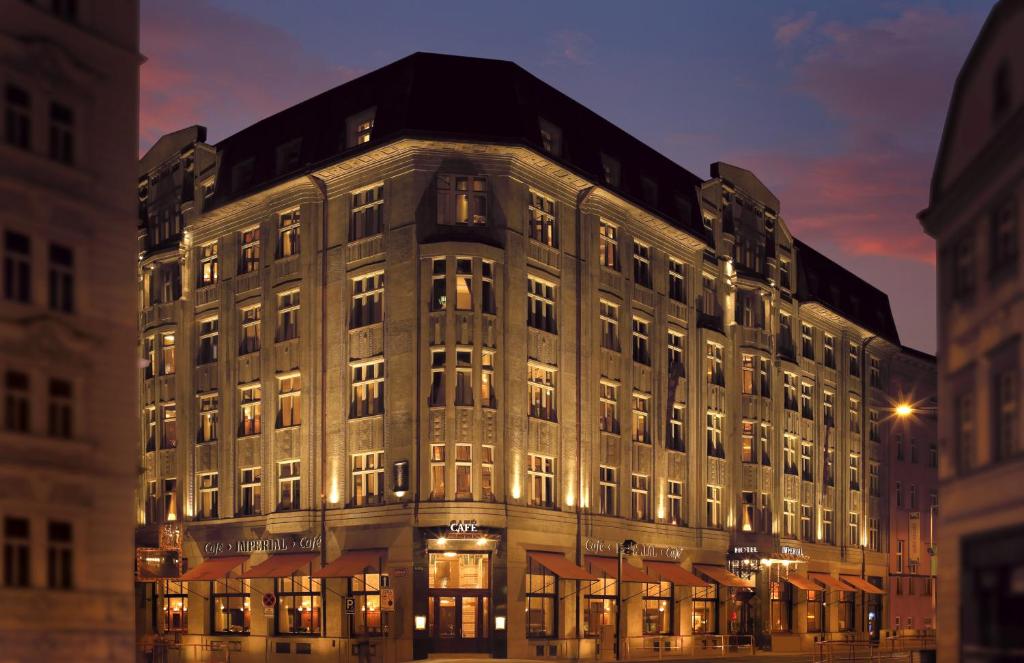
Featuring Art-Déco style, precious mosaics, historic hand-painted tiles, fitness and spa facilities, a sauna, a steam bath, rich fabrics, laptop-sized safes, 2 phone lines, flat-screen TVs, marble bathrooms with heated floors, free WiFi and a café, Art Deco Imperial Hotel can be found near Café Imperial (Czech restaurant), Next Door by Imperial (Czech restaurant), Presto – Svět Her (game store), Ali Baba Kebap (kebab shop), Siam Orchid (Thai restaurant), Max Fitness Bílá Labuť (spa and health club), Ovocný Světozor (cake shop) and more.
Within feet:
-
-
- Ungelt (medieval neighborhood)
- Florentinum
- Mucha Museum
- Old Town Square
- Náměstí Republiky Metro Station
Within 1 mile:
Within 2.1 miles:
Within 57 miles:
Art Deco Imperial Hotel is 6 miles from Vaclav Havel Airport Prague.
Approximate cost per night (Suite): $550
Old Town Square
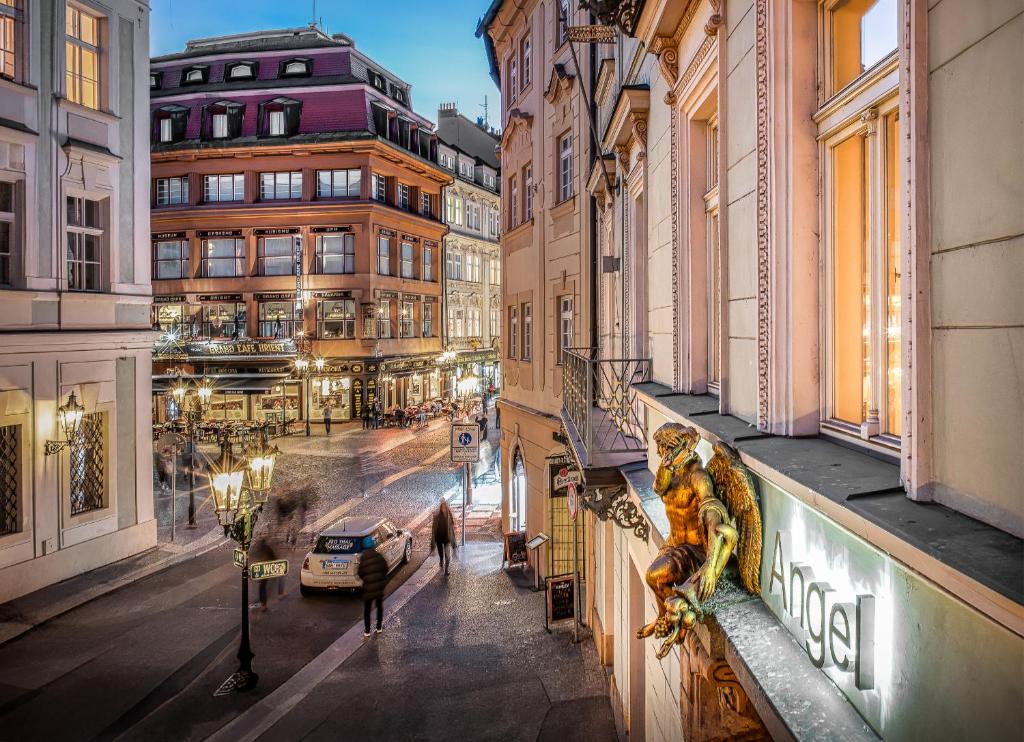
Featured at Golden Angel Suites by Adrez are air conditioning, free WiFi, fully-equipped kitchenettes, flat-screen TVs, ironing facilities, desks, coffee machines, kettles and paid airport shuttle service. Kolacherie (café), Mozart Dinner Prague (opera house), The House at the Black Madonna (museum), Staroměstský pivovar U Supa (brewpub), Celetná (notable street), Lumia Gallery (art museum), Gallery Of Steel Figures (children’s museum), Pasta Fresca (Italian restaurant) and more are within range.
Within feet:
-
-
- Old Town Square
- Powder Tower
- Municipal House
- Mucha Museum
Within 1 mile:
-
-
- Queen Anne’s Summer Palace
Within 2.1 miles:
Within 2.9 miles:
Golden Angel Suites by Adrez is 5 miles from Vaclav Havel Airport Prague.
Approximate cost per night (Two-Bedroom Apartment): $287
Cost per person (four people): $71
Florenc Central Bus Station
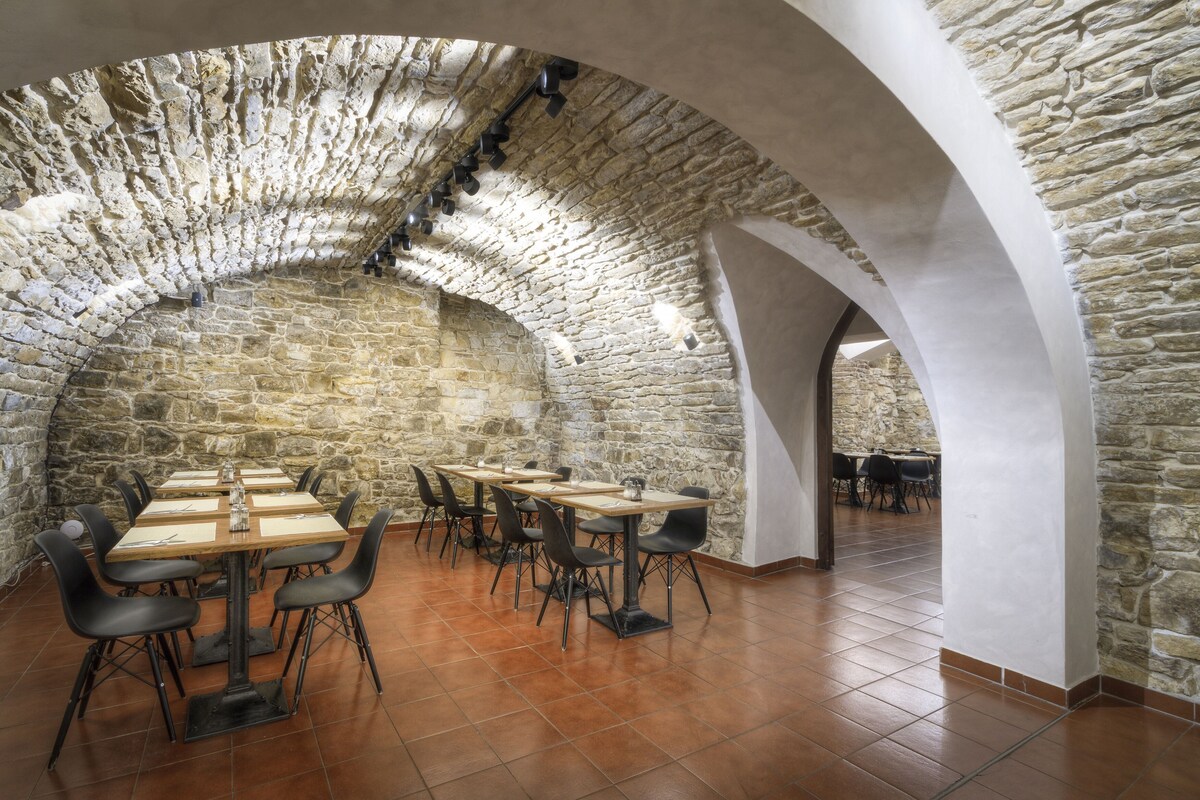
Newly reconstructed, Hotel Mucha has free WiFi, tea/coffee makers, flat-screen TVs, mini-bars, a 24-hour reception, a restaurant and buffet breakfast. Botanique Hotel Prague shares the area.
Within feet:
-
-
- Florenc Central Bus Station
- Kasárna Karlín
- National Memorial on the Vítkov Hill
- Municipal House
Within 1 mile:
-
-
- Prague Astronomical Clock
Within 1.7 miles:
Hotel Mucha is 6 miles from Vaclav Havel Airport Prague.
Approximate cost per night (Luxury Quadruple Room): $305
Cost per person (four people): $76
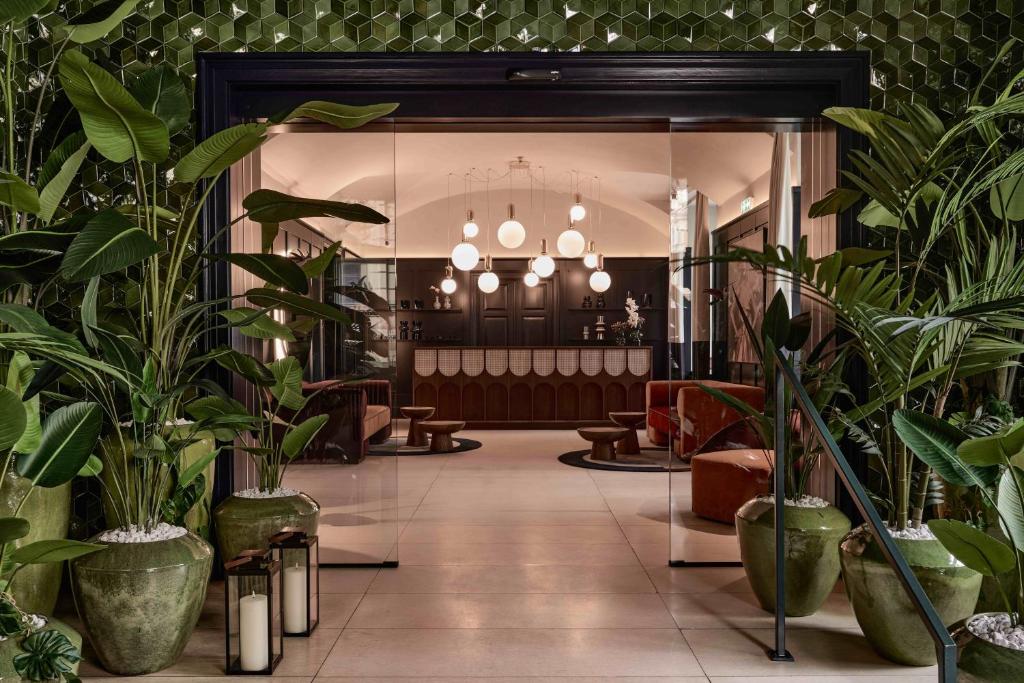
Main Station Metro Station
You’ll have a terrace, a sauna, a steam bath, a fitness area, soundproofed windows, wooden floors, air conditioning, Nespresso coffee machines, free WiFi, wellness mattresses and a selection of pillows at Falkensteiner Boutique Hotel Prague. which is close to MeetMe23.
Within feet:
-
-
- Main Station Metro Station
- Prague Main Train Station
- Henry’s Tower
- Jan Palach Memorial
Within 1.4 miles:
-
-
- Queen Anne’s Summer Palace
Within 2.5 miles:
Within 3 miles:
Falkensteiner Boutique Hotel Prague is 6 miles from Vaclav Havel Airport Prague.
Approximate cost per night (Boutique Junior Suite): $599
Náměstí Republiky Metro Station
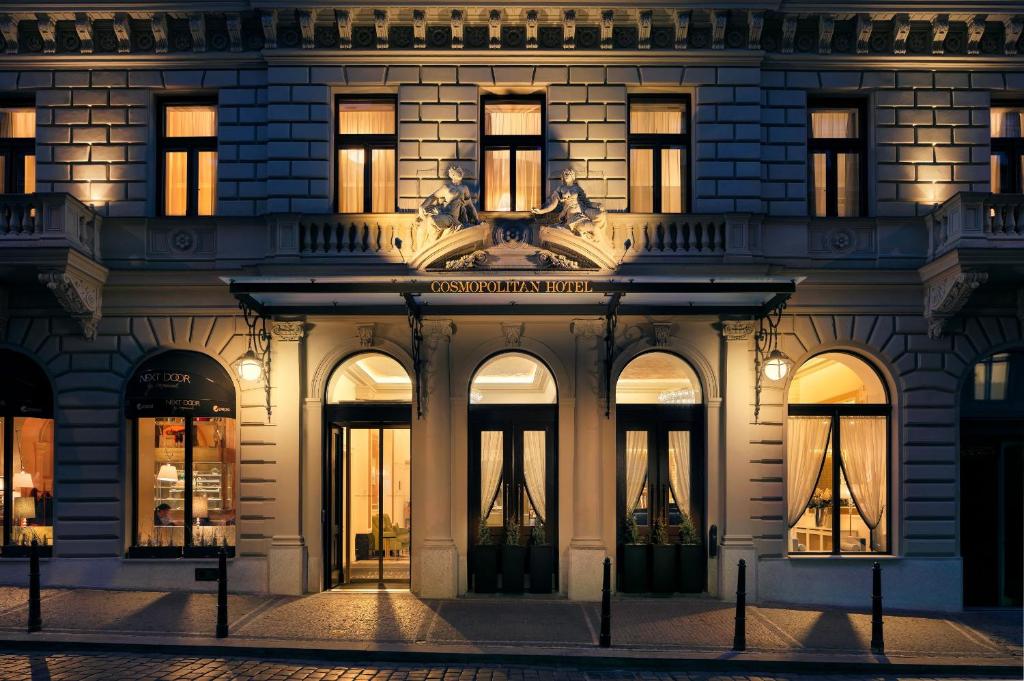
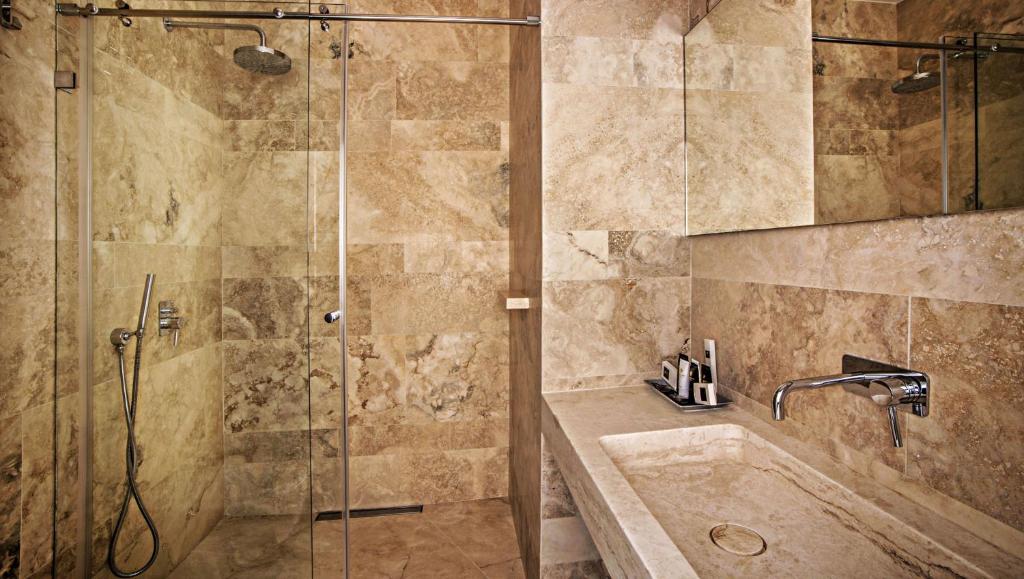
Built in 1889, COSMOPOLITAN Hotel Prague has free WiFi, interactive smart TVs, Swarovski décor, tea and coffee facilities, bathrobes, slippers, a gym, a sauna, a 24-hour front desk and an original restaurant. Across the street is Art Deco Imperial Hotel.
Within feet:
-
-
- Náměstí Republiky Metro Station
- Florentinum
- Municipal House
- Powder Tower
Within 1 mile:
Within 1.3 miles:
Within 13 miles:
COSMOPOLITAN Hotel Prague is 6 miles from Vaclav Havel Airport Prague.
Approximate cost per night (Martini Suite): $494
Jan Palach Memorial
Hotel Golden Crown comes with free WiFi, air conditioning, soundproofing, flat-screen TVs, mini-bars, bathrobes and slippers. INVITALY Pizza (Italian restaurant), Beas Vegetarian Dhaba (vegetarian restaurant), Divadlo Františka Troníčka (performing arts theater), Orijin Tea (tea house), Jelínkova plzeňská pivnice (restaurant), Bjukitchen (bistro), IPPA Café Jungmannova (coffee shop), The Glass (wine bar), Franz Kafka – Rotating Head by David Cerny (sculpture), OC Quadrio (shopping mall), Aroma Quadrio (Italian restaurant), Vapiano (restaurant), Tchibo (coffee shop), Lee’s Tea (bubble tea store), Oh Deer Bakery, Benefit Brow Bar (beauty salon), Beer spa Hotel Michelangelo (restaurant), Gabby’s Irish Pub, The Dutch Pub – Steak & Burger (restaurant), Ideas are Bulletproof (American restaurant), Divadlo Kalich (theater company), Kadeřnické Studio 13 (hairdresser), Ruby Nails & Spa (beauty salon), Bouvard & Pécuchet (wine bar), Bikram Yoga Prague Vodičkova (Bikram yoga studio), Pub U Kruhu (pub) and more are in proximity.
Within feet:
-
-
- Jan Palach Memorial
- Mucha Museum
- Prague Astronomical Clock
- Old Town Square
- Národní Metro Station
Within 1 mile:
-
-
- Florenc Central Bus Station
Within 1.1 miles:
Hotel Golden Crown is 5 miles from Vaclav Havel Airport Prague.
Approximate cost per night (Luxury Superior): $243

Havlicek Gardens
Set in an 18th century renovated historic building, Hotel St George – Czech Leading Hotels provides elegant décor, flat-screen TVs, mini-bars and free WiFi. Near here are JS Studio (beauty supply store), Beer Spa Bernard (spa and health club), Hospoda “U Tiskárny” (pub), DanceDifferent (dance school), Whisky&Kilt (club), Oak (bistro), MindMaze Prague (escape room center), Honest Taste (breakfast restaurant), Kaviár Prague – Shisha Lounge Bar (espresso bar), Kavárna snů (café), Restaurace Buket (Czech restaurant) and more.
Within feet:
-
-
- Havlicek Gardens
- Botanical Garden
- Historical Building of the National Museum of Prague
- Vysehrad Castle
- I.P.Pavlova Metro Station
Within 1 mile:
Within 1.1 miles:
Within 15 miles:
-
-
- Šibeniční vrch – Mnichovice Ski Lift
Hotel St George is 6 miles from Vaclav Havel Airport Prague.
Approximate cost per night (Standard Quadruple Room): $614
Cost per person (four people): $153
Prague Main Train Station
With a 24-hour front desk, airport transportation, a shared lounge, free WiFi, desks, flat-screen TVs, coffee machines, terraces, city views, electric tea pots and buffet, continental or vegetarian breakfast, Miss Sophie’s Downtown is in the vicinity of SPA SPA privátní wellness – Opletalova (wellness center), Česká zbrojovka a.s. – Podniková prodejna (gun shop), Lady Boss Nails (nail salon), Beer Spa Natural (spa), Section Prague (shoe store), Jerusalem Synagogue, Edison Filmhub (movie theater), Bistro Italiano 61 (pizza restaurant), ROSSMANN (cosmetics store), LaVendera (beauty supply store), Vinograf (restaurant), Hoffa bar, Hanibal Sport (outdoor clothing and equipment store), Galerie Kvalitář (art gallery) and more.
Within feet:
-
-
- Prague Main Train Station
- Henry’s Tower
- Mucha Museum
- Ungelt
Within 1 mile:
Within 1.4 miles:
-
-
- Queen Anne’s Summer Palace
Within 13 miles:
Miss Sophie’s Downtown is 6 miles from Vaclav Havel Airport Prague.
Approximate cost per night (Family Suite): $323
Cost per person (four people): $80
Národní Metro Station
Hotel Adler – Czech Leading Hotels has free WiFi, breakfast and facilities for disabled guests. Church of Saint Michael the Archangel in Prague, Café Jericho, Antikvariát Kant – Milo Burdátš (used book store), Kavárna Velryba (restaurant), Phono.cz (record store), Zahrada V Jirchářích (garden), Coffee and Riot (coffee shop), Kostýmy Ladana (costume rental store), Super Tramp Coffee (café), Laser Arena Praha (laser tag center), Prague Weekends (tour agency), La Casa de La Havana vieja bar, BO District (Asian restaurant), Cafe KávOkno (coffee shop), Good tea room (tea house), Max’s Steakhouse, Křal Barbershop, Groove Bar and more are in the vicinity.
Within feet:
-
-
- Národní Metro Station
- Prague Astronomical Clock
- Charles Bridge
- Rudolfinum
Within 1 mile:
Within 1.2 miles:
-
-
- Florenc Central Bus Station
Within 3 miles:
Hotel Adler – Czech Leading Hotels is 5 miles from Vaclav Havel Airport Prague.
Approximate cost per night (Triple Room): $519
Cost per person (three people): $173
Rudolfinum
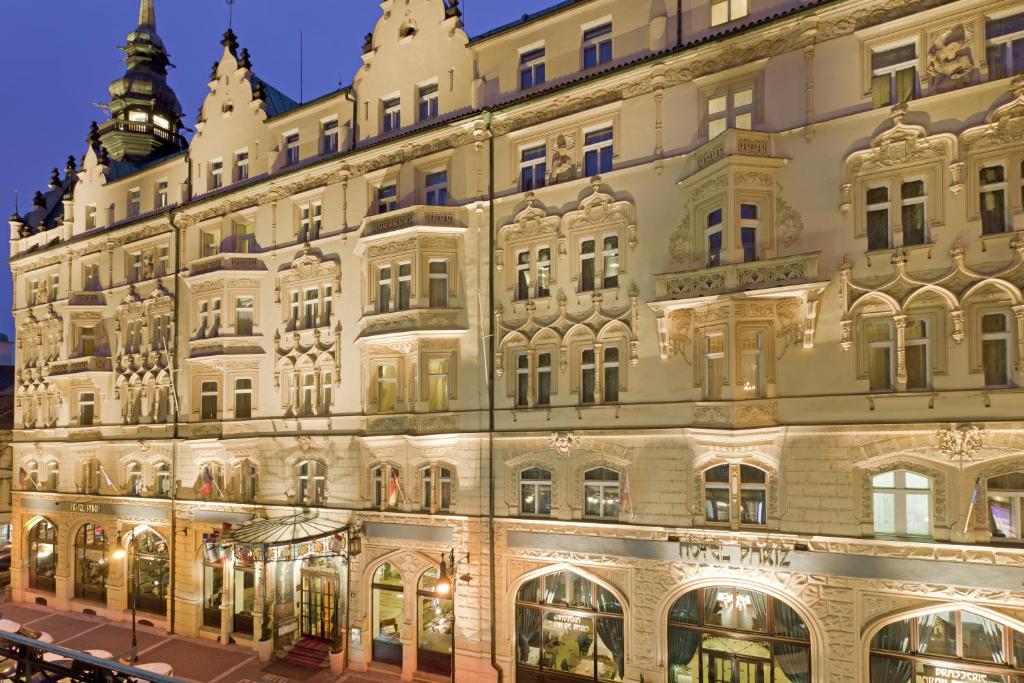
Housed in a 1904, Neo-Gothic, Art Nouveau building, Hotel Paris Prague comes with wellness center access, a massage shower, a jacuzzi, a sauna, a steam bath, Thai massages, a gym, free WiFi, flat-screen TVs, mini-bars, air conditioning, tiled bathrooms with underfloor heating, hairdryers and a 1920s-style Parisian café and bar. Also in the area are Hotel KINGS COURT and Grand Hotel Bohemia.
Within feet:
-
-
- Rudolfinum
- Municipal House
- Powder Tower
- Ungelt
- Florentinum
Within 1.1 miles:
-
-
- Queen Anne’s Summer Palace
Within 2.1 miles:
Hotel Paris Prague is 6 miles from Vaclav Havel Airport Prague.
Approximate cost per night (Superior Suite): $843
Cost per person (three people): $281
Karlovo Náměstí Metro Station
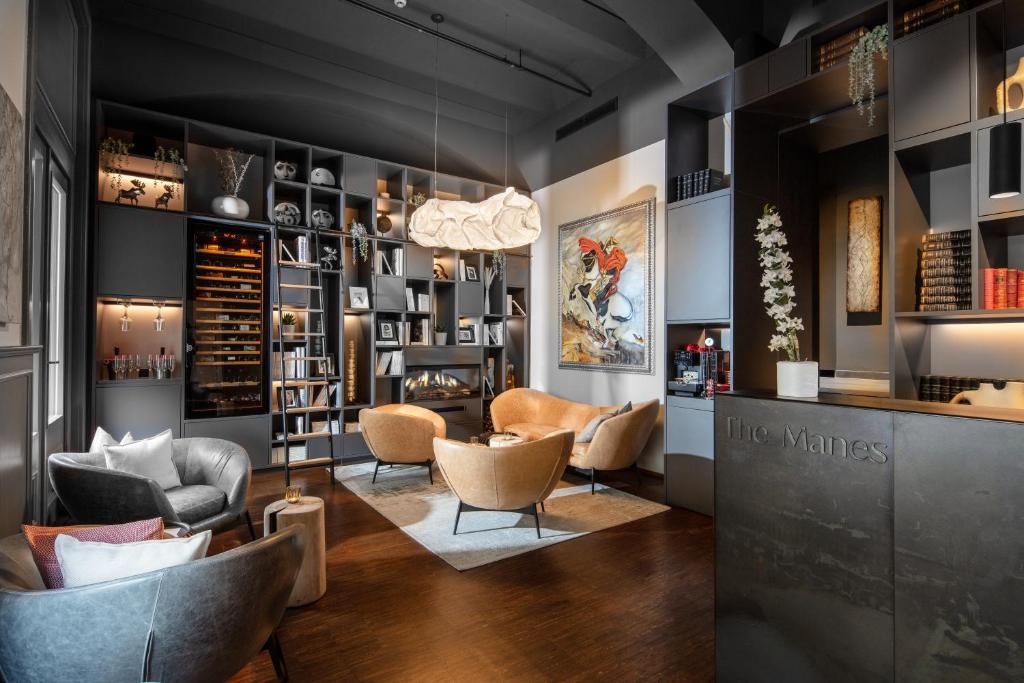
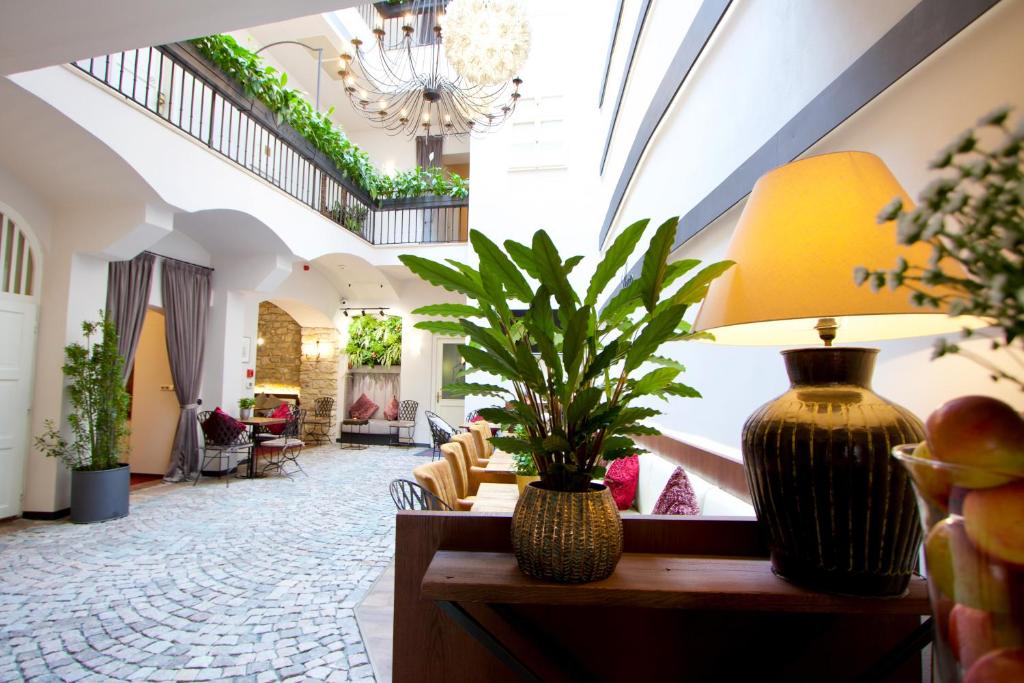
Providing free WiFi, flat-screen TVs, mini-bars and safety deposit boxes, THE MANES Boutique Hotel Prague is close to MOSAIC HOUSE Design Hotel.
Within feet:
-
-
- Karlovo Náměstí Metro Station
- Botanical Garden
- Historical Building of the National Museum of Prague
Within 1 mile:
Within 2.7 miles:
Within 57 miles:
THE MANES Boutique Hotel Prague is 5 miles from Vaclav Havel Airport Prague.
Approximate cost per night (Duplex Suite): $333

Roxy Club
Hotel Residence Agnes offers air conditioning, flat-screen TVs, desks, a 24-hour front desk, an exchange office, concierge service, private limousine transportation, mini-bars, free WiFi, spacious bathrooms and buffet breakfast. Also in the area is Metropolitan Old Town Hotel – Czech Leading Hotels.
Within feet:
-
-
- Roxy Club
- Kotva Department Store
- Palladium Shopping Center
- Mozart Dinner
Within 3.2 miles:
Within 8.7 miles:
Hotel Residence Agnes is 5 miles from Vaclav Havel Airport Prague.
Approximate cost per night: $313

Hybernia Theater
BoHo Prague Hotel has air conditioning, a restaurant, flat-screen TVs, seating areas, bathrobes, slippers, a 24-hour front desk and a wellness center. Meat & Greet (hamburger restaurant), Sicily café (coffee shop), Senovážné 6 (fashion accessories store), Takumi Praha (ramen restaurant), STOKLASA (haberdashery), Selfie House Prague (museum), Midtown Grill (restaurant), SABAI (Thai massage therapist), Dhaba Beas (vegetarian restaurant), Riedel Wine Shop (wine bar), Slovanský dům (shopping mall), Brasileiro Slovanský dům (Brazilian restaurant), The Powder Tower (scenic spot) and more are in the vicinity.
Within feet:
-
-
- Hybernia Theater
- Henry’s Tower
- Náměstí republiky
- Mozart Dinner
- Palladium Shopping Center
Within 1.3 miles:
Within 1.6 miles:
BoHo Prague Hotel is 6 miles from Vaclav Havel Airport Prague.
Approximate cost per night (Triple Room with Parking): $710
Cost per person (three people): $236

Palladium Shopping Center
With kitchenettes, large bathrooms with heated floors, garden views, buffet breakfast, a restaurant and a 24-hour fitness center, The Grand Mark Prague – The Leading Hotels on the World is close to Le Grill Restaurant, Portfolio restaurant, Wine & Dine (wine bar), Sia Restaurant, Cukrář Skála (cake shop), K-shop (Korean grocery store), CZECH BEER SPA, Vinárna Konírna (wine bar), Libor Smrž Hair (hairdresser), R&P – Rolotto&Pizza 🥰🍕, Prokop, coffee & croissants (coffee shop), SOUVLAKI BAR (Greek restaurant), Wine Table (wine bar), THAI SPA Traditional Thai Massage, Restaurace Hybernská (restaurant), Restaurace Červený jelen (restaurant), Studio Sara Puchowska s.r.o. (Pilates studio), Belles Fleurs (florist) and more.
Within feet:
Within 1.4 miles:
Within 1.7 miles:
The Grand Mark Prague is 6 miles from Vaclav Havel Airport Prague.
Approximate cost per night (Presidential Suite): $9,645

Wallenstein Garden
Free WiFi, flat-screen TVs, terraces and kitchenettes come standard at Old Royal Post Boutique Hotel & Premium Suites. In the area are Mondieu (coffee shop), Euro Segway (sightseeing tour agency), Laboratorio della pizza (Italian restaurant), Restaurace U Malířů1543 (restaurant), Cukrkávalimonáda (restaurant), Bistro Monk (breakfast restaurant), NAPA bar and gallery (bar), Pâtisserie Saint Tropez (patisserie), Ferdinanda (restaurant), The Vrtba Garden (historical landmark), U Malého Glena Restaurace & Jazz Klub (restaurant), Mr. Dick (adult bakery), J.J. Murphy’s Irish Pub, Bread Gap (sandwich shop), San Carlo Mala Strana (pizza restaurant), Lžička café, Kafírna u Sv. Omara (coffee shop), Aquarius Restaurant, Wine Bar Vinotéka U Mouřenína (wine store), St. Martin (restaurant), Coda Restaurant (fine dining restaurant), Nicolas bar & restaurant, A Studio Rubín (theater company), Academy of Performing Arts in Prague, Gitanes restaurant, Galerie Millennium (art gallery), U Staré studny (wine bar), U Malého Glena Jazz Club, Flowers Carmelita (florist), Dárky (gift shop), Phase 2 (clothing store) and more.
Within feet:
-
-
- Wallenstein Garden
- Charles Bridge
- Prague Castle
- Šternberg Palace – Czech National Gallery
- Petřín
- Queen Anne’s Summer Palace
Within 1 mile:
Within 1.3 miles:
Within 1.6 miles:
-
-
- Florenc Central Bus Station
Old Royal Post Hotel by TKC is 5 miles from Vaclav Havel Airport Prague.
Approximate cost per night (Two-Bedroom Suite with Balcony): $393
Cost per person (four people): $98

Prague Castle
Located in a 16th century historic building, MOOo by the Castle has free WiFi, concierge services, flat-screen TVs, fully-equipped kitchenettes, coffee machines, hairdryers and airport transportation upon request. Nearby are Santini Garden (Italian restaurant), Kellyxír (cocktail bar), Tavern by Seven Swabians (restaurant), Kafe & Hrnky (café), U zeleného krále (pizza restaurant), Museum Montanelli (art museum), tāst restaurant, U Dvou slunců (restaurant) and more.
Within feet:
-
-
- Prague Castle
- Šternberg Palace – Czech National Gallery
- Wallenstein Garden
- Petřín
- Charles Bridge
Within 1 mile:
Within 1.1 miles:
-
-
- Museum of Alchemy – Speculum Alchemiae
Within 13 miles:
MOOo by the Castle is 4.7 miles from Vaclav Havel Airport Prague.
Approximate cost per night (One-Bedroom Apartment): $252

Florenc Metro Station
Buffet breakfast, free WiFi, city views, a terrace, private parking, air conditioning, desks, coffee machines, mini-bars, safety deposit boxes, flat-screen TVs and paid airport transportation service are found at Rooftop Planet Prague Hotel. In the area as well is Hotel Merkur – Czech Leading Hotels.
Within feet:
-
-
- Florenc Metro Station
- Florentinum
- Kasárna Karlín
- Municipal House
- Powder Tower
Within 1 mile:
Within 1.2 miles:
Within 2 miles:
Rooftop Planet Prague Hotel is 6 miles from Vaclav Havel Airport Prague.
Approximate cost per night (Deluxe Suite with Terrace): $371
Cost per person (four people): $92

Queen Anne’s Summer Palace
Offering castle, bridge, church and street views, antique furniture, free WiFi and kitchen facilities, Malostranská Residence is near Old Royal Post Boutique Hotel & Premium Suites.
Within feet:
-
-
- Queen Anne’s Summer Palace
- Wallenstein Garden
- Prague Castle
- Charles Bridge
- Šternberg Palace – Czech National Gallery
- Rudolfinum
Within 1 mile:
Within 1.3 miles:
-
-
- Historical Building of the National Museum of Prague
Within 2.3 miles:
Malostranská Residence is 5 miles from Vaclav Havel Airport Prague.
Approximate cost per night (Deluxe Suite with Terrace): $523
Cost per person (eight people): $65

Rajská Zahrada Metro Station
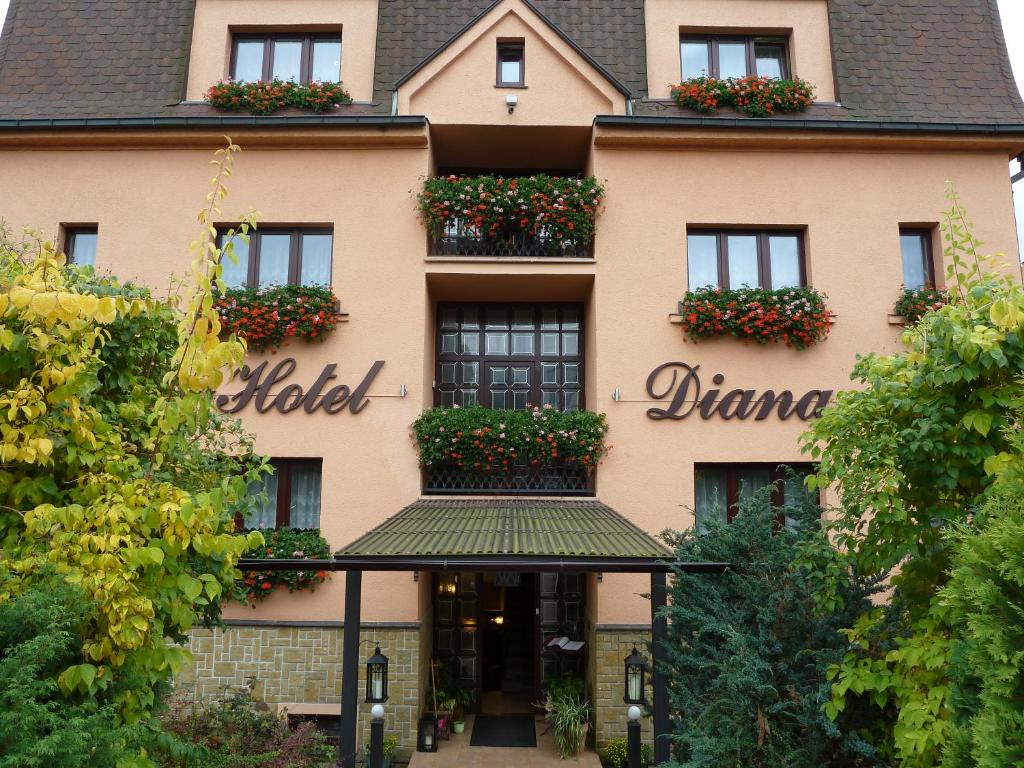
A family-run hotel set in a tranquil location on Prague’s eastern outskirts, Hotel Diana has a terrace, a garden, free WiFi and flat-screen TVs. Restaurance Tong (restaurant), Sochi Restaurant (Georgian restaurant), Sestav si pizzu (pizza delivery), MTV SQUASH & FITNESS (gym), Positano (Italian restaurant), Potraviny MAX (supermarket), Kioku Restaurace (Asian restaurant), Amentes (cake shop), Palác Food (restaurant), Prison Island Praha (recreation center) and more are in the area.
Within feet:
-
-
- Rajská Zahrada Metro Station
Within 2.7 miles:
Within 5.7 miles:
Hotel Diana is 11 miles from Vaclav Havel Airport Prague.
Approximate cost per night (Two-Bedroom Suite): $208
Cost per person (four people): $52
St. Vitus Cathedral
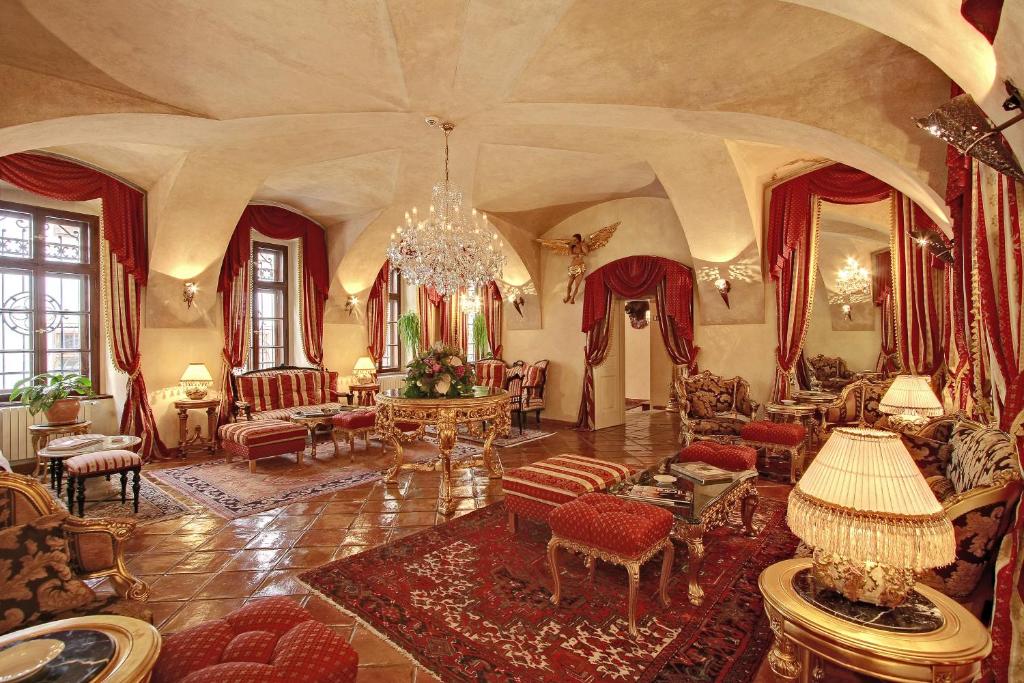
Found inside a 16th century, Baroque UNESCO building, Alchymist Grand Hotel and Spa comes with free WiFi, a complimentary welcome drink, 24-hour reception, a fitness center, a sauna, pool facilities, daily breakfast, complimentary wine and cheese tasting, chocolate pralines and turn-down service. Old Royal Post Boutique Hotel & Premium Suites and Malostranská Residence are also in the area.
Within feet:
-
-
- St. Vitus Cathedral
- St. Nicolas Church
- Schwarzenberg Palace
- Šternberg Palace
- Museum Kampa
- Prague Loreto
- Waldstein Riding School
Within 1.8 miles:
Within 4.3 miles:
Alchymist Grand Hotel and Spa is 4.8 miles from Vaclav Havel Airport Prague.
Approximate cost per night (Tower Suite): $1,205
Cost per person (four people): $301

Grand Central Residence by TKC
Opletalova 15, 110 00
Muzeum Metro Station
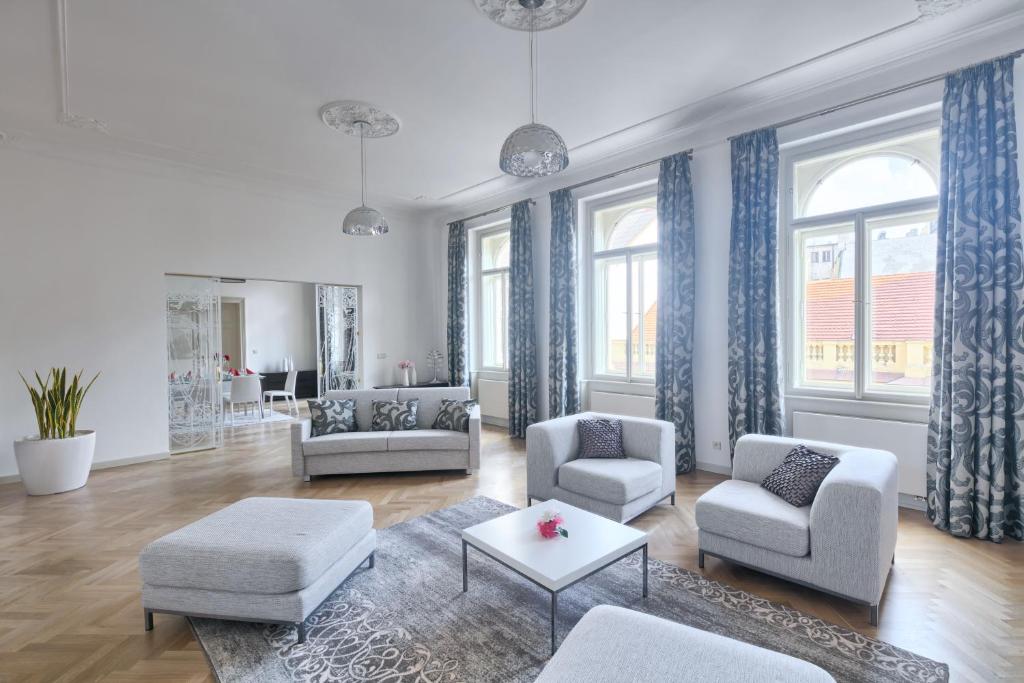
Included at Grand Central Residence by TKC are air conditioning, free WiFi, a sauna, a terrace, fully-equipped kitchens and flat-screen TVs. Sharing the area are MeetMe23 and Falkensteiner Boutique Hotel Prague.
Within feet:
-
-
- Muzeum Metro Station
- Henry’s Tower
- Mucha Museum
- Historical Building of the National Museum of Prague
Within 1.4 miles:
Within 2.5 miles:
Grand Central Residence by TKC is 6 miles from Vaclav Havel Airport Prague.
Approximate cost per night (Three-Bedroom Apartment): $668
Cost per person (six people): $111
Wallenstein Palace
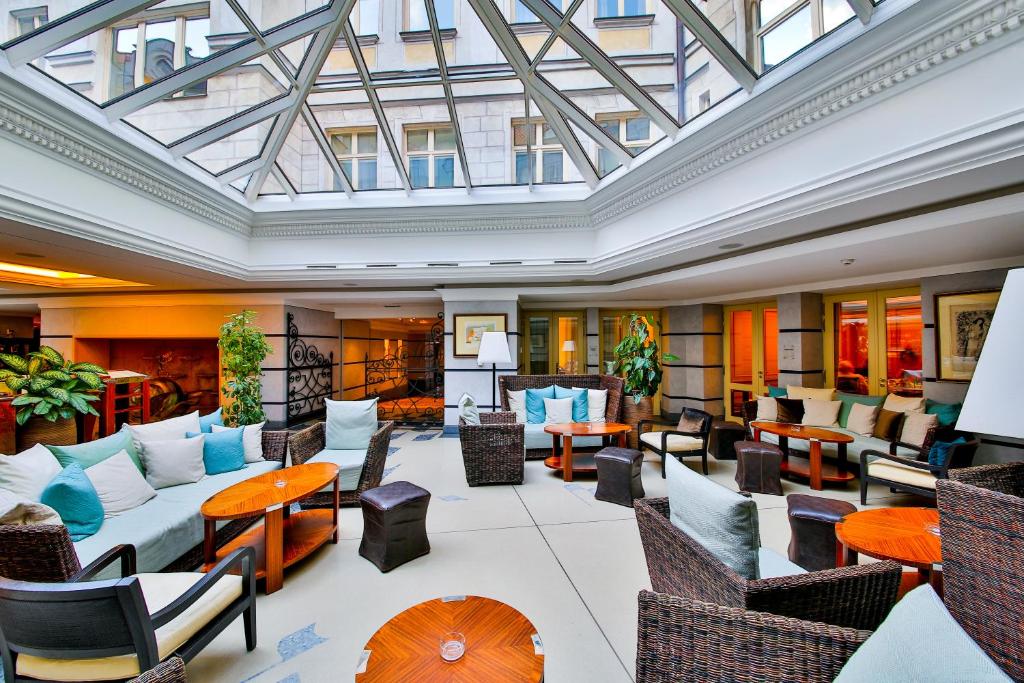
Offering free welcome drinks, free afternoon snacks and drinks, a rooftop garden terrace, city views, a restaurant and direct Baroque Vrtbovska Gardens access, Aria Hotel Prague is near Old Royal Post Boutique Hotel & Premium Suites, Malostranská Residence and Alchymist Grand Hotel and Spa.
Within feet:
-
-
- Wallenstein Palace
- St. Nicolas Church
- Prague Castle
- St. Vitus Cathedral
- Schwarzenberg Palace
- Museum Kampa
Within 4.2 miles:
Within 9.3 miles:
Aria Hotel Prague is 4.9 miles from Vaclav Havel Airport Prague.
Approximate cost per night (Luxury Apartment): $904


Waldstein Riding School
Set inside 7 historic buildings including the 13th century Augustinian St. Thomas Monastery, Augustine Hotel comes with city views, a spa, a hammam, a sauna, a steam room, a gym and a restaurant. It’s near Augustine Restaurant, Refectory Bar, Restaurace Malostranská beseda (restaurant), Restaurant U Glaubicu, Jo´s Bar & Restaurant, Restaurace U Mecenáše, Hergetova Cihelna (eastern European restaurant), Perníkový panáček (cookie shop), Cocovanka (cookie shop), Terasa U Zlaté studně (restaurant) and more.
Within feet:
-
-
- Waldstein Riding School (art gallery)
- Museum Kampa
- Lesser Quarter
- Malostranská Metro Station
Within 2 miles:
Within 4 miles:
Augustine Hotel is 5 miles from Vaclav Havel Airport Prague.
Approximate cost per night: $764

Ve Smečkách Penthouse
9 Ve Smečkách, 110 00
ABC Theater
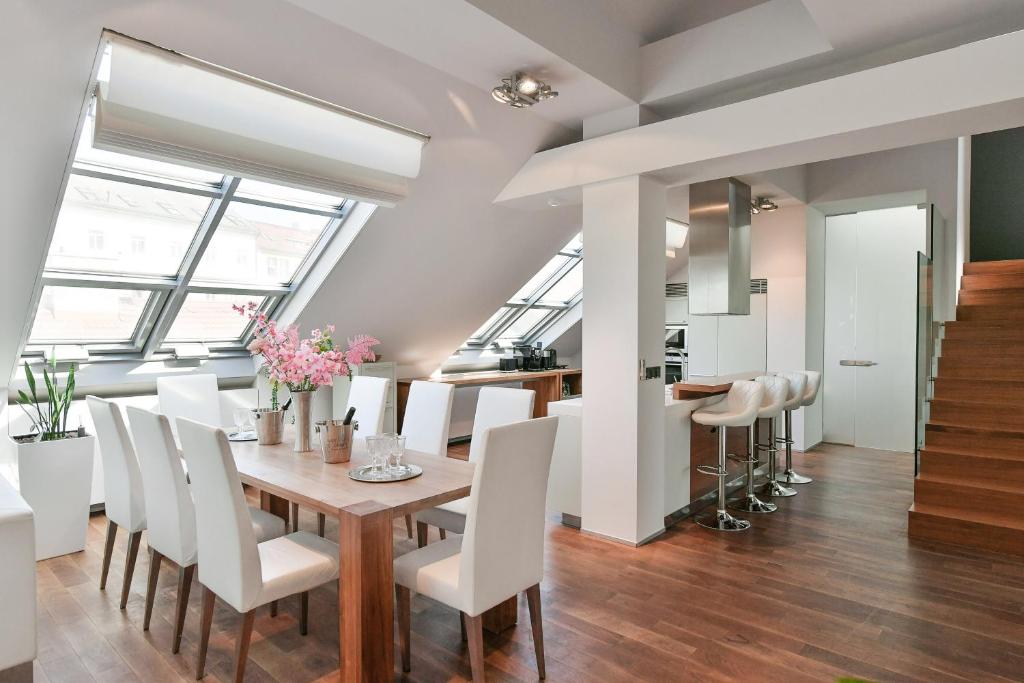
Equipped with 5 bedrooms, 3 bathrooms, free WiFi, a sauna, air conditioning, a terrace, city views, a flat-screen TV, a fully-equipped kitchen, a walk-in shower and an outdoor dining area, Ve Smečkách Penthouse is close to Ježkovy voči Bar&Tapas (bar), Kavárna Bílá vrána (coffee shop), Cafe Smečky, Indian Kitchen By R&R (Indian restaurant), Hanoi Square Restaurant (Asian restaurant), Seafood Market & Grill (seafood restaurant), Prague Old School Barbershop, Tuscany Taste (bistro), Leica Gallery Prague (art gallery), Little Bali (café), Sauna Central – Praha (public bath), Činoherní klub (performing arts theater), Rocky O’Reilly’s (Irish pub), Eden’s Garden Massage, swim club (restaurant), Metalshop Megastore Prague (fashion accessories store), Alcron Bar, Alcron Restaurant, Studio DVA divadlo, U Vlčáka (restaurant), Jáma³ Garden Pub (restaurant), Veget bistro café, Elias Coffee Shop, La Casa trattoria Nové Město (Mediterranean restaurant), Kyvadlo – Restaurant – Pub (restaurant), DeLuxe Club Karaoke & Shisha lounge (karaoke bar) and more.
Within feet:
-
-
- ABC Theater
- Historical Building of the National Museum of Prague
- Mucha Museum
- Henry’s Tower
- Botanical Garden
- Muzeum Metro Station
Within 1 mile:
Within 1.4 miles:
Within 16 miles:
-
-
- Šibeniční vrch – Mnichovice Ski Lift
Ve Smečkách Penthouse is 6 miles from Vaclav Havel Airport Prague.
Approximate cost per night: $698
Cost per person (ten people): $69

Ostrovní Penthouse
30 Ostrovní, 110 00
Újezd Train Station
Ostrovní Penthouse comes with 3 bedrooms, free private parking, free WiFi, a flat-screen TV, a washing machine, a fully-equipped kitchen and a fireplace. Hotel Adler – Czech Leading Hotels is close by.
Within feet:
-
-
- Újezd Train Station
- Prague Astronomical Clock
- Mucha Museum
- Old Town Square
- Charles Bridge
Within 1 mile:
Within 1.4 miles:
Ostrovní Penthouse is 5 miles from Vaclav Havel Airport Prague.
Approximate cost per night: $789
Cost per person (eight people): $98
Anenska Penthouse
Anenska 13, 110 00
Karlovy Lázně
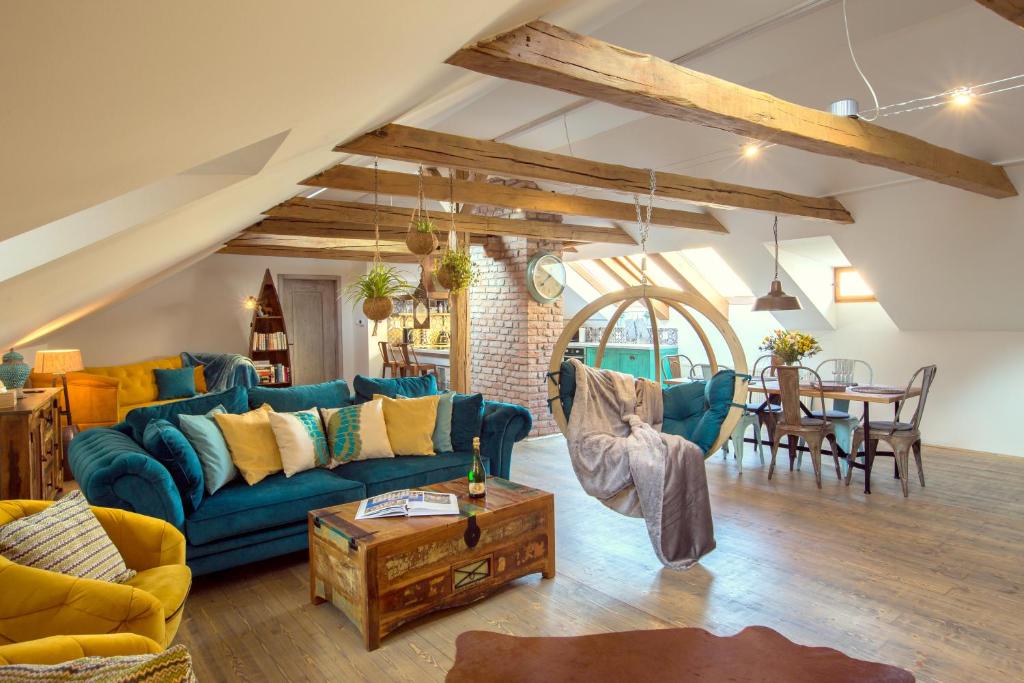
Anenska Penthouse has 2 bedrooms, 2 bathrooms, free WiFi, a fully-equipped kitchen, a coffee machine and a hot tub. Nearby you may find Bar Konirna (bar), Tricafe (coffee shop), Prague Riverside Parties (tour agency), Thai Paradise (Thai massage therapist), The Irish Times Bar, WINE O’CLOCK (small plates restaurant), Country Life (cosmetics store), Georgia Restaurant, Blues Skiep (live music venue), Art Master Gallery and more.
Within feet:
Within 1.5 miles:
Within 3.7 miles:
Gigantic Anenska Penthouse is 5 miles from Vaclav Havel Airport Prague.
Approximate cost per night: $538
Cost per person (six people): $89

So there they are, Prague accommodations that will help make for an outstanding trip. We hope you have found this information valuable and most importantly, that you enjoy your time in the Czech Republic!